
Hepplewhite vs Sheraton: How to Tell Federal Furniture Apart
“Hepplewhite” and “Sheraton” are the two names dealers use for light, neoclassical furniture made in Britain and America around 1790–1810. The quick rule is Hepplewhite = shield back, square tapered legs, spade feet and Sheraton = square back, round turned and reeded legs. That rule is a good start and a poor finish: the two pattern books overlap, and American cabinetmakers mixed them freely. Below, the features one at a time on seven dated Met pieces, then all seven scored in one table.
Table of Contents
Two Books, Not Two Workshops
Both names come from pattern books, and neither man is known to have made a surviving piece of furniture.
- George Hepplewhite died in 1786. The Cabinet-Maker and Upholsterer’s Guide came out two years later, in 1788, under the name A. Hepplewhite and Co., the firm run by his widow Alice (Wikipedia; Collectors Weekly; buffaloah.com). It was reissued in 1789 and again in 1794 (Wikipedia; buffaloah.com); Collectors Weekly gives the third edition as 1793, and we follow the two sources that agree. No furniture made by Hepplewhite or his firm is known to exist (the British Antique Dealers’ Association; Wikipedia), and Britannica adds that none can definitely be attributed to it.
- Thomas Sheraton (1751–1806) issued The Cabinet-Maker and Upholsterer’s Drawing-Book in parts from 1791, with the first complete edition in 1793 (the Met’s library record; the Smithsonian Libraries record). No piece of furniture has ever been traced to him (History Today; Wikipedia), and Britannica describes him as a designer with no known workshop.
So “Hepplewhite” on a label means a design of the kind in the Guide, made by somebody else. In America both are treated as sub-styles of the Federal period, the late eighteenth and early nineteenth centuries (buffaloah.com; the Canadian Museum of History’s glossary). They were made at the same time, by the same shops, which is why the labels blur.
For the walnut and mahogany furniture that came just before, with cabriole legs and claw-and-ball feet, see the Chippendale furniture guide; for the New York maker who worked through both styles into the Empire, the Duncan Phyfe guide.
Start With the Chair Back
If the piece is a chair, the back is the strongest single clue. The shield back is the Guide’s signature form (Collectors Weekly; the Canadian Museum of History; Wikipedia), and its top rail runs in one rounded, unbroken line. Sheraton-type backs are square or rectangular, with a straight or broken top rail (buffaloah.com; 1stDibs describes Sheraton’s lines as straighter and more rectilinear than Hepplewhite’s curves).
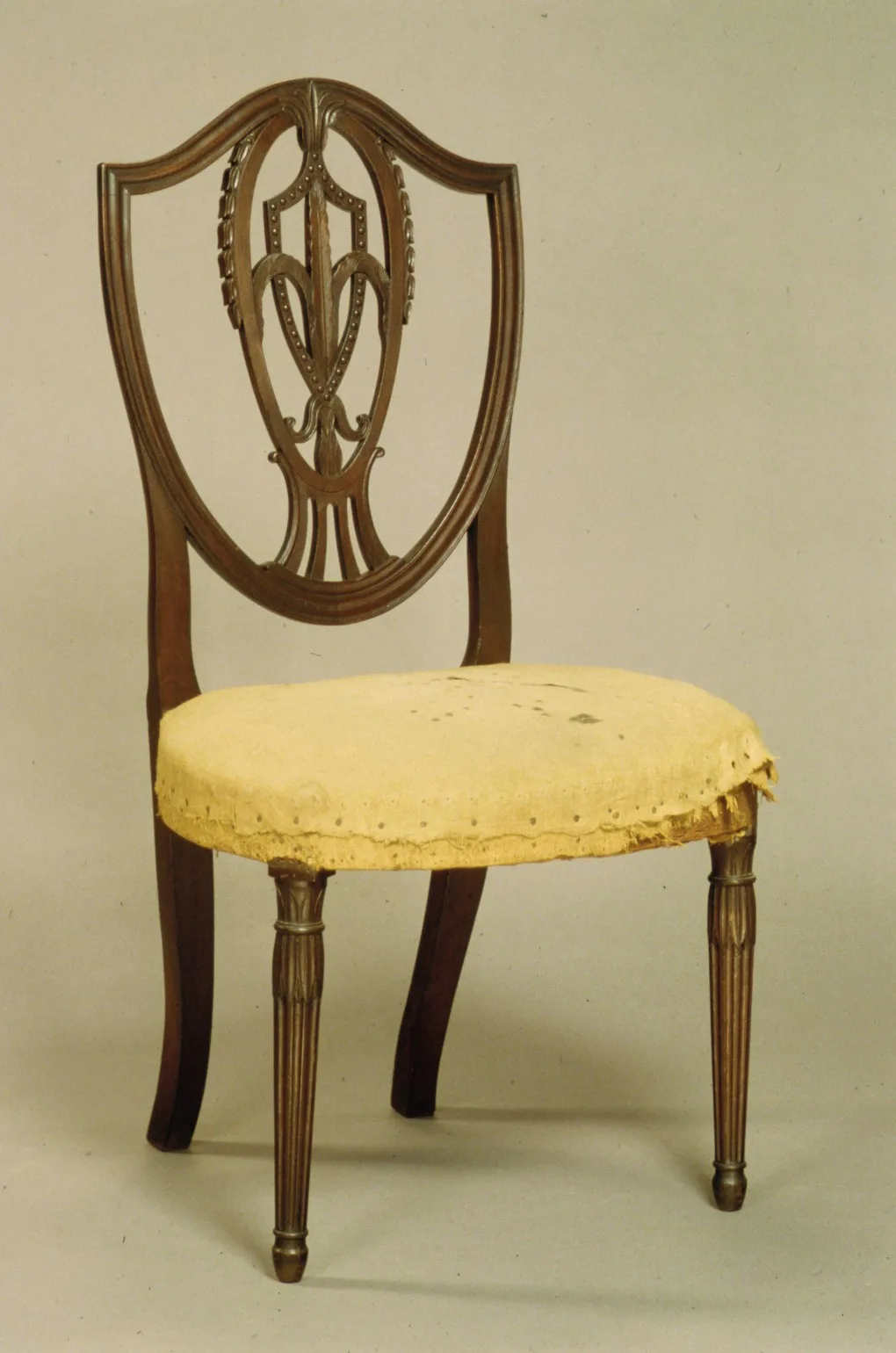
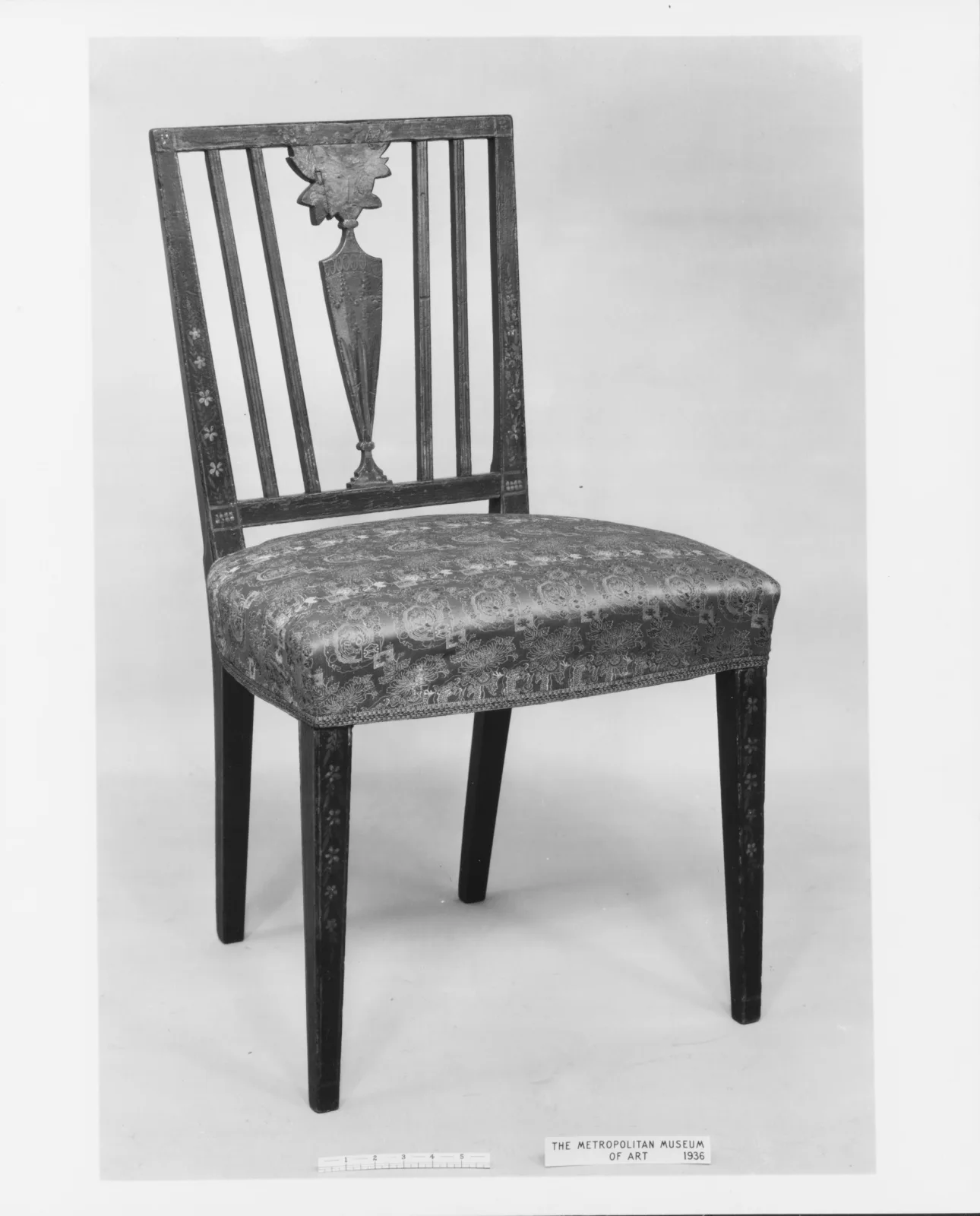
Each is a correct Federal chair that one feature alone would misname. The back is still the better guide; describe the legs separately.
Two cautions. Homes & Antiques notes that Sheraton’s own 1790s designs include shield backs, and that the Guide popularised the form rather than inventing it, so a shield back does not exclude Sheraton. And both styles were revived: the same magazine records shield backs made again in the late nineteenth-century Adam revival and the early twentieth century, and London dealers in LAPADA sell satinwood “Sheraton Revival” furniture of around 1890–1910. The shape gives the design, not the date.
Legs and Feet: Square and Tapered or Round and Reeded
The Canadian Museum of History’s glossary sums up Hepplewhite chairs as shield backs, square tapered legs and spade-like feet, and Sheraton pieces as having “turned or tapered legs”. Note the “or”: tapered legs belong to both. Collectors Weekly goes further and says the Guide’s own plates do not support the shortcut that tapered means Hepplewhite and turned and reeded means Sheraton.
- Square tapered leg: four flat faces narrowing towards the floor. The Guide’s legs may end in a spade foot, a slightly wider tapering block, or in nothing at all (Collectors Weekly; buffaloah.com).
- Round turned leg: made on the lathe, usually with rings near the top, often reeded, cut with narrow parallel convex grooves (the Canadian Museum of History defines reeding as a neoclassical ornament of closely spaced straight grooves).
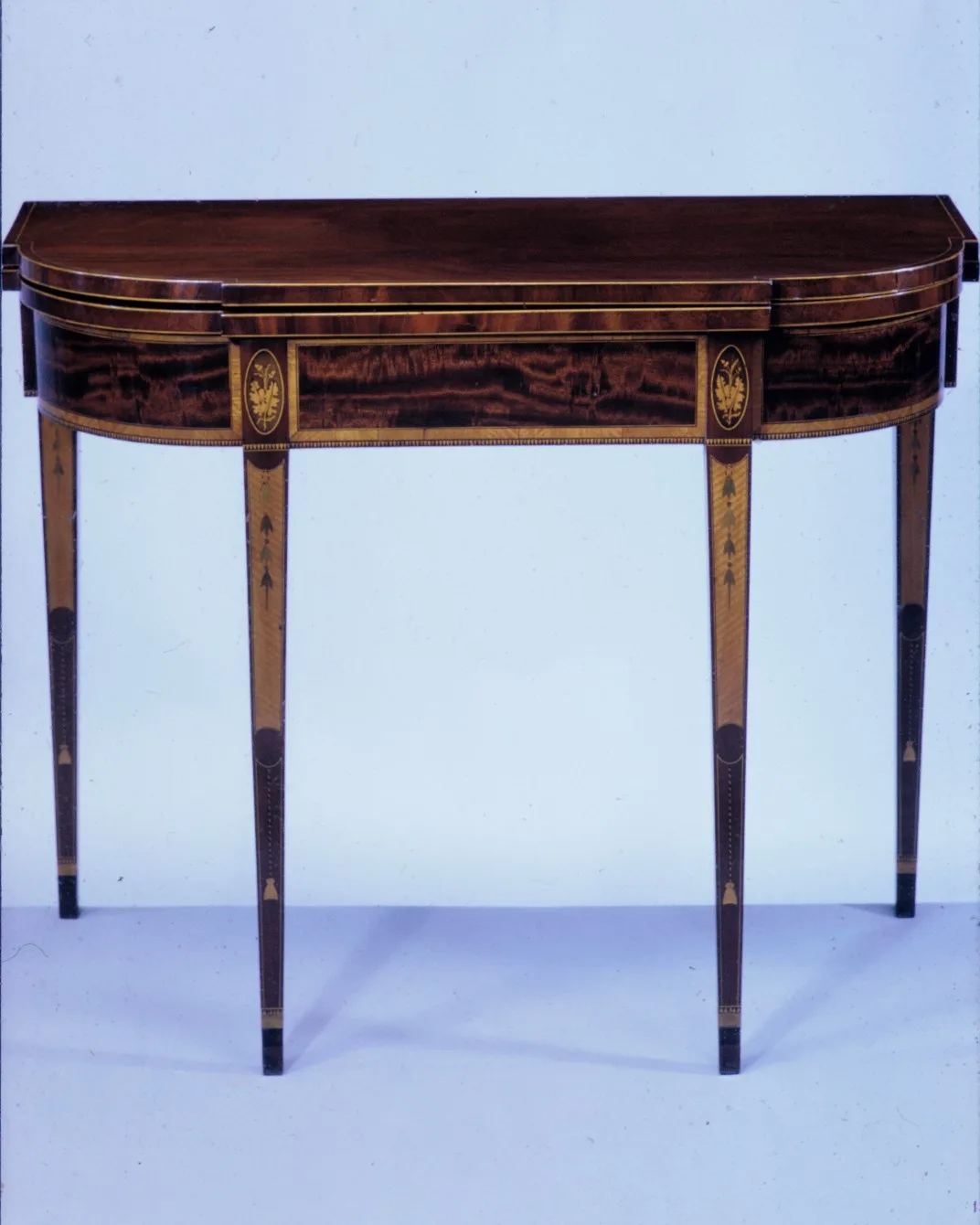
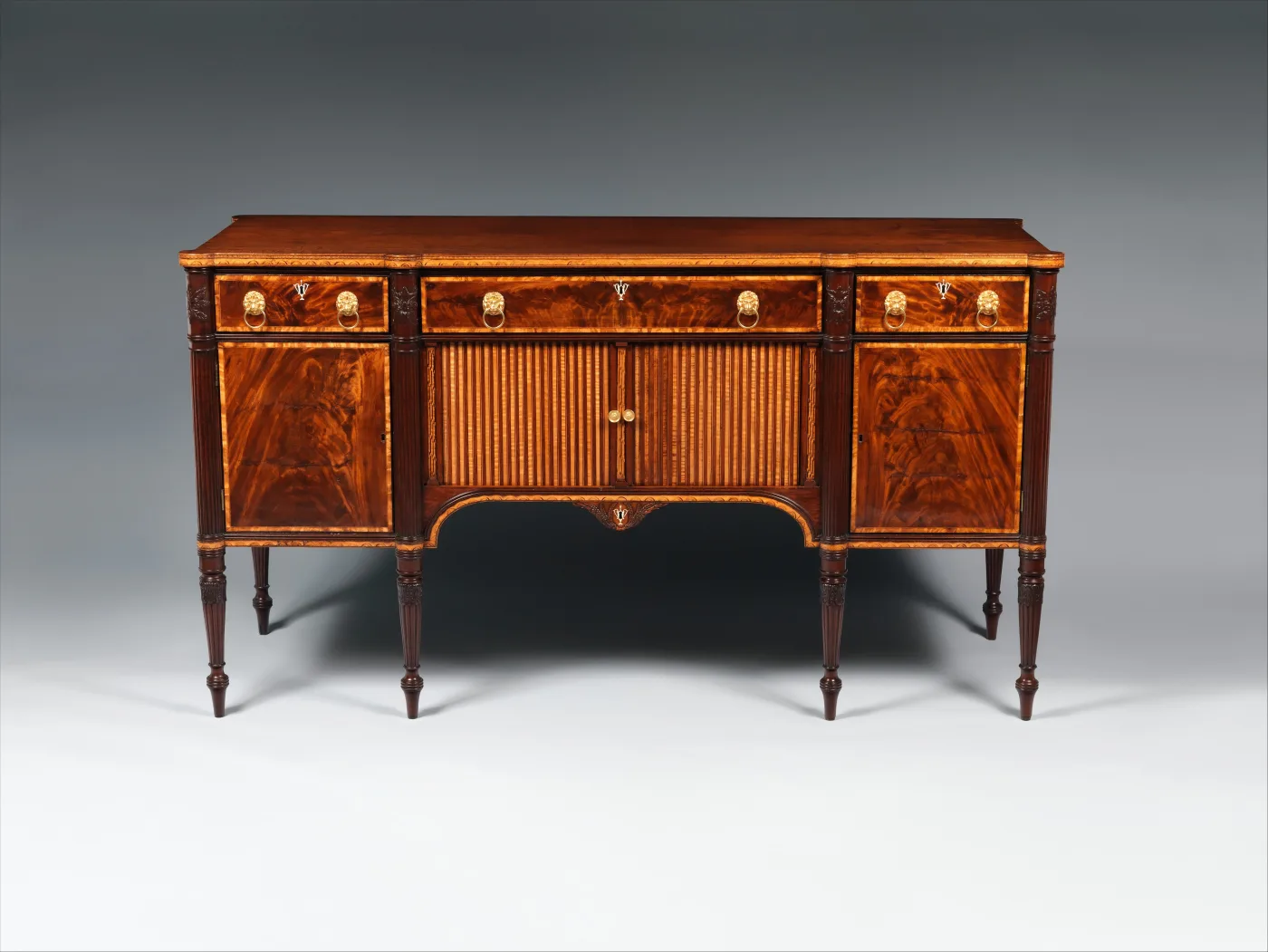
On a table or sideboard the leg is all you have, so treat it as a lean, not a verdict.

Ornament: Inlay, Carving and Reeding
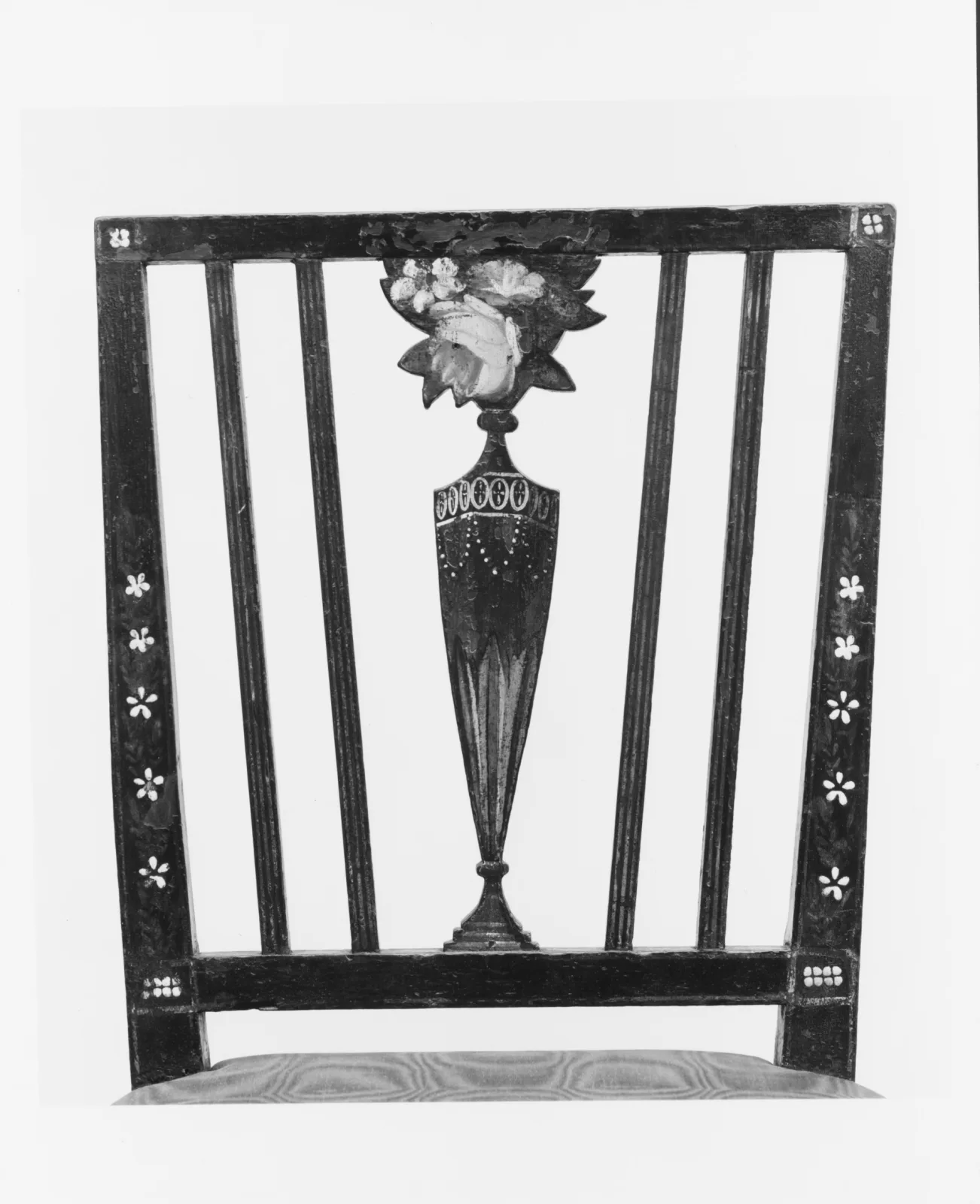
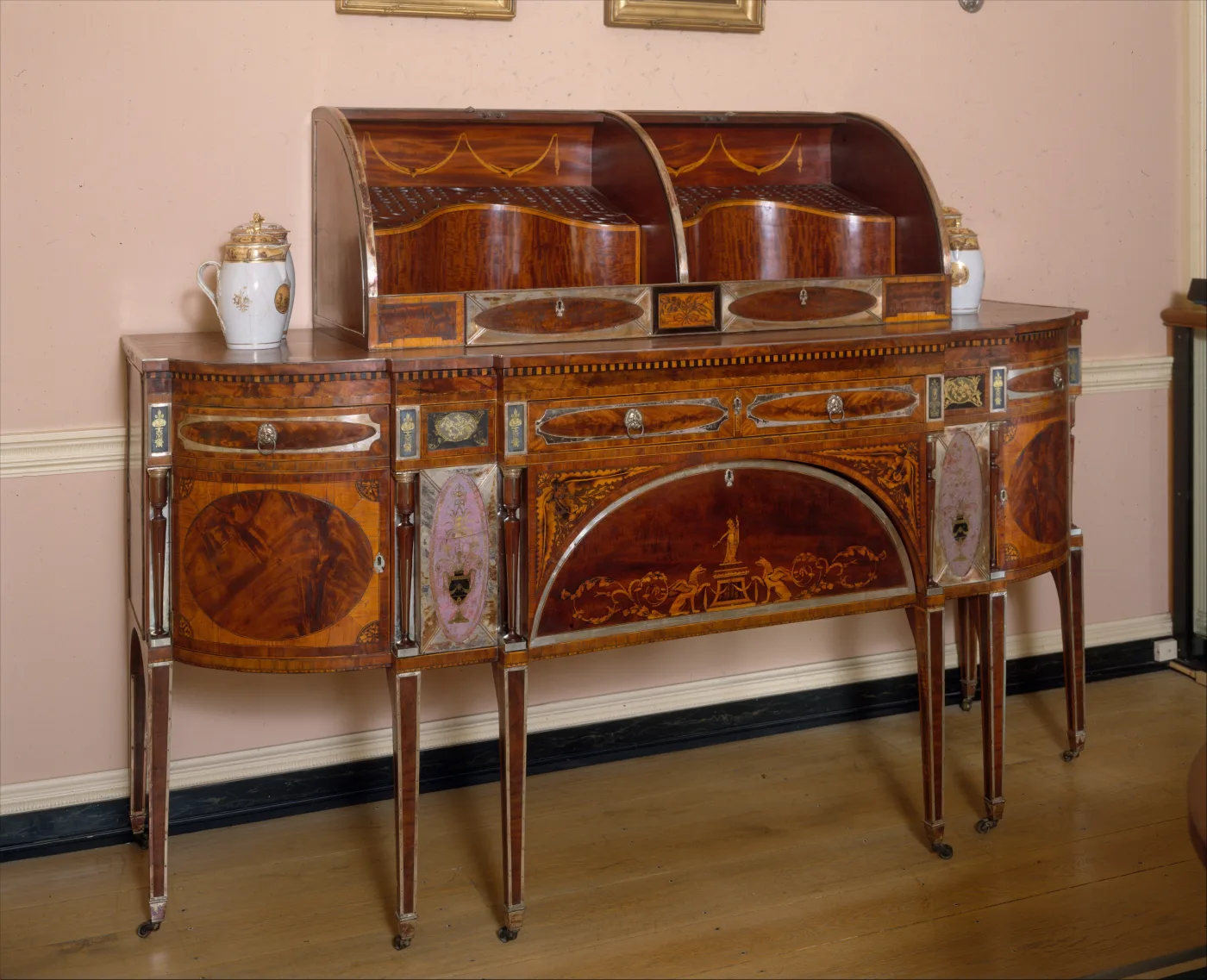
Hepplewhite-type pieces are decorated mostly flat: contrasting veneers and inlay in light woods such as satinwood and holly, with thin stringing lines (Collectors Weekly; buffaloah.com; Wikipedia). Sheraton-type pieces still use inlay, but reeded legs are among the features listed for the style (buffaloah.com), and Wikipedia notes that many Sheraton designs draw on classical architecture. On the pieces below, that shows as ornament cut into the wood rather than laid onto it.
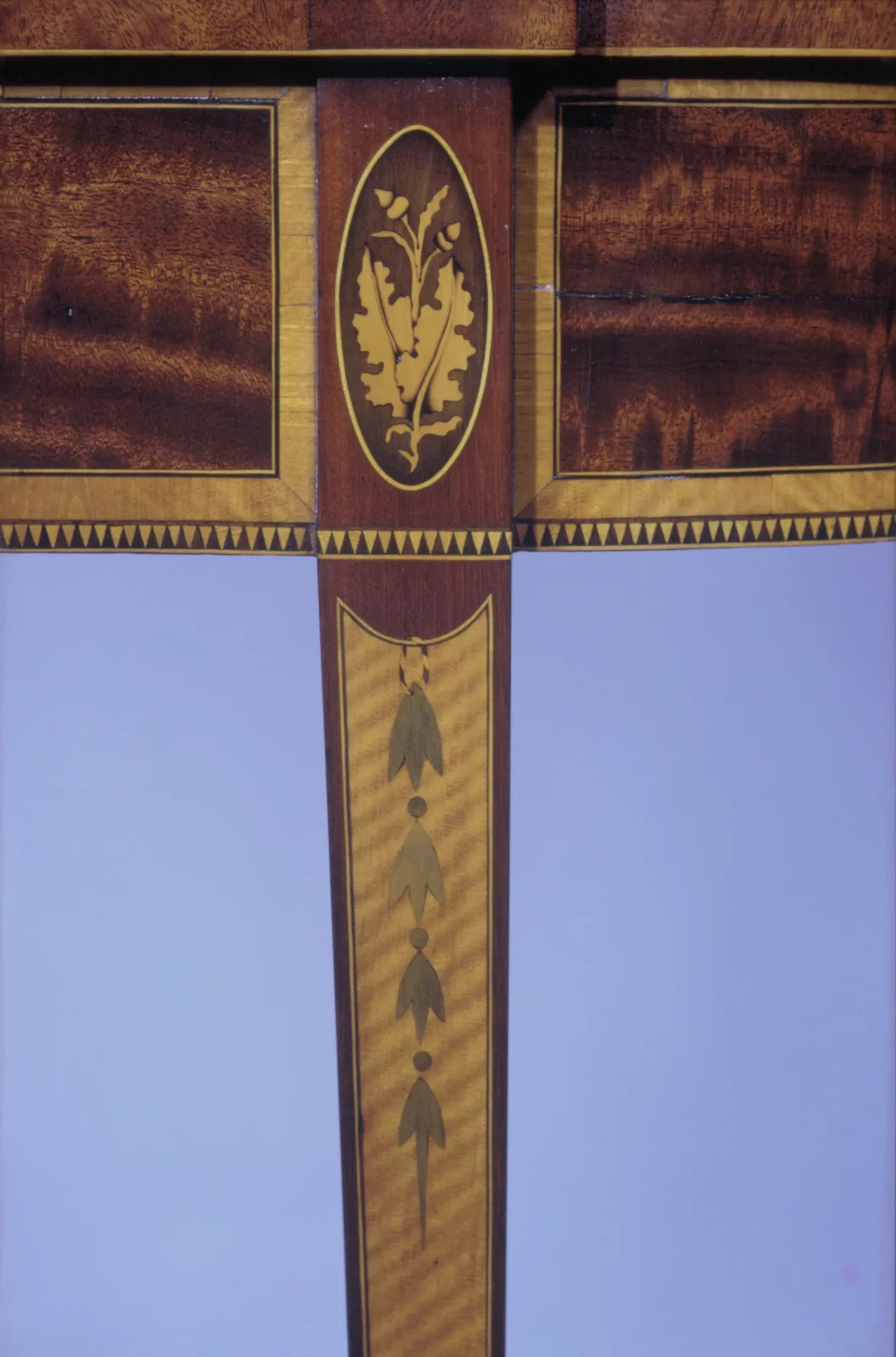
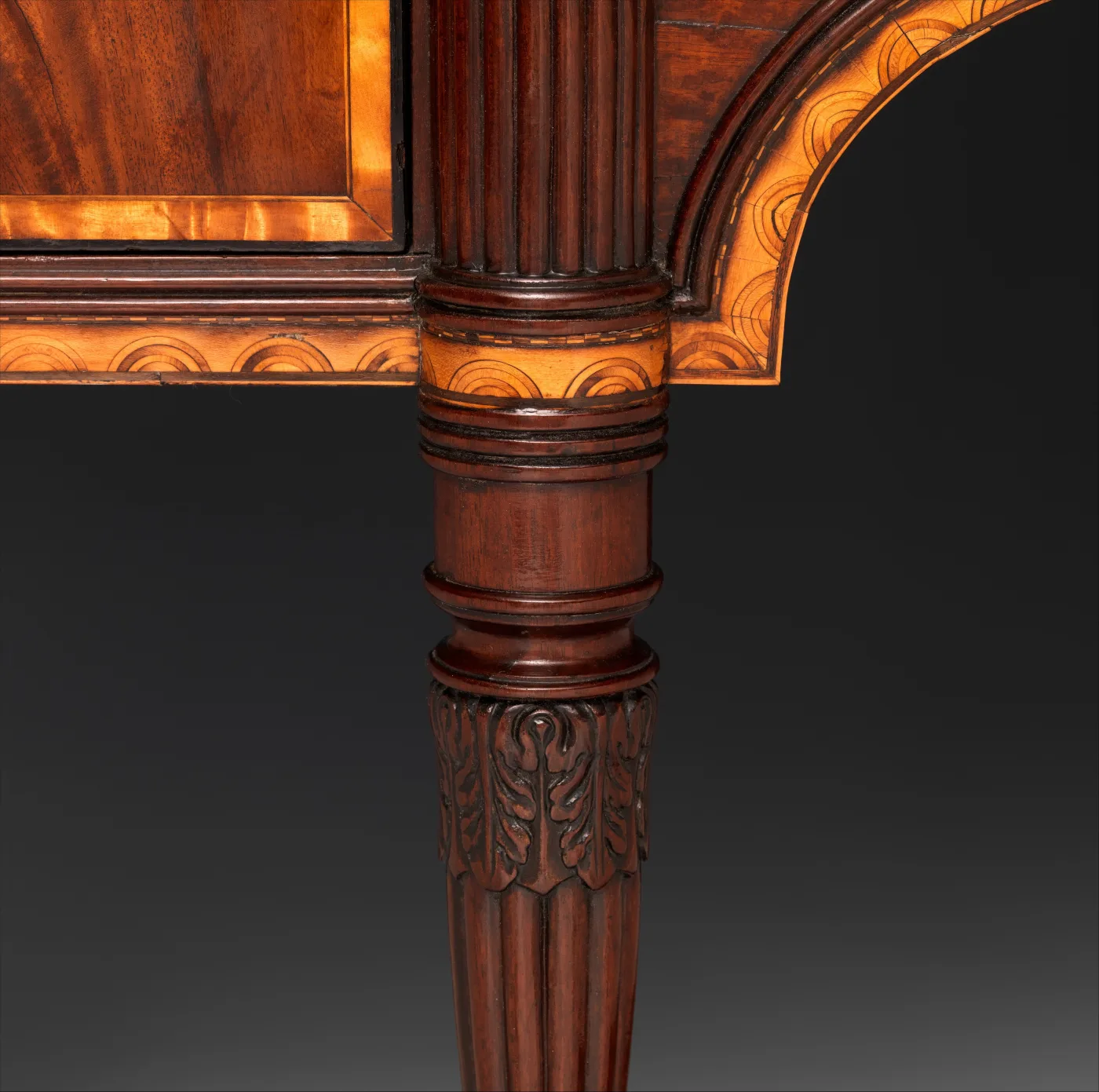
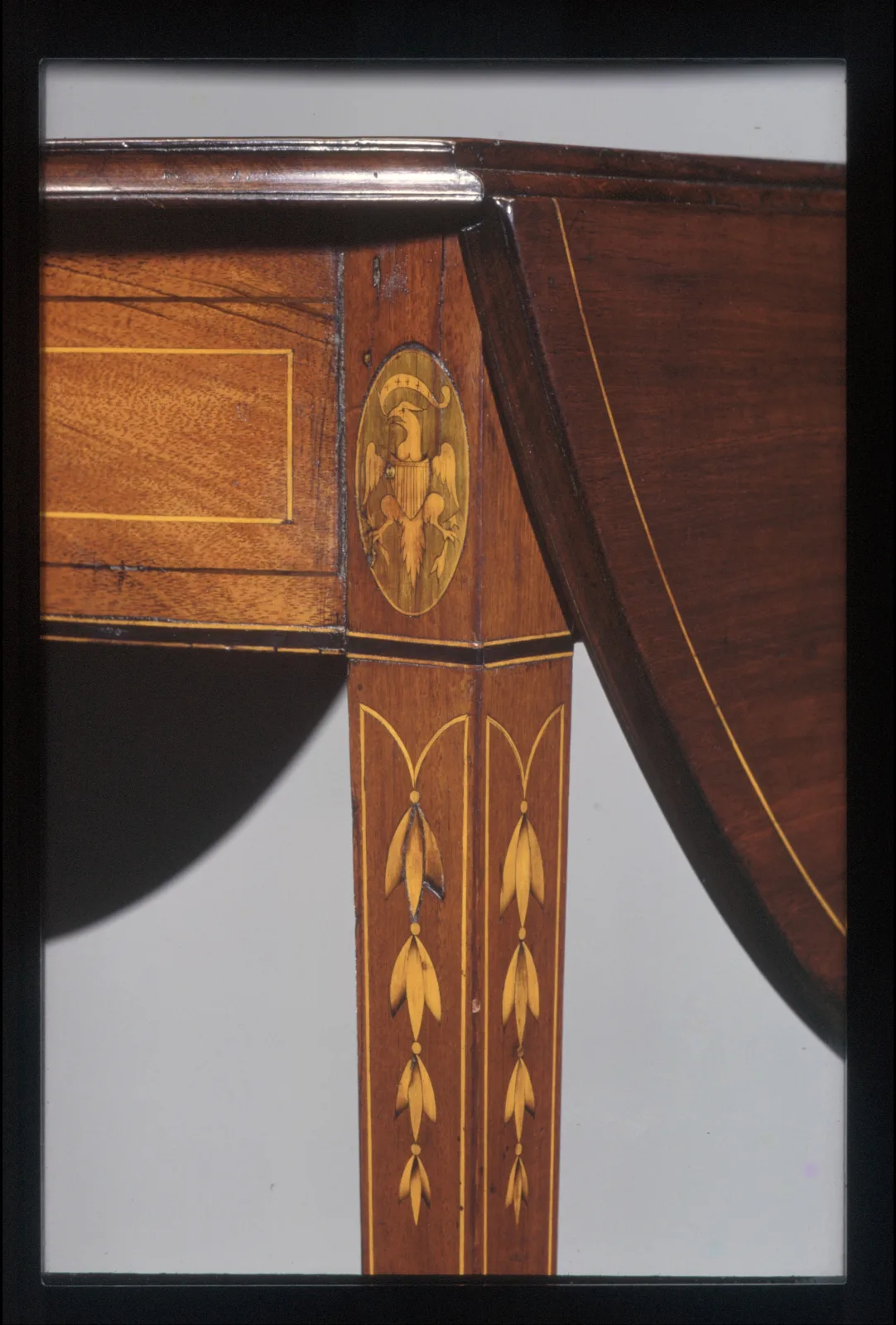
Inlay is also where later embellishment shows. For reading the surface, see the furniture finish test and the guide to artificially aged furniture; for a period base under a later top, the married furniture guide.
Seven Met Pieces, Scored Feature by Feature
Our own scoring of the seven pieces in this article, from the Met’s photographs and records. Each feature is marked H where it fits the Hepplewhite type, S where it fits the Sheraton type, and a dash where the piece does not have it. The last column is the honest label.
| Piece (Met date, place) | Back | Legs | Ornament | Honest label |
|---|---|---|---|---|
| Side chair, 1790–1800, Hartford | H – shield | S – round, reeded | – pierced urn splat, fits either | Federal, mixed: Hepplewhite back on Sheraton legs |
| Side chair, about 1800, New York | S – square, urn splat | H – square tapered | S – straight bars, urn and stars | Federal, mixed: Sheraton back on Hepplewhite legs |
| Card table, 1790–95, Baltimore | – | H – square tapered | H – inlaid bellflowers and oval | Hepplewhite type |
| Pembroke table, 1790–1810, Baltimore | – | H – square tapered | H – inlaid patera and bellflowers | Hepplewhite type |
| Sideboard, about 1795–1805, Baltimore | – | H – square tapered | H – inlaid ovals, plus painted glass | Hepplewhite type, Baltimore |
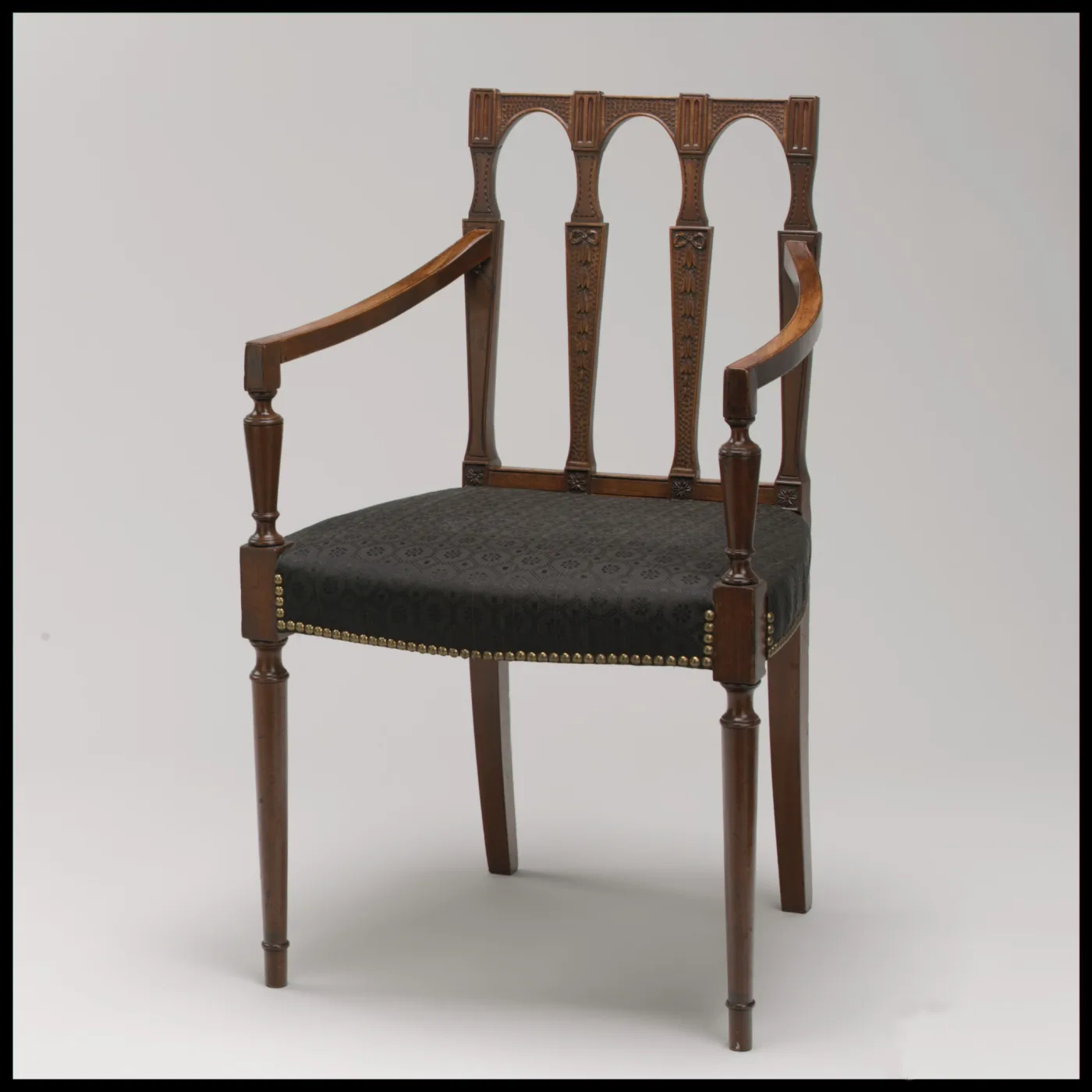
| Armchair, 1801, Salem (McIntire) | S – square | S – turned | S – carved splats | Sheraton type |
| Sideboard table, 1805–10, Boston (Seymour) | – | S – round, reeded | S – reeding, carved leaves | Sheraton type |
Two of the three chairs mix the types; all four pieces without a back fall cleanly on one side, because there is less to disagree. Read the table as a method, not a census of seven: score each feature on its own, and only use a single name when every feature agrees. Otherwise write “Federal” and describe what you see. That is also how a careful furniture appraisal will describe it, and it protects you from paying a premium for a name the piece only half earns.
One more check before the name matters at all: whether the piece is period. Original upholstery evidence, covered in the upholstery guide, and the construction checks in is this an antique come first.
Frequently Asked Questions
What is the main difference between Hepplewhite and Sheraton furniture?
The chair back. A shield, oval or heart back with a curved, unbroken top rail is the Hepplewhite type; a square or rectangular back with a straight or broken top rail is the Sheraton type. Square tapered legs lean Hepplewhite and round turned or reeded legs lean Sheraton, but legs are the weaker clue.
Did Hepplewhite or Sheraton make my furniture?
Almost certainly not. No piece made by George Hepplewhite or his firm is known to survive, and no piece has ever been traced to Thomas Sheraton, who worked as a designer and drawing master. Both names describe designs from their pattern books, made by other cabinetmakers.
What years are Hepplewhite and Sheraton furniture?
Hepplewhite's Guide was published in 1788 and Sheraton's Drawing-Book in parts from 1791 to 1793. In America both styles belong to the Federal period, from about 1790 into the early nineteenth century, and the two were made side by side rather than one after the other.
What is a spade foot?
A small tapering block at the bottom of a square tapered leg, slightly wider than the leg above it, so it looks like the blade of a spade. It is a standard Hepplewhite-type foot; the Guide's legs end with or without it.
Is a shield-back chair always from the 1790s?
No. Shield backs were made again in the late nineteenth-century Adam revival and in the early twentieth century, and satinwood “Sheraton Revival” furniture was made around 1890–1910. Check construction, wear and wood before trusting the shape; the back only tells you the design.
The Short Version
Read the chair back first: shield, oval or heart for Hepplewhite, square for Sheraton. Score the legs and ornament separately, use a name only when all agree, and otherwise call it Federal.