
Stained to Look Old: How to Spot Artificially Aged Furniture
Antiquing new furniture with stain, dents and fake wormholes is an ordinary decorative finish. Furniture makers sell it as “distressed”, and finishing guides teach it. The same techniques are also how a new piece is passed off as an old one, so a buyer needs to know where they fail.
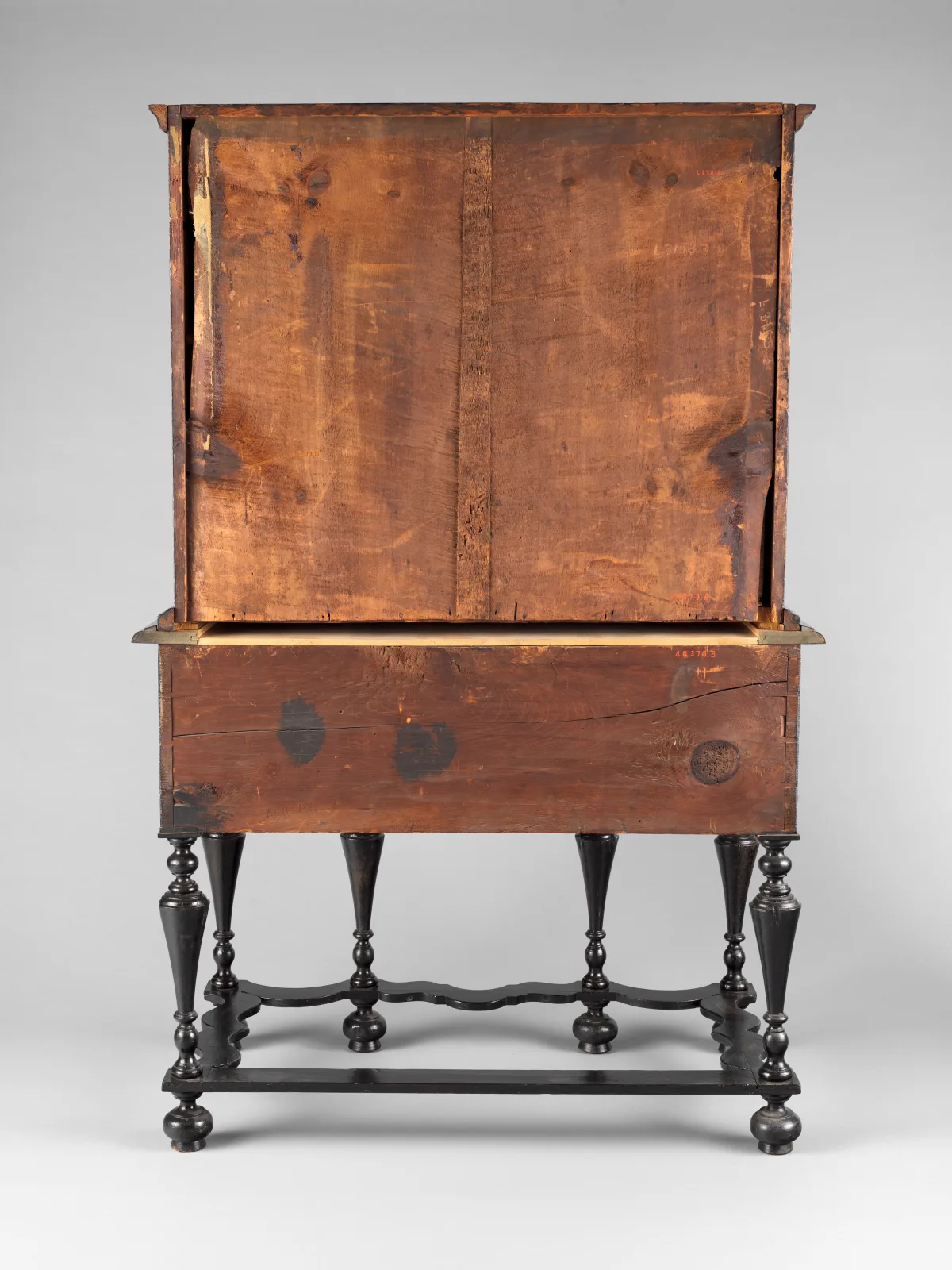
They fail in the same places every time. Stain changes the colour of wood; it cannot change where the colour is. Two centuries of air, light, hands and insects leave a pattern across the whole piece, and that pattern is what this guide reads: five checks, then a table that weighs them.
Table of Contents
What Faked Age Gets Right, and What It Misses
The best-known fake in American furniture shows both halves of the problem. In 1970 the Henry Ford Museum acquired what it believed was a rare seventeenth-century Brewster chair. The woodworker Armand LaMontagne had made it himself and aged it: Woodshop News and Mortise & Tenon both describe him burning the surfaces with an acetylene torch and fixing years of dust onto it. The surface convinced the museum.
What gave it away was inside the wood. After a 1977 Providence Journal story described LaMontagne's chair, the museum X-rayed its own. According to the Henry Ford, the holes in the posts had been drilled with a bit that had “a modern-day pointed end rather than the spoon shape” of seventeenth-century bits. Woodshop News says LaMontagne used the modern bit on purpose, as proof. The lesson for everyone else: a surface can be faked; a pattern across the whole piece is much harder.

Check 2: Wear Goes Where Use Went
Every guide on this agrees: real wear sits where people touched the piece. This Old House lists chair arms and seats and the wood around drawer pulls; Appraisily describes “smooth, rounded wear on high points and edges naturally handled over decades.” This Old House also warns against wear that is too uniform, or in places nobody would touch.
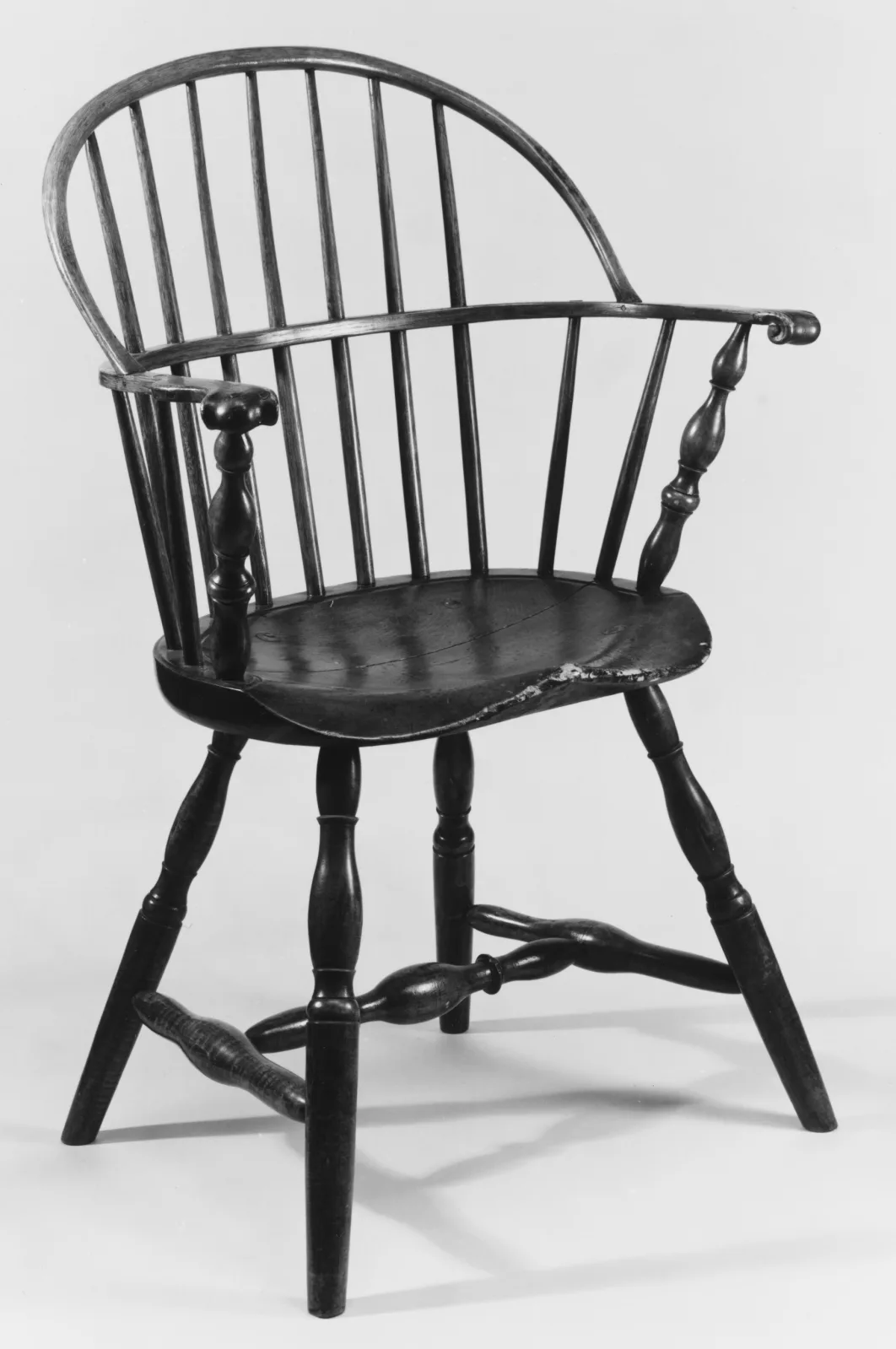
Shape matters as much as place. Keno's fake chest had induced wear on the drawers, and he faulted the edges: “It's much too sharp. You can almost cut your finger on that edge.” Decades of hands round an edge over; a rasp, a chain or a sanding block leaves a fresh facet with crisp borders. On chairs, look at the front stretcher (the Windsor chair guide shows the forms); feet wear its top, not its underside.
Check 3: Wormholes Are Exits
The larvae of the common furniture beetle spend most of their lives burrowing beneath the surface of the wood (Bob Vila's guide; Which? describes the same). What reaches the outside is the adult's exit hole: round, 1 to 2 mm across according to Which?, about 1/16 inch according to Bob Vila. Fresh, bright holes with fine powder (frass) mean the infestation is still active; both sources agree on that.
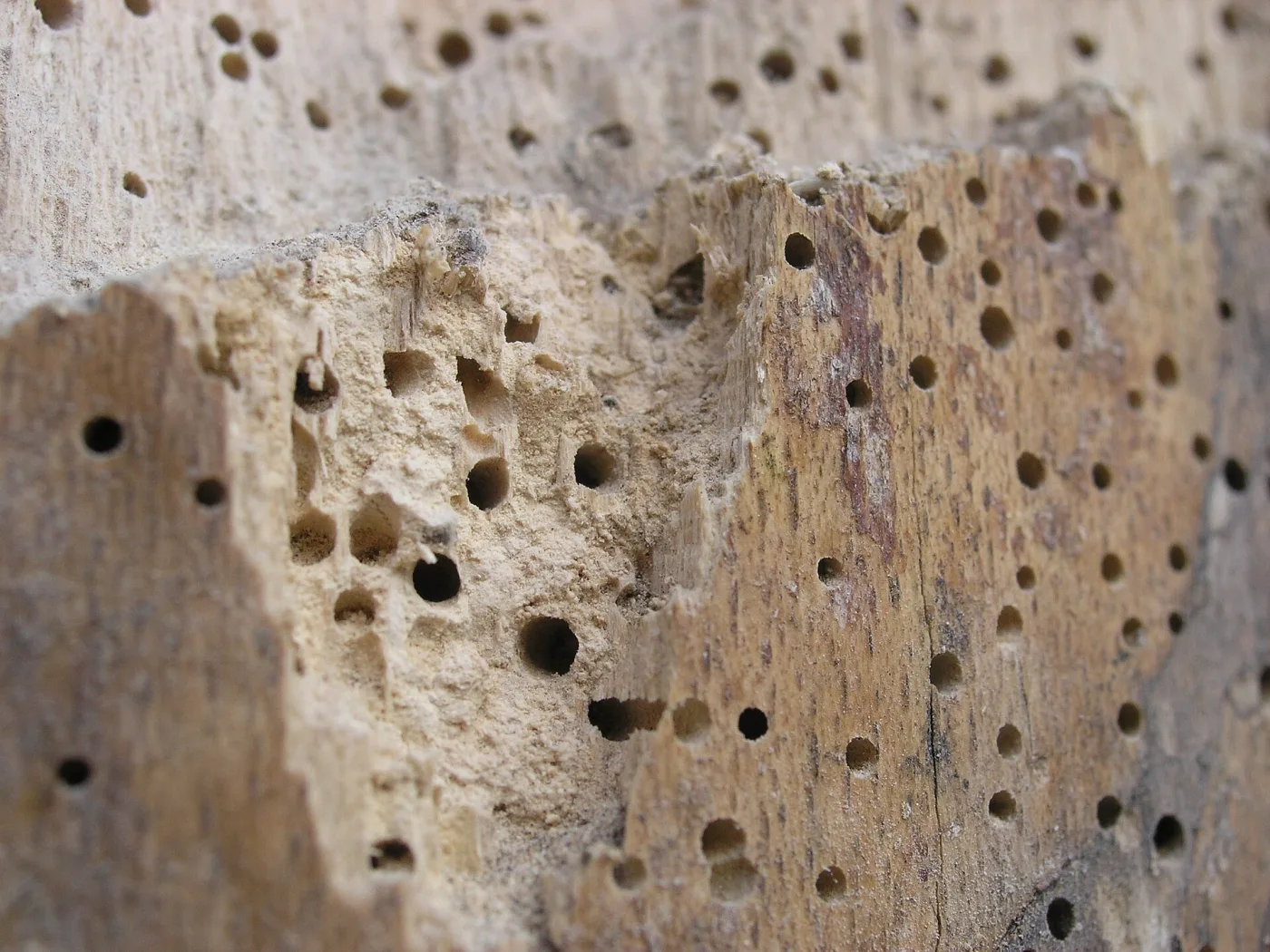
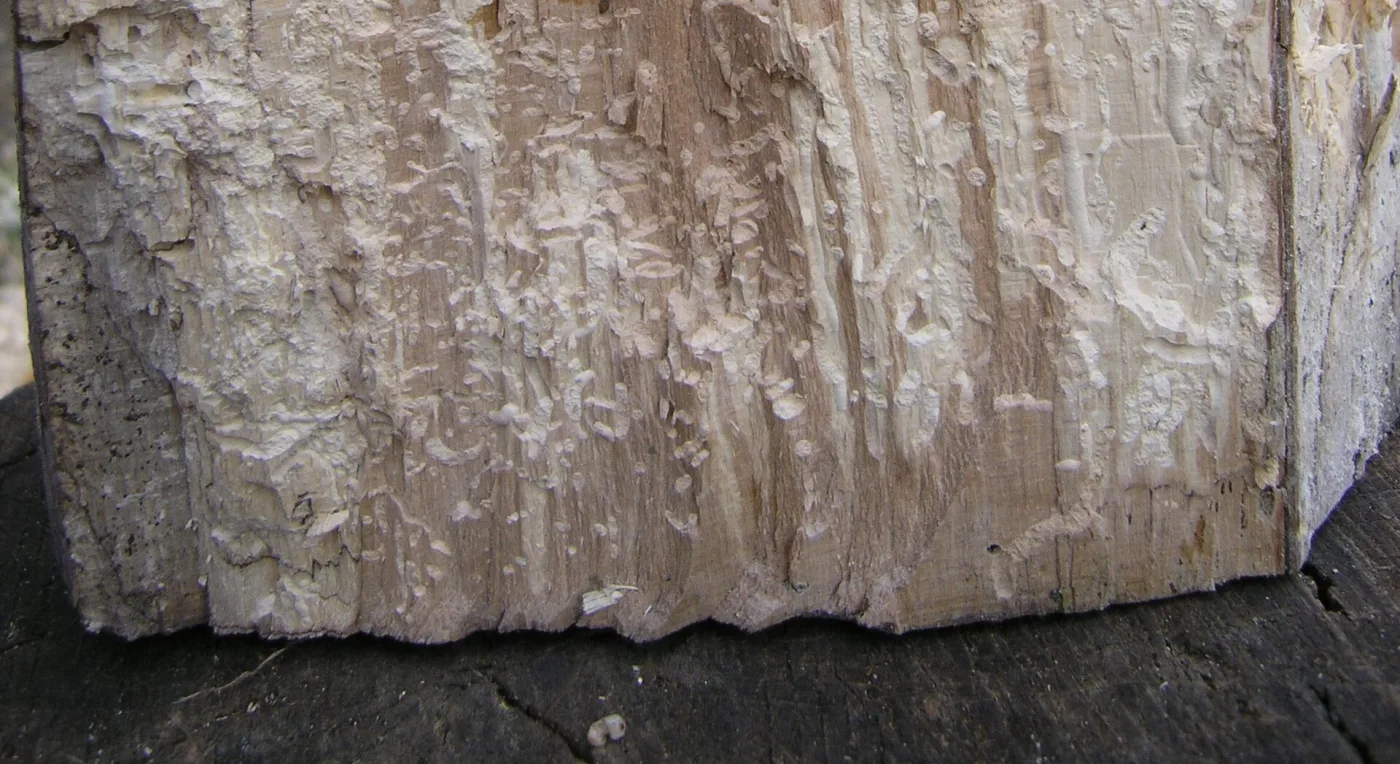
Faked holes are made with an ice pick, a nail or a 1/16-inch drill bit (Colonial Pest Control) and, according to Wikipedia's article on distressing, are usually “all of identical diameter and vertical into the wood.” Colonial Pest adds that they tend to be shallow and grouped in small clusters. Sources disagree on how easy this is. Wikipedia says faux holes “can easily be distinguished”, while a cabinet-industry glossary (Kitchen Cabinet Kings) says a beetle hole and a drill hole can be identical, especially once painted. Take the cautious reading: regular holes are a warning, but irregular holes prove nothing, because beetles attack new wood too.
One further point follows from how the beetles work. Because the tunnels run inside the wood, open grooves running along a show surface mean the wood was cut or planed after the insects had been at it. That might be a board resawn from old, wormy timber or a surface taken back during restoration. Either way, ask which.
Check 4: Measure the Top Both Ways
Solid wood shrinks across the grain as it dries over the years and hardly at all along it. Appraisily notes that old solid boards “shrink across the grain” and that a perfectly flat, dead-straight case with wide boards can be a red flag. So a round top that was cut round will measure less across the grain than along it. LaMontagne's chair showed the same thing in its spindles, which Woodshop News says dried from round to oval.
How much is disputed. An appraisal column in D Magazine gives up to a quarter of an inch on an antique table; English Georgian America, a dealer, says a Regency top can be out by an inch or more. Both are sizes for wide tops, and a reproduction built from old boards will have shrunk too. Treat a top that is perfectly round as a question, not a verdict.
Check 5: The Tools Inside
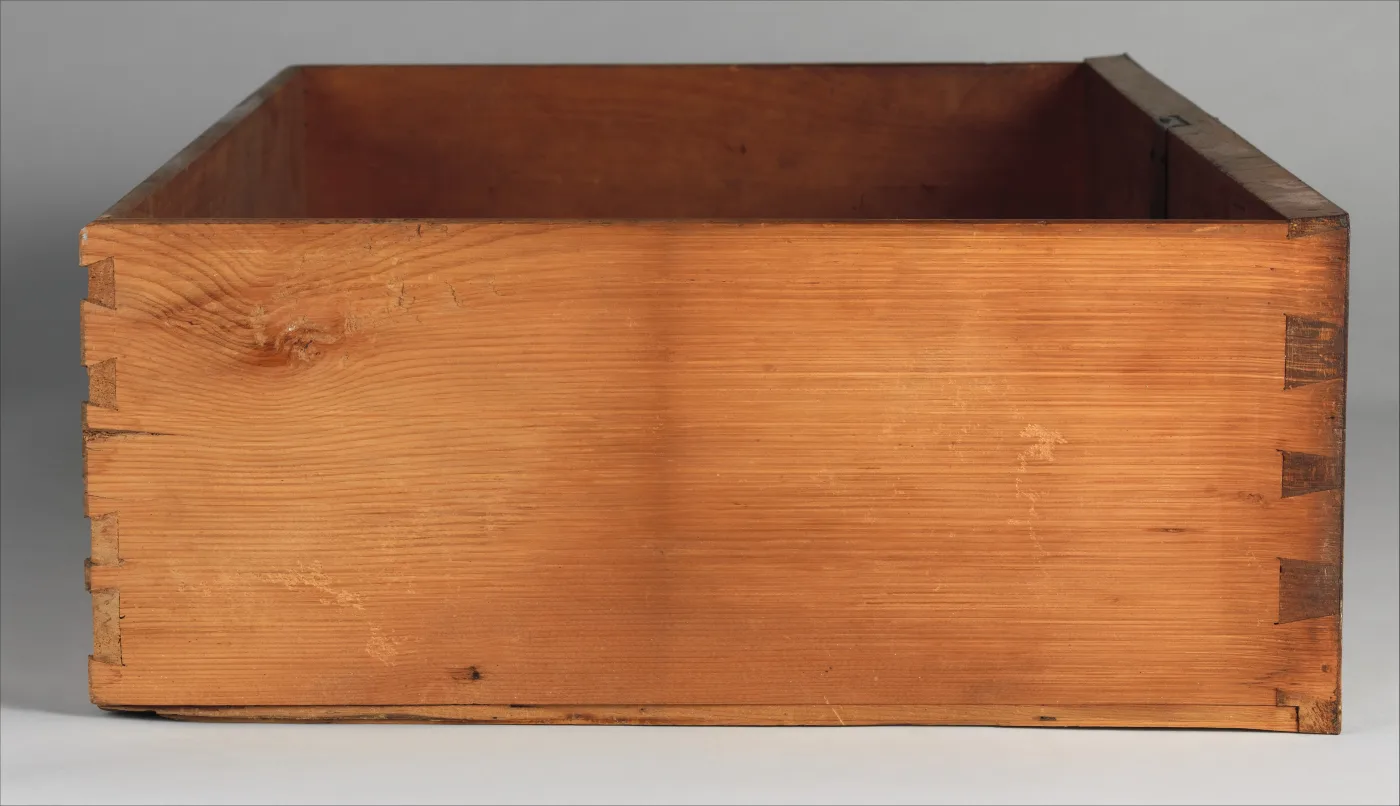
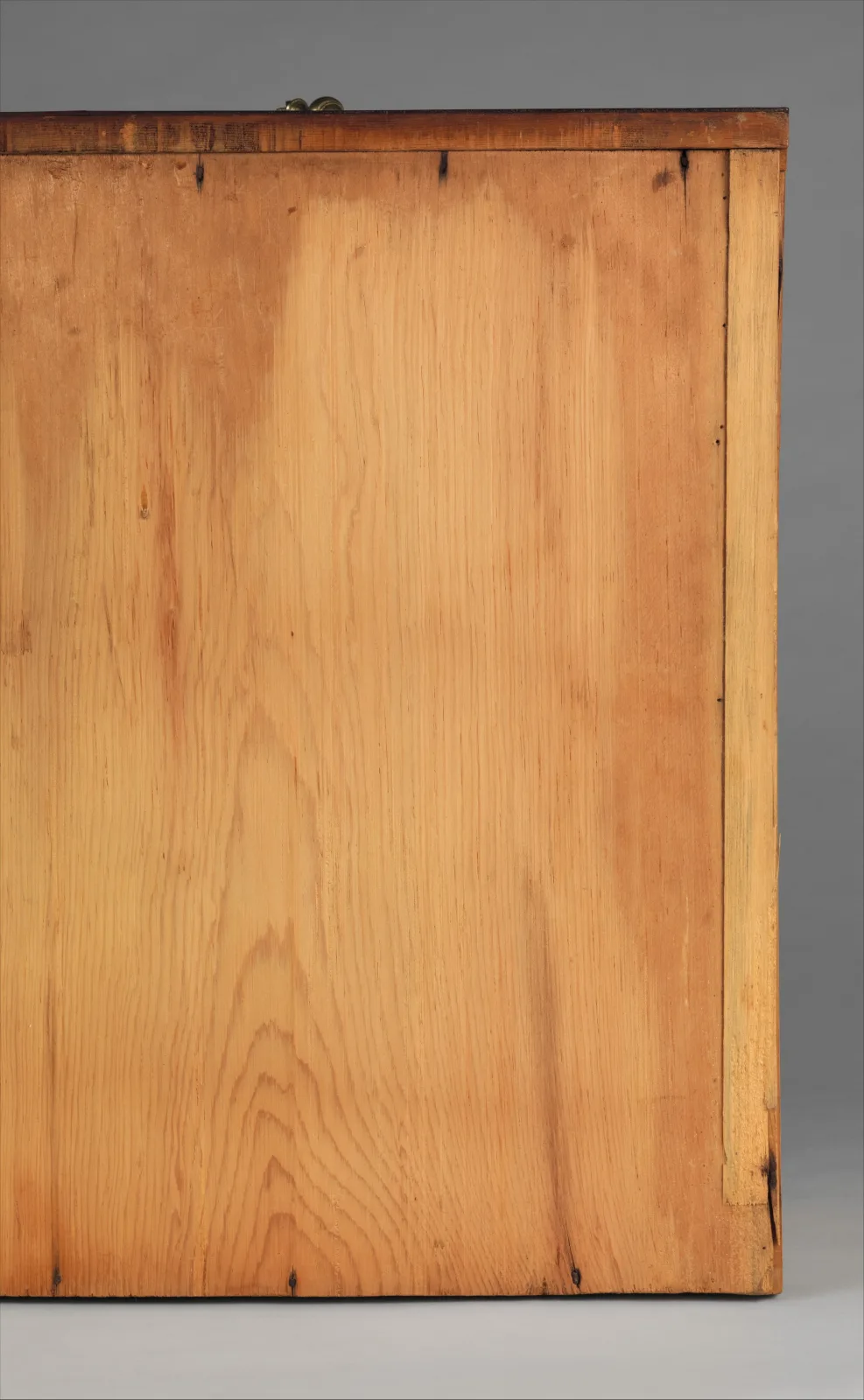
The Brewster chair was caught by its drill holes, and the principle is general. The University of Delaware's Winterthur program trains students to spot fakes by woodworking tools “and their characteristic marks”, and Mortise & Tenon writes that modern tools and practices leave “a signature that points irrefutably” to a recent origin. Look where a faker had no reason to work: inside joints, drawer bottoms, the backs of rails. Hand-cut dovetails like the drawer above, with the scribe lines and saw overcuts the Delaware piece lists, belong to one age. Machine-perfect dovetails, or holes with the cone-shaped bottom of a modern pointed bit, belong to another. The antique furniture guide covers joinery and nails by period.
The Five Checks, Weighed
The table puts the five checks side by side. The “age” and “faked” columns come from the sources above; the weights and the rule below are our reading of them.
| Check | Where to look | What age leaves | What faking leaves | Weight |
|---|---|---|---|---|
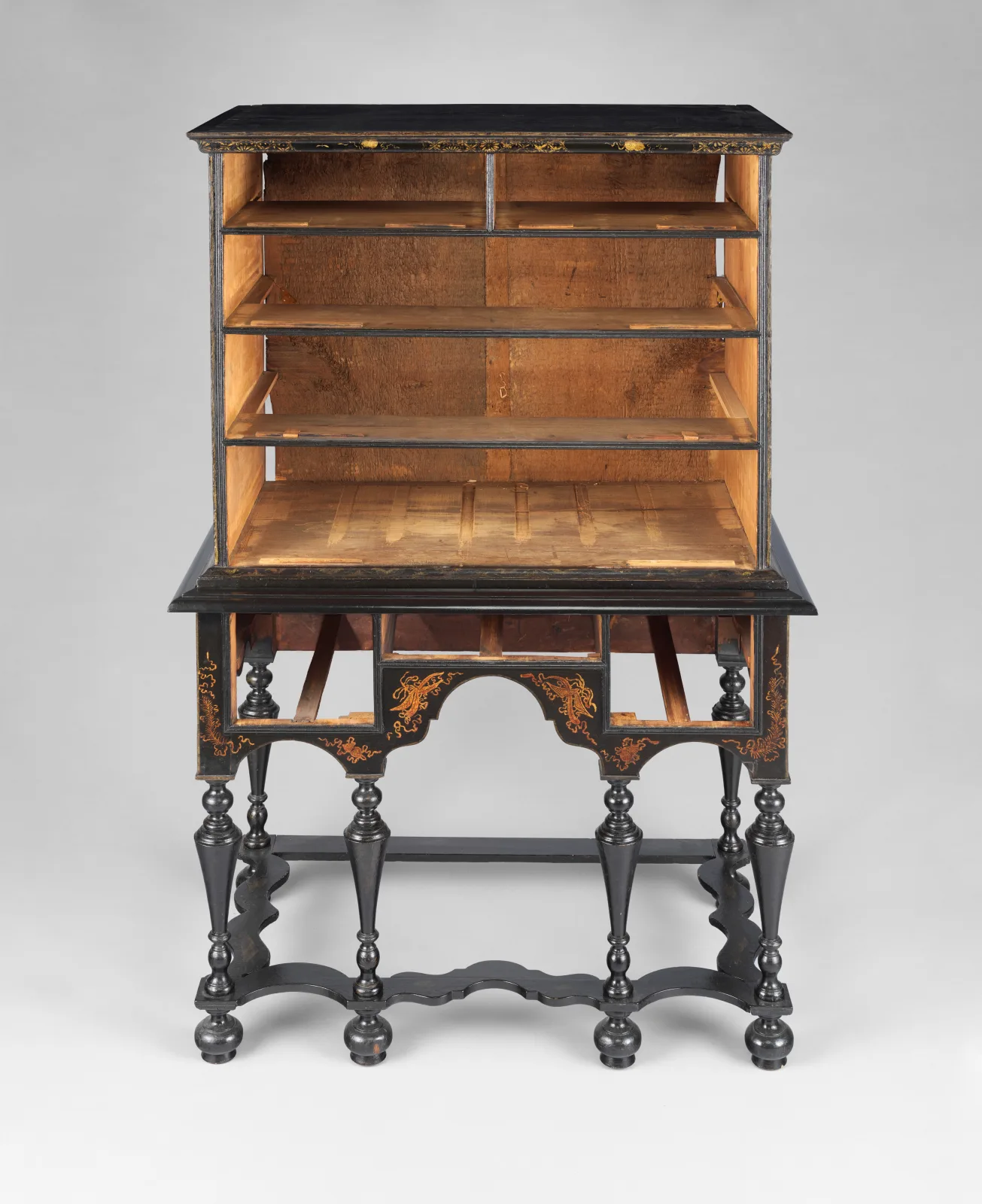
| 1. Exposed vs hidden wood | Back, drawer outsides and bottoms, inside the case | Exposed darker, covered lighter, with a gradual change; secondary wood fits the region | One even colour inside and out, or a hard stain line; wrong secondary wood | Strong |
| 2. Wear | Arms, seat fronts, stretchers, drawer edges, around pulls | Smooth, rounded, only where hands and feet went | Even wear all over, wear in odd places, sharp-edged facets | Strong |
| 3. Wormholes | Any surface, especially soft secondary wood | Round exits of varying size and angle; tunnels hidden inside | Uniform, straight, shallow holes in neat clusters; open channels on a show face | Medium: proves nothing either way on its own |
| 4. Shrinkage | Round or wide solid tops, turned parts | Shorter across the grain than along it | A perfectly round top, a dead-flat wide board | Medium: old wood shrinks wherever it ends up |
| 5. Tool marks | Inside joints, drill holes, drawer bottoms | Marks of hand tools of the claimed period | Marks of modern bits, saws and machines | Strongest when found |
The rule: one “faked” result is a reason to look harder. Two in different checks mean the age was applied, not earned. No single “age” result clears a piece, because old wood can be reused and a surface can be convincing; it was the surface that fooled the Henry Ford. If a check needs a solvent, run the finish test first, so you know what you are touching.
Frequently Asked Questions
How can you tell if furniture has been artificially aged?
Compare the wood that air and light could reach with the wood they could not. On a genuinely old piece the exposed back is darker than the inside of the case, with a gradual change between them. Then check that wear sits where hands and feet actually touched, that wormholes are round exits of varying size rather than a uniform drilled set, and that a wide top has shrunk across the grain.
What does stain do to make furniture look old?
It colours new wood to imitate the darkening that oxidation gives old wood. On a fake chest appraised on Antiques Roadshow, the interior had been stained with a reddish permanganate stain made to look like old oxidized wood. Stain colours every surface it touches at once, so it tends to leave hidden and exposed areas the same tone, or a hard line between them, where age leaves a gradual change.
Are wormholes a sign that furniture is antique?
No. Woodworm can attack new wood as well as old, and holes can be faked with a drill, nail or ice pick. Genuine exit holes of the common furniture beetle are round, about 1 to 2 mm across and vary in size and angle. Faked holes tend to be all the same diameter, straight into the wood and shallow.
Where should wear be on an antique chair or chest?
Where use put it: chair arms and seat fronts, front stretchers where feet rest, drawer edges and the wood around pulls. Real wear is smooth and rounded. Wear that is spread evenly over the piece, sits where nobody would touch it, or leaves sharp edges is a sign of distressing.
Can an expert be fooled by artificially aged furniture?
Yes. The Henry Ford Museum acquired a Brewster-type chair in 1970 that the woodworker Armand LaMontagne had made and aged himself. It was exposed only after a 1977 newspaper story, when X-rays showed holes drilled with a modern bit. The surface fooled the experts; the tool evidence inside did not.
The Short Version
Antiquing with stain colours wood; it does not put the colour in the right places. Compare the back with the inside of the case, then check that the wear follows hands and feet, that the wormholes are irregular exits, that a wide top has shrunk across its grain, and that the tool marks inside belong to the claimed period. Two failures in different checks mean the age was applied. Pine pieces, the most often distressed, have their own section in the antique pine furniture guide.