Before You Clean Antique Furniture, Find Out What the Finish Is
The question people ask is how to clean antique furniture. The question that decides the answer is what the surface is made of. A cleaner that lifts grime off a varnished table can take the colour off a painted chest, dissolve a shellac top, or strip the decoration from a japanned one.
This guide gives that order: first decide whether the surface is a clear finish or a decorated one, then check its condition, then identify a clear finish with a short ladder of solvent tests, stopping at the first one that reacts.
Table of Contents
Clear Finish or Decorated Surface?
Conservation cleaning methods are written for one kind of surface: a clear coating through which you see the wood. The National Park Service's leaflet on cleaning wood furniture allows cleaning only on a “sound, stable, clear finish” or bare wood, and treats paint separately; the Canadian Conservation Institute's note on furniture finishes sorts surfaces the same way.
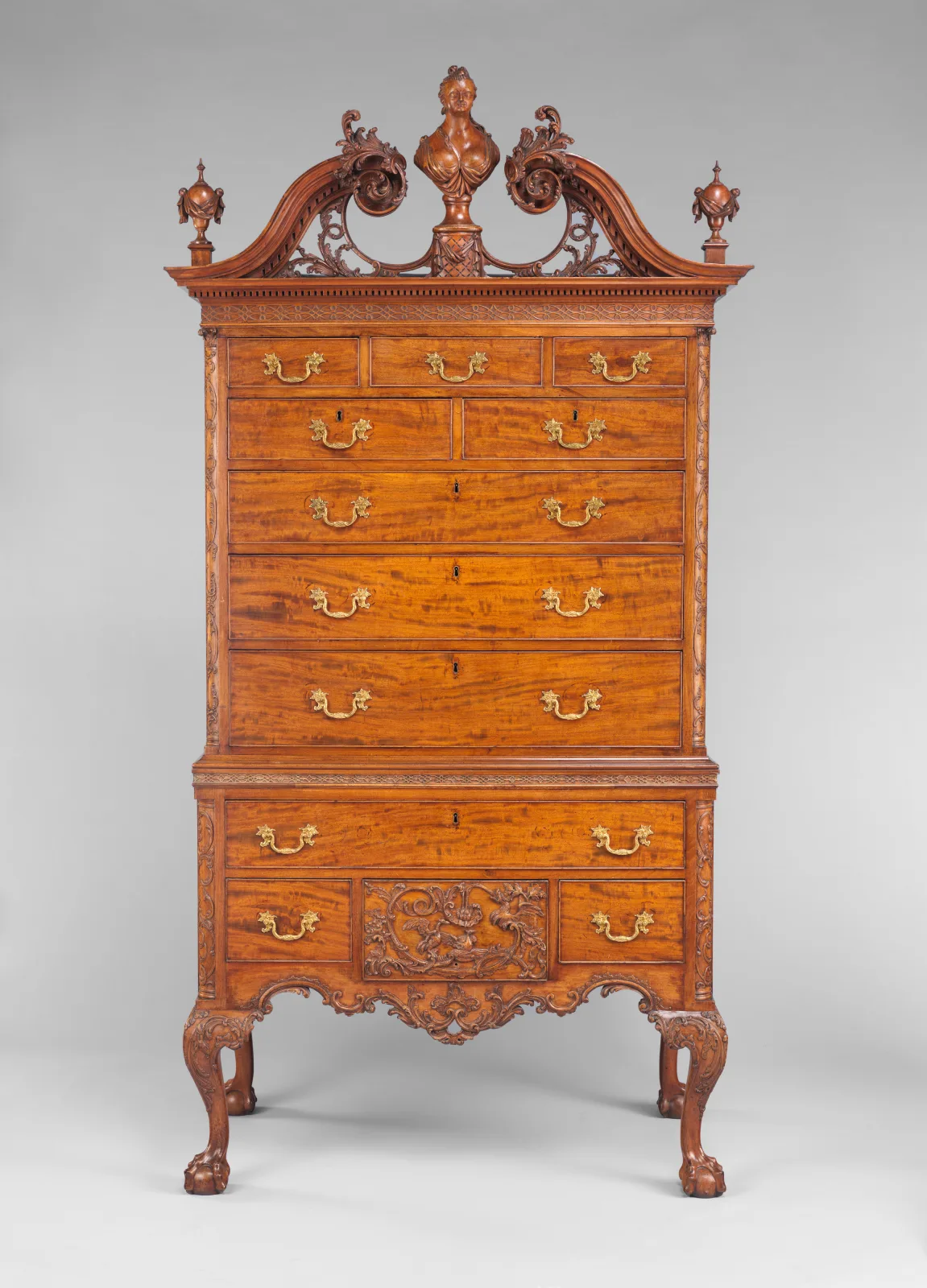
So the first test needs no solvent. Look at the surface in raking light. Wood grain under a transparent layer means a clear finish; colour that hides the wood, gilt decoration or raised figures means a decorated surface, and the rest of this page is not for it.
Paint, Japanning and Lacquer: Dust Only
Both conservation sources draw the same line here. The Park Service advises that painted surfaces not be cleaned at all by anyone who is not trained to tell paint types apart, because some are fragile and some are water-soluble, and that anything beyond dusting go to a furniture conservator. The Canadian note says flaking or powdering paint is not stable enough to clean, and that degraded resin coatings and Asian lacquers belong with an experienced conservator.
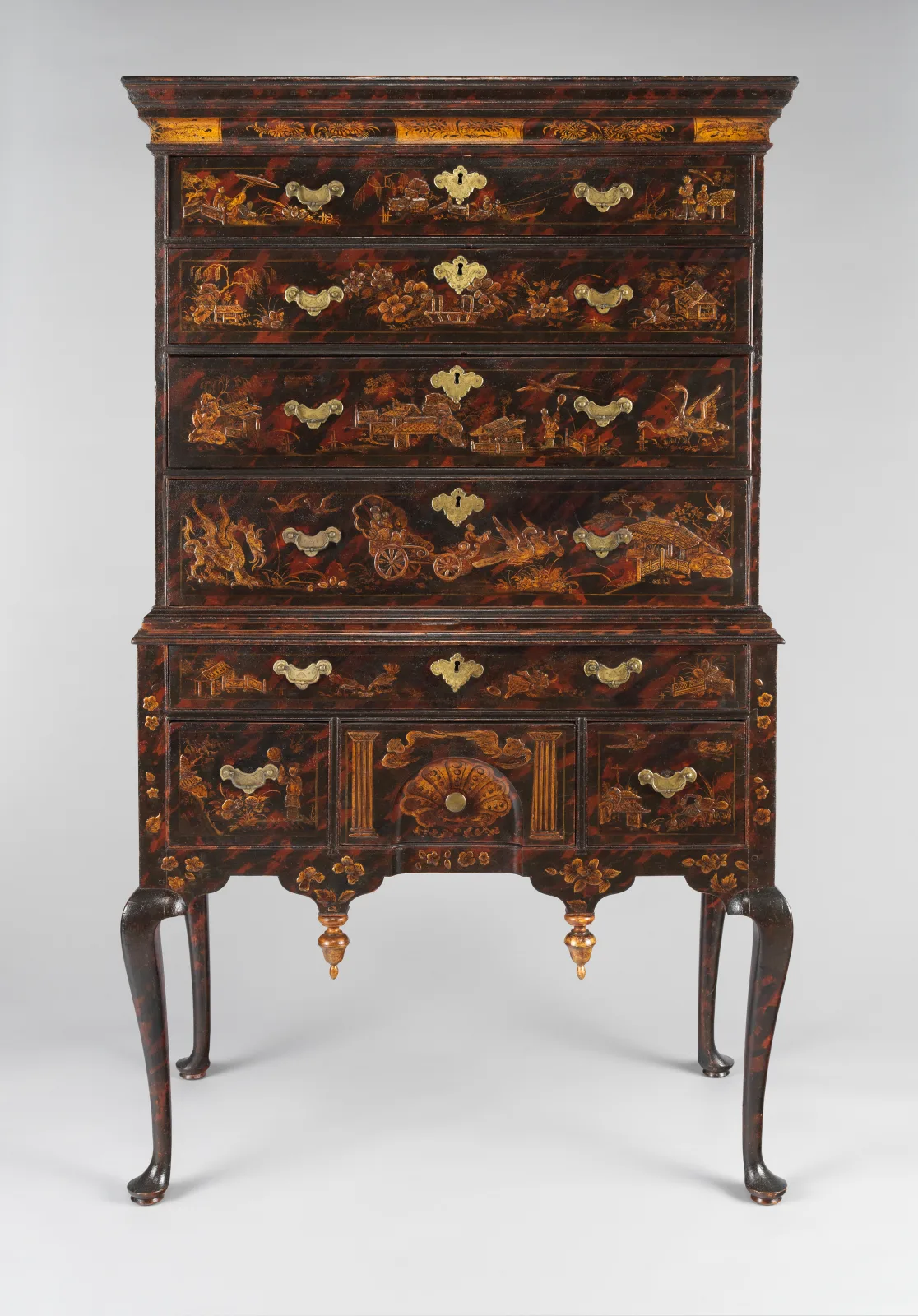
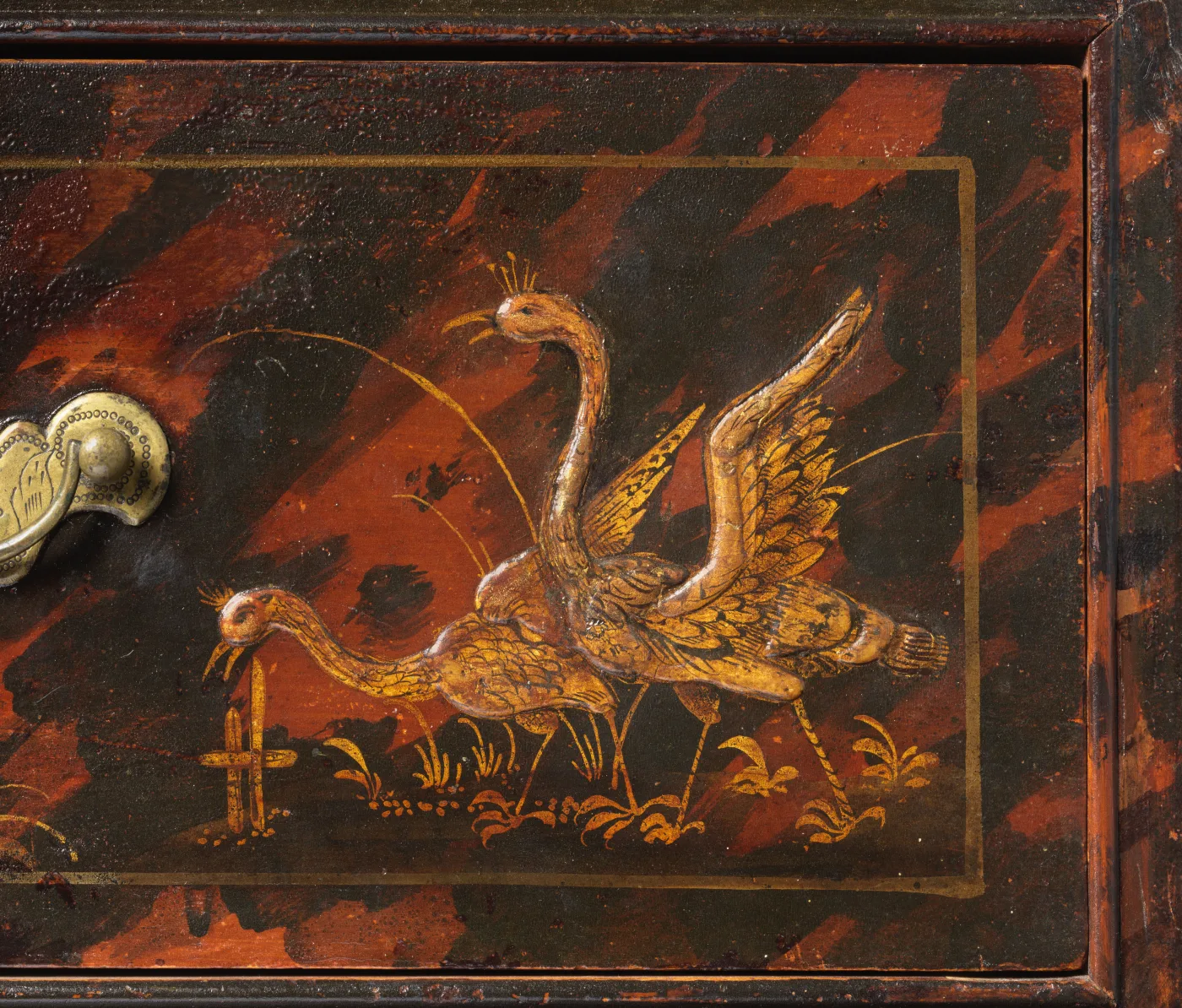
Japanning is the case most often mistaken for an ordinary dark finish. It is not lacquer and not a stain. Boston japanners imitated Asian lacquer with paint, built-up gesso and gold: the Met describes japanning as paint and gilded gesso imitating the gloss of Asian lacquerwork, and other collection records describe the raised figures the same way. Historic New England records a Boston japanner laying a ground of vermilion streaked with lampblack to look like tortoiseshell, and the Museum of Fine Arts, Boston dates that simulated tortoiseshell to the 1730s and 1740s, which fits this chest. Every layer of that is a decorated surface, and a solvent test on a japanned drawer front tests the decoration away.
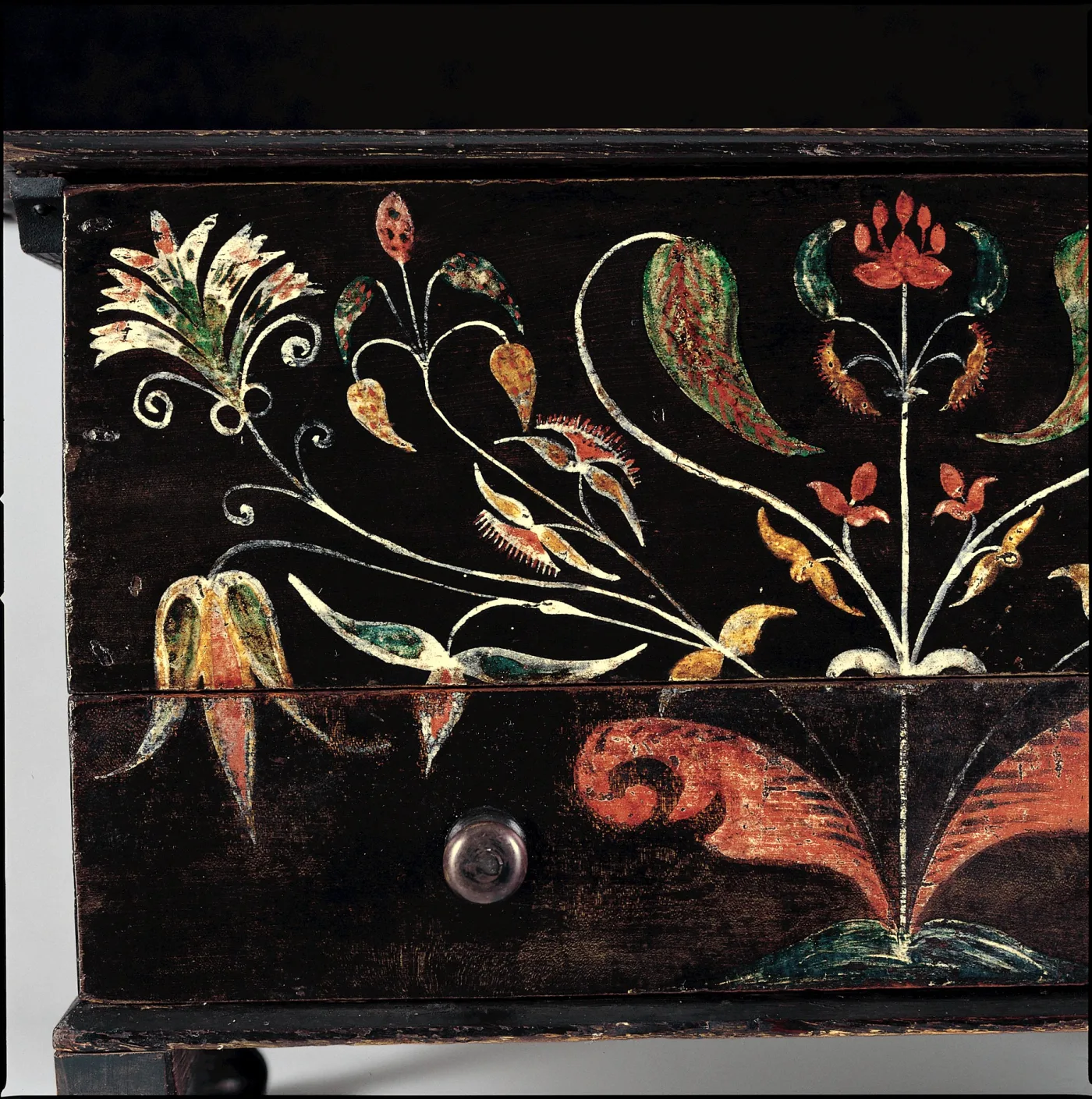
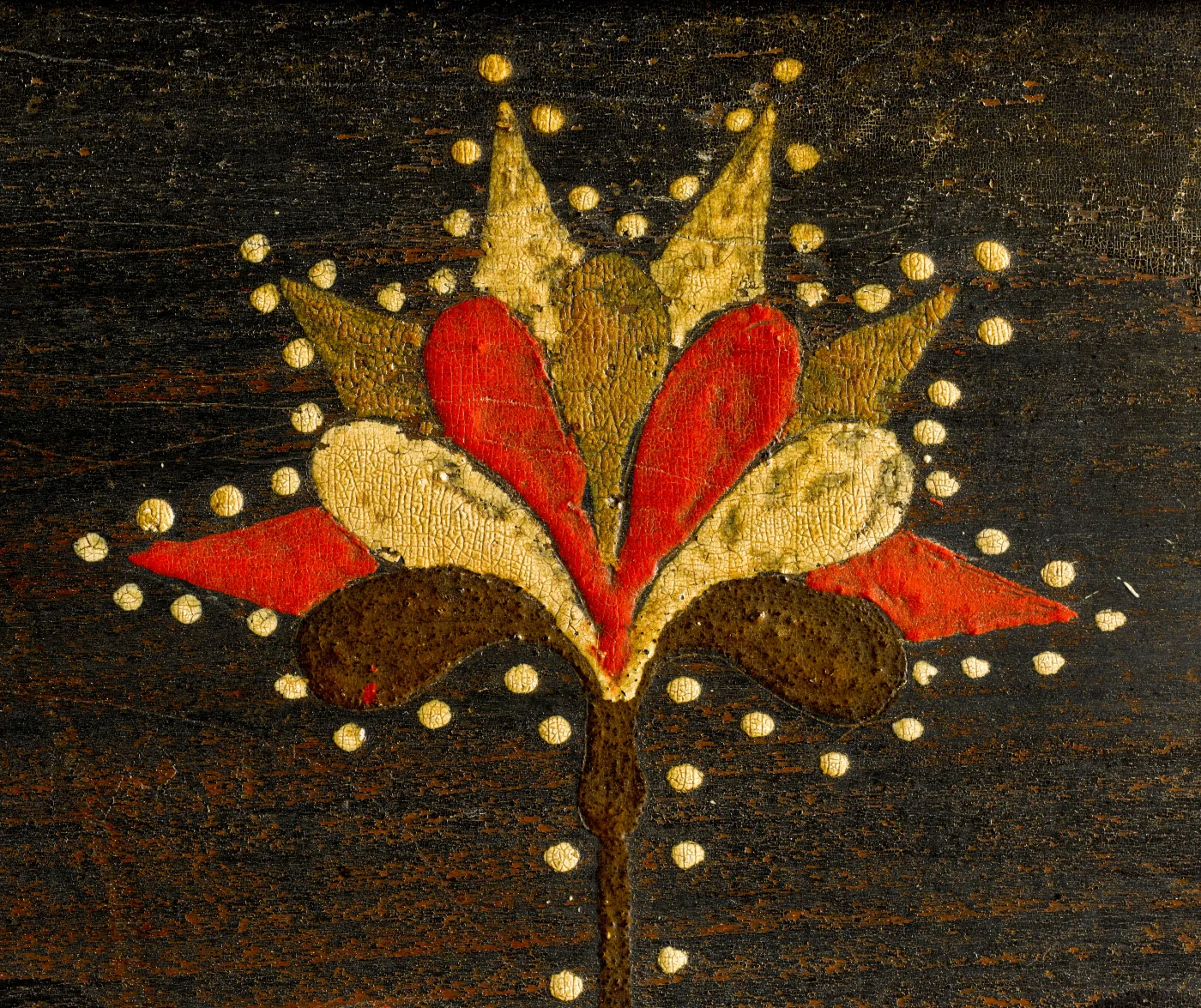
Painted country furniture is the commonest decorated surface you will meet, and a single colour over the whole piece is paint too.
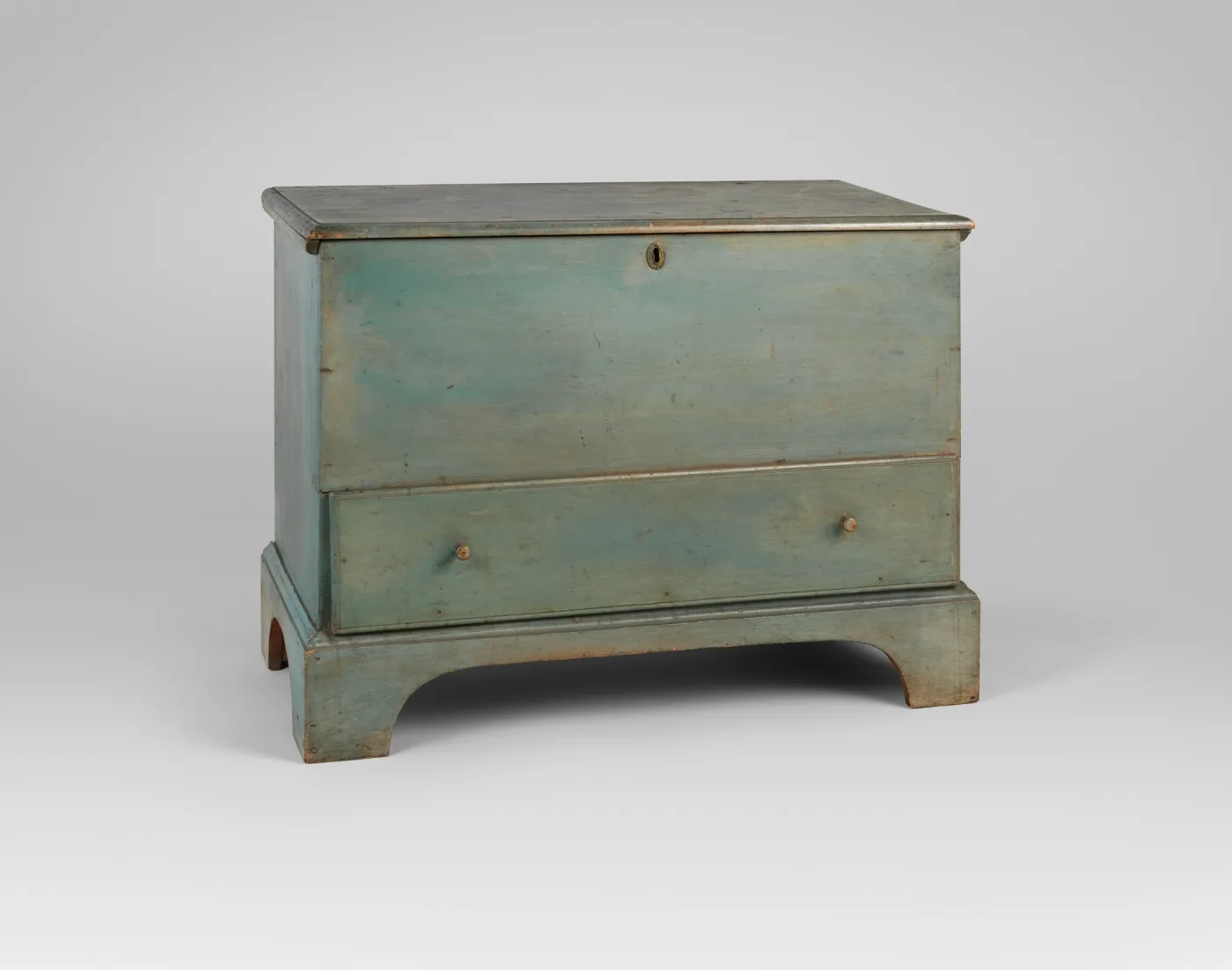
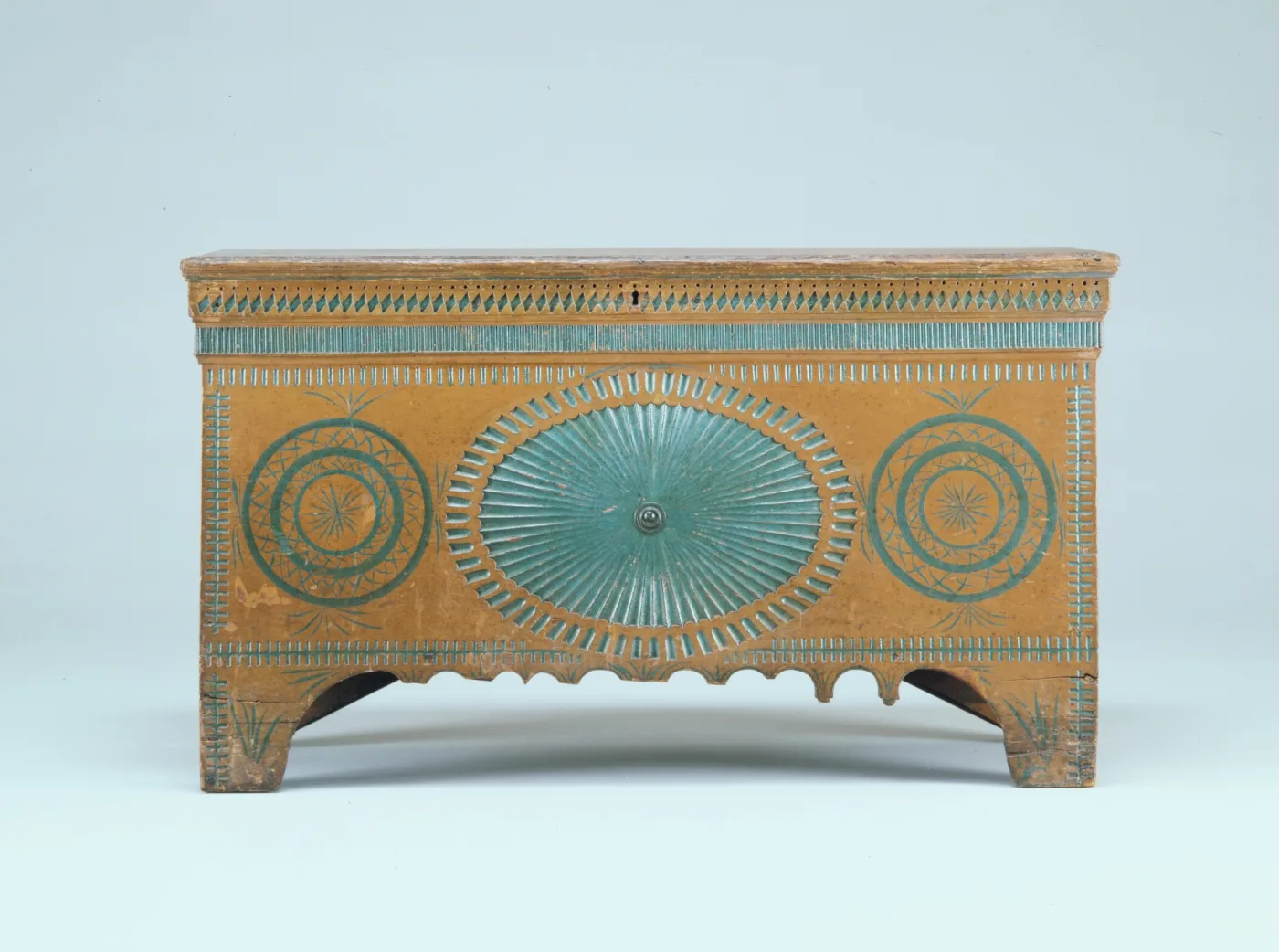
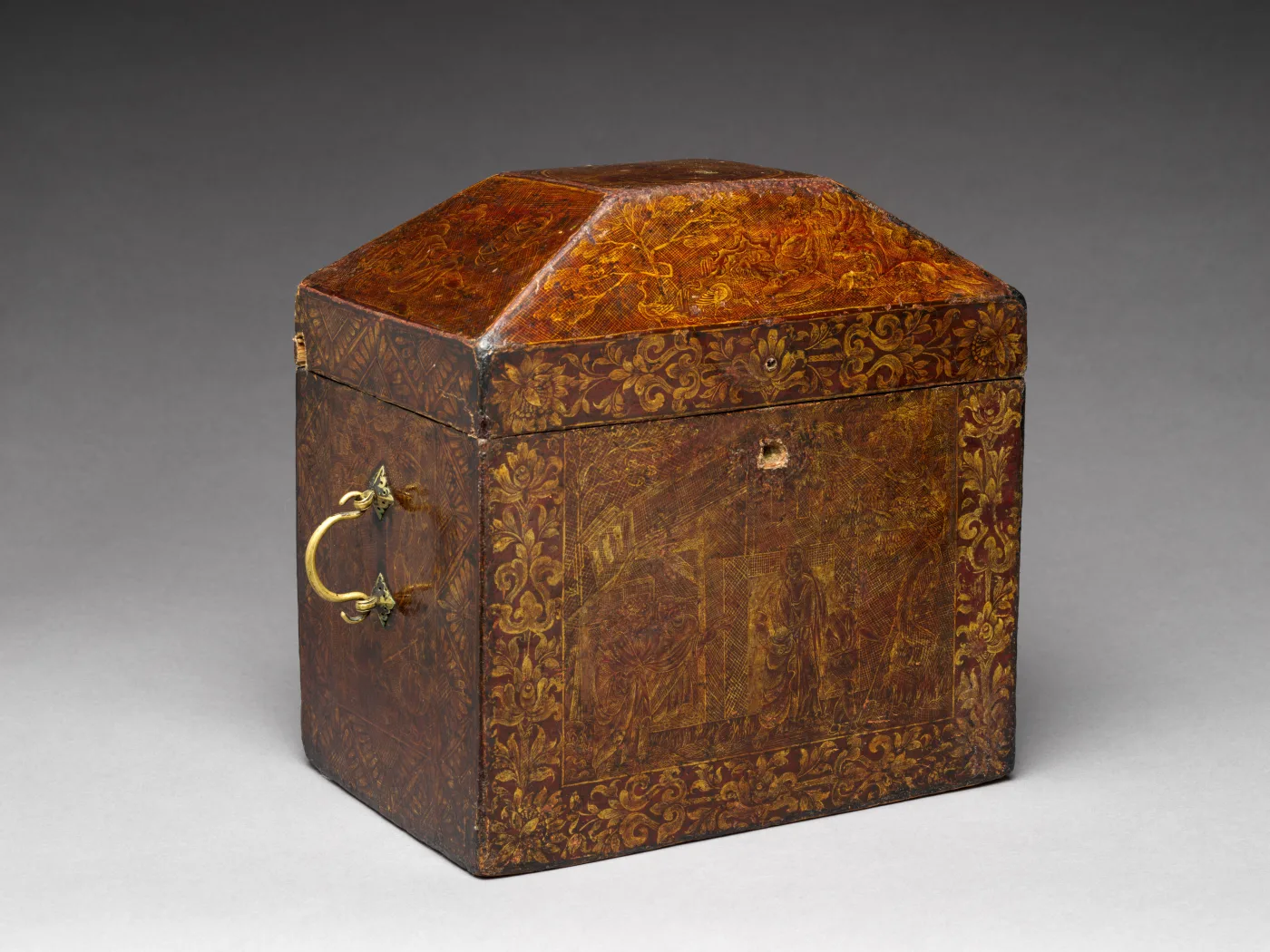
For every surface in this section the safe treatment is the same: a soft brush or a clean cotton cloth, and nothing wet. If a decorated piece is dirty enough to need more, that is the conservator's job described in the restoration and conservation guide. On painted furniture the paint is often why the piece is collected at all, as the folk art identification guide and the Shaker furniture guide show.
Is the Clear Finish Sound?
A clear finish is a candidate for cleaning only if it is sound. The Park Service lists the conditions that rule it out: a finish that is embrittled, cracked, raised or flaking. The Canadian note adds that loose or flaking varnish needs a conservator's assessment first, and that degraded and repaired areas may dissolve more easily than the intact finish around them.
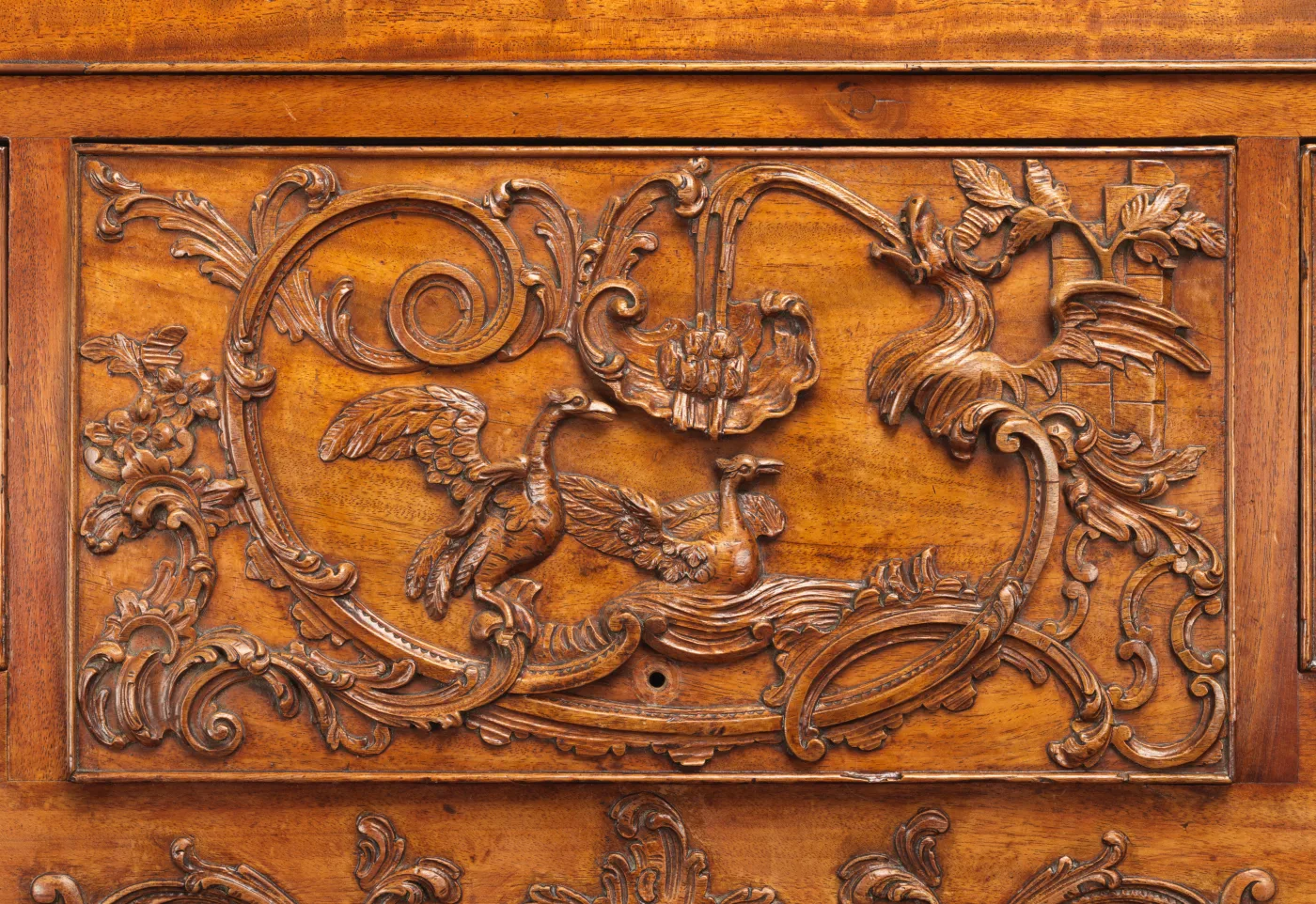
Two rules come out of the condition check. If the finish is worn through or cracked, water must not reach the wood: the Park Service says to use mineral spirits rather than water on such a surface. And if veneer or inlay edges are lifting, the cloth itself is the danger; the Park Service warns against snagging raised edges.

The Test Ladder
The finish on a sound clear surface can be identified by what dissolves it. Bob Flexner (Popular Woodworking), Mark Schofield (Fine Woodworking) and Michael Dresdner (Woodworker's Journal) all describe it. Each test is a drop on a cotton swab, in a hidden place such as the back of a leg or the inside of an apron, with gloves and an open window. Go down the ladder in order and stop at the first reaction. The table joins each result to the cleaning that finish tolerates; the identification comes from the finishing sources, the cleaning column from the two conservation leaflets, and putting them side by side is ours.
| Step | Test | If it reacts | What it points to | What cleaning it tolerates |
|---|---|---|---|---|
| 1 | Mineral spirits (odourless paint thinner) | Yellow-brown residue on the swab, while the finish underneath stays hard | Wax, or wax and grime, over another finish | Wipe it off and carry on down the ladder. If there is no finish under the wax, only bare wood, dust only: the Park Service says its cleaning methods damage a wax-only finish |
| 1a | The same swab, watched for softening of the finish itself | The finish itself turns soft or tacky, or keeps colouring the swab | A degraded or unusual coating | Stop. Both conservation sources stop here: the Park Service if mineral spirits softens the finish, the Canadian note unless the swab comes away clean |
| 2 | Denatured alcohol | Finish softens and comes off on the swab within a minute or two | Shellac, including French polish | Mineral spirits wipe; a barely damp cloth with mild soap only if needed, dried at once. Keep alcohol, and anything containing it, away |
| 3 | Lacquer thinner | Surface turns sticky | Nitrocellulose lacquer (or a water-based finish on recent work) | As for shellac. Lacquer thinner, acetone and nail-polish remover must never touch it |
| 4 | Nothing above reacts | Surface stays hard | Oil varnish, or a modern catalysed or oil-based finish | The most tolerant: mineral spirits, then mild soap and water sparingly, still testing first |
Why the order matters. Lacquer thinner attacks shellac as well as lacquer, so testing it first would read a shellac top as lacquer. Wax comes first because a waxed surface blocks the other solvents and muddies their result.
What the result says about date, and what it does not. Flexner's history of finishes puts shellac as the dominant furniture finish from the 1820s for about a century, and nitrocellulose lacquer replacing it through the 1920s; Fine Woodworking dates the invention of that lacquer to 1921. Both Flexner and Fine Woodworking place water-based finishes in the 1980s and 1990s, so they are unlikely on anything older. The Canadian note adds that French polish, a shellac finish built up in many thin layers, is common on nineteenth-century mahogany. But Flexner notes that this assumes the finish is original, and most antique furniture has been refinished. A lacquer reaction on a Chippendale chest dates the lacquer, not the chest. For dating the piece itself, look at construction instead, as the Chippendale furniture guide and the guide to married antique furniture do.
Where the sources differ. Three of the four finishing sources read a sticky reaction to lacquer thinner as lacquer; Fine Homebuilding reads it as varnish. We follow the majority and treat a slow, partial softening as inconclusive. For cleaning it hardly matters: all three take the same gentle method.
Cleaning a Sound Clear Finish
The Park Service and the Canadian Conservation Institute agree closely on method, and both start by saying that cleaning should be done only when it is needed, not on a schedule. The Park Service adds that old build-up of wax and soil can be part of a piece's historic character.
- Dust first with a soft cotton cloth, or a vacuum with a soft brush attachment.
- Test a hidden spot with mineral spirits on a swab. Stop if the finish softens.
- Wipe with a cloth dampened in mineral spirits, which lifts old wax and greasy dirt. Let it dry for several hours.
- Only if dirt remains, use a cloth wrung out in warm water with a little mild soap. Both sources name Orvus; the Park Service also allows Ivory flakes but not dishwashing liquid, and says never to use detergents, which leave a film. Follow with a cloth barely damp with clean water, then dry at once. The Canadian note adds a check before any water: rub a nearly dry swab on a hidden spot and wait several minutes; if the surface blanches, turning white or cloudy, use no water at all.
- Re-wax once it is dry, because cleaning removes the old wax. Use a paste wax thinly and buff it; a good waxing lasts years.
On veneer or inlay, work in small areas and dry each before moving on. The storage, care and preservation guide covers light, humidity and handling afterwards.
What Not to Put on It
The Canadian note advises against commercial polishes and “restoration” mixtures: their oils, waxes or silicones build up into a sticky film that holds dust and complicates later treatment, and wood does not need to be “fed”. The Park Service's waxing leaflet warns about silicones in liquid and aerosol polishes too, and allows only paste wax over a stable clear finish, never on bare wood, where it sinks into the pores.
Frequently Asked Questions
How do I know what finish is on my antique furniture?
If you see wood grain through a clear layer, test a hidden spot in order with mineral spirits, denatured alcohol and lacquer thinner. Wax comes off in mineral spirits, shellac softens in alcohol, lacquer turns sticky in lacquer thinner, and a finish none of them touches is most likely varnish. If colour or gilt hides the wood, it is a decorated surface: do not test it.
Can you clean antique furniture with soap and water?
Only a sound clear finish, and only after dusting and a mineral spirits wipe have failed. Use a cloth wrung out in warm water with a little mild soap such as Orvus, never detergent, then a barely damp cloth and dry it at once. Skip water entirely if the finish is cracked or worn through, or if a nearly dry swab turns the surface white or cloudy.
Is it safe to use furniture polish on antiques?
Conservators advise against it. Many liquid and aerosol polishes contain silicones or oils that build up into a sticky film, hold dust and complicate later treatment, and wood does not need to be fed. A thin coat of paste wax over a sound clear finish, buffed and renewed rarely, is the recommended alternative.
How do you clean painted antique furniture?
Dust it with a soft brush or a clean cotton cloth and do nothing wet. Some old paints are fragile or water-soluble, and both the US National Park Service and the Canadian Conservation Institute leave any cleaning beyond dusting to a furniture conservator. The same applies to japanned and Asian lacquer surfaces.
Does a shellac finish mean the furniture is old?
Not on its own. Shellac was the main furniture finish from about the 1820s until lacquer replaced it in the 1920s, but most antique furniture has been refinished and shellac is still used today. The test dates the finish, not the piece.
The Short Version
Decide first whether you are looking at a clear finish or a decorated one. Paint, japanning and Asian lacquer get dusted and nothing else. A clear finish that is cracked, flaking or lifting goes to a conservator. A sound clear finish can be identified by the ladder (mineral spirits, then alcohol, then lacquer thinner, stopping at the first reaction) and cleaned with mineral spirits, then mild soap and very little water, then a thin coat of paste wax.
The ladder tells you what the finish is, not how old the furniture is. The same holds for upholstery, which the guide to original antique upholstery dates layer by layer.