
Married Antique Furniture: Do the Top and Base Belong Together?
If you collect antique furniture, one of the costliest mistakes you can make is not buying a fake. It is buying a married piece: a high chest, chest-on-chest or desk and bookcase whose top and base were made for different pieces and put together later. Both halves can be genuinely old, and the whole can look right across a room, yet it is worth a fraction of a piece that was built as one.
This is the check to run before you pay. It starts at the back, because the surfaces nobody polishes are the ones that tell the truth.
Table of Contents
What a Married Piece Is, and What It Costs
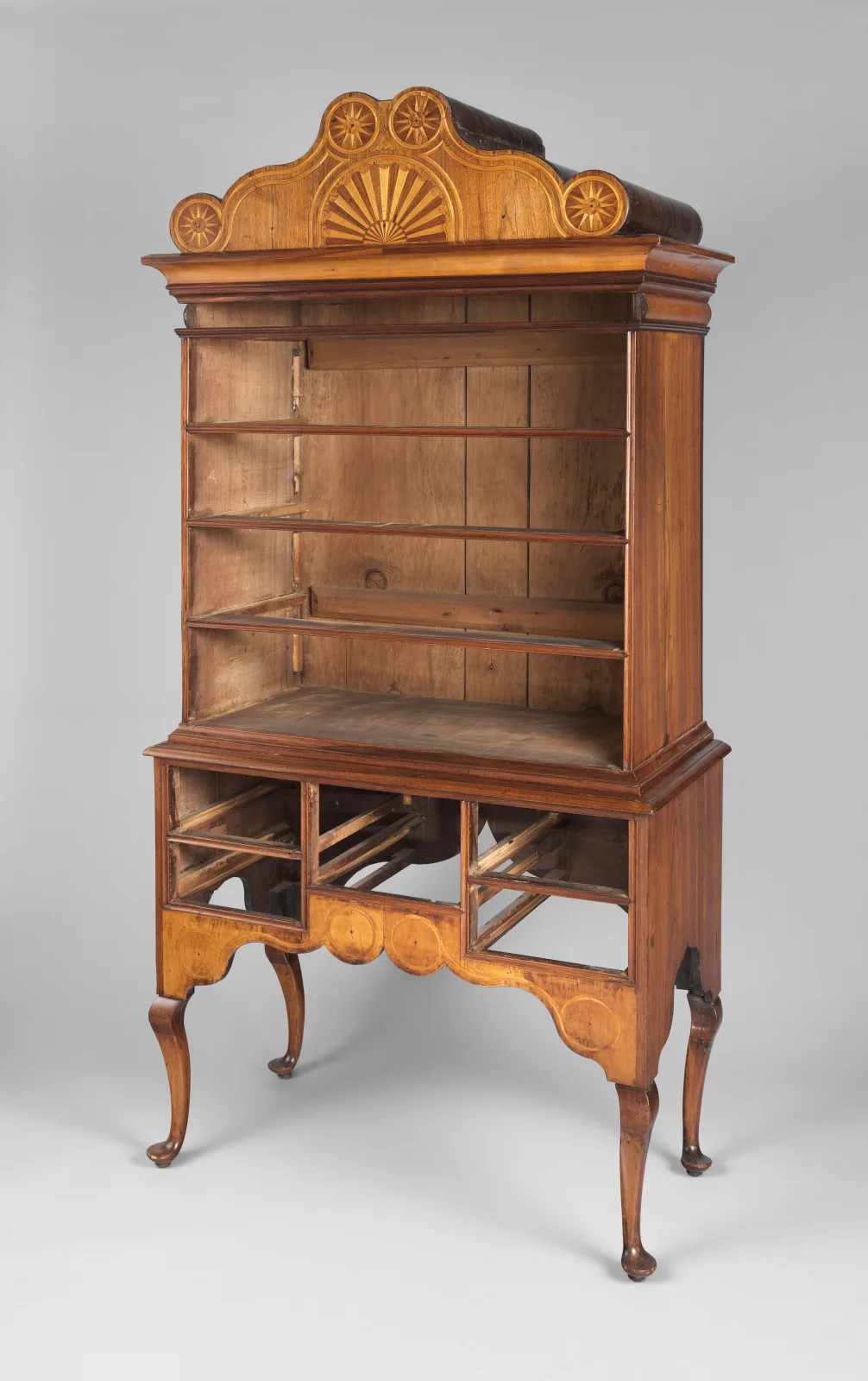
Large case furniture was built as two separate boxes, an upper case that lifts off a lower case, and that construction is what makes marriages possible. Tops and bases were sometimes separated, and a surviving top from one piece can be set on a surviving base from another. The usual candidates are the high chest, the chest-on-chest, the desk and bookcase or secretary, and the buffet and hutch.
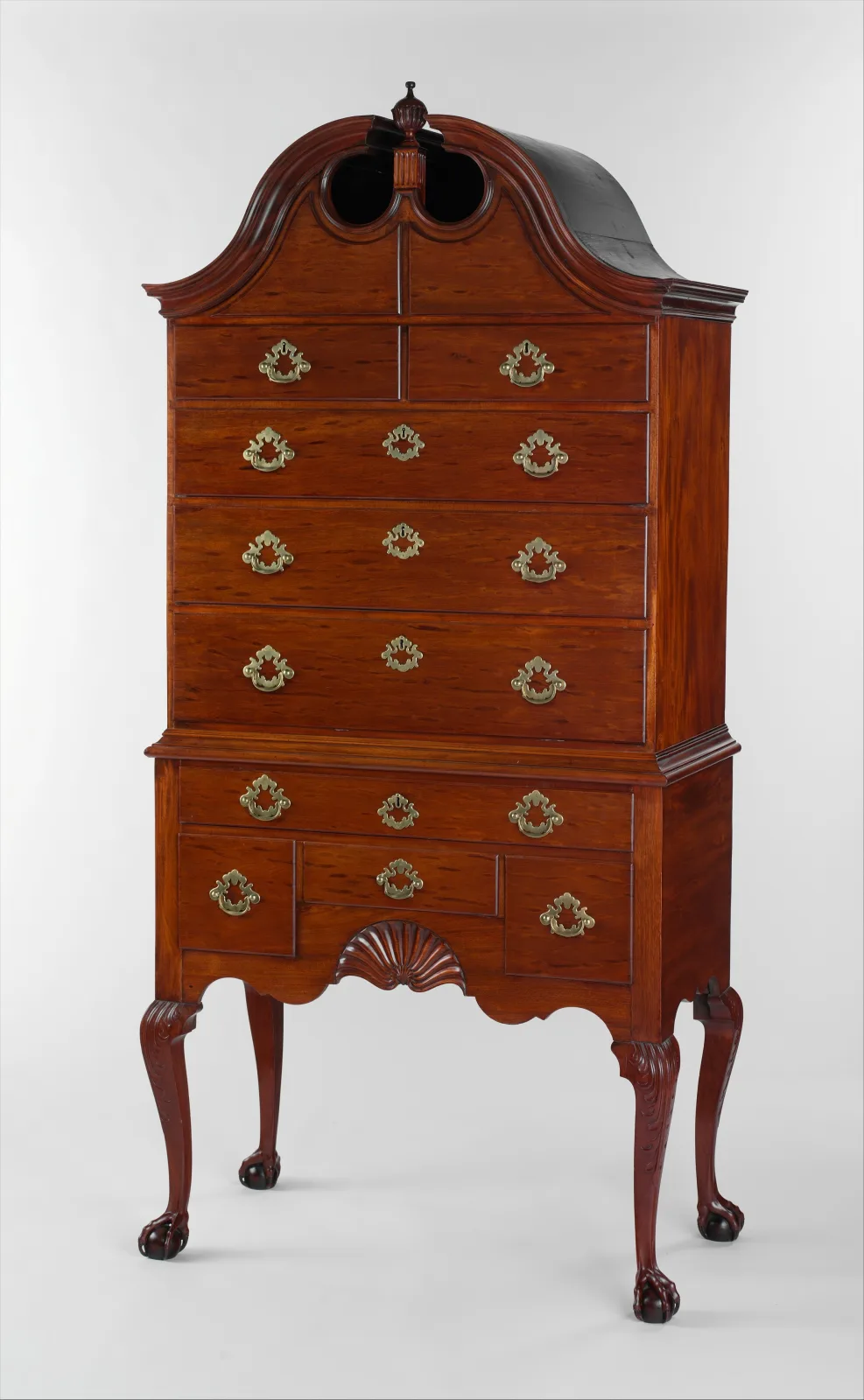
The cost of a marriage is large and well documented. On Antiques Roadshow, Leslie Keno valued a married high chest attributed to Major John Dunlap of southern New Hampshire at about $5,000, and said it would have been worth $25,000 to $30,000 had its top and base been original to each other. Another Roadshow appraiser, Andrew Holter, put an auction estimate of $500 to $1,000 on a married Queen Anne maple high chest in 2018, because the market now sees such a piece as a decorative object rather than a period one. Dealers put it simply: a married case piece is never worth the price of an unaltered original. The broader antique furniture identification guide covers dating a piece by period; this one assumes the piece is old and asks only whether it is whole.
The Evidence, Weighed
No single test settles a marriage; several independent checks agreeing does. The table sets out each check and how much weight it deserves. The observations come from the sources cited in each section; the weighting is ours, based on how easily each clue can be faked, refinished or explained away by an old repair.
| Check | Made together | Married | Weight |
|---|---|---|---|
| Backboards | Same wood, same sawing and planing, similar colour on the unfinished side | One half dark and oxidised, the other light; different species or tooling | Strong. Rarely refinished, so it shows each half's history |
| Secondary wood and thickness | Same interior woods; drawer sides and bottoms planed to the same thickness | Different interior woods, or visibly thicker stock in one half | Strong |
| Drawer dovetails | Same size, count and spacing in both cases | Different layout, such as one large dovetail below and small ones above | Strong. A maker's habit is hard to copy |
| Moulding at the join | Back of the moulding as dark as the wood around it | Fresh wood behind the moulding, made new to fit a top that did not belong | Strong |
| Nails in the backs | The same kind of nail in both halves | Cut nails in one half, round wire nails in the other | Strong, but can be a repair. Check whether only a few boards were refastened |
| Proportion and fit | Top sits squarely and looks like it belongs | Top looks too narrow, too deep or top-heavy for the base | Supporting. Styles vary, so the eye can be wrong |
| Hardware holes | The same history of holes in both halves | Plugged or extra holes in one half only | Supporting. Brasses were often replaced on genuine pieces |
| Chalk and pencil marks | The same marking system in both cases | Different marking systems | Supporting. Missing marks prove nothing |
| Outside finish colour | Matches | May also match, after refinishing | Weak. Never clears a piece on its own |
How to read it: a single strong mismatch is a reason to look harder, since one replaced board or one old repair can explain it. Two strong mismatches in different places, say the backboards and the dovetails, are enough to treat the piece as married. A matching outside finish, however good, never outweighs a strong mismatch inside.
Start at the Back
Pull the piece away from the wall and look at both halves of the back together. Backboards are the least touched surface of a case piece. They were left as bare wood because they were never meant to be seen, and bare wood darkens with the environment the piece has lived in. In a piece made as one, the upper and lower backs should match in wood and in colour.
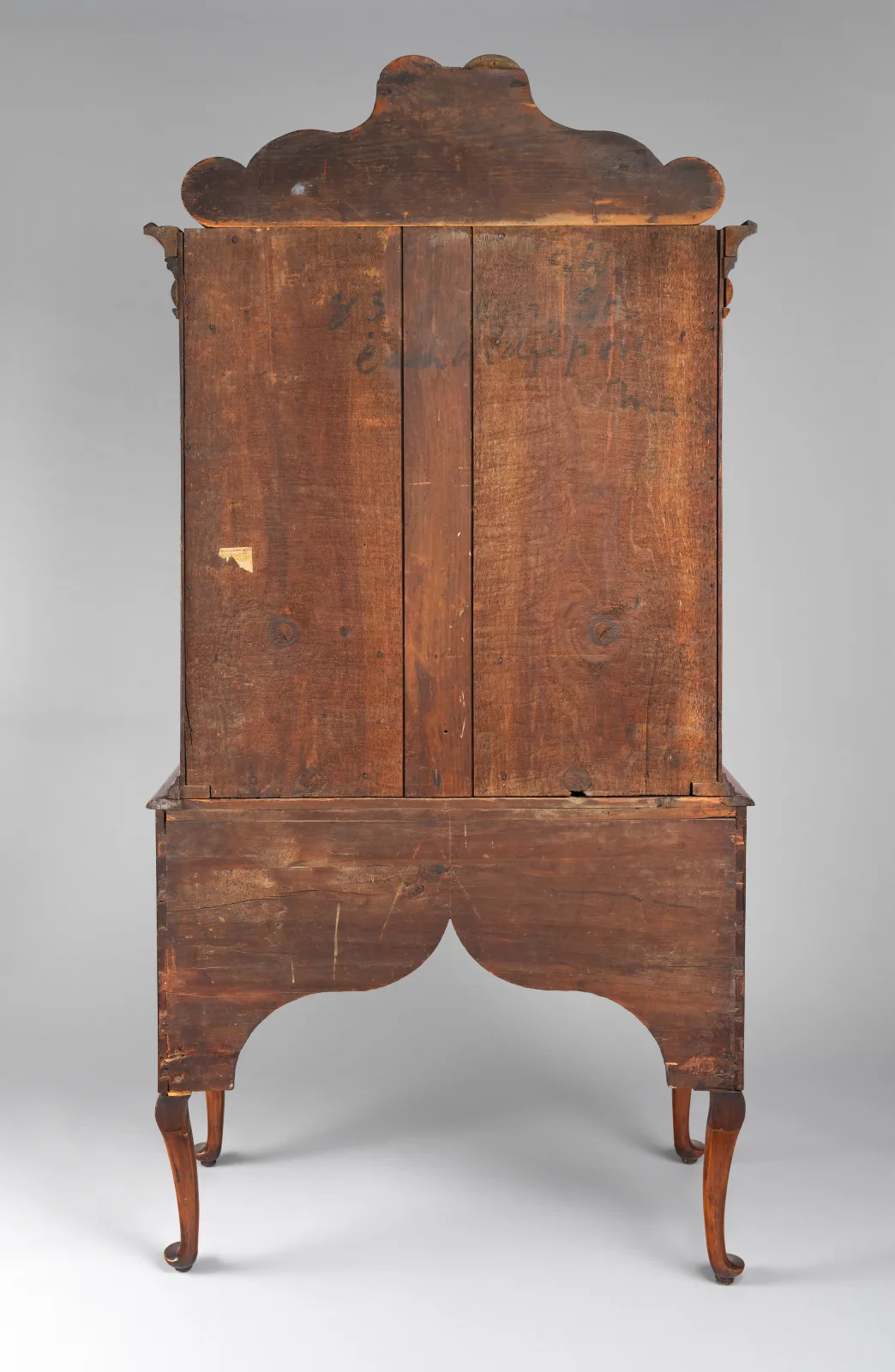
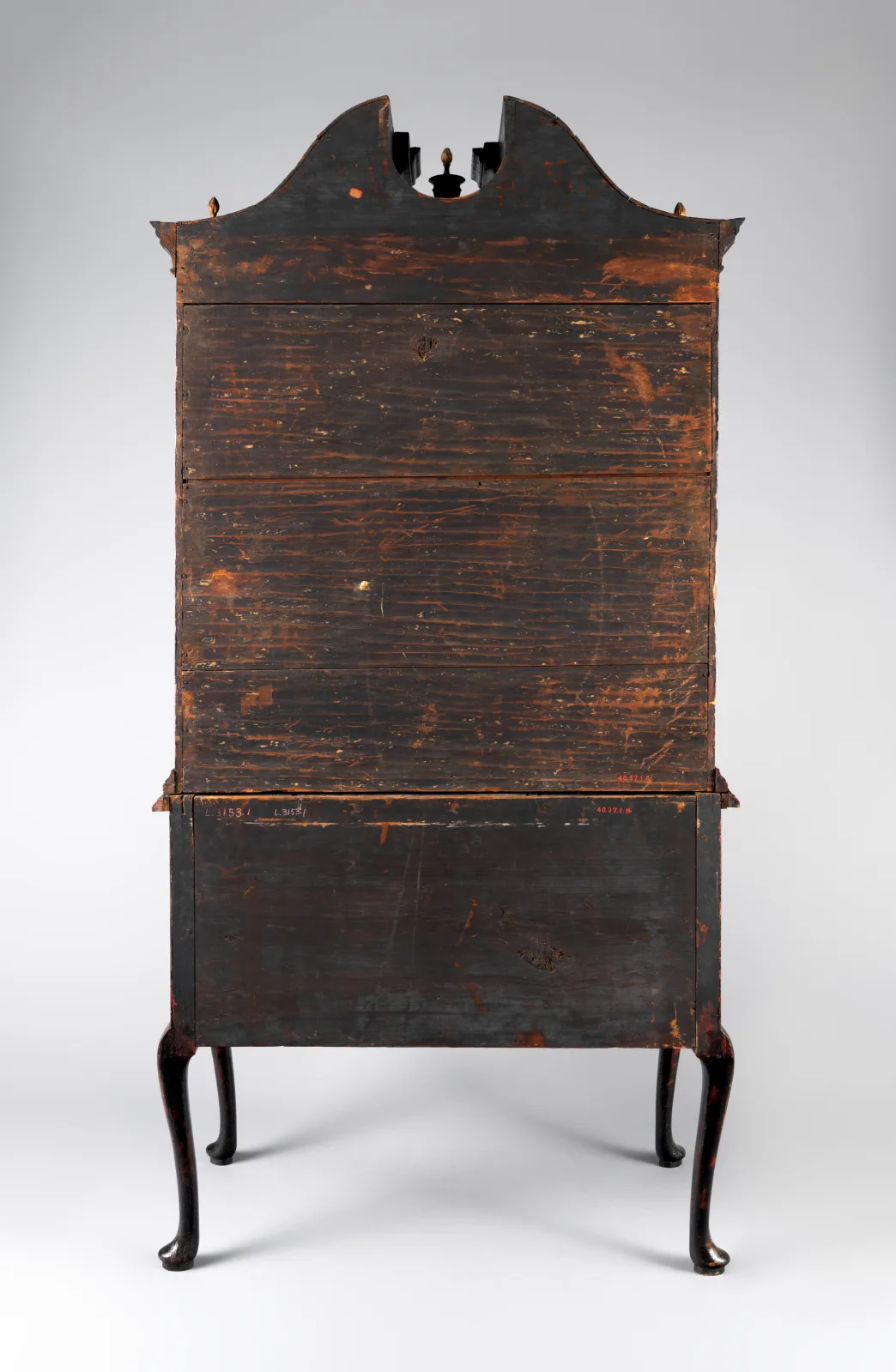
What a marriage looks like here was described exactly on Antiques Roadshow: the backboards of the lower case were dark, heavily oxidised pine, while those of the top were light, showing that the two halves had lived in different environments. In a matched piece, the back panels match from top to bottom.
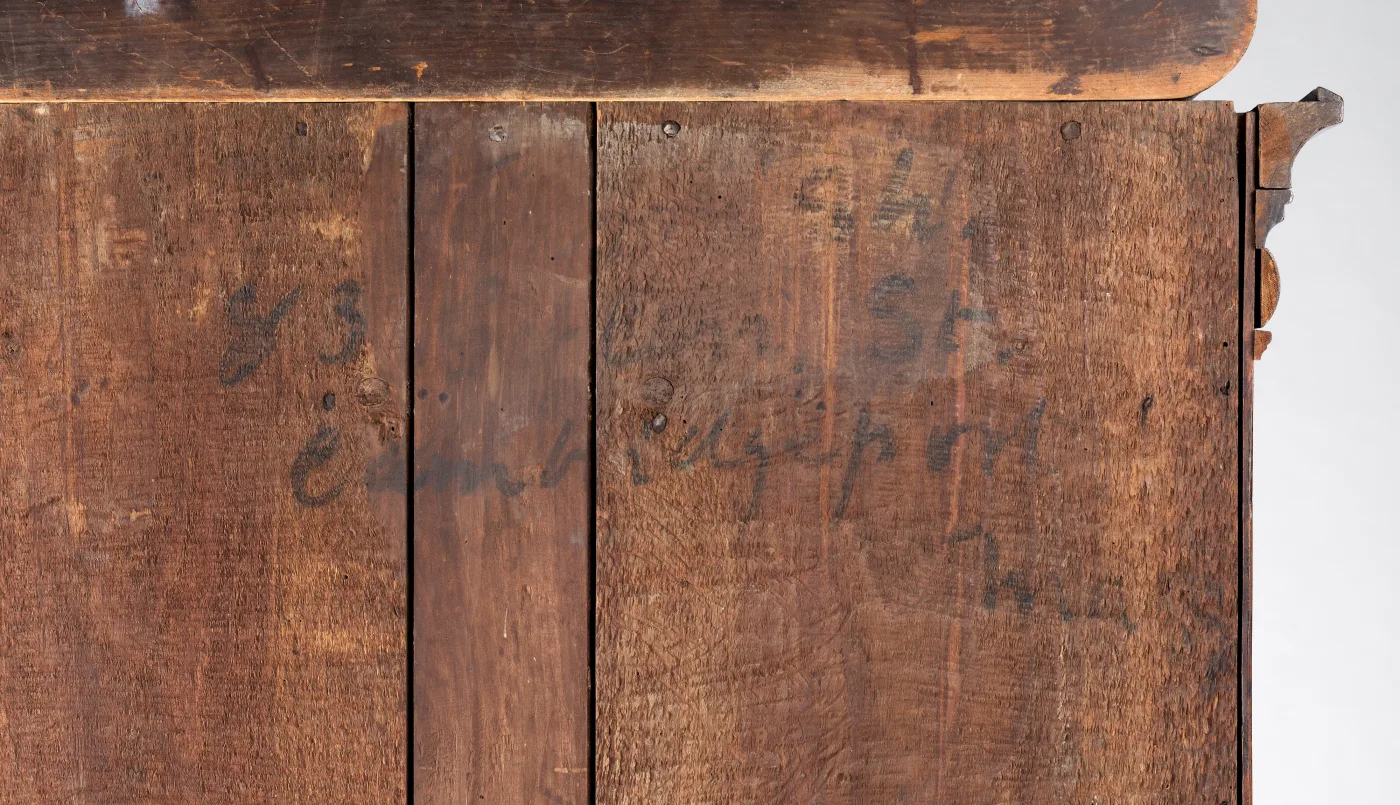
While you are at the back, look at the nails. Machine-cut nails, rectangular in section, were made from about 1790 into the 1880s. Round steel wire nails began to replace them in the early 1890s and had displaced them by about 1900. Cut nails in one half and wire nails in the other is, as one dealer puts it, proof that the pieces are either married or improperly repaired. A few wire nails in one refastened board suggest a repair; a whole back of them does not.

Secondary Wood and Drawers
Next, set a drawer from the top case beside one from the bottom. Secondary woods, the cheaper woods used for drawer sides, bottoms and backs, give some of the best evidence of whether a piece is original. A shop working on one commission used the same stock throughout, so the interior woods should match, and the drawer sides and bottoms should be planed to the same thickness in both halves.
Then count the dovetails. Whether cut by hand or by machine, the joinery should be the same on the drawers of the top and the bottom. On one Roadshow high chest the giveaway was exactly this: the bottom drawer had one large dovetail at each corner, while the drawers up top had smaller ones. The appraiser's rule was that construction should be uniform throughout the case. Another appraiser cleared a chest-on-chest as genuine on the same test in reverse: the construction was consistent between top and bottom. The Queen Anne furniture guide and the Chippendale furniture guide show what period dovetails look like for the two styles you will meet most often in high chests.
Chalk and Pencil Marks
Shop marks in chalk and pencil are common on furniture made before the twentieth century, and one reason for them was practical: a workshop building several drawers of the same height needed a way to keep each drawer's sides, back and front together while the joints were cut and assembled.
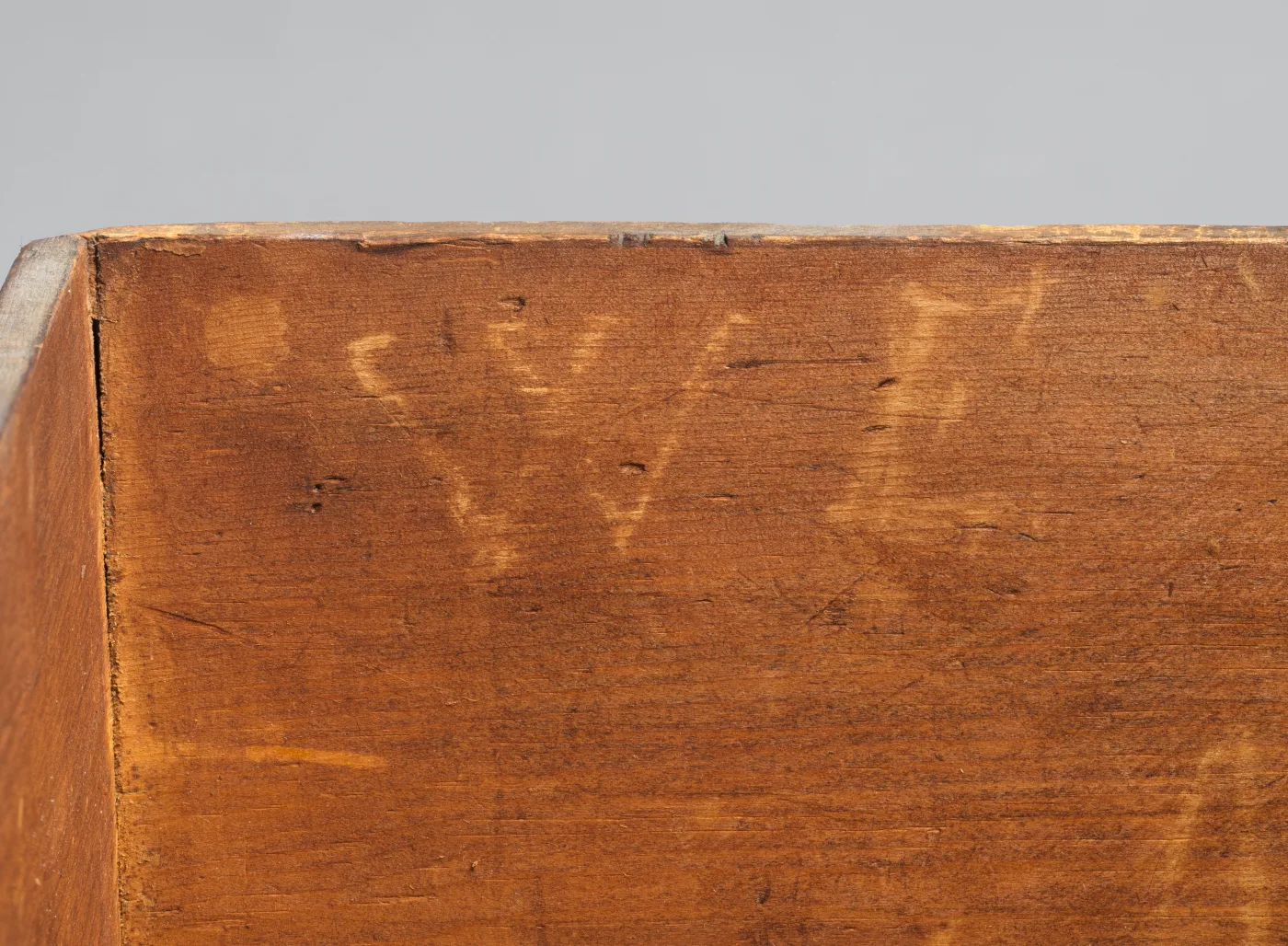
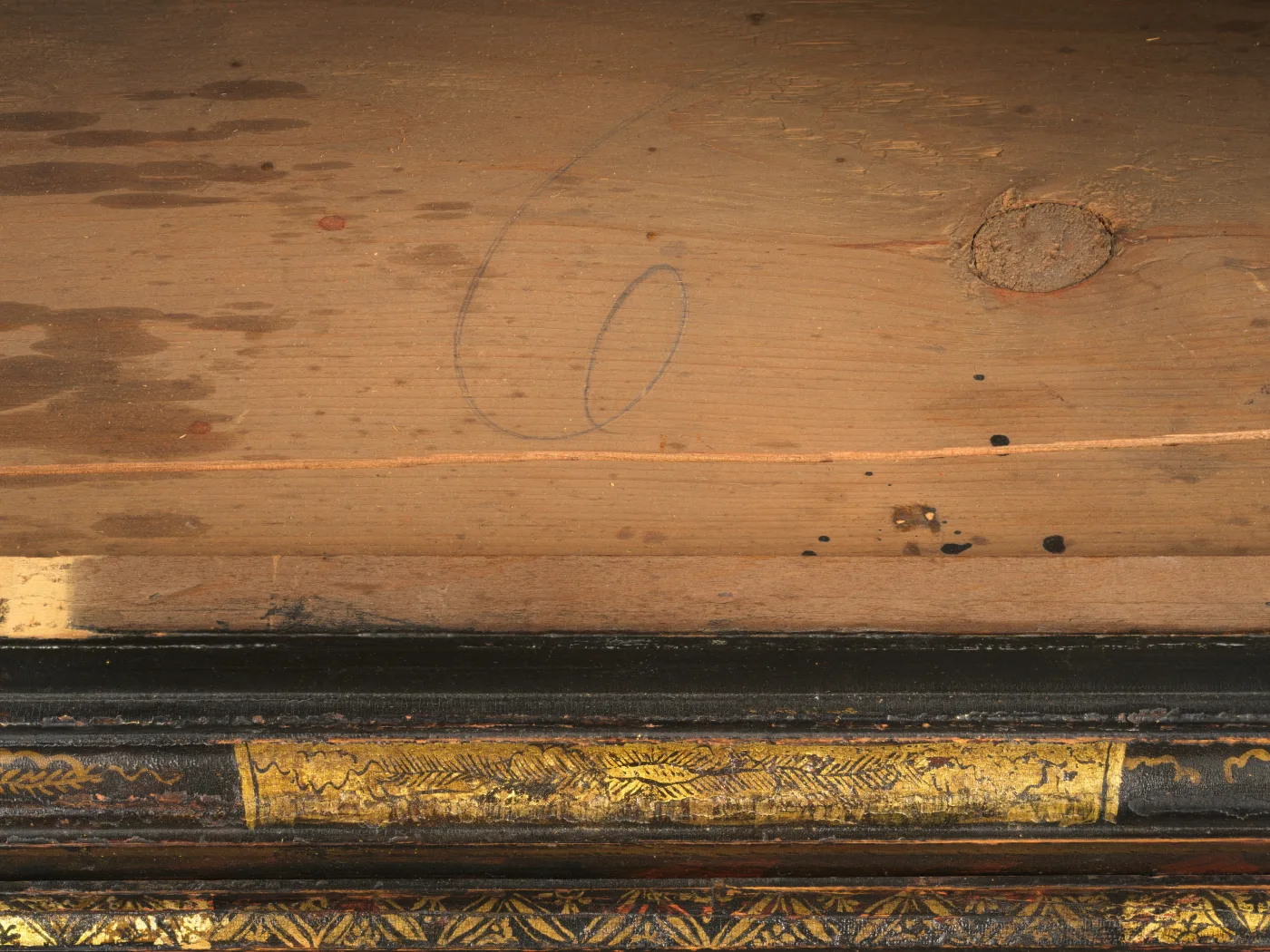
For a buyer, these marks are supporting evidence. If both cases carry marks in the same hand and the same system, that fits a piece made in one shop. If the systems differ, that is one more point against. If there are no marks at all, it proves nothing: many were wiped away, and many pieces never had them.
The Join, the Proportions and the Brasses
Now look at where the two cases meet. On many two-part pieces a moulding at the waist covers the joint. A top that did not belong often needed a new moulding to fit it, and on Roadshow that was the first clue Keno showed: behind the moulding the wood was fresh, while the top was an original oxidised nut-brown, so someone had made a new moulding to accommodate the shape. Look at the back and underside of the moulding with a torch.
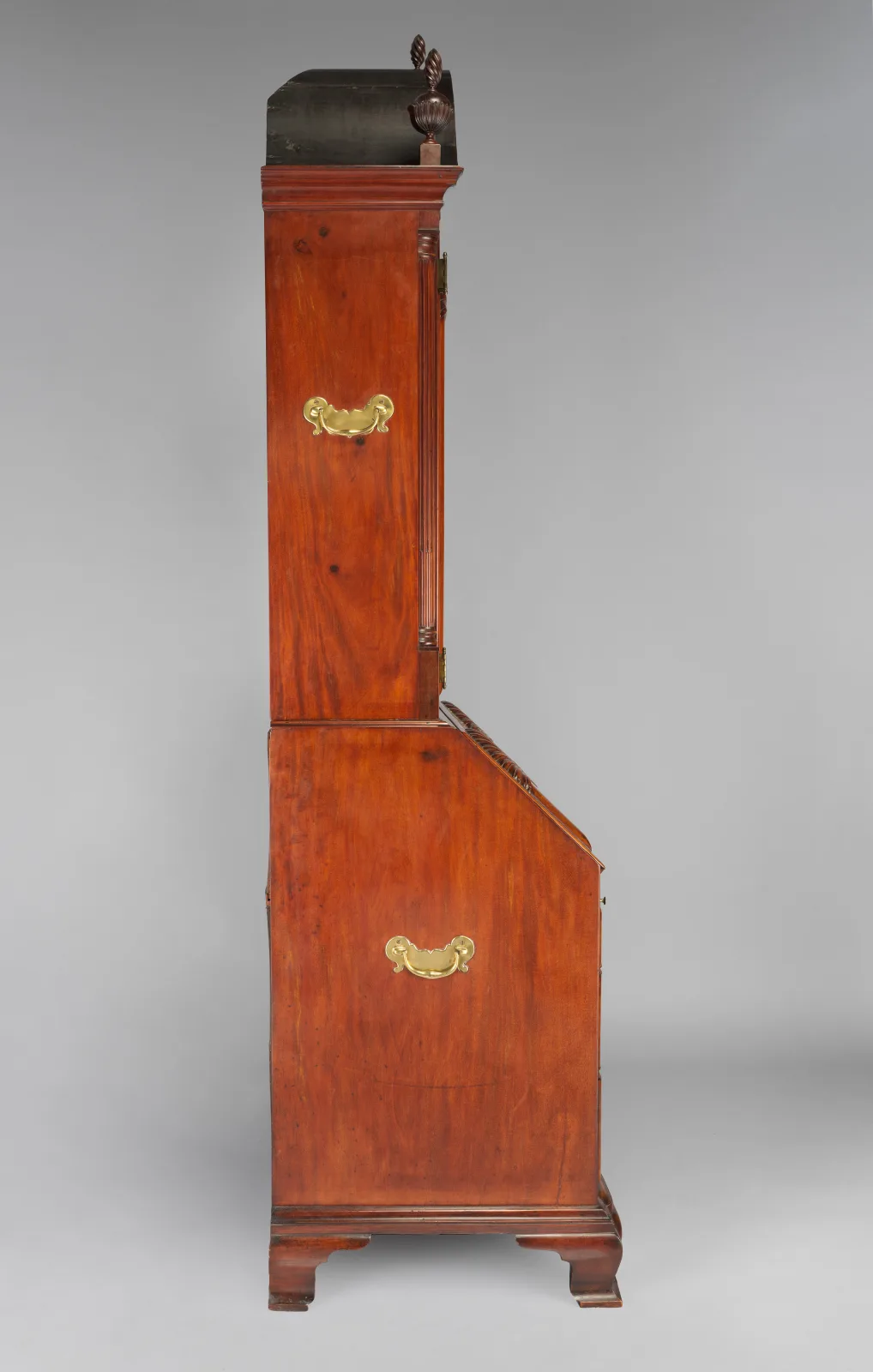
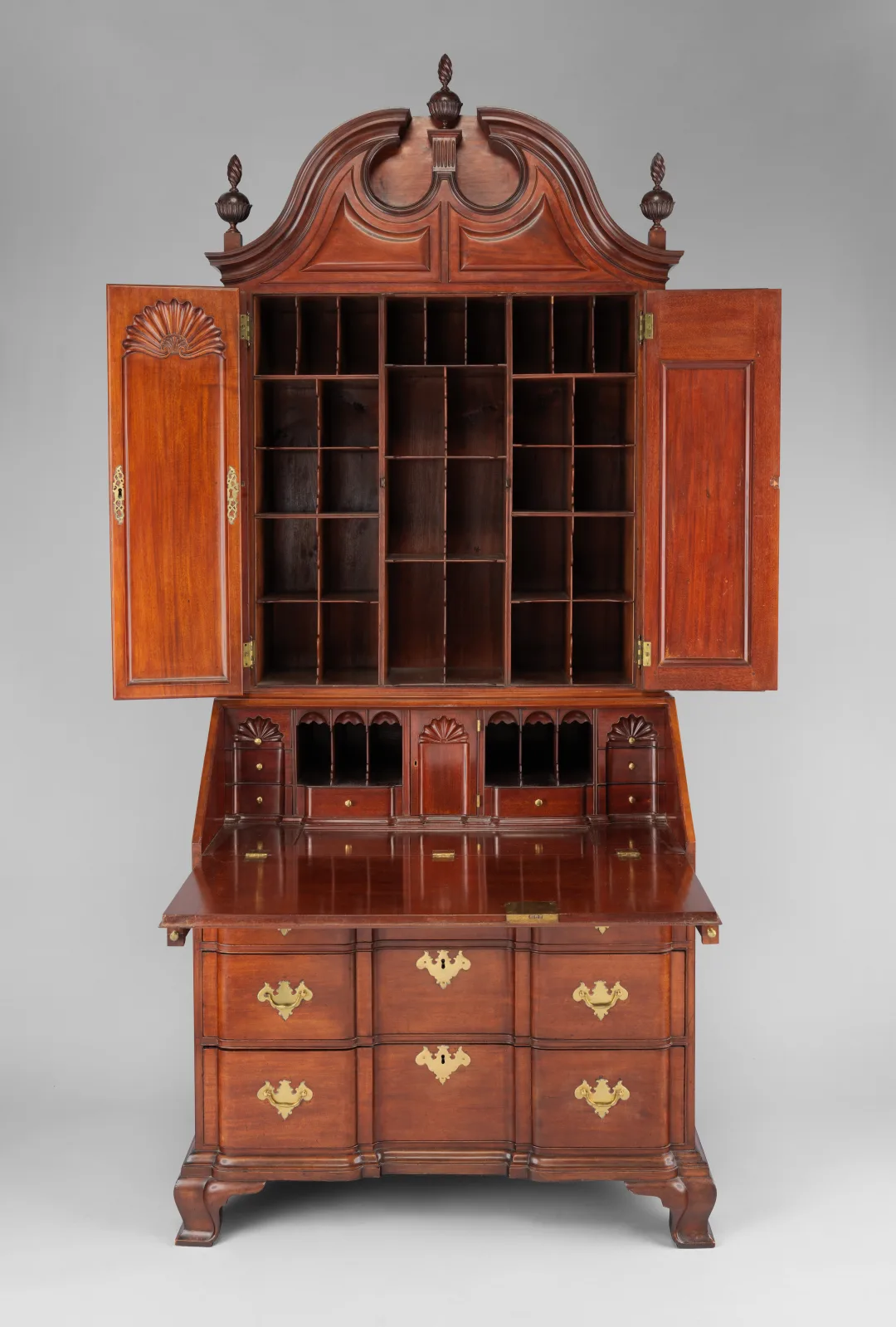
Stand back and judge the proportions. One dealer's test is blunt: does the top look like it could fall over if it were loaded? Drawer facings and doors should match across both halves.
Finally, the brasses. Handles on old furniture were often replaced as fashions changed, so a set of new brasses proves little either way. The holes do. Open each drawer and look inside the front for holes from earlier handles, and on the outside for a faded outline where an old handle once sat. In a piece made as one, the upper and lower drawers should share the same history of holes. For what counts as acceptable restoration and what destroys value, see the restoration and conservation guide.
Frequently Asked Questions
What does married mean in antique furniture?
A married piece is a two-part piece of furniture whose top and base were not made together. Someone has put the upper case of one piece on the lower case of another, or an old section on a newer one. High chests, chests-on-chests, desks and bookcases, secretaries and buffets with hutches are the usual candidates, because they were built as two separate cases.
How can you tell if a chest-on-chest is married?
Compare the two halves where nobody polishes them. Look at the backboards, the secondary wood inside, the thickness of the drawer sides and bottoms, the dovetails, the nails and the moulding at the join. In a piece made as one, all of these match from top to bottom. A marriage usually shows up as a difference in more than one of them.
Is a married antique worth less?
Yes, usually much less. A married case piece is never worth the price of an unaltered original. On Antiques Roadshow a married New Hampshire high chest was valued at about $5,000, against $25,000 to $30,000 had the top and base been original to each other.
Can a married piece still be a good buy?
It can, if it is sold and priced as a marriage. Both halves may be genuinely old, and the piece can be useful and handsome furniture. The problem is only paying the price of an original for it, so ask the seller directly whether the top and base started life together, and have the answer written on the receipt.
Does matching finish prove the top and base belong together?
No. A refinisher can make two halves the same colour on the outside. The evidence that is hard to fake sits on the unfinished surfaces: the backboards, the drawer interiors and the back of the moulding at the join, which age with the room and are rarely touched.
The Short Version
Before you buy any two-part piece, compare the halves where nobody polishes them. Check the backboards for matching wood and colour, the drawers for matching secondary wood, thickness and dovetails, the nails for one type throughout, and the waist moulding for fresh wood behind it. Two strong mismatches mean a marriage, whatever the outside finish says.
A marriage sold as one is honest furniture at the right price. Ask the question, get the answer in writing, and pay for what the piece is. For more on buying with care, the guide to buying and selling antiques and our collecting strategies guide cover dealers, venues and paperwork.