
Is the Upholstery Original? Reading an Antique Chair Layer by Layer
The best upholstery tip for an antique chair comes before any fabric is chosen: find out what you already have. A frame and its upholstery almost never share a date. Covers wear out and get replaced, so a chair from the 1760s may be on its fourth or fifth set, and the one in front of you could be from last year or from the day the chair was made.
The difference matters. Original upholstery is rare enough that museums collect it as evidence in its own right, and once it is stripped it is gone. This guide shows how to read the layers from the cover down to the bare frame, and which materials put a hard earliest date on the work.
Table of Contents
A Chair Has Two Dates
Every upholstered antique has a frame date and an upholstery date, and each later re-covering adds another. The frame is dated by its wood, joinery and style, which the antique furniture identification guide covers. The upholstery is dated by what it is made of, and that is the subject here.
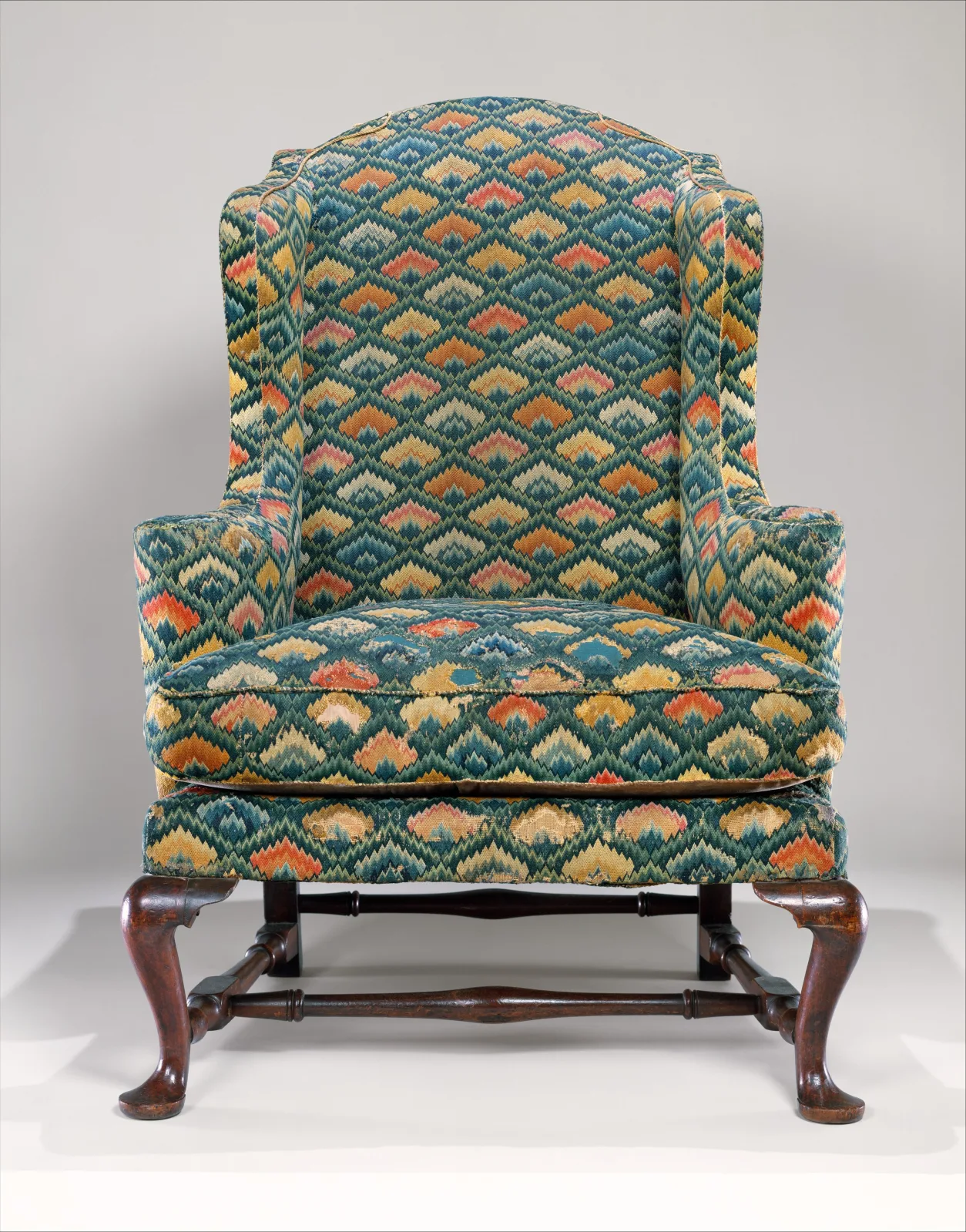
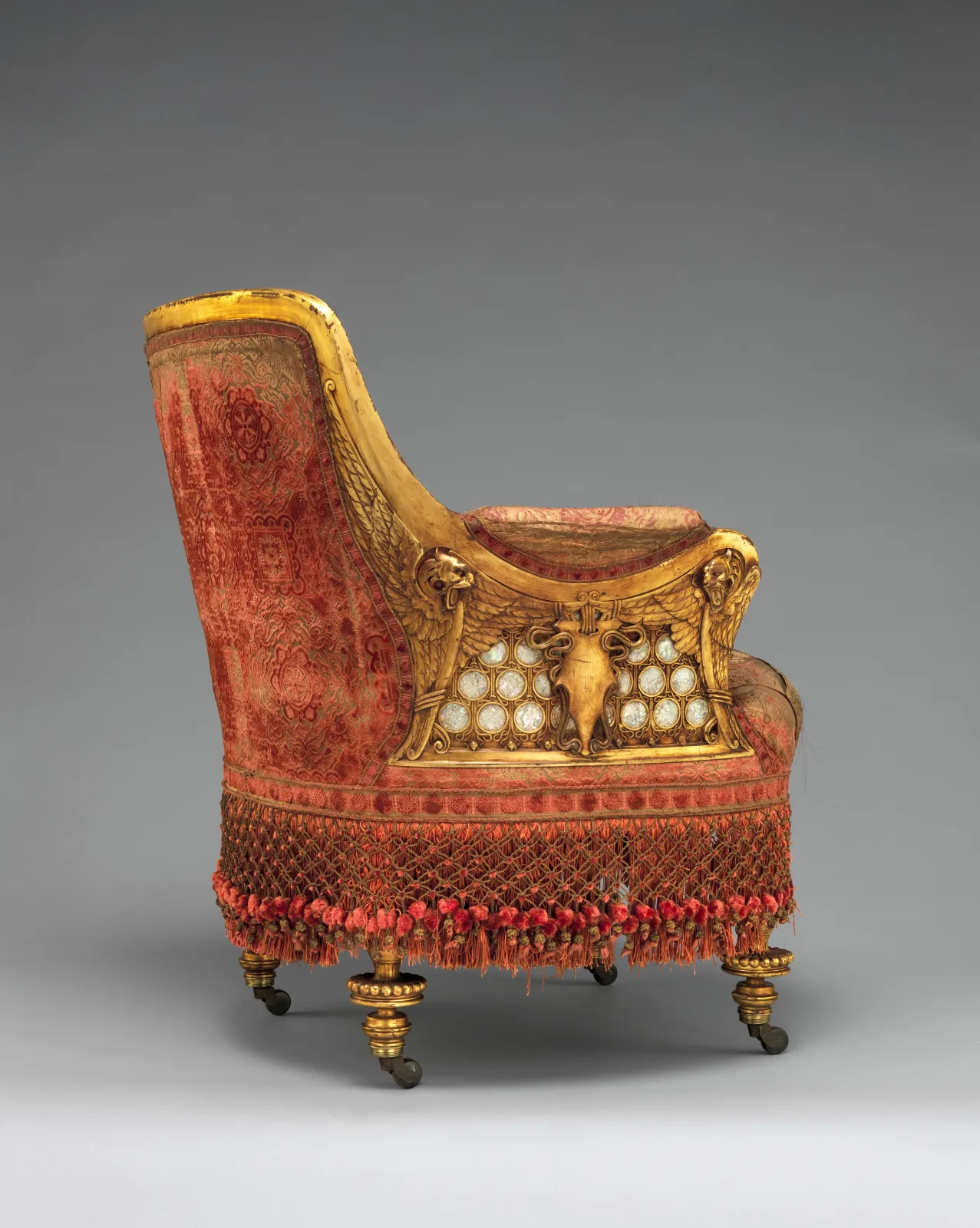
The Gardner chair is the benchmark, and it is a museum piece precisely because chairs like it are so uncommon. Most antique chairs you will handle have been re-covered at least once. That is not a fault. It only means the upholstery has to be dated separately, and that a seller's word “original” deserves the same checking as any other claim.
The Materials That Set a Date
Old upholstery cannot be dated precisely, but it can be given a floor: a year before which a material could not have been there. The table lists the materials you will find under a cover, the earliest date each allows, and what that proves. The dates are drawn from the histories cited below the table; the floors and the reading of them are ours.
| What you find | Earliest date it allows | What it proves |
|---|---|---|
| Curled horsehair, grass, tow, linen sackcloth | No floor. All were in use in the eighteenth century | Nothing on its own. Consistent with period work, but horsehair stayed in use well into the twentieth century |
| Square-shanked tacks with forged heads, or the holes they left | No useful floor | Supporting. Fits early work; tacks of some kind are used to this day |
| Coil springs in the seat or back | About 1830 | Strong. On a frame made before 1830, the sprung upholstery is a later campaign |
| Jute webbing, hessian or burlap | About 1830, and commonly later | Strong. Jute was first machine-spun in Dundee in the 1830s |
| Zigzag (sinuous) springs | Twentieth century | Strong. A modern spring system, known in the trade as No-Sag |
| Latex foam | About 1930 | Strong. Invented at Dunlop in 1929, made commercially from 1933 |
| Staples | Mid-twentieth century | Strong. Pneumatic upholstery staplers replaced the tack hammer after the Second World War |
| Polyurethane foam | 1950s | Strong. Flexible foam for cushions came in during that decade |
How to use it: the newest material in a layer dates that layer, and the chair's upholstery is original only if no layer, down to the webbing, is younger than the frame. A single strong material out of period settles it. The weak rows never clear a chair on their own, because upholsterers who work in the traditional way still use horsehair, linen and tacks.
Where the sources differ. On springs, histories give 1828 for Samuel Pratt's London patent, while others give 1826. Both are right: Pratt took out two patents, in 1826 for beds, couches and seats and in 1828 for elastic beds and cushions, and a Viennese patent of 1822 came before either. Some furniture histories also say springs only became practical around the middle of the century, while John Gloag recorded Birmingham factories making thousands of upholstery springs by the early 1830s. We use about 1830 as the floor because it is the earliest well-attested furniture use. A later floor would only make an eighteenth-century spring seat more obviously wrong.
What an Untouched Foundation Looks Like
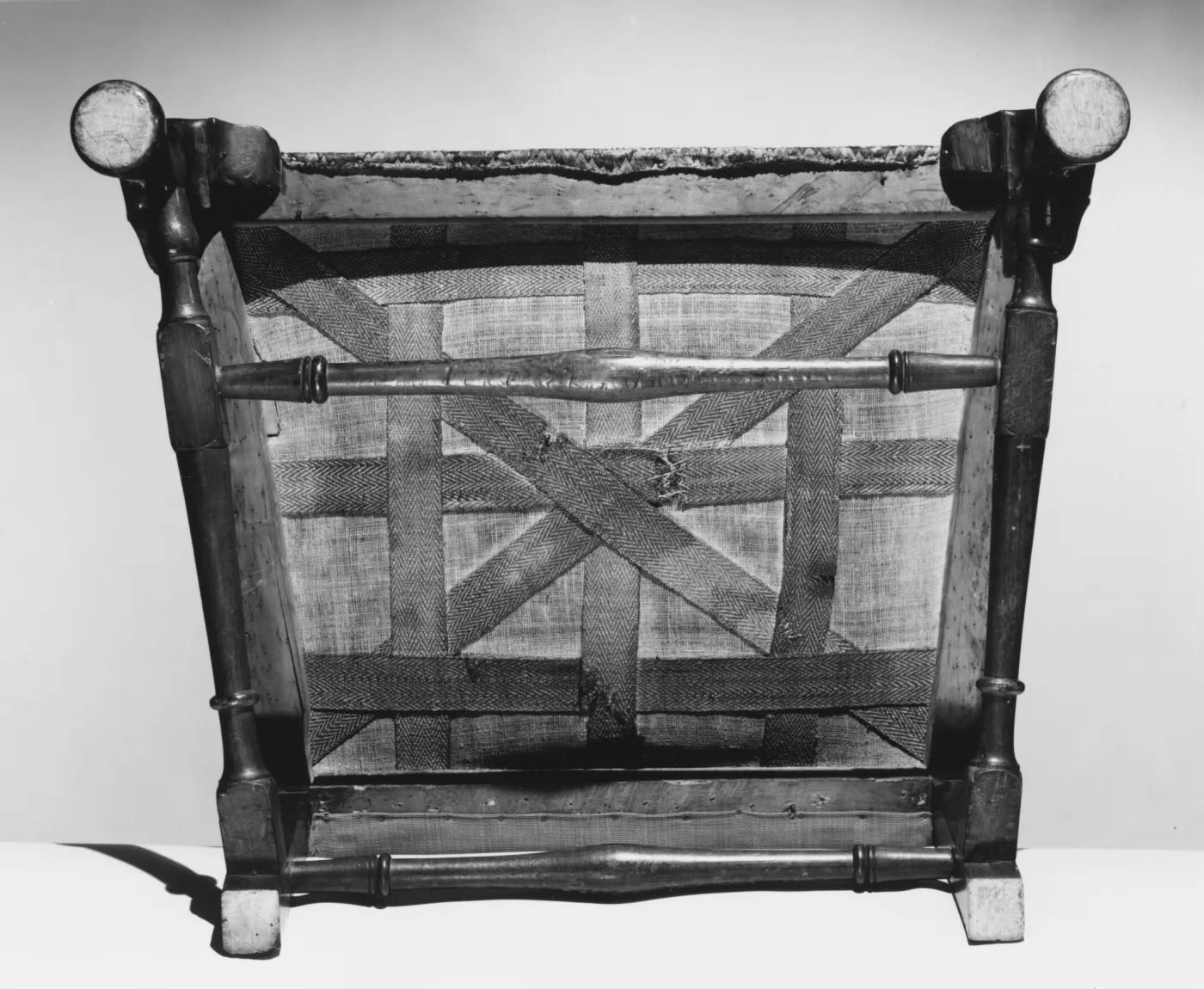
The Gardner chair's own conservation photographs show what period work looks like under the cover. Start at the top of the back, where the cover is tacked to the crest rail.
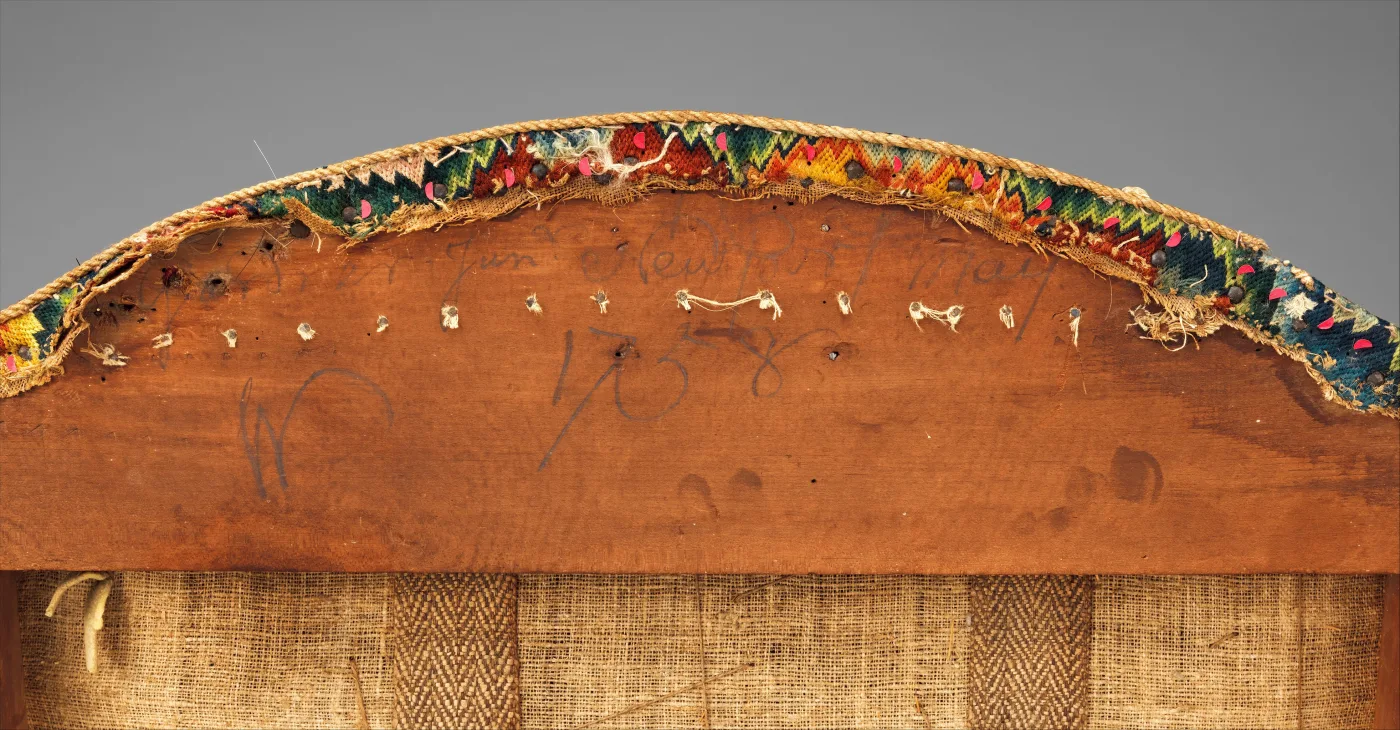
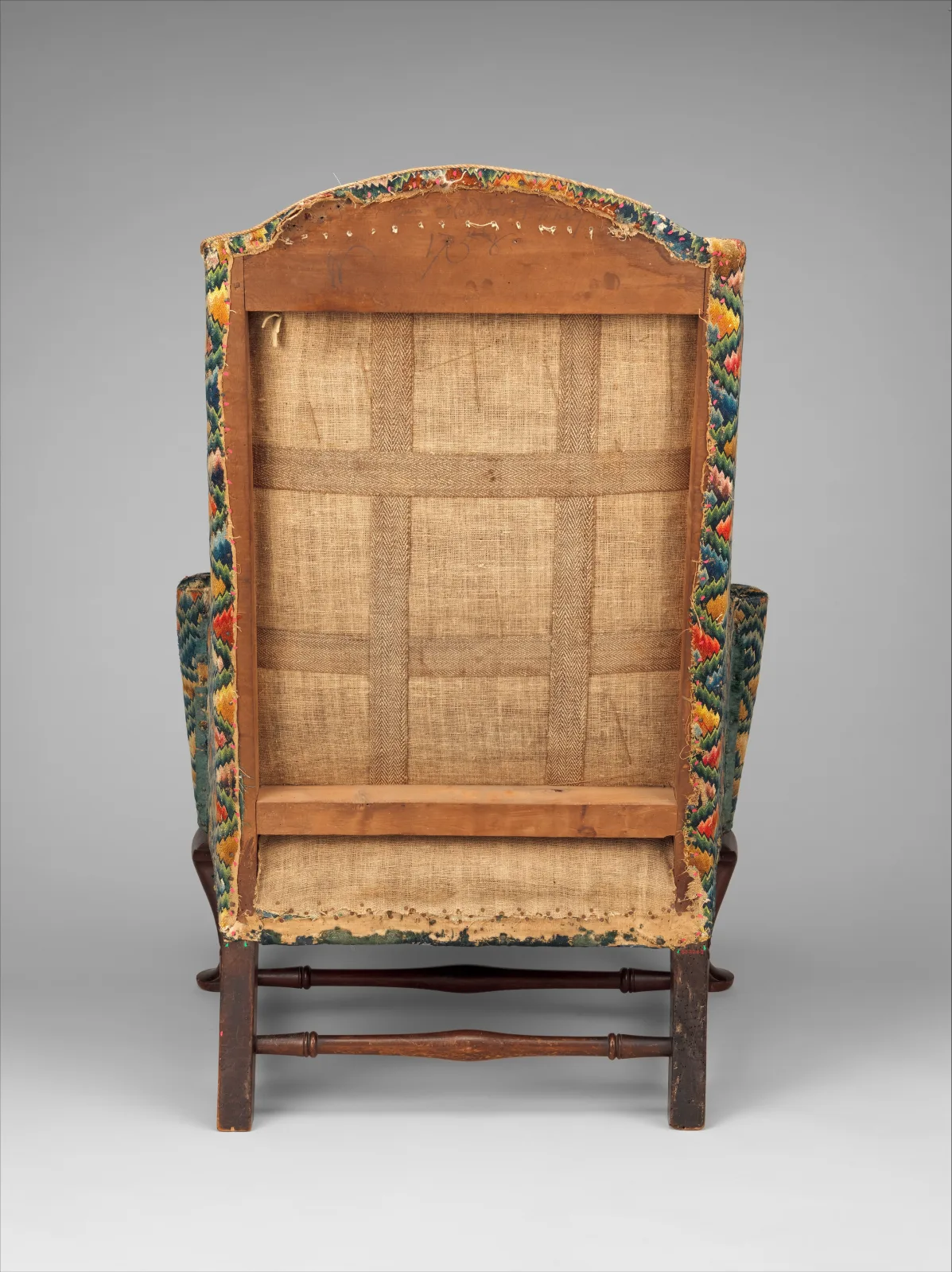
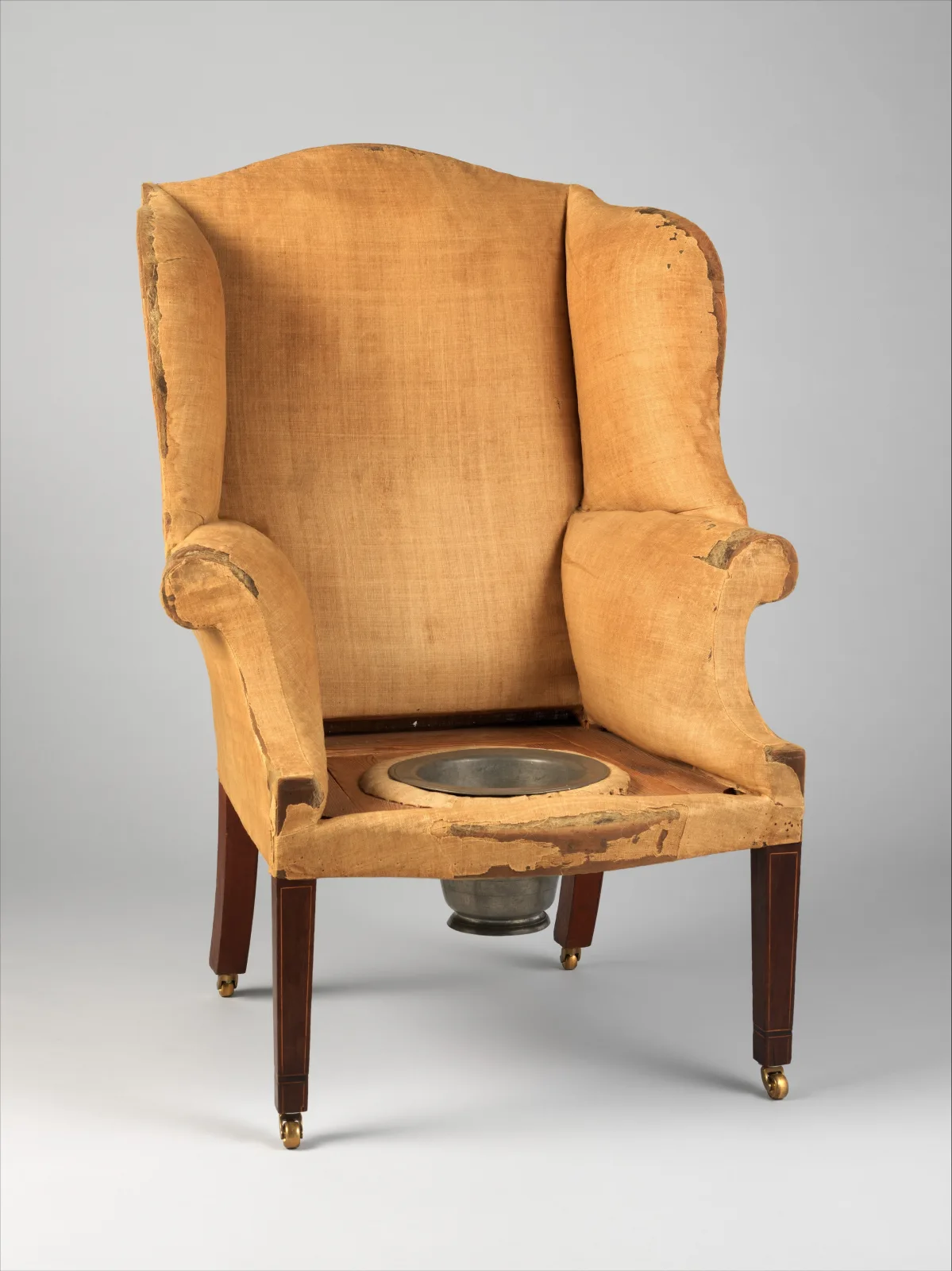
Underneath, an eighteenth-century seat is built on webbing tacked across the rails and woven over and under. Over that went sackcloth, then stuffing, usually curled horsehair, sometimes grass or tow, and shaped with stitched edge rolls. Catalogues of surviving American easy chairs and the conservators who study them describe exactly these materials, and also note that no two frames were done quite alike.

Reading the Bare Frame
If the chair has already been stripped, the frame still keeps its history, and museum upholstery conservators read it as evidence. At Colonial Williamsburg, Tara Gleason Chicirda and Leroy Graves describe what to look for: nail holes, corrosion residue in the holes, parts of nails, impressions left by materials or tacks, and threads or fluff caught under a nail. Clusters of holes on top of the seat rails can show where webbing was nailed; an uneven row across a rail can mark where the linen was attached.
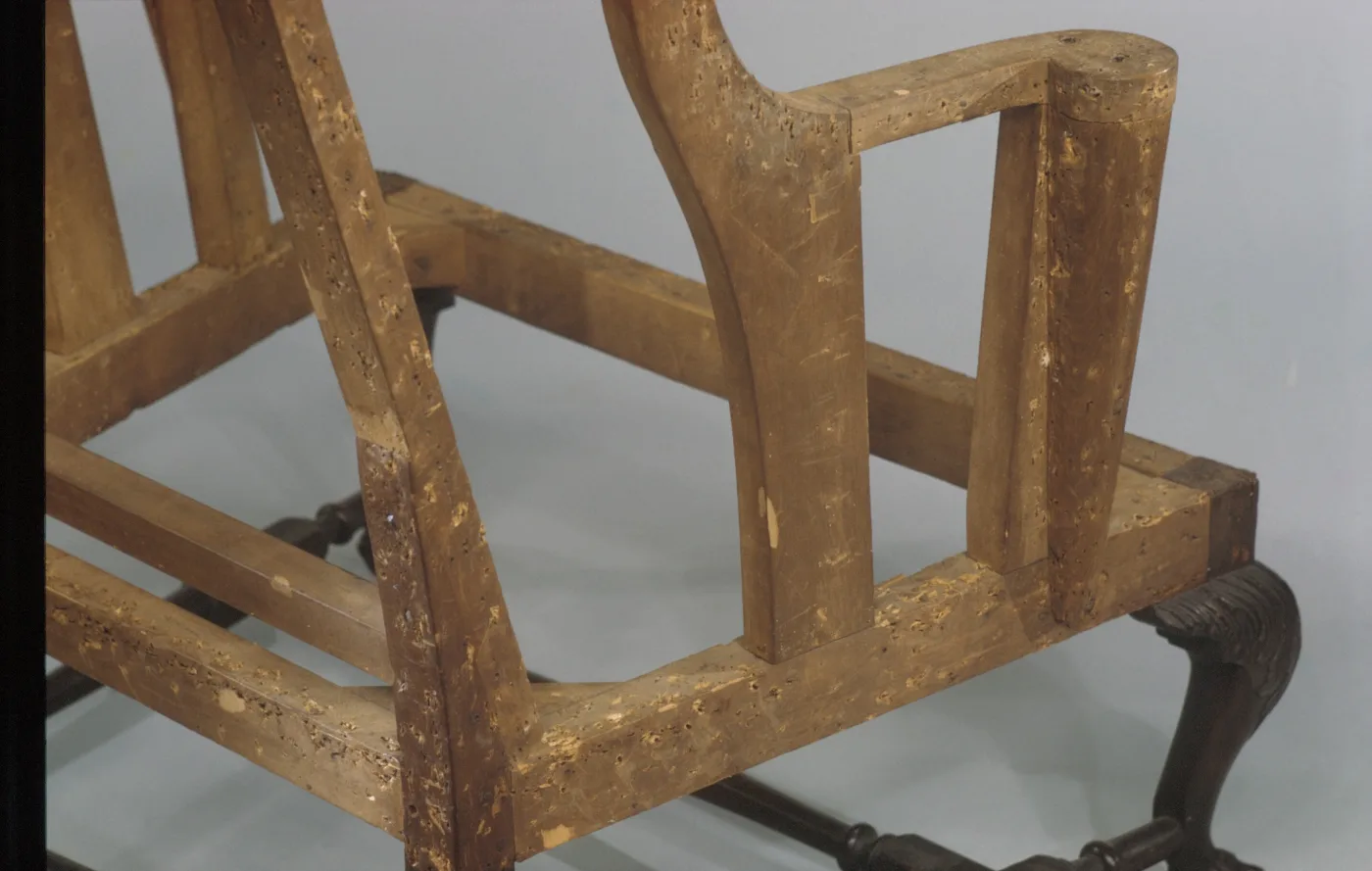
Two refinements help. A line of perfectly spaced holes, sometimes with the impression of round heads, comes from decorative brass nails rather than iron tacks. Brass nail holes often show greenish corrosion, iron tack holes a dark stain. Fibres trapped under an old tack can even preserve the colour of the first cover.
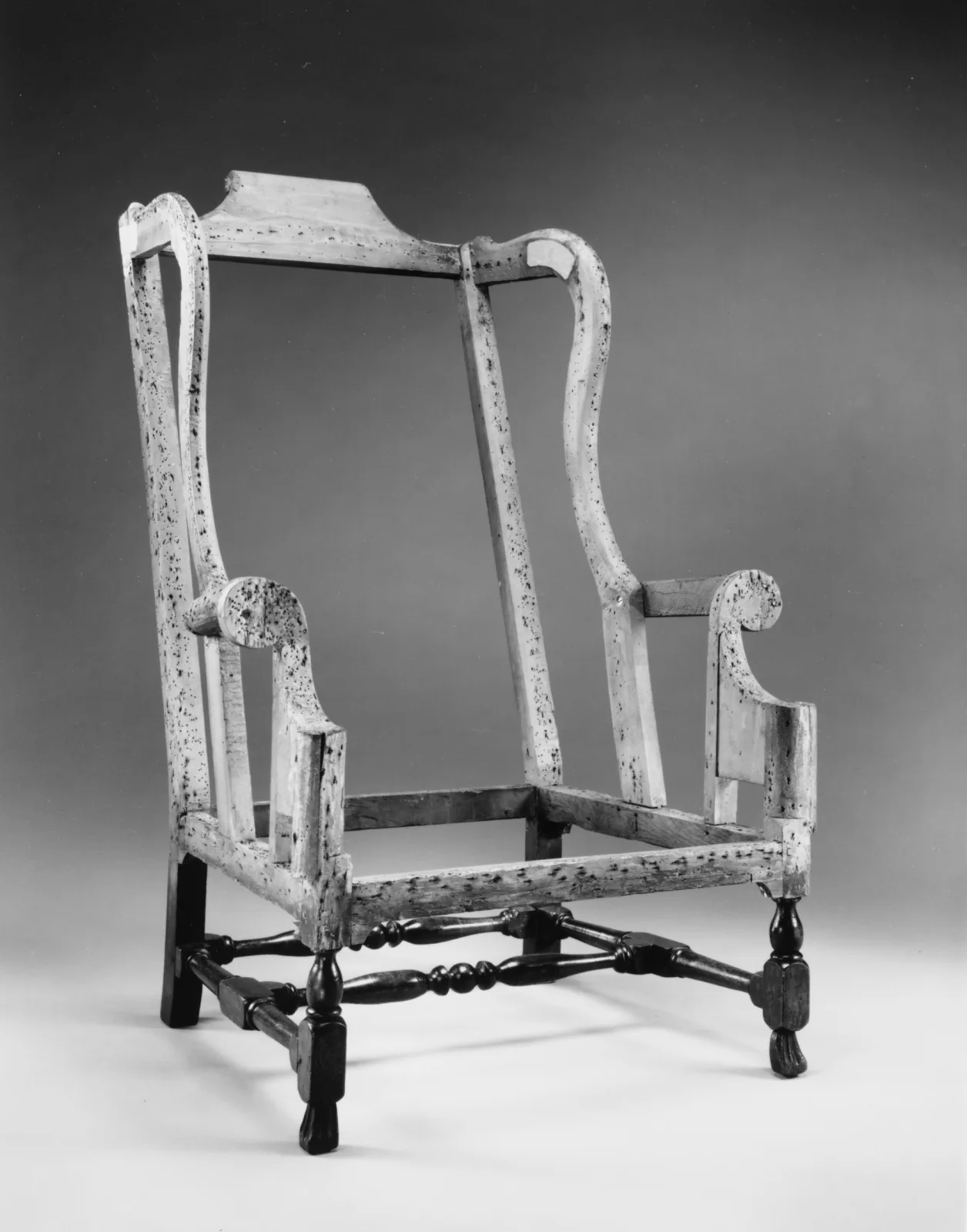
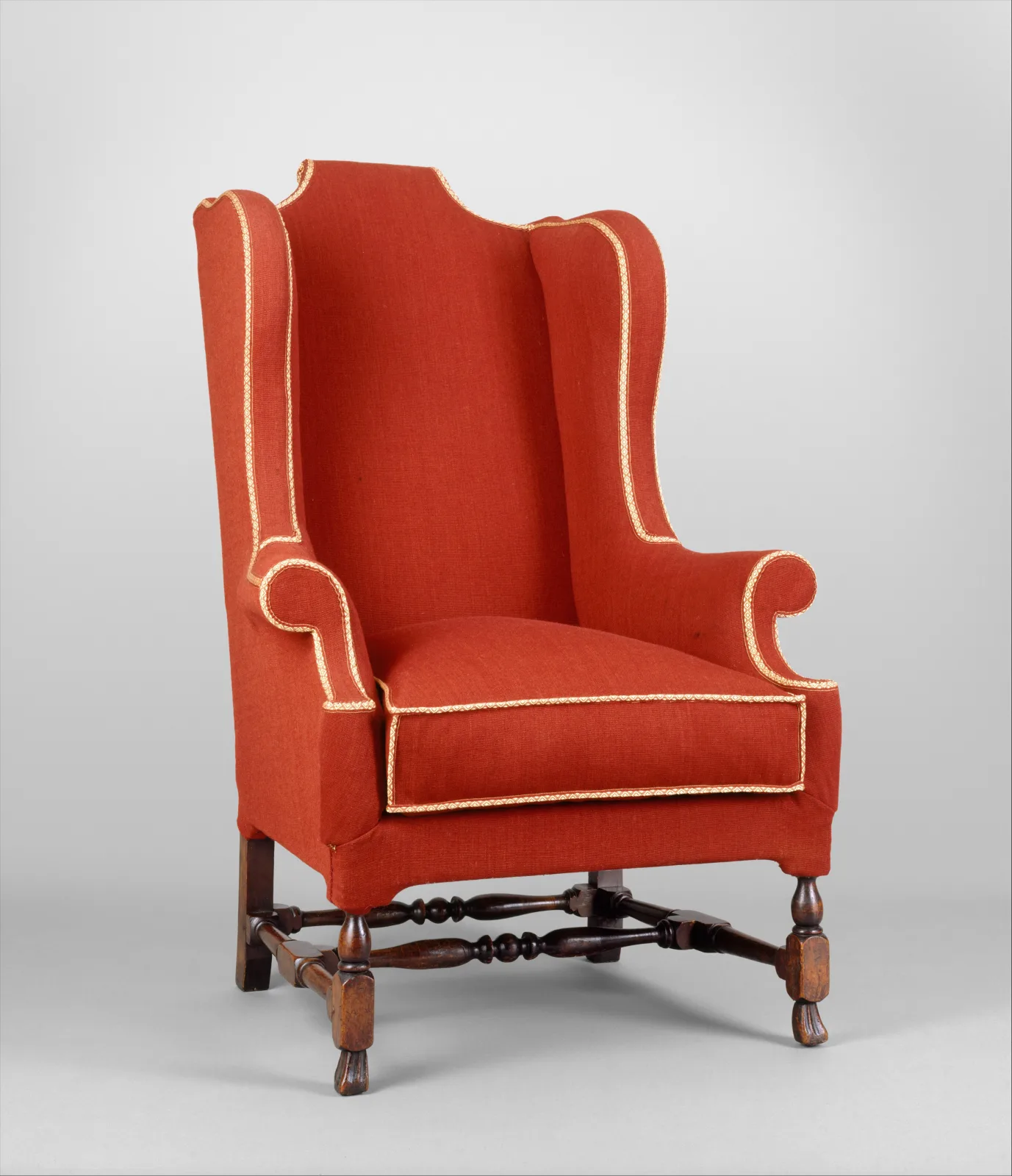
This is also where a frame's other evidence lives. The Queen Anne furniture guide and the Chippendale furniture guide show what period seat rails and joints look like. Holes in the frame are expected. A frame with no holes at all, on a chair sold as two hundred years old, is the thing to question.
Victorian Seats and Springs
From the 1830s the inside of a chair changed. Coil springs, sewn to the webbing and tied together with twine, made seats deeper and rounder, and the patents of Pratt in London and the Birmingham spring makers mark the start. For a Victorian chair, springs are therefore expected, and the question moves up a layer: are the springs and stuffing undisturbed, and is the cover the first one?
Inside a Victorian seat, look for the layers working in order: jute webbing, springs tied with twine, hessian over the springs, stuffing, then a muslin undercover beneath the show fabric. Any foam, zigzag springs or staples in that stack are twentieth-century work. The Victorian furniture guide covers the frame styles of the period.
Before You Reupholster
If the chair needs new upholstery, a few steps keep its history intact:
- Photograph every layer as it comes off, with the frame in view, and keep a labelled sample of each old material.
- Look for writing on the frame once it is bare. The Gardner chair's maker and date were found on its crest rail, under the cover.
- Ask for existing tack holes to be reused wherever possible, rather than adding a new row around the rail.
- If anything original survives, talk to a conservation upholsterer. Since the 1970s, Leroy Graves and other museum conservators have developed nonintrusive, tackless upholstery: a cover built on a separate support that fits over the frame without nails, leaving the frame and any surviving upholstery untouched.
The restoration and conservation guide explains which repairs preserve value and which destroy it, and the antique textile identification guide helps with dating an old cover once you have it off.
Frequently Asked Questions
How can you tell if antique upholstery is original?
Look underneath and work down to the frame. Original upholstery has no material in any layer that is younger than the frame, and the frame carries one set of tack holes rather than several. Springs in an eighteenth-century seat, jute webbing on a frame older than about 1830, foam or staples anywhere all mean at least that layer has been redone.
When were springs first used in upholstered chairs?
Spring upholstery was patented in Vienna in 1822 and in London by Samuel Pratt in 1826 and 1828, and by the early 1830s Birmingham factories were making springs for upholstered furniture in large numbers. A sprung seat on a chair made before about 1830 is therefore a later upholstery job, not a period one.
Do staples mean a chair is not antique?
No. Staples date the upholstery, not the frame. Pneumatic upholstery staplers came into the trade in the mid-twentieth century, so a stapled cover is modern work, but the frame underneath can be far older. Check the frame on its own evidence.
Is horsehair stuffing proof that upholstery is old?
No. Curled horsehair was used in the 1750s and stayed in use well into the twentieth century. It is consistent with old upholstery but sets no date. The materials that do set a date are the ones that did not exist before a known year, such as springs, jute, latex foam, polyurethane foam and staples.
Should I reupholster an antique chair with original upholstery?
Not before you have recorded what is there. Surviving original upholstery is evidence that museums collect for its own sake. Photograph every layer, keep samples of the old materials, and ask for the new work to reuse existing tack holes, or consider a conservation upholsterer who can fit a cover without nailing into the frame at all.
The Short Version
Date the frame and the upholstery separately. Work down from the cover and ask of each layer whether it contains anything younger than the frame: springs (after about 1830), jute (after the 1830s), latex foam (1930s), staples (mid-twentieth century) or polyurethane foam (1950s). Then read the bare rails: one row of holes means one campaign, a crowded rail means many. Horsehair and tacks are consistent with age but never prove it.
Most antique chairs have been re-covered, and a good modern job on a sound old frame is honest furniture. What is rare is the chair whose first upholstery survives. If you have one, record it before anyone takes it off. For other questions to ask before buying, see the guide to married antique furniture.