
Is This an Antique? Five Checks and the Details That Rule It Out
Is this an antique, or just old-looking? You can often settle it in a few minutes without a specialist. An antique is usually defined as at least 100 years old, so in 2026 the line falls around 1926. The test is easier from the other side: you do not have to prove a piece is old. You only need to look for one detail that could not have existed 100 years ago.
This guide gives five checks you can use on almost anything, in the order that rules things out fastest. The table in the middle lists modern details with the year each one appeared. For the wider subject, the antique identification guide covers categories and styles, and this article answers the narrower question first.
Table of Contents
What Counts as an Antique
There is no single legal definition for everyday use. Wikipedia describes an antique as often defined as at least 100 years old, while noting that the word is used loosely. The firmest version is in US customs law: the Harmonized Tariff Schedule heading 9706 covers “antiques of an age exceeding one hundred years”. Dealers tend to call younger collectibles vintage, though that word has no fixed age.
Age alone does not make a piece valuable, and a piece that fails the 100-year line can still be worth more than one that passes. If value is your real question, the valuation guide covers what drives it.
Check 1: Printed Wording and Dates
Turn the piece over and look for any wording. A country of origin, a patent number, a registration number or a company form can set a date on its own. “Made in England” generally points to about 1914 or later, for example, and a five-digit ZIP code to 1963 or later. Our guide to reading pottery marks lists these clues with their dates and traps.
Treat a printed date with care. “Established 1864” is when a company was founded, and it can appear on something made last year. A mark tells you the earliest the piece could be, and rarely the year it was made.
Check 2: Nails and Screws
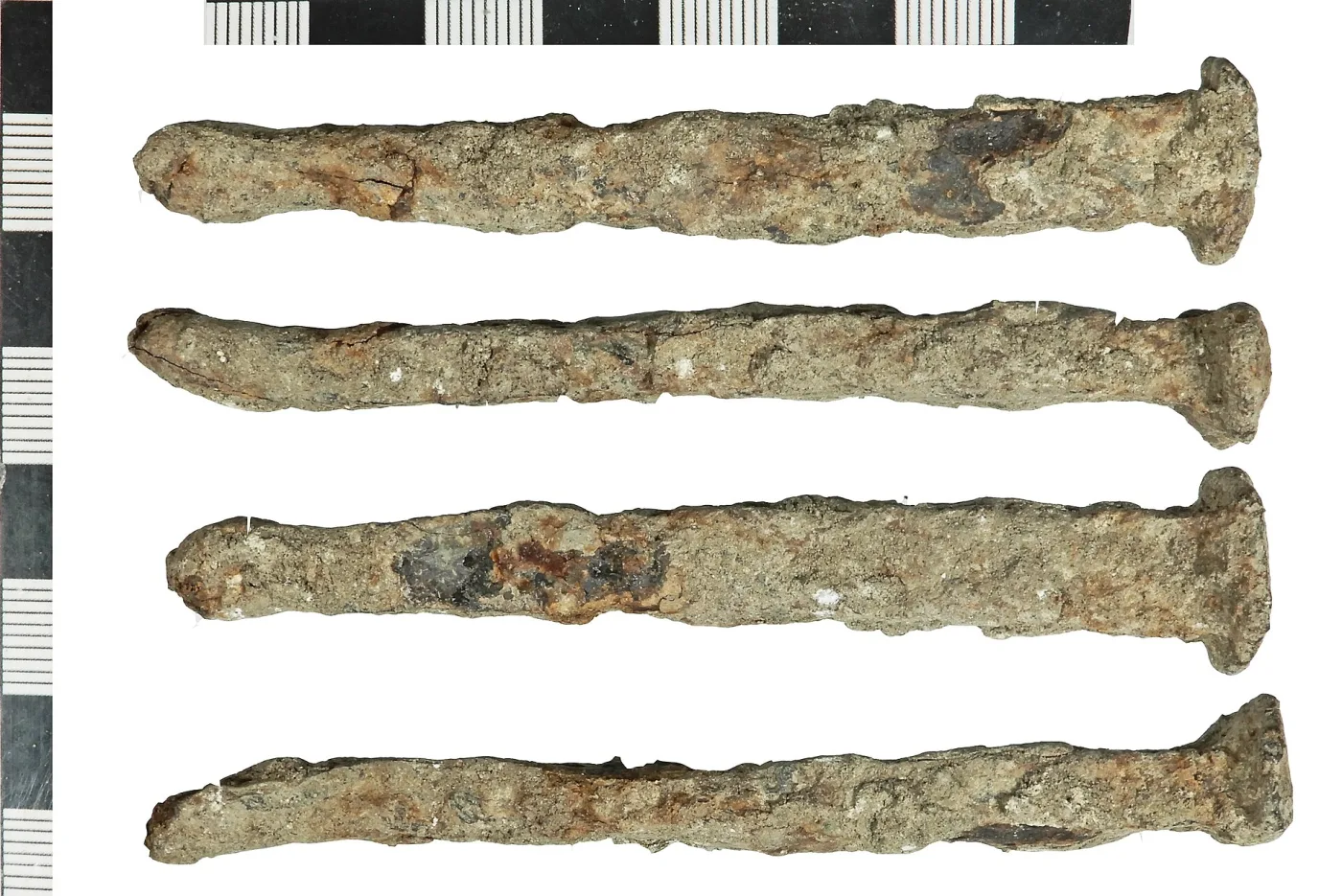
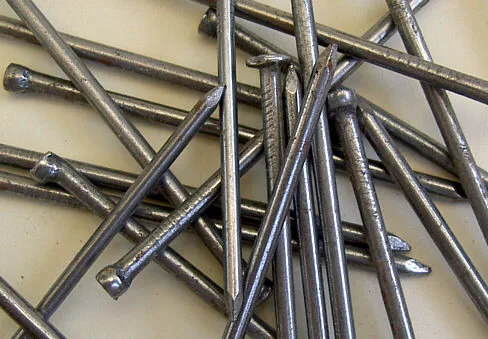
Fasteners are the quickest check on anything made of wood, because each type has a known history and people rarely think to fake them. The National Park Service leaflet Nail Chronology by Lee Nelson, still the standard reference, divides old nails into three types: hand-wrought, cut and wire.
- Hand-wrought nails have a hammered, uneven head and a shank that tapers on all four sides. One study of early nails treats them as the main construction nail until about 1845.
- Cut nails are sheared from sheet, so they taper on two sides and have a rectangular section. Cut-nail makers spread across the northeastern US after the Revolution.
- Wire nails have a round shank and a flat round head. Small ones existed earlier, but they became common in building around the 1890s.
Screws work the same way. Look at the slot: a cross-shaped Phillips recess comes from a design patented in 1932, and it was not common in furniture until after World War II. Older screws have a single straight slot.
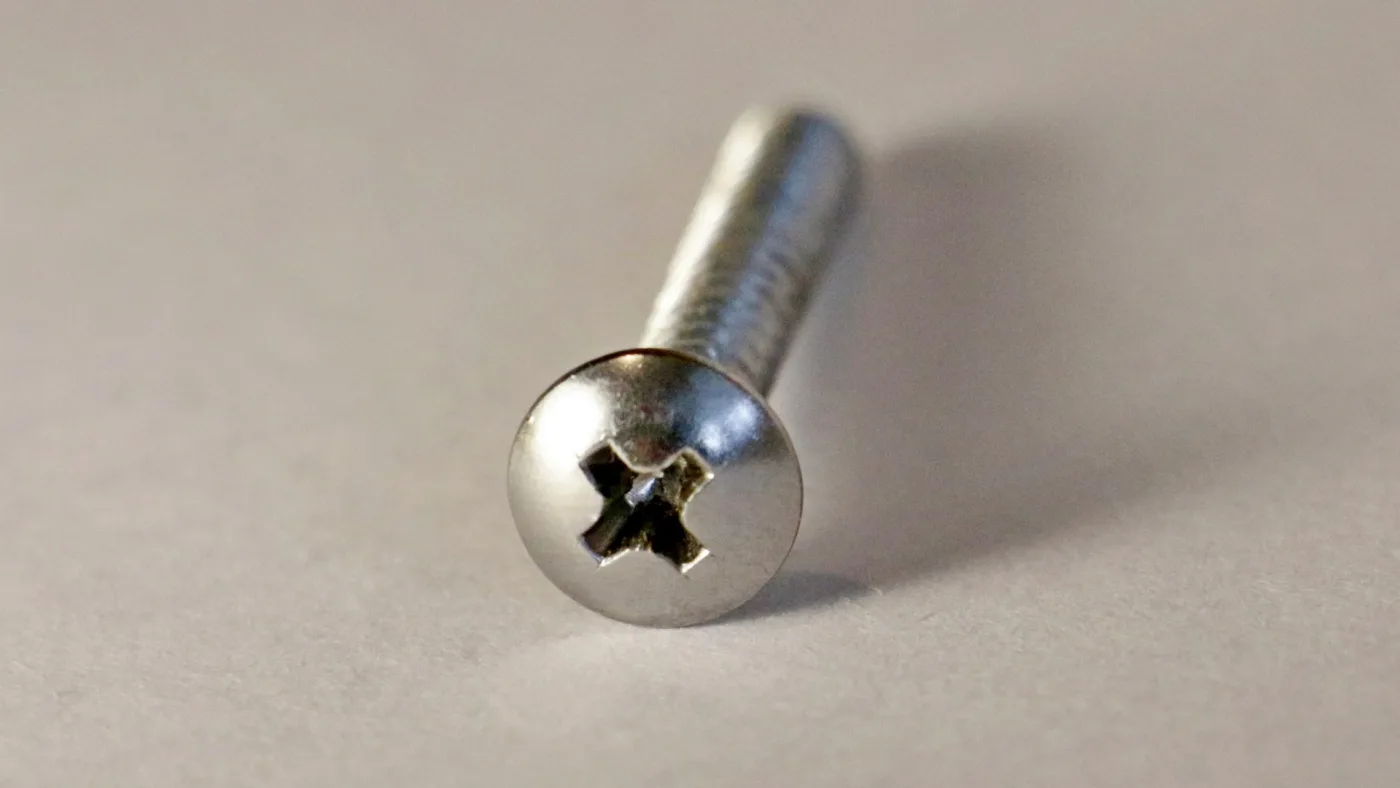
One modern screw does not condemn a piece, because hinges and handles get replaced. Check whether it sits in an old hole and whether the other fasteners match. The guide to married furniture covers pieces assembled from parts of different ages.
Check 3: Drawer Corners and Hand Finishing
Pull out a drawer and look at the corner. Hand-cut dovetails are few, a little uneven and often show the scribe line the maker worked to. Machine work is even. Machines did not arrive all at once: the pin-and-scallop Knapp joint was in factory production from the early 1870s and had gone by about 1900, and Popular Woodworking dates the true machine-cut dovetail from about 1895.
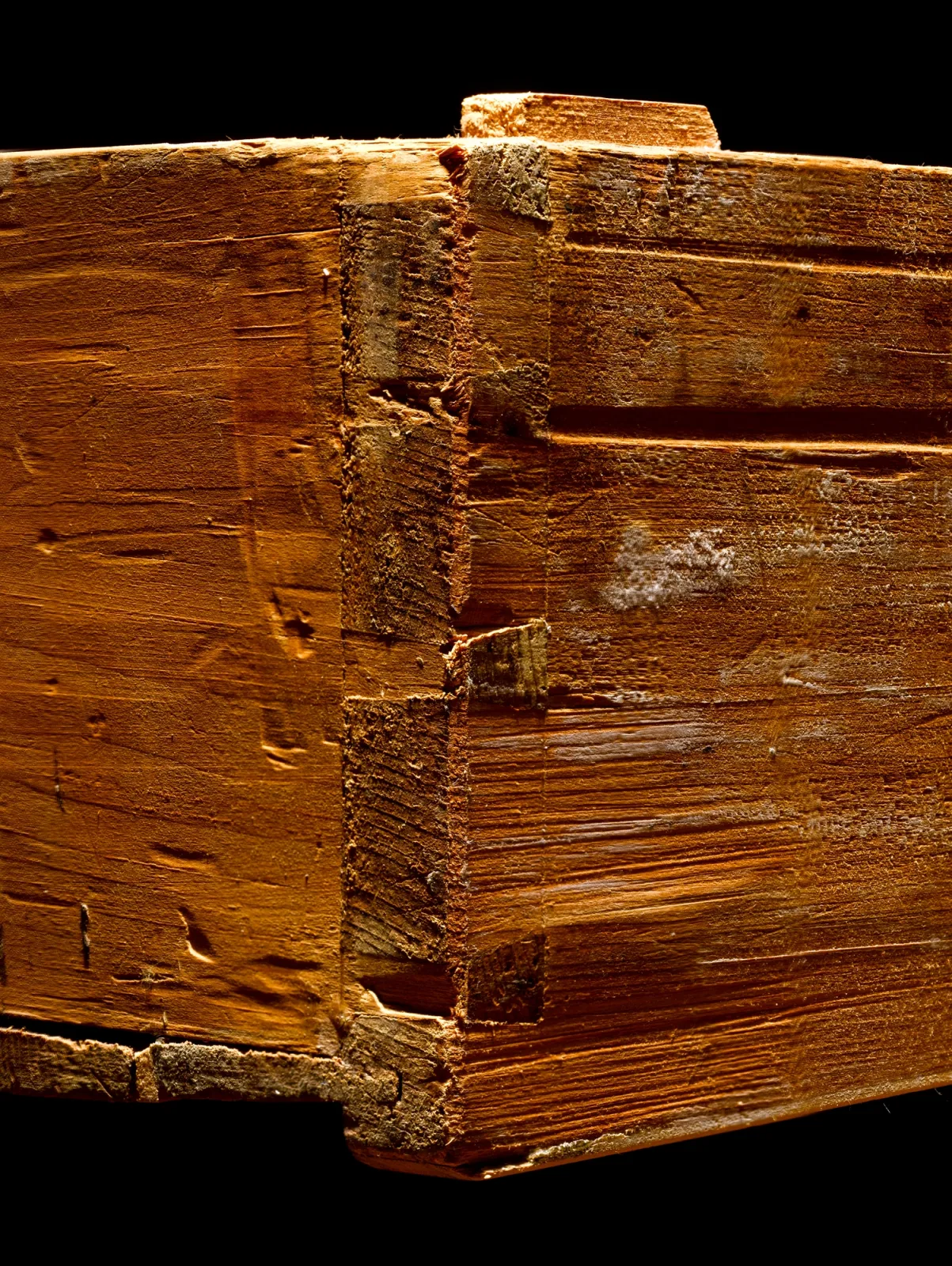
Also look for tool marks on surfaces no one was meant to see, such as drawer bottoms and backboards. Hand planes leave shallow ripples. Glass tells a similar story: a rough pontil scar on the base shows that a bottle or bowl was held on a rod while it was finished. The Society for Historical Archaeology’s bottle site puts bottles with a blowpipe pontil scar at no later than about 1860–1865. A side seam running right through the lip means the reverse, a machine-made bottle from about 1905 or later.

Sellers can fake age on the surface, so look at more than one thing. Artificially aged furniture is built to pass a quick look.
Check 4: Materials
Some materials simply did not exist 100 years ago. Run down the table below with the piece in your hand: anything in the first group, if original to the piece, means it is not an antique. The second group does not rule a piece out today, but it does set a limit on how old it can be.
Details That Rule Out 100 Years
Built for this article. The year is when each detail first appeared, so a piece carrying it can be no older, unless that part was added later. Sources are in the last column.
| Detail | Not before | Can the piece be 100 years old in 2026? | Source |
|---|---|---|---|
| Recycling triangle with a resin number | 1988 | No | Wikipedia |
| Barcode (UPC) | 1974 | No | Wikipedia |
| “Microwave safe” | 1967, when countertop ovens arrived | No | Wikipedia |
| Five-digit US ZIP code | 1963 | No | Wikipedia |
| Nylon thread or fabric | 1938 | No | Wikipedia |
| Phillips screw | 1932, common after WWII | No, unless it is a later repair | Wikipedia |
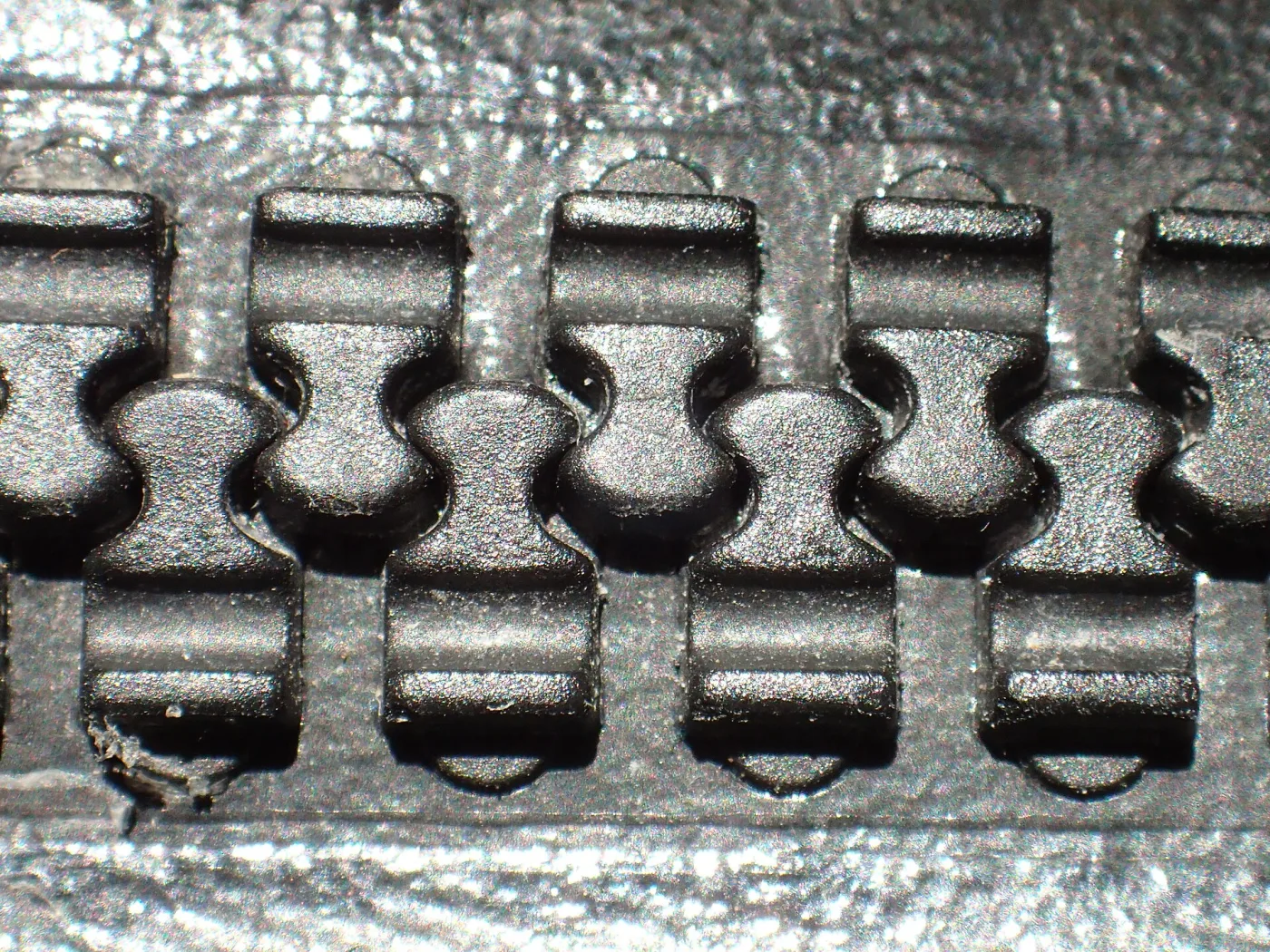
| Modern metal zipper | 1917; the word “zipper” 1923 | Yes, but only just | Wikipedia |
| “Made in England” | About 1914 | Yes, but only just | The Potteries.org, Hemswell |
| Stainless steel | 1913 | Yes, but only just | Wikipedia |
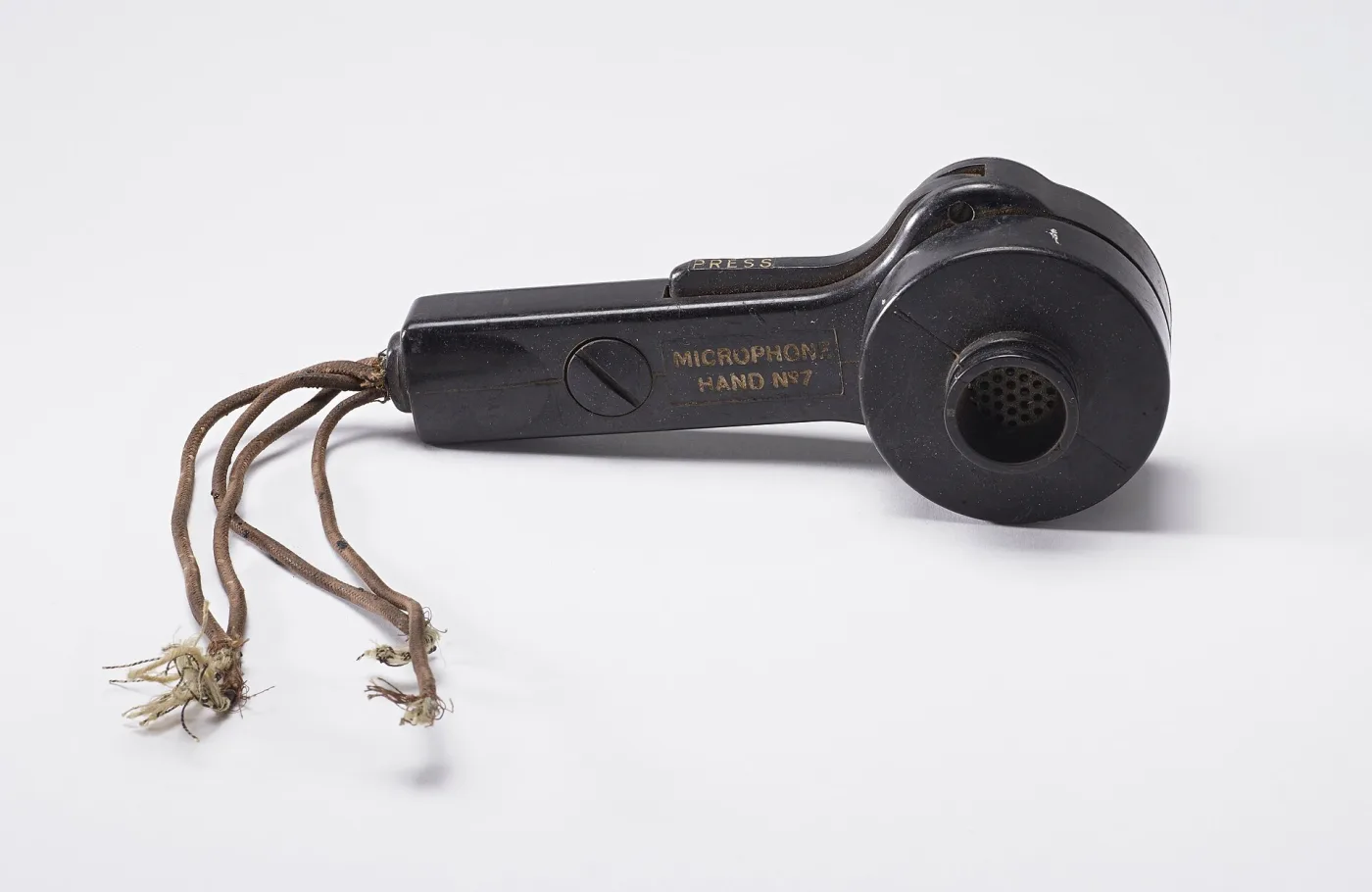
| Bakelite | 1909 | Yes, if early | Wikipedia |
| Bottle seam through the lip | About 1905 | Yes, if early | Society for Historical Archaeology |
| Wire nails in general use | About 1890s | Yes | National Park Service, Nelson |
| Machine-cut dovetails | About 1895 | Yes | Popular Woodworking |
Each year here is the first appearance, and the piece itself is often much later. The answer in the third column moves forward every year, so the zipper that only just passes today will be well inside the line a decade from now. For silver, the British hallmarks guide can give you an exact year instead of a floor.
Check 5: Where the Rubbing Falls
Real wear follows use. It collects where hands, feet and other objects touched a piece over decades: the front edge of a drawer, the top of a chair rail, the foot of a jug. Then look for the opposite. Evenly spread scratches, dark stain in places no hand reaches, and a worn front with a crisp, unworn underside all suggest that someone added the age later.
Wear cannot prove age by itself, because a hard life can age a piece quickly. Use it to confirm what the other checks found. When the checks disagree, read that as a warning sign and get a second opinion before you buy.

Frequently Asked Questions
How do I know if something is an antique?
Look for details that could not exist 100 years ago: modern wording, Phillips screws, plastics, barcodes or machine-made joints. If you find none, check that the marks, construction and wear all agree with an older date. One modern detail may just be a repair, so look at several before you decide.
How old does something have to be to be an antique?
The usual rule is at least 100 years old, which is also the line in US customs law. In 2026 that means made before about 1926. The word is used loosely, and some dealers call younger pieces antiques, so ask how a seller knows the age.
What is the difference between antique and vintage?
An antique is usually 100 years old or more. Vintage has no fixed definition, and dealers generally use it for younger pieces that clearly belong to a past era. Neither word says anything about quality or value on its own.
Can a modern screw or nail mean a piece is fake?
Not by itself. Hinges, handles and legs get repaired, so one Phillips screw can be an honest later repair. It matters more when modern fasteners hold the main structure together, or when there are no older holes beneath them.
Is there an app that can tell me if something is an antique?
Yes. Antique Identifier takes a photo and gives a likely identification with an era, origin and estimated value, and it includes 3 free scans on iPhone. A photo cannot prove age, so use the result as a starting point and confirm it with the checks above.
The Quick Answer
Do not try to prove a piece is old. Look for one thing that says it is not: modern wording, a Phillips screw, plastic, a barcode, machine-made joints. Check that the detail is original rather than a repair. If nothing rules the piece out, and the marks, construction and wear all agree, you may well have an antique. Then it is worth finding out what it is.