British Silver Hallmarks: Reading the Five Punches
A British hallmark is not a signature. It is a legal record, struck by an assay office after testing the metal, and it is the single most reliable dating tool in the whole of antique silver. Learn to read it and a piece that arrived with no story attached will tell you where it was tested, roughly when, and who submitted it.
This guide covers the marks used on British silver: what each punch means, how to narrow a date before you touch a reference table, and the two mistakes that most often send beginners wrong — mistaking engraved initials for hallmarks, and mistaking electroplate for sterling.
Table of Contents
The Five Punches
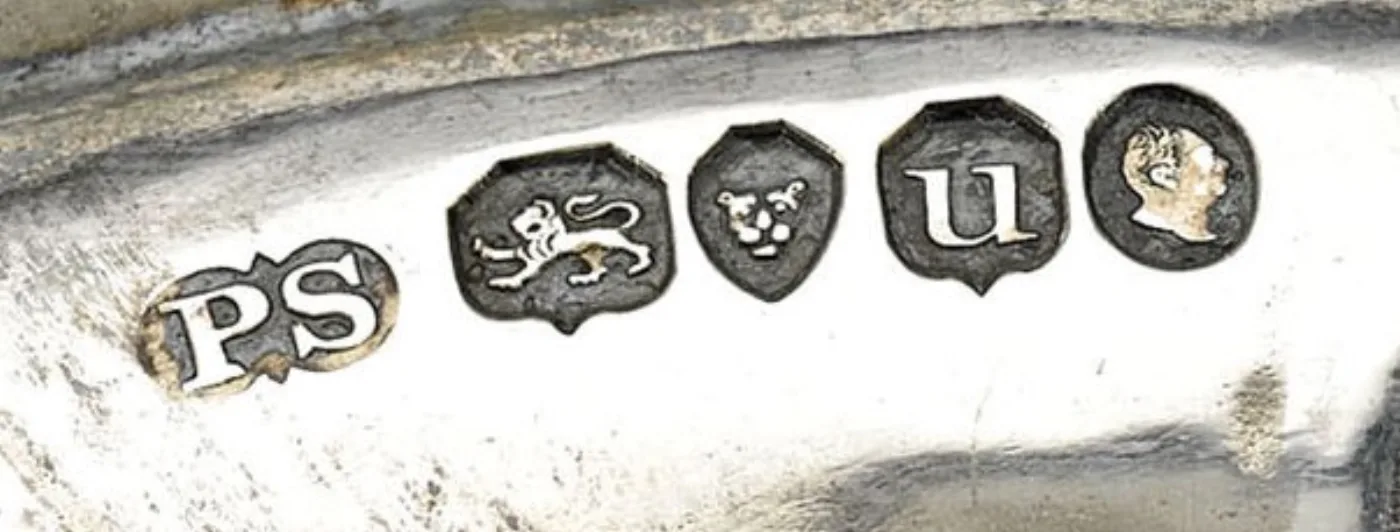
A fully marked piece of English sterling carries up to five separate punches, each struck with its own tool. The photograph at the top of this page shows all five in a single row, which is unusually legible — most pieces you handle will be worn, partly struck, or squeezed around a curve, and on flatware the punches are often gone entirely, which is why an English spoon is dated from its stem and bowl instead.
Reading left to right in that image:
- Maker's (sponsor's) mark — PS, the initials of the silversmith or firm that submitted the piece for assay. Paul Storr, in this case, one of the best-known Regency silversmiths.
- Standard mark — the lion passant, a walking lion in profile. This is the guarantee of sterling standard, 92.5% silver. It is the punch that matters most: no lion, no English sterling.
- Town mark — the leopard's head, which identifies the London assay office.
- Date letter — a single letter, here a lowercase u, in a shaped shield. Each office ran its own alphabet cycle.
- Duty mark — the sovereign's head in profile, showing that duty had been paid on the piece.
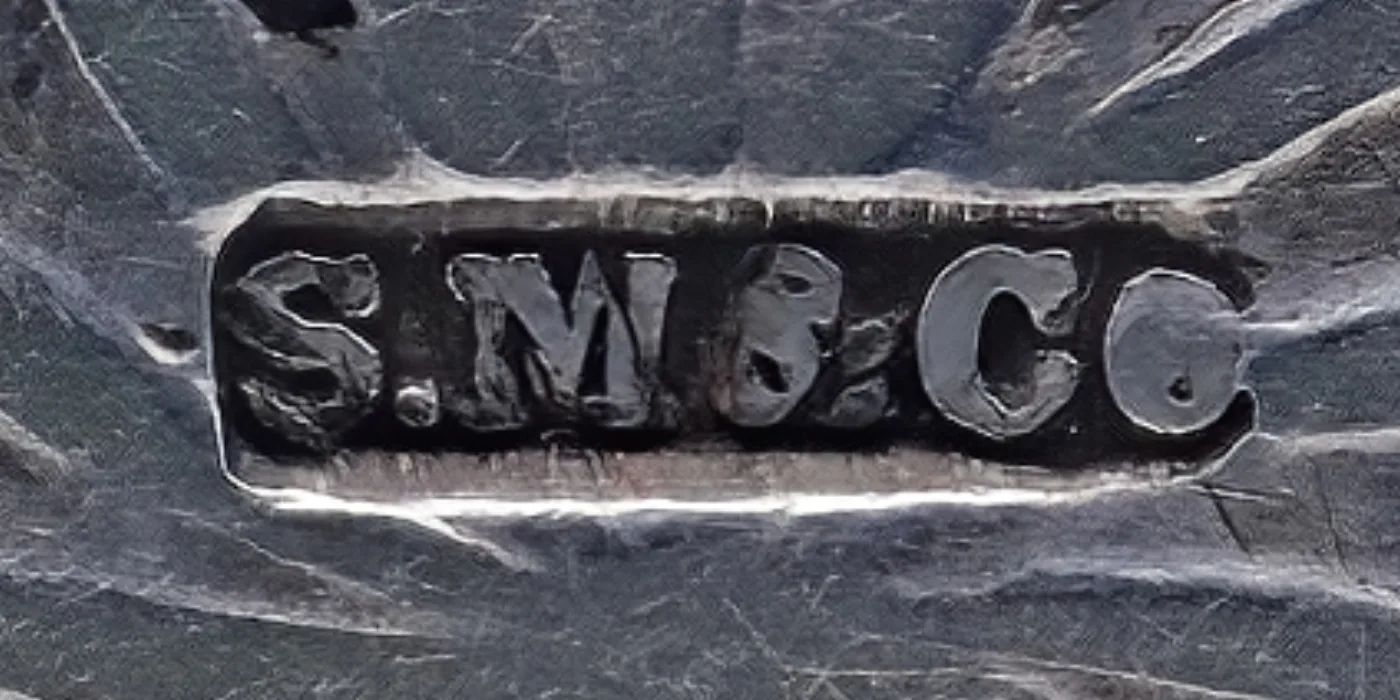
The maker's mark is the one that varies most in appearance, because the punch itself was cut for that individual firm. This close-up of a nineteenth-century mark shows how much the shape of the surrounding shield varies:
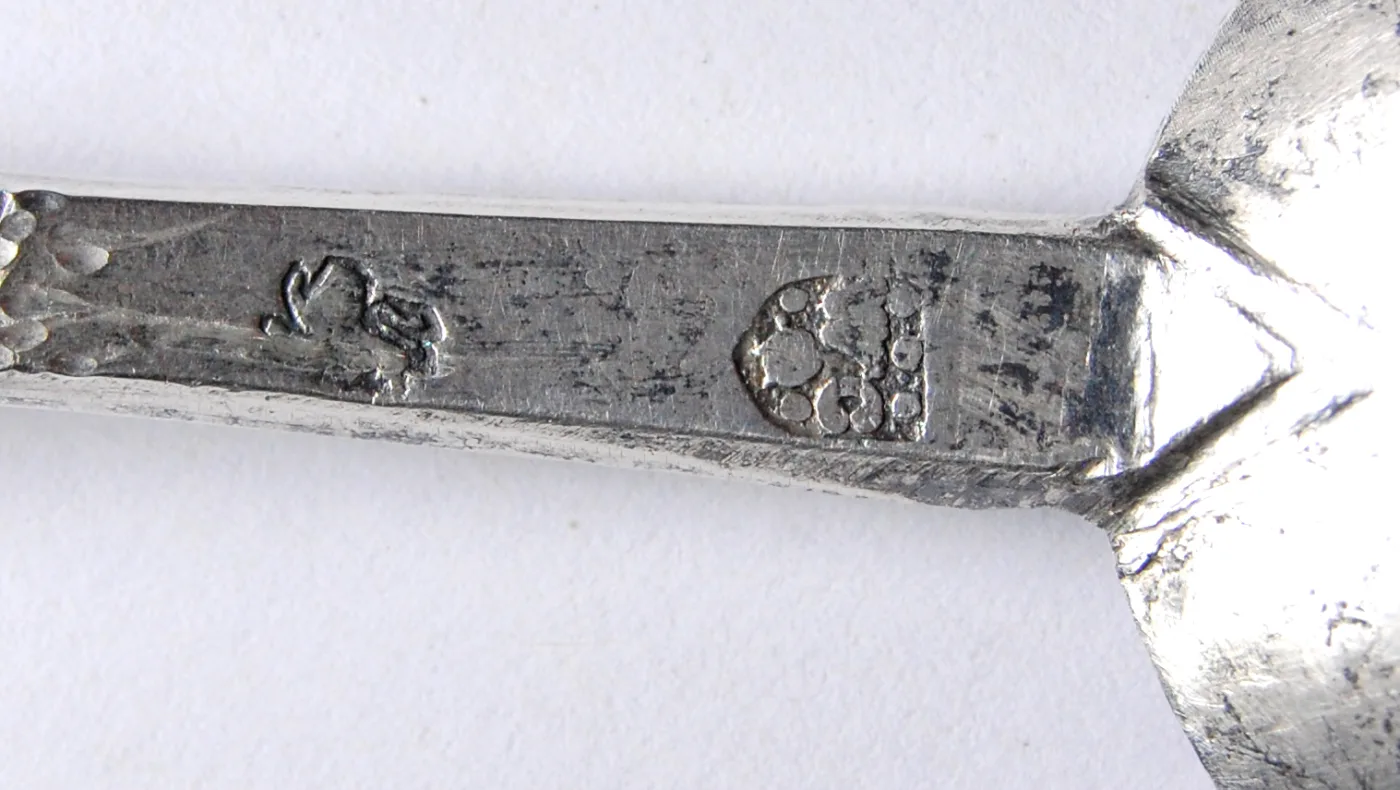
On earlier and on excavated pieces the maker's mark is often a device — a symbol or rebus — rather than initials:
Assay Office Town Marks
The town mark is the fastest route to a date range, because several assay offices closed permanently. If your piece carries the mark of a closed office, you have an immediate upper bound on its age without consulting anything else.
| Symbol | Assay office | What it tells you |
|---|---|---|
| Leopard's head | London | Still operating. The head was crowned until the early 1820s and uncrowned afterwards. |
| Anchor | Birmingham | Still operating. Office established 1773, so nothing earlier. |
| Crown | Sheffield | Office established 1773; the crown was used until the mid-1970s. |
| Rose | Sheffield | Replaced the crown from 1975 — a reliable marker of modern silver. |
| Castle | Edinburgh | Still operating. Scottish pieces may also carry a thistle or lion rampant standard mark. |
| Tree, fish and bell | Glasgow | Office closed 1964 — nothing later. |
| Three wheatsheaves and a sword | Chester | Office closed 1962 — nothing later. |
| Three castles | Newcastle | Office closed 1884 — nothing later. |
| Three-towered castle | Exeter | Office closed 1883 — nothing later. |
| Crowned harp | Dublin | Irish assay. Often accompanied by a figure of Hibernia. |
A Chester wheatsheaf therefore places a piece before 1962 on its own. An Exeter castle places it before 1883. That is a genuinely useful bound to establish in five seconds, and it is the reason the town mark is worth learning before the date letters.
Narrowing the Date in Four Steps
Date letters are the last step, not the first, because you cannot read one until you know which office's alphabet to look it up in. Work through the marks in this order:
- Is there a sovereign's head? The duty mark was in use from 1784 until 1890. Its presence brackets the piece to roughly a century straight away; its absence on an otherwise fully marked English piece points either side of that window.
- Is the standard mark a lion passant, or a seated Britannia? The higher Britannia standard (95.8% silver), struck with a figure of Britannia and a lion's head erased instead of the usual marks, was compulsory between 1697 and 1720 and optional afterwards.
- Which town mark? This decides both the office and, for the closed offices in the table above, an upper bound.
- Now read the date letter against that specific office's cycle. The letter alone is meaningless — the same letter recurs every twenty-odd years, and the font and shield shape are what separate one cycle from the next.
Steps one to three cost nothing and often narrow a piece to a few decades. Only step four needs a reference table, and by then you know exactly which table.

Struck Marks vs Engraved Initials
This is the most common beginner error, and it is easy to avoid once you have seen the difference side by side. Hallmarks are struck with a punch: the metal is displaced, so the mark sits in a small depression with a raised lip around it, and the letterforms are blunt. Owner's initials are engraved: metal is cut away with a graver, leaving fine, sharp lines with no surrounding deformation.
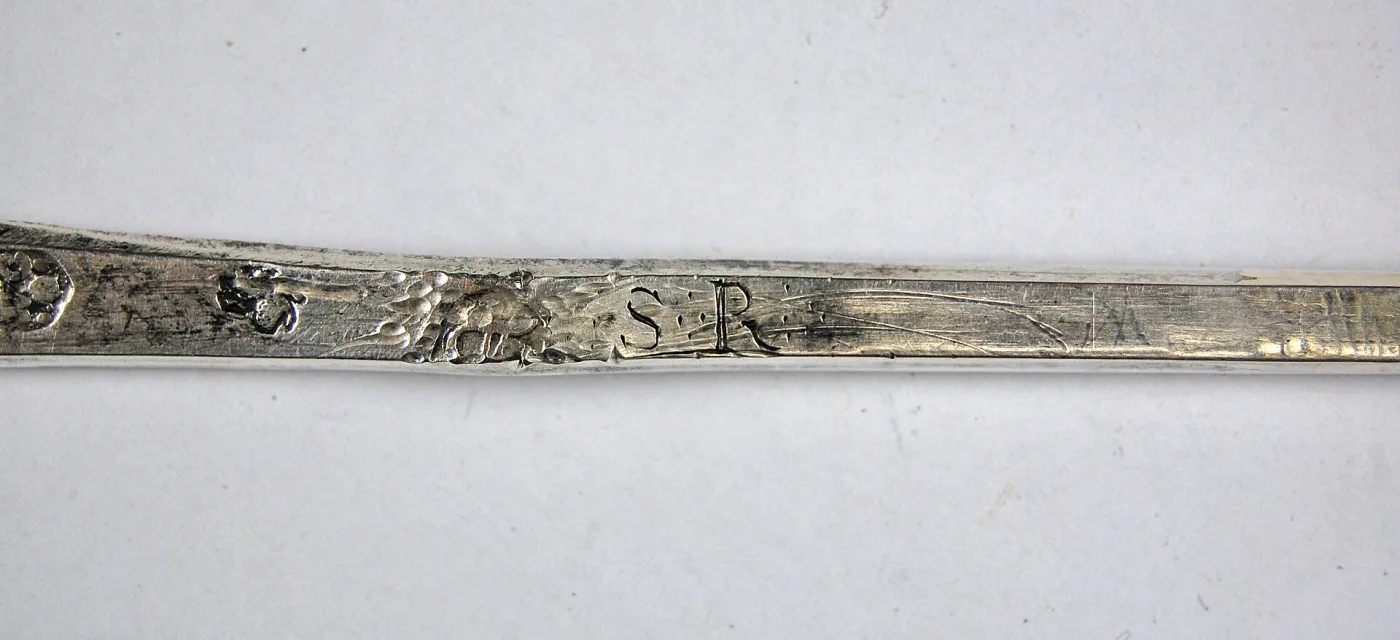
Engraved initials, monograms and crests were added at any point in a piece's life, frequently long after manufacture. They tell you about ownership, not origin. Treat them as provenance, never as identification — a point that matters just as much when you come to value a piece, since a later monogram usually reduces rather than adds worth.
When the Mark Is Not British
Plenty of Continental and later silver carries marks that look broadly similar at a glance but follow an entirely different system. The quickest tell is that most non-British systems state fineness as a number, where the British system uses an animal.
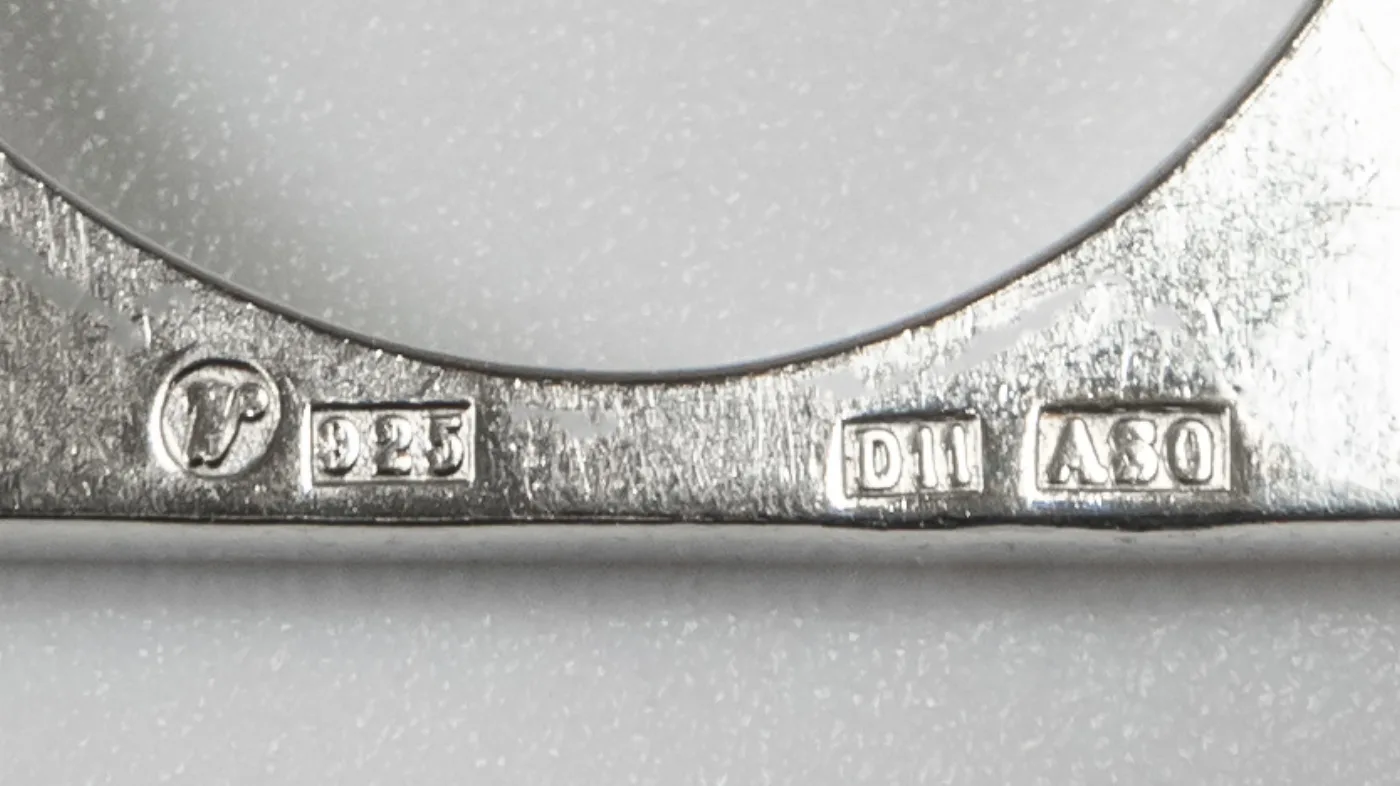
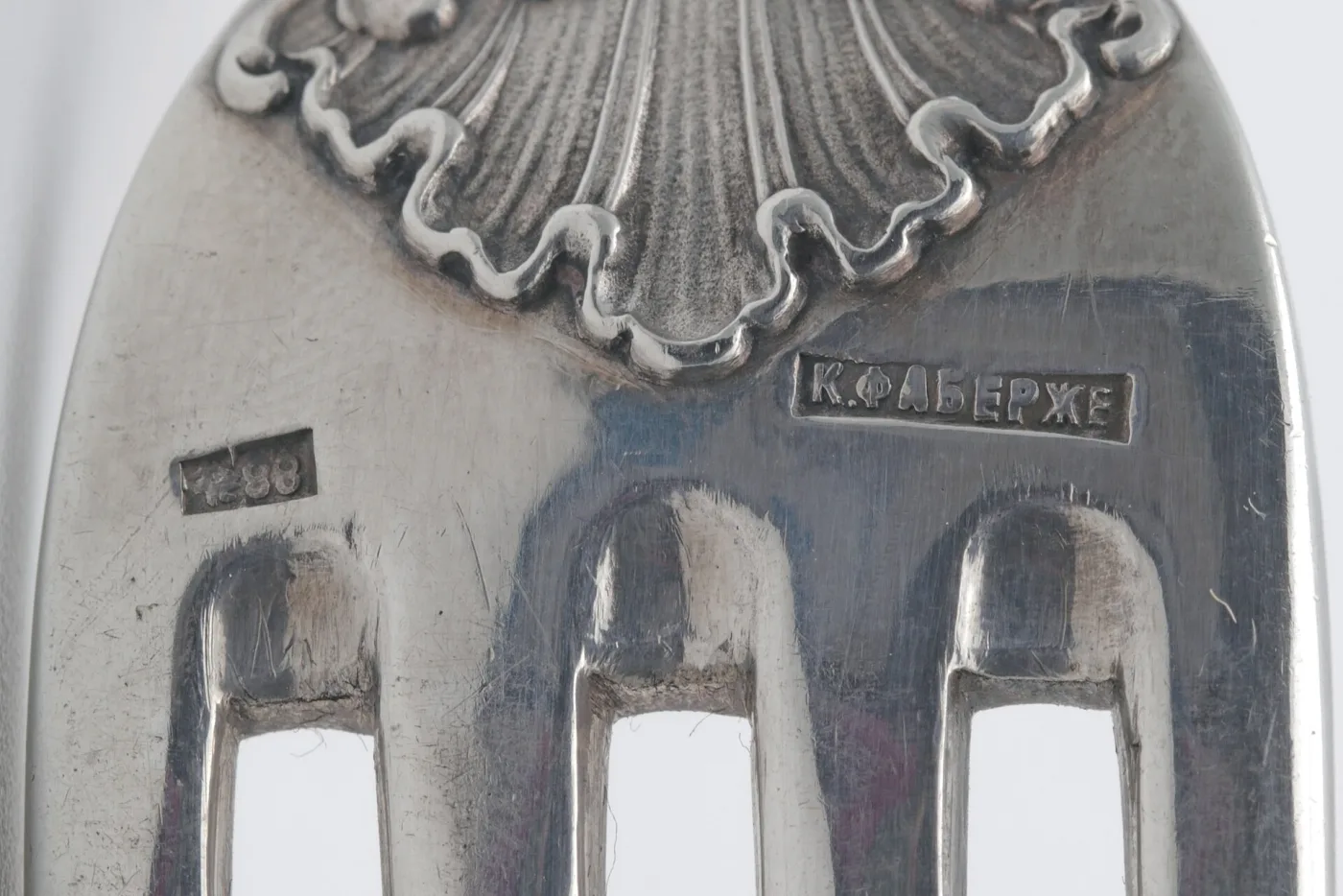
If you find a numeral standard such as 800, 830, 900 or 925 rather than a lion, you are almost certainly outside the British system, and the British date-letter tables will not apply. The same logic helps when sorting souvenir spoons, which were produced across Europe and North America for the same tourist market and mixed freely in collections.
Plate Posing as Sterling
Electroplated wares were frequently marked with a row of small punches arranged to resemble a hallmark — separate shaped shields, struck in a line, in the same position on the object. These are pseudo-hallmarks. They were not illegal in themselves, but they cause endless confusion, and they are the reason you should read the marks rather than merely notice that marks exist.
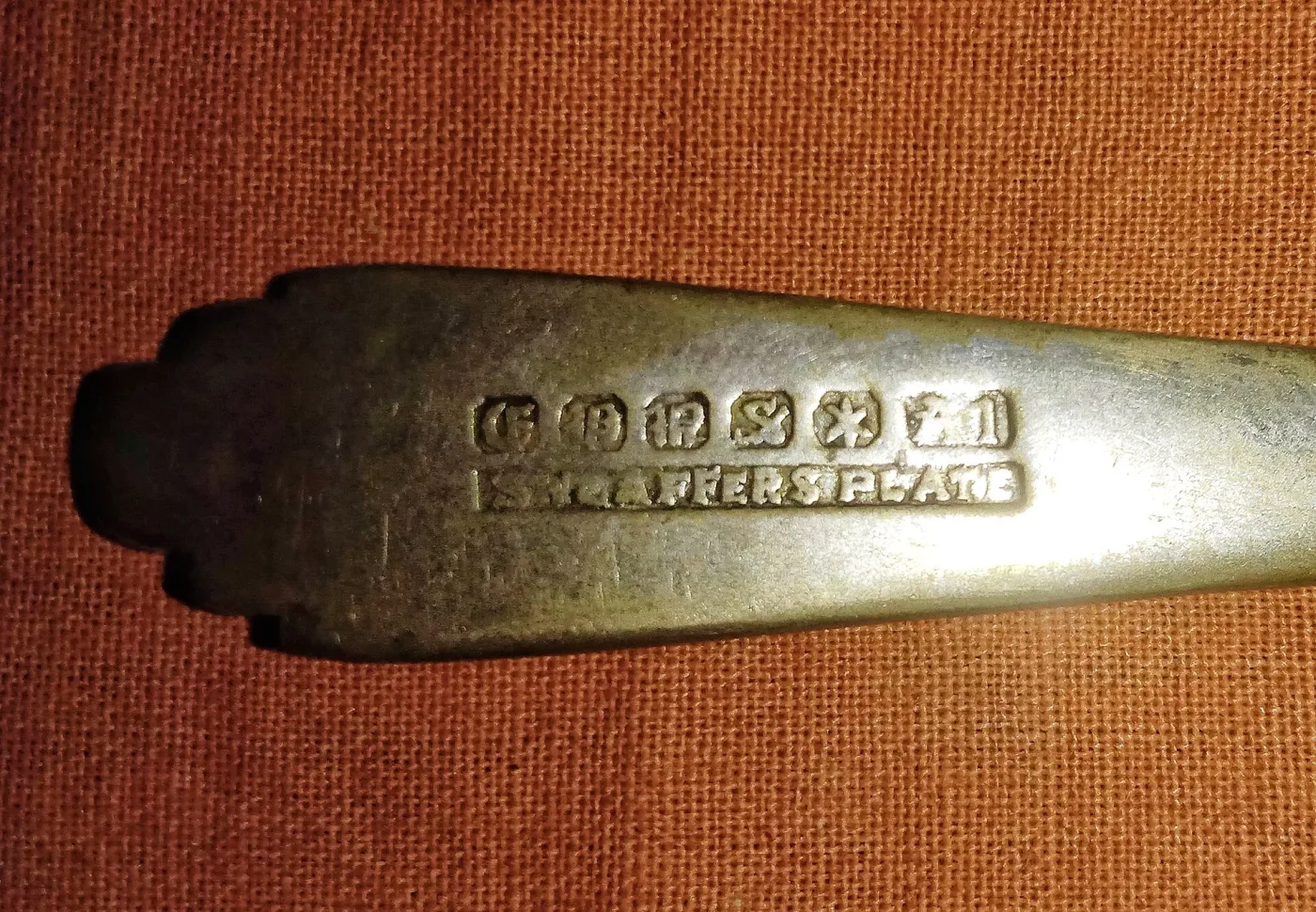
Words are the giveaway. Genuine British assay marks are symbols and single letters in shaped shields; they never spell out PLATE, EPNS, A1, NICKEL SILVER or a firm's full trading name in a hallmark row. Any of those words means plated base metal. The related but quite distinct fused-plate process is covered in our guide to Sheffield plate, and unmarked white metals are worth comparing against pewter, which is softer, greyer and never carries a lion. A single punch with no assay marks at all is a different case again and often means colonial America, where a porringer is dated from its handle rather than a date letter.
Reading Worn Marks
Most real-world marks look nothing like the crisp Paul Storr row. Spoons and forks are handled and polished for generations, and the marks on the stem take the worst of it.
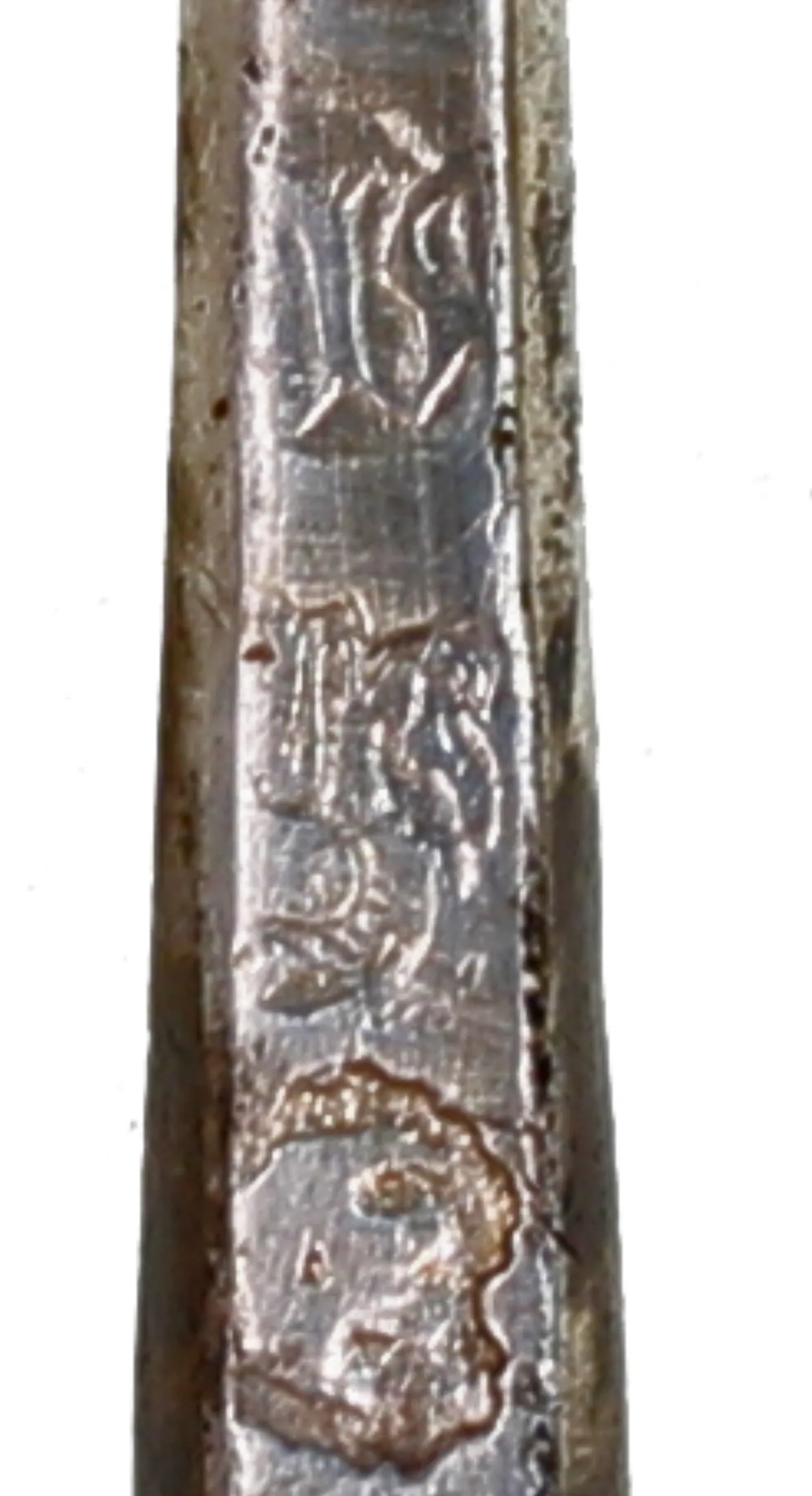
Three practical habits help. Use raking light from one side rather than straight-on light, so the shallow relief throws a shadow. Photograph the marks and enlarge the image rather than straining at the object. And work outward from whichever punch is clearest — if you can identify the town mark, the number of possible date letters collapses immediately.
Where marks are genuinely unreadable, the object itself still carries evidence: construction, wear pattern, and the form of the piece. Those are the same clues used across silver flatware generally, and they matter for smaller marked items such as antique jewellery, where there is often barely room for a partial mark.
Frequently Asked Questions
What does the lion passant mean on British silver?
The lion passant — a walking lion shown in profile — is the English standard mark, guaranteeing the piece is sterling: 92.5% silver. It is the single most important punch to find. If there is no lion passant, the piece is not English sterling, whatever else is stamped on it.
How do I date a piece of British silver from its hallmarks?
Work in this order. Check for a sovereign's head duty mark, which brackets the piece to 1784–1890. Check whether the standard mark is a lion passant or a seated Britannia, since the Britannia standard was compulsory between 1697 and 1720. Identify the town mark, which names the assay office and, for offices that have closed, gives an immediate upper date bound. Only then read the date letter, against that office's own alphabet cycle.
Does EPNS or A1 mean a piece is sterling silver?
No. Both indicate plated base metal. EPNS stands for electroplated nickel silver, and A1 is a plating quality grade rather than an assay mark. Genuine British assay marks are symbols and single letters in shaped shields; they never spell out words such as PLATE, EPNS or a firm's trading name.
What is the sovereign's head hallmark?
A profile of the reigning monarch, struck to show that duty had been paid on the piece. It was in use from 1784 until 1890, so finding one brackets a piece to roughly that century straight away.
Are engraved initials part of the hallmark?
No. Hallmarks are struck with a punch, so the metal is displaced and the mark sits in a shallow depression with a raised lip around it. Owner's initials are engraved: metal is cut away with a graver, leaving fine sharp lines and no deformation. Initials were frequently added long after manufacture and carry no dating value.
The Short Version
Find the lion passant first — it is the sterling guarantee, and its absence is the single most informative thing about a piece. Then read the town mark for the office and, if that office is closed, an instant upper date bound. Check for a sovereign's head to test the 1784–1890 bracket. Only then look up the date letter, in that office's own cycle.
And before any of that, satisfy yourself that you are looking at struck punches rather than engraved initials, and at symbols rather than words. Those two checks alone resolve most of the pieces that come in labelled "old silver, unknown".