How to Read Pottery Marks: Makers’ Marks, Signatures and Backstamps
Turn a plate or vase over and you may find a name, a printed crest, a scratched signature, a number, or all four. Pottery marks, also called ceramic marks, backstamps or makers’ marks, can tell you who made a piece, where, and roughly when. They can also mislead you, because some of the dates printed on a mark have nothing to do with the year the piece was made.
This guide reads a mark in the order that settles most cases: how it was applied, whose name it carries, what its wording dates, and only then any bird, crown or number. The dating table in Step 3 was built for this article from the sources named beside it. Once you have a maker’s name, the guides at the end take you the rest of the way.
Table of Contents
Where to Find the Mark
Start with the base, inside the foot ring. If it is bare, check inside any lid, under the handle, and on the body near the foot, which is where makers of stoneware and redware often stamped their names. Look before you clean: a printed mark on top of the glaze can wear away, and a faint impressed mark shows best with a light held low to one side.
No mark is not a verdict. The Potteries.org guide to English marks explains that early wares were sold to merchants and exporters rather than to the public, so firms had little reason to name themselves on them. An unmarked piece can be old, and it can be good.
Step 1: How Was the Mark Applied?
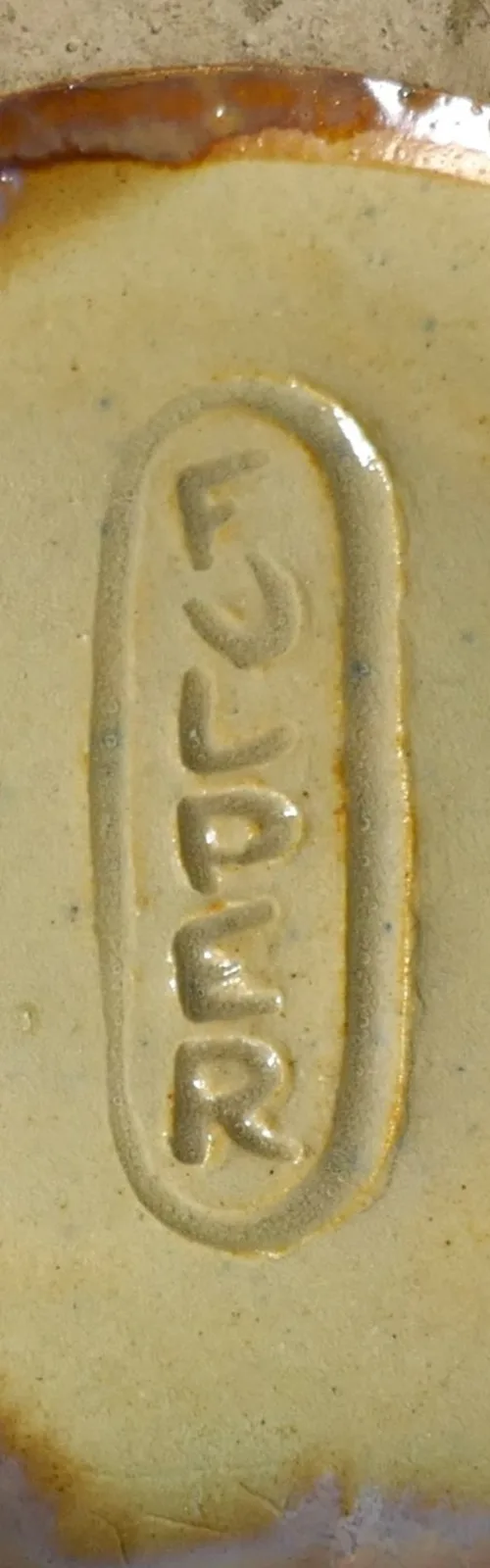
Before you read the words, work out how they got there. The Potteries.org and Hemswell Antique Centres both separate marks by method, and the method tells you whether the mark went on at the factory or could have been added later. Run a fingernail across it: impressed and incised marks have depth, and printed marks are flat.
| Method | What you see | What it tells you |
|---|---|---|
| Impressed | Clean letters pressed into the clay with a stamp | Made before firing, so hard to fake afterwards. Common on early Staffordshire and Wedgwood |
| Incised | Letters cut or scratched by hand, slightly uneven | Often a potter’s own hand, or a small workshop |
| Moulded | Raised letters that are part of the mould | A factory product, and easy to compare with documented examples |
| Printed | Flat ink or transfer with fine lines, under or over the glaze | A factory mark, mostly 19th century onward, often with a pattern name |
| Painted | Visible brush strokes | A signature, a decorator’s initials or a batch mark, and not always the factory |
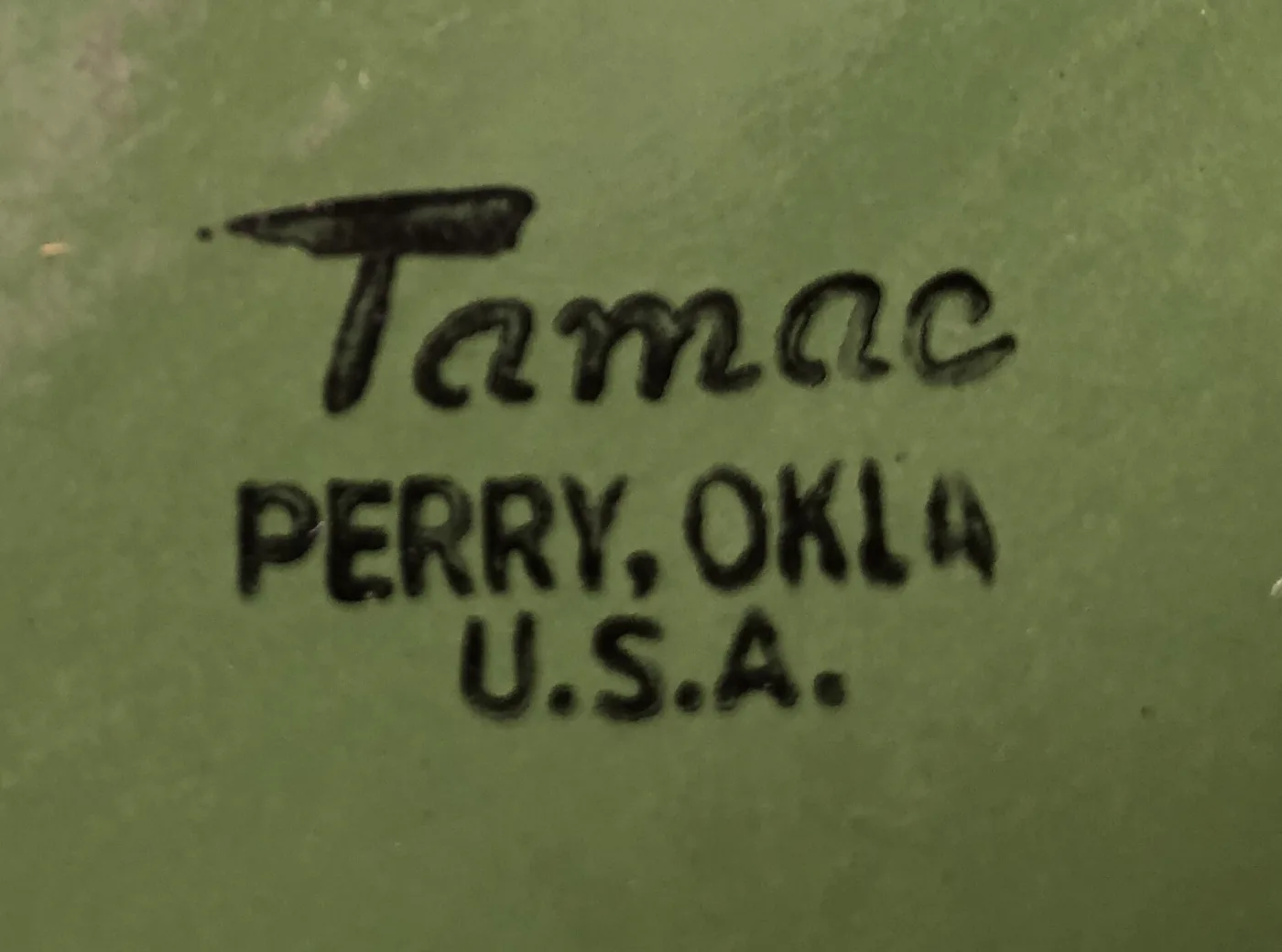
Step 2: Whose Name Is It?
A name on a base is not always the name of the firm that made the piece. It can belong to any of four people.
- Factory marks name a company or brand. Search these first, because they are the best documented.
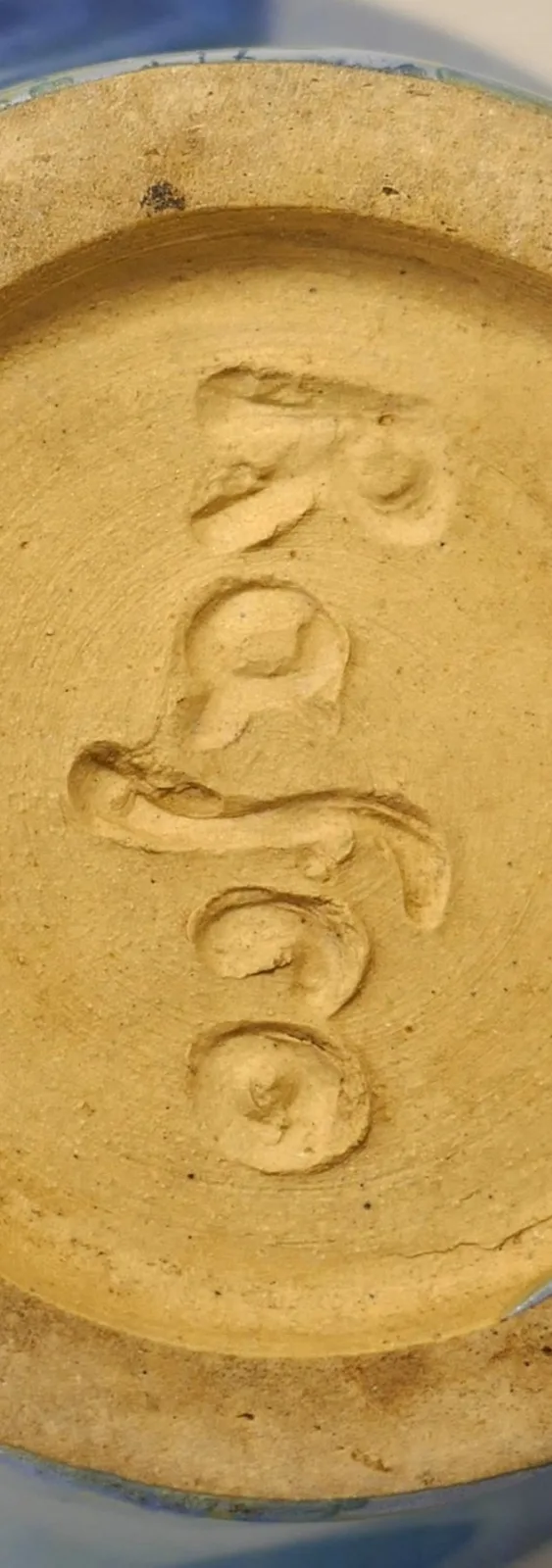
- Potters’ marks are a personal name, initials or a small device added by the maker. They are the hardest to trace, and a cipher with no documented match is a research lead, not an attribution.
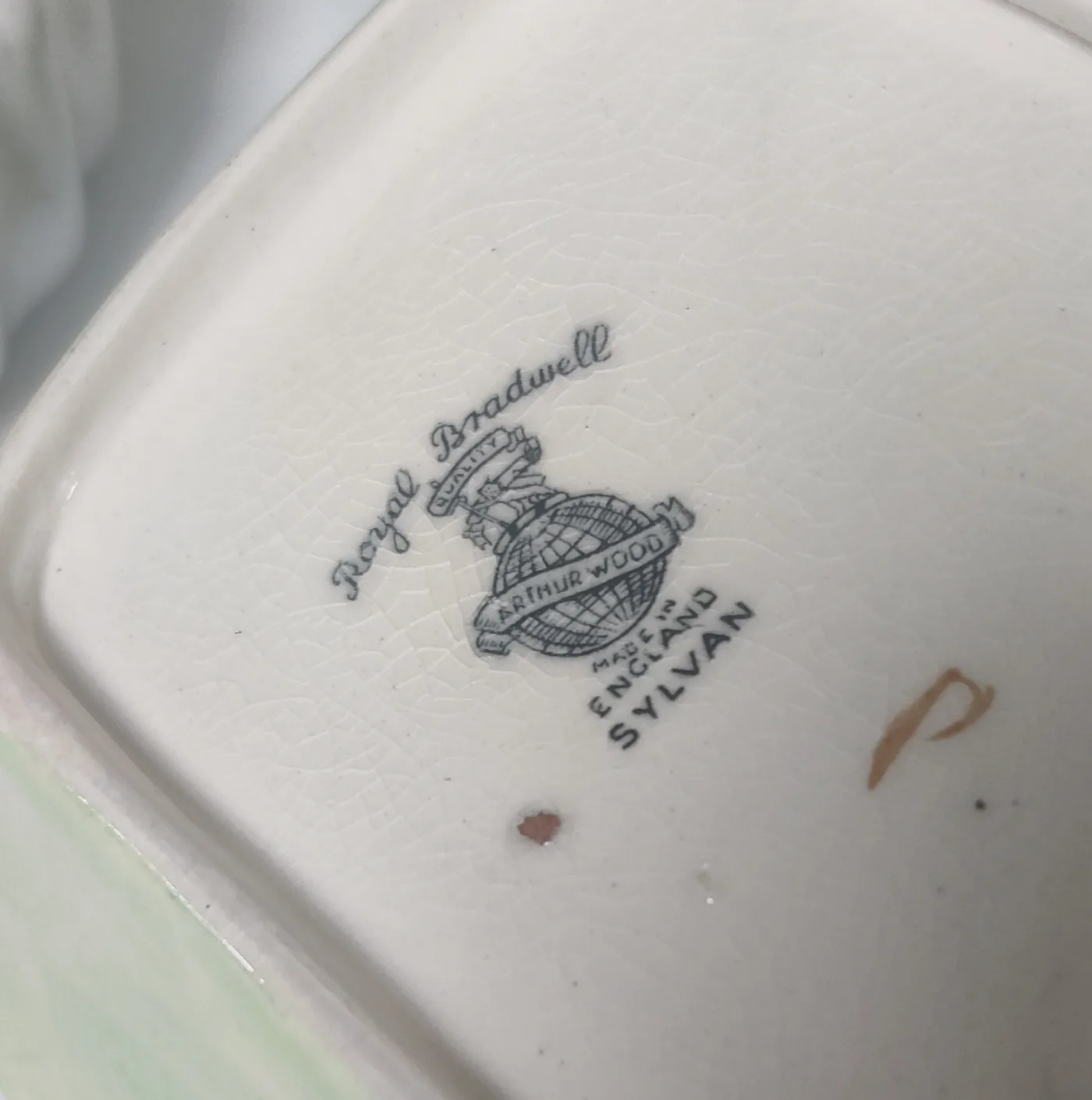
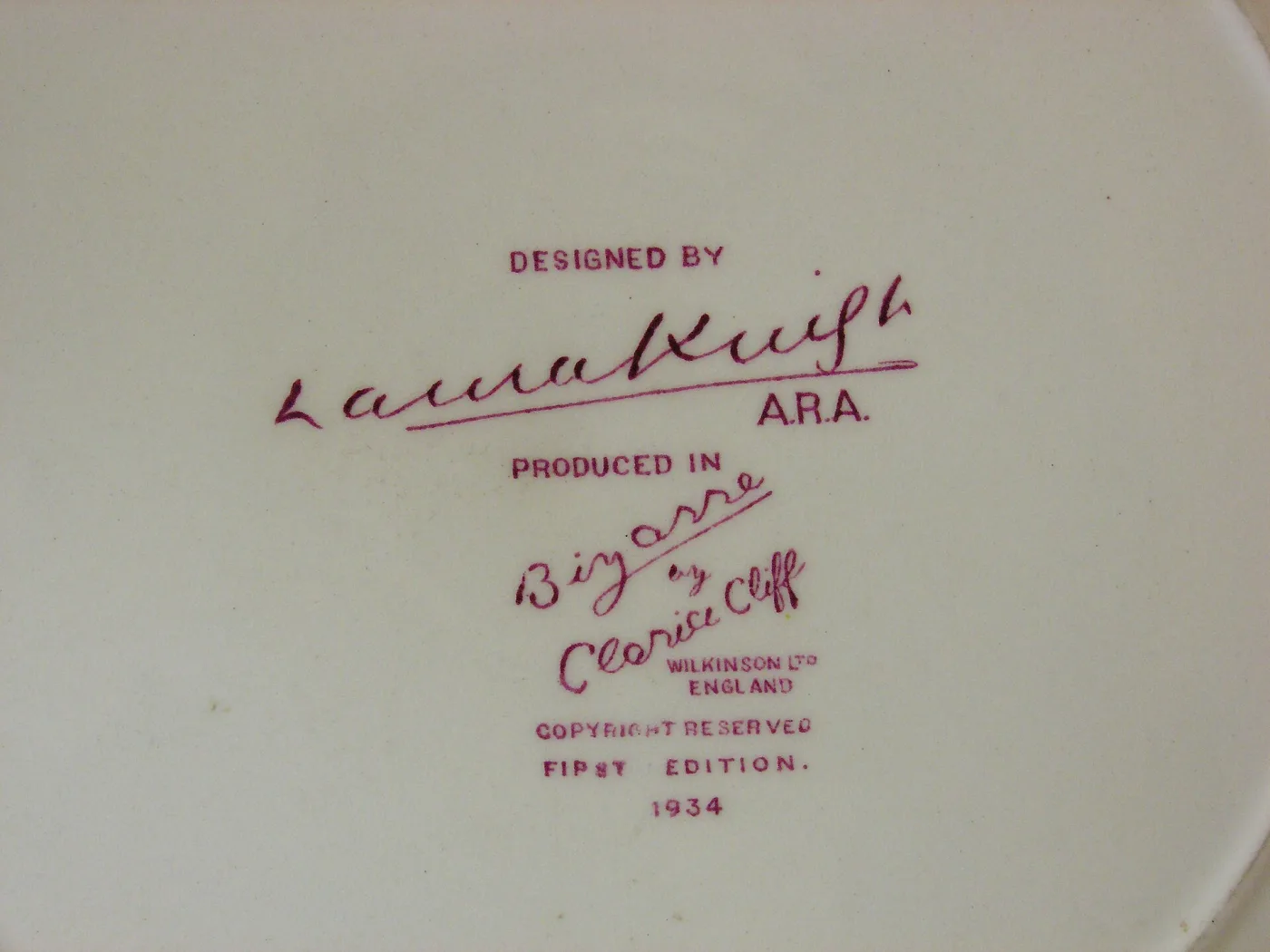
- Designers’ and decorators’ signatures name whoever drew or painted the piece. Hemswell notes that hand-painted marks may be artist signatures or decorators’ initials. A signature on pottery tells you who decorated it, and the factory may be elsewhere in the mark.
- Retailers and importers sometimes added their own names, so check for words such as “made for”.

Step 3: Date It From the Wording
Most of the useful dating on a mark comes from ordinary words, because the law or a customs rule forced makers to add them. Each row below gives you a floor: the piece is unlikely to be older than that date, but it can be much newer. The dates for English wares follow The Potteries.org, checked against Hemswell where it covers them; the Japanese rows follow the Gotheborg glossary and the Texas Historical Commission.
| On the mark | Not before | Why | The trap |
|---|---|---|---|
| British Royal Arms | About 1806 | Prestige; the earliest firmly dated use is Hicks & Meigh | Many firms used the arms without a warrant, so they do not prove royal custom |
| Diamond registration mark | 1843 (ends 1883) | British design registration from the 1842 Act | Dates the design, and production could run for years afterwards |
| “Rd No” and a number | 1884 | Replaced the diamond | Also a design date, so the piece can be later |
| “Trade Mark” | 1862, mostly after 1875 | Merchandise Marks Act 1862, then the Trade Marks Registration Act 1875 | A floor only |
| “Ltd” or “Limited” | After 1861 | Limited companies were rare until the 1890s and normal by 1900 | Check when that firm became limited |
| “England” | 1891 | The US McKinley Tariff of 1890 required the country of origin in English | A few firms used it earlier, and many went on using it |
| “Made in England” | About 1914, common by 1921 | Stricter US marking rules | Mintons used it from about 1902, and some firms kept plain “England” |
| “Nippon” | 1891 (ends 1921) | US customs stopped accepting it in 1921 | Compliance was not exact, and a few firms kept the word in their names |
| “Japan” or “Made in Japan” | 1921 on most exports | Replaced “Nippon” | Use 1921 as a starting point, not a hard line |
| “Occupied Japan” | 1945 (ends 1952) | Required on exports during the occupation | Fake examples exist, and only part of the output was marked this way |
| Five-digit US ZIP code | 1963 | ZIP codes began on July 1, 1963 | None: a ZIP code is always modern |
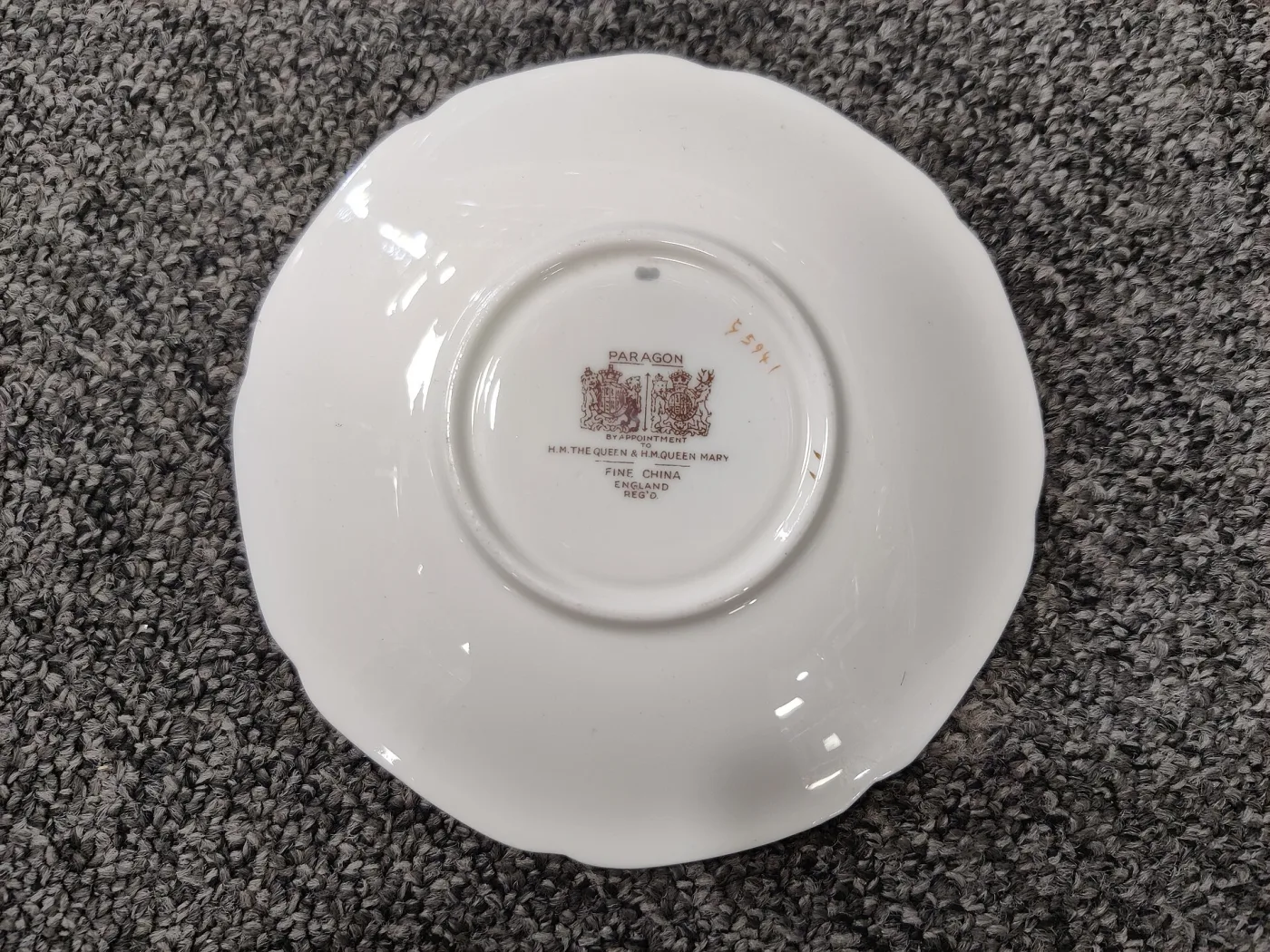
Use the rows together. The Potteries.org traces one firm through them: plain “Mintons” to 1890, “Mintons England” from 1891 to about 1912, then “Made in England”. Titles can narrow a date further, and the three marks below show why a date on a mark must be read before it is trusted.
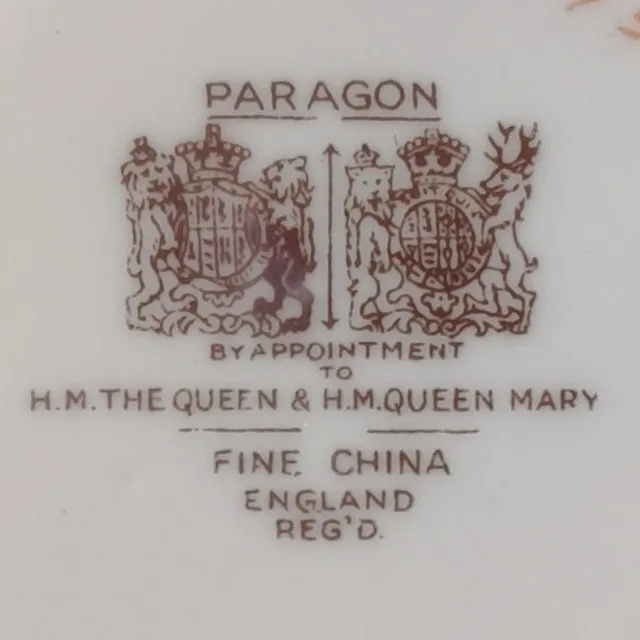
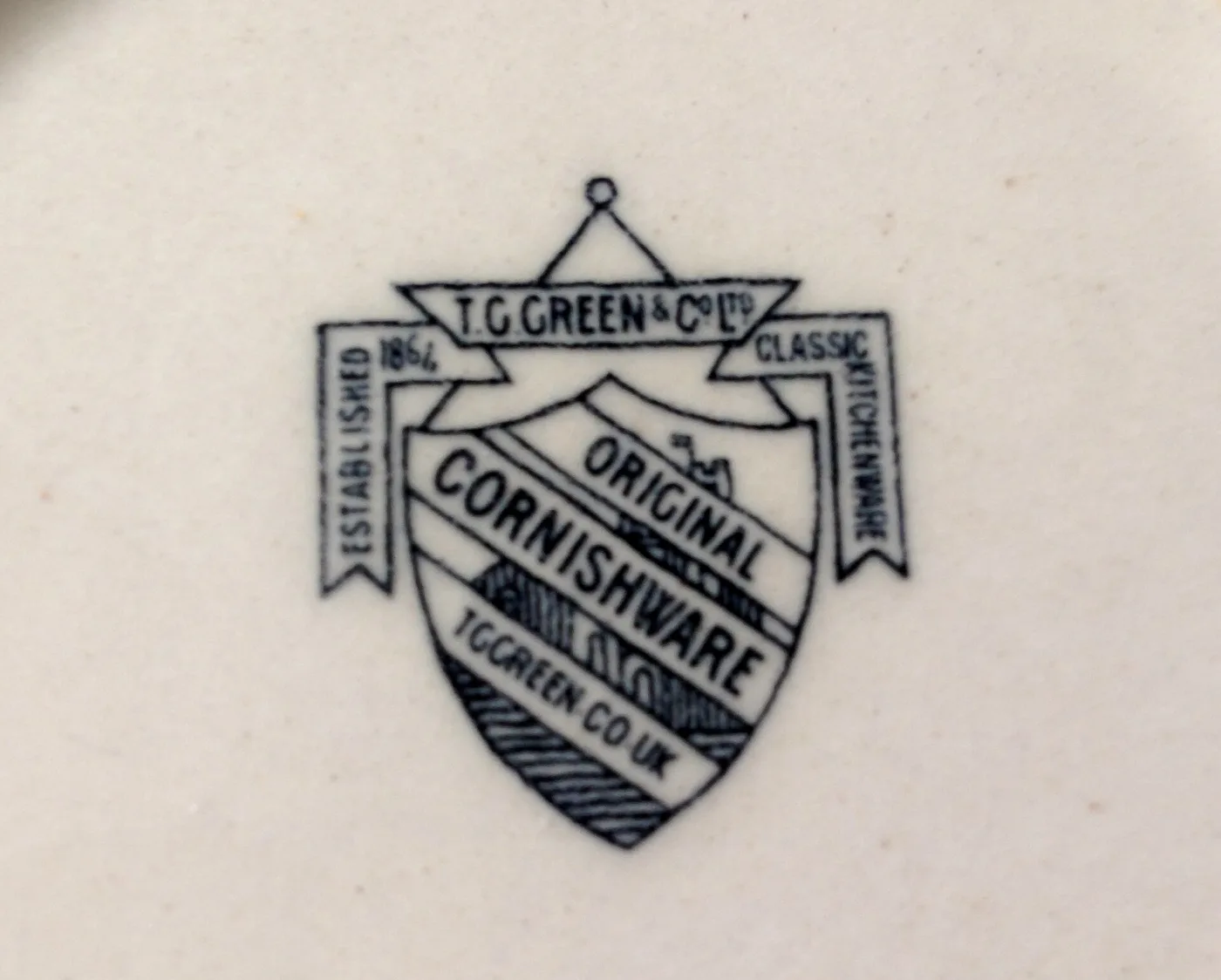
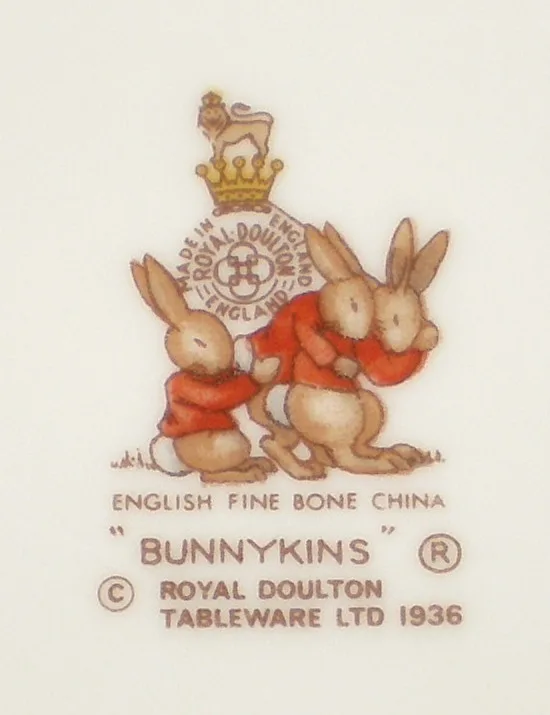
Step 4: Birds, Crowns and Other Devices
Read the picture last. Bird pottery marks attract a lot of searches, but a bird, lion, crown or anchor is rarely enough on its own, because many firms and countries used the same few symbols. A bird can be doing three different jobs:
- A factory device, printed or impressed on the base, normally with words or numbers around it.
- A pattern name, where the bird illustrates the design rather than the maker.
- Plain decoration on the body or lid, which is not a mark at all.
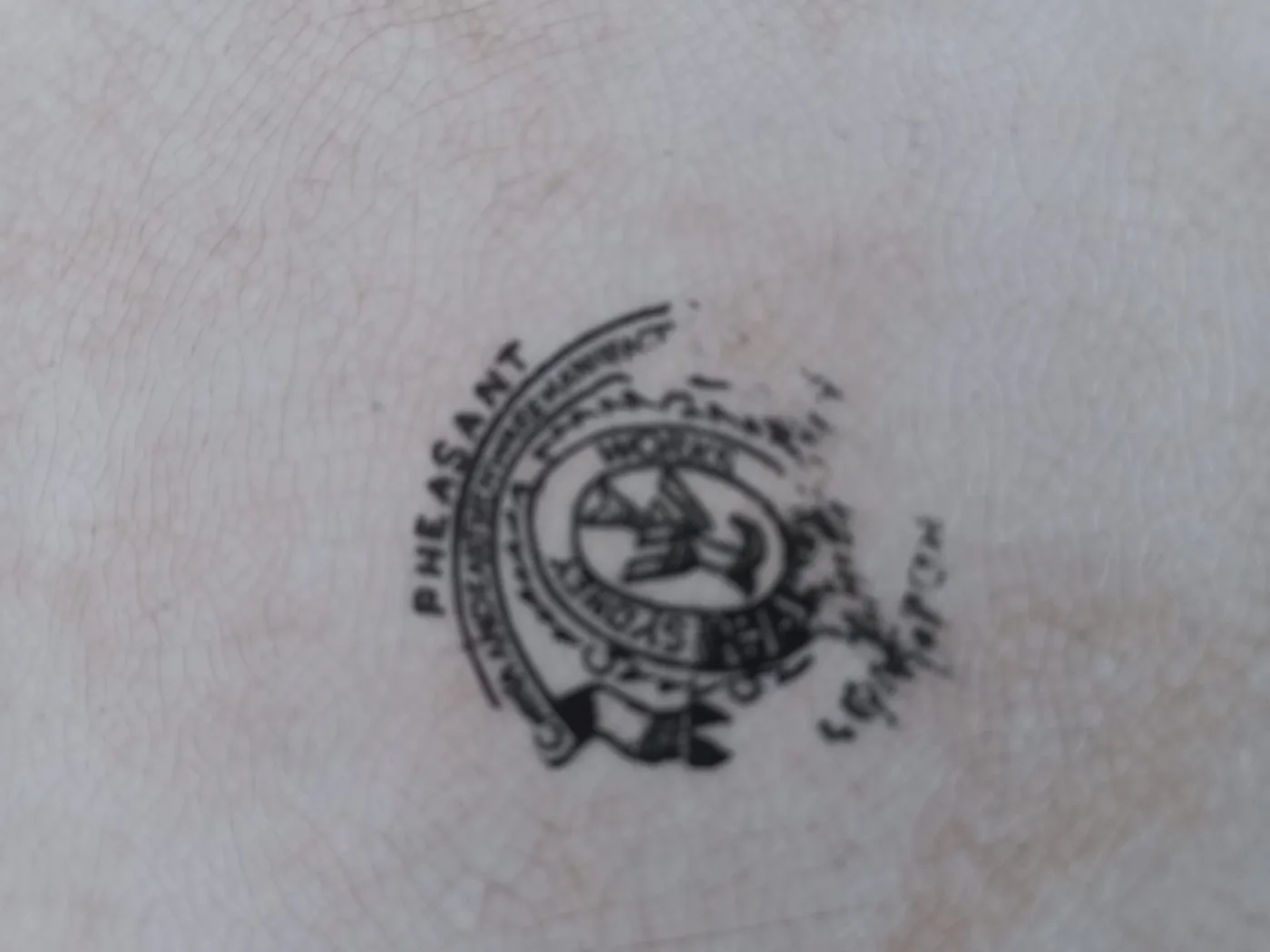
The same rule applies to crowns and lions. Hemswell cites Royal Doulton’s lion and crown, visible on the Bunnykins mark above, as a factory mark, but the crown alone is on the wares of many other firms. Photograph the device with every letter around it, and search the words first.
Numbers That Are Not Dates
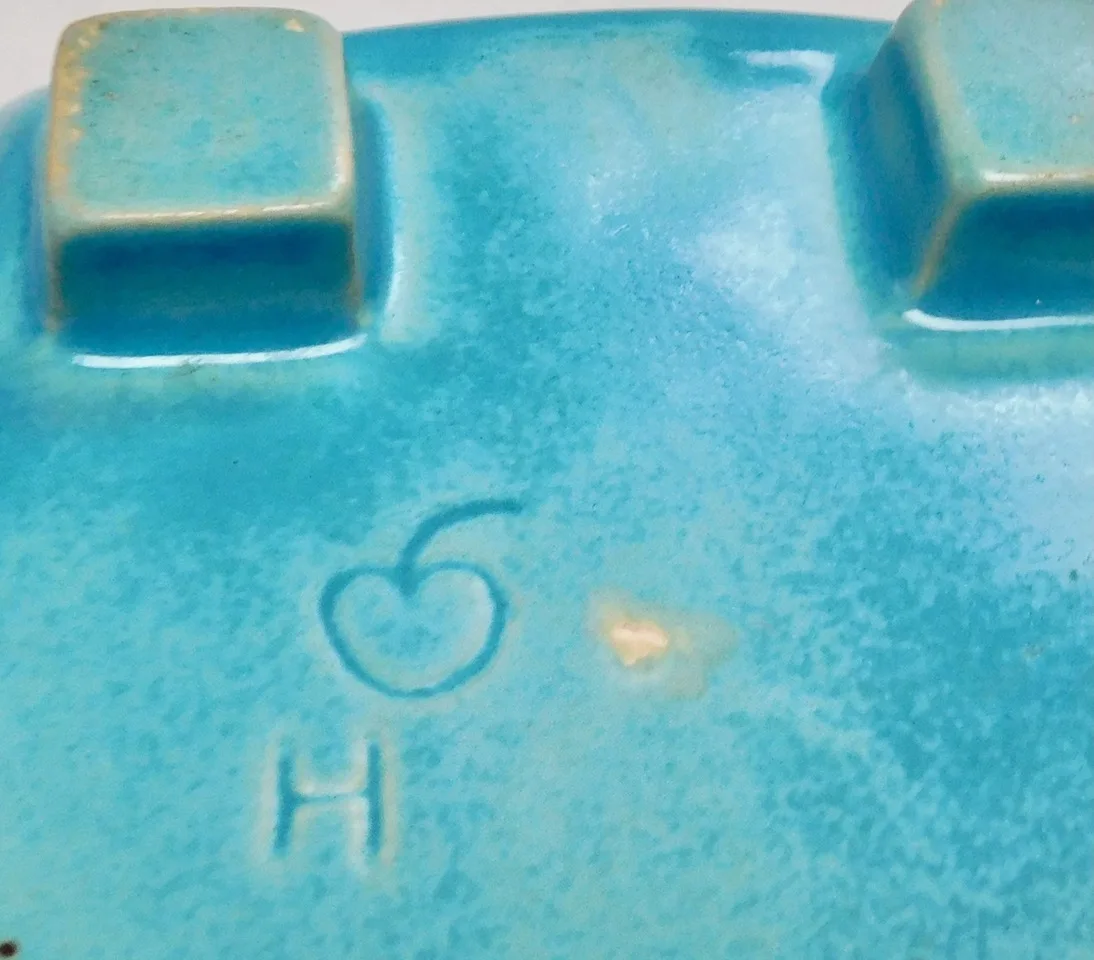
A number on a base is usually a catalogue reference. The Potteries.org explains that by the late 19th century firms held thousands of designs and tracked them in pattern books by number, and American art potteries such as Hull used mould and size numbers in the same way. Few of these numbers are years. They help most when you can compare them with a maker’s catalogue.
Museums, dealers and collectors also write inventory numbers on bases, and these are easy to mistake for a factory mark.
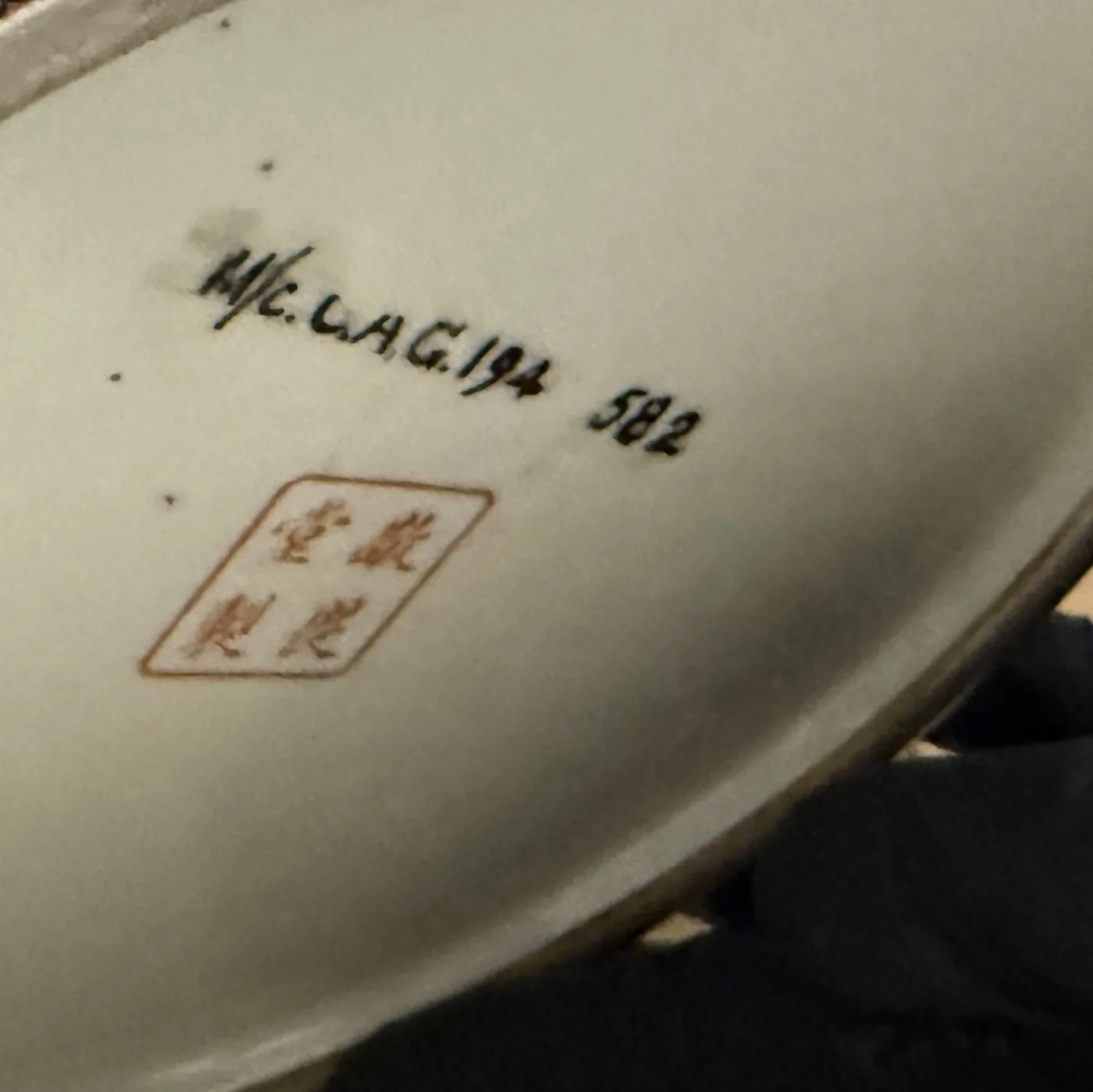
Match the Mark to a Maker
Once you have a name, go to a guide for that maker, because each firm’s marks changed in its own way. The Roseville pottery guide covers raised script marks, and the McCoy pottery guide and Weller pottery guide cover the other big Ohio names. For the UK, read the Wedgwood guide and the transferware guide. Porcelain marks work differently, so start with the Limoges guide or the Nippon guide. For the wider picture, the ceramics and pottery guide covers bodies and glazes.
Frequently Asked Questions
How do I identify a pottery mark?
Photograph the whole base, then work out how the mark was applied, read any maker’s name, and use the wording to set a date range. Search the words before the picture. Once you have a name, compare the mark with a guide to that maker, because reproductions can copy a mark closely.
Are pottery marks and hallmarks the same thing?
Not strictly. A hallmark is an official assay mark on silver and other precious metals, while a pottery mark is a maker’s or factory’s own mark. Collectors often say “pottery hallmarks” anyway, and they mean makers’ marks and backstamps.
What are potters’ marks?
They are personal marks added by the maker, such as a name, initials or a small device, often incised by hand. Factory backstamps name a company instead. Both can appear on one piece, and a potter’s mark with no documented match is a lead rather than an attribution.
What does a bird mark on pottery mean?
It can be a factory device, an illustration of a pattern name, or plain decoration. Treat it as a mark only when it is on the base with other words or numbers. Many makers used birds, so identify the words around it first rather than searching by species.
What if my pottery has no mark?
Many genuine pieces are unmarked, especially early wares and utilitarian stoneware. Look at the clay, glaze, shape and how the foot was finished, then compare them with documented pieces. A missing mark does not make a piece modern or worthless.
Is there an app that identifies pottery marks?
Yes. Antique Identifier takes a photo of the piece and its mark and gives a likely identification with an era, origin and estimated value, and it includes 3 free scans on iPhone. Treat the result as a research lead, and ask a specialist before you insure or sell a valuable piece.
The Short Version
Read a mark in order. Check how it was applied and whether it could have been added later. Work out whether the name is a factory, a potter, a designer or a retailer. Use the words to set a floor: “England” from 1891, “Made in England” from about 1914, “Rd No” from 1884, and a ZIP code from 1963. Treat any printed date with suspicion until you know what it is dating. Leave the bird, the crown and the numbers until last.