
Is the Glass Original? Reading an Antique Mirror’s Plate, Silvering and Back
An old mirror is two objects that only look like one: a frame and a plate of silvered glass. Frame styles are well documented and widely copied, and the antique mirror identification guide covers them period by period. This guide is about the other half, the half people forget to check.
It works through four things you can see without taking anything apart: the number of plates, the coating, the back, and any label or stamp. Each dates something different, and the table near the end says what.
Table of Contents
Why the Glass Is a Separate Question
Mirror glass was never treated as permanent, even by the people who sold it. The printed labels of the Philadelphia looking-glass dealer John Elliott are the clearest evidence. His 1760s labels, in English and German, say he “new Quickfilvers and Frames old Glasses, and supplies People with new Glass to their own Frames.” A label his son used in the 1780s still offered looking glasses “new Quicksilvered and Frames”, according to Christie’s catalogue of a labelled example, and the son’s later Front Street label, transcribed by Historic Odessa, promises “Old glasses new quicksilvered and framed as usual, and new Glass supplied to People’s old Frames.”
So a frame and its glass can part company early, by the hand of the shop whose label is on the back. Dating one does not date the other.
Check 1: One Plate or Two
On a tall old looking glass, look for a horizontal line across the glass, often about a third of the way down: the edge of a second plate.
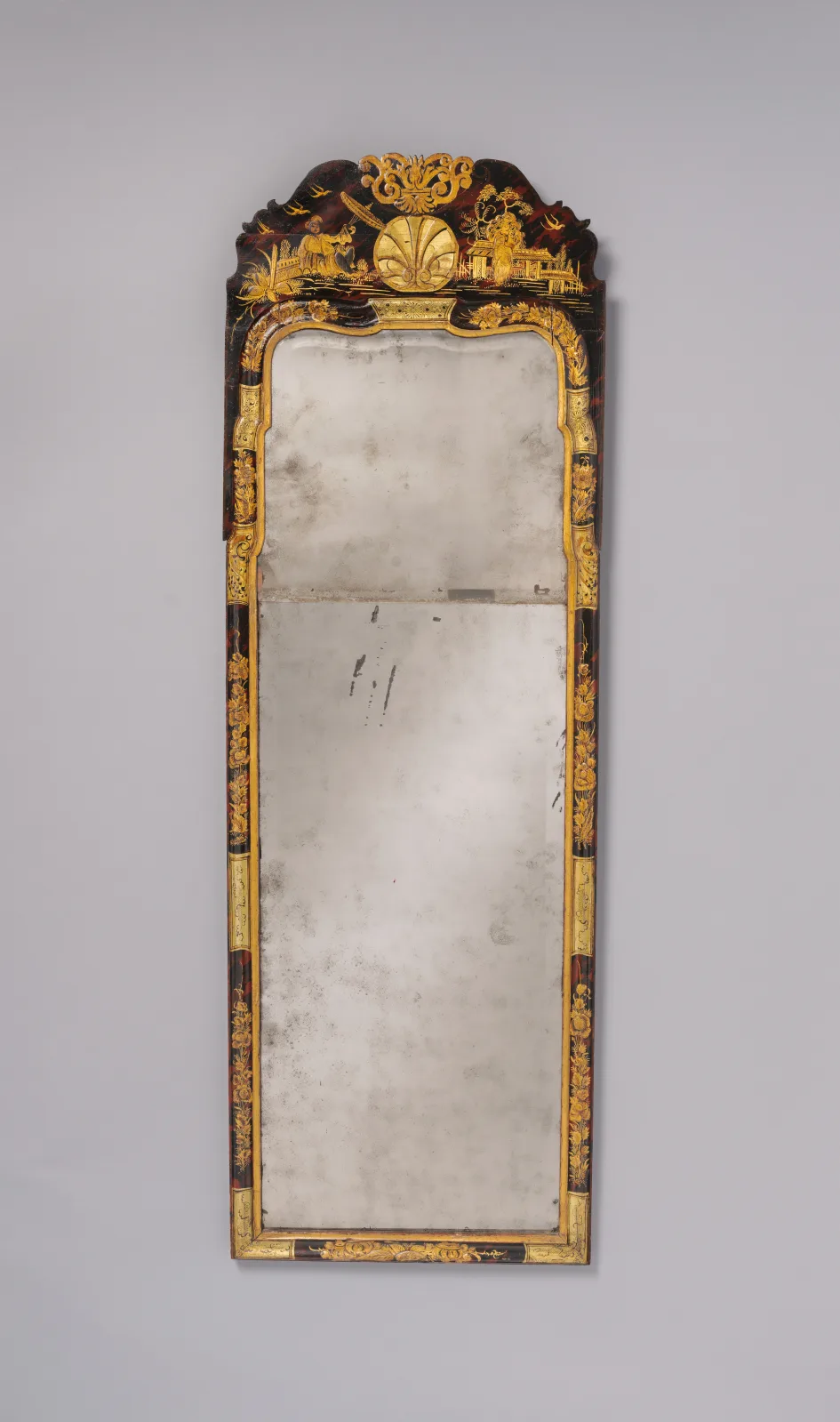
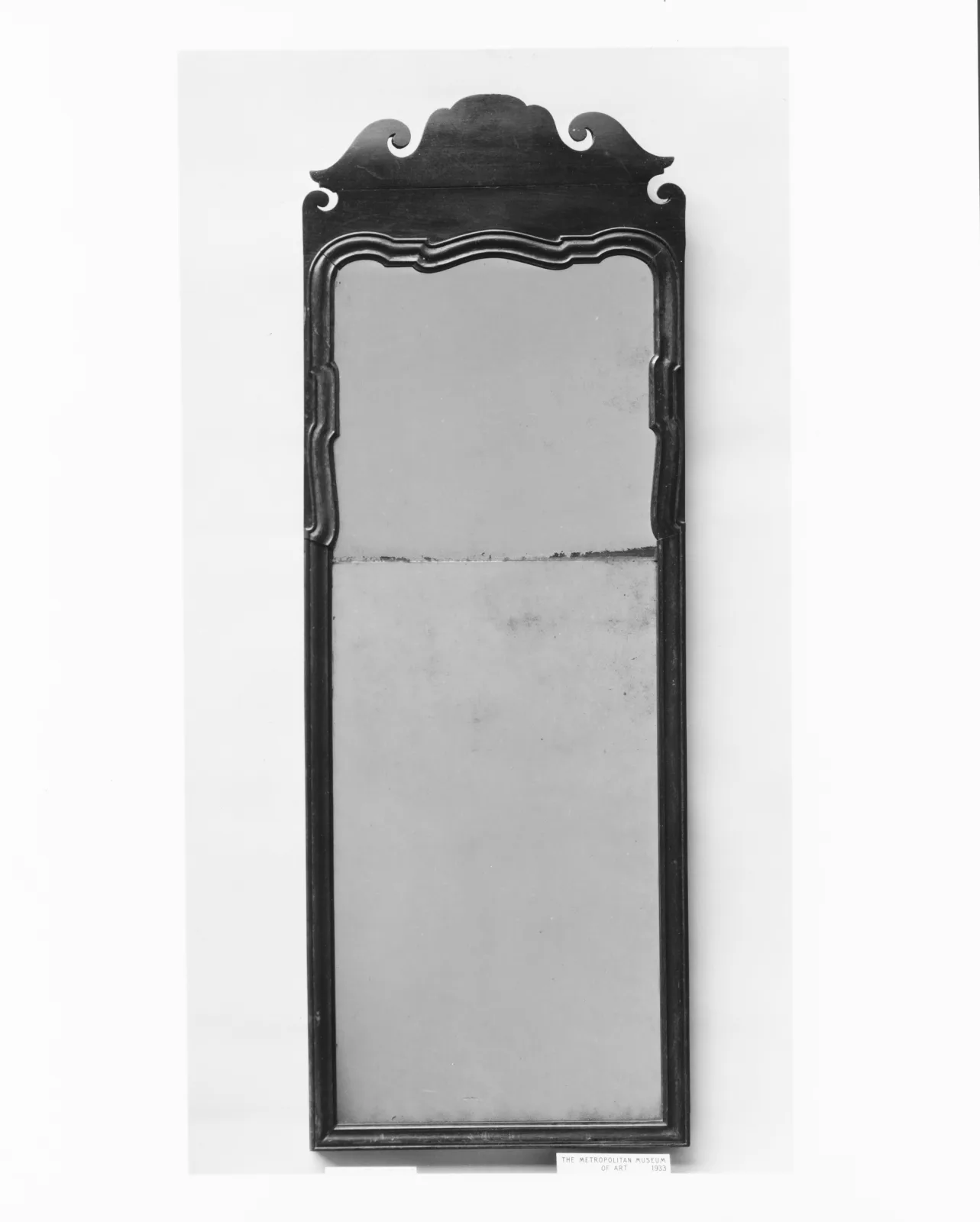
The reason is the size of the glass that could be made. The Williamstown Art Conservation Center notes that blown glass, spun into a cylinder and cut open, gave a plate no larger than about four feet by two. The Virginia Museum of Fine Arts makes the same point in its record of a looking glass: period techniques limited the size of the plate, and larger glasses needed two pieces. Cooper Hewitt points out the two-plate construction on an 18th-century mirror six feet tall. Where the two plates meet, the upper one usually overlaps the lower: the Concord Museum notes this as the common arrangement, and the Mather Homestead describes it on an English glass of 1740–70.
There is one disagreement worth knowing. Cooper Hewitt says the technology to make one large plate came only in the 19th century; Williamstown dates cast plate glass, up to nearly nine feet by five, to the late 17th century. Both can be true: casting made big plates possible long before it made them ordinary. What the line on the glass tells you is that the plate was made, or replaced, by someone working to the old size limit. It points to the 18th century without proving it, and it says nothing about whether the coating on the back is still the first one.
Check 2: Mercury or Silver
Old mirror glass was coated in one of two ways. From around 1500, Venetian makers backed glass with an amalgam of tin and mercury, and the method spread to France and England by the mid-17th century; Winterthur and Williamstown give the same outline. In 1835 the German chemist Justus von Liebig developed a way of depositing silver on glass instead, which both sources also date to that year.
The two ran side by side for a long time, and the sources do not agree on when the old one ended. Winterthur says silver had replaced amalgam on an industrial scale by the end of the 19th century; Williamstown and the conservation wiki of the American Institute for Conservation place the end in the early 20th. The safe reading is that either coating can be found on a 19th-century mirror.
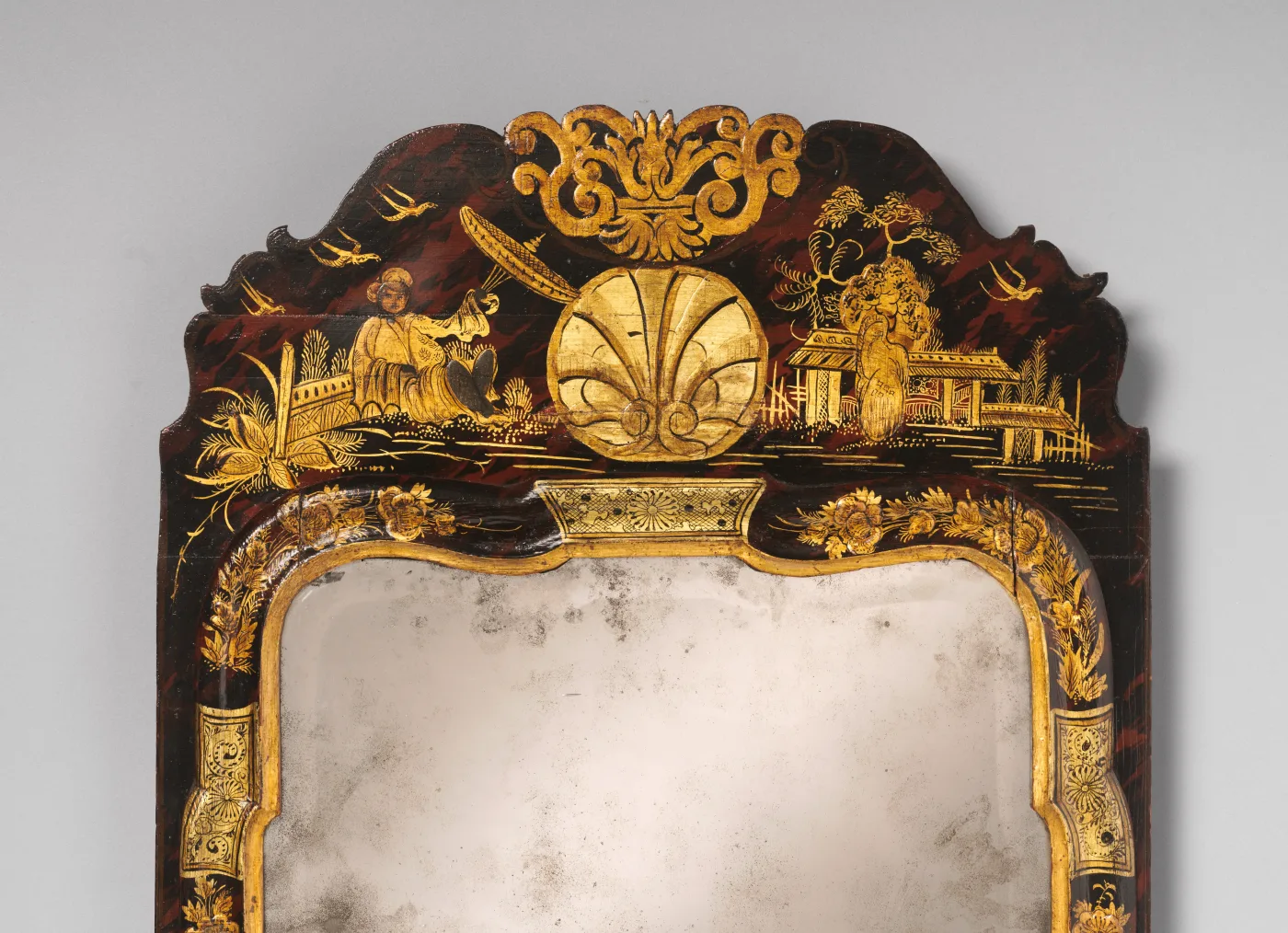
Three signs separate them, and none needs a tool:
- The paper test. Lay a sheet of thin white paper against the glass and look at its reflection. Amalgam gives a cooler, slightly bluish and duller reflection; silver gives a brighter, warmer one. Winterthur, Williamstown and the AIC wiki all describe this test.
- The back. Silvered mirrors were almost always varnished or painted on the back, because silver tarnishes. Amalgam backs were usually left unsealed, except on mirrors made for damp rooms or for use at sea. Williamstown and Winterthur agree on this.
- Where the damage is. In amalgam the liquid mercury slowly drains downward, so holes and a darkened, speckled look tend to concentrate in the lower half of a mirror that has hung upright for a long time. Williamstown and the AIC wiki both describe it, and the wiki adds that beads of mercury sometimes collect at the bottom of the frame.
Winterthur is careful about what this proves, and so should you be: because the two methods overlapped, the coating alone does not establish a mirror’s age or that the glass is original. A silver coating does set a floor of 1835 for the coating, though. On a frame that is plainly 18th century, a bright silvered plate with a painted back is either a replacement or a resilvering.
One safety point. Do not scrape, sand or clean the back of a mirror you think may be amalgam, and do not vacuum up any beads. The AIC wiki advises treating any mirror made before the second half of the 20th century as containing mercury unless it has been tested, and Williamstown notes that mercury vapour passes into the blood through the lungs. X-ray fluorescence, which a conservator can arrange, settles the question without disturbing the coating.

Check 3: The Back
Turn the mirror over. The back is where a replaced plate or a new backboard shows, because nobody decorates it.
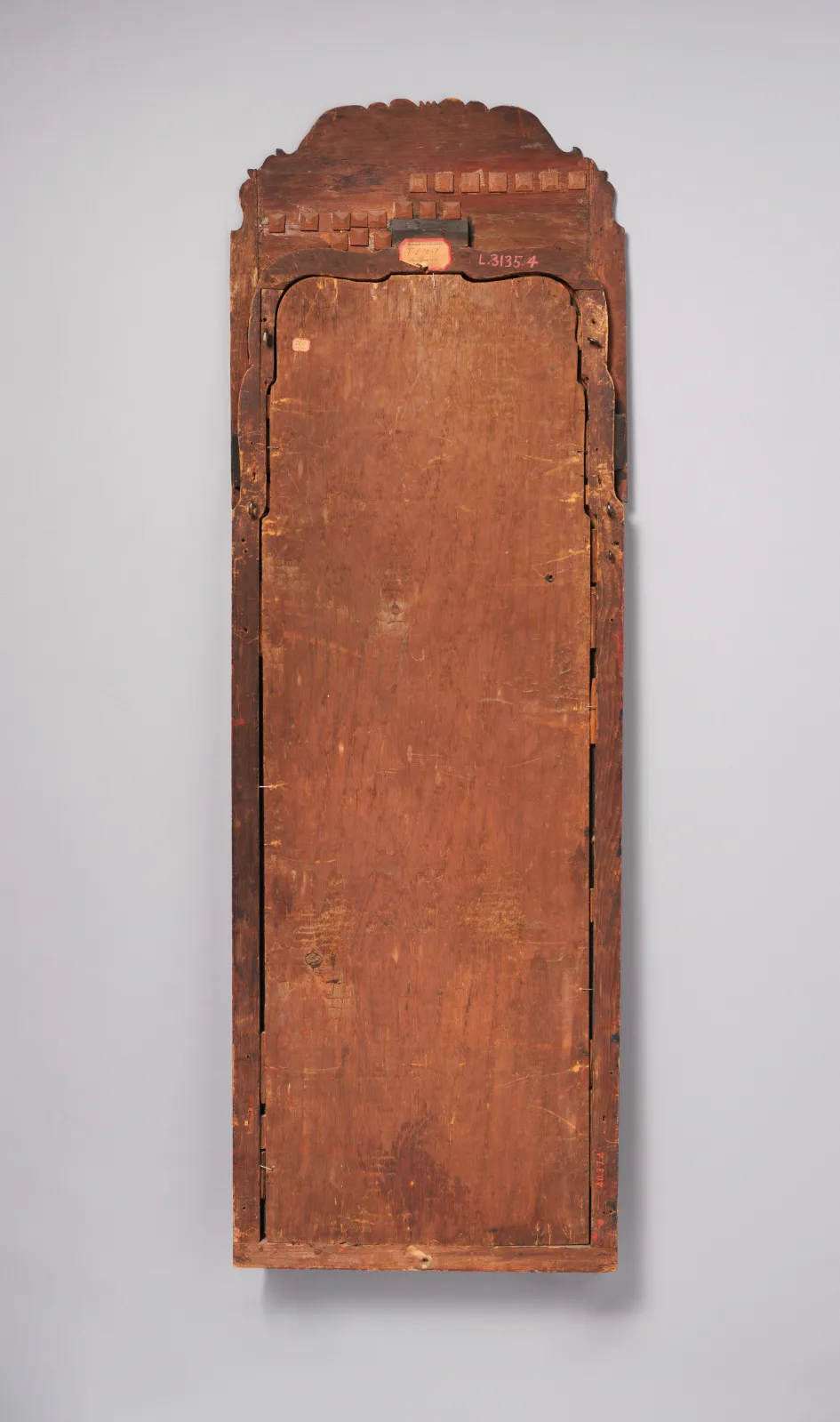
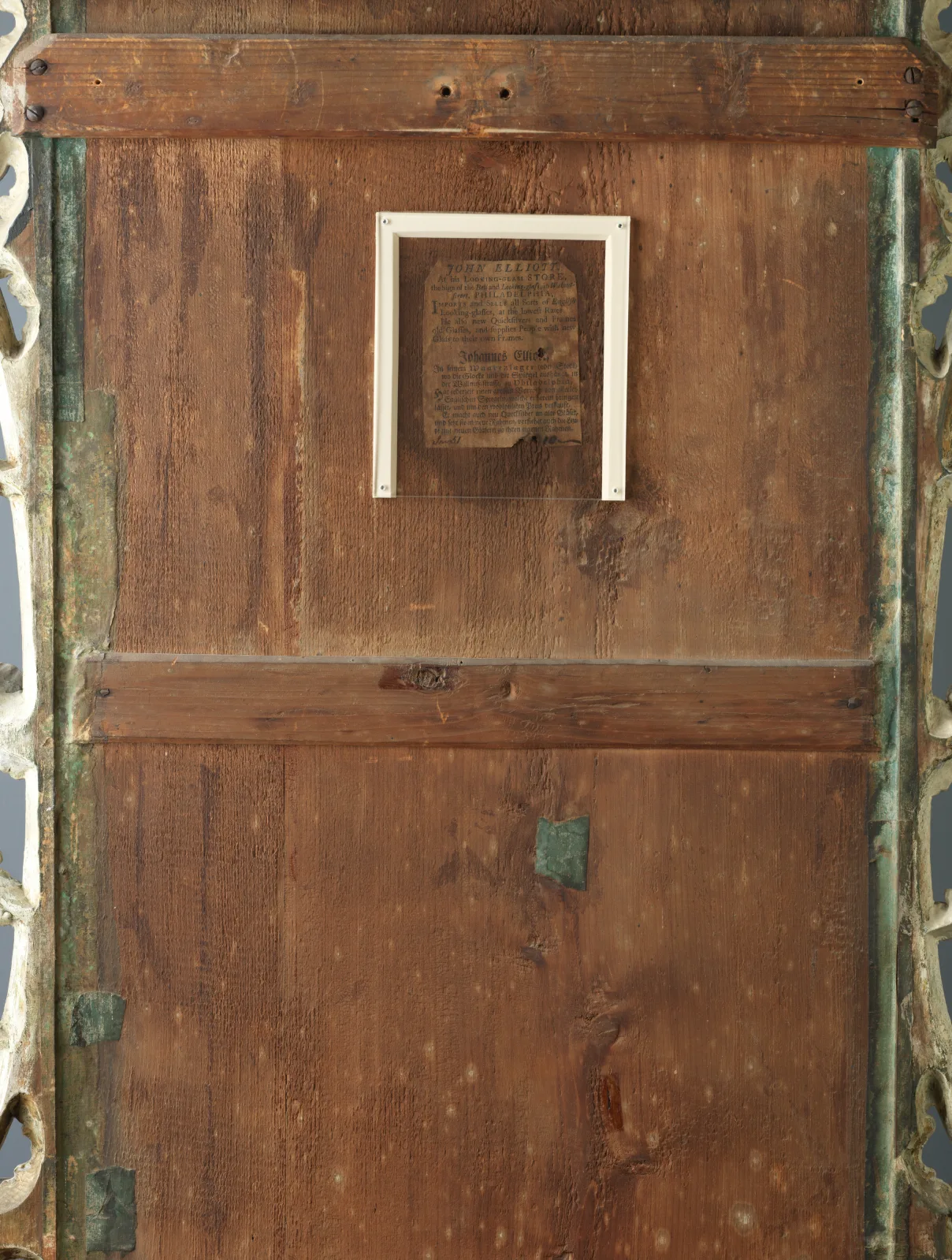
On these two the back is solid wood throughout, aged to the same tone from edge to edge, and the label or the crest blocks sit on it as if they always had. That is what you hope to see. Collectors and appraisal guides alike read plywood or staples on the back as a sign of rebacking, and with a new back the glass may have been out too.
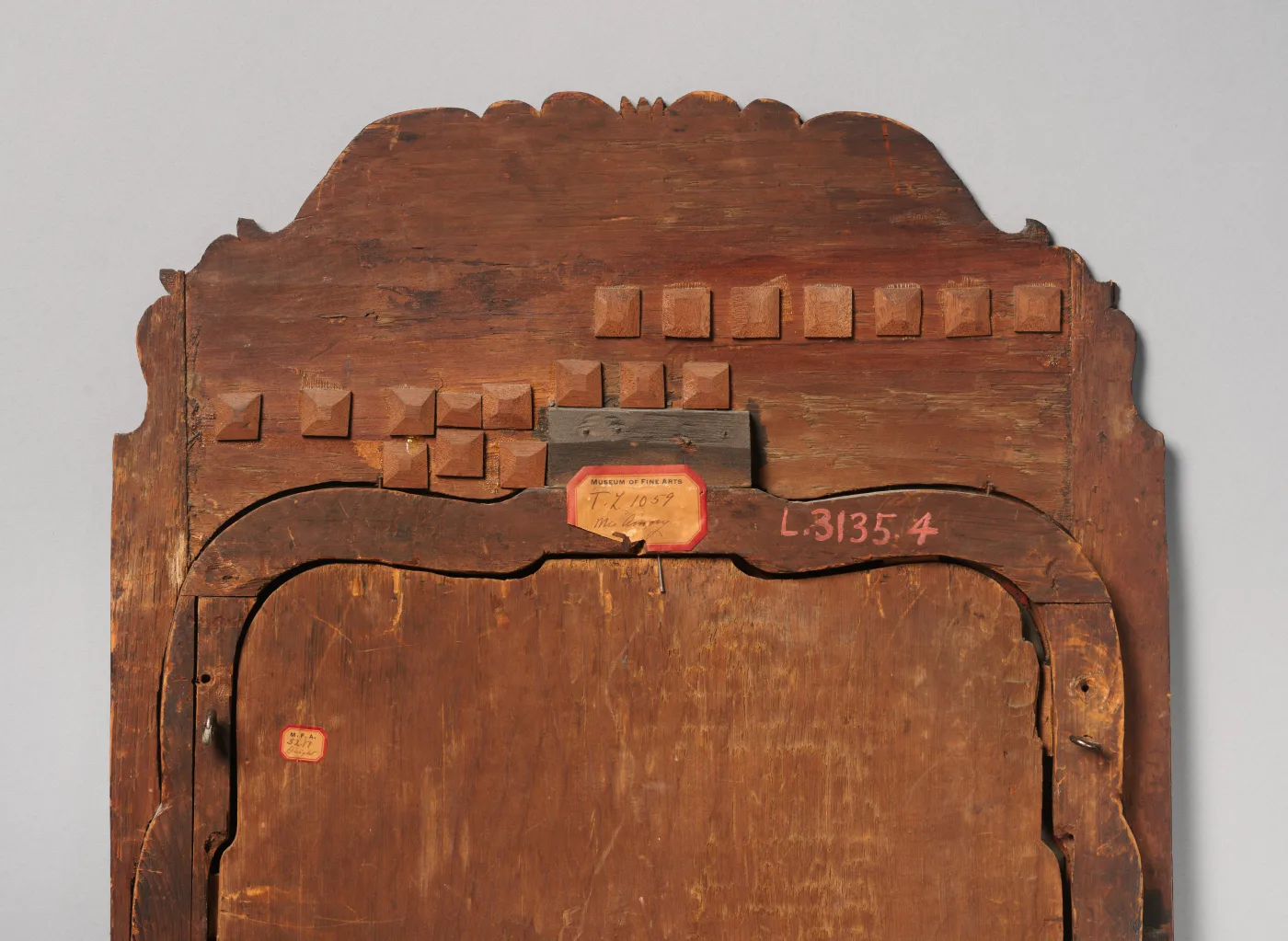
A perfect back does not prove the glass, and a later back does not condemn the frame; it tells you whether to ask. The same habit of looking where nobody looks is the basis of the checks for married antique furniture and for furniture that has been aged on purpose.
Check 4: Labels and Stamps
A printed label on the back is the best dating evidence an old mirror can carry, and John Elliott’s are the best studied. He changed address, and the address on his label changed with it.
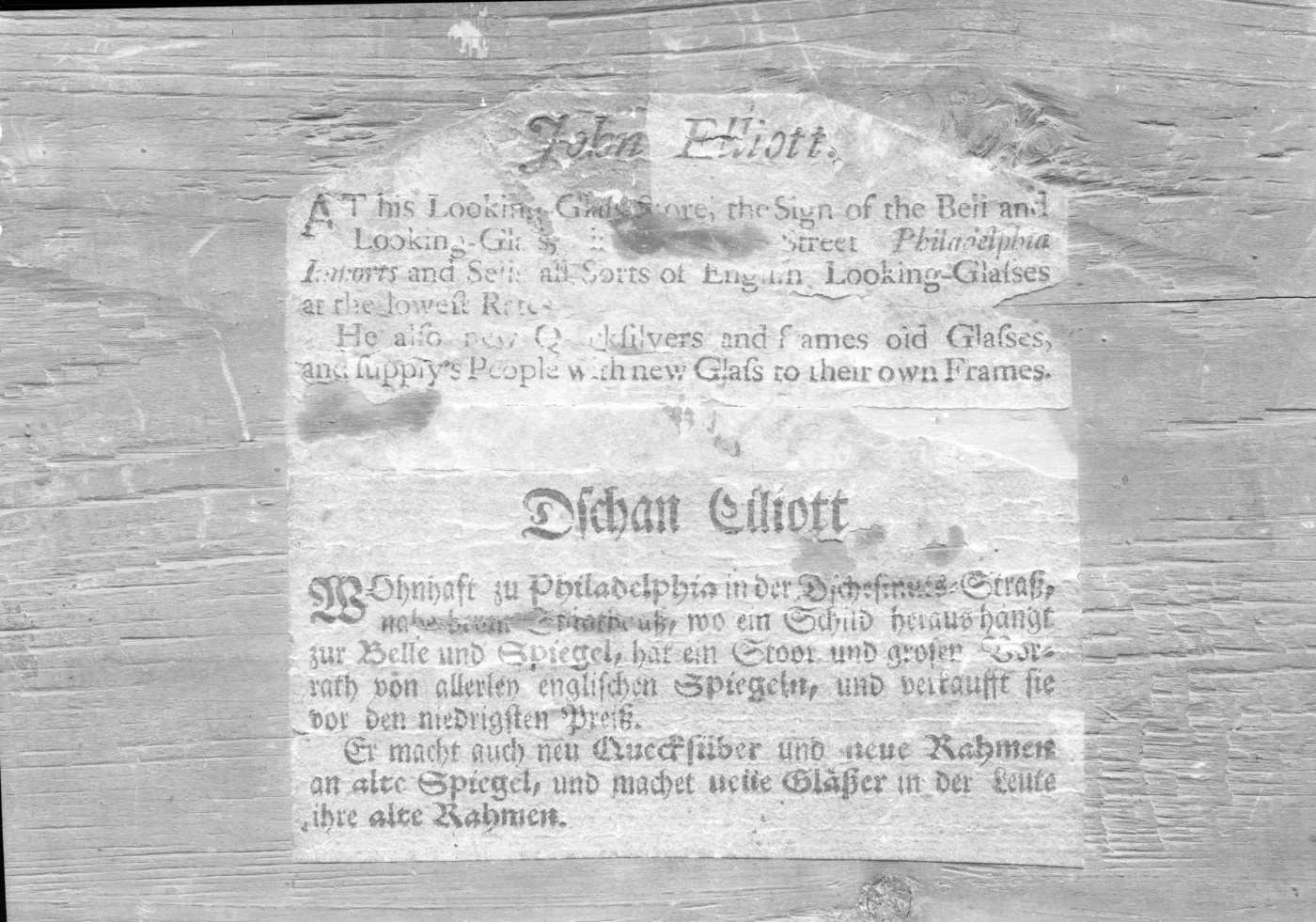
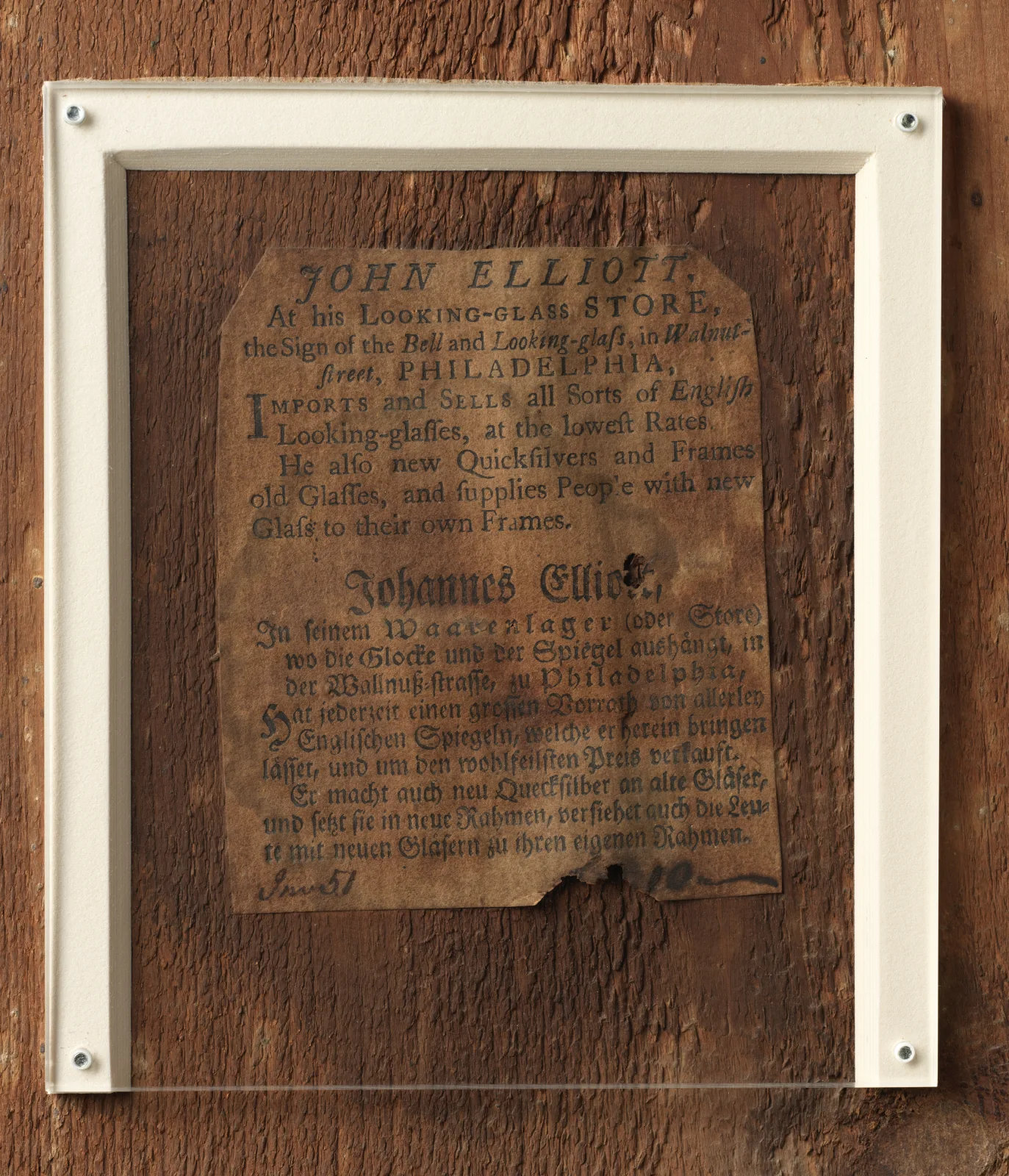
The Met dates the Chestnut Street glass to 1762–67 and the Walnut Street glass to 1769–75. Elliott was advertising from Walnut Street by October 1768, in newspaper notices traced by the Adverts 250 Project, and a Christie’s catalogue calls the Walnut Street label the last of his bilingual labels, used from 1768 to 1776. One record disagrees: the Detroit Institute of Arts dates a Walnut Street label to about 1765. The table below uses the range most sources share.
Read the label for what it claims, not only where it was. The Walnut Street label says Elliott imported and sold English looking glasses, and the Met catalogues the Chestnut Street glass as American or British, made in England. A dealer’s label names the seller. Whether the frame was made in Philadelphia or London is a question for the wood, and the Met’s record of the 1769–75 glass gives white pine and northern white cedar, American woods.
Later labels follow the son, also John Elliott (1739–1810). One headed “JOHN ELLIOTT, Jun’r” on First Street is dated 1784–90 by Christie’s; the “Junior” matters because, as Historic Odessa notes, he dropped it after his father died in 1791. Historic Odessa dates his No. 60 South Front Street label to 1796–1803 from the city directories, and Colonial Williamsburg gives a similar label 1790–1809.
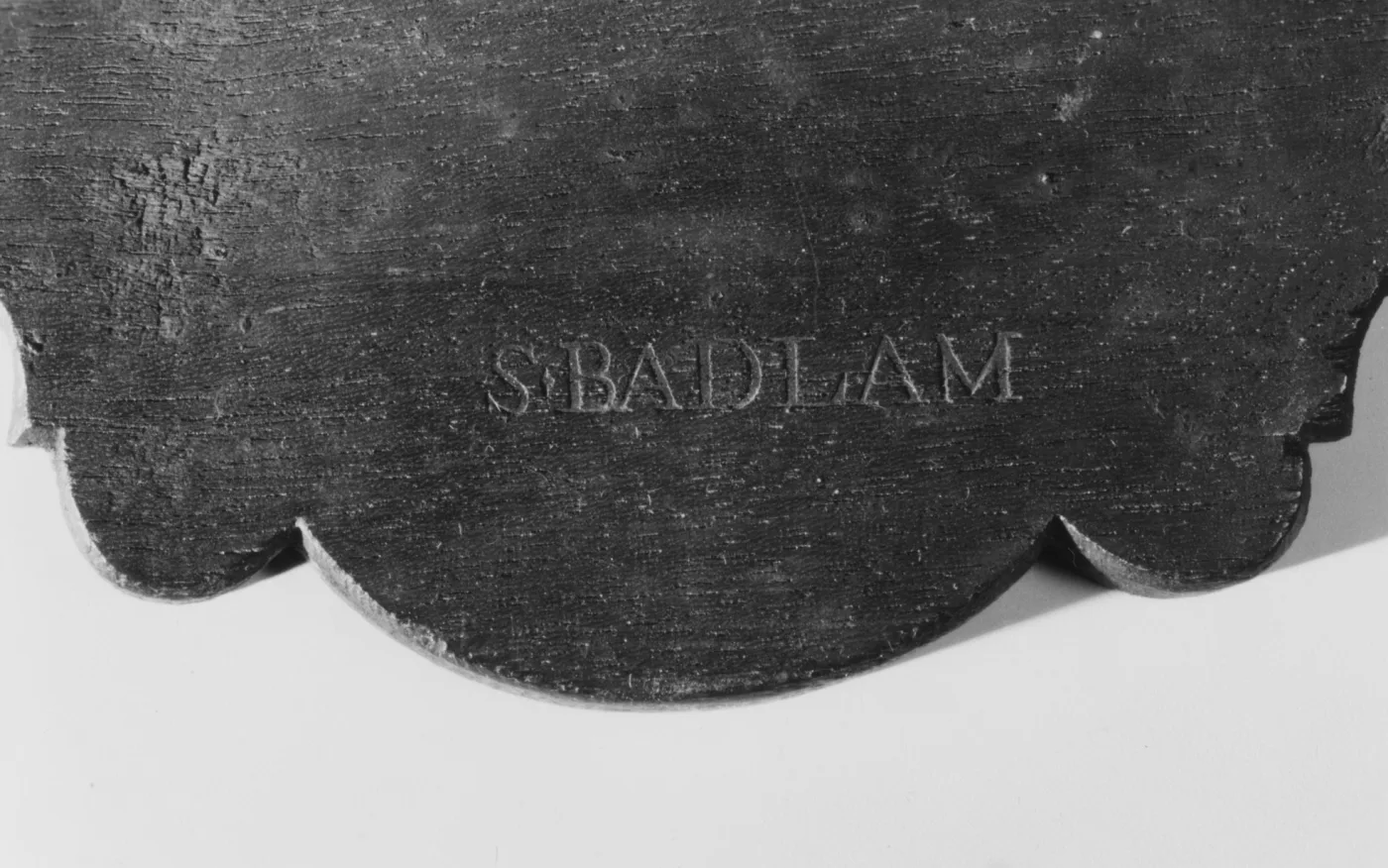
Some makers stamped instead of labelling. Stephen Badlam (1751–1815) of Dorchester Lower Mills made looking glasses as well as furniture, and the Dorchester Atheneum records that many of his pieces carry his iron stamp. A stamp struck into the wood outlasts a paper label, but it dates the frame, not the plate in it. For the furniture styles these frames belong to, see the Queen Anne and Chippendale guides.
What Each Finding Dates
The four checks answer different questions. This table puts each finding against what it can and cannot date.
| What you find | What it dates | Bound it sets | What it does not tell you |
|---|---|---|---|
| Two plates, the upper one overlapping the lower, in a tall frame | The plate | Made to the old size limit; points to the 18th century | Whether the coating is original; the frame’s date |
| Bluish, dull reflection of white paper; unsealed back; losses in the lower half | The coating | Tin-mercury amalgam; no year on its own | Age: amalgam was still made in the 19th century |
| Bright, warm reflection; back painted or varnished | The coating | Silvered, so no earlier than 1835 | Whether the plate is older and was resilvered |
| Plywood or staples on the back | The back | Rebacked at some point | Whether the glass went with it |
| Elliott label, English and German, Chestnut Street | The sale | About 1762–67 (Met) | Where the frame was made |
| Elliott label, English and German, Walnut Street | The sale | From 1768; to about 1775–76 (Met, Christie’s) | Where the frame was made |
| “John Elliott, Jun’r”, First Street | The sale | 1784–90; before his father’s death in 1791 | Whether the glass was replaced since |
| “John Elliott”, No. 60 South Front Street, no “Jun’r” | The sale | 1790s to about 1809; Historic Odessa narrows it to 1796–1803 | Whether the glass was replaced since |
| “S.BADLAM” stamped in the wood | The frame | Stephen Badlam, Dorchester, within his working life (he died in 1815) | The glass |
A mirror with two plates, an amalgam coating, an undisturbed back and a label whose address fits the style has a strong case. One with an 18th-century frame and a bright silvered plate is still an 18th-century frame. If you are deciding what one is worth, the guide to antique furniture appraisal covers how a replaced part changes that.
Frequently Asked Questions
How can you tell if a mirror is antique?
Check the glass and the back as well as the frame. A tall glass made of two plates, a dull bluish reflection of white paper, an unsealed back and an old maker’s label all point to age. A bright, warm reflection and a painted back mean the glass was silvered no earlier than 1835, even if the frame is older.
How do I know if my mirror has mercury in it?
Hold thin white paper against the glass: tin-mercury amalgam reflects it cooler and duller than silver does. Amalgam backs were usually left unpainted, and loss of the coating tends to gather in the lower half. Only X-ray fluorescence, arranged through a conservator, confirms it.
Is an old mercury mirror dangerous?
Not if you leave the back alone. Mercury vapour is absorbed through the lungs, so do not scrape, sand or clean the coating, and do not vacuum any beads that collect at the bottom of the frame. Conservators treat any mirror made before the second half of the 20th century as containing mercury unless it has been tested.
Why is my antique mirror glass in two pieces?
Because large plates were hard and expensive to make. Period methods limited the size of a plate, so tall looking glasses used two, with the upper plate usually overlapping the lower one. It is a sign that the glass was made to that old limit, not proof of a date.
Did old mirror shops replace the glass?
Routinely. John Elliott’s Philadelphia labels from the 1760s offered to quicksilver old glasses and fit new glass to old frames, and his son’s labels offered the same into the 1800s. So an old frame can hold a later plate, sometimes put there by the shop on its label.
The Short Version
Date the glass and the frame separately. Two plates point to the old size limit; a bluish reflection and unsealed back point to amalgam; a bright reflection and painted back mean silver, so 1835 or later; the back tells you whether anything has been out; and a label dates the sale, not the plate. Leave an amalgam back untouched.
The decorative silvered glass sold as “mercury glass” is a different thing, a double-walled vessel rather than a mirror; the mercury glass guide covers it.