
Elgin Pocket Watch Value: Which Serial Chart to Trust, and What Sets the Price
Elgin made more pocket watches than any other American company, so an Elgin is the watch most families actually inherit. Its value is read from the movement in two steps. The serial number gives the year, but the two serial charts published online do not always agree, and we measured where they part. The grade, jewels and case decide the price. An old Elgin is not a rare one.
Table of Contents
Find the Movement Serial
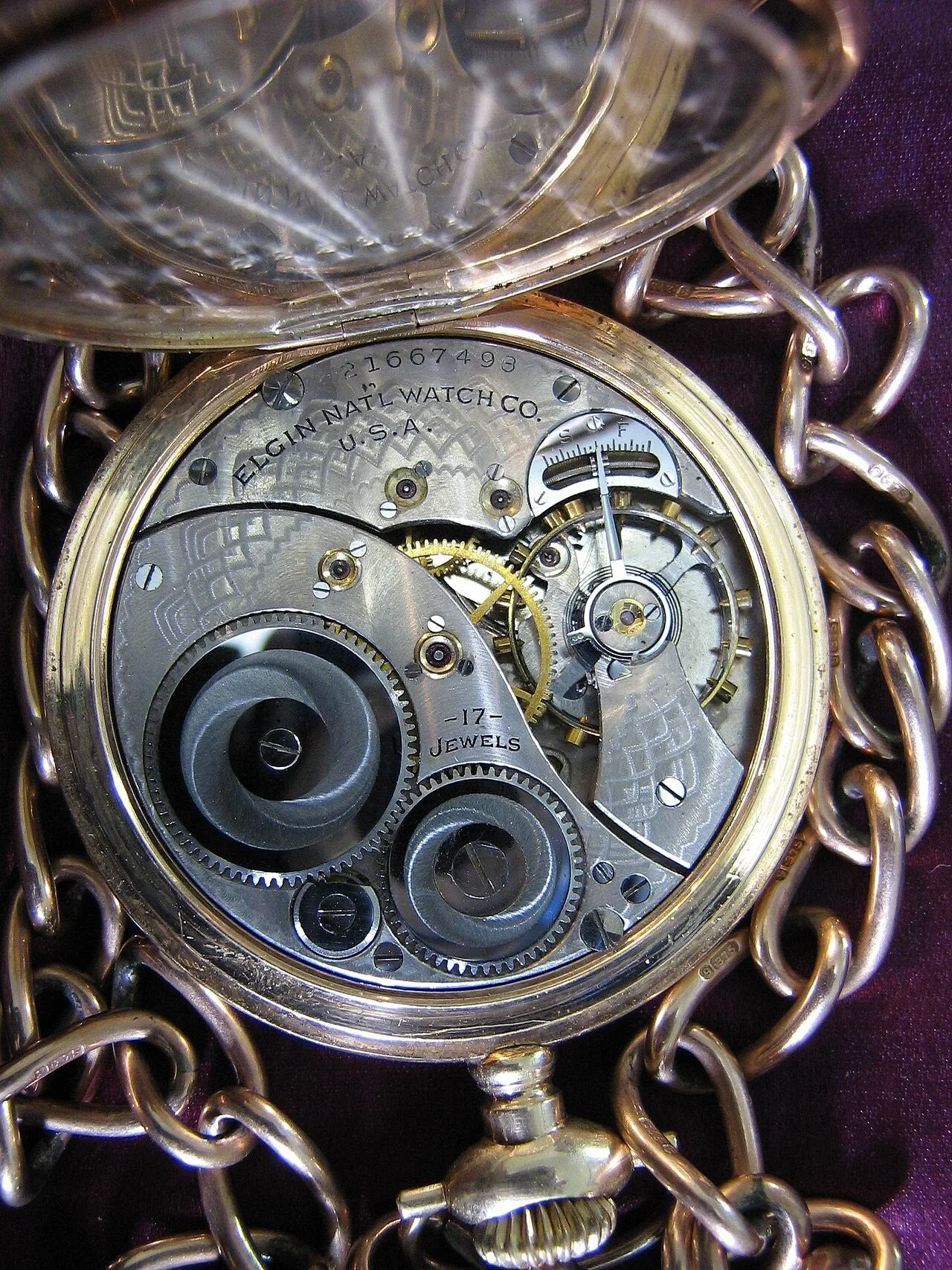
Open the back of the case, and the inner dust cover if there is one, and read the number engraved on the movement plate. That is the serial. antique-pocket-watch.com points out that an Elgin can carry three numbers once the case is counted: the movement serial, a grade number, and a case number. Only the first dates the watch. The Pocket Watch Database has the same warning in its records, where a number a seller quoted turned out to be the case number.
A serial that starts with a letter is a late Elgin. Watch Doctor's Elgin page says that from the 1930s Elgin used a letter in place of the millions digits, and antique-pocket-watch.com agrees that a letter serial belongs to this late period and cannot be looked up as a plain number. The published letter keys do not all match, as WatchScanning notes, so look a letter serial up in the Pocket Watch Database rather than converting it from a key.
The engraved name helps too. The company was founded in 1864 as the National Watch Company, delivered its first movement, an 18-size B.W. Raymond, in 1867, and took the name Elgin National Watch Company in 1874 (Wikipedia; Watch Doctor). It closed its original factory in 1964 and ended all American manufacturing in 1968 (Wikipedia; antique-pocket-watch.com gives the same 1968 closure).
Two Charts, and Where They Disagree
Elgin numbered its movements in one run across every grade and size, so a single table of serial numbers by year can date any of them. Two such tables are widely copied: the one on antique-pocket-watch.com and the one on Watch Doctor's Elgin page. Both run from 1867 to 1956 and end at 55,000,000. To use either, find the largest number in the table that is still below your serial; that row's year is the estimate.
They are not the same table. We read both serial by serial, every 1,000 numbers from 101 to 55 million, and counted how often they put the same serial in different years.
| Serial range | Years, roughly | Serials the charts date differently | Largest gap |
|---|---|---|---|
| Below 1,000,000 | 1867–1881 | 64% | 3 years |
| 1,000,000–4,999,999 | 1882–1892 | 15% | 1 year |
| 5,000,000–17,999,999 | 1893–1913 | 2% | 1 year |
| 18,000,000–30,999,999 | 1914–1927 | 9% | 1 year |
| 31,000,000–39,999,999 | 1928–1939 | 39% | 2 years |
| 40,000,000–55,000,000 | 1940–1956 | 12% | 1 year |
Two stretches stand out. Before 1882 the charts disagree on almost two serials in three, by up to three years. Watch Doctor puts serial 300,000 in 1872, antique-pocket-watch.com in 1875. Watch Doctor's table also starts 1867 at serial 9,000, so it gives no year at all for the first few thousand movements. From about 1928 to 1939 they disagree again, by up to two years. Between 1893 and 1913 they almost never disagree.
Neither table is a factory record. antique-pocket-watch.com calls its own list “visibly rounded”: many years start on an exact million, and 1917 to 1927 runs at exactly one million a year, which no factory achieved. The Pocket Watch Database, which works from Elgin's own serial lists, says its dates are estimates good to plus or minus three years. So read any chart year as “about”. Where the two charts disagree, give the watch both years, not the one you prefer.
Nine Elgins Read Against Both Charts
To see what the disagreement means on real watches, we took nine Elgins photographed on Wikimedia Commons whose serials are legible, read each serial off the plate, and dated it on both charts. The last column is the date the owner gave the watch when photographing it.
| Serial | Watch | antique-pocket-watch.com | Watch Doctor | Owner's date |
|---|---|---|---|---|
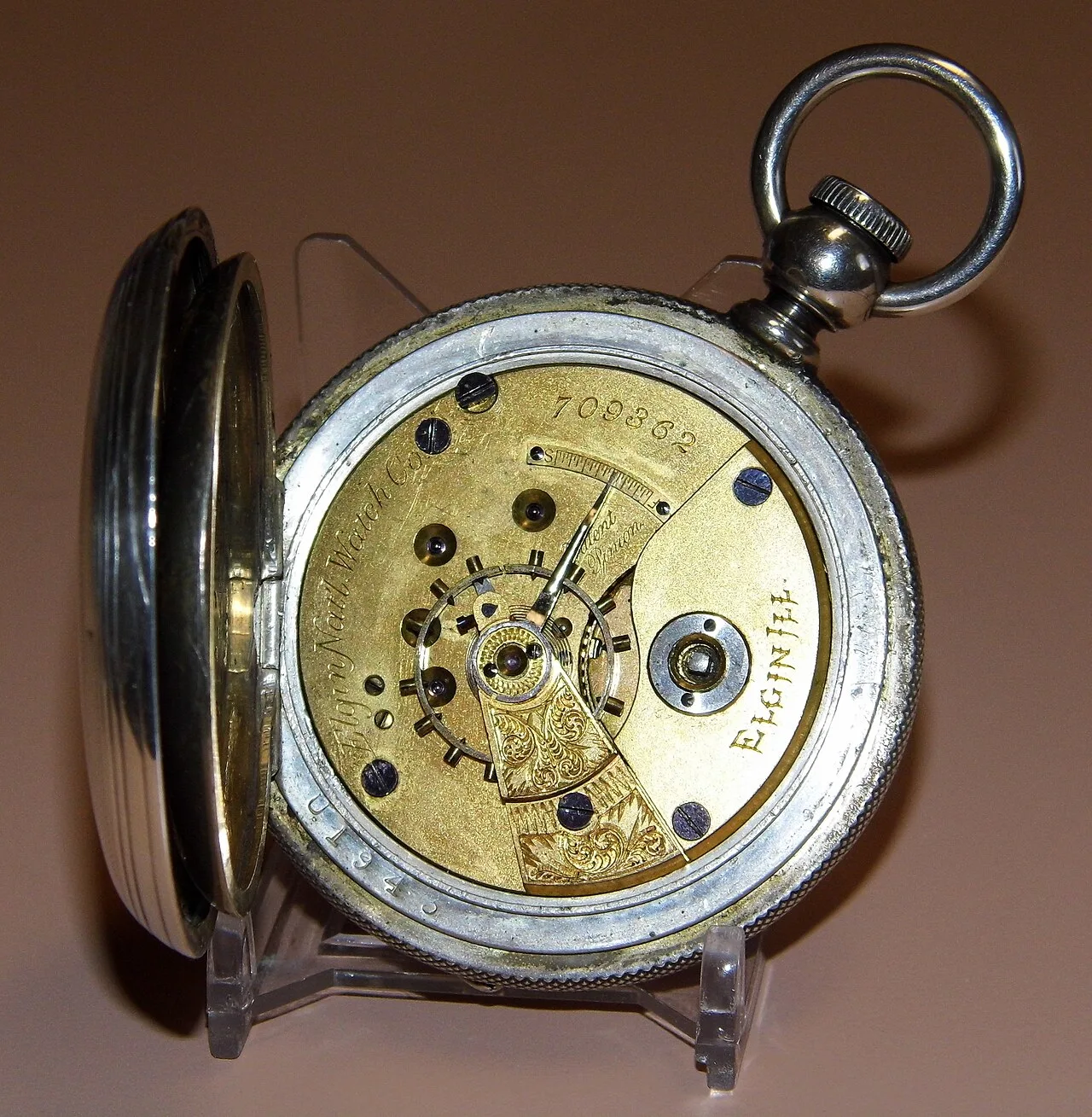
| 709,362 | 18-size, key wind | 1880 | 1879 | about 1880 |
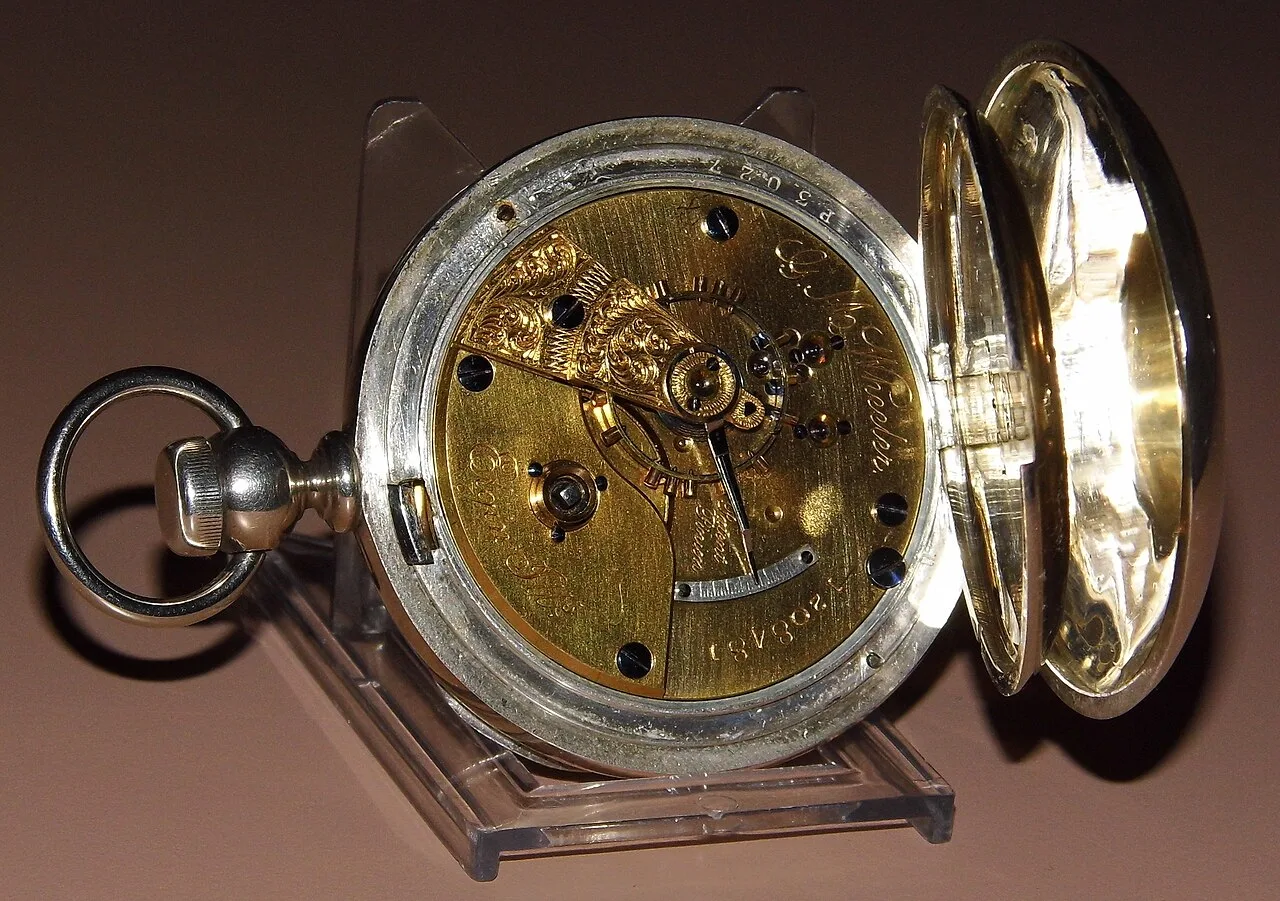
| 1,208,481 | 18-size, G.M. Wheeler, key wind | 1882 | 1882 | about 1882 |
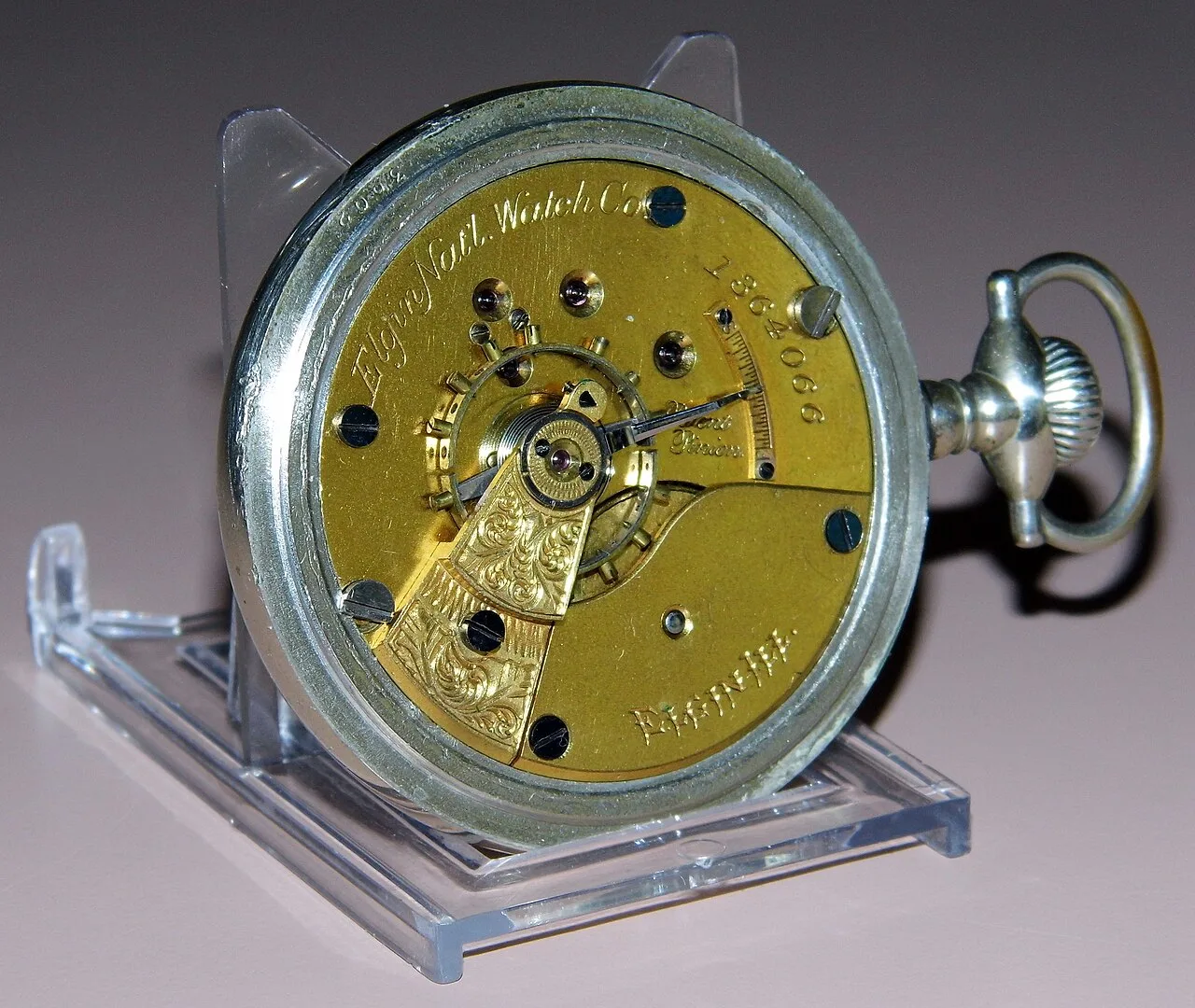
| 1,364,066 | 18-size, recased | 1882 | 1883 | about 1884 |
| 5,092,010 | 18-size, lever set | 1893 | 1893 | about 1894 |
| 9,506,667 | 0-size, 7 jewels | 1901 | 1901 | about 1901 |
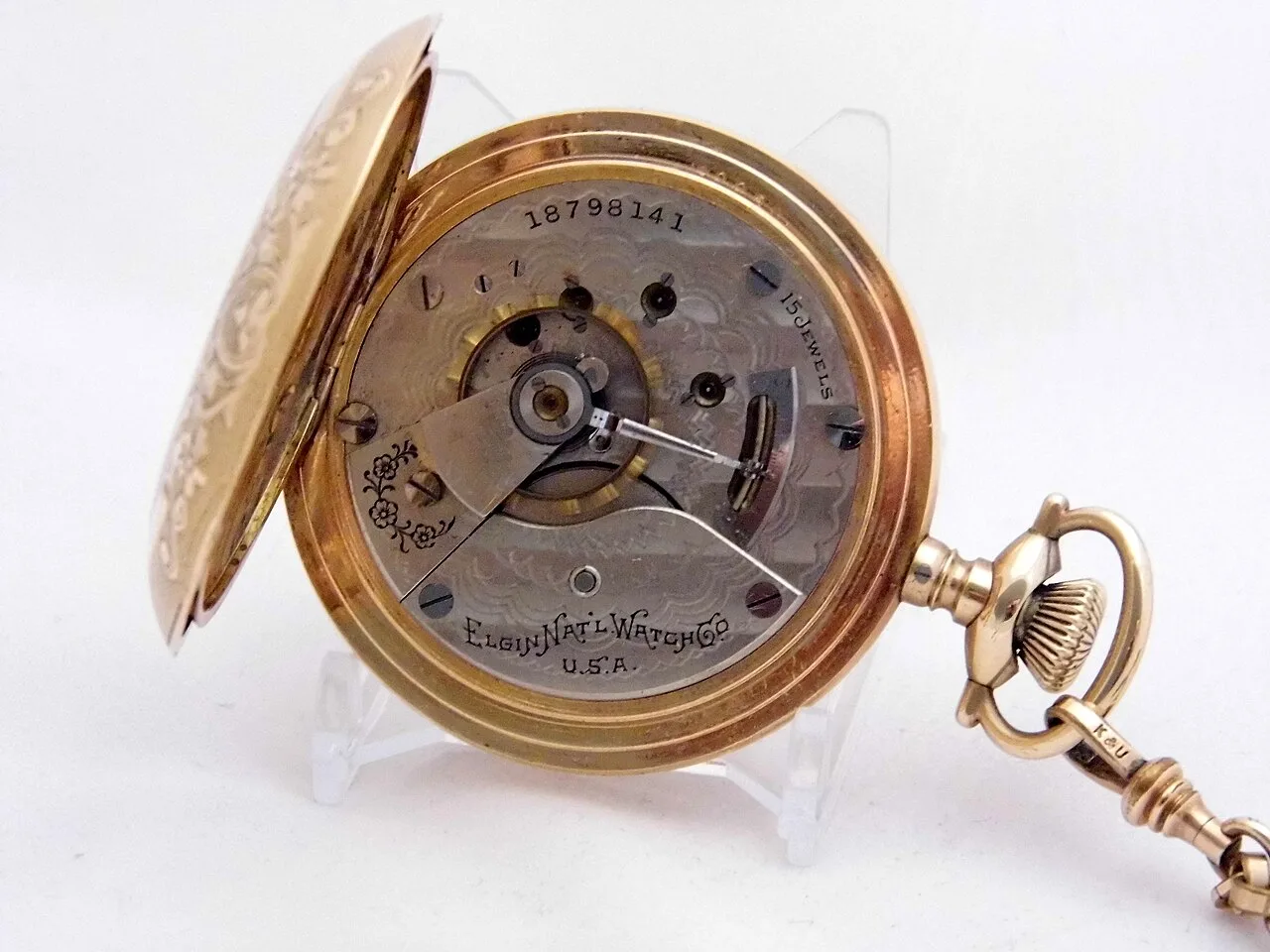
| 18,798,141 | 18-size, 15 jewels | 1915 | 1915 | about 1916 |
| 21,667,498 | 17 jewels | 1918 | 1918 | about 1919 |
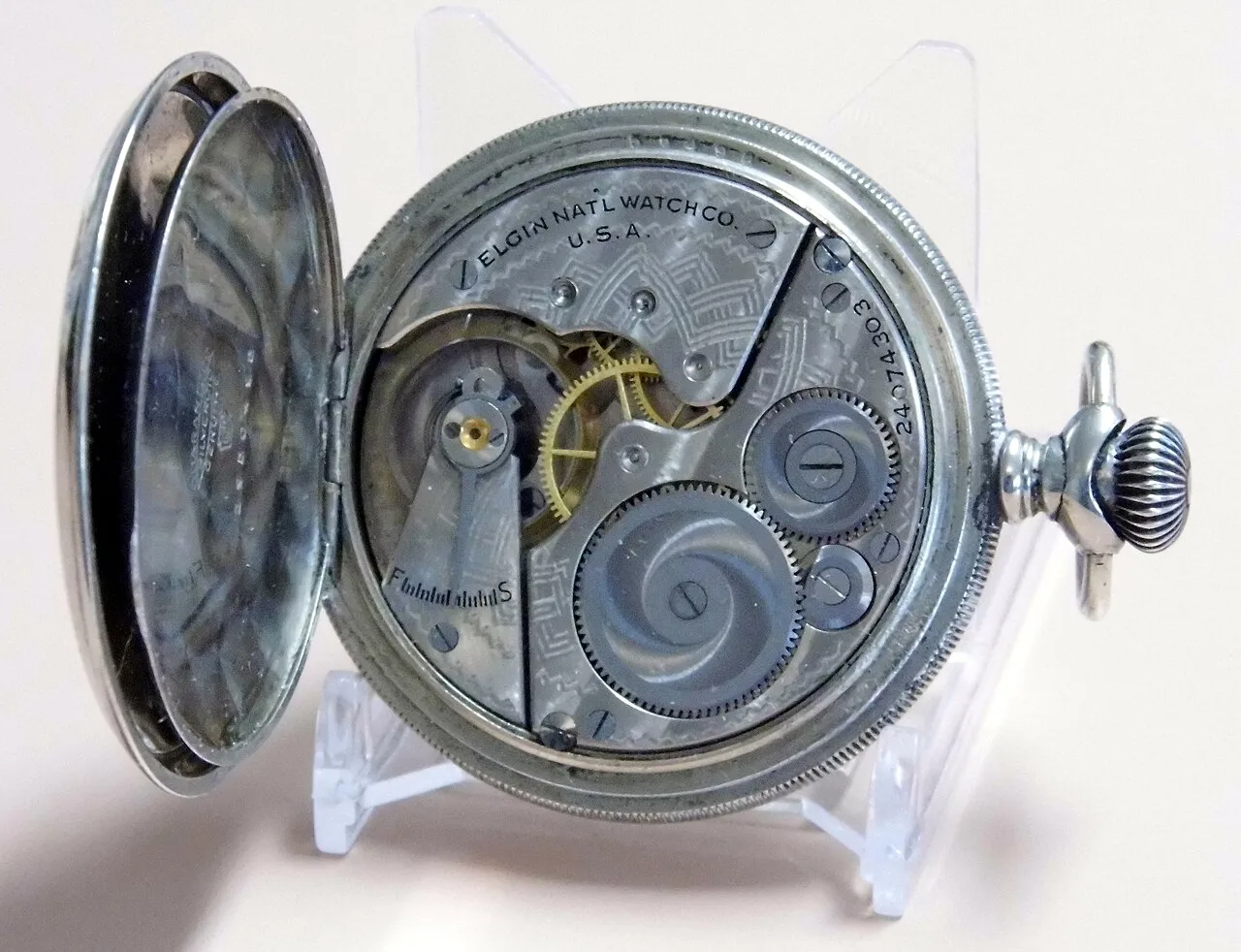
| 24,074,303 | 16-size, 7 jewels | 1921 | 1920 | about 1921 |
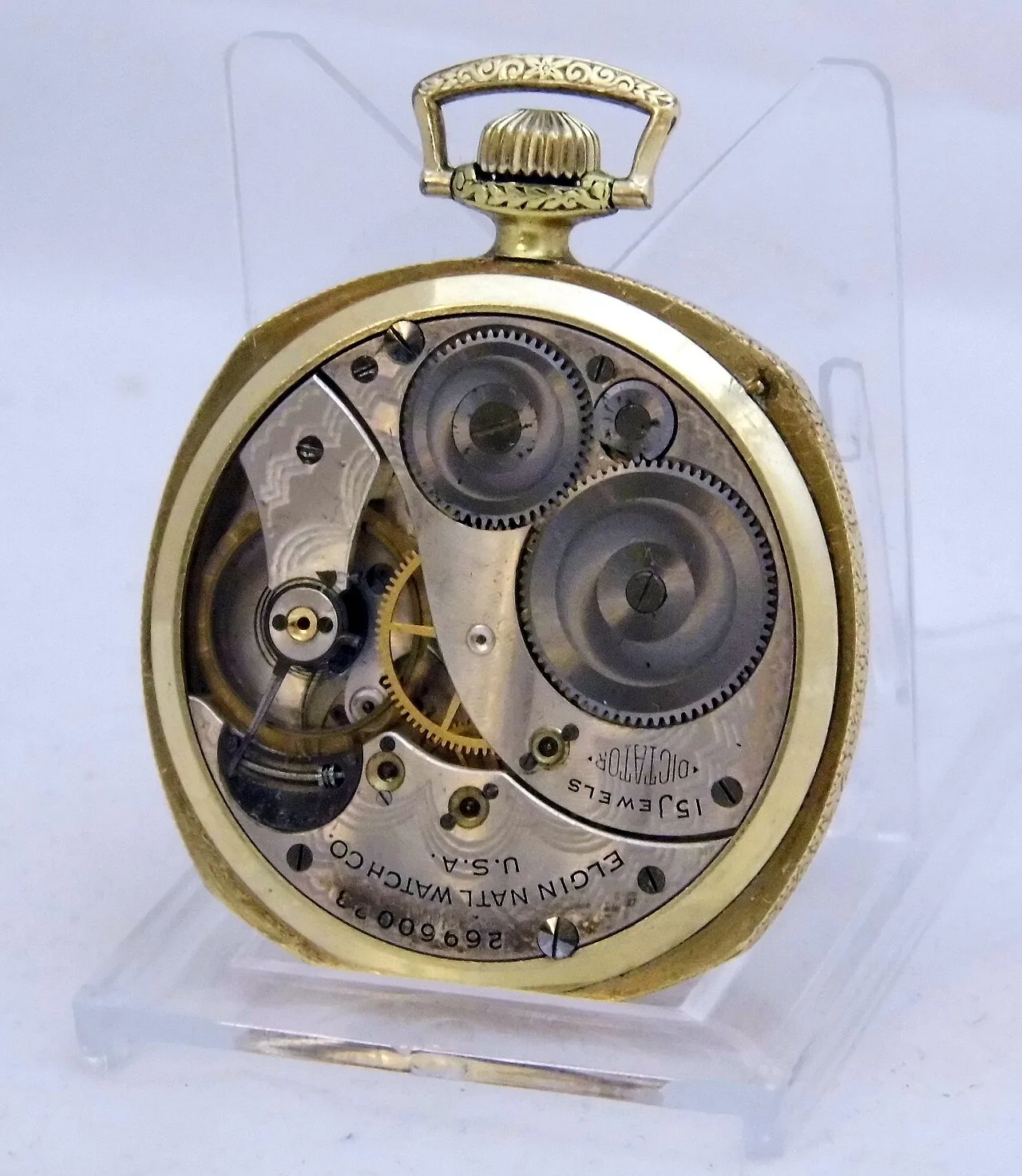
| 26,960,0–– | 12-size, 15 jewels, Dictator | 1923 | 1923 | about 1923 |
The charts split on three of the nine, by one year each time. More useful is the last column: the owner's date is never earlier than either chart, and in four cases it is a year later than both. That fits what antique-pocket-watch.com says about Elgin's numbering: plates were numbered in batches and often finished, cased and sold a year or more later. A chart year is best read as the year the movement was numbered, and the watch may have reached its first owner a year or two after that.

Grade and Jewels: What Sets the Price
A date is not a price. antique-pocket-watch.com puts it plainly: the serial says when a watch was made, the grade says what it is, and only the grade is a price signal. Watch Doctor makes the same point from the other side. Elgin's success was built on very large runs of low- and mid-grade watches of 7 to 15 jewels, which is why Elgins are still plentiful and reasonably priced. Elgin's total output is put at 55 to 60 million watches by both sources. Most surviving Elgins are those ordinary grades, so most are worth more as working watches than as rarities, however old they are.
Read the plate for these, in order:
- Jewel count. 7 jewels, or no count at all, is a basic movement. 15 is the middle. 17 and above are the better grades, and 21 and 23 the best.
- A grade name. Elgin's railroad grades carry names. Both antique-pocket-watch.com and a 1913–14 Elgin catalog reproduced on RailsWest name B.W. Raymond, Father Time and Veritas as the grades built for railroad service. A name alone is not enough, as the Dictator above shows: read it with the jewel count.
- The grade number. Many Elgin movements do not show a grade number on the plate at all; none of the seven movements photographed here does. The grade comes from the serial: Elgin's own parts catalog of about 1927 lists grade against serial range, as antique-pocket-watch.com describes, and the Pocket Watch Database's serial lookup returns the grade with the date.
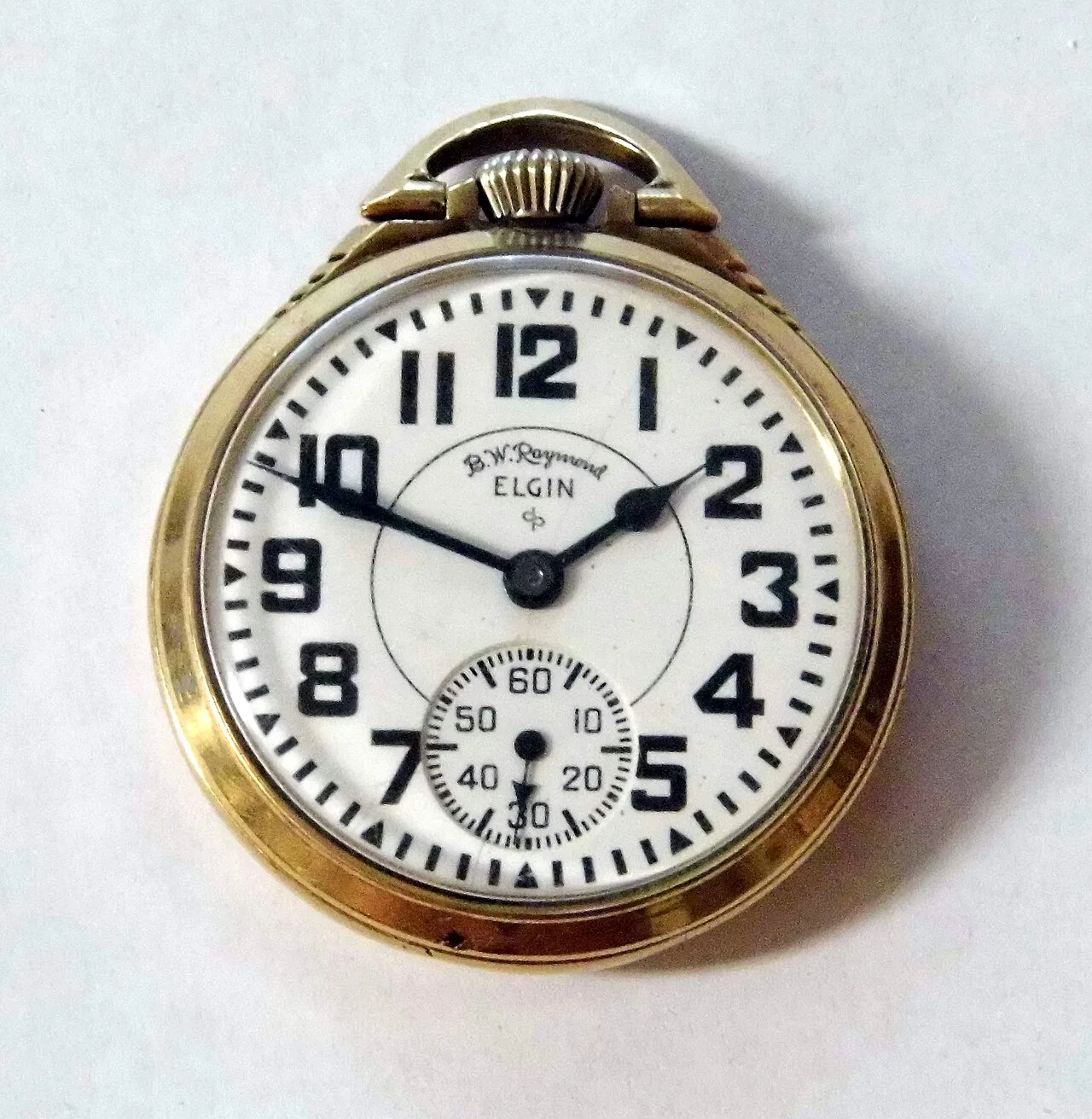
A railroad watch also had to meet size, setting and case rules, not just carry a name; the Waltham value guide sets those rules out, and they apply to Elgin the same way. For railroad lanterns, locks and timetables, see the railroad collectibles guide.
The Case: “Elgin” Is Not Always Elgin
Movements and cases were usually made by different companies, and the word “Elgin” on a case is a known trap. The Illinois Watch Case Company was based in Elgin, Illinois, and sold cases under names such as “Elgin Giant”. Watch Doctor warns that these cases lead people to think a watch is an Elgin, or that a movement by another maker has been put in an “Elgin case”. The Pocket Watch Database records “Elgin Giant” as an Illinois Watch Case Company trademark and lists the firm separately from the Elgin National Watch Company.
So an Elgin is identified by its movement: “Elgin Nat’l Watch Co.” or “Elgin Ill.” on the plate, with a serial that dates on the charts above. The case is valued on its own metal. Solid gold, gold-filled and silver are told apart by the marks inside the back, which the Waltham guide's case section explains for American cases of every maker. A case dated decades away from its movement, or a hunting-case movement in an open-face case like the recased watch above, usually means the watch has been recased.
For setting methods, case styles and dials across all makers, see the pocket watch identification guide and the wider watches and timepieces guide. Elgin's wristwatches are covered in the wristwatch guide.
Frequently Asked Questions
How do I find out what year my Elgin pocket watch was made?
Read the serial number engraved on the movement, not the number inside the case, and find the largest number below it on an Elgin serial chart. Check it on two charts. Before 1882 and between about 1928 and 1939 the published charts often disagree, so give the watch both years. Either way the year is approximate, and the watch may have been sold a year or two later.
Where is the serial number on an Elgin pocket watch?
On the movement plate, usually near “Elgin Nat’l Watch Co.”. Open the back of the case and any inner dust cover to see it. A number stamped on the case rim or inside the case back belongs to the case and does not date the watch.
What does a letter at the start of an Elgin serial number mean?
It is a late Elgin. From the 1930s Elgin replaced the millions digits of the serial with a letter, so the number cannot be read on a chart as it stands. The published keys for the letters differ in places, so look the full serial up in the Pocket Watch Database, which works from Elgin's records.
Which Elgin pocket watches are worth the most?
High grades in good original condition, and above all the railroad grades: B.W. Raymond, Father Time and Veritas, with 17 to 23 jewels. Solid gold cases add value. The commonest Elgins, with 7 or 15 jewels in gold-filled or base metal cases, were made in the millions and are worth far less, whatever their age.
Is a watch case marked Elgin made by Elgin?
Not always. The Illinois Watch Case Company of Elgin, Illinois sold cases under names such as Elgin Giant, and they are not Elgin National Watch Company products. Identify an Elgin by the name and serial on the movement, not by the case.
The Short Version
Date an Elgin by the serial on the movement, and check it on both published charts: they agree almost exactly from 1893 to 1913, but split on most serials before 1882 and on many from 1928 to 1939. Treat the year as approximate and the sale as possibly a year later. Then read what sets the price: the jewel count, a railroad grade name, and the case metal. A 7- or 15-jewel Elgin is the common one. A B.W. Raymond, Father Time or Veritas is the one worth looking for.