
Waltham Pocket Watch Value: Date It, Then Read the Grade and the Case
What a Waltham pocket watch is worth is written on the watch, in three places. The movement serial number dates it. The grade and jewel count engraved beside it say how good the movement is, and that, more than age, is what collectors pay for. The case marks say whether the gold is solid or a thin layer over brass. This guide reads all three, and tests the standard serial chart against the factory-run records so you know how far to trust the year it gives you.
Table of Contents
Find the Right Number
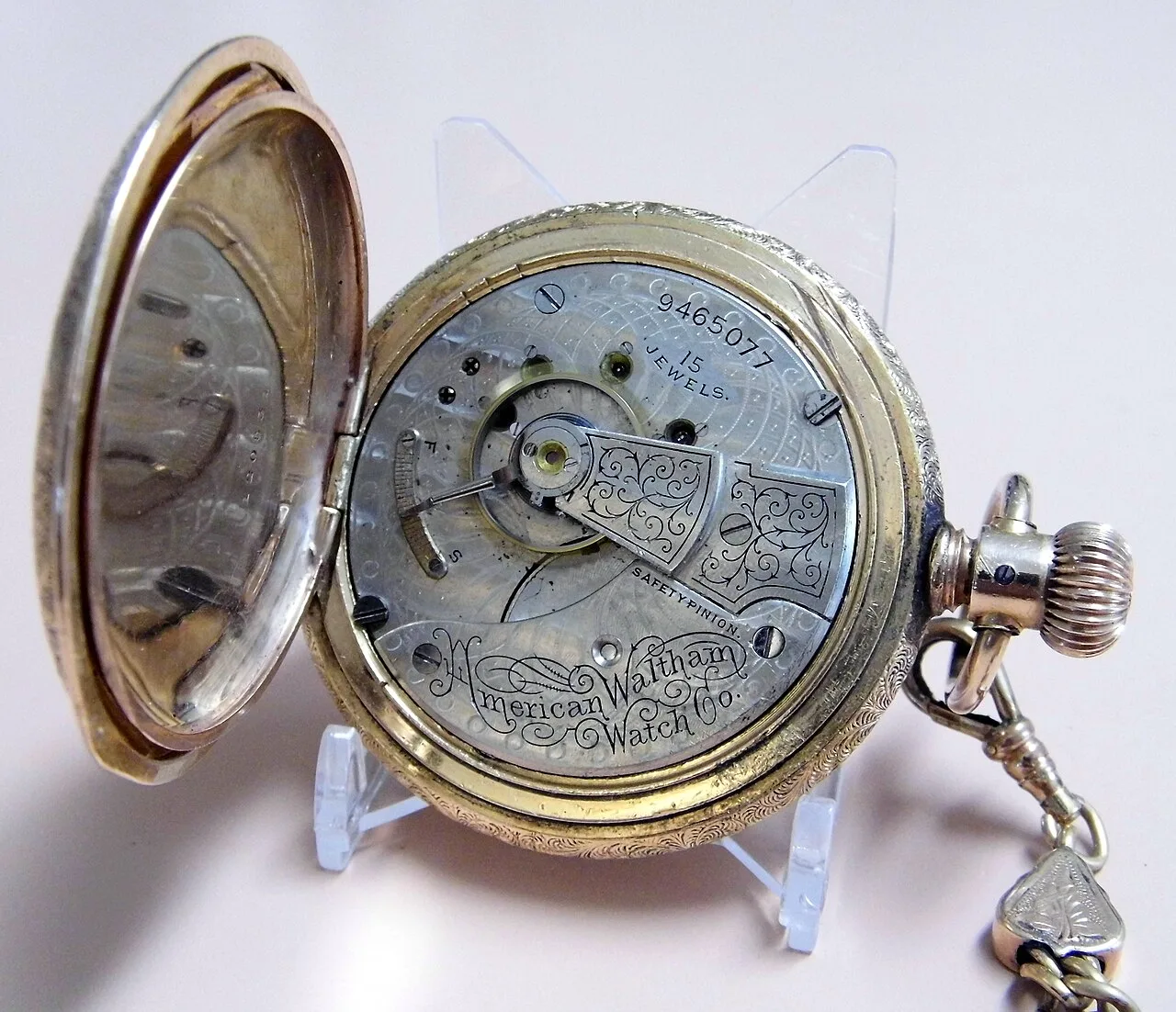
Open the back, or the hinged inner cover behind it, and look at the movement itself. The serial number is engraved on the largest plate, near the company name and “Waltham, Mass.”. Waltham numbered every movement it made in America. Both antique-pocket-watch.com and WatchScanning's Waltham guide make the same warning: the number stamped inside the case back belongs to the case maker, not to Waltham, and does not date the watch. A five- or six-digit number on a watch that does not look Victorian is usually the case number.
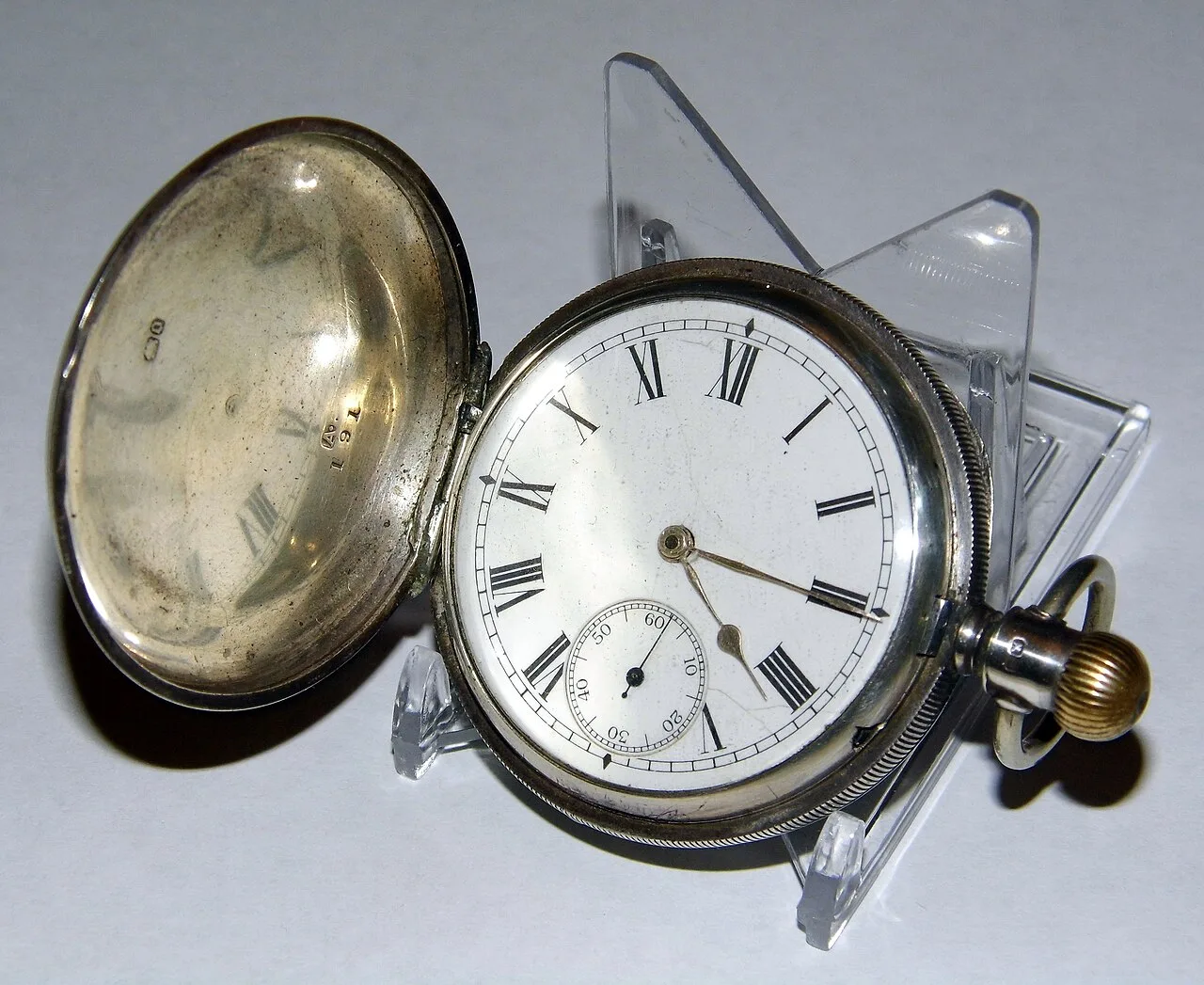
Movements and cases were sold separately, so a case newer or older than its movement is normal. A gap of decades suggests a watch that has been recased, which matters for value. If the case carries British marks like the one above, the British silver hallmarks guide will date it independently.
One more check before you date anything: watches signed “Waltham” but made in Switzerland are a different story. The company began importing complete Swiss movements in 1952, and Waltham International SA was founded in Switzerland in 1954 (Wikipedia; WatchScanning). A watch marked “Swiss” is not dated by the chart below.
Date It, and How Far to Trust the Chart
The usual tool is a published table of serial numbers by year. The version on antique-pocket-watch.com runs from serial 50 in 1852 to about 35,000,000 in 1957, and WatchScanning reprints the same figures. Find the largest number in the table that is still below yours; that row's year is your estimate. Both sites say the result is approximate, and antique-pocket-watch.com adds that serial numbers were not always used in strict order.
So we tested it. The Pocket Watch Database dates individual movements from the factory's production runs, using the NAWCC Waltham serial records and the American Horology Archive. We took eleven serial numbers that it publishes and set its date beside the chart's.
| Serial | Model and grade | Chart year | Factory-run date | Gap |
|---|---|---|---|---|
| 639,658 | Model 1857 | 1872 | Aug–Dec 1872 | None |
| 1,583,661 | Model 1872 | 1880 | Mar 1882–Feb 1885 | 2 to 5 years later |
| 4,782,129 | Model 1888, No. 20 | 1890 | May–Nov 1891 | 1 year later |
| 4,947,606 | Model 1883, No. 1 | 1890 | Apr–Aug 1891 | 1 year later |
| 7,252,503 | Model 1883, No. 18 | 1895 | Jun 1896–Mar 1902 | 1 to 7 years later |
| 7,904,811 | Model 1892, Crescent St. | 1896 | 1896 | None |
| 9,524,044 | Model 1899, Maximus | 1900 | 1900 | None |
| 10,552,447 | Model 1899 | 1901 | 1901 | None |
| 19,112,249 | Model 1908, Crescent St. | 1913 | 1913 | None |
| 25,052,115 | Model 1908, No. 620 | 1925 | 1925 | None |
| 25,680,019 | Model 1908, Crescent St. | 1926 | 1926 | None |
The pattern is clear even in a small sample. From serial 7,904,811 (1896) on, the chart and the factory runs agree to the year. Before that they drift, and always the same way: in four of the five earlier cases the factory run is later than the chart's year, never earlier, and one Model 1872 movement dates two to five years after it. The likely reason is that the database dates whole production runs, and some early runs were long; the Model 1883 run containing 7,252,503 spans June 1896 to March 1902.
The practical rule: for a movement numbered above about 7,500,000, between the last row that drifted and the first that agreed, trust the chart's year. Below that, treat it as the earliest likely date, and look the serial up in the Pocket Watch Database for the run's own dates.
Do not lean on the company name instead. antique-pocket-watch.com gives “American Waltham Watch Co.” as about 1885 to 1907 and “Waltham Watch Co.” from 1907, while Wikipedia has the Waltham Watch Company name arriving only in 1923. The movement in the next section, numbered 19,105,785 and made in 1913, is still engraved “A.W.W.Co.”. The name narrows a date to decades, not years.
Model and Size Are Not the Year
Waltham named its movement designs by the year each was introduced, and kept making them for decades. The Model 1883 movement in the first photograph was made around 1899; the Pocket Watch Database lists Model 1883 runs as late as 1896 to 1902. A “1908” on a listing is a design name, not a date: both Wikipedia and the Pocket Watch Database show 23-jewel Vanguard movements of the Model 1908 design made in the 1940s.
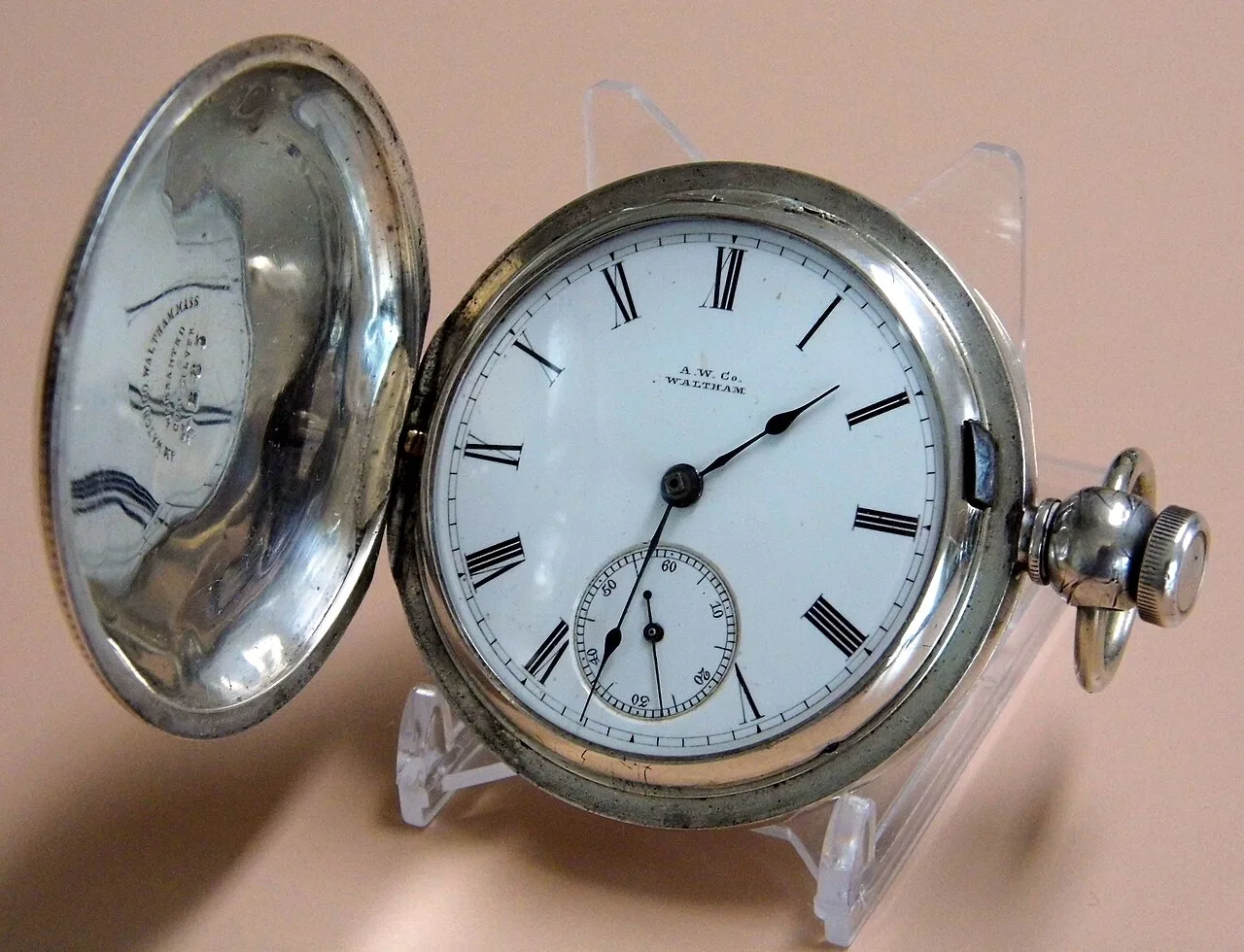
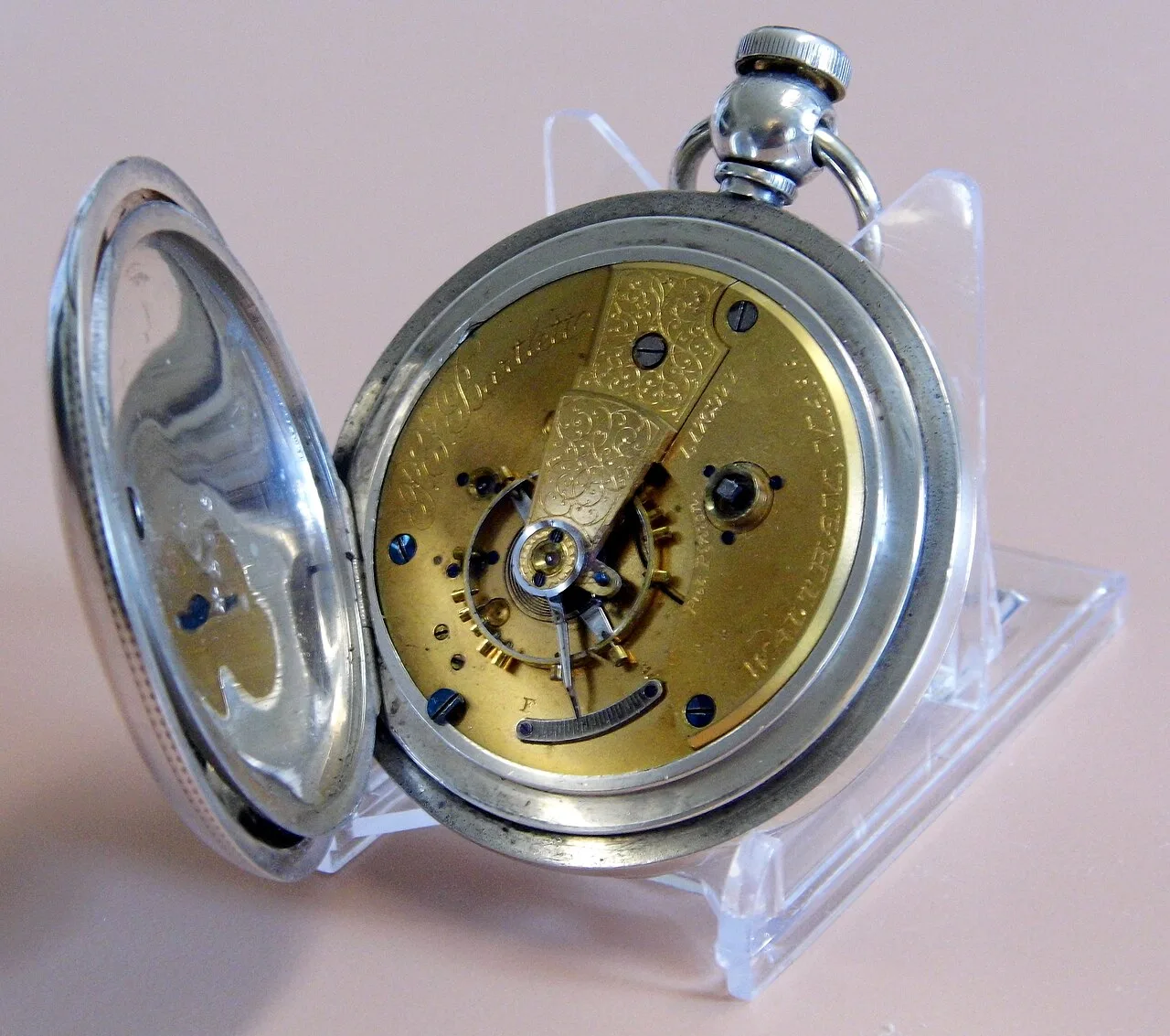
Model still matters, because it tells you the size, and size is the first thing a buyer filters on. The Pocket Watch Database records the Model 1857, 1877, 1883 and 1892 movements as 18-size and the Model 1888, 1899 and 1908 movements as the smaller 16-size. For movement types, setting methods and case styles across all makers, see the pocket watch identification guide.

Grade and Jewels: What Collectors Pay For
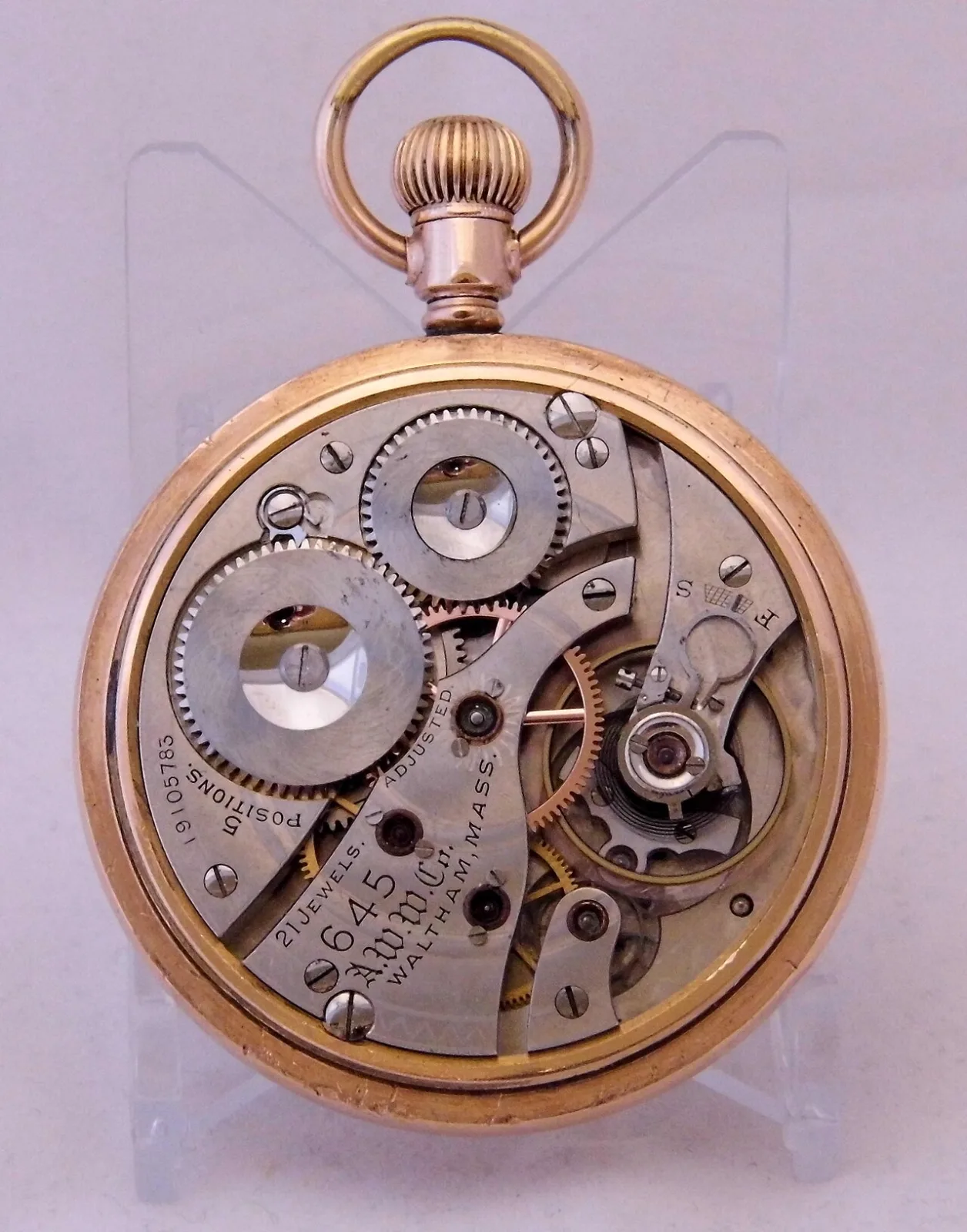
Within the same model, Waltham made many grades, from plain 7-jewel movements to the finest it built. The serial number dates a movement but says nothing about its grade, and both antique-pocket-watch.com and WatchScanning name the grade as the main driver of value. Look for these words on the plate:
- Jewel count. “7 Jewels” or no count at all marks a basic movement. 15 is a middle grade. 17, 19, 21 and 23 jewels are the better grades.
- “Adjusted” and a number of positions. A movement regulated to keep time in several positions and temperatures took extra work at the factory, and says so.
- A named top grade. Vanguard and Crescent Street are the names collectors look for. The Pocket Watch Database records the Vanguard as a 16-size, 23-jewel railroad-grade Model 1908, and the Crescent Street as a 21-jewel railroad grade in both the 18-size Model 1892 and the 16-size Model 1908; antique-pocket-watch.com lists both among Waltham's railroad grades.
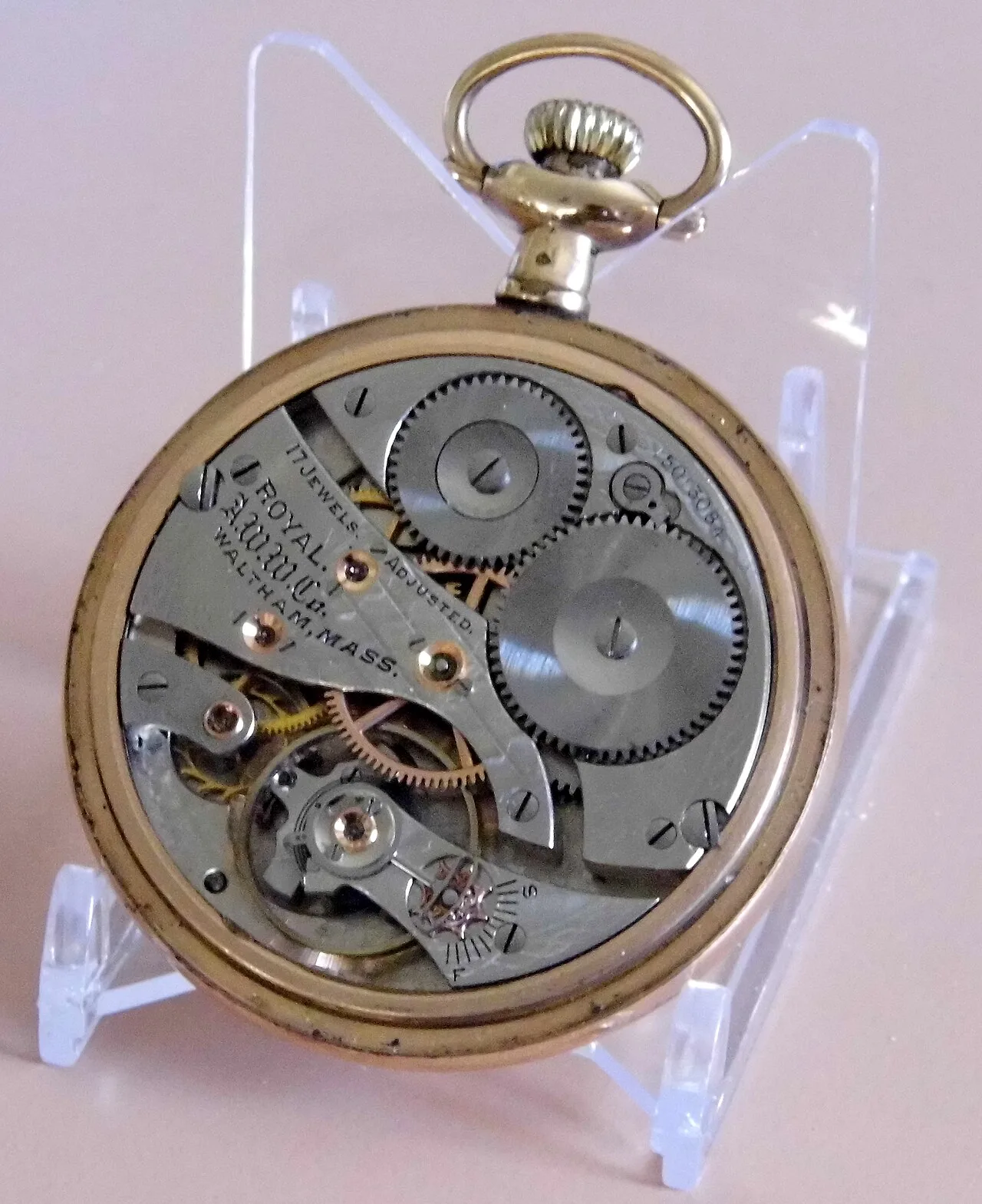
What makes it a railroad watch
After an 1891 train crash, the jeweller Webb C. Ball was hired to set standards for the watches carried by railroad crews, and American railroads adopted them. Wikipedia and antique-pocket-watch.com agree on the core: 16 or 18 size, at least 17 jewels, adjusted to five positions, accurate to 30 seconds a week, open face, and set by a lever rather than by pulling the crown. They differ on timing. antique-pocket-watch.com lists all of these as the standard by 1893; Wikipedia says the minimum was 15 jewels until 1895 and that open faces and lever setting were required only after 1908. Either way, a hunting case or a pull-to-set crown rules a watch out of later railroad service, however many jewels it has.
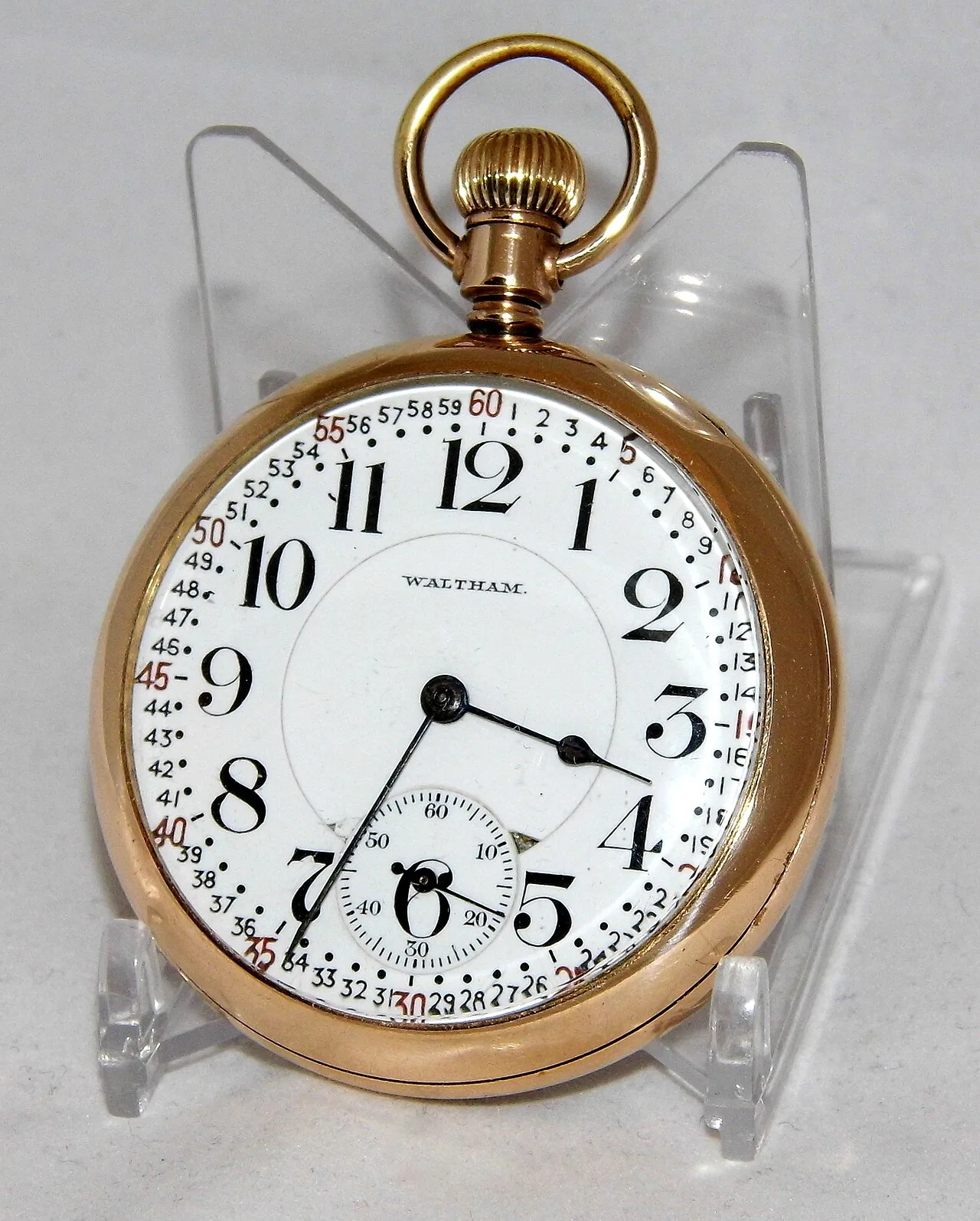
Sellers use “railroad grade” loosely. A railroad-style dial is easy to fit to any movement, so check the plate for the jewel count and adjustments before believing the dial. For lanterns, locks and the rest of the hobby, see the railroad collectibles guide.
The Case: Solid Gold, Gold-Filled or Silver
The other half of value is the case. Many gold-coloured Waltham watches are gold-filled: a layer of gold bonded over base metal, with far less gold in it than a solid case. The case markings tell you which you have, and two independent guides, antique-pocket-watch.com and the Pocket Watch Database's article on identifying solid gold cases, give the same rules:
- A guarantee in years means gold-filled. “Warranted 20 Years” or “Guaranteed 25 Years” promises the gold will not wear through to the metal beneath it. A solid gold case has nothing to wear through to, so it never carries one.
- A fraction or “G.F.” means gold-filled. “1/20 14K” means a 14-karat layer making up one twentieth of the case's weight.
- A karat mark and nothing else points to solid gold: “14K” or “18K” alone, often with a fineness figure. When a case is unmarked or the stamp is unclear, have it tested.
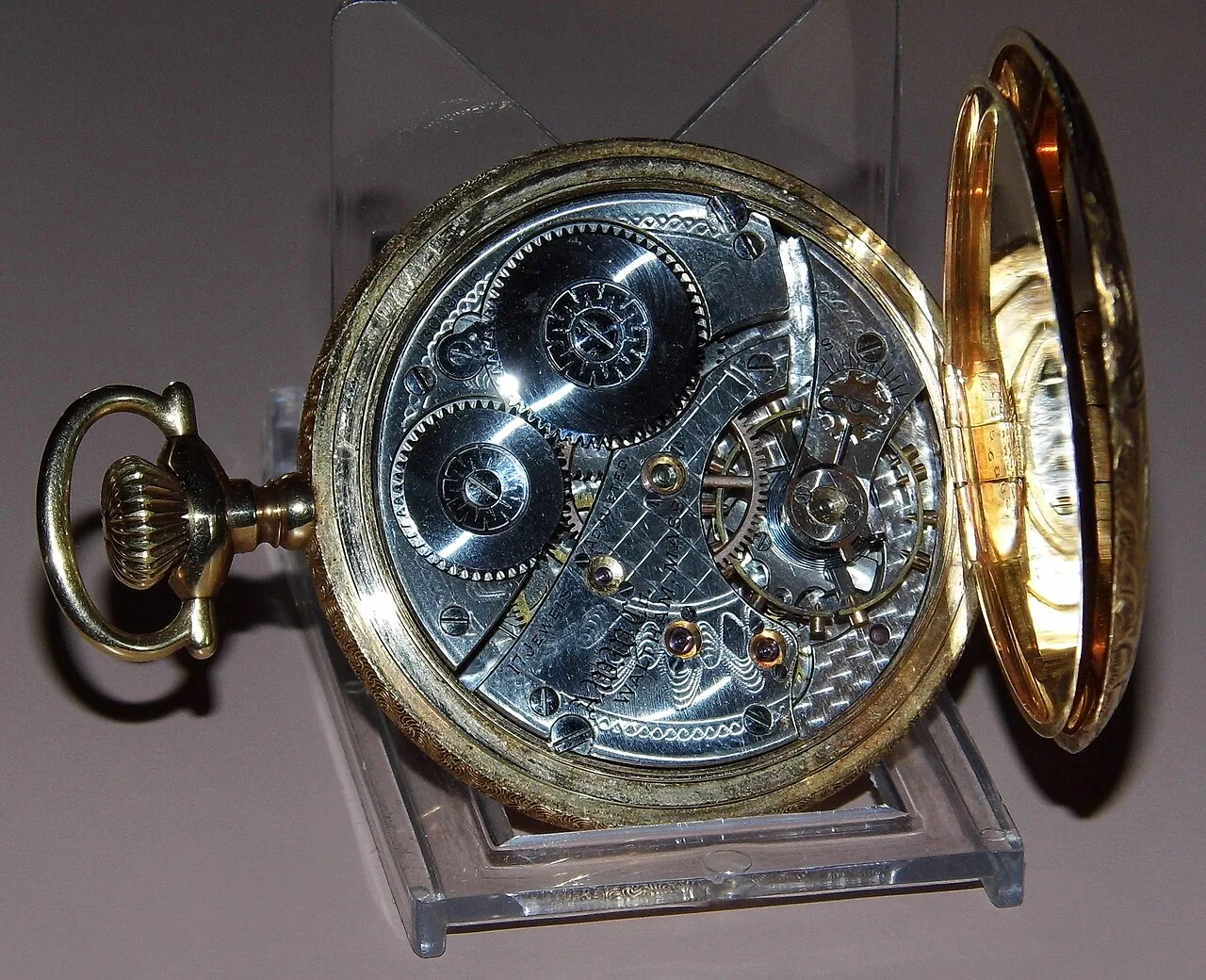
Silver cases are the third kind. American cases are often marked “coin silver” or “sterling”; English cases carry hallmarks, as in the Hillside example above. Whatever the metal, the original dial matters too. WatchScanning notes that a refinished dial lowers value, and antique-pocket-watch.com counts originality and condition among the main value factors. The watches and timepieces guide covers dials and cases across other makers.
The Value Checklist
We put the evidence above into one sequence. Work down it with the back open; each line takes seconds and none needs tools beyond a loupe.
| # | Read | Where | What it tells you | Effect on value |
|---|---|---|---|---|
| 1 | Signature: “Waltham, Mass.” or “Swiss” | Movement and dial | American-made, or a later Swiss-made watch the chart does not cover | Decides whether the rest of this list applies |
| 2 | Movement serial | Largest movement plate | Year: exact from about 7,500,000 on, earliest likely year below that | Small on its own; age is not what sells a Waltham |
| 3 | Size and model | Measured movement; serial lookup | 18-size or 16-size; which design | Defines which watches it competes with |
| 4 | Jewels, “Adjusted”, positions | Movement plate | Quality of the movement | Large: 7 and 15 jewels are common; 21 and 23 adjusted are sought |
| 5 | Grade name or number | Movement plate | Vanguard, Crescent Street, Riverside, a numbered grade such as 645 | Largest single factor for the movement |
| 6 | Face and setting | Front; does the crown pull to set? | Open face with lever set, or hunting case | Needed, with 4 and 5, for a real railroad watch |
| 7 | Case metal marks | Inside the case back | Solid gold, gold-filled or silver | Large: solid gold adds metal value; years or a fraction mean gold-filled |
| 8 | Case against movement | Case style and marks, movement date | Original pairing or a later recasing | A recased watch is worth less |
| 9 | Dial condition | Front, in raking light | Original enamel, cracks, chips or a refinish | A clean original dial adds; a refinish subtracts |
We give no prices, on purpose. Dealer and auction figures for “a Waltham” range so widely that they mean little until rows 4 to 9 are known, and the sources we checked did not agree on figures for any grade. Once you have the grade, jewels, size and case metal, look for sold results of that exact combination. For how appraisers turn comparable sales into a value, see the antique valuation guide.
Frequently Asked Questions
How do I tell what year my Waltham pocket watch was made?
Read the serial number engraved on the movement, not the number inside the case, and find the largest number below it on a Waltham serial chart. For movements numbered above about 7,500,000 the chart's year matches the factory records. Below that, take it as the earliest likely year and look the serial up in the Pocket Watch Database, which gives the production run's own dates.
Where is the serial number on a Waltham pocket watch?
On the movement, engraved on the largest plate near the company name and “Waltham, Mass.”. Open the back, and on a hunting case or a watch with a dust cover, the inner cover too. The number stamped inside the case back belongs to the case maker and does not date the watch.
Which Waltham pocket watches are worth the most?
High grades in solid gold cases, in original condition. On the movement, look for Vanguard, Crescent Street or Riverside, 21 or 23 jewels, and “Adjusted” with a number of positions. A common 7- or 15-jewel movement in a gold-filled case is the most frequent Waltham and the least valuable, whatever its age.
Is my Waltham pocket watch solid gold?
Check inside the case back. A guarantee in years, such as “Warranted 20 Years”, a fraction such as “1/20 14K”, or the letters G.F. mean gold-filled. A karat mark such as “14K” with nothing else points to solid gold. If there is no mark, have the case tested.
How do I know if my Waltham is a railroad watch?
Check the movement and the case together. A railroad watch is 16 or 18 size, has at least 17 jewels, is adjusted to five positions, sits in an open-face case with the crown at twelve, and is set by a lever rather than by pulling the crown. A railroad-style dial alone proves nothing, because it can be fitted to any movement.
The Short Version
Date a Waltham by the movement serial, and above about 7,500,000 trust the chart's year; below that, treat it as a floor. Then read what sets the price: the grade, the jewels and adjustments on the plate, and the metal marks inside the case. A high grade in a solid gold case is the Waltham worth chasing. A 7-jewel movement in a gold-filled case is the one most families own.