Antique Identifier Logo

Antique Pocket Watch Identification: Movements, Jewels, Cases, Serial Dating, and Value
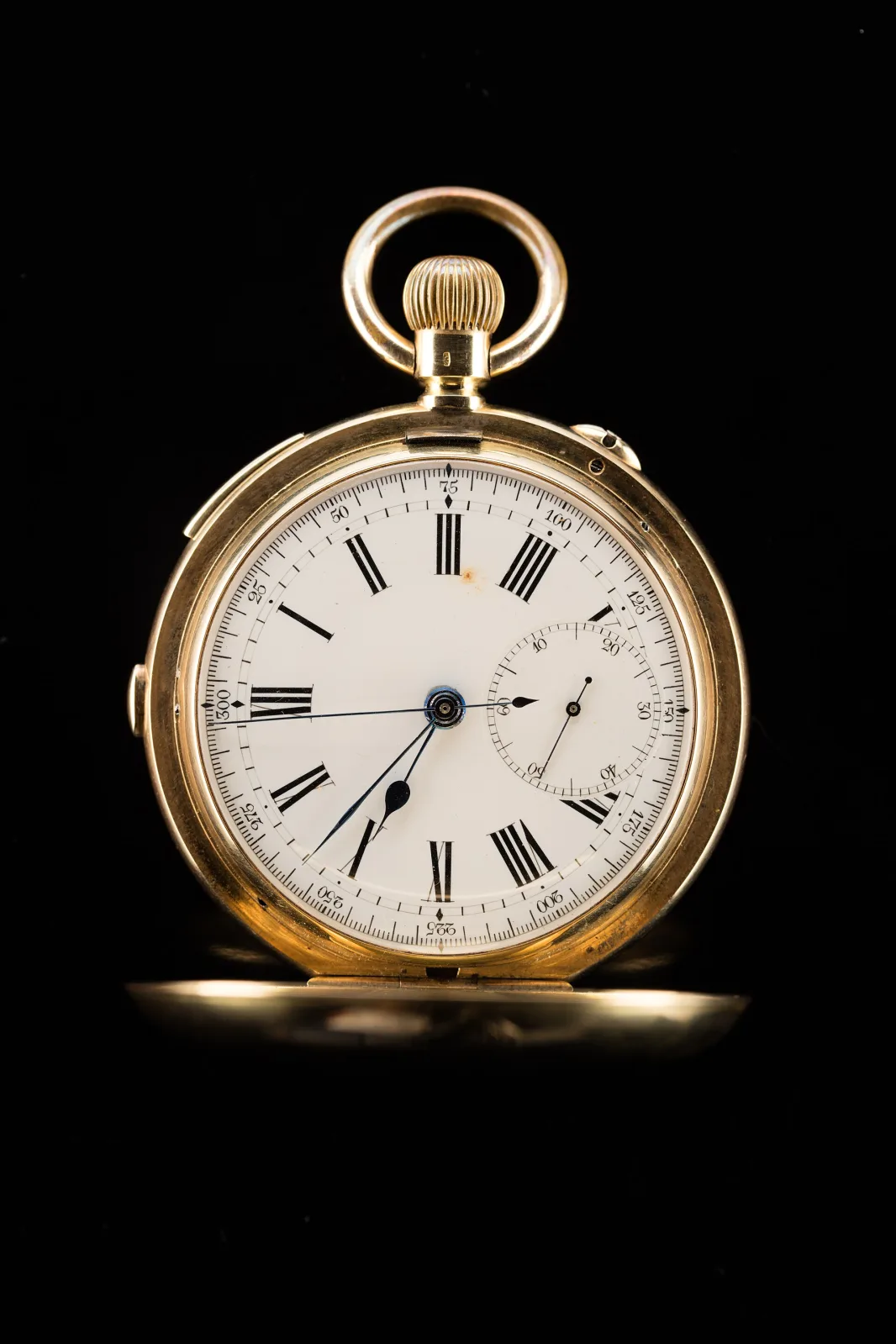
Gold pocket watch photographed against black, its hinged front cover swung open to show a white enamel dial with black Roman numerals, blued steel hands and a small seconds dial at six o'clock
A hunting-case pocket watch in 18 carat gold, and the museum record for it reads like a checklist for this whole article: quarter repeating movement, one minute sub-dial at six o'clock, stem wound, pin set, cut balance with overcoil spring, enamel dial. Every one of those is a separate identification decision, and they are the reason a description matters more than a photograph here. Two are visible: the sub-seconds dial at six, which is the standard position, and the hunting case, meaning a hinged cover over the dial. That cover is the thing to check first on any such watch — it takes the wear, its hinge is the commonest structural failure, and a hunter whose lid does not spring open crisply and sit flush has a worn or repaired hinge, which is expensive. Auckland War Memorial Museum; CC BY 2.0

Written by the Antique Identifier Team

Expert Antique Appraisers & AI Specialists

Our team combines decades of antique appraisal experience with cutting-edge AI technology. Meet our experts who help authenticate and identify antiques for collectors worldwide.

Antique pocket watches combine engineering precision with decorative artistry. Correct identification requires a systematic look at the movement, jewel count, adjustments, setting and winding mechanisms, case materials and hallmarks, dial and hands, and the relationship between the movement and case. This guide walks you through each step and shows how to use serial numbers, grade names, and maker marks to date and evaluate pocket watches accurately.

Movement Types and Setting Systems

The movement is the heart of the watch and your primary identification target.

  • Key-wind / Key-set (c. 1850-1890): Wound and/or set with a key from the back or front; older American and European pieces.
  • Stem-wind / Lever-set (railroad grade): Crown winds; a lever near the dial edge must be pulled to set time—adopted for reliability and to prevent accidental setting.
  • Stem-wind / Pendant-set: Crown both winds and sets; common on non-railroad watches.
  • Full-plate vs. 3/4-plate/Bridge: Plate style aids maker identification; American full-plate common in earlier production, later bridge styles show jeweled train.
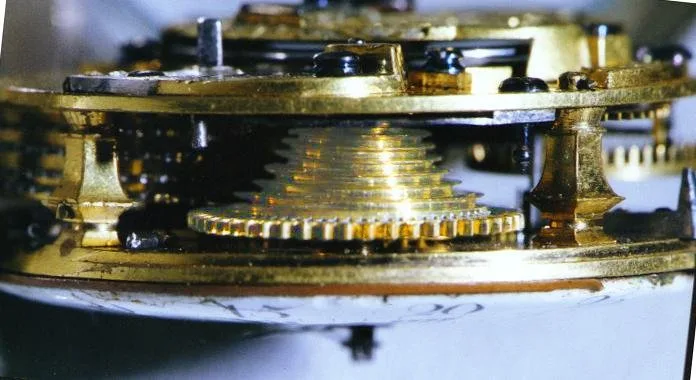
Close side view inside a watch movement showing a small stepped brass cone wound with fine chain, standing between the plates beside a toothed wheel
The fusee, from a movement made in 1760 by Johann Lindquist of Stockholm — and the single most useful thing to recognise in an early watch. It is a grooved cone linked to the mainspring barrel by a fine chain, and its job is to even out the power: a spring pulls hardest when fully wound, so the chain starts on the cone's narrow end at the worst mechanical advantage and works outward as the spring weakens. Seeing one settles the date bracket immediately. A fusee means an early watch — the arrangement is essentially gone from new production by the later nineteenth century, superseded by the going barrel. It also means fragility: the chain is the size of a bicycle chain in miniature, it snaps, and a broken fusee chain is a specialist repair rather than a service. Photograph by Gervald Frykman; public domain

Jewel Counts, Adjustments, and Grades

Jewel count and adjustments indicate quality.

  • Jewel counts: 7-11 jewels (entry), 15-17 jewels (mid), 19-23+ jewels (high grade). Look for cap jewels on escape and balance pivots.
  • Adjustments: Markings like "Adjusted," "Adj. Temp & 5 Positions," or "Heat Cold Isochronism" indicate higher precision.
  • Grades and model names: Makers used grade numbers/names (e.g., "B.W. Raymond," "992," "Van Buren"). Cross-reference grades to date ranges.
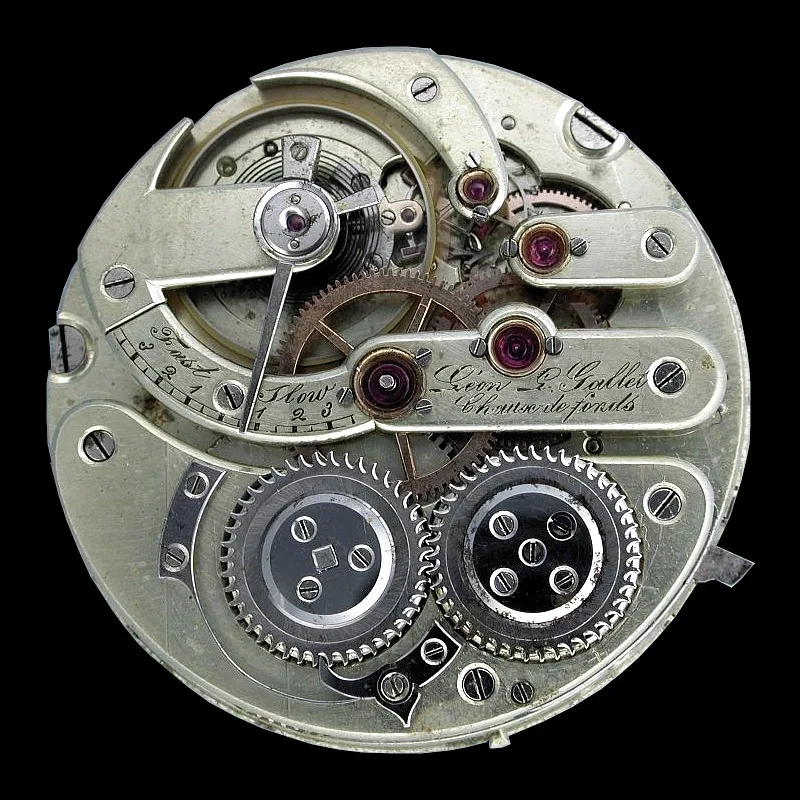
Circular nickel watch movement seen from the back, its plates cut away to show the going train, with several red jewel bearings set into the plate and an engraved maker's signature across it
A movement of 1879, and the red dots set into the plate are the jewels the section above is about. Each is a synthetic or natural stone drilled to take a pivot, and they exist because metal running in metal wears where a pivot turning in a jewel does not. Two things to know. The count is not a quality claim in itself — jewels have to be in the right places to matter, and a movement advertising a high count with stones in decorative rather than load-bearing positions is a known nineteenth-century marketing trick. And the jewels are visible, so the count is checkable: open the back, count the red settings on the plate, and compare with what the movement is stamped or advertised as carrying. A discrepancy is worth pursuing. Photograph via Wikimedia Commons; public domain

Case Materials, Hallmarks, and Construction

Cases were often made by specialized case companies and may not match the movement maker.

  • Solid gold/silver: Hallmarks inside back covers; karat marks (14K/18K), sterling (.925), and assay symbols for British/Continental cases.
  • Gold-filled/rolled gold plate: Stamped "GF," "RGP," or brand marks (e.g., "Wadsworth," "Keystone," "Dueber"). Wear through at edges reveals brass base.
  • Nickel/coin silver: Coin silver often marked "COIN" or .900; nickel cases bright and durable.
  • Hunter vs. Open-face: Hunter has a metal lid; open-face exposes the crystal. Stem position differs between designs (open-face typically at 12 o'clock).
  • Case serials and style names: Some case makers provide catalogs; hinge styles (swing-out, screw-back/bezel) help date.

Have an antique to identify? Snap a photo and get instant AI-powered identification.
Download on App Store
Close view of the join between a pocket watch's silver case and its chain, showing a row of small struck hallmarks punched into the metal at the pendant
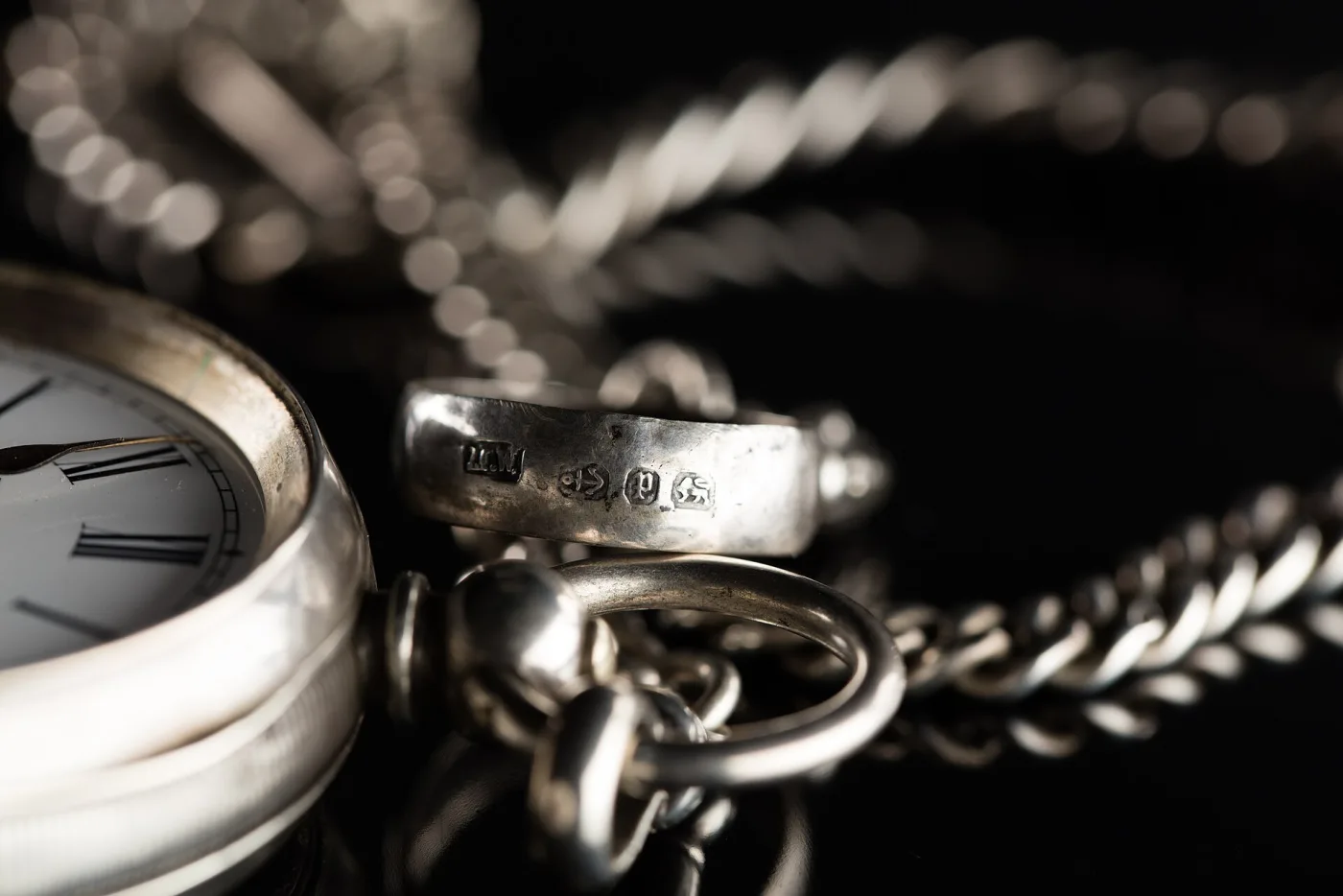
The hallmarks on a silver case, struck at the pendant where the bow joins — and on a British watch this is where the date comes from, not from the movement. A hallmarked case carries the standard mark, the assay office town mark and a date letter, and the date letter gives the year the case was assayed to within twelve months. That precision is unusual and worth exploiting. But it is also the origin of the trap the section on movement-case relationships describes: the case was made and marked by a different firm from the movement, so a hallmark dates the case and only implies the watch. Read the marks first because they are the hardest evidence available, then check whether the movement is plausibly of the same date. Auckland War Memorial Museum; CC BY 2.0

Dial, Hands, and Railroad Requirements

  • Enamel dials: Multi-piece enamel with sunk seconds. Hairlines and chips affect value.
  • Hands: Spade, cathedral, moon, and baton styles; blued steel common.
  • Railroad standards (USA): Typically 16s/18s, lever-set, 17+ jewels, adjusted to 5+ positions, bold Arabic numerals, open-face orientation. Railroad-grade watches are among the most sought-after railroad collectibles and were essential to safe railway operations.
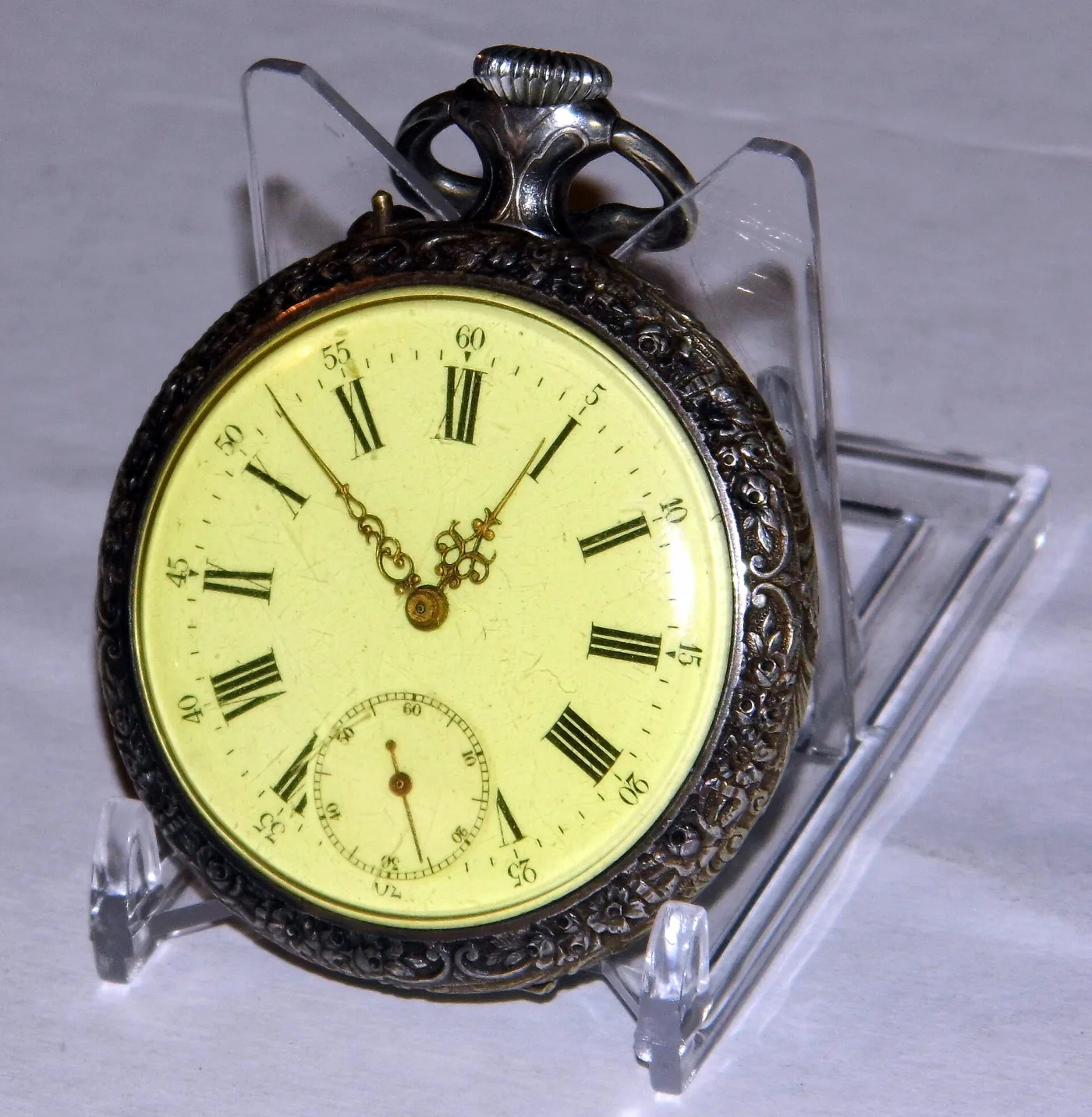
Large pocket watch standing in a clear display support, with a cream enamel dial carrying bold black Roman numerals, an outer minute track, a subsidiary seconds dial and ornate gilt hands
A white enamel dial, and the material is the point. This is vitreous enamel fused onto a copper disc, not paint and not printed card, which is why the surface is glassy, why the numerals sit slightly below it, and why the white has not yellowed in a century and a half. Enamel does one thing badly: it chips and cracks rather than wearing, so damage is sudden and local rather than gradual. Two checks follow. Hairline cracks radiate from the winding and hand-setting holes and from the dial feet on the reverse, so angle the dial to the light rather than looking at it straight on. And a dial that is evenly cream or grey rather than white is usually a replacement in painted metal, which is common, cheap and a substantial deduction. Photograph via Wikimedia Commons, CC BY-SA 2.0

Serial Numbers and Dating Methods

Use movement serial numbers—not case serials—to date watches for most American makers.

  • Movement serial: Engraved on the movement plate. Match to published ranges by maker to estimate production year.
  • Case serial: Useful only for case maker dating; cases were commonly swapped during service.
  • Maker-specific cues: Plate shapes, regulator types (e.g., Reed's), and damaskeening patterns help confirm maker and grade.
  • European watches: Hallmarks and assay office marks on cases, maker's cartouches, and key-wind survivals are strong dating clues.
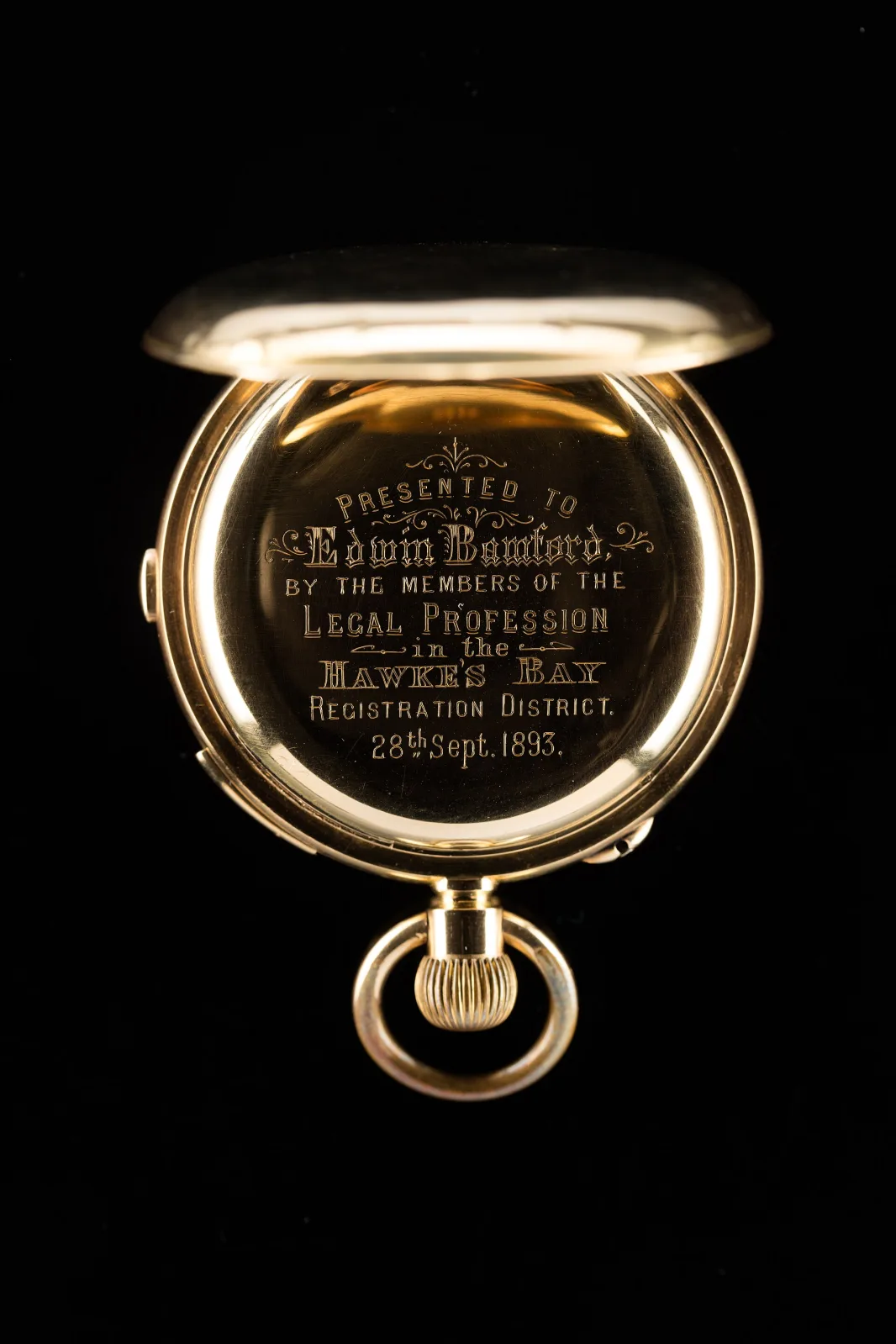
Inside of a gold watch case cover engraved in flowing script with a presentation inscription naming a recipient, the members of the legal profession, and a date in September 1855
The inside of a case cover, engraved with a presentation inscription: a named recipient, the body who gave it, and a date in September 1855. This is the best kind of evidence a watch can carry, and it lives in the one place nobody photographs. An inscription of this sort is contemporary with the presentation, which sets a firm date the watch cannot postdate, and it frequently names an occupation or an institution that can be checked in period directories. Two cautions. It dates the case, which on a British watch is a separate manufacture from the movement — so read it alongside the hallmarks rather than instead of them. And engraved presentations are sometimes polished out by dealers because a stranger's name is thought to hurt resale, which destroys the best documentation the object had. Auckland War Memorial Museum; CC BY 2.0

Authenticity Checks: Movement-Case Relationship

  • Matching wear: Consistent wear on hinges, bezels, and pendant areas; recent case swaps show mismatched patina and fit.
  • Dial signature vs movement: Re-cased watches may have retailer-signed dials with a different movement maker; acceptable historically but affects originality premiums.
  • Correct stem position: Open-face movements at 12 o'clock; hunter movements at 3 o'clock. Mismatches indicate conversions.
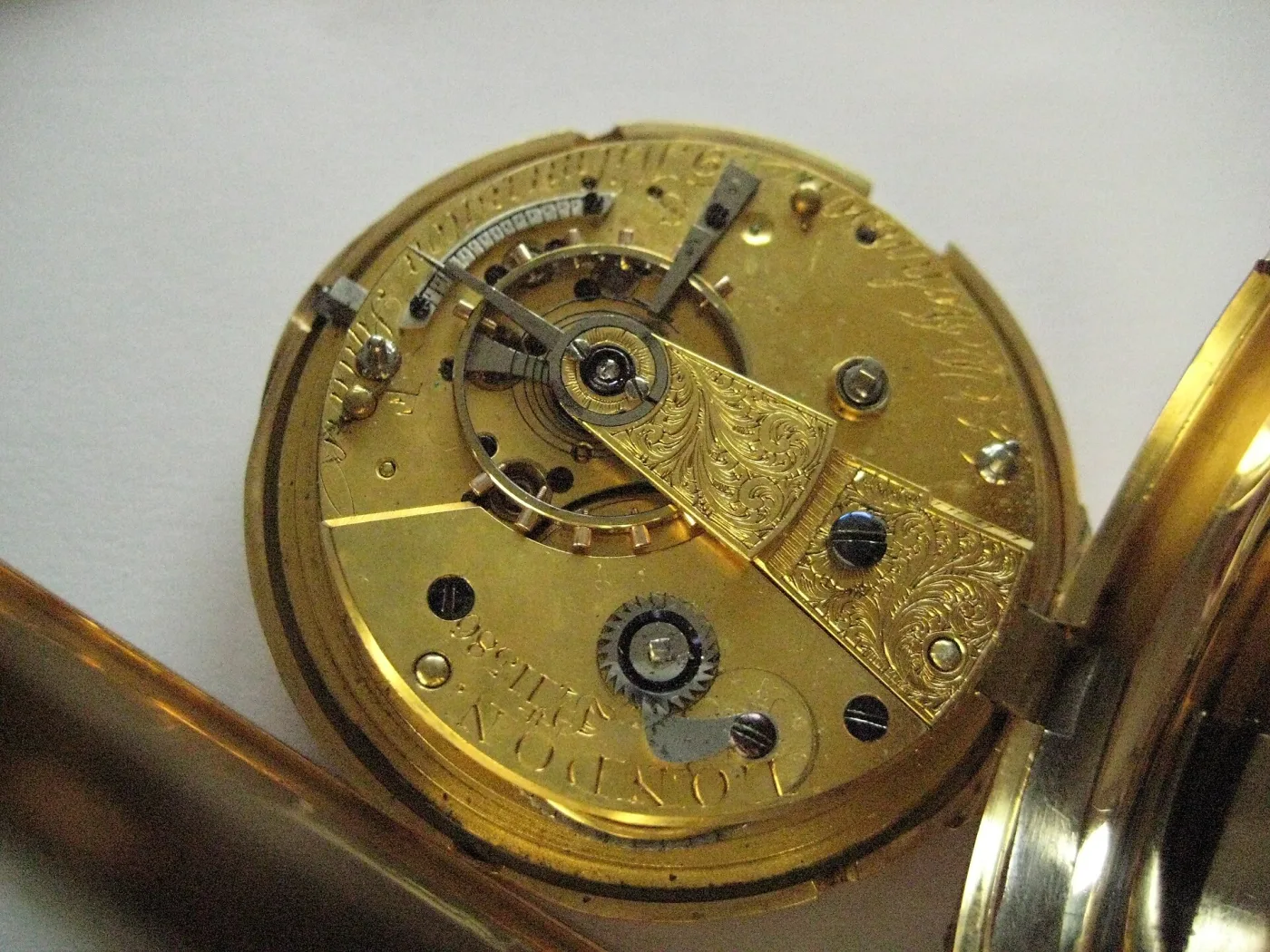
Gilt watch movement lying in its opened case, seen from the back, with an engraved balance cock over the balance wheel and the maker's name engraved across the plate
A movement shown in its case, which is the relationship this article's authenticity section turns on. Look at the fit: the movement is a separate assembly that hinges or drops into a case made by another firm, and for most of the nineteenth century the two were bought separately and married by the retailer. That was normal trade practice, not deception. What matters is whether this movement has always been in this case, and the evidence is physical — the movement should sit without rocking, the case screws should bear on unmarked seats, and the dial should clear the bezel evenly all the way round. A movement that has been swapped in usually shows fresh bright marks where it has been persuaded to fit. Photograph via Wikimedia Commons, CC BY-SA 3.0

Condition Grading and Value Drivers

  • Movement: Clean plates, intact jewel settings, tight balance staff, proper amplitude; corrosion or missing screws reduce value.
  • Case: Dents, brassing on gold-filled, hinge looseness, replaced crystals; solid gold weight has intrinsic value.
  • Dial/Hands: Enamel hairlines, chips, replaced hands affect desirability.
  • Completeness: Original boxes, papers, and proven railroad service documentation increase premiums.
  • Maker & grade: High-grade adjusted movements by respected makers command the strongest prices.
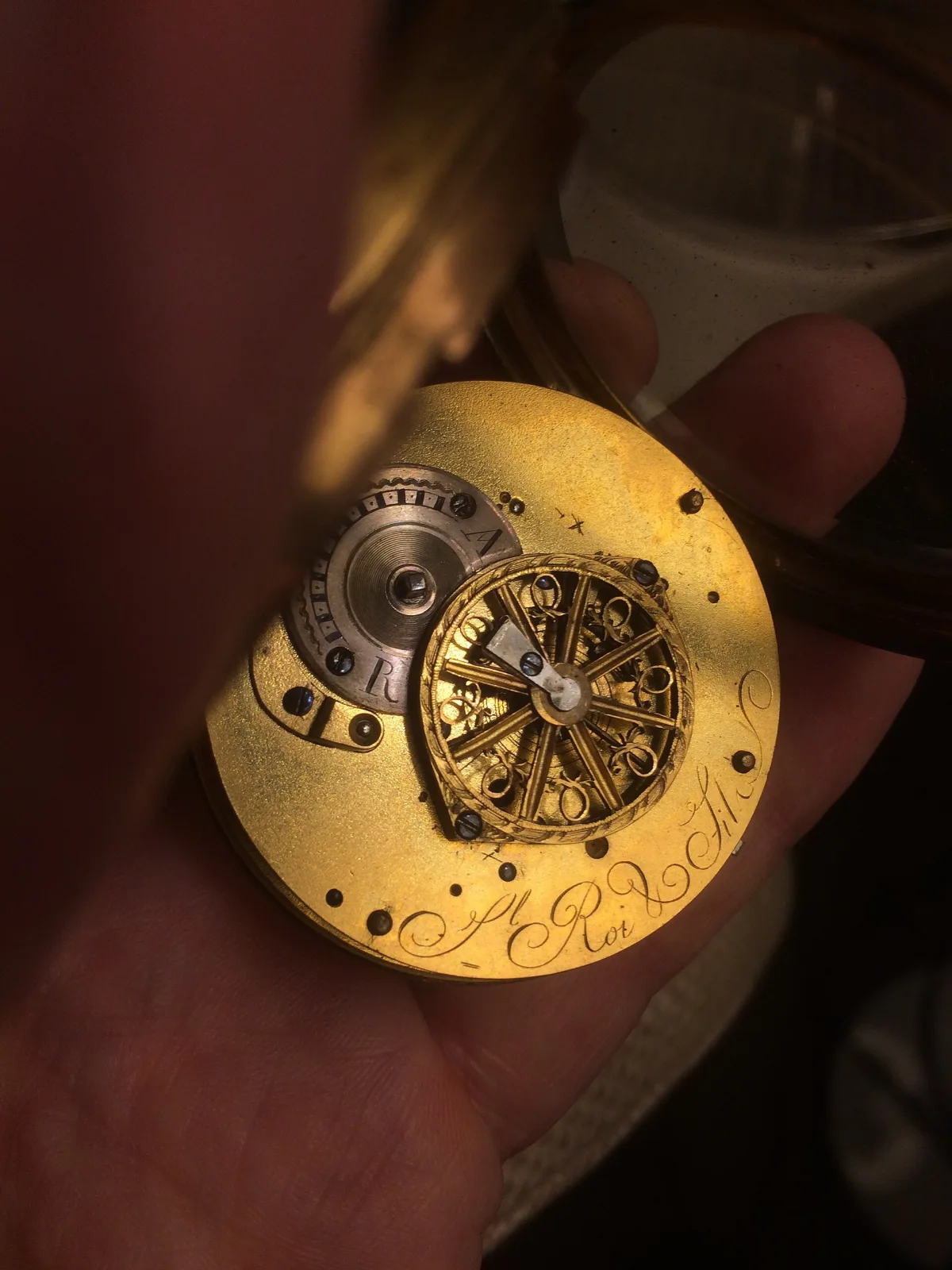
Gilt watch movement held in a hand, its back plate engraved all over with foliate scrollwork around a pierced balance cock, with a signature engraved along the lower edge
A movement held in the hand and signed along the plate, which is how these should be examined and almost never how they are sold. Two observations. The engraving covers the whole back plate, and on early watches that decoration was meant to be seen — the movement, not the dial, was the display surface, which is why the finest work is on the side the owner never looked at in use. And the signature is engraved rather than stamped, so it is part of the plate and cannot be added convincingly later without leaving a bright cut in an aged surface. The handling note: fingers on a movement leave salts that corrode, so this photograph shows exactly what not to do for longer than a moment. Hold a watch by its case, and open the back only with the right tool. Photograph via Wikimedia Commons, CC BY-SA 4.0

Care, Service, and Safe Handling

  • Service interval: Every 3-5 years for running watches; dried oils cause wear.
  • Winding: Wind gently to firm stop; avoid over-winding myths—breakage occurs from force and lack of lubrication.
  • Storage: Keep away from magnets and temperature extremes; display open-face watches crystal-up.

Quick Identification Checklist

  • Open back to photograph the movement safely (use a soft surface).
  • Record movement serial, jewel count, grade/markings, plate layout.
  • Note setting system: lever-set or pendant-set; key-wind/key-set if applicable.
  • Document case hallmarks, material, and style (hunter/open-face).
  • Assess condition of movement, case, dial, and hands.
  • Cross-reference movement serial and grade with maker catalogs or databases to date.

Conclusion

Antique pocket watches reward careful observation. By focusing on the movement, serial numbers, jewel count, adjustments, and case details, you can identify and date most watches with confidence. The same movement-and-serial discipline carries directly over to the vintage wristwatch that superseded the pocket watch in the twentieth century. As with all antiques, originality, condition, and documented history drive value—so take your time, document thoroughly, and compare to verified examples.

Whether you're examining a simple key-wind watch or a complex railroad-grade timepiece, the systematic approach outlined in this guide will help you uncover the story behind each antique pocket watch. Remember that the Antique Identifier app can provide additional assistance with movement identification and maker research.

← Back to Antique Identifier