Antique Spode & Copeland Identification Guide: Marks, Patterns & Dating
Few names in English ceramics carry the weight of Spode. The firm that Josiah Spode founded at Stoke-on-Trent in the 1770s did more than any other to perfect two techniques that reshaped the world's tableware: it brought underglaze blue transfer printing to a commercial peak, and—around 1799—it established the recipe for English bone china that virtually every later factory would copy. For a quarter of a millennium, wares carrying the Spode name (and its successor names, Copeland & Garrett and W. T. Copeland) have poured out of the same Stoke works, from humble blue-and-white dinner plates to sumptuous gilded ornamental urns. That long, unbroken run is exactly what makes Spode both a joy to collect and a challenge to identify.
The challenge is that "Spode" is not one thing. It is a bone china teacup and a heavy ironstone-type ashet; it is a 1790s pearlware plate printed with a chinoiserie scene and a 1970s "Christmas Tree" mug; it is a mark that reads SPODE, or COPELAND & GARRETT, or COPELAND LATE SPODE, or simply COPELAND, depending on which decade a piece left the factory. Reading a piece of Spode correctly means reading its mark, its body, its pattern, and its potting together, and knowing how the firm's changing names map onto the calendar. Get that framework straight and a confusing jumble of blue-and-white resolves into a datable, attributable, and often surprisingly valuable object.
This guide walks through the whole picture: the Spode–Copeland–Spode chronology and why the name on the base is your first and best dating tool; the bodies Spode pioneered, from bone china to stone china and felspar porcelain; the great patterns—Blue Italian, Willow, Tower, the botanicals, and the Indian Sporting series—that collectors chase; how to read printed and impressed marks, pattern numbers, and later date codes; how Spode sits among its Staffordshire peers; and how to separate genuine period pieces from later reissues, "seconds," and outright reproductions. By the end you should be able to turn a plate over, read its base, and place it in the right maker, the right body, and the right decade.
Table of Contents
- Who Was Spode? A Firm in Three Names
- The Spode–Copeland Timeline at a Glance
- The Bodies Spode Pioneered
- Reading Spode Marks and Backstamps
- Pattern Numbers and Date Codes
- The Great Blue-and-White Patterns
- Botanicals, Indian Sporting, and Fine Printing
- Bone China, Gilding, and Ornamental Wares
- Copeland Parian and Later Ornamental Production
- Twentieth-Century Spode and Portmeirion
- Spode Among Its Peers
- Reproductions, Reissues, and Seconds
- Condition and Value
- Field Checklist Before You Buy
Who Was Spode? A Firm in Three Names
The single fact that unlocks Spode identification is that the same factory traded under a sequence of different names, and the name on the base tells you which era a piece belongs to. There were, in effect, two Josiah Spodes and then a long line of Copelands, and the business passed through their hands without ever leaving its Stoke-on-Trent works.
Josiah Spode I (1733–1797) established the pottery in the 1770s and built its reputation on fine underglaze blue transfer-printed earthenware—the blue-and-white that made the firm's early name. Josiah Spode II (1755–1827) succeeded him and presided over the firm's golden age: it was under Spode II, around 1799, that the factory perfected and commercialized the bone china body, and under him that Spode became one of the grandest names in English china, supplying the aristocracy and, from 1806, holding a royal appointment. The firm was simply Spode through this whole early period, and a mark reading SPODE alone, without any Copeland element, points to this founding era running up to the mid-1830s.
Enter Copeland
After Josiah Spode II's death the business passed, through his London agent William Taylor Copeland, into a partnership: Copeland & Garrett ran the works from 1833 to 1847, and pieces marked COPELAND & GARRETT belong precisely to those fourteen years—one of the most useful tight date brackets in all of English ceramics. When the partnership with Thomas Garrett ended, W. T. Copeland continued alone, and the firm traded as W. T. Copeland (and later W. T. Copeland & Sons) from 1847 well into the twentieth century. Crucially, Copeland kept trading on the Spode heritage, so marks from this era frequently read COPELAND LATE SPODE or pair the Copeland name with "Spode." Only in the twentieth century did the historic Spode name return to full prominence, with the firm formally becoming Spode again in 1970. So the three names—Spode, Copeland & Garrett, Copeland—are not different factories but successive chapters of one continuous business, and learning to read which name (and which combination) appears on a base is the foundation of dating the ware.
The Spode–Copeland Timeline at a Glance
Because the name changes do so much of the dating work, it helps to hold the whole chronology in mind before looking at any single piece. The following sequence is the backbone every Spode attribution hangs on:
1770s–c.1833: Spode. The founding era under Josiah Spode I and II. Fine blue-and-white transferware from the outset; bone china from around 1799; stone china and felspar porcelain introduced in the 1810s–1820s. Marks read SPODE (painted, printed, or impressed), often with a pattern number.
1833–1847: Copeland & Garrett. A tight, fully datable window. Marks incorporate COPELAND & GARRETT, frequently with "Late Spode," and the wares continue the Spode bodies and many Spode patterns.
1847–c.1970: W. T. Copeland / Copeland Late Spode. The long Copeland century. Marks read COPELAND, COPELAND LATE SPODE, or COPELAND SPODE. Parian statuary, fine bone china, and continued blue-and-white all belong here, and from the later nineteenth century date codes and, after 1891, country-of-origin marks help pin down the year.
1970 onward: Spode (and Spode within Portmeirion from 2009). The historic name is restored; later twentieth-century tablewares, giftware, and the ubiquitous "Christmas Tree" pattern date from this modern era, and from 2009 the brand sits within the Portmeirion Group.
Why the Sequence Matters More Than Any Single Clue
The value of holding this timeline is that every other clue is read against it. A pattern number, a body type, a printing style, a registration mark—each one narrows the date, but the name on the base sets the frame. A piece marked simply SPODE cannot (with rare late-revival exceptions discussed below) belong to the Copeland century; a piece marked COPELAND & GARRETT can only be 1833–1847; a piece marked COPELAND SPODE with an "ENGLAND" is post-1891. Beginners who chase pattern names before reading the maker's name often misdate pieces by decades; specialists read the name first, then let the pattern, body, and date code refine it.
The Bodies Spode Pioneered
Spode's historical importance rests as much on the materials it developed as on the patterns it printed, and recognizing the body of a piece is central to identifying and dating it. Spode worked across the full range of early nineteenth-century ceramic bodies and led the way in several of them.
The most important is bone china. Around 1799, Josiah Spode II perfected the standard English recipe—china clay and china stone with a large proportion of calcined animal bone ash—that gave a body both white and translucent, strong enough for thin, elegant forms, yet more forgiving to fire than true hard-paste porcelain. This was the formula that swept English china manufacture and remains the basis of "English bone china" to this day. A genuine Spode bone china piece is white, finely translucent when held to the light, and rings with a clear note; the body is refined and the potting typically crisp. Because Spode's bone china defined the type, it belongs in the same family as the great porcelain houses, and the broader vocabulary of paste, glaze, and translucency that separates true porcelain from earthenware is set out in our antique porcelain identification guide.
Stone China and Felspar Porcelain
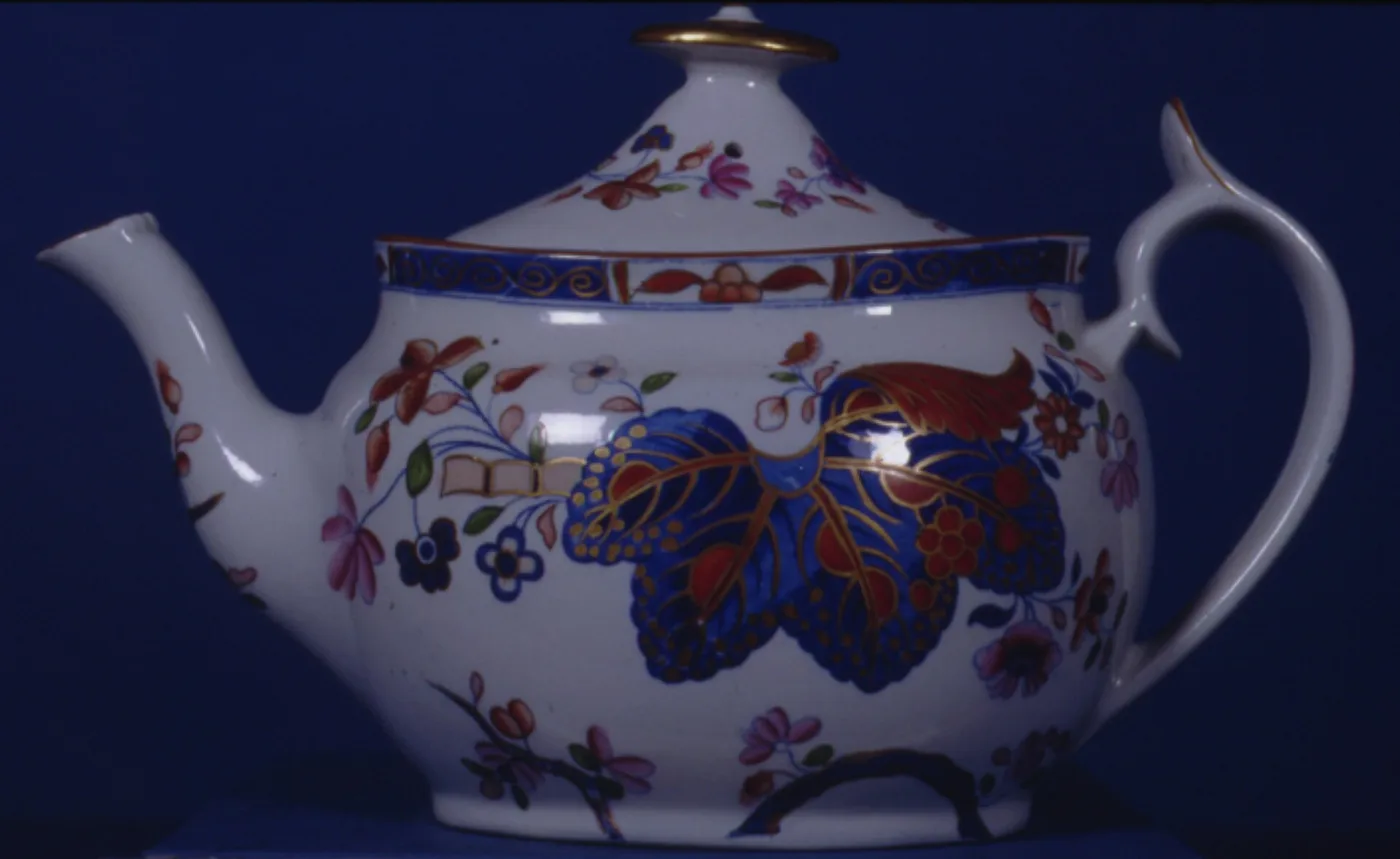
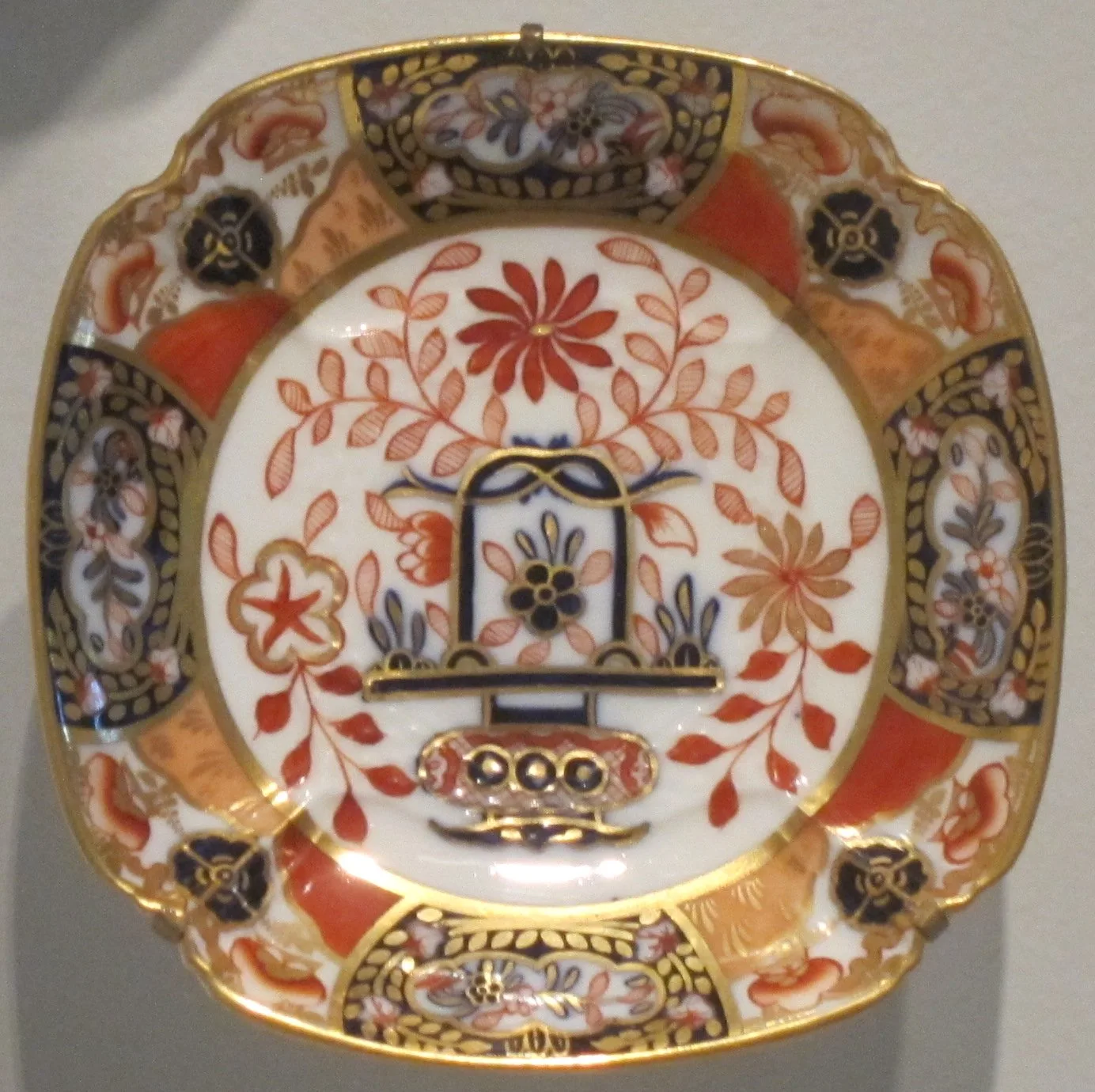
Alongside bone china, Spode produced heavier, more durable bodies for everyday and export use. Stone china (Spode's "New Stone") is a dense, hard, off-white earthenware body—stronger and heavier than ordinary pearlware, with a slightly grey or bluish cast—introduced in the 1810s and marketed for robust dinnerware, much of it richly printed or enamelled in "Japan" and chinoiserie patterns. It belongs to the same broad category as the ironstone bodies that other Staffordshire firms made famous, and if you are weighing a heavy, durable Spode dinner service you will find the wider context in our ironstone china identification guide. Spode also introduced felspar porcelain in the 1820s—a fine, translucent body using Cornish feldspar, marketed as an especially white and durable porcelain and often marked "Spode's Felspar Porcelain." Recognizing which of these three bodies you hold—translucent bone china, dense opaque stone china, or fine felspar porcelain—both narrows the date and shapes the value, since ornamental bone china and early stone china "Japans" sit well above ordinary printed earthenware.
Reading Spode Marks and Backstamps
The base of a Spode piece is where most of its history is written, and learning to read the marks is the heart of identification. Spode used a wide range of marks across its long life—painted, printed, and impressed—and while the variety can seem bewildering, the marks fall into recognizable groups tied to the name eras above.
Early Spode marks (to c.1833) take several forms. The name SPODE appears painted in blue or red on early hand-decorated wares; printed as part of a pattern's backstamp on transferware; and impressed into the body—an "impressed SPODE," pressed into the clay before firing, is a hallmark of the founding era and a reassuring sign of period manufacture. Bodies were often labelled too: impressed or printed marks reading "STONE CHINA," "NEW STONE," or "SPODE'S FELSPAR PORCELAIN" identify those specific bodies. Many early pieces also carry a hand-painted pattern number (discussed in the next section), and the combination of an impressed SPODE with a painted pattern number is very characteristic of the golden age.
Copeland-Era Marks
Copeland & Garrett marks (1833–1847) incorporate the partnership name, very often as "COPELAND & GARRETT" with "LATE SPODE," sometimes within an ornate printed cartouche or garter. Any piece bearing the Garrett name is locked to this fourteen-year window. W. T. Copeland marks (1847 onward) drop Garrett and read COPELAND, COPELAND LATE SPODE, or later COPELAND SPODE, and appear in printed forms that evolved through the Victorian and Edwardian periods. From the late nineteenth century Copeland added elements that sharpen dating: a printed date code or year cipher on many pieces, an impressed month-and-year on some, the word "ENGLAND" (added to satisfy the American McKinley Tariff from 1891), and later "MADE IN ENGLAND" (generally from the 1920s onward). These country-of-origin words are among the most useful single clues on the base: a Spode/Copeland mark with "ENGLAND" cannot predate 1891, and one with "MADE IN ENGLAND" points to the twentieth century.
Because marks were also printed as part of the decoration, a piece can carry both a pattern-specific printed backstamp (naming or illustrating the pattern) and a separate factory mark. Read them together: the factory mark and any date code establish the maker and era, while the pattern backstamp names the design. The disciplined habit of weighing a mark against the physical object—rather than trusting a stamp in isolation—matters here as everywhere, and the general method is set out in our authentication and provenance research guide.
Pattern Numbers and Date Codes
Beyond the name, two numbering systems help place Spode precisely: pattern numbers in the early period and date codes in the Copeland era. Both reward a little familiarity.
From the founding period onward, Spode assigned pattern numbers to its decorated wares, typically hand-painted on the base (often preceded by a symbol or the abbreviation "No."). These numbers ran in sequences that broadly increase over time, so a low pattern number generally indicates an earlier design and a high number a later one. Pattern numbers are especially valuable on bone china and enamelled wares, where they can tie a piece to a documented design in the surviving Spode pattern books—one of the best-documented archives in English ceramics. While you rarely need to memorize specific numbers, understanding that a painted number on a Spode base is a pattern reference (not a random figure) is important, and its style and placement help confirm the period.
Copeland Date Codes and Impressed Dates
In the Copeland century the firm increasingly marked pieces with date information. Many bear an impressed date—a month and year pressed into the body—while others carry a small printed year cipher or code as part of the backstamp. Where present, these give a genuine year of manufacture, which is exceptional precision for tableware. Combined with the country-of-origin words ("ENGLAND" from 1891, "MADE IN ENGLAND" from the 1920s) and the style of the printed mark, a Copeland date code can often place a piece to within a year or two. British registration marks also appear on some Copeland and later Spode wares: the diamond-shaped registration mark used 1842–1883 and the "Rd No" (registered number) used from 1884 both date the design's registration and set a "not before" date for the piece. Reading these numbering systems together—pattern number, date code, registration mark, and country-of-origin word—lets you triangulate a date with real confidence.
The Great Blue-and-White Patterns
Spode's fame rests first on its blue-and-white transferware, and its most celebrated patterns are among the most recognizable designs in all of ceramics. Recognizing them is both a pleasure and a practical identification tool, because many were made continuously for so long that the pattern alone rarely dates a piece—but it does name it and, combined with the mark and body, places it.
The most famous of all is Blue Italian, introduced in 1816 and still in production two centuries later: a central Italianate landscape of buildings, a river, and figures, framed by a distinctive "Imari"-style border of scrolling flowers and geometric bands. Blue Italian is arguably the best-selling transferware pattern ever made, and precisely because it has run continuously since 1816, an example must be dated by its mark, body, and printing quality, not by the pattern. An early nineteenth-century Blue Italian on pearlware with an impressed SPODE is a very different object from a mid-twentieth-century Copeland Spode example, though the printed scene is much the same.
Willow, Tower, and the Chinoiserie Family
Spode was also a master of the Willow pattern and the broader family of chinoiserie designs that defined early English blue-and-white. Spode's version of Willow—the pagoda, the bridge with three figures, the willow tree, the two birds—is one of the definitive renderings of a pattern that dozens of factories copied; for the full story of that design and how to tell the makers apart, see our Blue Willow china identification guide. The Tower pattern (an Italian bridge-and-tower landscape after an engraving of the Bridge of Salaro near Rome), Woodman, Girl at the Well, and numerous "Blue Room" chinoiserie scenes all belong to Spode's blue-and-white repertoire, many introduced in the 1810s and revived by Copeland and by modern Spode. Because these designs were transfer-printed, the quality and character of the printing is itself a dating clue: crisp, finely engraved early impressions with the slightly uneven, hand-applied look of period transfer printing differ from the more mechanical uniformity of later reissues. Reading Spode blue-and-white therefore means naming the pattern, then reading the mark, body, and print quality to place it in time—an approach that applies across the whole transfer-printed tradition covered in our antique transferware identification guide.
Botanicals, Indian Sporting, and Fine Printing
Above the everyday blue-and-white sit Spode's more ambitious printed series, which are collector favorites and command real premiums. Two in particular deserve attention: the botanical patterns and the Indian Sporting series.
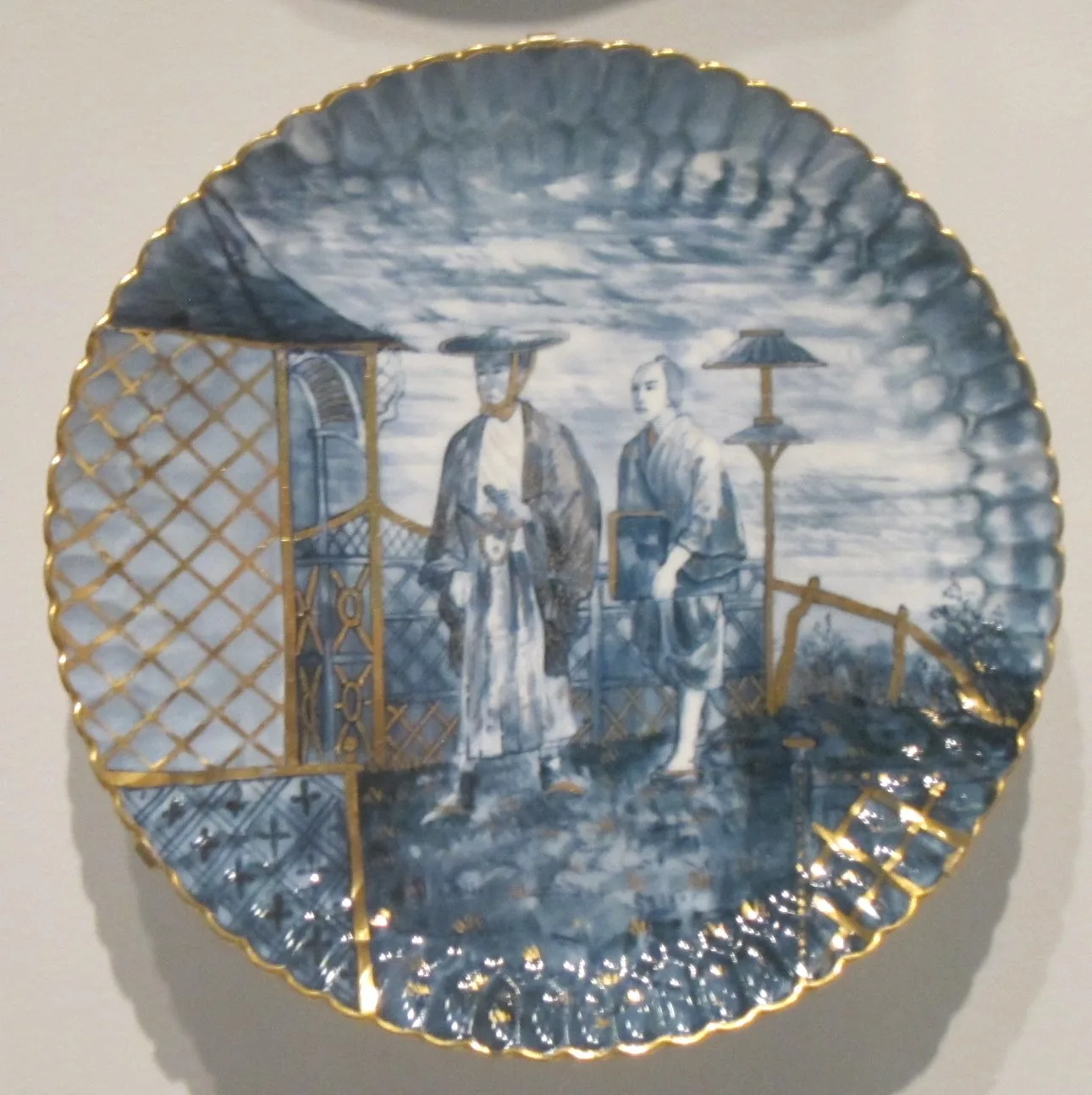
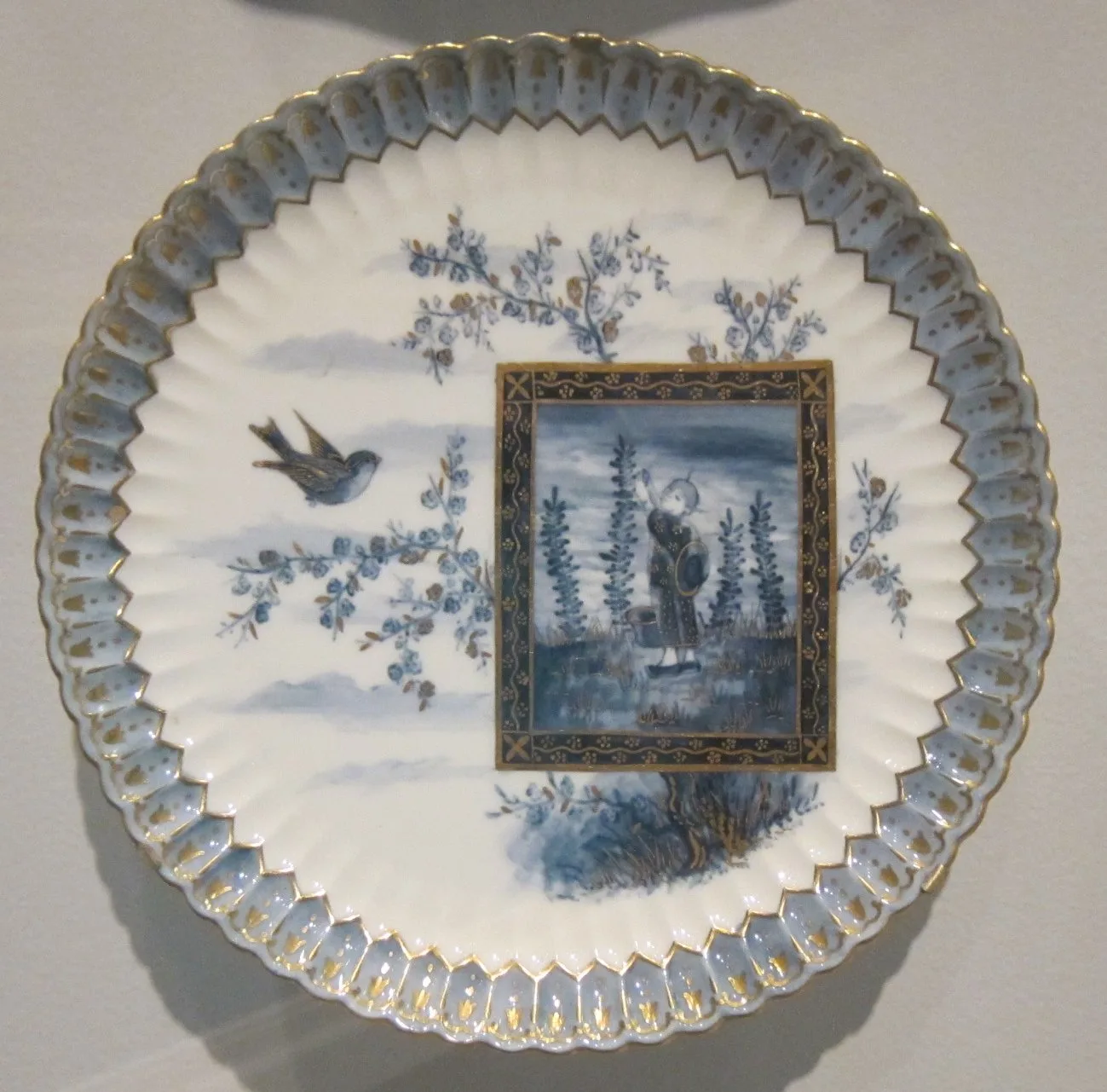
Spode's botanical wares reproduce finely engraved flowers and plants, often after the great botanical illustrations of the period, printed in blue (and sometimes overpainted in enamels) with a naturalistic delicacy that shows off the firm's mastery of the transfer process. These botanical prints, on both earthenware and the finer bodies, are prized for the quality of the engraving and the beauty of the plants depicted, and good examples are keenly collected.
The Indian Sporting Series
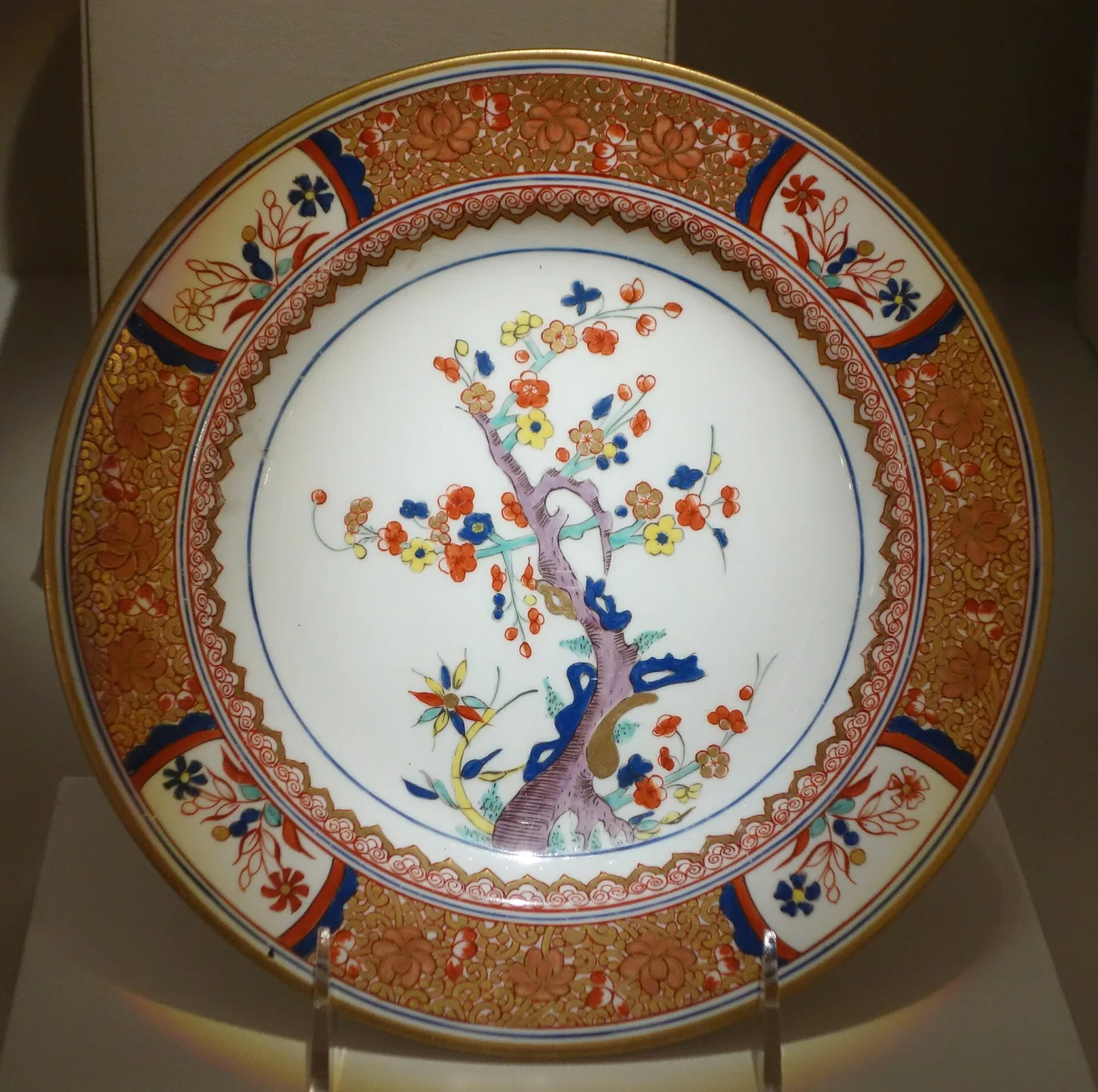
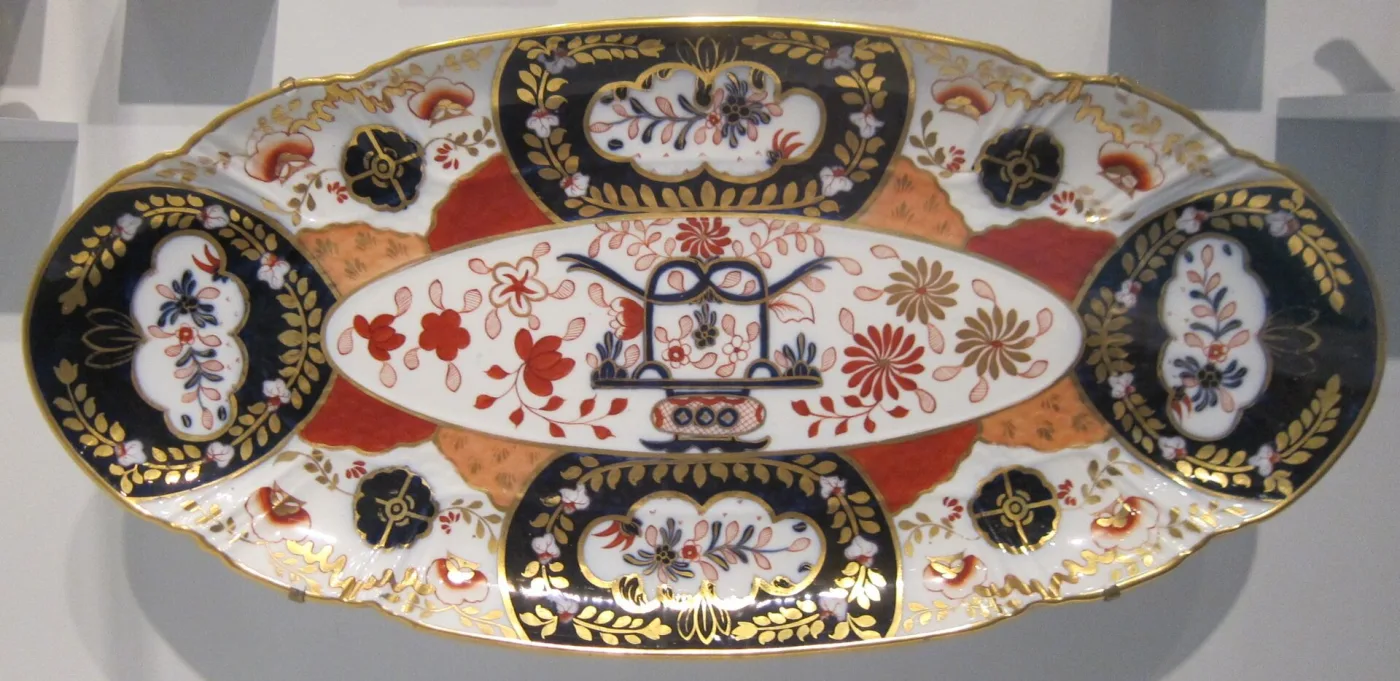
The Indian Sporting series (introduced around 1810) is among Spode's most sought-after transferware: a set of dramatic hunting scenes—tiger, leopard, and big-game hunts in Indian landscapes—adapted from Thomas and William Daniell's aquatints and from Samuel Howitt's engravings. Each piece within the service carries a different named scene, and the series is admired both for its bold, exotic imagery and for the technical brilliance of the printing. Because the scenes are individually titled and the engraving is exceptional, Indian Sporting pieces are readily identified and highly valued, especially early examples with strong, crisp impressions. Alongside these, Spode produced richly coloured "Japan" and Imari-style patterns on stone china—bold cobalt, iron-red, and gilt designs in the Japanese taste—which sit close to the Imari tradition and which, if you are comparing Spode's Japans with their Asian models, are illuminated by our Imari porcelain identification guide. Across all these fine printed wares, the same principle holds: the quality and crispness of the print, read together with the body and mark, separates a fine early impression from a later, weaker one.

Bone China, Gilding, and Ornamental Wares
Spode was never only a maker of blue-and-white dinner plates. Under Josiah Spode II and again under Copeland, the firm produced lavishly decorated bone china for the top of the market: tea and dessert services, cabinet cups, vases, and ornamental urns painted with flowers, landscapes, and named views, and enriched with tooled and burnished gilding of the highest quality. These pieces are the aristocrats of Spode collecting, and they are identified and valued on a different footing from the printed earthenware.
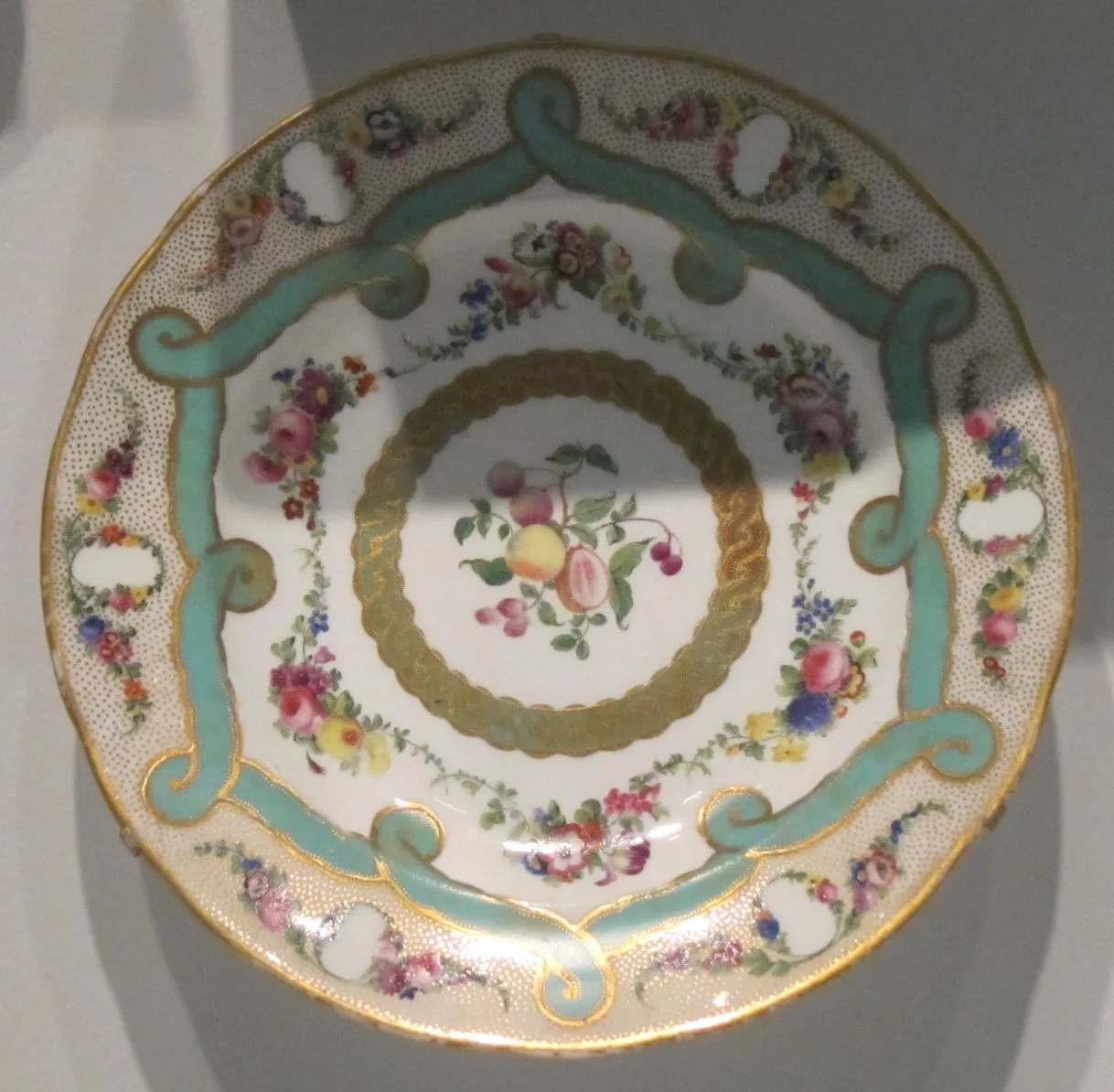
On fine bone china, look for hand-painted decoration—botanical flowers, topographical scenes, armorials—often signed or attributable to known factory painters, combined with rich gilding that on the best pieces is raised, tooled, and burnished rather than merely printed in gold. A hand-painted pattern number on the base ties such a piece to the Spode pattern books. The forms themselves—the neoclassical urn shapes, the elaborately handled cabinet cups, the pierced dessert baskets—reflect the Regency taste and are part of the identification. Because these ornamental wares blur the line between tableware and decorative art, and because their value turns on the quality of painting and gilding as much as on the mark, they are best appraised in the context of fine decorative ceramics generally, and the broader field of ornamental china and objets is surveyed in our antique ceramics and pottery identification guide.
Reading Quality on Fine Spode
The gap between an ordinary printed Spode plate and a top-flight painted-and-gilded bone china cabinet piece is enormous, both visually and in value, so learning to read quality is essential. On the finest pieces the painting is confident and detailed, the enamels are jewel-like, and the gilding is thick, tooled, and burnished to a mirror finish; the potting is thin and precise, and the whole object has a richness that photographs never quite capture. Lesser pieces—still Spode, still bone china—carry printed or simpler painted decoration and thinner, flatter gilding. Since gilding wears, always check the gold for rubbing and loss, which materially affects the value of an ornamental piece, and examine painted decoration for later restoration or overpainting under raking light and UV.
Copeland Parian and Later Ornamental Production
One of the most distinctive Copeland-era products has nothing to do with blue-and-white at all: Parian ware. In the 1840s Copeland (working from the Spode works) was among the pioneers of Parian, a fine, unglazed white porcelaneous body that imitates the look of carved marble and was used above all for statuary and figures—reduced copies of famous sculptures, portrait busts, and decorative figures. Parian became a Victorian craze, and Copeland was one of its leading and most accomplished makers.
Copeland Parian is identified by its matte, sugary, marble-like white surface and its sculptural forms, and good pieces carry the Copeland mark (impressed or printed), sometimes with the name of the sculptor or the publishing art union that commissioned the model. Because Parian is unglazed, its identification and care differ from glazed china: the surface can hold dirt and stain, cleaning must be gentle, and condition (chips to fine extremities, staining, restoration) weighs heavily on value. Copeland also continued to make richly decorated bone china and, through the Victorian and Edwardian eras, a wide range of tablewares and ornamental pieces under the Copeland and Copeland Spode marks. Reading a Copeland ornamental piece therefore means first recognizing the body—Parian, bone china, or earthenware—and then the mark and any date code, before assessing the quality of modelling, painting, or gilding that sets its value.
Twentieth-Century Spode and Portmeirion
The Spode story runs right up to the present, and a great deal of what turns up today is twentieth-century Copeland Spode and modern Spode—which is perfectly collectible but must be dated and valued as what it is, not mistaken for Regency ware. Through the twentieth century the firm (as W. T. Copeland & Sons, marked COPELAND SPODE) continued the classic patterns—Blue Italian, Tower, Willow, the Camilla and Chelsea patterns—alongside new designs, and in 1970 formally readopted the historic Spode name.
The most ubiquitous modern Spode is the "Christmas Tree" pattern, introduced in the twentieth century and produced in vast quantities: a decorated Christmas tree with gifts beneath it, on a range of tablewares and giftware. It is warmly collected but common, and it is unambiguously modern. Other twentieth-century Spode—dinner services, giftware, commemoratives—carries printed COPELAND SPODE or SPODE marks, usually with "MADE IN ENGLAND" and often a pattern name and modern backstamp that make dating straightforward. In 2009 the Spode brand passed to the Portmeirion Group, which continues to produce Blue Italian and other classic patterns, so a very recent Blue Italian plate may carry Portmeirion-era marking. The practical point is to read the mark honestly: a modern printed backstamp, "MADE IN ENGLAND," and a familiar current pattern all indicate recent production, and while such pieces have genuine appeal and utility, they should never be confused—or priced—as early Spode.
Spode Among Its Peers
Spode belongs to the great cluster of Staffordshire firms that dominated English ceramics, and placing it among its peers both aids identification and clarifies value. Spode competed with, and was contemporary to, the other titans of Stoke-on-Trent and the Potteries, and its wares are frequently confused with theirs.
Spode's nearest rival in the founding era was Wedgwood, the firm that made creamware and jasperware famous; the two together defined the top of the English market, and while Wedgwood is best known for its bodies and neoclassical ornament, Spode led in bone china and blue-and-white printing. Collectors moving between the two will find Wedgwood's distinct world of jasper, basalt, and creamware set out in our Wedgwood identification guide. In fine Victorian bone china, Copeland Spode stood alongside Royal Worcester, and the two firms' richly painted and gilded wares occupy similar territory; our Royal Worcester porcelain identification guide is the natural companion for anyone comparing fine painted English porcelain of the period.
Reading Spode Against the Field
The broader Staffordshire context matters because so many firms printed similar blue-and-white and made similar bone china, and the mark is what distinguishes them. A blue-and-white plate could be Spode, Minton, Davenport, Ridgway, or any of a dozen others; the pattern (Willow, Italian, a chinoiserie scene) may be shared, but the backstamp names the maker. This is why the discipline of reading the mark first is so central to Spode collecting specifically—the wares are handsome and the patterns widely copied, so attribution rests on the name and the body far more than on the design. The same holds when distinguishing Spode from later Staffordshire figural and decorative production, the wider world of which is sketched in our Staffordshire figurines identification guide. In short, Spode is best understood not in isolation but as the leading edge of a huge, competitive industry, and reading it well means reading its marks against that crowded field.
Reproductions, Reissues, and Seconds
Spode's long, continuous production creates a special identification problem: much of what looks "old" is in fact a later genuine reissue of an early pattern by the same firm, rather than a fake by an outsider. This is different from most antique fields and calls for a clear head.
The first and biggest category is legitimate later production of continuing patterns. Blue Italian (from 1816), Tower, Willow, and many others were made continuously for a century or two by Spode and then Copeland and then Spode again. A twentieth-century Copeland Spode Blue Italian plate is genuine Spode—it is simply not early Spode, and it is worth a fraction of a Regency example. The way to tell them apart is exactly the framework of this guide: the mark (SPODE vs. COPELAND vs. COPELAND SPODE with "ENGLAND"/"MADE IN ENGLAND"), the body (period pearlware vs. modern whiteware or bone china), and the print quality (crisp early engraving with period hand-application vs. later, more mechanical printing). Confusing a modern reissue for an antique is the single most common—and most expensive—Spode mistake.
Seconds, Outright Fakes, and How to Resist Them
A second category is factory "seconds"—pieces sold as substandard, often with the mark scored through or a "second" indication, or with visible faults. These are genuine Spode but were sold at a discount for flaws, and they should be valued accordingly. A third, smaller category is outright reproduction and deception: modern wares made to imitate Spode, spurious or altered marks, and genuine plain pieces "improved" with fake decoration or gilding. As with all valuable ceramics, resist these by reading the whole object—does the body have genuine period character and honest wear; does the glaze show natural age; is the printing or painting consistent with the claimed date; and does the mark match the era it purports to be from and sit correctly on the base? A mark that looks freshly printed on an ostensibly Georgian body, a country-of-origin word on a piece sold as pre-1891, or decoration that sits oddly over the glaze are all warnings. Where serious money is involved, examine the base and decoration under magnification and UV, lean on the exceptionally well-documented Spode literature and pattern books, and buy from dealers and auctions whose attributions carry weight.
Condition and Value
Value in Spode ranges enormously—from a few dollars for a common modern printed plate to five figures for a rare early service or a fine painted-and-gilded cabinet piece—and both the category and the condition drive the number. Understanding where a piece sits on that spectrum is the point of everything above.
At the accessible end are common modern and later patterns: twentieth-century Copeland Spode and modern Spode Blue Italian, Tower, Willow, and Christmas Tree, which are attractive, useful, and inexpensive because they were made in huge quantities. In the middle sit nineteenth-century Copeland and good Victorian bone china, better transferware, and stone china "Japans," which carry real but moderate value. At the top are the early founding-era pieces—Regency bone china with fine painting and tooled gilding, early Indian Sporting and botanical services, rare forms and complete early services—which reach into four and five figures. Rarity of pattern, quality of decoration, early date, desirable form, and completeness of a service all push value up, and they compound: an early, rare, finely decorated piece in a scarce form is worth many times a common late plate.
Condition and Care
Condition governs value sharply across every category. Inspect under strong light for chips, hairline cracks, crazing and staining, worn or rubbed gilding, and print or enamel wear, and check any painted-and-gilded piece for restoration and overpainting under UV, since gilding loss and restoration substantially reduce the value of ornamental Spode. On Parian, watch for chips to fine extremities and for staining of the porous unglazed body. Damage discounts value steeply, and a repaired or heavily worn example of even a desirable pattern may be worth a small fraction of a clean one. For a structured way to weigh rarity, condition, quality, and demand together, our antique valuation and appraisal guide sets out the framework, and it applies directly to a maker whose output spans such a wide value range. Care is conservative: hand-wash glazed china in lukewarm water with mild soap (never the dishwasher for antique, gilded, or crazed pieces), support hollow and handled forms fully, cushion pieces on display so rims and gilt edges cannot chip, and clean Parian only gently and sparingly. Treated this way, a Spode piece keeps both its beauty and its value for the next collector.
Field Checklist Before You Buy
When a piece of Spode is in front of you, work this sequence before you think about price.
First, turn it over and read the name on the mark, because it sets the era: SPODE alone points to the founding period (to c.1833); COPELAND & GARRETT locks the piece to 1833–1847; COPELAND or COPELAND LATE SPODE means the Copeland century from 1847; COPELAND SPODE or SPODE with "ENGLAND" is post-1891 and with "MADE IN ENGLAND" is twentieth-century. Note the mark's form (impressed, painted, or printed) and whether it looks right for that era and sits correctly on the base.
Second, read the body: translucent, ringing bone china; dense, heavy, off-white stone china ("New Stone"); fine felspar porcelain; matte marble-like Parian; or ordinary printed earthenware. The body narrows both date and value. Third, name the pattern and read the printing or painting—Blue Italian, Tower, Willow, a botanical, Indian Sporting, a Japan, or a hand-painted-and-gilded design—and judge the quality: crisp early transfer engraving or fine confident painting and tooled gilding (period, high value) versus weaker, more mechanical, or thinner work (later or lesser).
Fourth, look for numbers and codes: a hand-painted pattern number (early), an impressed or printed date code (Copeland era), a diamond registration mark (1842–1883) or "Rd No" (from 1884), and any body label ("STONE CHINA," "FELSPAR PORCELAIN"). These triangulate the date. Fifth, decide which value tier the piece occupies—common modern reissue, mid-range Victorian, or top-flight early ornamental—remembering that a continuing pattern like Blue Italian must be dated by mark and body, never by the pattern alone. Sixth, assess condition honestly: chips, hairlines, crazing, staining, worn gilding, print and enamel wear, restoration, and (on services) completeness, all of which move value sharply.
A piece that shows a coherent story—an era-appropriate mark of the right form, a body consistent with that era, a pattern and print or painting quality that match the date, supporting numbers and codes, and honest condition—is very likely exactly what it appears to be, and if the mark is an early impressed SPODE on fine bone china with tooled gilding or a crisp Indian Sporting scene, you may be holding something genuinely special. Practiced as a routine, this sequence turns Spode from one of the most name-confused corners of English ceramics—three factory names, two centuries of continuous patterns, and endless later reissues—into one of its most rewarding: a field where the base tells the story, the bodies are landmarks in ceramic history, and the collector who reads the mark, the body, and the pattern together can move with confidence from a common Christmas-Tree mug to a Regency cabinet cup at any sale, shop, or auction.