Is It Pewter? How to Tell Pewter From Britannia Metal, Silver Plate and Other Grey Metals
A dull grey jug or plate at a sale could be pewter, or it could be Britannia metal, worn silver plate, spelter or aluminium. They look alike in a photograph and they are not worth the same. The pewter identification guide surveys the craft, its makers and its regional styles; this article answers the narrower question first: is the metal pewter at all?
It works through six checks you can make in a few minutes, in the order that settles most cases: the marks, how the piece was made, the colour under wear, the weight in your hand, a magnet, and a test for lead. The table near the end gives each lookalike’s result on every check.
Table of Contents
What Counts as Pewter
Pewter is an alloy that is mostly tin. What the rest is has changed over time. Historic pewter was hardened with copper, antimony or bismuth and often softened and cheapened with lead; the lower grades used for wares that did not touch food carried the most. Wikipedia’s pewter and English pewter articles and Science Notes all describe that pattern, though they quote different lead limits for different guilds and centuries, so no single percentage is safe to repeat. Modern pewter is made to standards that keep lead to a trace: the British Standard of 1974 and its European successor specify tin with antimony and copper.
Britannia metal is the case that confuses most people, because it is pewter by composition. The Pewter Society calls it “a trade description for a pewter alloy” with a comparatively high share of antimony, typically 92% tin, 6% antimony and 2% copper; Wikipedia gives 92–93% tin, 5–6% antimony and 2% copper. The Victoria and Albert Museum gives a little more antimony, 8–10%. The sources agree on the important part: it is a tin alloy with no lead in the recipe.
So “is it pewter?” really holds two questions. Is it a tin alloy at all, and if so, is it the older cast pewter or the later sheet-formed Britannia metal? Checks 1 to 3 answer the second; checks 3 to 6 rule out the metals that are not tin alloys.
Check 1: Read the Marks
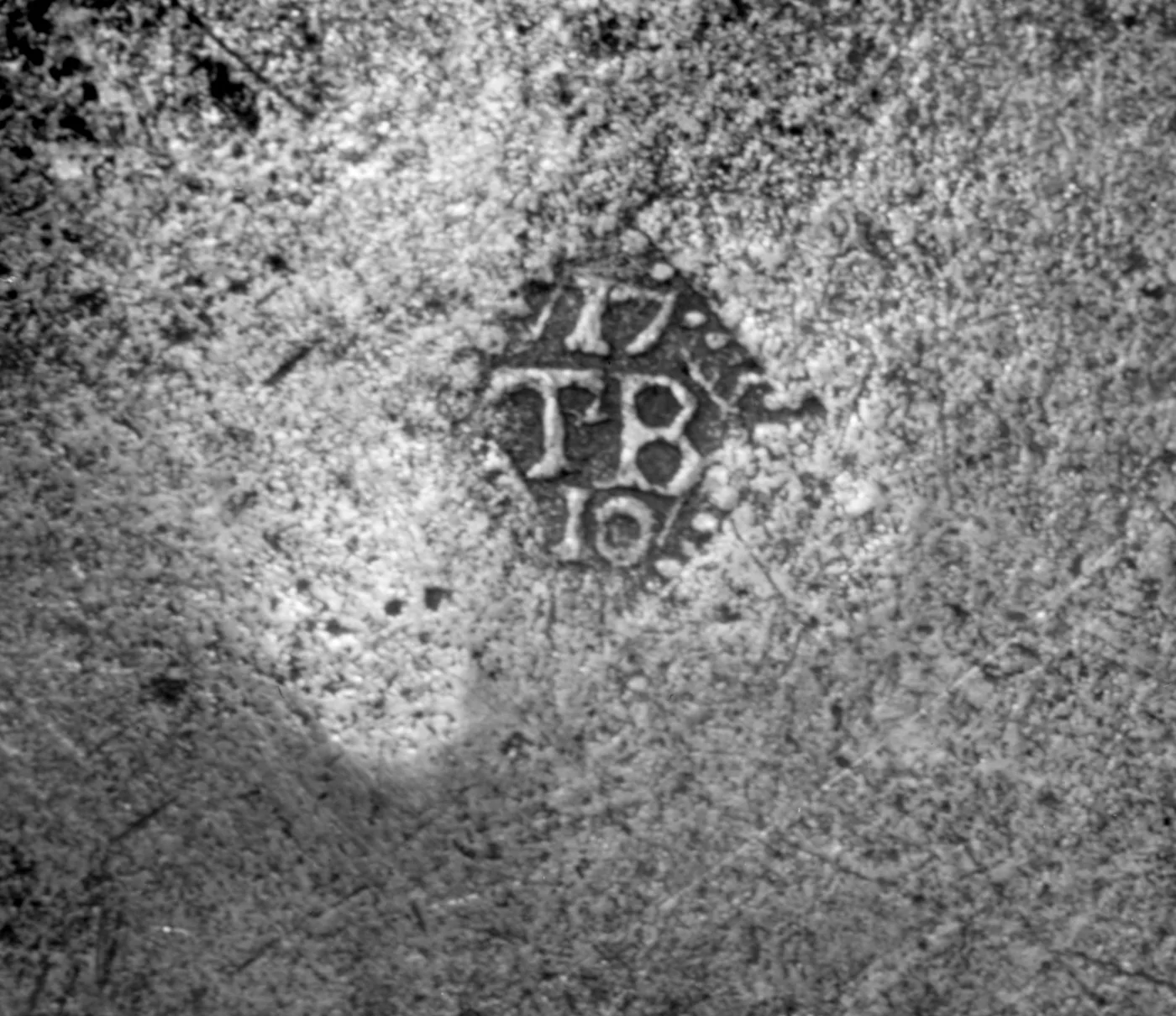
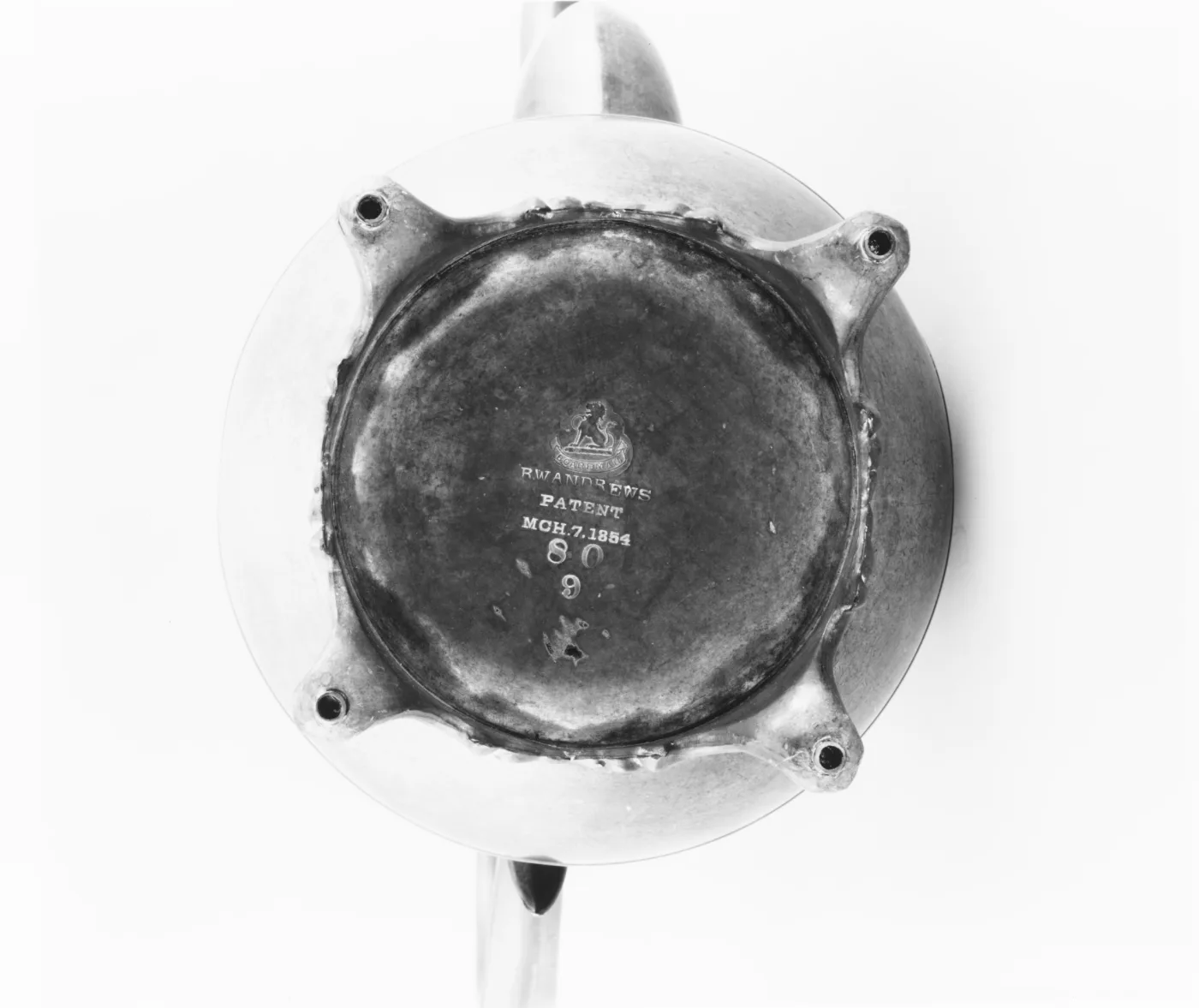
Turn the piece over. Pewterers struck a touch, their own registered mark, and many added others. Two of those others are quality marks, and the Pewter Society dates both: the crowned rose was used from the mid-16th century to denote higher-quality metal, and by the end of the 17th century the crowned X marked harder alloys. Antique Trader gives the same late-17th-century date for the crowned X and the same meaning. The Pewter Society adds the caveat that matters for identification: pewterers later lost control of both and struck them on all their wares, so neither proves a high grade. Both prove you are looking at pewter made in the old tradition.
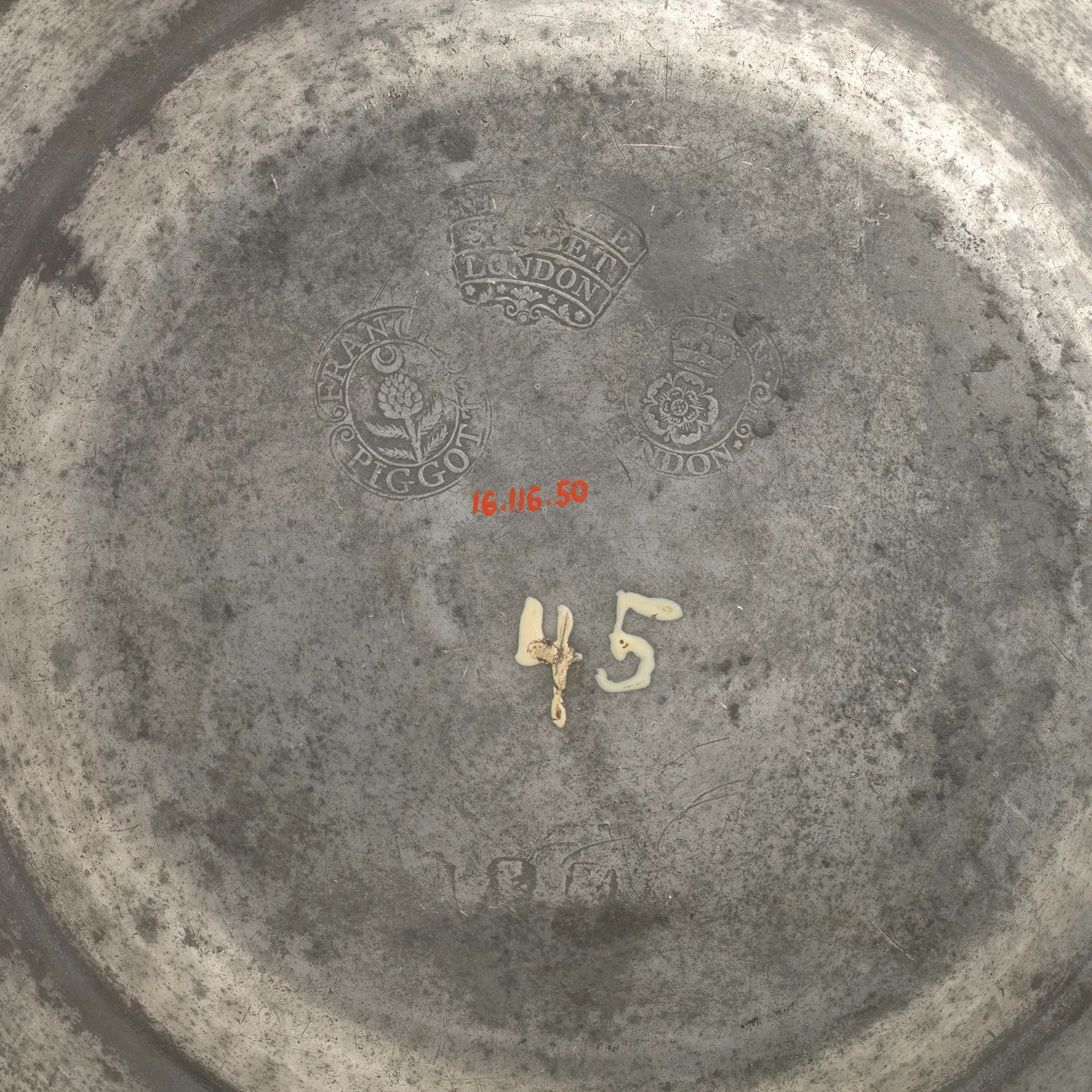
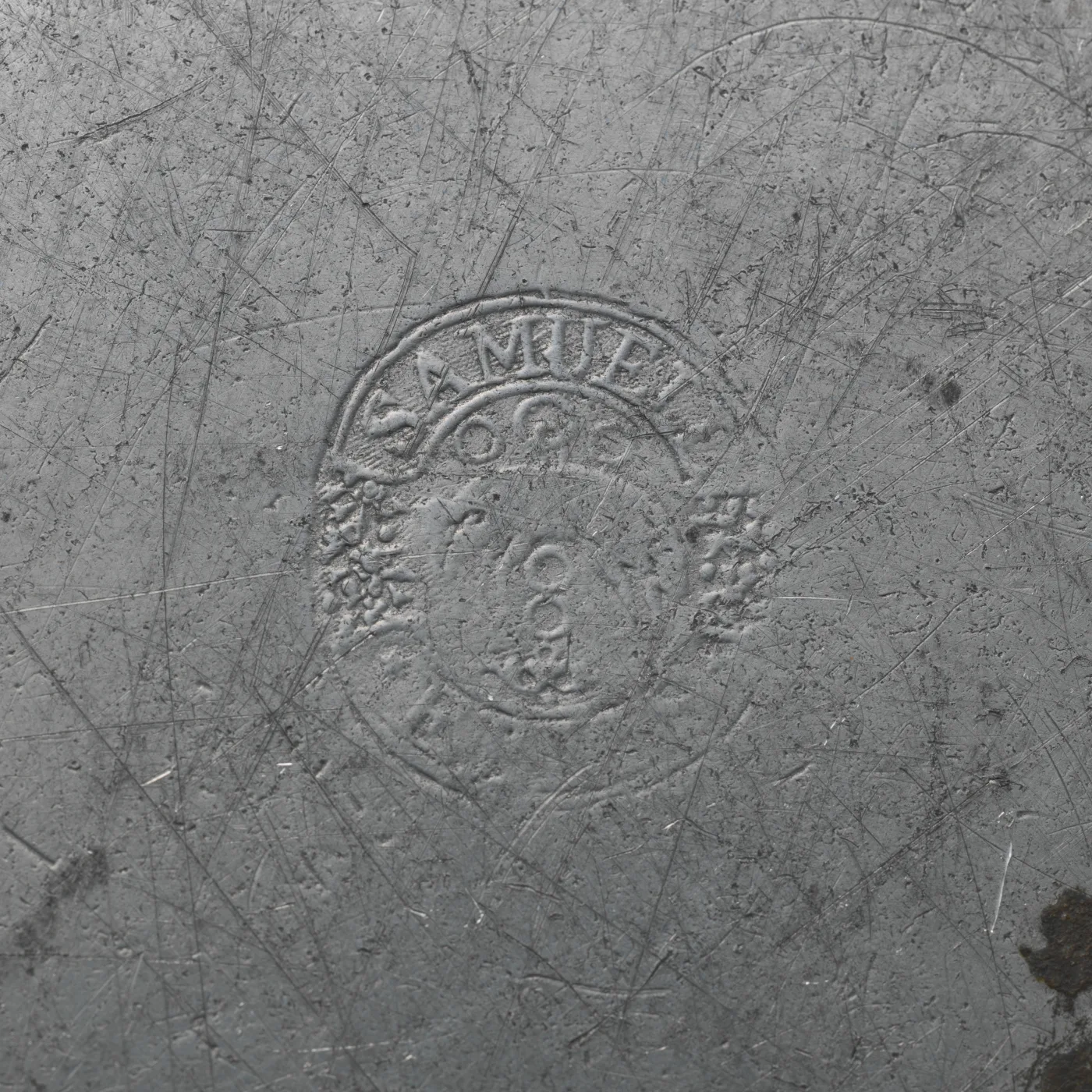
Words are as useful as devices. “Britannia” or “Fine Pewter” in the mark name the alloy. EPBM means electroplated Britannia metal, and EPNS electroplated nickel silver: both are silver plate, whatever the surface looks like now. Silver itself is marked “Sterling”, “925” or, in England, with a lion passant; the British silver hallmarks guide reads those. A missing mark proves nothing either way, since plenty of old pewter was never marked.
Check 2: Cast or Made From Sheet
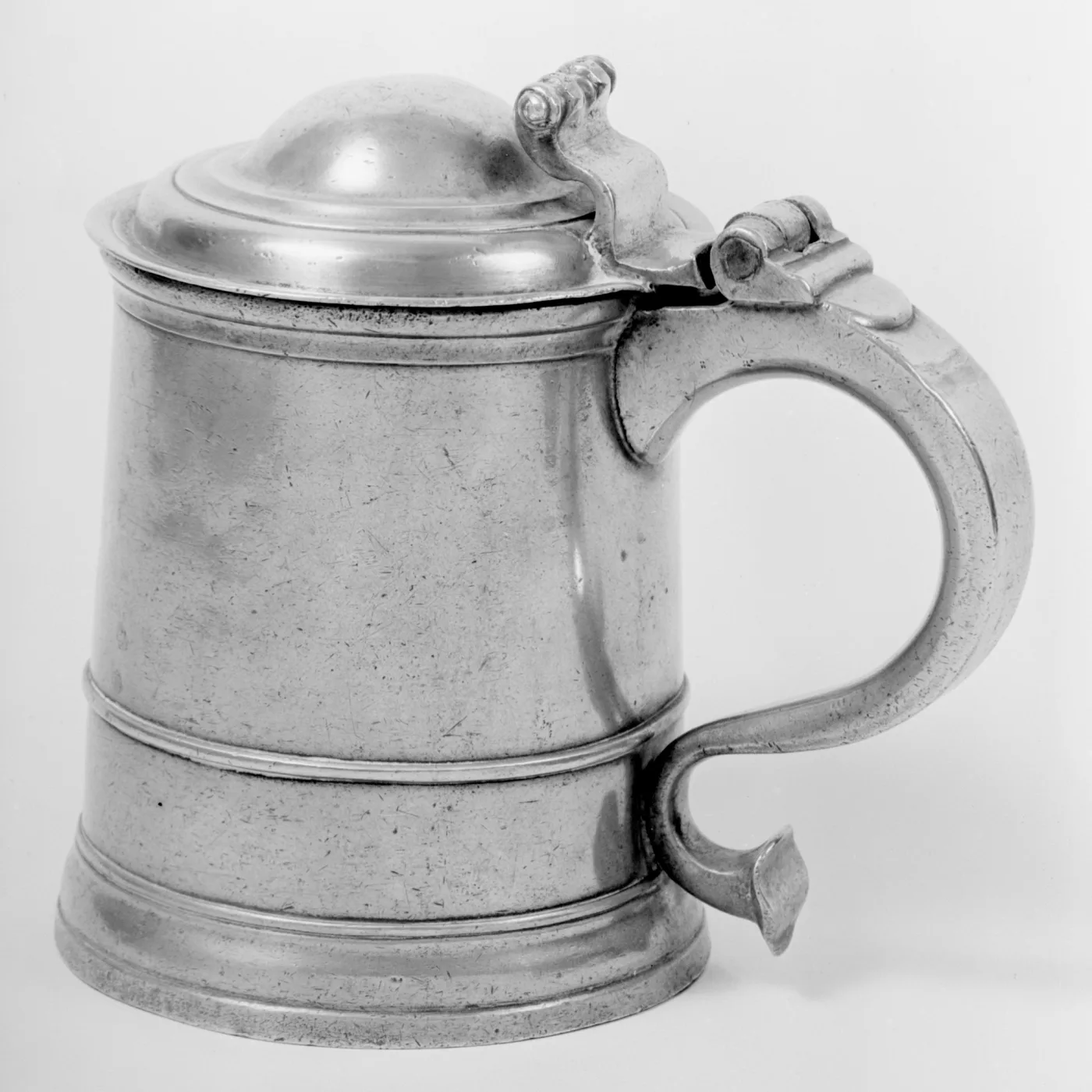
Pewter was cast in moulds and then finished on a lathe and with a hammer. Britannia metal was formed from sheet. The Pewter Society says Britannia metal was cut and shaped by hand or spun on a wooden former and then soldered together; the V&A says its wares were stamped from sheet with cast mouldings, feet and handles soldered on. Both credit James Vickers of Sheffield with the alloy from 1769, and Wikipedia gives 1769 or 1770. In America, Isaac Babbitt and William Crossman began making Britannia ware in Taunton, Massachusetts, in 1824, the firm that became Reed & Barton; the company’s own archive and Wikipedia agree on the year.
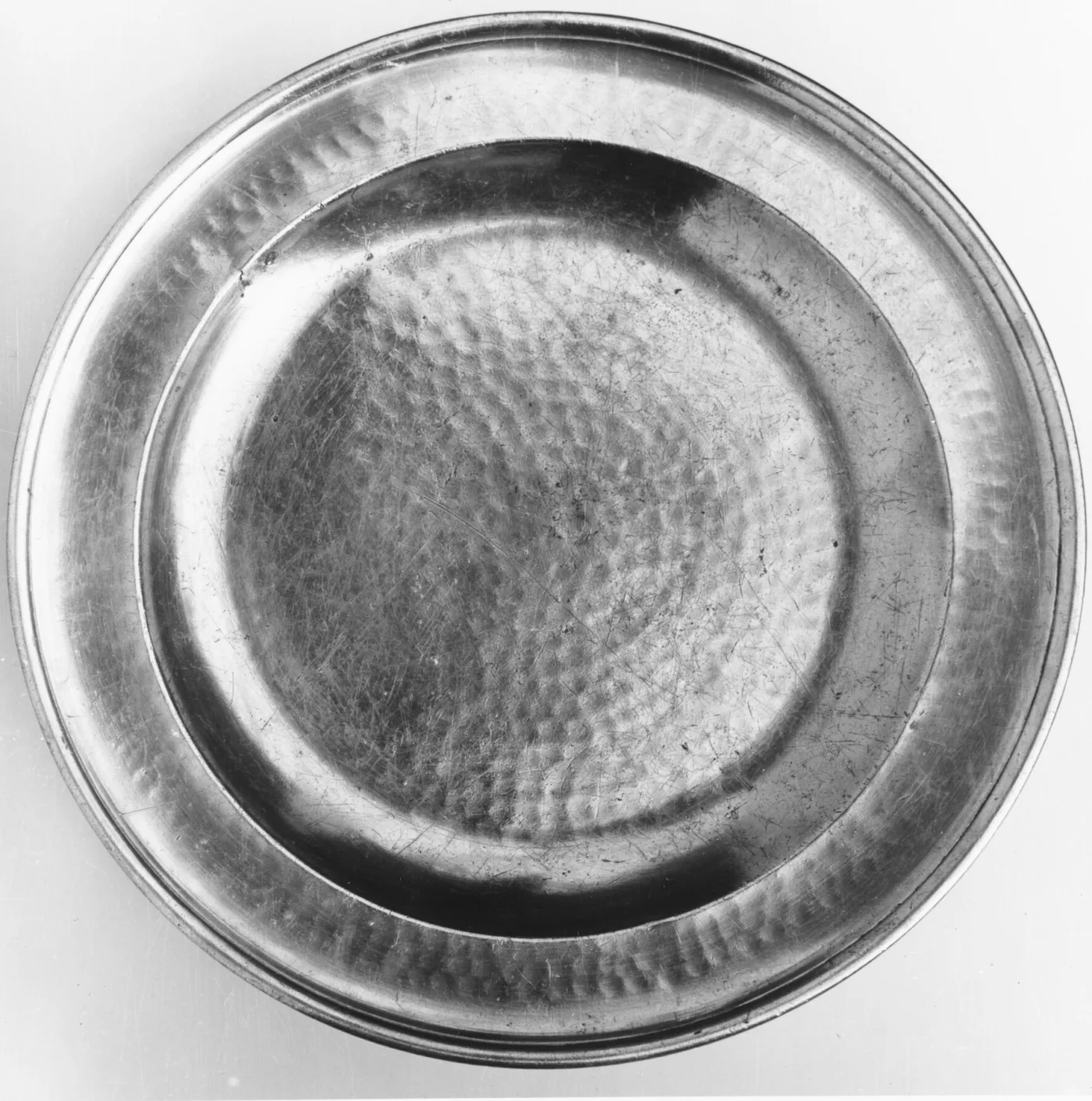
On plates and dishes, look at the booge, the curved wall between the flat centre and the rim. The Pewter Society says that on the back of the booge you will normally see rows of small hammer marks, made to strengthen the metal there, and Historic Odessa and the Museum of Fine Arts, Houston, describe the same finishing step. Hammer marks mean a cast plate finished by hand.
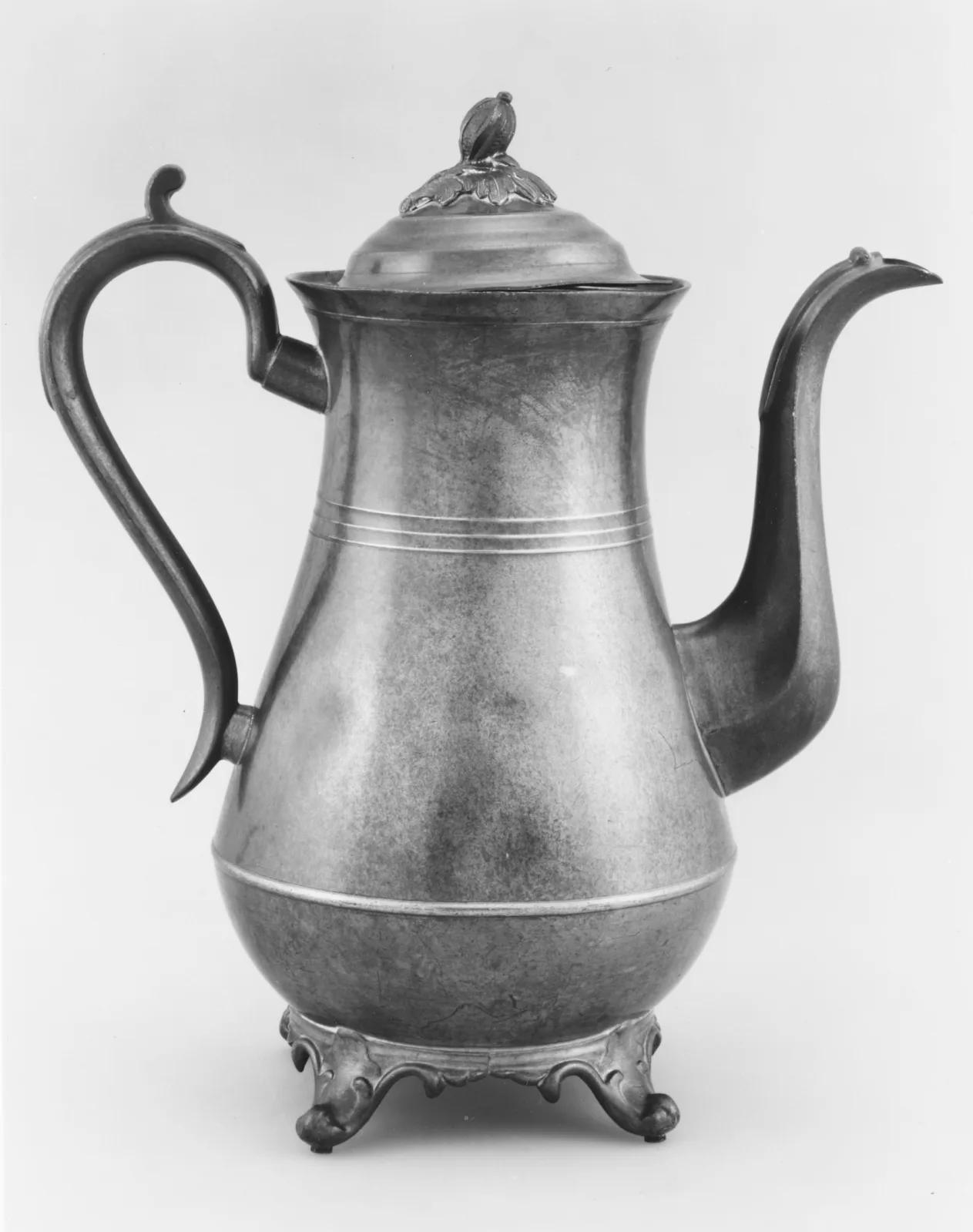
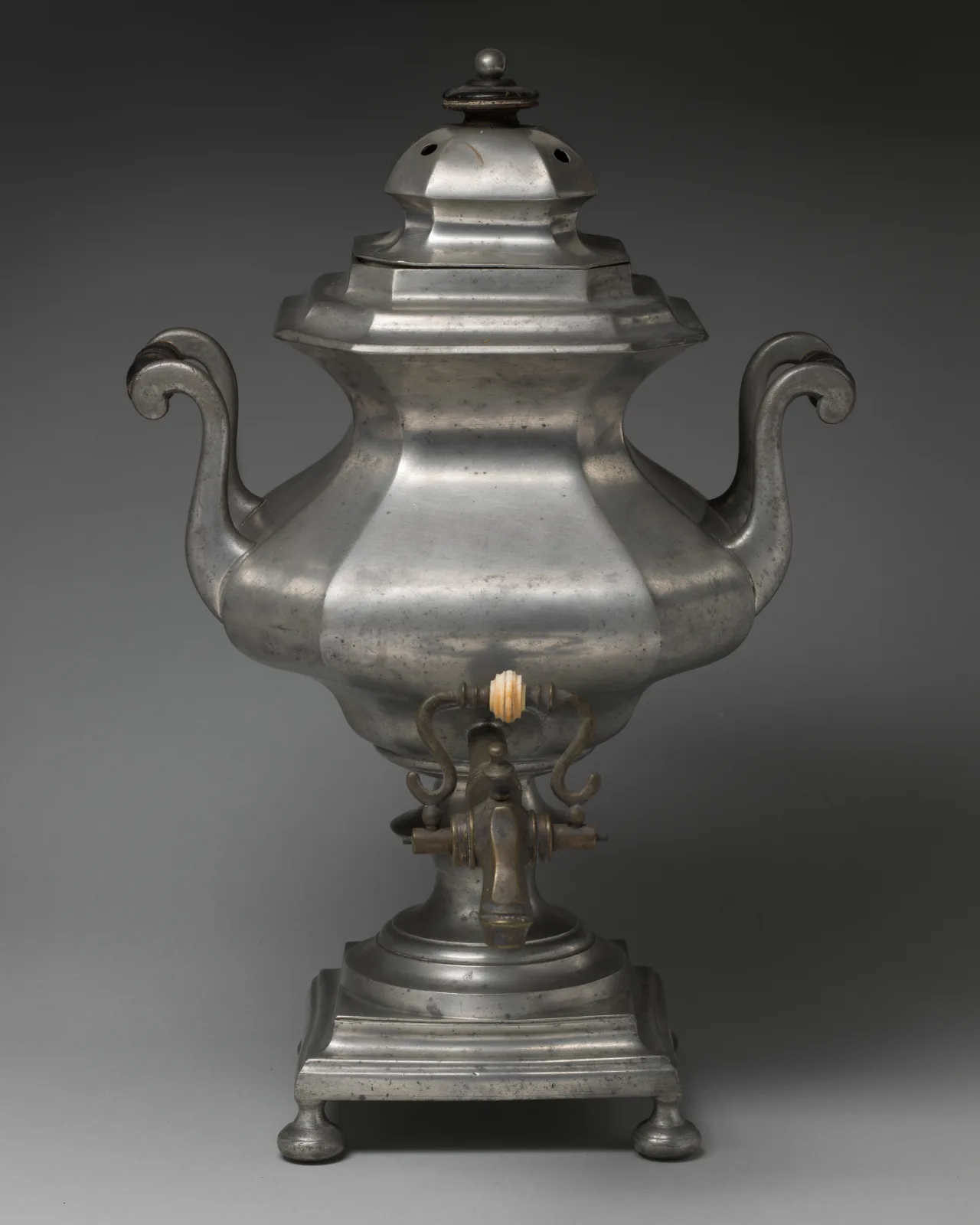
Britannia metal shows the opposite evidence: thinner, even walls, the faint concentric rings of spinning on curved surfaces, and joins where separate parts were soldered together.

Check 3: The Colour Under the Wear
Pewter and Britannia metal are the same alloy all the way through. Plate is not. Look at the places that take the most handling: the rim, the handle, the foot, the high points of any decoration.
- Red, pink or brass-yellow showing through: silver plate on copper or brass. Antiques and Auction News and Appraisily both treat a coppery colour under worn patches as one of the most reliable signs of plate.
- Grey showing through a brighter skin: silver plate on Britannia metal, the EPBM of the mark. Worn EPBM can look exactly like pewter, which is why the mark in Check 1 matters.
- White and hard showing through: silver plate on nickel silver, EPNS.
- The same grey everywhere, wear included: a tin alloy, or spelter or aluminium, which the next checks separate.
The surface itself helps less than people expect. Silver tarnishes towards yellow, brown and black; pewter dulls to a soft grey. But a cleaned pewter piece can be bright and a worn plated piece can be grey, so use colour to choose the next check, not to decide. For older plate fused to copper rather than electroplated, the Sheffield plate guide shows where the copper shows first.
Checks 4 and 5: Weight and a Magnet
Weight separates one lookalike cleanly. Aluminium has a density of about 2.7 g/cm³, tin about 7.3, so an aluminium piece of the same size weighs well under half as much and feels startlingly light. Zinc, at about 7.1, is too close to tin to separate by hand, so weight cannot tell pewter from spelter. A heavy piece with a dark grey cast suggests lead in the alloy, which Check 6 tests.
A magnet only rules things out. Tin, lead, antimony, copper, zinc, aluminium and silver are all non-magnetic, so pewter, Britannia metal, spelter, aluminium and most plate all ignore it. If the magnet sticks, the piece is iron or steel, perhaps tinned or plated, and it is not pewter. Hunker and the collector guides that recommend this test say the same: it excludes; it does not confirm.
Spelter needs one more word. It is zinc, usually cast into figures, clocks and lamp bases and finished to look like bronze. Under a worn or scratched finish it shows a light grey metal, and the spelter guide covers the rest.
Check 6: Lead
Lead matters for two reasons. It tells cheap old pewter from fine, and it decides whether a piece is safe to drink from. There are two ways to look for it.
- The paper test. Draw an edge of the piece across white paper. A heavy grey mark, like a soft pencil, means lead in the alloy; fine, high-tin metal leaves little or nothing. The Woman’s Encyclopaedia of the 1900s gives it on the authority of the pewter writer H. J. L. J. Massé, and modern collector guides repeat it. It shows that lead is present, not how much.
- A lead swab or test paper. These turn pink to red or purple when they touch lead. The Canadian Conservation Institute’s note on testing for lead and the instructions for 3M’s LeadCheck swabs both describe the colour change, and the CCI warns that the reagent can leave a mark, so test somewhere hidden, such as under the base.
A positive result on old pewter is normal and is not a sign of a fake. It is a reason not to use the piece for food or drink, especially anything acidic.
Six Checks Against Five Lookalikes
Built for this article from the sources above. Read across a row to see what each check shows on each metal; read down a column to see the profile you are matching. A piece is pewter when it fits the first or second column on most rows and contradicts it on none.
| Check | Old cast pewter | Britannia metal | Silver plate (EPBM, EPNS, on copper) | Spelter (zinc) | Aluminium |
|---|---|---|---|---|---|
| 1. Marks | Touch; crowned rose or crowned X; often unmarked | “Britannia”, maker’s name, factory or pattern numbers | EPBM, EPNS, EP, “Quadruple Plate” | Usually a foundry or sculptor’s name, or none | “Aluminum”, maker, or none |
| 2. How it was made | Cast; thick walls; hammered booge on plates | Sheet, spun or stamped; thin even walls; soldered parts | Depends on the base metal underneath | Cast, often hollow figures and bases | Spun or cast; machine-even |
| 3. Colour under wear | Same grey throughout | Same grey throughout | Copper, brass, grey or white base shows through | Light grey under a bronzed or painted finish | Same light grey throughout |
| 4. Weight | Heavy; heavier still with lead | Moderate; thin walls make pieces feel light for their size | Depends on the base | Close to pewter | Very light |
| 5. Magnet | No pull | No pull | No pull (a pull means plated steel) | No pull | No pull |
| 6. Lead | Often positive | Negative by recipe | Negative | Negative | Negative |
Two rows do most of the work. Marks and construction separate pewter from Britannia metal; the colour under wear separates both from plate. Weight catches aluminium, and the grey under a bronzed finish catches spelter. If a piece still will not settle, the valuation question is usually decided by the marks alone, and the porringer dating guide shows how American silver and pewter forms of the same object compare.
Frequently Asked Questions
How can you tell if something is pewter?
Turn it over and read the marks: a pewterer’s touch, a crowned rose or a crowned X means pewter, while EPBM or EPNS means silver plate. Then check that the same grey shows where it is worn, that it is heavy for its size, and that a magnet does not stick. A cast body with hammer marks on a plate’s curved wall points to old pewter.
Is Britannia metal the same as pewter?
By composition, yes: it is a tin alloy with antimony and copper and no lead in the recipe, and the Pewter Society treats it as a kind of pewter. It differs in how it was made. Pewter was cast, while Britannia metal, from 1769 in Sheffield, was formed from sheet, spun or stamped and soldered together.
How do you tell pewter from silver plate?
Look where the piece is worn. Silver plate shows a different metal underneath, red or yellow on copper or brass, white on nickel silver, while pewter is the same grey all the way through. Marks settle it: EPBM, EPNS and EP are plate marks. Worn EPBM can look like pewter, so read the base.
What does the crowned X mean on pewter?
It was a quality mark for harder alloys, in use by the end of the 17th century. Pewterers later struck it on all their wares, so it does not prove a high grade, but it does show the piece came from the old pewter trade. The crowned rose, used from the mid-16th century, has the same history.
Does antique pewter contain lead?
Often, yes. Historic pewter was frequently mixed with lead, especially the cheaper grades. Drawing it across white paper leaves a grey mark when lead is present, and a lead swab or test paper turns pink to red. Do not use old pewter for food or drink unless a test shows it is lead-free.
The Short Version
Look underneath first. A touch, a crowned rose or a crowned X means pewter in the old tradition; “Britannia” means the later sheet-formed alloy; EPBM or EPNS means silver plate. Then look at how it was made: cast walls and hammered booges for pewter, spun shapes and soldered parts for Britannia metal. Check the colour where it is worn, feel the weight, try a magnet, and test for lead before anything goes near food. The teapot and tea service guide covers the Britannia and plated tea wares most often mistaken for pewter.