English Wine Glasses: Dating by the Stem
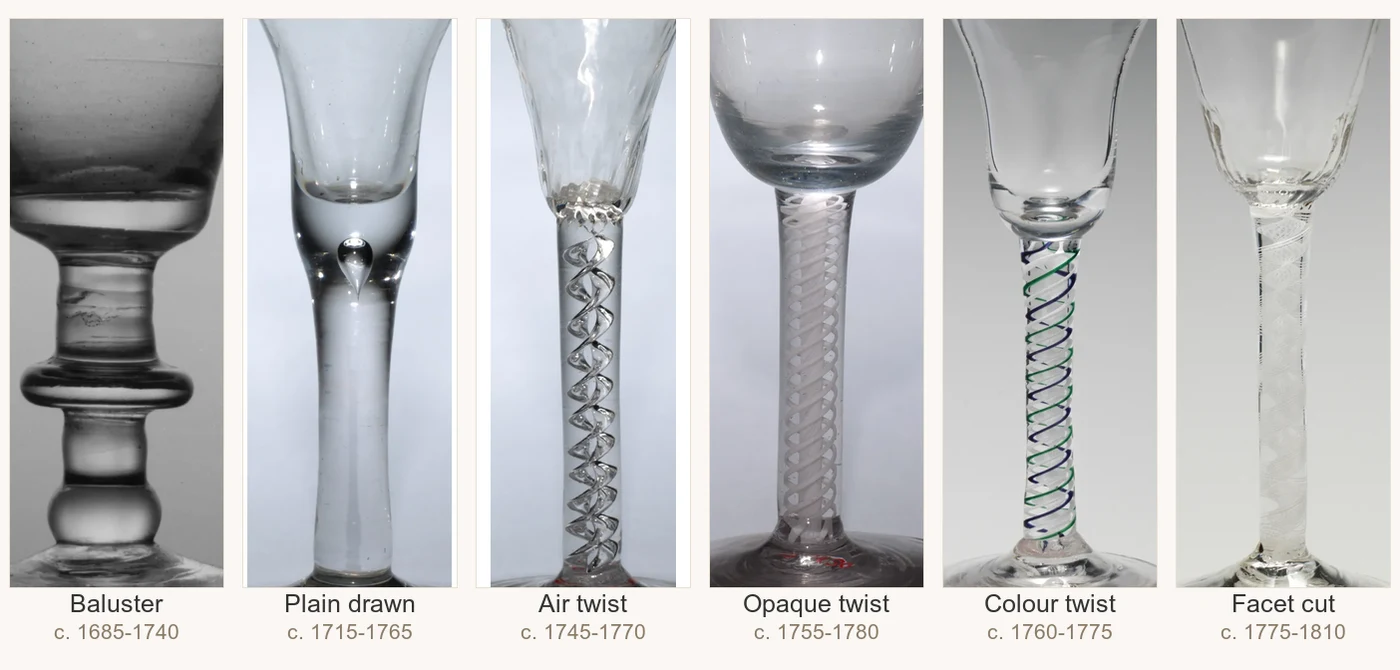
An English wine glass never carried a mark. There was no assay office for glass, no maker's stamp, no date letter — so unlike a spoon or a teapot, it cannot be looked up. Everything you can know about its age is in the object.
Fortunately the most informative part is also the part that survives best. The stem changed on a schedule, and it changed for an unusually hard reason: Parliament taxed glass by weight in 1746 and taxed it again, differently, in 1777. Those two dates bracket the whole story, and they are why the stems of the middle century are hollow, twisted and strange.
Table of Contents
Two Tax Dates Bracket the Sequence
English glass of this period is lead glass, or flint glass: heavy, soft, highly refractive, and often faintly grey or smoky with a scatter of tiny seed bubbles trapped in it. That weight is the point of the story, because glass was sold by weight and, from 1746, taxed by it.
The Glass Excise passed in 1745 and took effect the following year, charging duty on the weight of the raw materials that went into the pot. A glassmaker could no longer make an impressive object by making a heavy one. So the trade did the obvious thing: it made stems thinner, and moved the decoration inside them, where a spiral of trapped air weighs nothing at all.
Then in 1777 the duty was doubled and, crucially, extended to the opaque-white metal that the enamel twists were made from — the one material that had escaped the first Act. The white twists stopped almost at once, and ornament moved to the outside of the stem, cut away on a wheel. Cutting removes weight rather than adding it, which under a tax on weight is the right direction to travel.
| Date | What the law did | What it did to the glass |
|---|---|---|
| 1745–46 | Glass Excise: duty charged on the weight of raw materials | Stems thin and lengthen; ornament moves inside the stem, where it is weightless. Air twists spread. |
| 1777 | Duty doubled and extended to opaque-white enamel metal | Opaque twists end. Ornament moves to the surface as cut facets. |
| 1780 | Restrictions on Irish glass exports lifted; Ireland stays outside the excise | Heavy deep-cut glass flourishes in Cork and Waterford while England economises. |
One caution before the spans below are taken too literally. Air twists appear a little before the 1746 Act rather than because of it, so the tax accelerated a fashion rather than inventing it. The 1777 date is the harder of the two: it really does close a style.
Heavy Metal: Balusters, Knops and Tears
Before the excise, weight was a selling point. Glasses from roughly 1685 to 1740 have thick stems swollen into knops — a true baluster like a pear, an inverted baluster, a flattened annular ring, a plain ball — and they are noticeably heavy in the hand for their size.
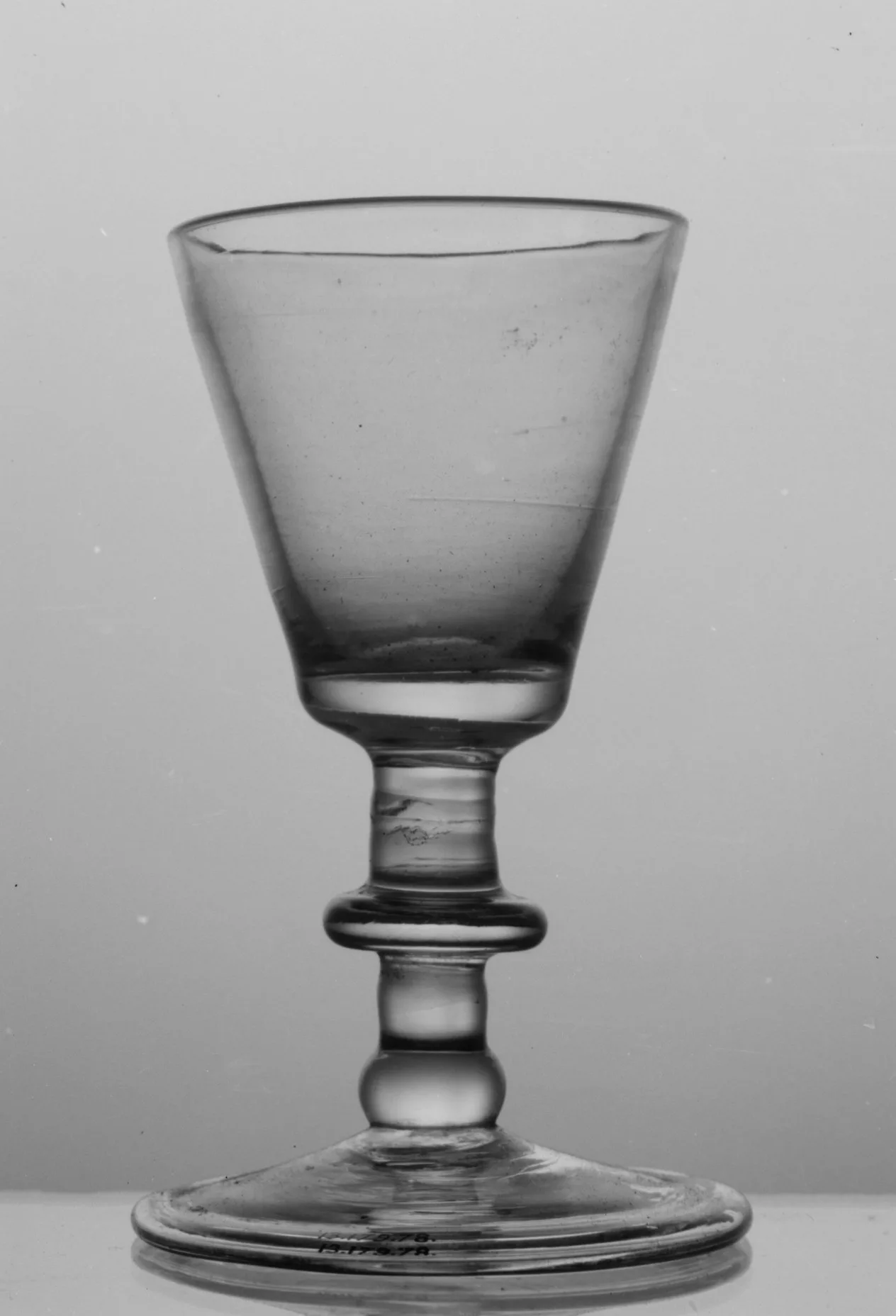
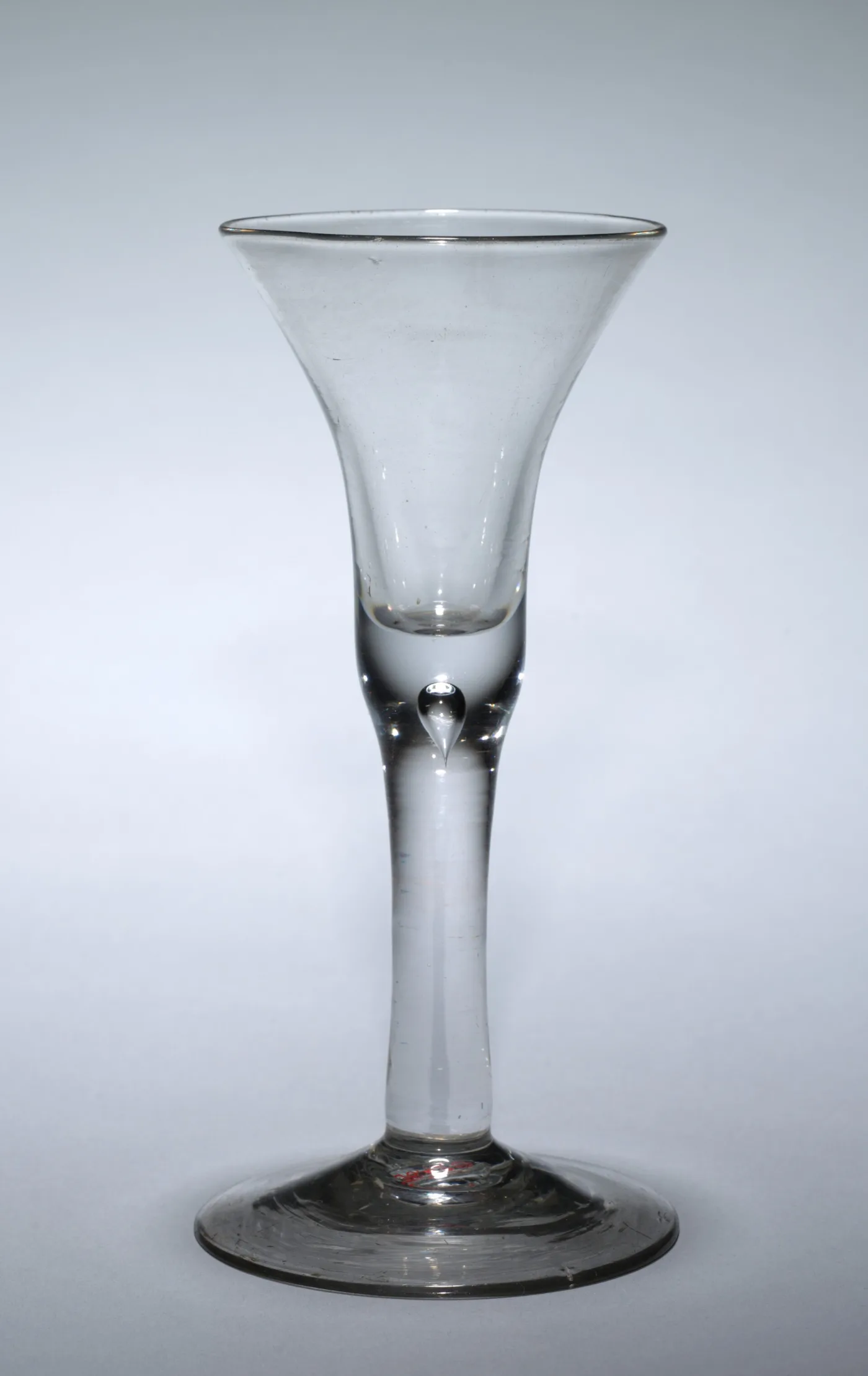
Look also for the tear: a single teardrop of air, deliberately introduced by pricking the hot glass and drawing it out, sitting in the knop or the top of the stem. It is the ancestor of everything in the next section — the same trick, done once instead of forty times.
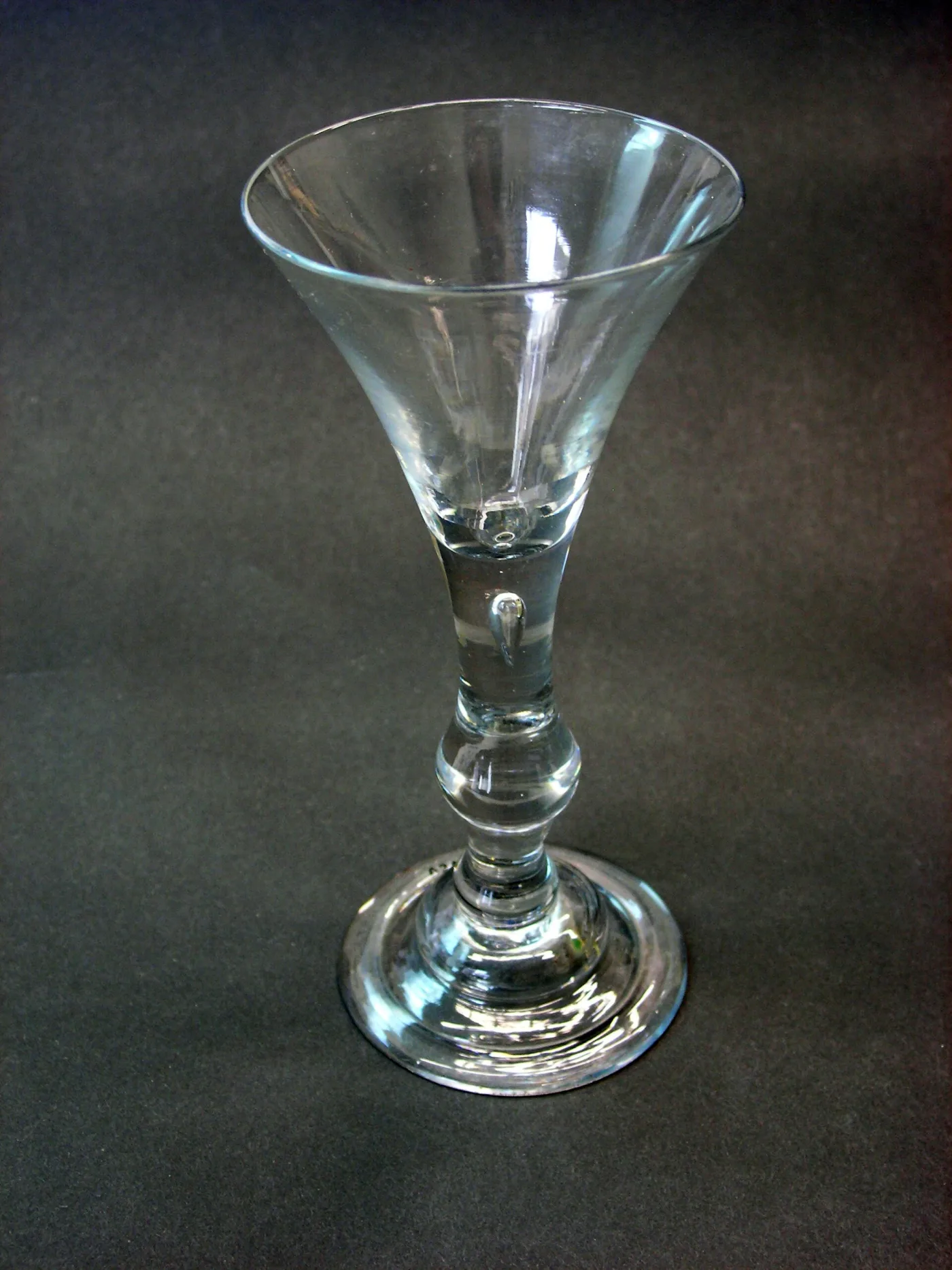
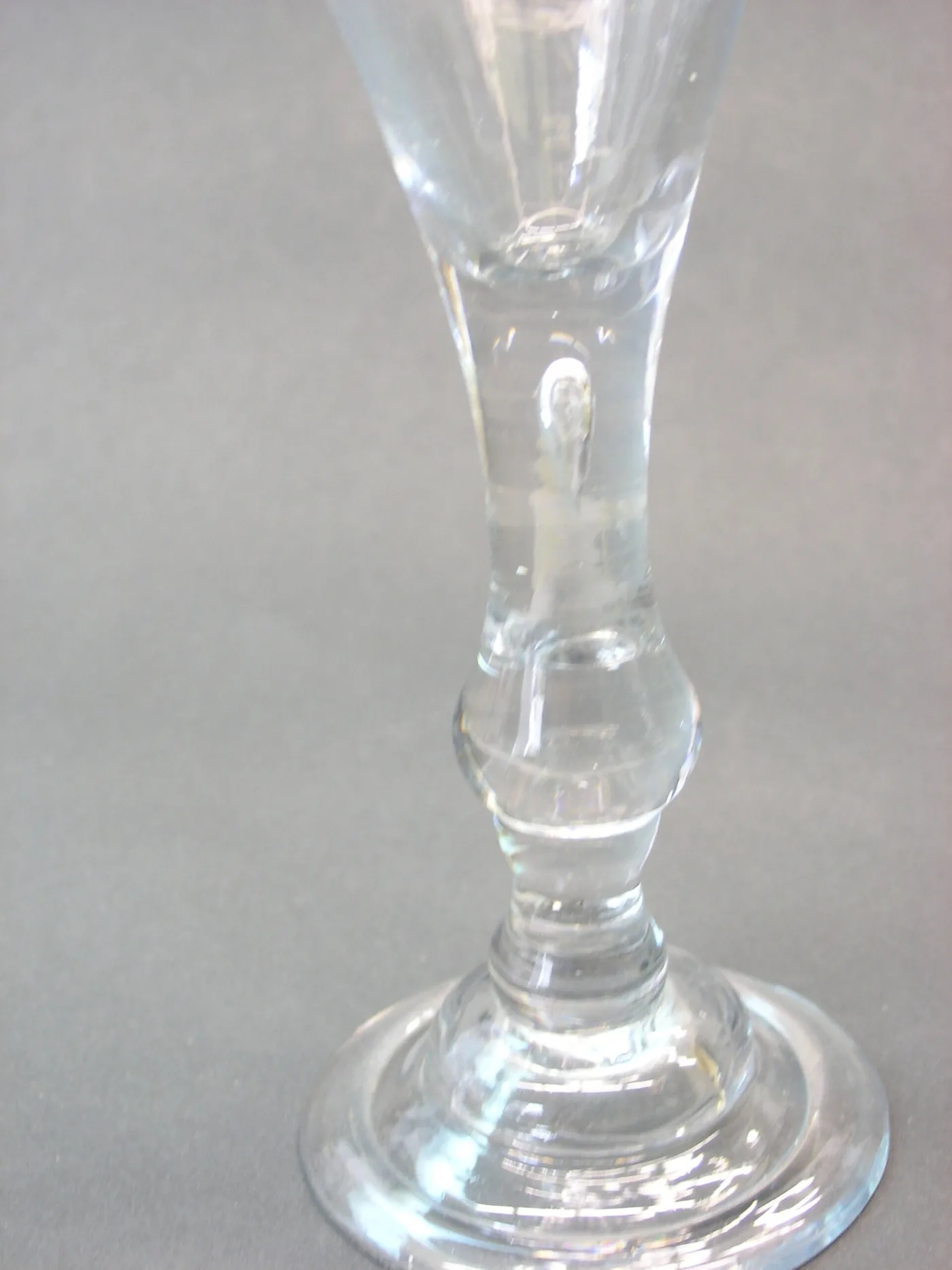
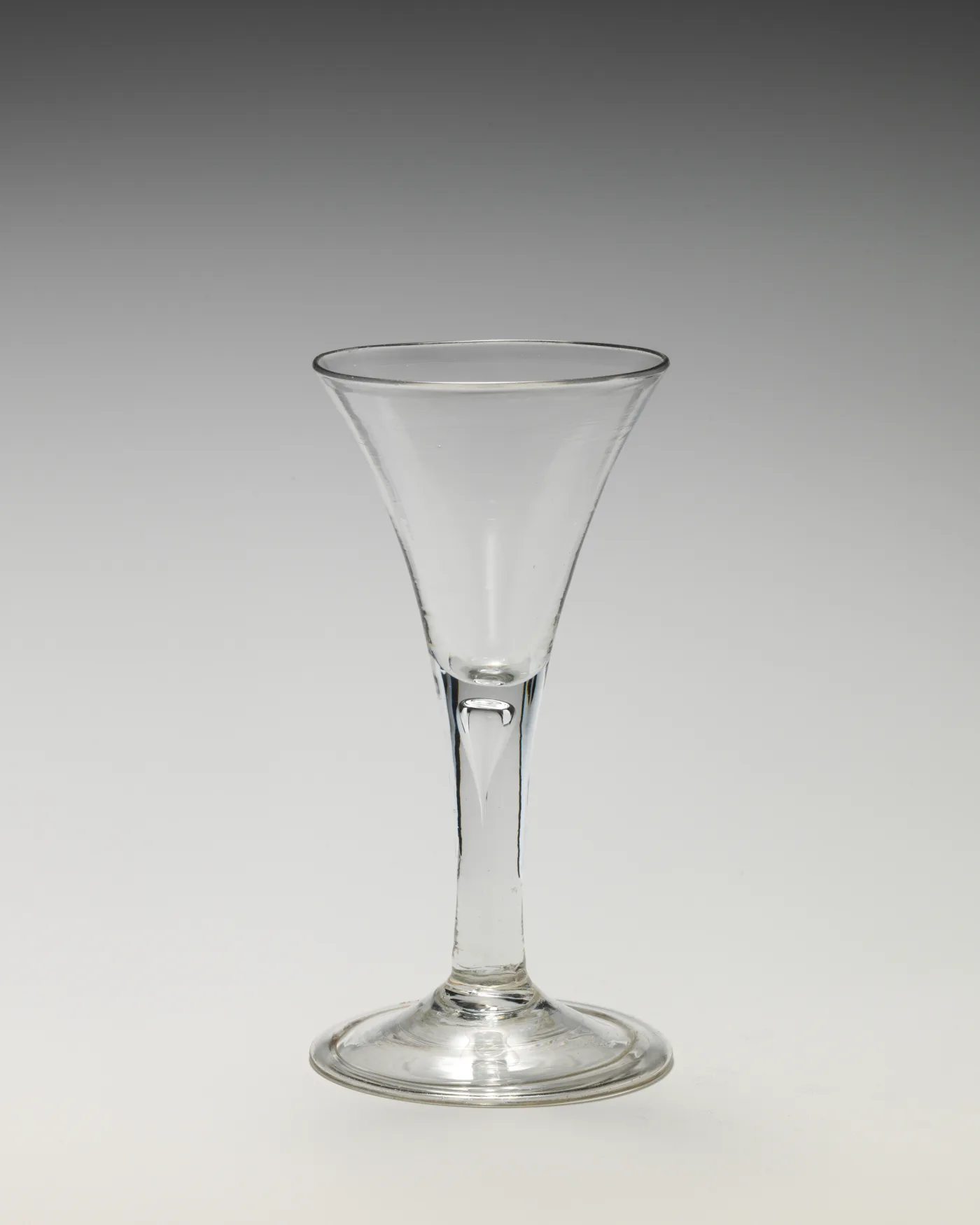
Running alongside from about 1715 is the plain drawn stem, where bowl and stem are pulled from one gather of glass so there is no join between them at all. Run a finger up from the foot: on a drawn stem the bowl grows out of the stem with no seam, and there is often a single tear stretched up into the base of the bowl.
One form of the period is worth knowing about even though no photograph here shows it: the moulded pedestal or "Silesian" stem, shouldered and four- or six-sided, in use from about 1715. Flat moulded faces and pinched shoulders rather than a turned profile point there.
Air Twist: c. 1740–1770
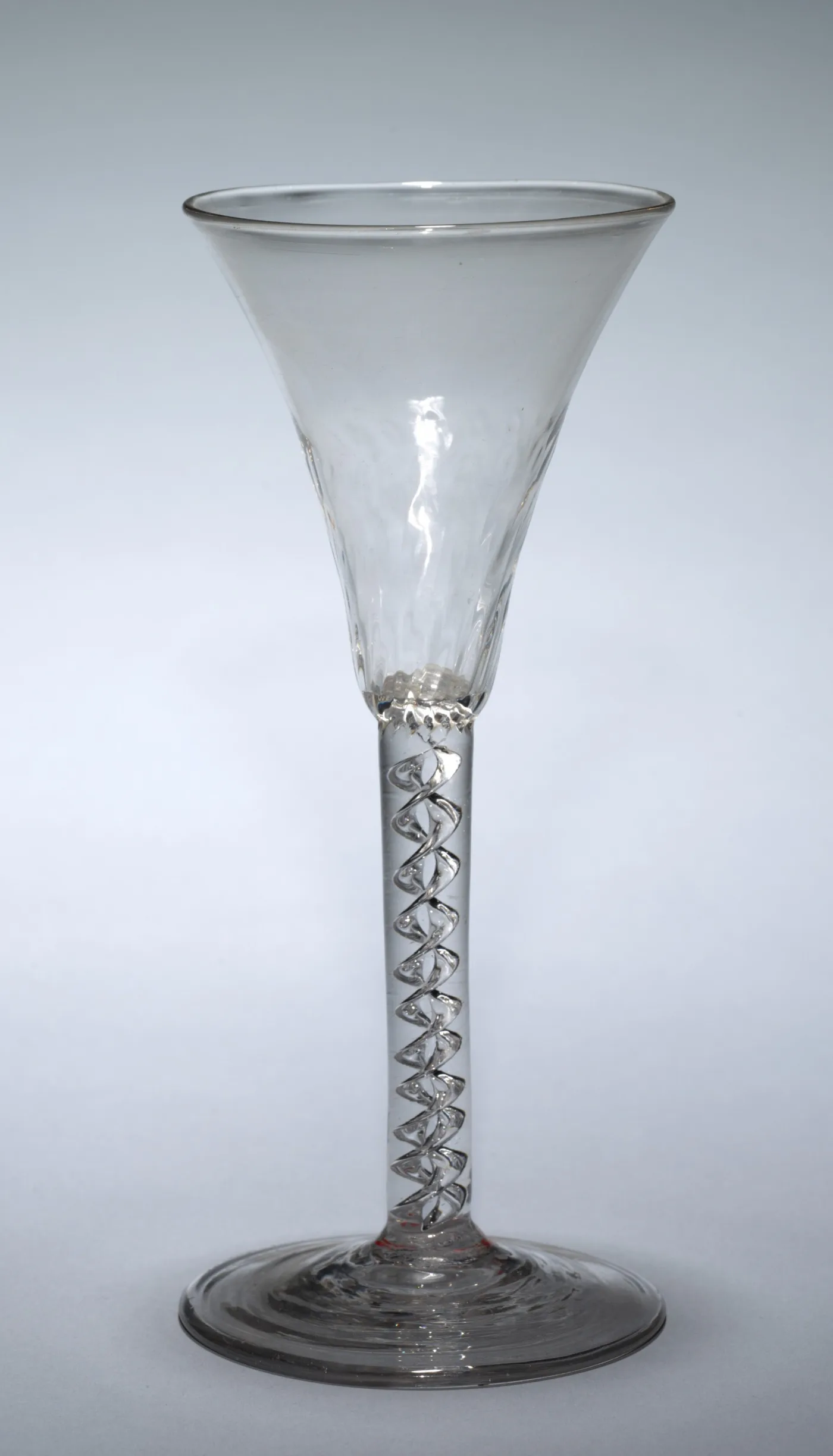
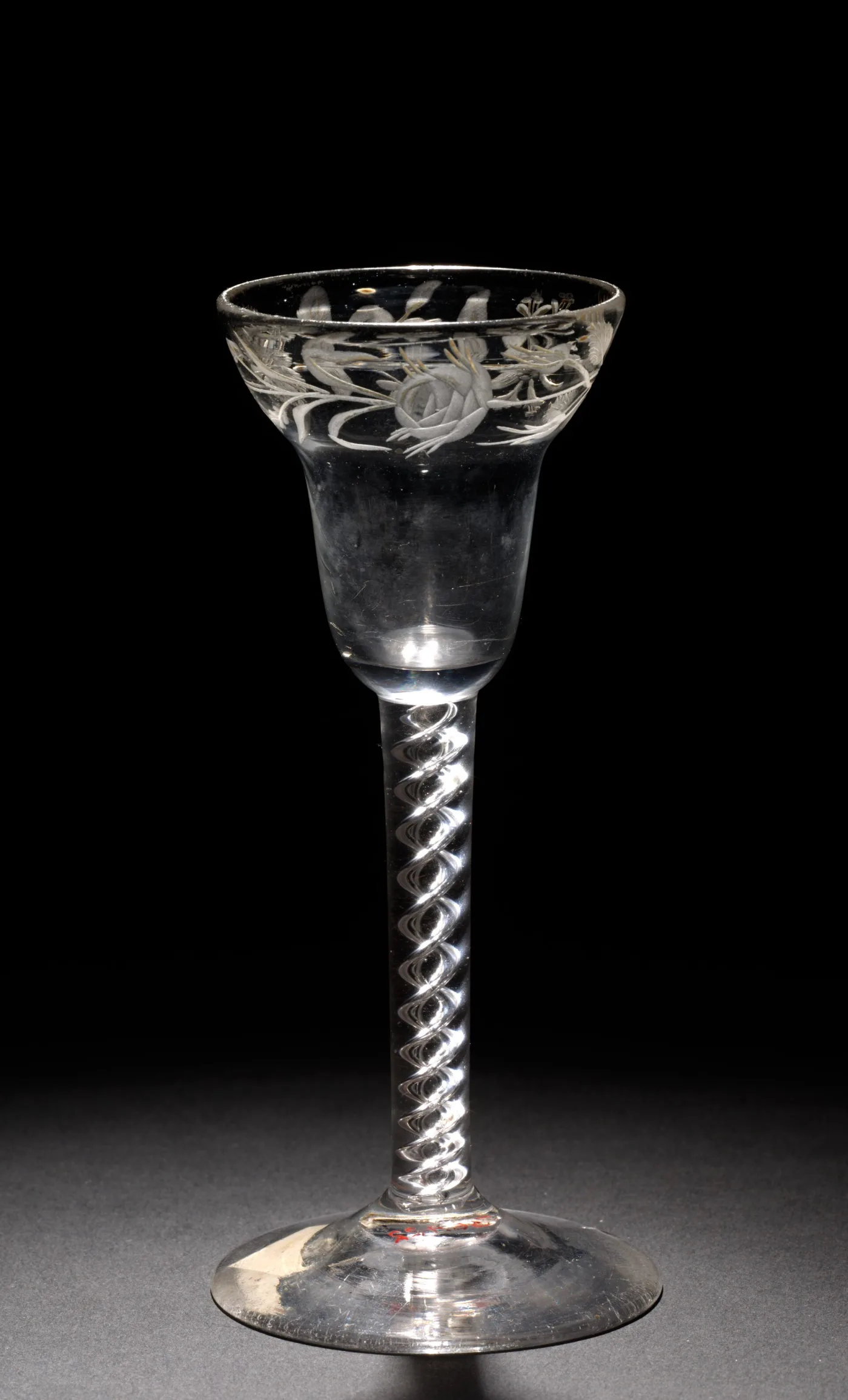
The air twist takes the tear and multiplies it. A ring of air pockets is pricked into the base of the gather, the glass is drawn out long, and as it is drawn it is twisted — so the pockets stretch into ropes that spiral the whole length of the stem. No extra material is used, and that is exactly the appeal under a tax on weight.
The tell is optical rather than chromatic. Because the spirals are hollow, they reflect: turn the glass under a lamp and an air twist flashes bright silver at one angle and nearly disappears at another. Nothing solid behaves that way.
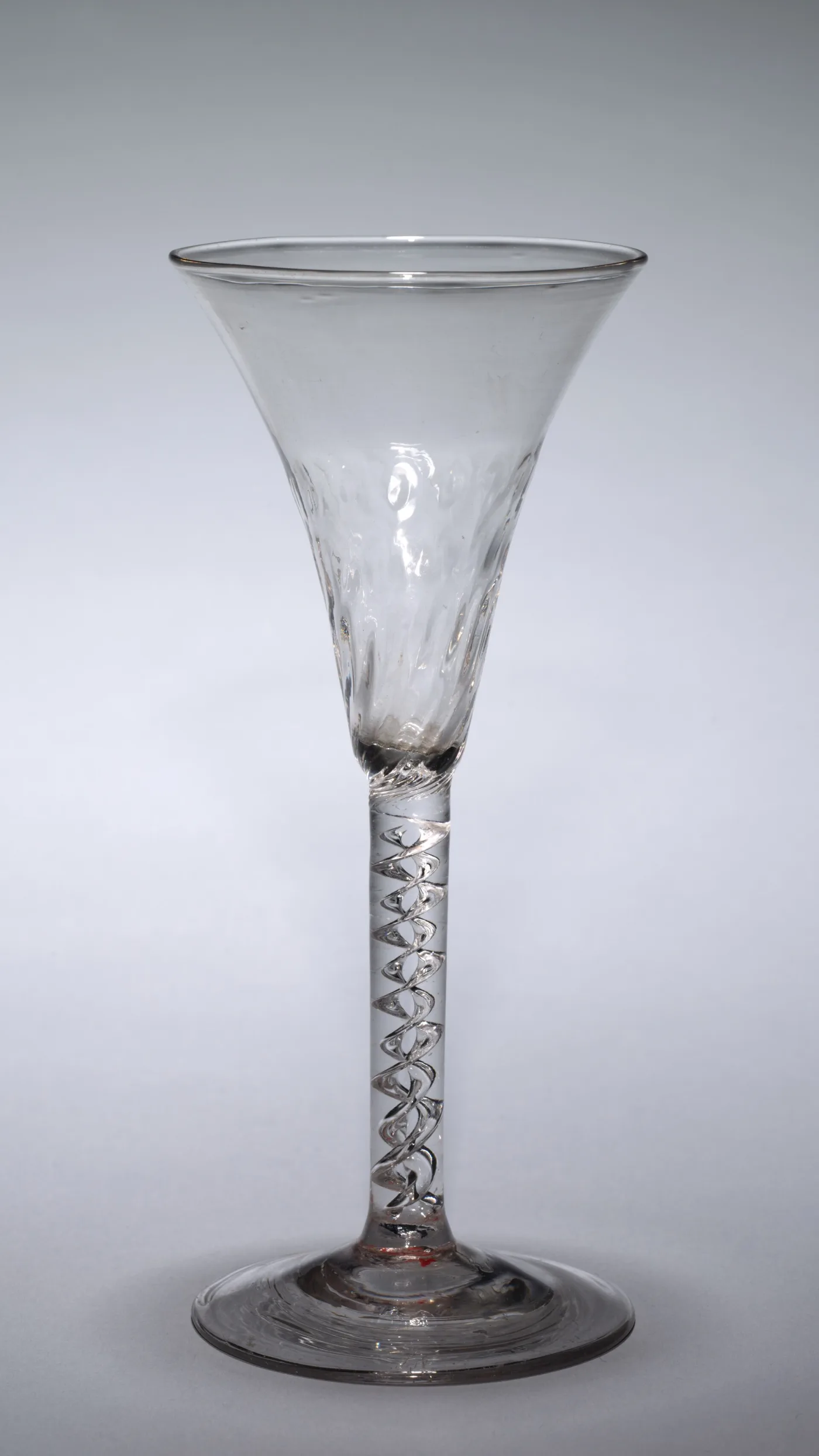
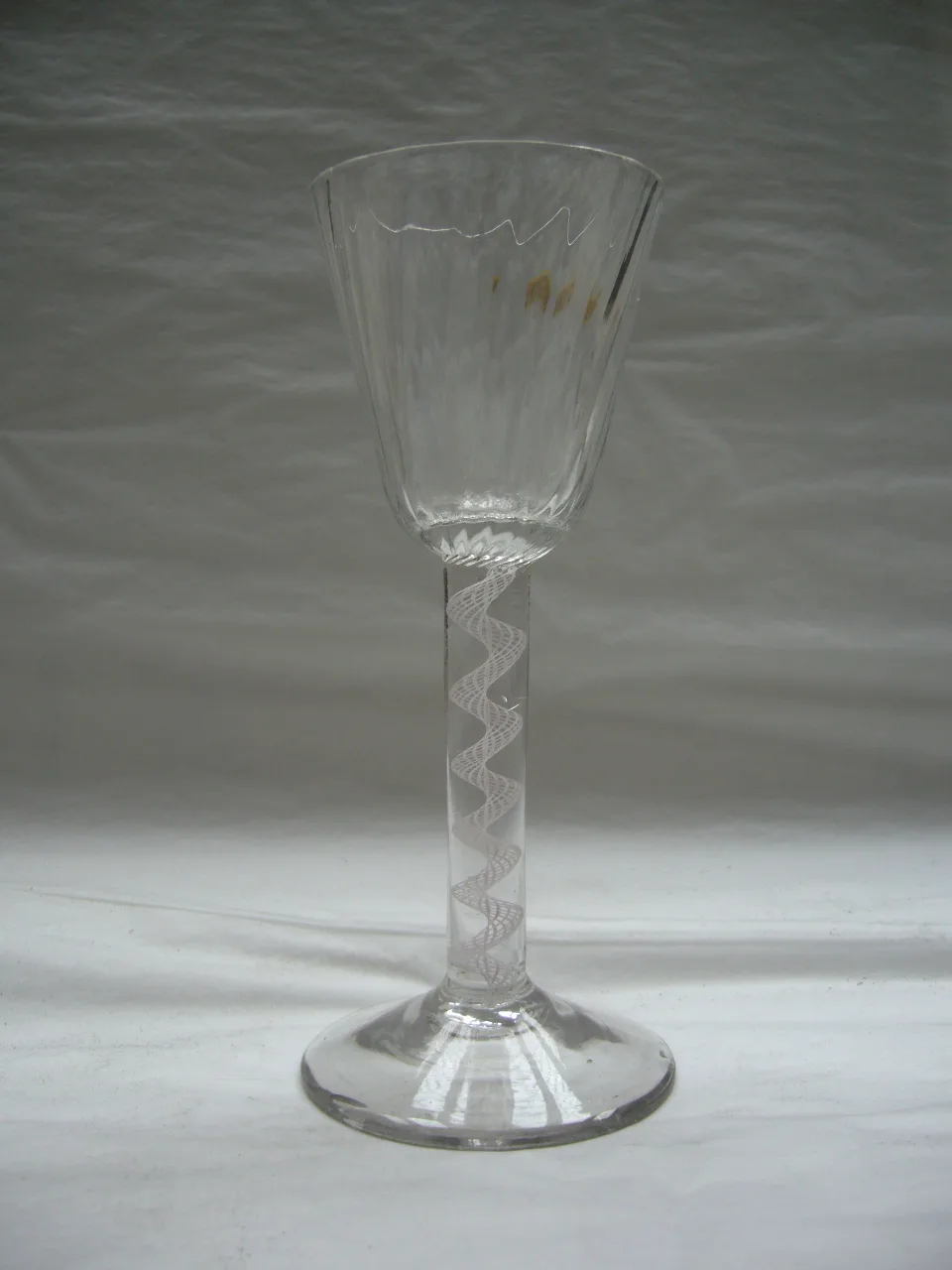
Air twist glasses are often engraved, and the engraving carries its own information. Vines and hops point at what the glass held; a rose with a half-open bud belongs to the politically charged glasses made for Jacobite sympathisers — heavily faked, so treat a rose as a reason for more caution, not less.

Opaque White Twist: c. 1755–1780
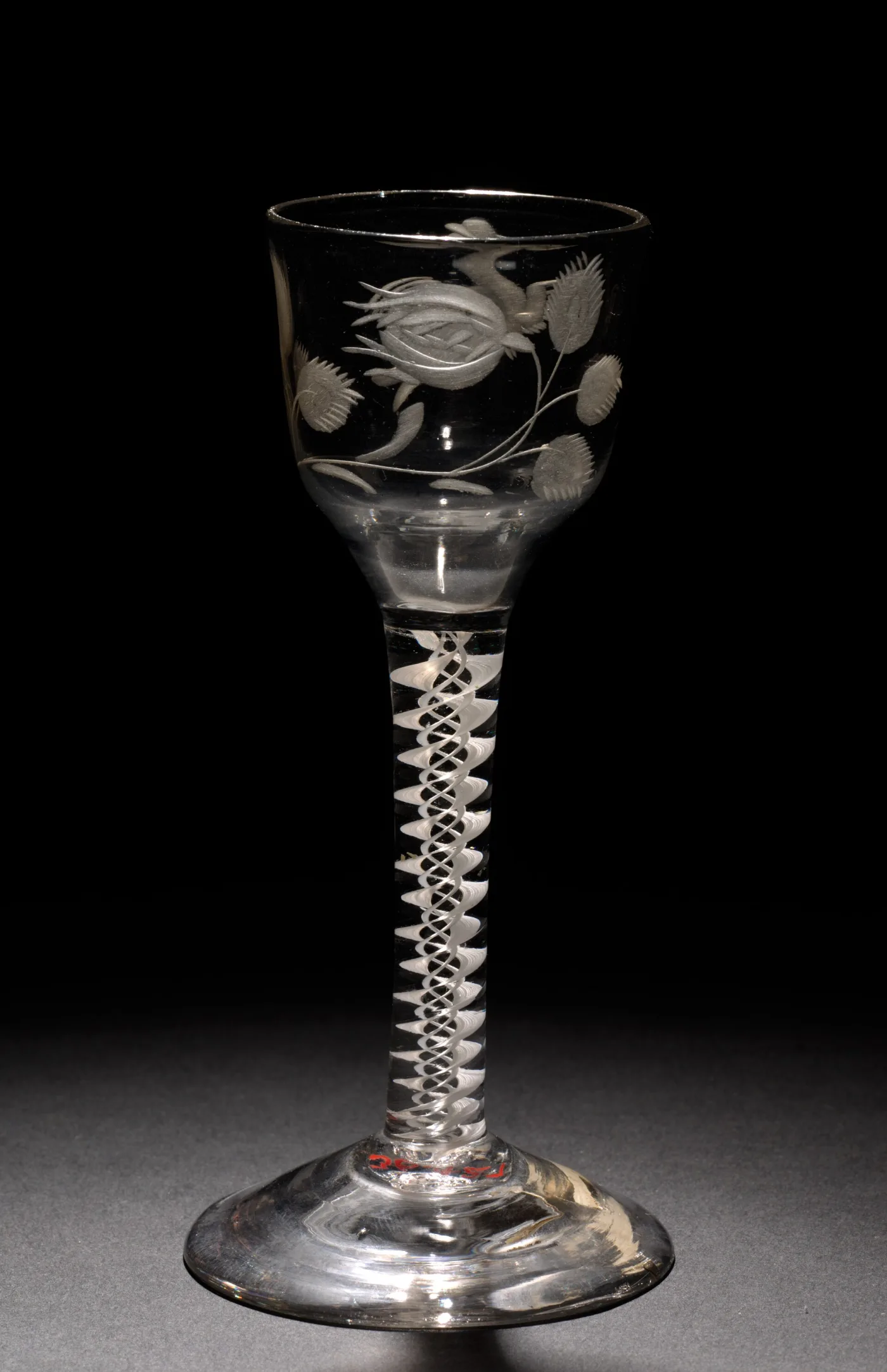
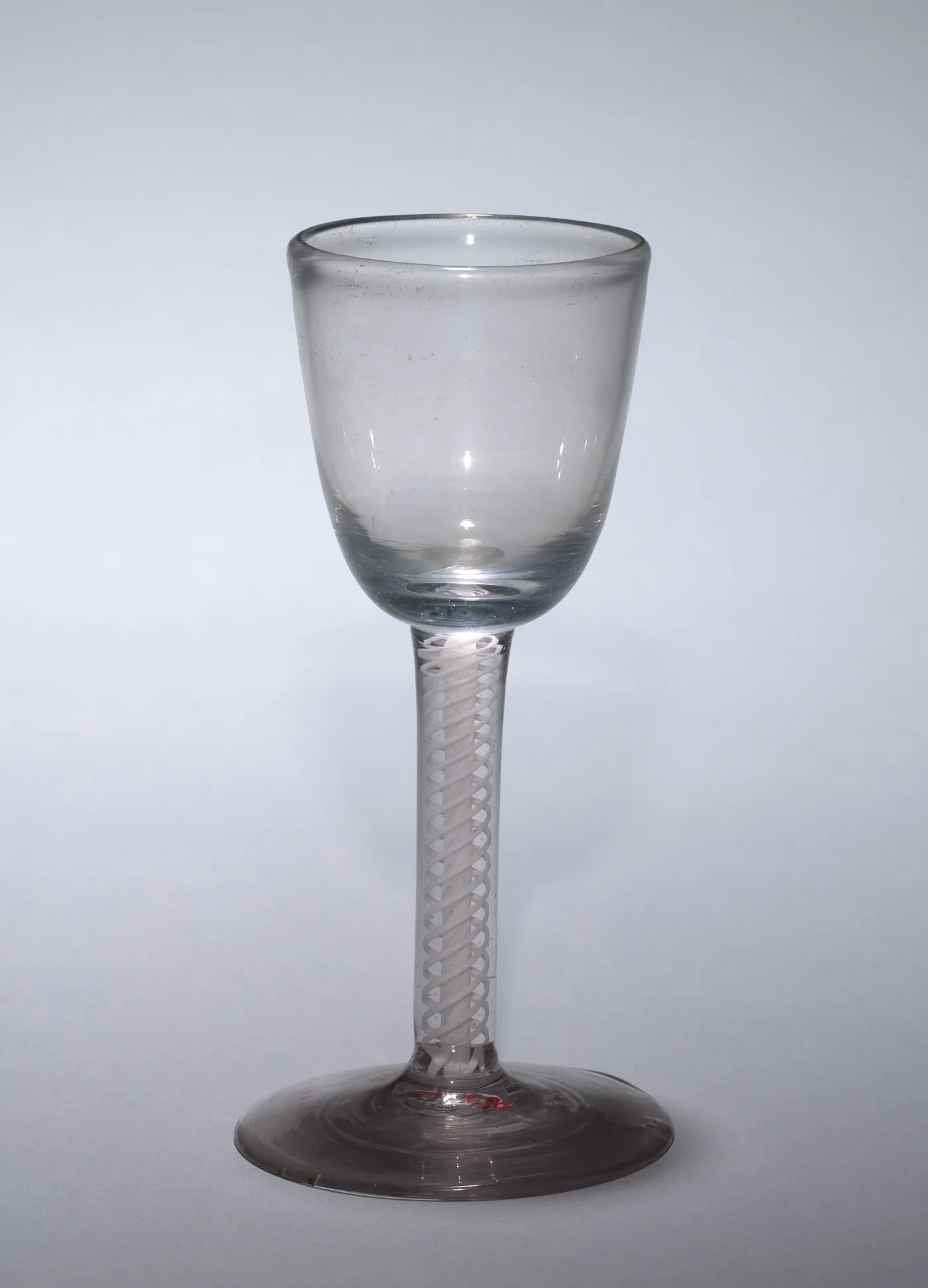
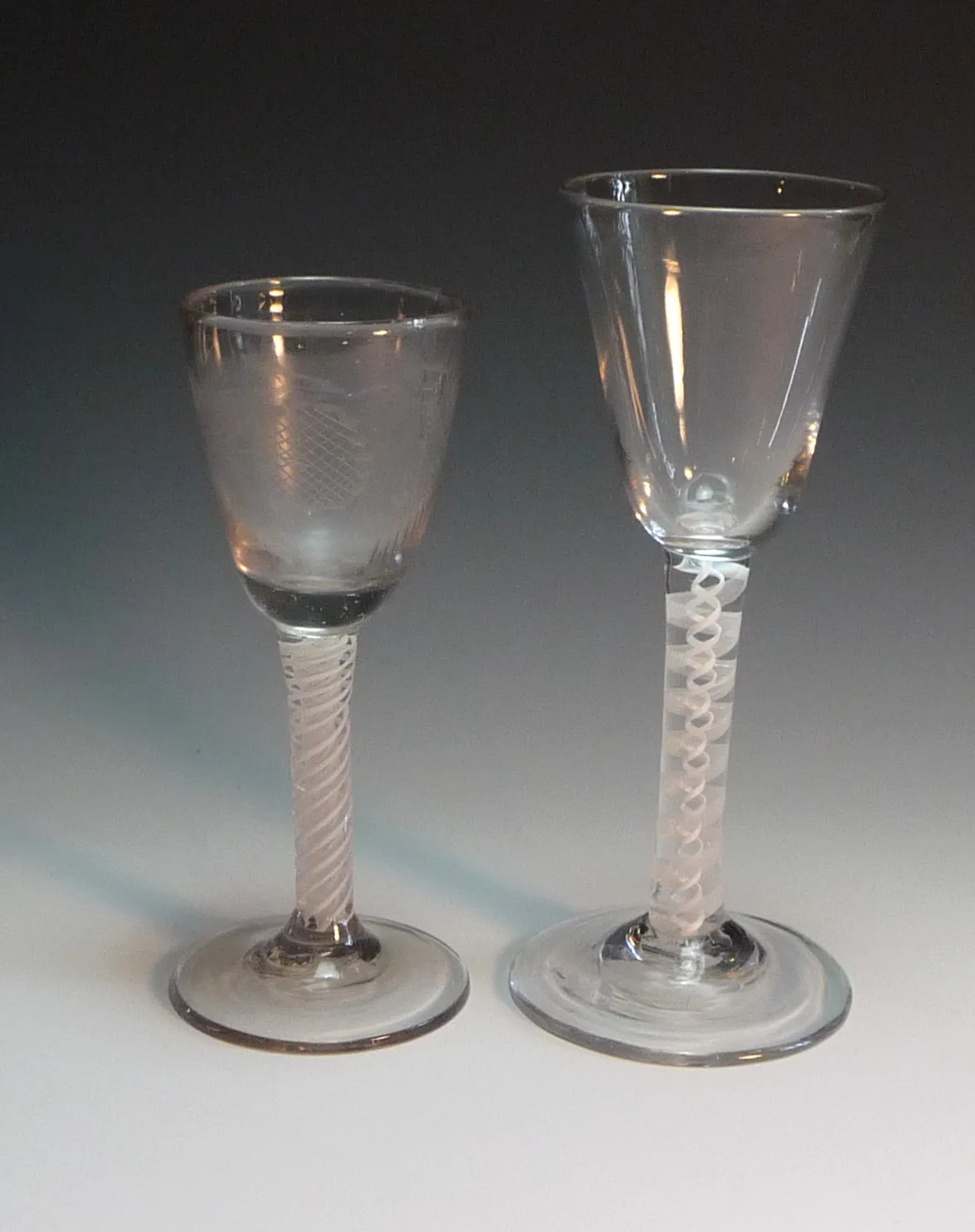
From the mid-1750s the same trick is done with solid rods of opaque white enamel instead of air, laid round the gather, drawn and twisted into a stem that looks like white lace under glass. The technique came from Venice and Bohemia; what made it an English industry was that the white metal escaped the 1746 duty.
Read the arrangement. A single series is one set of threads spiralling together. A double series has a distinct core running up the middle with a second spiral wound around it, and it is the commonest arrangement on surviving glasses.
Colour Twists, and Why There Are So Few
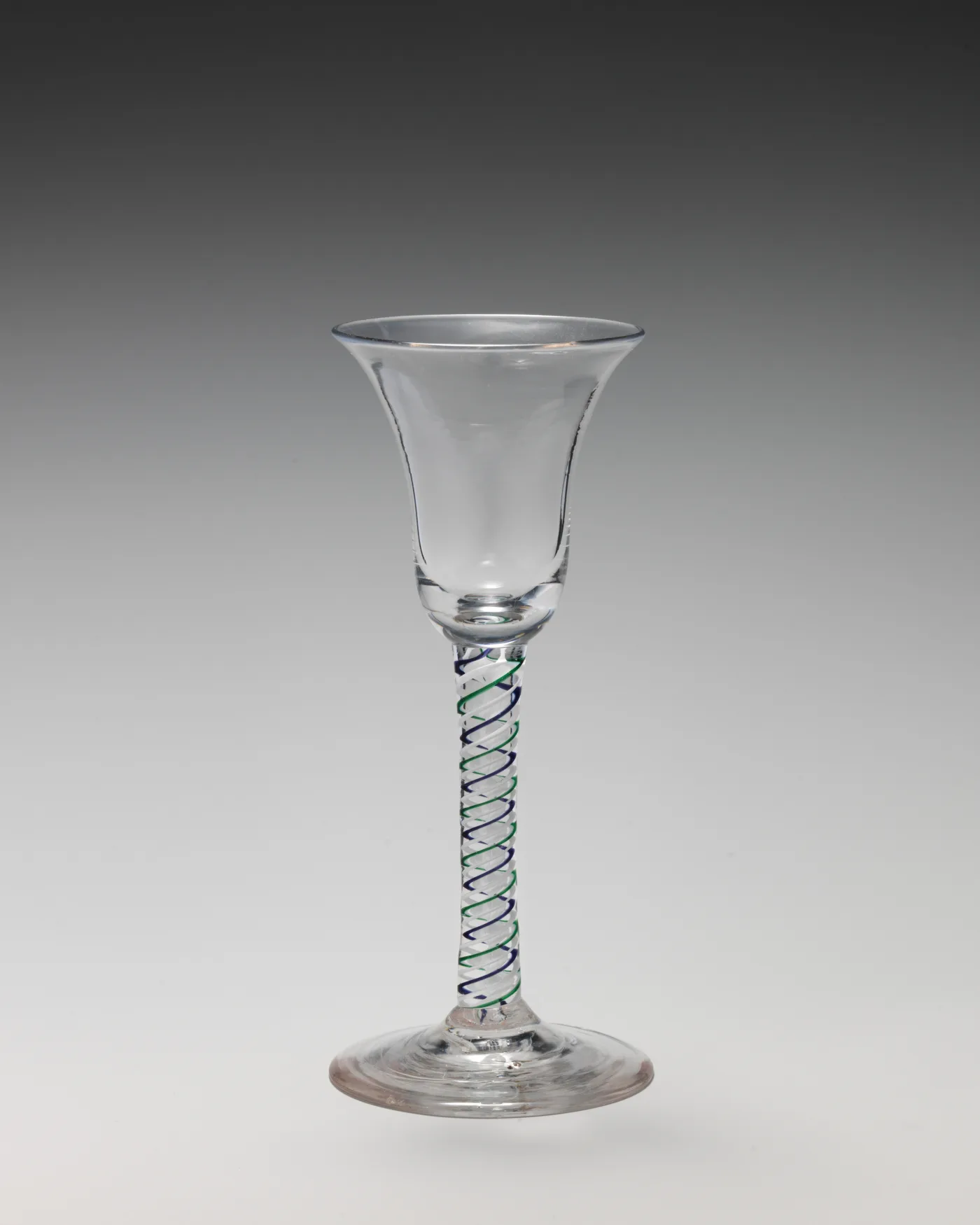
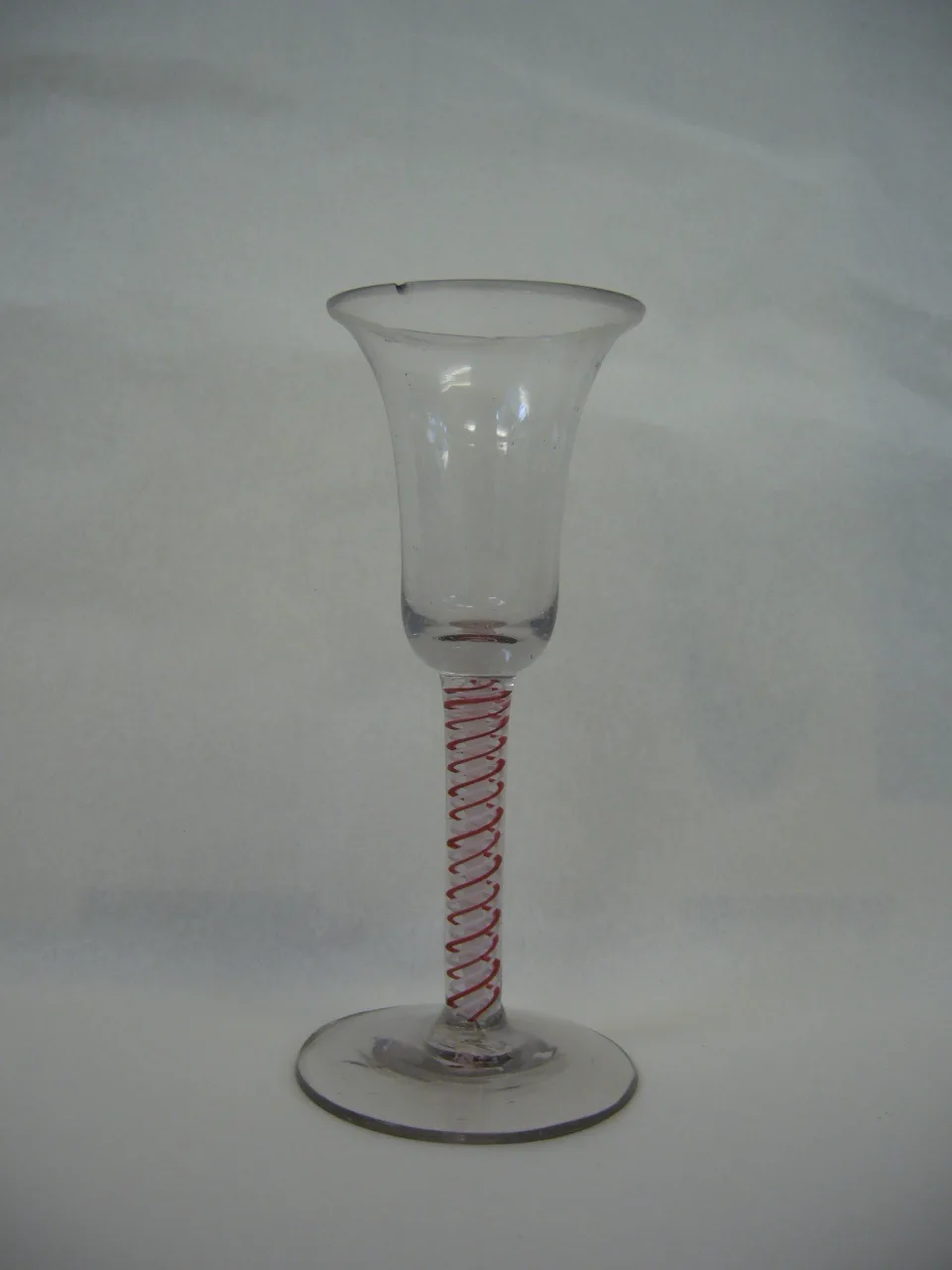
For a short window in the 1760s and early 1770s the same rods were made in colour — blue, green, red, occasionally yellow — either alone or wound in with white. Genuine ones are scarce, which is precisely why they are the most reproduced type on the market. The colour should be unmistakably in the glass, and it should run the full length of the stem.
Facet-Cut Stems and What Came After
After 1777 the ornament comes out of the stem and onto it. Facet-cut stems are ground on a wheel into small diamonds, hexagons or long flutes, and they run from about 1775 to 1810. They are easy to confirm by touch: facets have edges, and a fingernail catches on them.
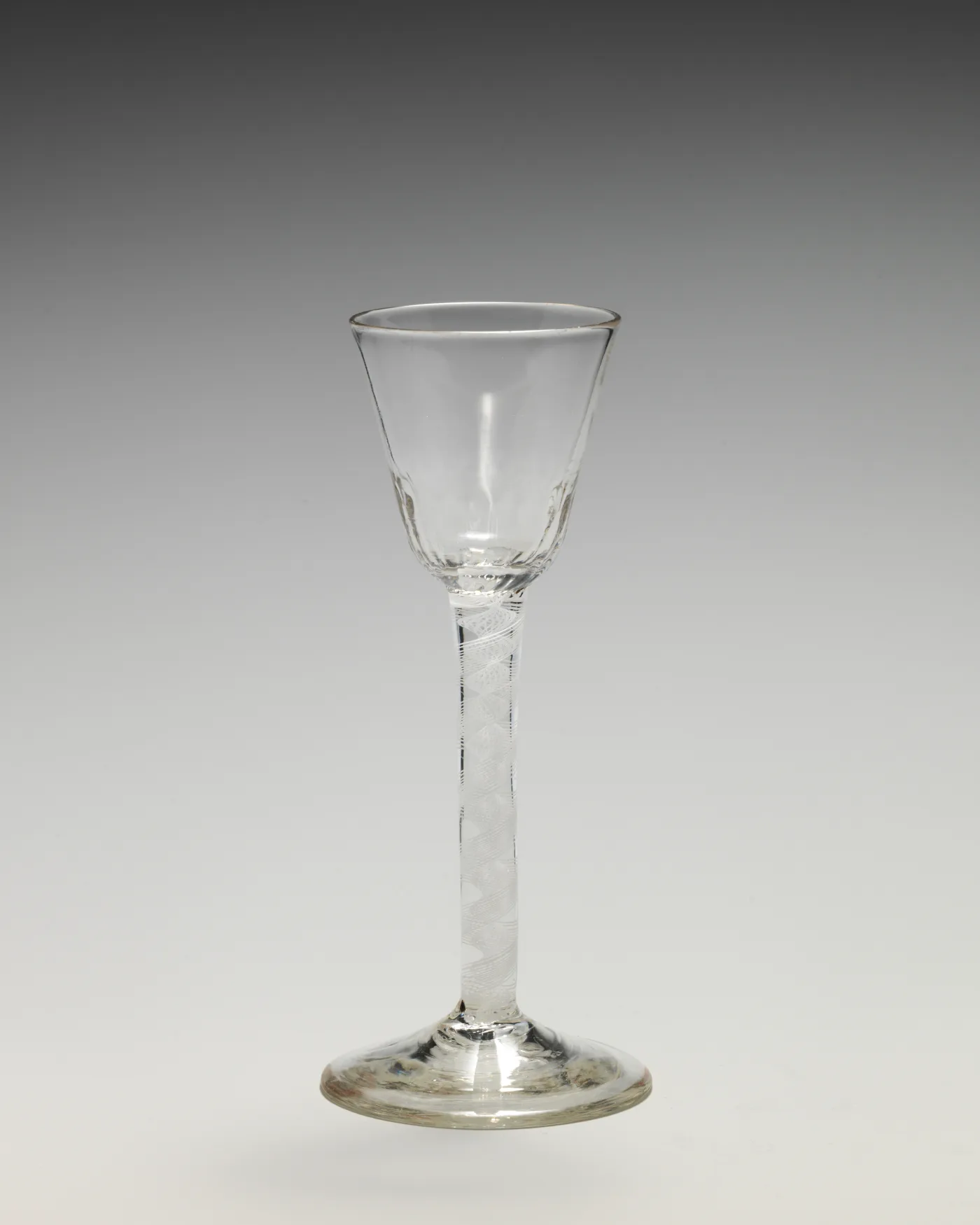
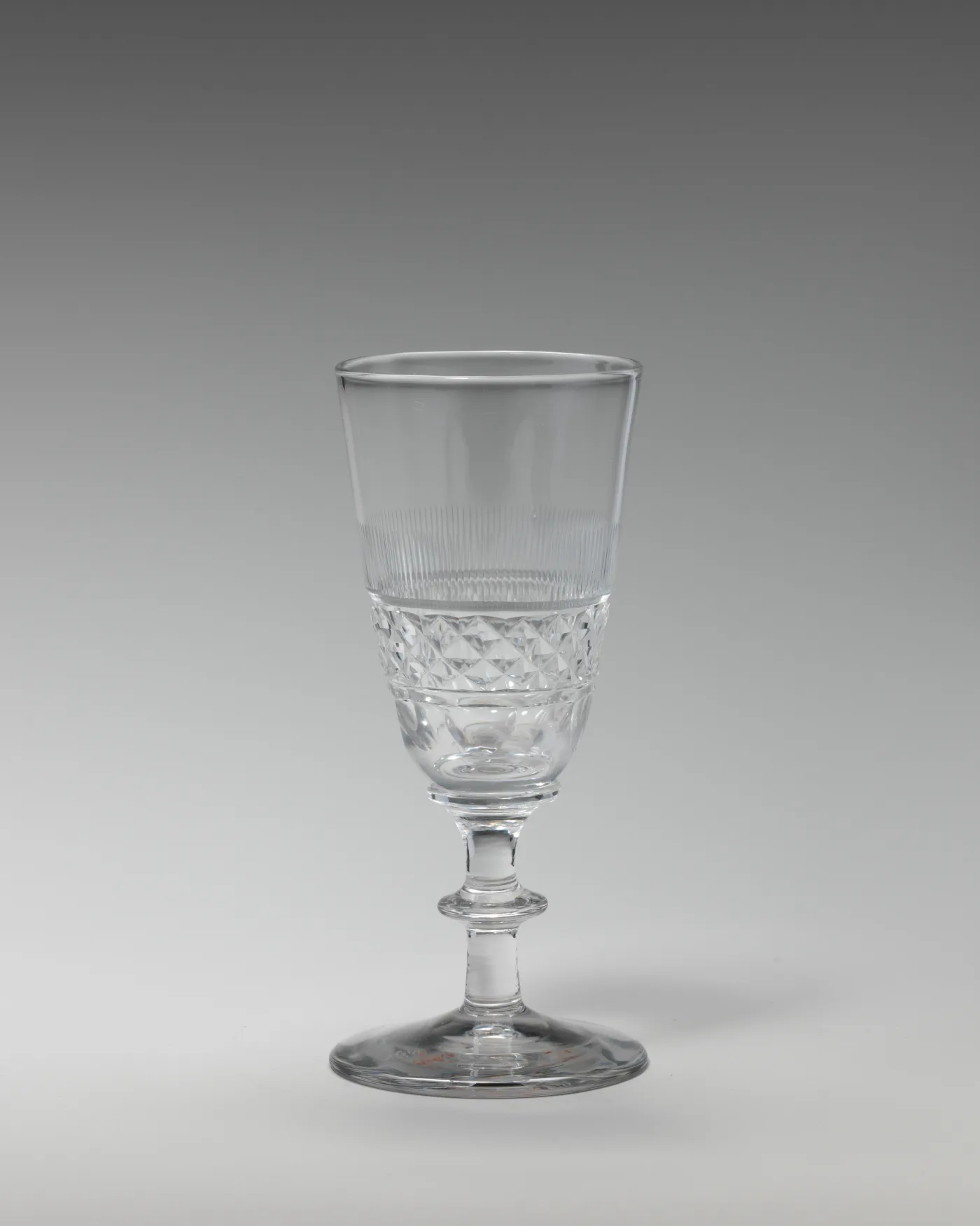
By about 1810 the tall Georgian glass is gone. Stems shorten, bowls thicken, and deep cutting takes over — the tradition traced in our antique cut glass identification guide, and pursued hardest in Ireland, which sat outside the English excise entirely. Mid-century onwards, pressed glass replaces hand work for everyday tables, which is where our pattern glass and EAPG guide picks up.
Where the Spans Overlap
The spans are not a tidy relay race. Old forms stayed in production while new ones arrived, so most glasses sit in a decade where two answers are possible. This is the table to use when that happens — what the two candidates are, how many years they genuinely share, and the one feature that separates them.
| The two it could be | Years both were made | What settles it |
|---|---|---|
| Baluster or plain drawn | c. 1715–1740 | Is there a swelling? A baluster has at least one knop. A drawn stem tapers smoothly from foot to bowl with no join and no knop. |
| Plain drawn or air twist | c. 1740–1765 | Count the cavities. A plain stem holds one closed tear with a tail. An air twist holds many, stretched into ropes that spiral the full length. |
| Air twist or opaque twist | c. 1755–1770 | Rotate it under a lamp. Air flashes silver then dims; enamel stays the same flat white from every angle. |
| Opaque twist or colour twist | c. 1760–1775 | Any thread that is not white puts it in the colour group. Confirm the colour is a rod inside the stem, not a surface stain. |
| Opaque twist or facet cut | c. 1775–1780 | Inside or outside. The 1777 duty ended the enamel, so ornament crosses to the surface. Facets have edges a fingernail catches. |
| Facet cut or Regency cut | c. 1800–1810 | Proportion. A facet-stem glass is tall and slender with a plain bowl; Regency glasses are shorter, heavier, and cut on the bowl as well. |
Treat a contradiction as the finding rather than a nuisance. A stem that cannot coexist with its own foot — a facet stem on a folded foot, say — usually means a marriage of two broken glasses, which is common and which our valuation and appraisal guide prices.
Three Checks Before You Trust the Stem
Turn it over. Under the centre of the foot an eighteenth-century glass normally shows a pontil mark, rough or roughly ground, where the rod that held it during finishing was snapped away. The same scar is a standard dating tool on early bottles, covered in our antique bottle identification guide. It is supporting evidence only: reproductions are sometimes given one on purpose.
Look at the foot rim, not the glass. A glass that has stood on tables for two centuries has fine, random, multidirectional scratches on the underside of the foot rim. Regular concentric scratching is a machine, and a rim with no wear at all under bright light is a warning regardless of how right the stem looks.
Ask whether it is English at all. Twists were made across Europe, and Continental glass of the same date is often lighter and more brilliant because it is potash rather than lead. English lead glass is heavy for its size, slightly grey, and rings with a long note when flicked. Bohemian work is covered in our Bohemian glass identification guide; for the wider family of English types see our antique glass identification guide.
Dating by shape alone is the same discipline used on early flatware, set out in our English silver spoon dating guide. The difference is that silver has hallmarks to fall back on, as our British silver hallmarks guide shows. Glass has nothing.
Frequently Asked Questions
How do I tell an air twist from an opaque twist?
Turn the glass under a lamp. An air twist is spun from ropes of trapped air, so it behaves like a mirror: the spirals flash bright silver at one angle and almost vanish at another. An opaque twist is solid white enamel rod, and it stays the same flat white however you turn it. If the stem changes brightness as it rotates, it is air.
Does a folded foot mean the glass is eighteenth century?
It points that way but it does not prove it. A folded foot has its rim turned under to make a double thickness that resists chipping, and English makers used it heavily before about 1750, then far less as the excise made extra glass expensive. It was also revived in the late nineteenth century, so treat it as one vote among several rather than a verdict.
Why did opaque twist wine glasses stop being made?
Because in 1777 the excise was doubled and extended to cover the opaque white metal the twists were made from. Until then the white enamel had escaped a tax that was charged on the weight of raw materials, which is much of why the style flourished at all. Once it was taxed, the trade moved its ornament to the outside of the stem and cut facets instead.
Are colour twist wine glasses rare?
Yes, genuinely so. Colour twists were made for a short window in the 1760s and early 1770s and survive in tiny numbers next to plain white ones, which is exactly why they are the most reproduced type. Check that the colour sits inside the glass rather than on it, and that it runs the whole length of the stem instead of stopping short.
Does a rough mark under the foot mean the glass is old?
A rough or ground scar under the centre of the foot is the pontil mark, left where the rod that held the glass during finishing was snapped off, and it is normal on eighteenth century glasses. It is supporting evidence rather than proof, because reproductions are sometimes given one deliberately. Read it together with the wear on the foot rim and the form of the stem.
Can a wine glass with no marks be dated at all?
It can, and it has to be, because English drinking glasses were never marked. Dating rests entirely on the object: the form of the stem sets a span of two or three decades, and the bowl, the foot and the pontil either agree with it or reveal that something has been altered or copied.
The Short Version
Hold the stem up to a window. If it is thick and lumpy with knops, you are before about 1740. If it is slender and solid with a single teardrop, roughly 1715 to 1765. If it is full of spirals, decide what they are made of: silver and flashing means air, about 1740 to 1770; flat white means enamel, about 1755 to 1780; coloured means the 1760s or early 1770s and a much rarer glass. If the pattern is cut into the outside instead, you are after 1775.
Then check that answer against the foot and the pontil, and use the overlap table where two answers are possible. Read stem, bowl and foot together and an unmarked glass of 1760 will still land within about twenty years — a good deal better than nothing.