
Bronze Foundry Marks: Reading Who Cast a Bronze, and When
A bronze sculpture usually carries more than one mark, and each answers a different question. The signature names the sculptor who made the model. A date beside it is normally the year of that model. The foundry mark names the workshop that poured the metal, and only the foundry tells you when this bronze was cast. On the six museum bronzes below, the gap between the two dates runs from nothing to more than thirty years.
Table of Contents
Three Marks, Three Questions
Start by finding every mark on the piece. Look along the front and sides of the base, on the back, and underneath. Read them as three separate things:
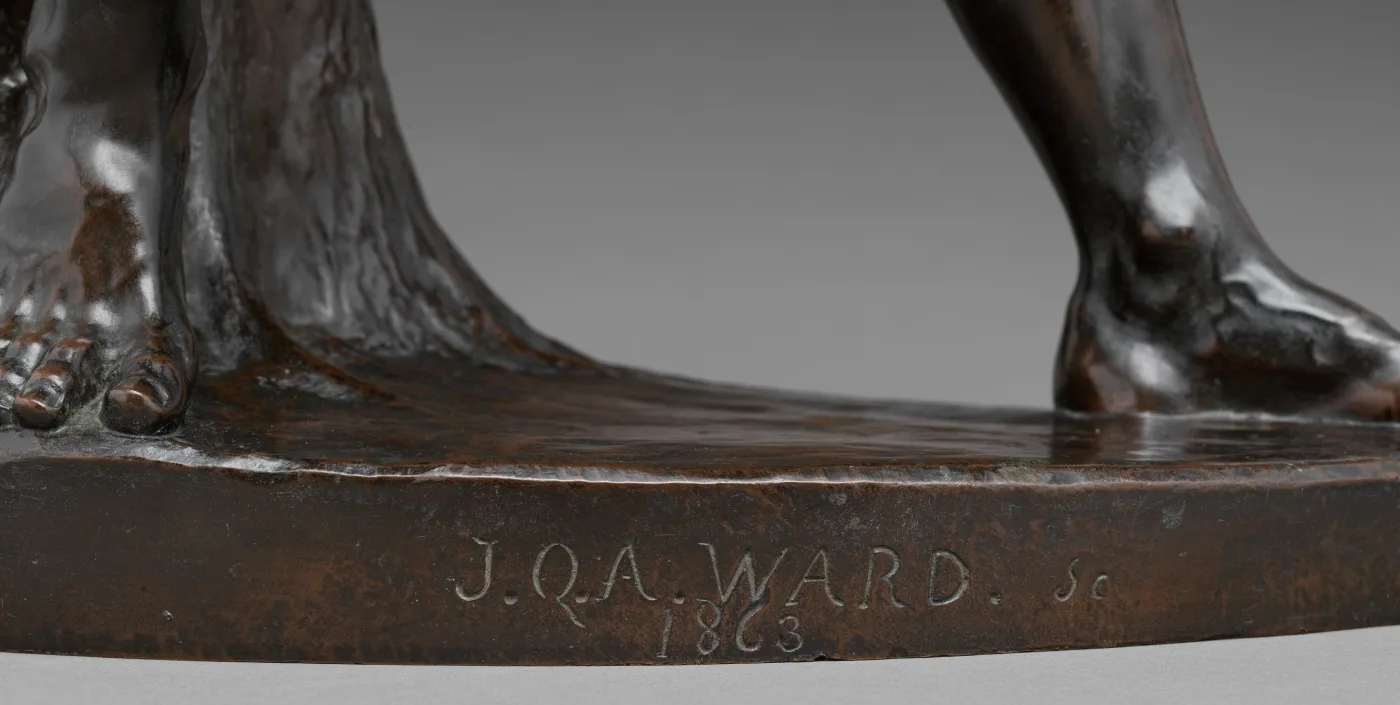
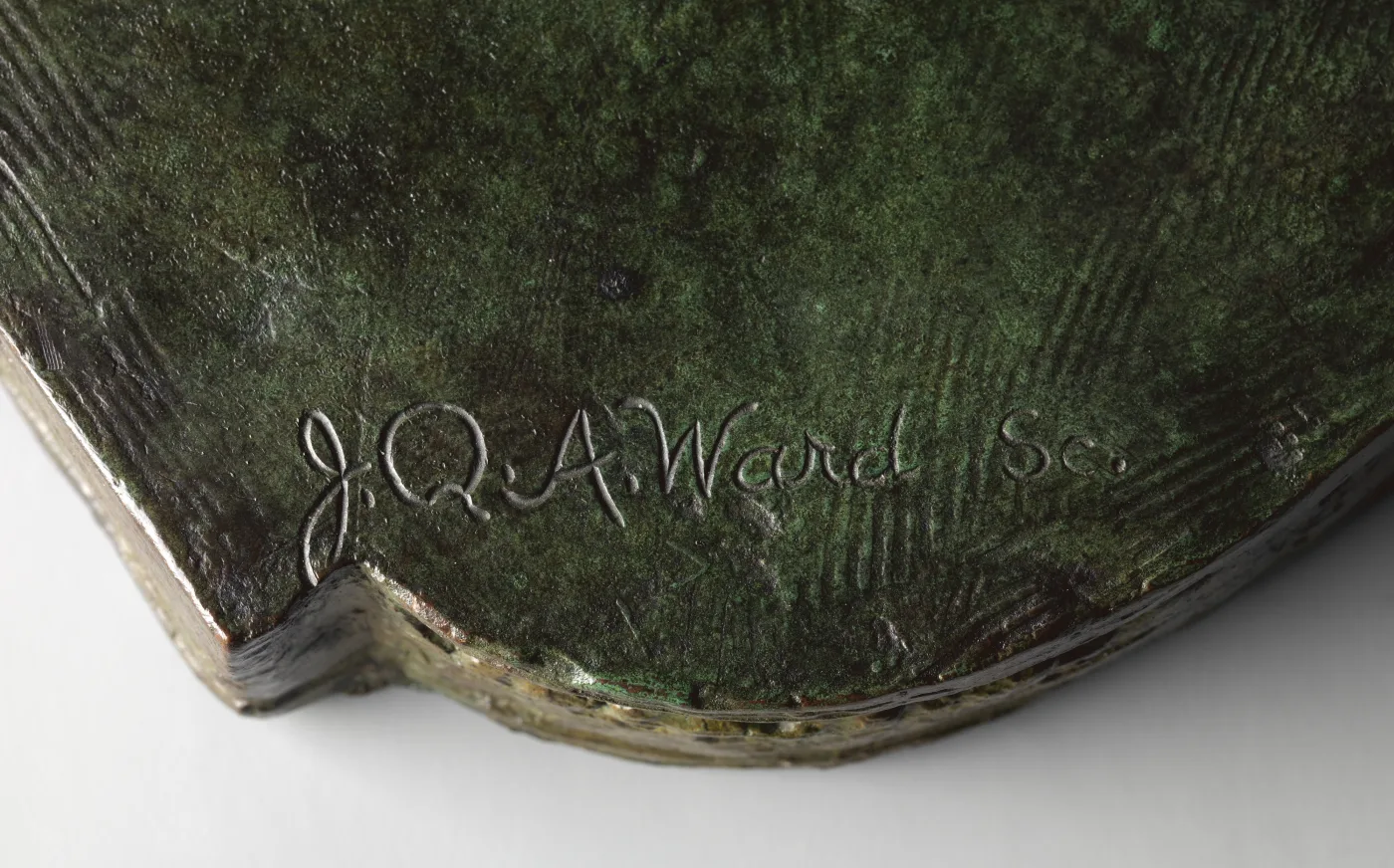
- The sculptor's signature. Often followed by “Sc.”, “Sculp.” or “Sculpt.”, short for the Latin sculpsit, “sculpted it”. The National Gallery of Art and the Washington University numismatic dictionary both read the abbreviation this way. A signature modelled into the clay or wax is reproduced on every bronze cast from that model.
- A date. When it sits beside the signature, it belongs to the model, as the next section shows.
- The foundry mark. A stamped name, a cast-in cartouche, or a line of script naming the founder. This is the mark that can date the bronze itself, because a foundry worked only for a known span of years.
For telling bronze from brass or spelter before you start reading marks, see the bronze, brass and spelter guide. A foundry mark on spelter is a different story, covered there.
The Date by the Signature Is Not the Cast Date
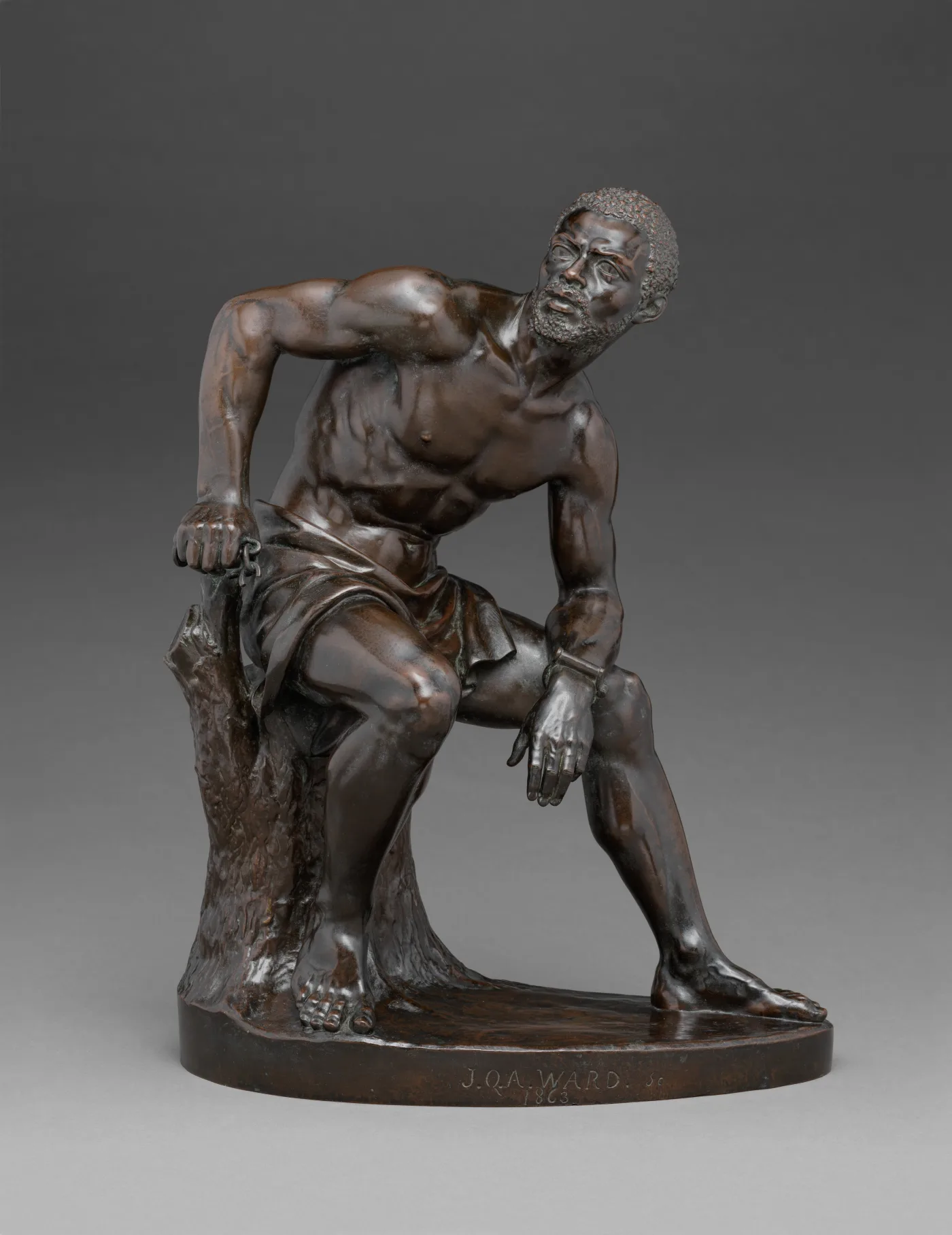
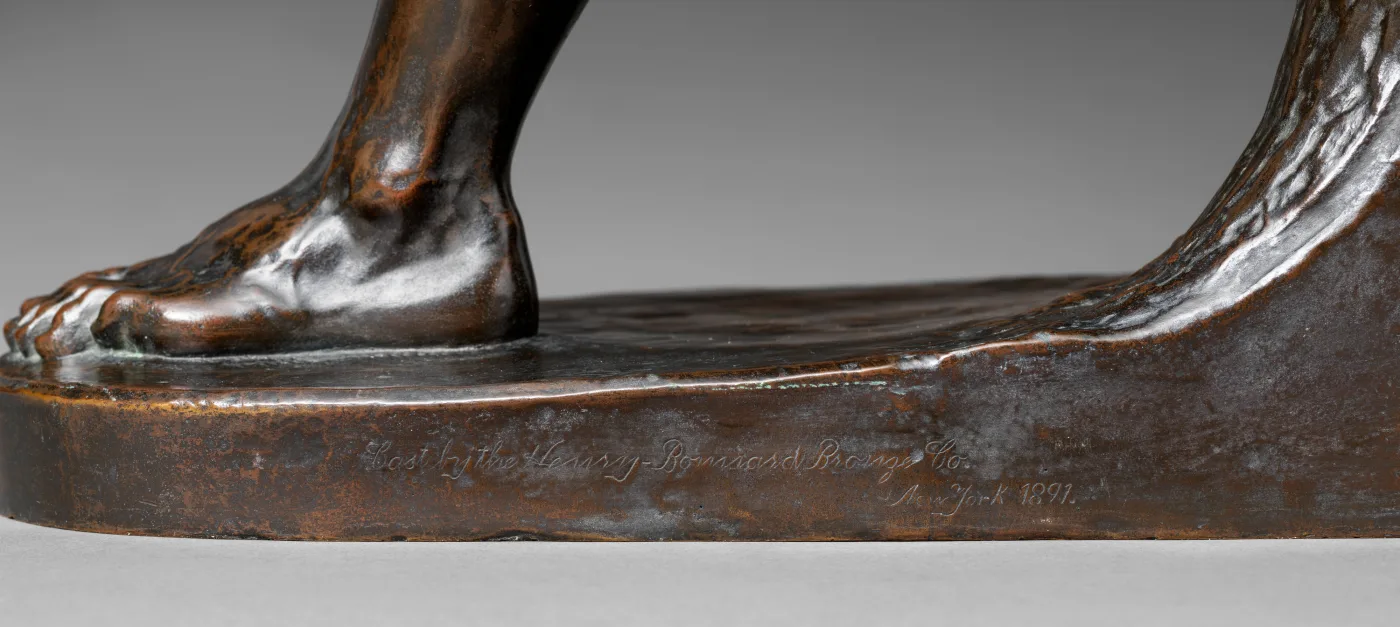
A popular model was cast again and again, sometimes for decades, and every cast carried the same signature and the same date. The Freedman shows it plainly. The front of the base reads 1863. The side of the same base reads “Cast by the Henry-Bonnard Bronze Co. New York 1891”. The Met catalogues it as “1863, cast 1891”: twenty-eight years apart, on one object.
We put six bronzes from the Metropolitan Museum's American collection side by side, each with the mark that is on it and the dates the museum gives for its model and its cast:
| Bronze | What the marks say | Model | This cast (Met) | Gap |
|---|---|---|---|---|
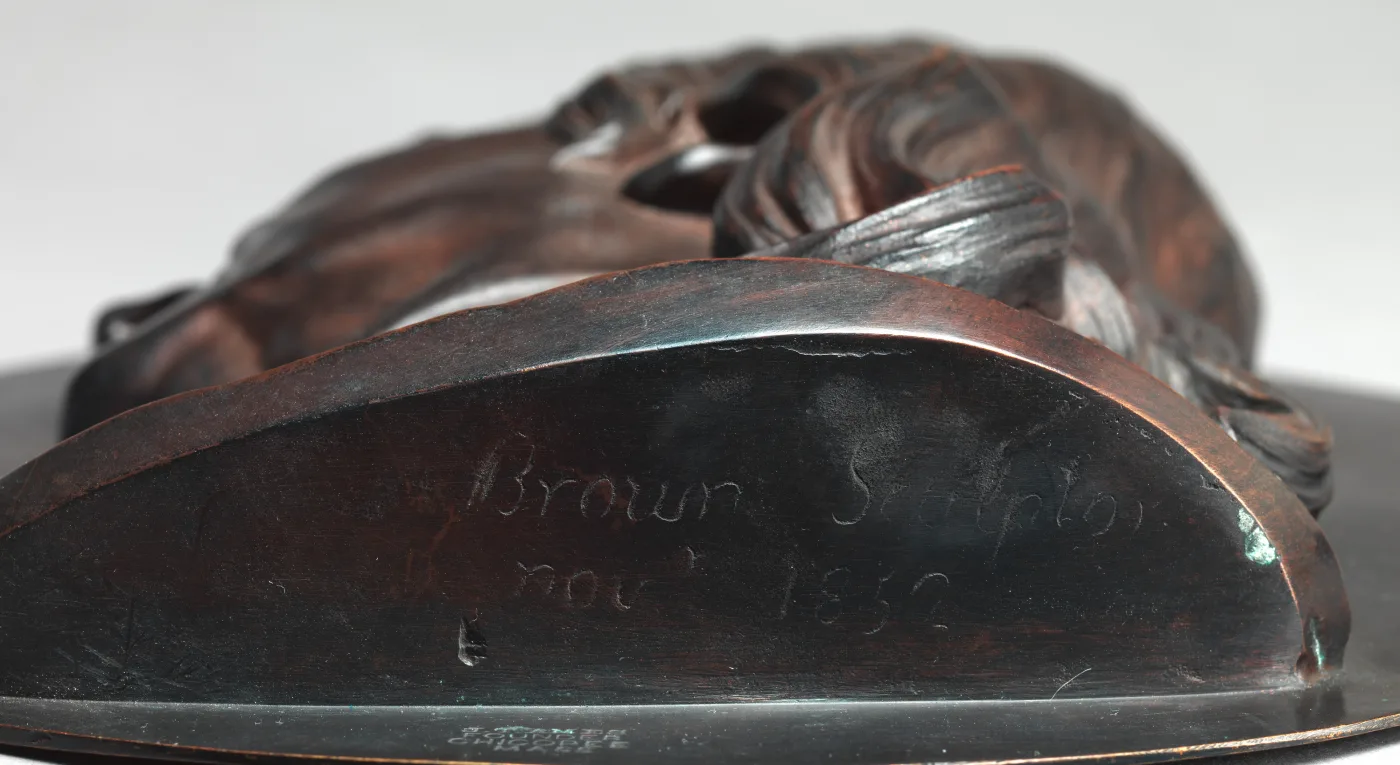
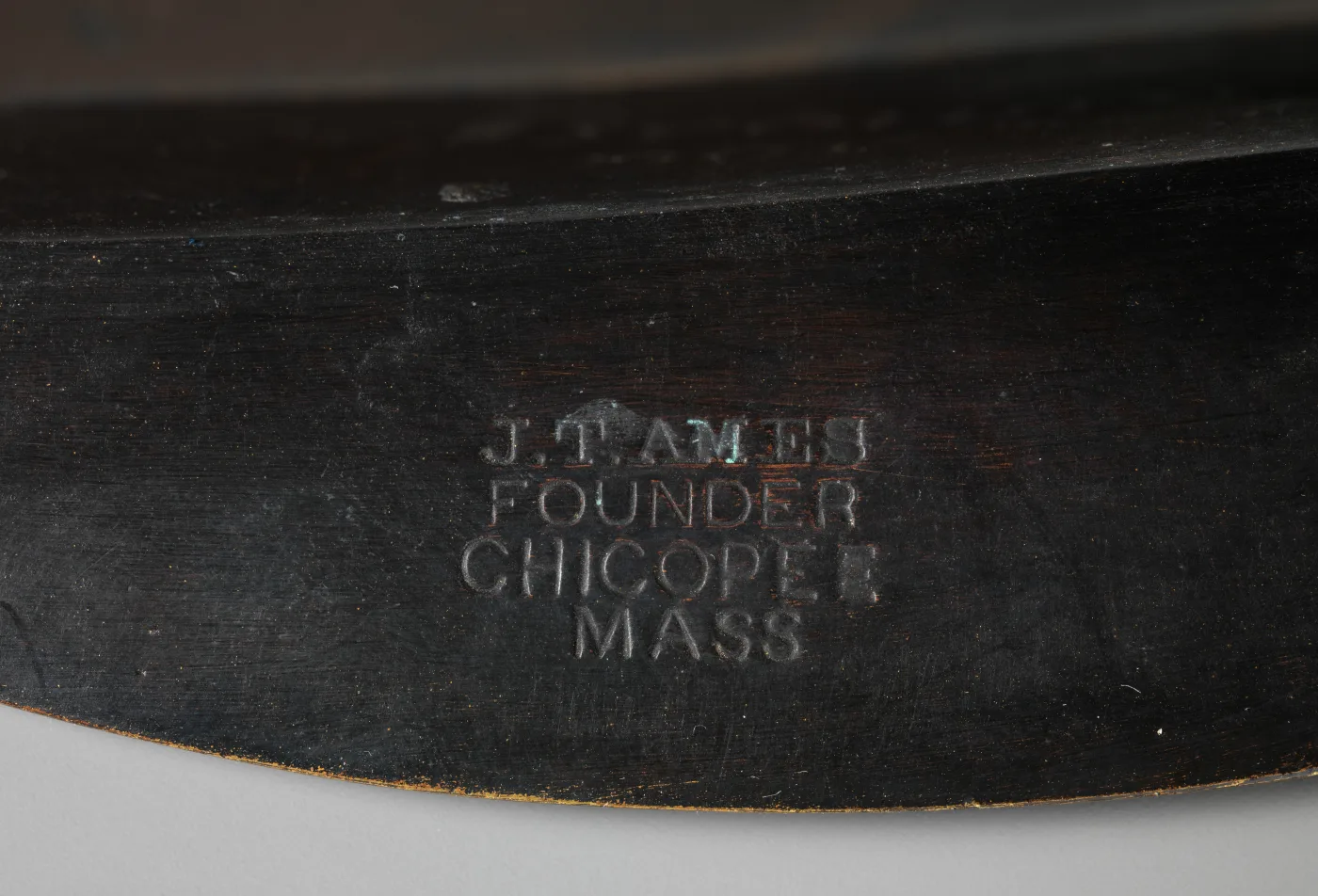
| H. K. Brown, Benjamin Franklin (medallion) | “Brown” and “Nov. 1852” scratched in; stamped “J.T. AMES FOUNDER CHICOPEE MASS” | 1852 | 1852 | none recorded |
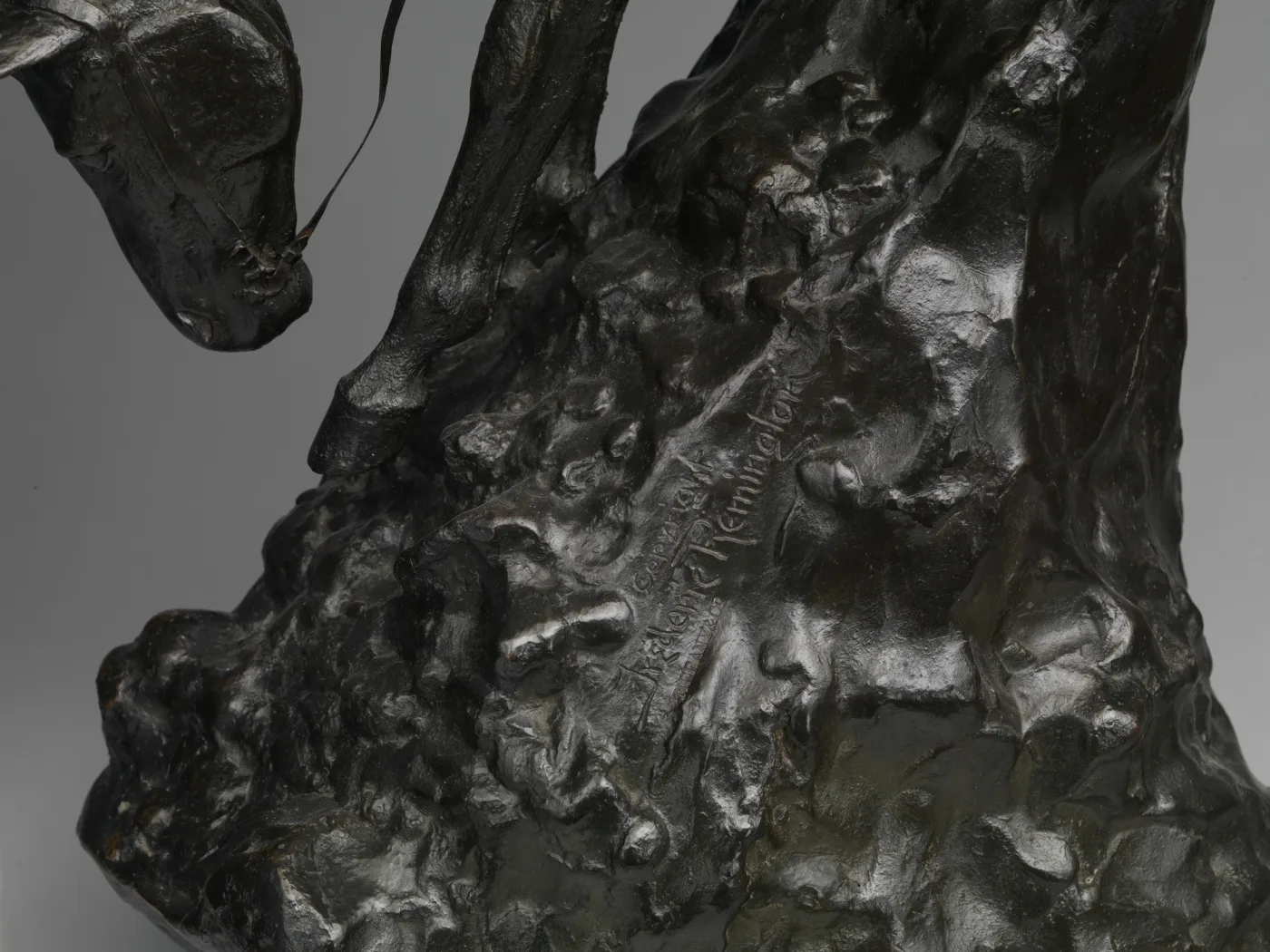
| Frederic Remington, The Mountain Man | “Copyright” and Remington's signature on the rock | 1903 | by March 1907 | up to 4 years |
| Frederic Remington, The Rattlesnake | “ROMAN BRONZE WORKS N.Y.” along the base | 1905, revised 1908 | before 1939 | unknown, up to 33 years |
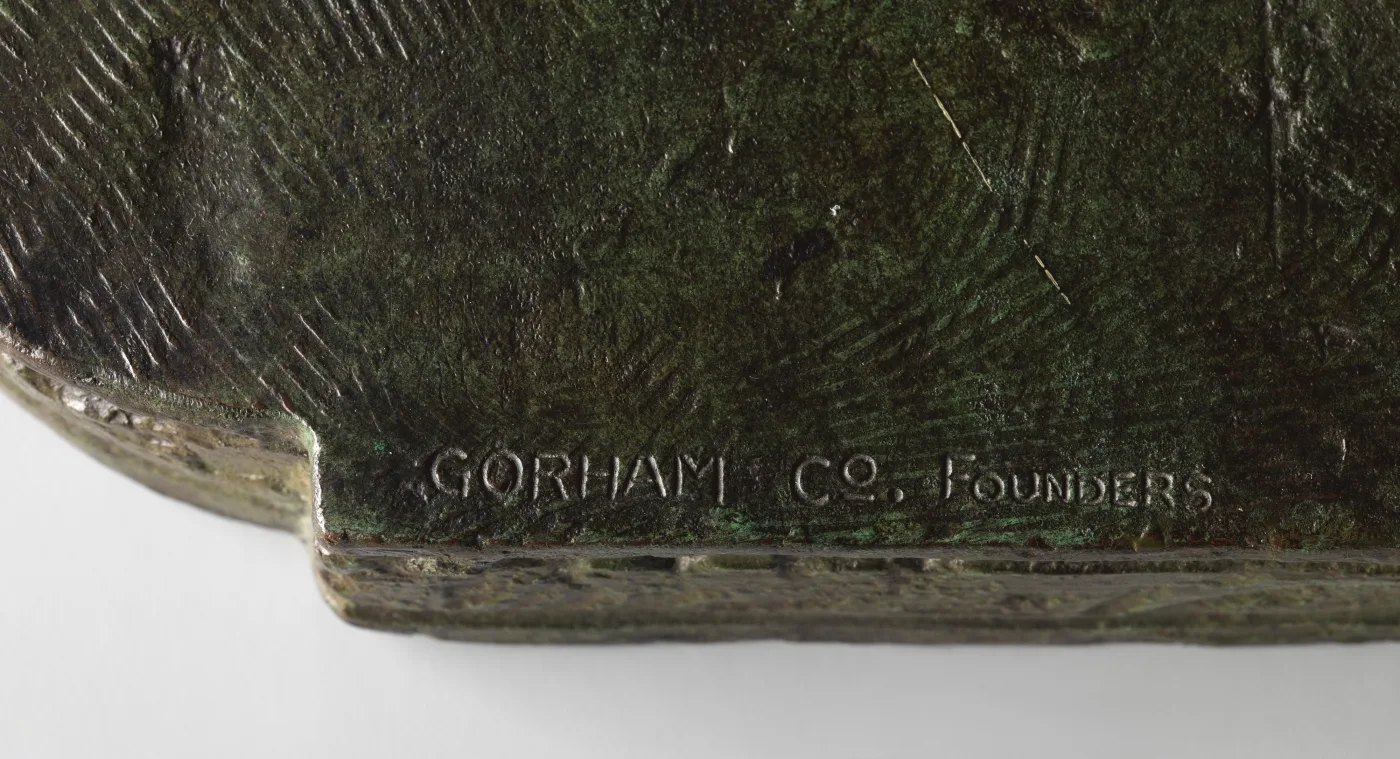
| J. Q. A. Ward, Henry Ward Beecher | “J.Q.A. Ward Sc.”, no date; “GORHAM CO. FOUNDERS” | 1891 | after 1910 | 19 years or more |
| Frederic Remington, The Broncho Buster | Remington's signature; Roman Bronze Works cast | 1895 | 1918 | 23 years |
| J. Q. A. Ward, The Freedman | “J.Q.A. WARD Sc 1863”; “Cast by the Henry-Bonnard Bronze Co. New York 1891” | 1863 | 1891 | 28 years |
Three things come out of the table. Only two of the six carry a date beside the signature, and only one of those, the Franklin, was cast that year. Two of them, the Beecher and the Broncho Buster, were cast after the sculptor had died: Ward in 1910 (the Met; Wikipedia) and Remington in 1909 (the Sid Richardson Museum; Wikipedia). And in every case where the gap is known, it was the foundry mark or the foundry's records, not the signature, that dated the cast. A signed and dated bronze with no foundry mark tells you when the model was made and nothing more.
Five Foundry Marks and the Years They Allow
A foundry mark dates a bronze only as closely as the foundry's own working life. Here are the five that appear most on American and French bronzes of the period, with the years that two or more sources give, and where they disagree.
| Mark as it reads | Foundry | Years | Method | Where sources disagree |
|---|---|---|---|---|
| “J.T. AMES FOUNDER CHICOPEE MASS” | Ames Manufacturing Co., Chicopee, Massachusetts | Statuary bronze from about 1850; James Tyler Ames ran the firm after his brother Nathan died in 1847 | — | The firm's own founding is given as 1829 (Wikipedia) and 1835 (SNAC). Neither affects a bronze, which is after 1847 either way. |
| “Cast by the Henry-Bonnard Bronze Co. New York” | Henry-Bonnard Bronze Co., New York | 1882–1926 in two museum records (Columbia Museum of Art; Birmingham Museum of Art) | Sand casting (the Met; Sid Richardson Museum) | No account of the closing found; 1926 is the museums' end date, not a documented one. |
| “GORHAM CO. FOUNDERS” | Gorham Manufacturing Co., Providence, Rhode Island | Bronze casting from the 1880s, beginning with church furnishings | — | Its first large statue, The Skirmisher at Gettysburg, is dated 1885 by the Archives of American Art and 1889 by Wikipedia. |
| “ROMAN BRONZE WORKS N.Y.” | Roman Bronze Works, New York | Closed 1988 (Wikipedia; museum records) | Lost wax, the first American foundry to specialise in it (Wikipedia; the Met; Center of the West) | Founded 1897 (Wikipedia; the Amon Carter Museum) or 1899 (Buffalo Bill Center of the West). Read the floor as 1897. |
| “F. BARBEDIENNE FONDEUR”, and on reductions a seal reading “Réduction mécanique A. Collas” | Barbedienne, Paris | From Barbedienne's partnership with Achille Collas in 1838 until 1952, the last decades under his nephew Gustave Leblanc | Collas's reducing machine of 1836 made the scaled-down copies | Barbedienne's death is put in 1891 by some accounts and 1892 by Wikipedia. |
Read a mark as a window, not a date. “ROMAN BRONZE WORKS N.Y.” puts a cast between 1897 and 1988, a ninety-year span. It becomes useful only next to a second clue: the model date, the sculptor's death, or a cast number. The Collas seal is a different kind of mark again. It says the bronze is a mechanical reduction of a larger work, a smaller copy made on Collas's machine, and it was used on reductions of other sculptors' models as well as antiquities. It is a mark of how the piece was made: “mécanique” refers to the machine, not to the casting, and the seal does not date the cast.
For French bronzes of the same years, the sculptor's name tells you about the style, which the Art Nouveau guide and the Art Deco guide cover; the foundry mark still decides the date. Garden-scale cast figures, often in iron or zinc rather than bronze, are in the garden statuary guide.

Remington Bronzes: Copyright, Foundry and Cast Number
Frederic Remington's bronzes show every one of these marks at work. Both the Met and the Sid Richardson Museum record the same sequence. His first bronzes, starting with The Broncho Buster in 1895, were sand cast by the Henry-Bonnard Bronze Co. From about 1900 he worked with Roman Bronze Works, which cast by lost wax and let him rework each wax before it was poured. Wikipedia gives an earlier start with Roman Bronze Works, 1898, so read the change as 1898 to 1901.
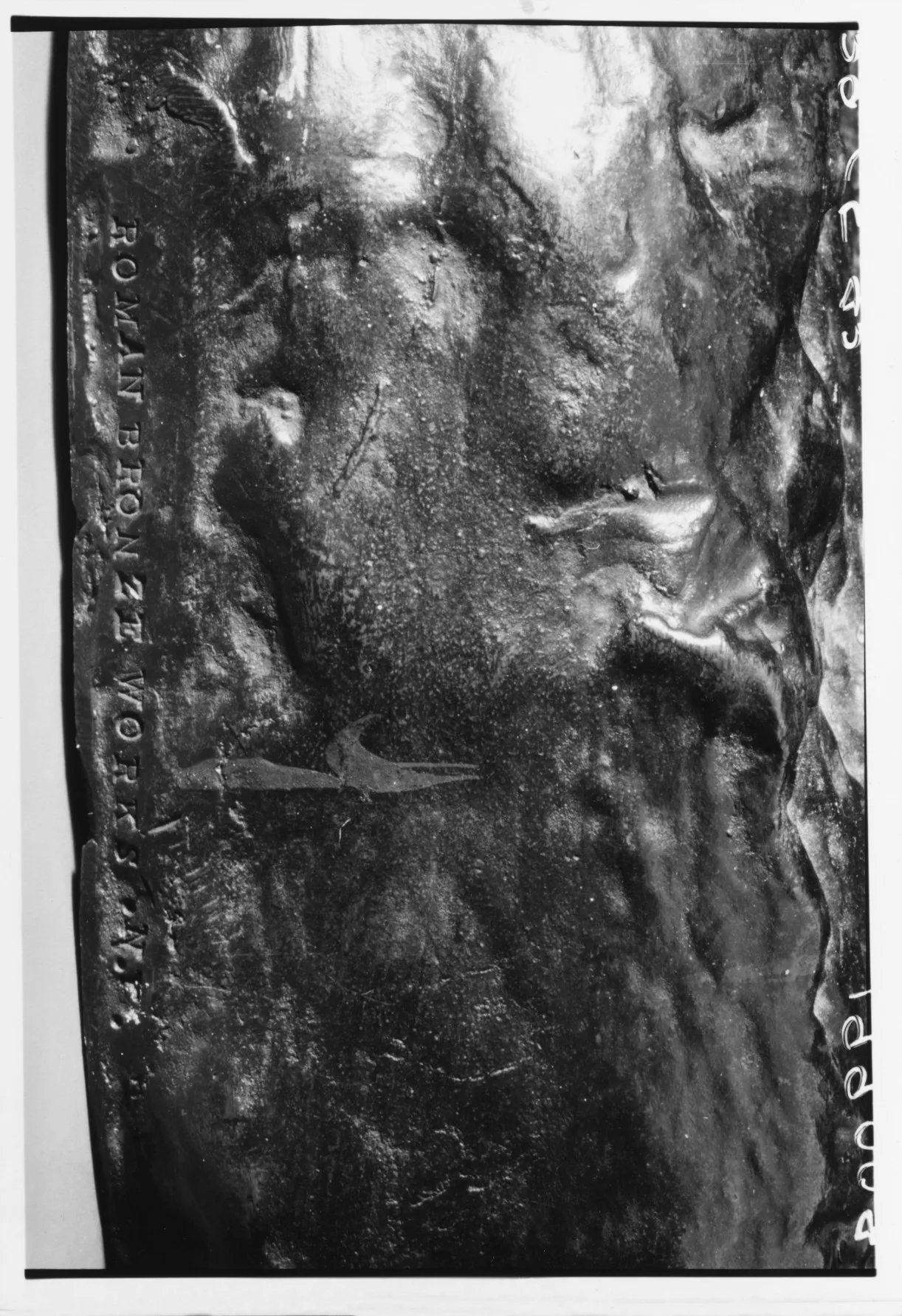
Three marks matter on a Remington:
- “Copyright” with the signature. Remington registered his models; the Sid Richardson Museum records that The Rattlesnake was registered on 18 January 1905. The word dates the model, not the cast.
- The foundry name. Henry-Bonnard points to the early sand casts of his first four models; Roman Bronze Works points to about 1900 or later.
- A cast number. Roman Bronze Works numbered its Remington casts and entered them in its ledgers. The Sid Richardson Museum cites The Rattlesnake as cast no. 5 of 1906 and no. 19 of 1910, and the Met records a Broncho Buster numbered 214 in the ledger on 31 December 1918. A number lets the foundry ledger date a cast to the year.
Casting went on after Remington died in 1909. The Sid Richardson Museum records his widow, Eva, supervising a casting he did not live to see, and the Met's Broncho Buster of 1918 is another posthumous cast. A genuine Roman Bronze Works Remington can therefore be posthumous, and the signature alone cannot tell you. Keep in mind too that a copy cast from an existing bronze takes its signature, copyright line and foundry name along with the rest of the surface, so a mark is evidence only when the casting quality and the number agree with it. The valuation and appraisal guide explains when to bring in an appraiser for that question.
Sand Cast or Lost Wax: Look Underneath
The foundry's method is a second check on its mark. A bronze stamped by a lost-wax foundry should look like a lost-wax cast, and the place to look is inside.
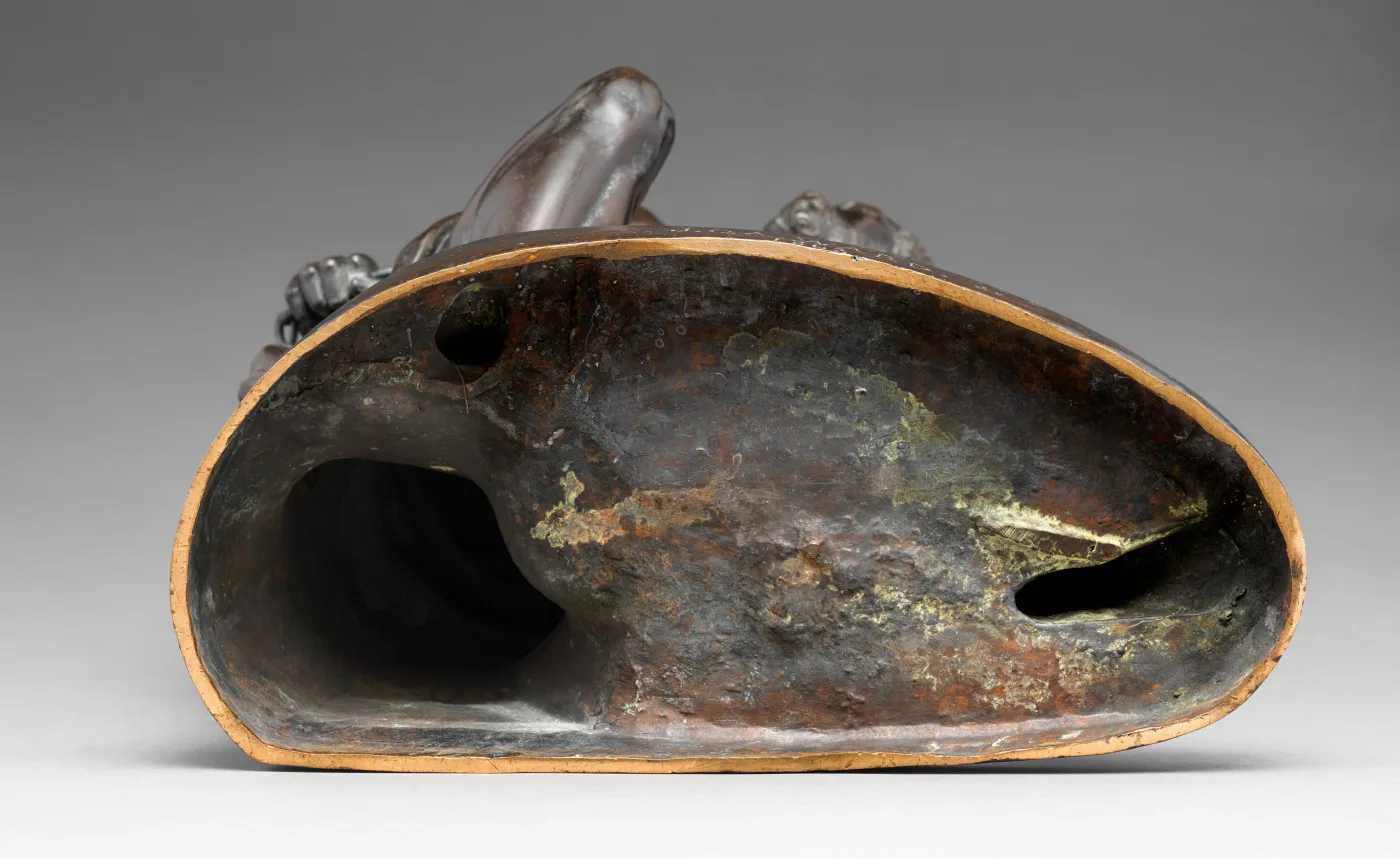
- The inside surface. The Getty's guidelines for the technical study of bronzes note that a smooth, soft-contoured interior often goes with lost wax, while a sand cast's interior tends to be more angular, shaped by a core pared down by hand.
- Joins and pins. Larger pieces were cast in sections and joined. Historic England describes sleeved, pinned or riveted joints on statues; on a statuette, look for a seam line where an arm or base meets the figure.
- “Cire perdue”. French for “lost wax”, sometimes stamped beside a foundry name. Both Wikipedia's entry on lost-wax casting and the Center of the West's foundry study read it that way.
None of these is conclusive alone. The Getty is explicit that the absence of the usual signs does not rule lost wax out, and that some sand casts have been mistaken for wax. Use the method as a consistency check on the mark, never as a substitute for it. For pricing what you find, the appraisal guide sets out which value to ask for and what to send; the photographs it lists apply to bronzes as well as furniture.
Frequently Asked Questions
Where is the foundry mark on a bronze sculpture?
Usually on the base: along its side or back edge, on the rear of the rocky ground, or underneath. It is often small and separate from the signature. A stamped name such as GORHAM CO. FOUNDERS or J.T. AMES FOUNDER, a raised name such as ROMAN BRONZE WORKS N.Y., or a script line such as Cast by the Henry-Bonnard Bronze Co. are all foundry marks.
Does the date on a bronze tell you when it was cast?
Not usually. A date beside the sculptor's signature is the year of the model, and it is repeated on every cast made from it. The Met's Freedman is signed and dated 1863 but was cast in 1891. The cast date comes from a dated foundry inscription, a cast number in the foundry's records, or the foundry's working years.
What does Sc. after a sculptor's name mean?
It is short for sculpsit, Latin for sculpted it, and marks the name as the sculptor's signature. Sculp. and Sculpt. mean the same. It identifies who made the model, not who cast the bronze or when.
What does Réduction mécanique A. Collas mean on a bronze?
It means the bronze is a mechanically reduced copy of a larger sculpture, made with the reducing machine Achille Collas invented in 1836 and cast by the Barbedienne foundry in Paris, his partner from 1838. It tells you how the piece was made rather than the year it was cast.
Can a Remington bronze cast by Roman Bronze Works be posthumous?
Yes. Roman Bronze Works went on casting Remington's models after his death in 1909; the Met's Broncho Buster was cast in 1918. The cast number, checked against the foundry's ledger, is what separates a lifetime cast from a later one.
The Short Version
Read the marks on a bronze separately. The signature names the sculptor, and a date beside it is the model's year. The foundry mark, and above all a dated foundry inscription or a cast number, is what dates the metal in front of you. Check the mark against the foundry's working years, against the sculptor's death, and against the way the inside of the bronze was cast. When they agree, the mark means something. When there is no foundry mark at all, the honest date is “cast after the model” and nothing narrower.