
Antique Waterford Crystal Identification Guide: Marks, Cut Patterns, and Irish Lead Crystal
Waterford is the name that, for most of the English-speaking world, means cut crystal. A Waterford bowl on the sideboard, a set of Waterford goblets brought out for special occasions, a Waterford vase given as a wedding present — these are objects that families keep, hand down, and ask about more than almost any other glass. The heavy, brilliantly cut, deeply sparkling lead crystal of Waterford has been a byword for Irish craftsmanship and luxury tableware for generations, and pieces turn up constantly in estates, at auction, and in the backs of china cabinets everywhere Irish glass was sold.
That very ubiquity is what makes Waterford confusing to identify. The name covers an eighteenth-century Georgian glasshouse, a famous twentieth-century revival that built the modern brand, decades of hand-cut Irish production, later machine-cut and overseas production under the same name, a separate "Marquis by Waterford" line, and an ocean of look-alike cut crystal from Bohemia, Germany, and elsewhere that gets hopefully called "Waterford" by sellers who do not know better. Telling genuine Waterford from its imitators — and telling old Irish-made Waterford from later production — is a matter of reading marks, recognizing patterns, and judging the weight, ring, and quality of the cutting.
This guide covers the whole field: the real history behind the name and why the 1783 date matters, how to find and read Waterford's acid-stamp and engraved marks, the major cut patterns (Lismore above all) and how to recognize them, how to date a piece, the all-important distinction between hand-cut and machine-cut crystal, the difference between "Waterford" and "Marquis," how to tell genuine Waterford from Bohemian and other look-alikes, the serious problem of fakes and misrepresentation, how to assess condition, and what actually drives value. Whether you have inherited a single goblet or a full service, this guide will help you tell what you have.
Table of Contents
- A Brief History of Waterford Crystal
- What Lead Crystal Actually Is
- Marks and Signatures: Reading the Acid Stamp
- Dating Waterford by Its Marks
- The Major Cut Patterns
- Lismore: The Pattern That Built the Brand
- Reading the Cutting: Hand-Cut vs. Machine-Cut
- Forms: Stemware, Bowls, Vases, and Giftware
- Waterford vs. Marquis by Waterford
- Georgian and Antique Irish Glass
- Waterford vs. Bohemian and Other Look-Alikes
- Fakes, Forged Marks, and Misrepresentation
- Condition Assessment
- What Drives Value
- Care, Cleaning, and Display
- Common Beginner Mistakes
- Frequently Asked Questions
A Brief History of Waterford Crystal
The Waterford story is told in two chapters separated by almost a century of silence, and understanding both is essential to identification, because they produced entirely different glass.
The Original Georgian Glasshouse (1783–1851)
The first Waterford glasshouse was founded in the port city of Waterford, Ireland, in 1783 by George and William Penrose. It made fine flint (lead) glass — tableware, bowls, decanters, and the deeply cut wares fashionable in the late eighteenth and early nineteenth centuries. This original firm produced the Georgian and Regency Irish glass that serious antique collectors still prize, much of it never marked. Heavy excise duties on glass, and later the removal of protective tariffs, made the business unprofitable, and the original Waterford works closed in 1851. For roughly the next hundred years, no crystal was made in Waterford at all.
The Twentieth-Century Revival (from 1947)
The Waterford brand that almost everyone owns today descends not from the Georgian firm but from a mid-twentieth-century revival. In the late 1940s a new glassworks was established at Waterford, recruiting skilled Continental glassmakers and cutters to rebuild the craft from scratch. Production grew through the 1950s and 1960s into one of Ireland's great industrial and cultural successes; by the late twentieth century "Waterford Crystal" was a global luxury brand, famous for hand-cut lead crystal stemware, bowls, vases, and high-profile commissions (the New Year's Eve ball in Times Square among them).
Modern Restructuring and Global Production
In 2009 the parent group entered receivership, and the brand and its production were reorganized under new ownership. A visitor center and limited specialist production continued in Waterford, but a great deal of crystal sold under the name in the modern era is made elsewhere in Europe and beyond. For the collector this matters: a piece marked "Waterford" may be hand-cut Irish crystal from the brand's golden decades, or later machine-assisted crystal made outside Ireland. The mark tells you the brand; the cutting, weight, and details tell you which kind of Waterford you actually have.
Why the Two Chapters Matter
When a piece is called "antique Waterford," it is worth asking which Waterford is meant. True antique (pre-1851) Irish Waterford is rare, usually unmarked, and a specialist field. The overwhelming majority of "Waterford" in circulation is twentieth-century revival crystal — collectible, desirable, and the subject of most of this guide. Conflating the two leads to wildly mistaken expectations about both rarity and value.
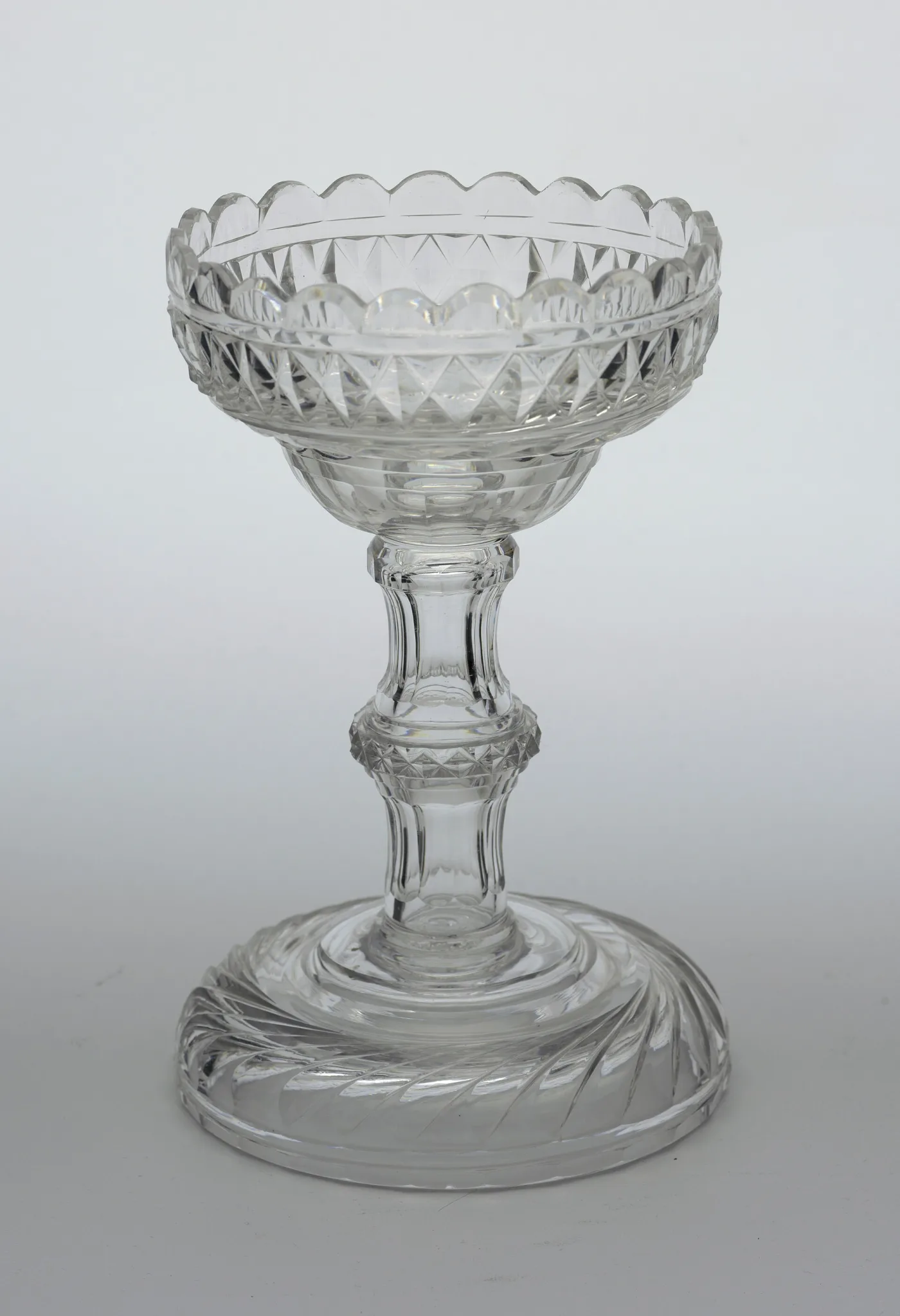
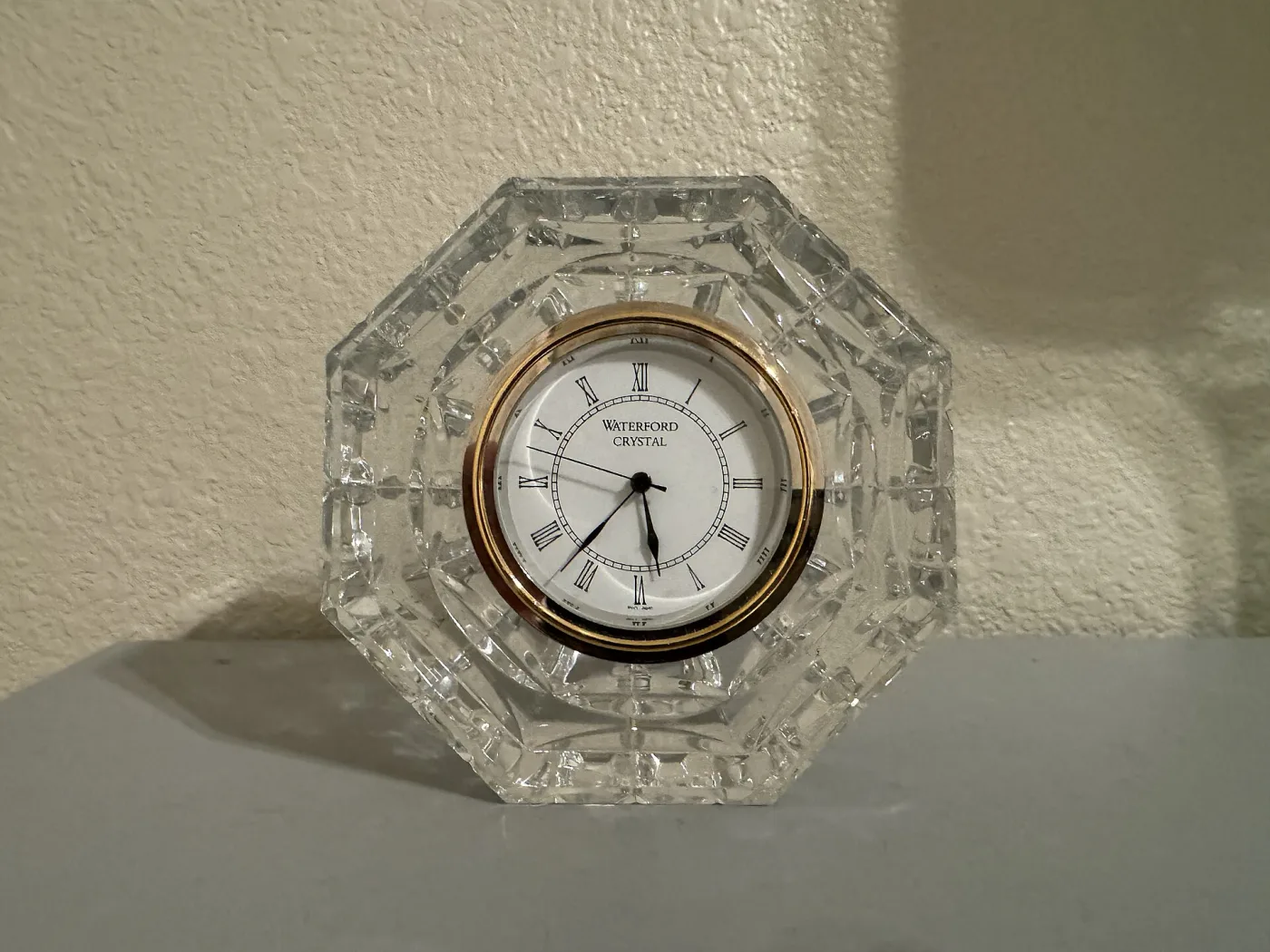
These two objects are both routinely described as "Waterford," and almost everything separates them. The sweetmeat glass is period Irish glass from the years the Penrose firm was trading — but nothing on it says Waterford, and it could equally be Cork, Dublin, or English. The clock announces the brand on its dial and is unambiguous about what it is, but it is a mass-produced gift item from the revival era, not an antique. Notice which one carries the name and which one carries the age: on this subject, they are almost never the same object.
What Lead Crystal Actually Is
Waterford's brilliance is not an accident of cutting alone; it begins with the glass itself. Understanding lead crystal helps you judge whether a piece has the right character to be Waterford.
Lead Content and Brilliance
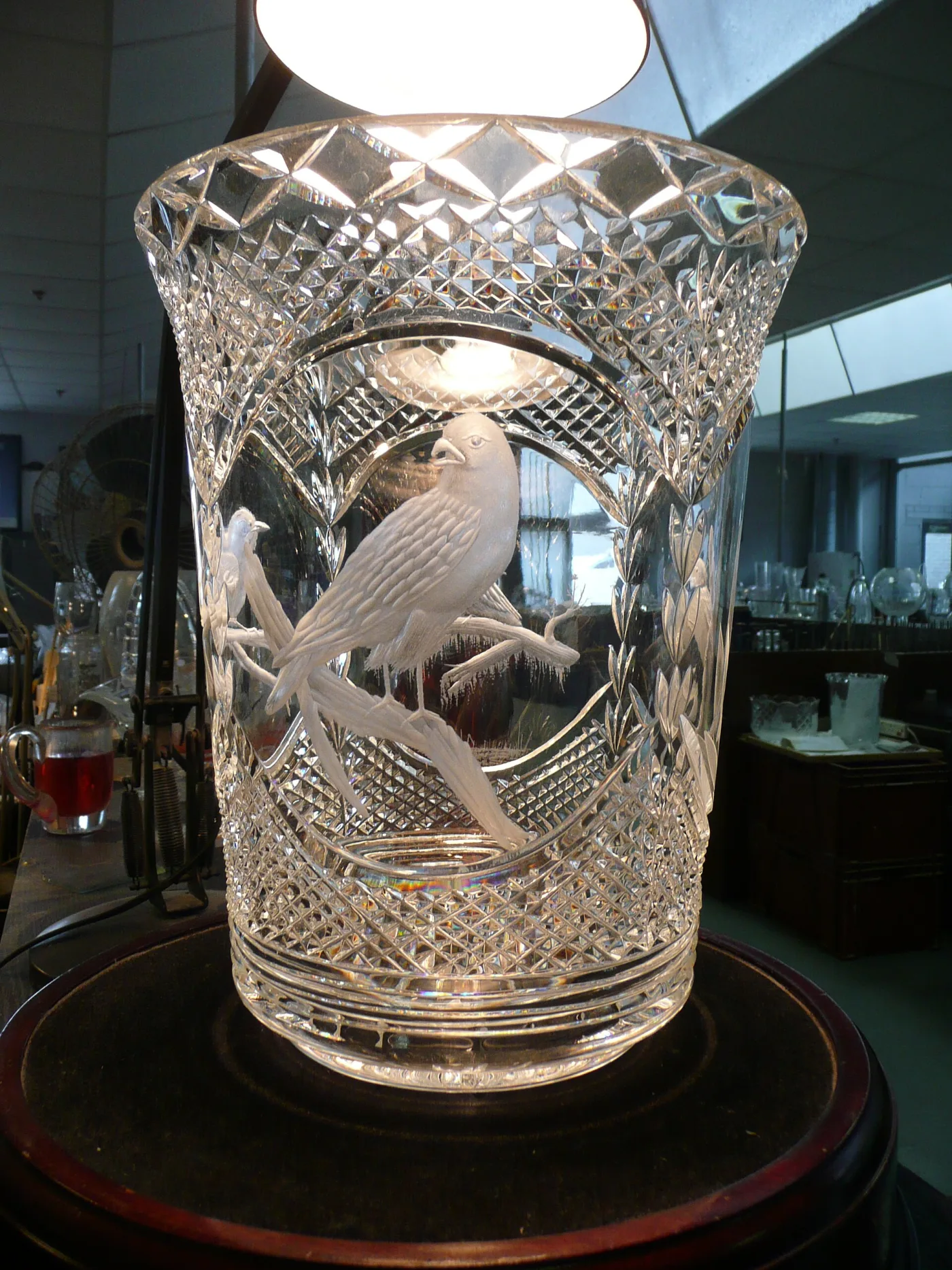
"Crystal," in this context, means glass with a significant lead-oxide content (traditionally 24% or more for "full lead crystal"). The lead raises the refractive index, so the glass bends and splits light more strongly, producing the fiery rainbow sparkle in the facets of a cut piece. It also makes the metal softer and easier to cut cleanly and to polish to a high shine, which is exactly what deep diamond and wedge cutting require.
Weight and Ring
Lead crystal is noticeably heavier than ordinary soda-lime glass of the same size — a genuine Waterford goblet has a reassuring heft. Tapped gently, full lead crystal gives a clear, sustained, bell-like ring rather than a dull clink. Neither test is conclusive on its own (some non-lead "crystal" rings well, and weight varies by form), but together, heft and a long musical ring are consistent with quality lead crystal and inconsistent with cheap pressed glass.
Clarity and Color
Good lead crystal is exceptionally clear and colorless, without the greenish or grayish cast of cheaper glass. Hold a piece to white paper or daylight: fine Waterford is water-clear. A distinct green, gray, or straw tint suggests lower-quality glass or a different maker. (This colorless brilliance is the opposite of the deliberately colored art glass discussed in our cranberry glass and uranium glass guides, where the color itself is the point.)
Crystal Within the Wider Glass Family
Cut lead crystal sits within the larger world of decorative glass, and the same vocabulary of cuts, blanks, and finishing appears across makers. For the broader principles of identifying glass of every kind — pressed, blown, molded, and cut — our general antique glass identification guide provides the foundation on which Waterford-specific identification builds.
Marks and Signatures: Reading the Acid Stamp
The mark is the single most direct piece of evidence, but Waterford marking has changed several times, much genuine old Irish glass is unmarked, and marks have been faked — so the mark must always be weighed against the cutting and quality.
Where to Look
Waterford marks are almost always on the base. On stemware, check the underside of the foot; on bowls, vases, and giftware, check the center or edge of the base. Marks are usually small and lightly etched, so examine the base under raking light and, ideally, a loupe. Wipe the base clean first — marks are easily hidden by dust, fingerprints, or wear.
The Acid-Etched Logo Stamp
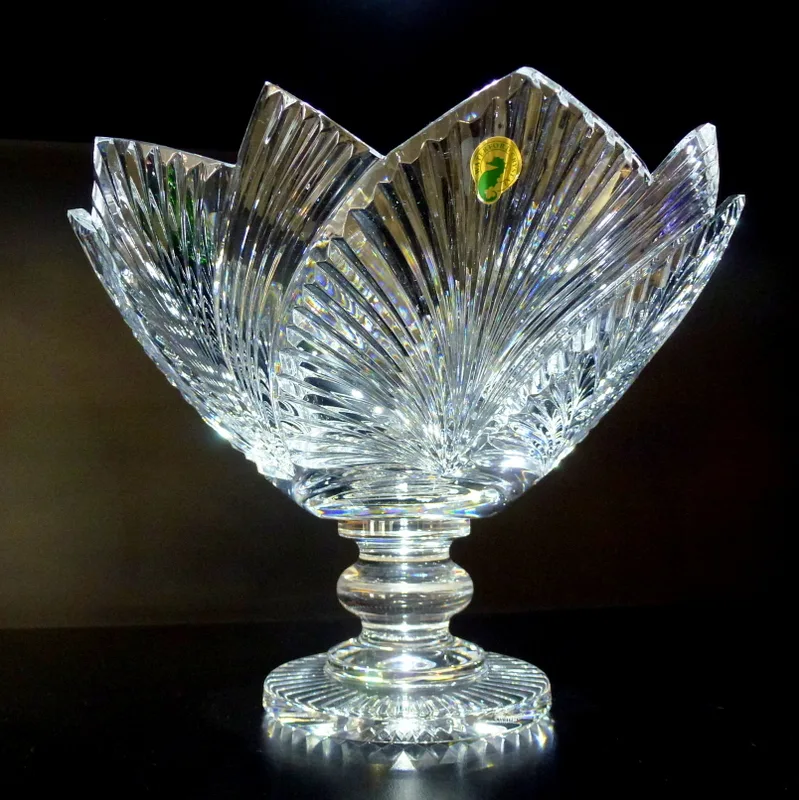
The most common modern Waterford mark is an acid-etched (lightly frosted) logo on the base. For much of the brand's history this took the form of a small "Waterford" script or block name, sometimes accompanied by the seahorse device that is the company's emblem, or a gothic/old-English style mark. The stamp is etched into the glass, not printed or applied as a sticker, and has a soft, satiny appearance under angled light.
The Seahorse Emblem
Waterford's heraldic seahorse appears in various forms across the brand's marks and packaging and is a useful confirming detail. A seahorse incorporated into an etched base mark is consistent with genuine Waterford; however, the emblem alone, without the name, should be treated cautiously, since look-alike makers and fakers have used similar devices.
Engraved and Later Marks
Some pieces carry a finely engraved (rather than acid-etched) "Waterford" signature, and later production has used updated logo styles. The exact font, the presence or absence of the seahorse, the wording (for example, whether "Ireland" appears), and the etching technique all vary by period and are the raw material for dating, covered next.
Original Paper Labels
Waterford pieces were also sold with paper or foil labels. A surviving original label is a nice bonus but is not by itself proof — labels can be moved between pieces, and reproduction labels exist. Treat a label as supporting evidence alongside the etched mark and the quality of the glass, never as a substitute for them.
Unmarked Genuine Waterford
Crucially, not every genuine Waterford piece is marked, and almost no pre-1851 Irish Waterford is. Older revival pieces, certain forms, and pieces where the mark has worn away all exist. Absence of a mark does not prove a piece is not Waterford — it means identification must rest on the cutting, weight, clarity, and pattern. Conversely, a crude or wrong-looking mark on doubtful glass is more suspicious than no mark at all.
Dating Waterford by Its Marks
Because Waterford changed its marks and methods over time, the mark and the way a piece is finished together place it within the brand's history.
Mark Style and Technique
The style of the etched logo (script vs. block vs. gothic), whether the seahorse is present, and the wording have evolved across the revival era and into modern production. Earlier revival marks differ from later ones, and modern marks differ again. While exact mark chronology is a specialist study, the general principle is that simpler early marks, hand-finishing, and the absence of modern logo styling point earlier, while polished modern logos and machine-finishing point later.
The Hand-Cut vs. Machine-Cut Watershed
The most useful dating distinction is not a date stamp but the method of manufacture. The brand's golden decades produced hand-blown, hand-cut crystal; later and modern production increasingly used machine-assisted cutting and overseas manufacture. A piece that is unmistakably hand-cut (see the cutting section below) and carries an older-style mark is older Irish Waterford; a piece with very regular, machine-precise cutting and a modern mark is later production. This watershed matters more to value than a precise year.
Country-of-Origin Wording
The presence or absence of "Ireland" or other country wording in the mark or on labels can help, since production has not always been Irish. Such wording is one clue among several and should be read together with the cutting and the mark style rather than relied upon alone.
Pattern Introduction Dates
Named patterns were introduced at known points and discontinued or revised later, so identifying the pattern narrows the date. A long-running pattern like Lismore brackets a piece loosely (it has been made for decades), while a pattern with a shorter production life dates a piece more tightly. Matching the pattern to documented introduction information is a practical dating tool, much as shape and pattern references date early American pattern glass.
The Major Cut Patterns
Waterford crystal is organized, bought, and sold by named pattern. Recognizing the major patterns by sight is central to identification, because a pattern name plus a form is how pieces are matched, replaced, and valued.
How Patterns Work
A Waterford "pattern" is a specific scheme of cuts — the arrangement of diamond (cross-hatched) cutting, vertical and wedge miter cuts, fan cuts, and plain panels — applied consistently across a whole range of forms (wine glasses, tumblers, bowls, vases, and so on). The same pattern name therefore links a goblet to a matching bowl. Learning to read the cut scheme lets you name the pattern even when a piece is unmarked.
Lismore
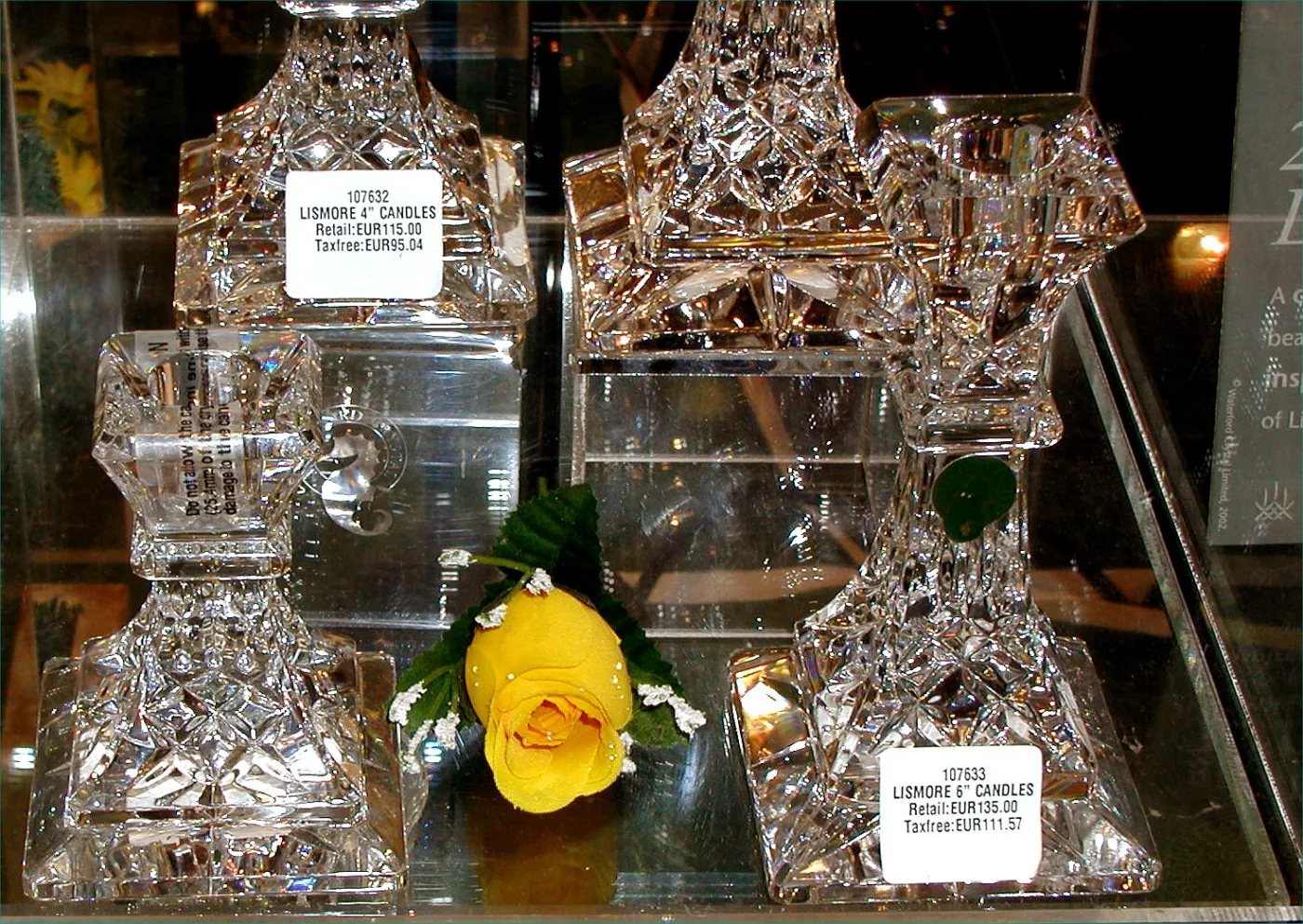
Lismore is by far the most famous and widely produced Waterford pattern — a scheme of alternating diamond (cross-cut) wedges and tall vertical wedge cuts that catch the light brilliantly. It is covered in detail in its own section below, because so many inherited pieces turn out to be Lismore.
Colleen
Colleen is another classic and long-popular pattern, with a band of cut diamonds above vertical fluting and cutting, giving a rich, busy, all-over sparkle. It is one of the patterns most often confused with Lismore by newcomers, though the arrangement of the cuts differs.
Alana
Alana features a distinctive scheme combining cut panels and diamond cutting in a more vertical, paneled arrangement. Like Colleen and Lismore, it appears across a full range of stemware and giftware and is a frequently encountered classic pattern.
Kylemore, Tramore, Maeve, and Others
Waterford produced many additional named patterns — among them Kylemore, Tramore (also associated with the name Maeve), Glandore, Powerscourt, and Comeragh — each with its own cutting scheme. Some are highly cut and ornate; others are more restrained. Identifying the exact pattern usually means comparing the cut scheme against a reference of named Waterford patterns, since the differences can be subtle.
Why the Pattern Matters
Pattern identification is not academic: replacement pieces, matching services, and resale all depend on naming the pattern correctly. A single goblet is worth far more to someone completing a Lismore set than as anonymous "cut crystal," so naming the pattern is often the difference between a modest and a meaningful value.
Lismore: The Pattern That Built the Brand
No discussion of Waterford is complete without Lismore, the pattern most responsible for the brand's worldwide fame and the one most likely to be sitting in an inherited box.
What Lismore Looks Like
Lismore is defined by a rhythmic alternation of two cuts: panels of fine cross-cut diamonds (a grid of tiny pointed pyramids) set between tall, deep vertical wedge (miter) cuts. The effect is a regular, vertical, intensely sparkling pattern that runs around the bowl of a glass or the body of a vase. Once you have seen Lismore, its alternating diamond-and-wedge rhythm is easy to recognize.
Why It Became Ubiquitous
Introduced in the mid-twentieth century, Lismore became the brand's signature pattern and was produced in an enormous range of forms — every size of wine glass, tumblers, decanters, bowls, vases, bells, clocks, lamps, picture frames, Christmas ornaments, and countless giftware items. Because it was made in such quantity for so long, Lismore is the Waterford pattern most often inherited and most often asked about.
Lismore Variants
Over the decades Lismore spawned variants — lighter, contemporary, and reworked versions with modified cutting or proportions, sold under names that extend the Lismore family. These later variants are generally machine-assisted and lighter than the classic hand-cut Lismore, and they trade differently. Distinguishing classic hand-cut Lismore from later variants comes down to weight, the crispness and depth of the cutting, and the mark.
Value Implications of Ubiquity
Because so much Lismore was made, common forms (a single wine glass, a small dish) are modest in value despite the famous name. Value concentrates in complete sets, larger and more elaborate forms (large bowls, decanters, statement vases), and earlier hand-cut examples. The name "Lismore" guarantees recognition, not rarity, so condition, form, completeness, and whether a piece is early hand-cut all matter more than the pattern name alone.

Reading the Cutting: Hand-Cut vs. Machine-Cut
The character of the cutting is the heart of Waterford identification and the key to separating early, hand-cut Irish crystal from later, machine-assisted production — and from cheap pressed-glass imitations.
The Feel and Sharpness of Hand Cuts
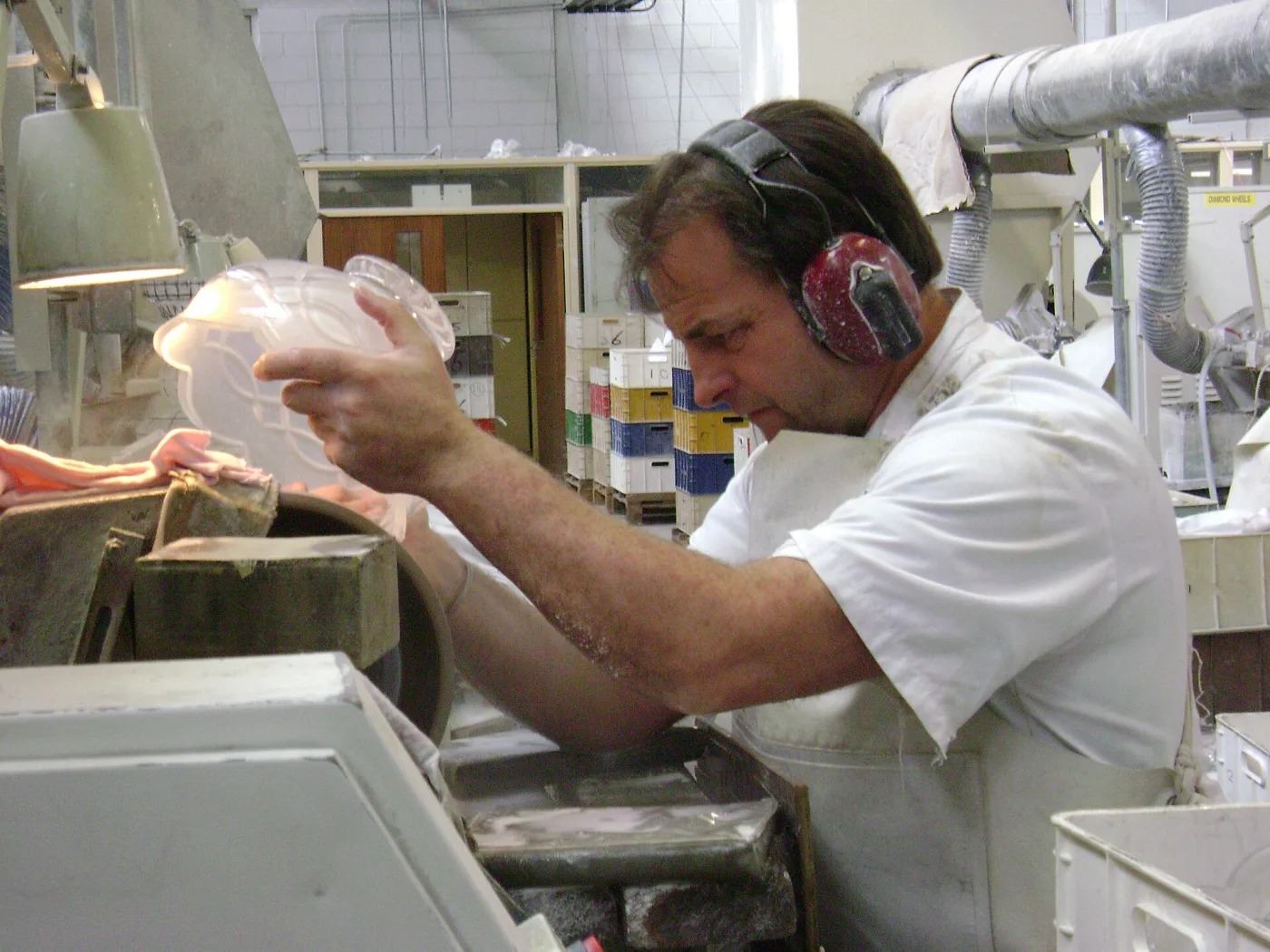
Hand-cut crystal is cut against rotating wheels by a skilled cutter, then acid-polished or hand-polished. The cuts are crisp and sharp to the fingertip, with clean, well-defined intersections where miter cuts cross. Run a fingernail across the diamonds: real hand cutting has a slightly irregular, hand-made vitality and genuinely sharp edges, not the soft, rounded contours of molded glass.
Pressed (Molded) Imitation
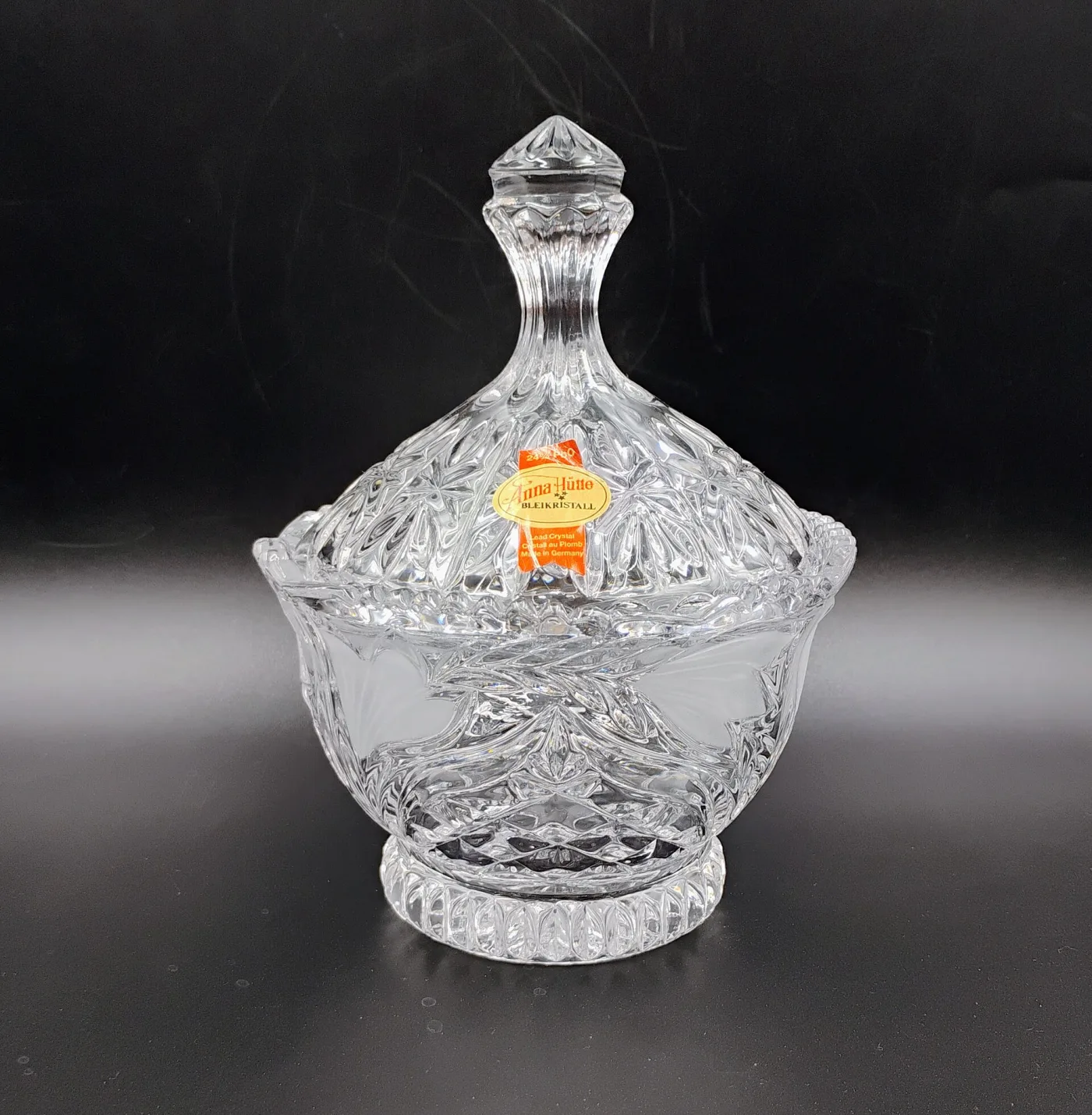
The crudest fakes are not cut at all but pressed in a mold to imitate cutting. Molded "cuts" are rounded and dull rather than sharp, the pattern is perfectly uniform with no hand variation, and there are usually mold seams running up the piece. A pressed imitation feels smooth where real cutting feels sharp, and it lacks the deep brilliance of acid-polished lead crystal. (Pressed glass is a legitimate category in its own right, as our pattern glass guide explains — the problem is only when pressed glass is passed off as cut crystal.)
Machine-Cut vs. Hand-Cut Crystal
Between fully hand-cut and merely pressed lies machine- or computer-assisted cutting, used in much later Waterford and look-alike production. Machine cutting is real cutting and can be sharp, but it tends to be almost perfectly regular and mechanical, lacking the tiny variations of hand work; intersections are uniform, and the overall effect can look slightly "too perfect." Early hand-cut Waterford shows subtle irregularities that, paradoxically, signal higher quality and greater value.
Polishing and the Pontil
Hand-blown crystal often shows a polished pontil mark (a smoothed area on the base where the glass was held during blowing). Acid polishing gives cuts a smooth, glossy finish; over-aggressive acid polishing can slightly soften crisp cuts, so the best pieces balance sharpness and shine. Examining the base for a polished pontil and the cuts for hand-made crispness together tells you a great deal about how a piece was made.
Forms: Stemware, Bowls, Vases, and Giftware
Waterford was made in a vast range of forms, and the form strongly affects both identification and value.
Stemware
Stemware — wine glasses, goblets, champagne flutes and coupes, sherries, brandies, water goblets, and tumblers — is the most common Waterford. Each pattern was made in graduated sizes, so a "set" spans several glass shapes. Matching the pattern and the exact size is what allows pieces to be replaced and sets to be completed.
Bowls and Centerpieces
Cut crystal bowls — from small berry and nut dishes to large fruit and centerpiece bowls — are a Waterford staple and a frequent gift item. Large, deeply cut bowls are among the more valuable common forms because of the quantity of crystal and cutting involved.
Vases and Decanters
Vases (from small bud vases to tall statement pieces) and decanters with cut stoppers are prominent Waterford forms. A decanter must have its original matching stopper — stoppers and bottles were ground to fit individually, so a replacement rarely seats perfectly and reduces value. The world of cut decanters overlaps with our decanters and carafes guide and with the broader barware and drinkware collected alongside fine crystal.
Giftware and Novelty Items
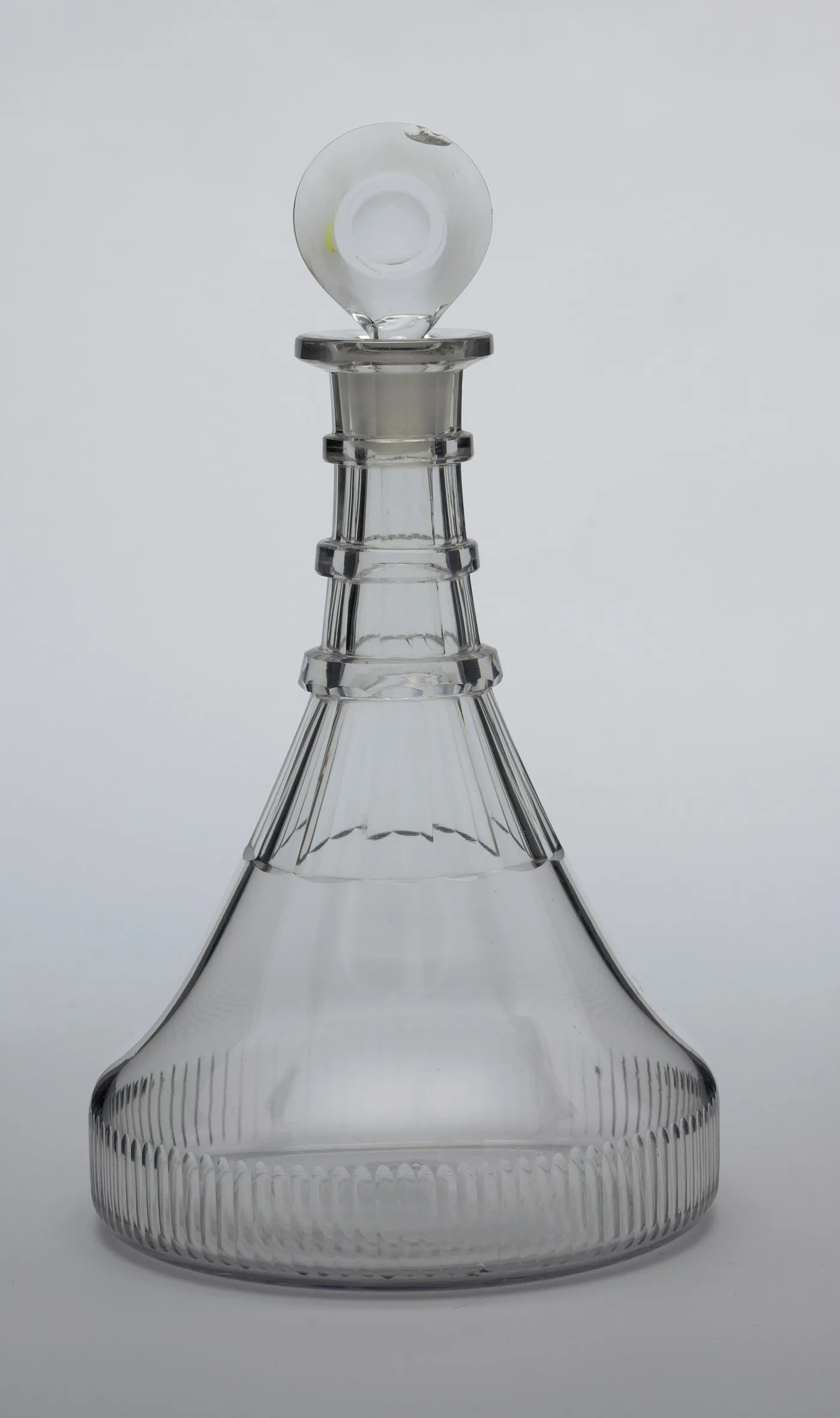
From the 1970s onward Waterford produced enormous quantities of giftware: bells, clocks, lamps, picture frames, paperweights, Christmas ornaments, golf and sports trophies, and commemorative pieces. These were affordable luxury gifts, made in large numbers, and most are modest in value today despite the name. The crystal paperweights overlap with the wider field covered in our paperweights identification guide.
Lamps, Chandeliers, and Large Pieces
Waterford also made cut-crystal lamps, chandeliers, and architectural and presentation pieces. These large and complex items can be valuable but are also the most vulnerable to damage and to having parts replaced, so completeness and condition are paramount.
Waterford vs. Marquis by Waterford
One of the most common points of confusion is the relationship between "Waterford" and "Marquis by Waterford," and getting it right matters for value.
What Marquis Is
Marquis by Waterford is a separate, more contemporary and more affordable line introduced under the Waterford umbrella. It typically features cleaner, more modern designs and is generally machine-made crystal produced for a lower price point than the traditional hand-cut Waterford range. It is genuine Waterford-brand product, but it is positioned and priced below the classic line.
How to Tell Them Apart
The mark is the clearest guide: Marquis pieces are marked "Marquis" (often "Marquis Waterford" or "Marquis by Waterford"), not simply "Waterford." The designs also tend to be more modern and minimal, and the crystal is usually machine-cut with very regular patterning rather than the deep, traditional hand cutting of classic Waterford. If the base says "Marquis," it is the Marquis line, regardless of how Waterford-like it looks.
Value Difference
Because Marquis is a more affordable, machine-made line, it generally commands lower prices than comparable classic hand-cut Waterford. Describing Marquis simply as "Waterford" (omitting the Marquis name) overstates what a piece is; conversely, dismissing it as "not real Waterford" is also wrong, since it is a genuine brand line. Accurate description — naming it as Marquis — is the honest and correct approach.
Georgian and Antique Irish Glass
True antique Waterford — glass from the original 1783–1851 firm — is a specialist field quite separate from the revival brand, and it deserves its own caution.
Mostly Unmarked
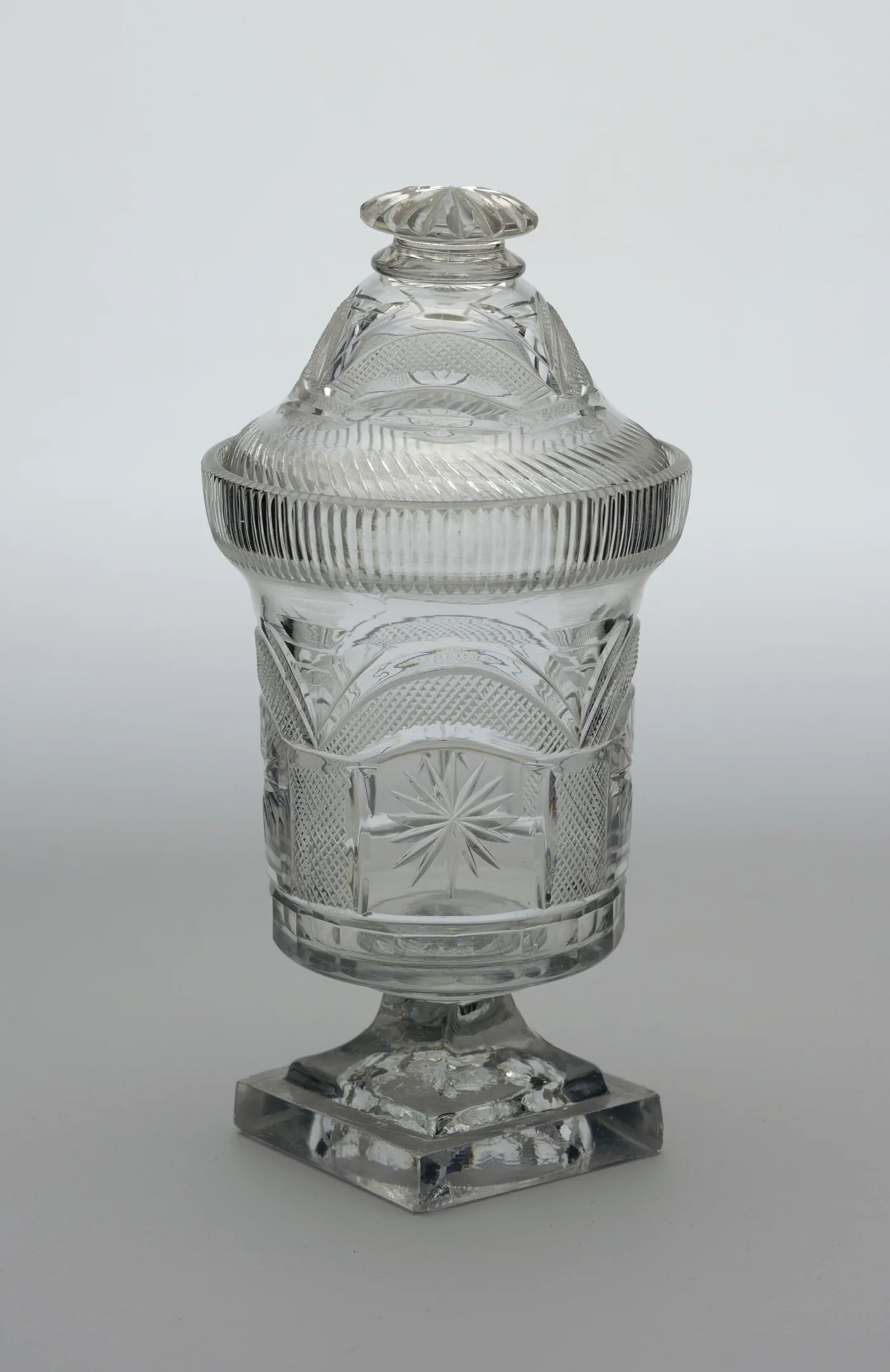
The original Waterford works did not routinely mark its glass, and a few rare moulded-base examples notwithstanding, most genuine Georgian Irish glass is unmarked. This means that a great deal of so-called "antique Waterford" attributed by sellers is in fact unattributable Irish or English flint glass of the period — possibly Waterford, possibly Cork, Dublin, or English. Firm attribution to Waterford specifically is difficult and usually requires expert opinion.
Characteristics of Period Irish Glass
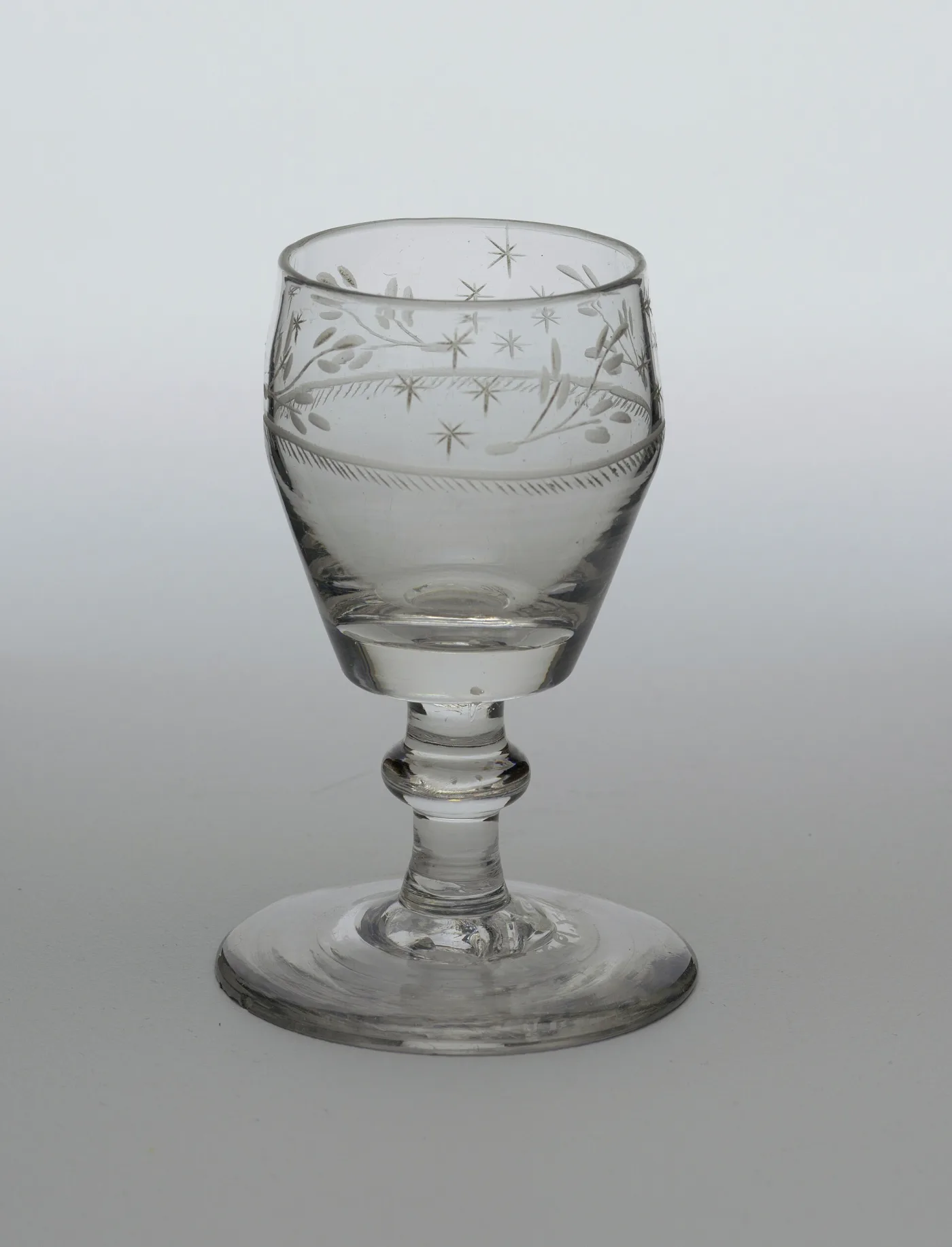
Late-eighteenth and early-nineteenth-century Irish cut glass tends to show a slightly grey or smoky tint (from the metal of the period), hand-blown forms with polished or rough pontils, period cutting styles (broad flutes, simple diamonds, fan and prism cuts), and the wear and minor imperfections of genuine age. The deep, regular, brilliant cutting of much later revival Waterford looks quite different from the more restrained Georgian and Regency style.
The Attribution Problem
Because the original firm is so romantic a name, "Waterford" is attached to period Irish glass far more often than the evidence warrants. Treat any unmarked piece described as "eighteenth-century Waterford" with healthy skepticism, judge it as period Irish glass on its own merits, and seek a specialist opinion before paying a Waterford premium. The disciplines of provenance and attribution covered in our authentication and provenance research guide apply directly to this kind of high-stakes attribution.
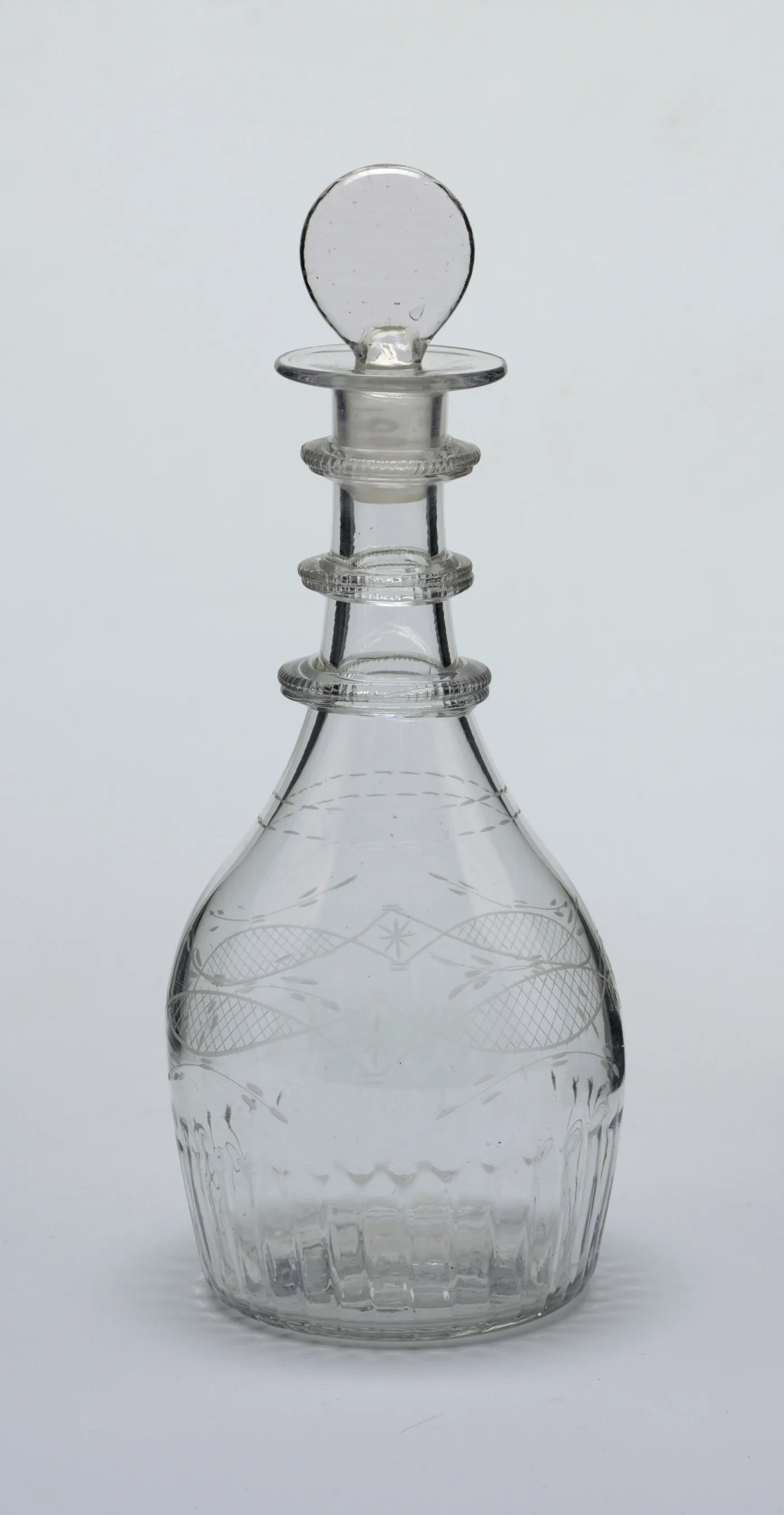
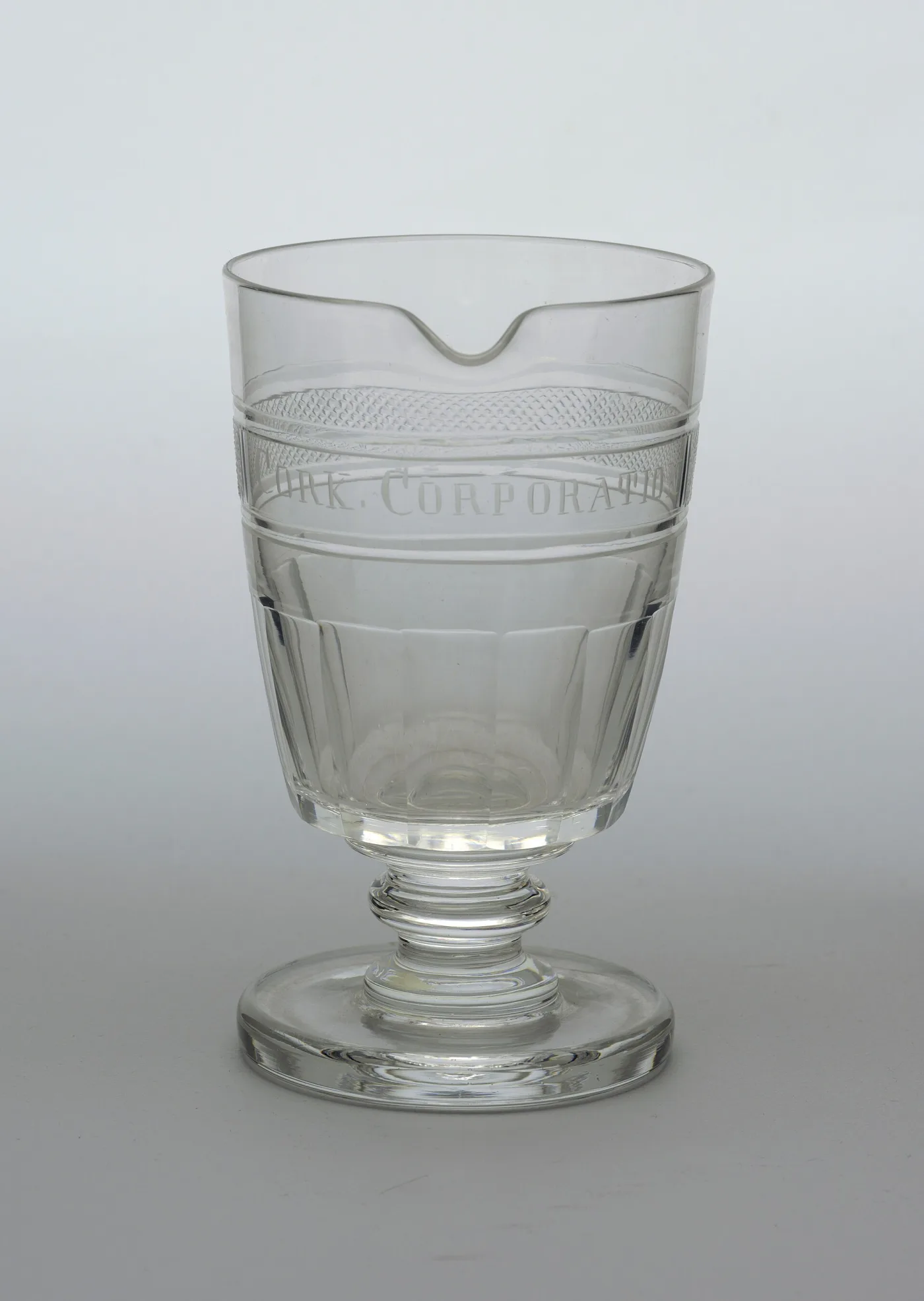
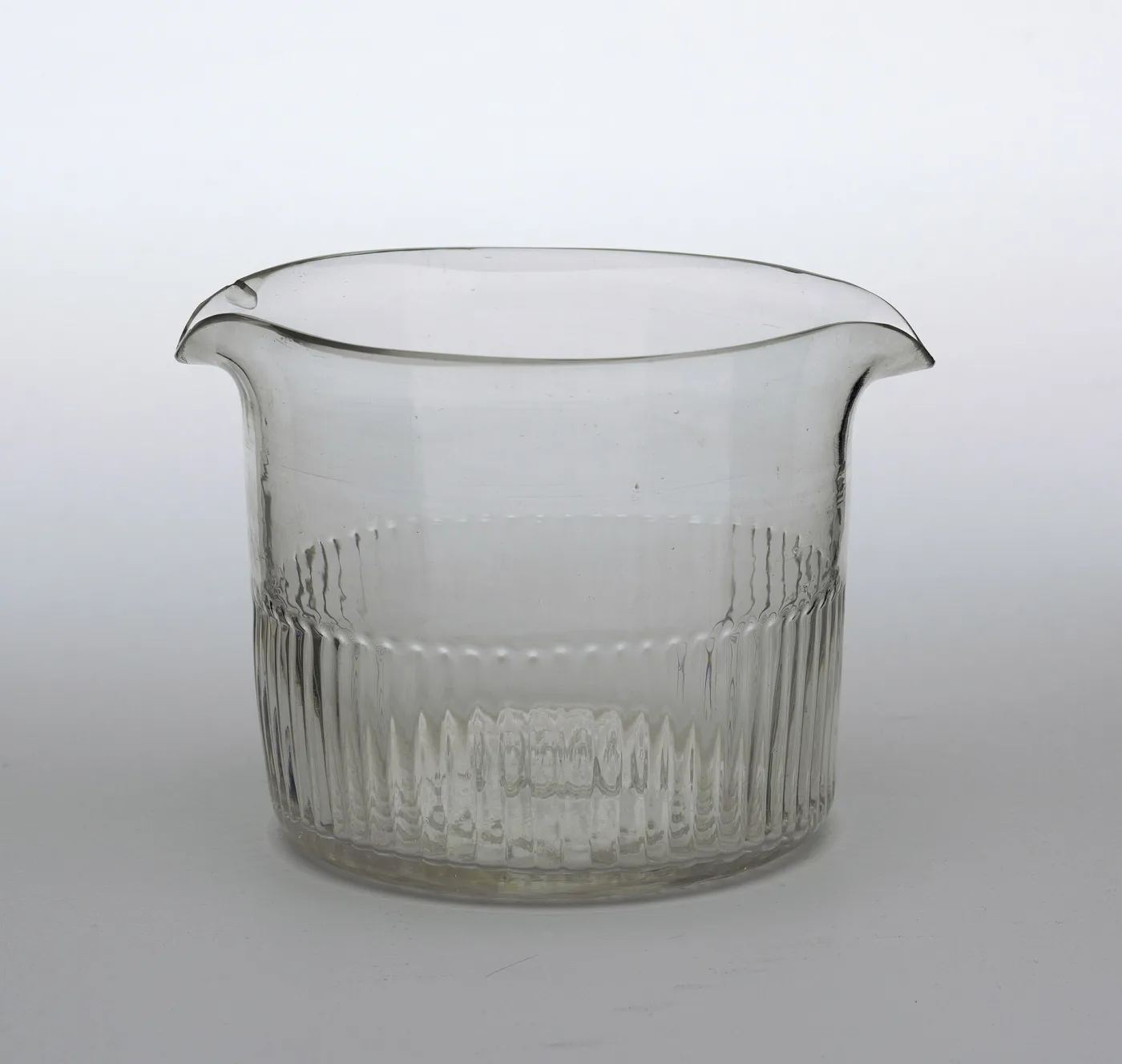
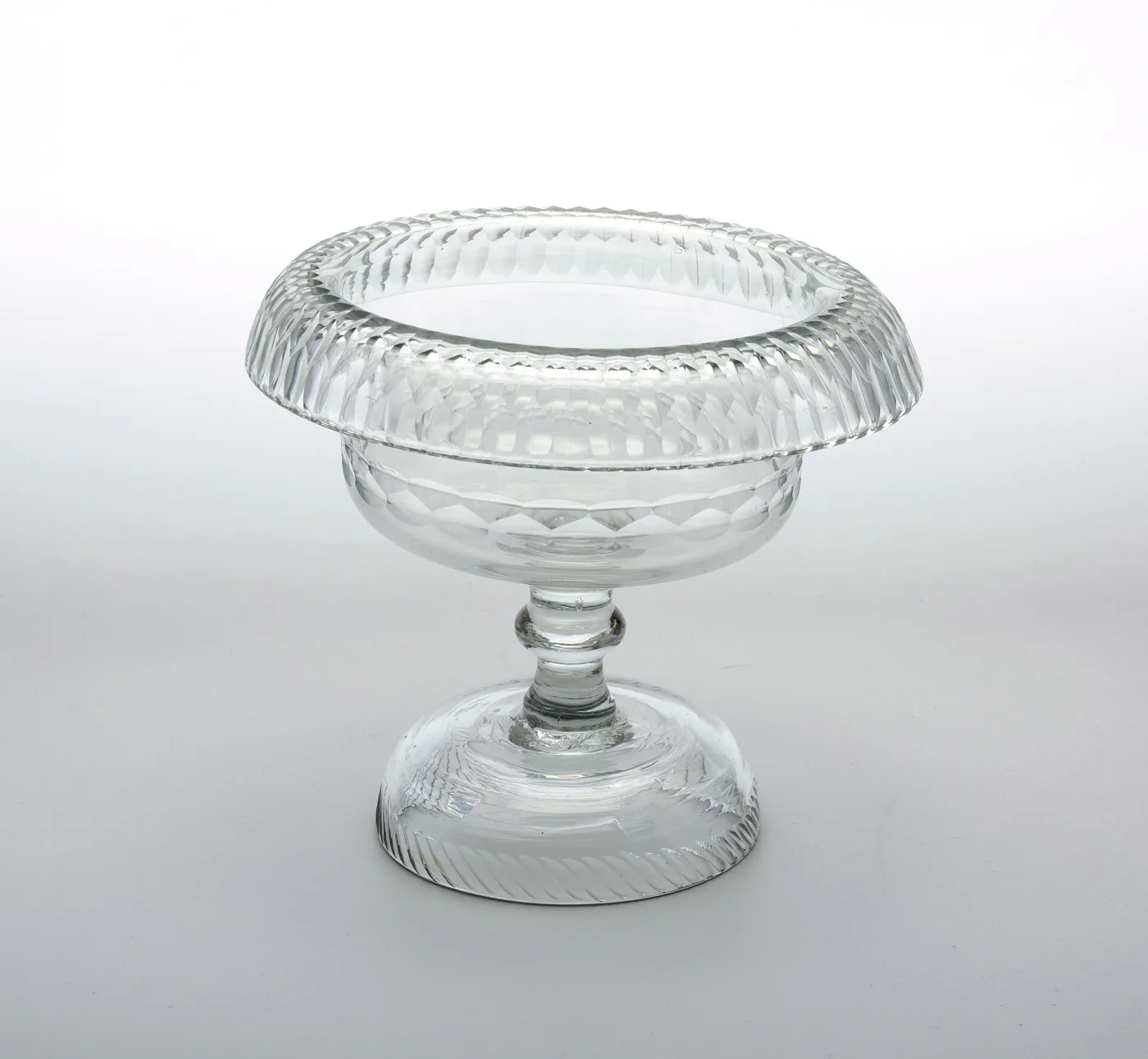
Neither of these is Waterford, and that is the point of putting them here: both are Irish, both are of the right period, and both would pass as "antique Waterford" in a saleroom description written by hope. They are Cork — the decanter carries a moulded Cork Glass Company mark round its pontil, the mixing glass says so in engraved letters. The vesica band on the decanter, those crossed ovals with a star at each crossing, is a motif associated with Cork rather than Waterford work. Marked Irish glass of this date usually turns out to be marked by somebody other than Waterford, which is why an unmarked piece is not evidence of Waterford by elimination.
Waterford vs. Bohemian and Other Look-Alikes
A huge quantity of fine cut crystal that is not Waterford circulates and is routinely mistaken — honestly or otherwise — for it. Distinguishing Waterford from its rivals is a core skill.
Bohemian and Czech Crystal
Bohemia (the modern Czech Republic) is one of the world's great cut-crystal regions and has produced enormous quantities of high-quality lead crystal, much of it deeply and beautifully cut. Bohemian crystal can equal or exceed Waterford in cutting and brilliance; it is simply a different (and often unmarked or differently marked) product. Without a Waterford mark, deeply cut crystal is at least as likely to be Bohemian, German, or Continental as Irish.
German, French, and Other European Crystal
Germany (and historically firms across Europe) produced fine cut lead crystal, as did French houses (whose finest cut and art crystal is discussed in our Lalique guide). Much of this is excellent crystal in its own right. The point is not that these are inferior, but that they are not Waterford, and should not be sold as such.
How to Distinguish Them
The decisive factor is the mark: genuine Waterford carries a Waterford mark (where marked), and the patterns match documented Waterford patterns. Look-alikes carry different marks, no marks, or different pattern schemes. Where there is no mark, attribution to Waterford specifically should be cautious; "Bohemian or Waterford-style cut crystal" is the honest description of unmarked deeply cut crystal.
Why It Matters
The Waterford name carries a price premium, so unmarked Continental crystal is frequently listed as "Waterford" to capture it. Buyers should insist on a genuine mark or a matched pattern before paying a Waterford price, and sellers should describe unmarked pieces honestly as "cut crystal, unmarked" rather than guessing at a famous name.
Fakes, Forged Marks, and Misrepresentation
Because Waterford commands a premium, it attracts outright fakes, forged marks, and a great deal of hopeful or dishonest misrepresentation.
Forged and Added Marks
Spurious "Waterford" marks — etched, engraved, or applied as fake labels — have been added to non-Waterford crystal to inflate its value. A mark that looks too crisp, too deep, freshly cut, oddly placed, or inconsistent with documented Waterford marks is a warning sign. Because genuine Waterford is sometimes unmarked, a faker's instinct is to add a mark — so a suspiciously perfect mark on otherwise doubtful glass is a red flag, not reassurance. Let the quality and pattern of the crystal justify the mark, not the other way round.
Pressed Imitation Sold as Cut Crystal
Pressed (molded) glass with imitation "cutting" is sometimes sold as Waterford cut crystal. The rounded, dull mold-cuts, the mold seams, the lighter weight, and the lack of true brilliance give it away. No pressed imitation has the sharp, acid-polished cutting of real hand-cut Waterford.
Misrepresented Look-Alikes
As noted, unmarked Bohemian, German, and Continental crystal is constantly listed as "Waterford," usually through ignorance rather than fraud. The fix is the same: demand a genuine mark or matched pattern, and treat unmarked deeply cut crystal as "Waterford-style" rather than Waterford.
Marriages and Replaced Parts
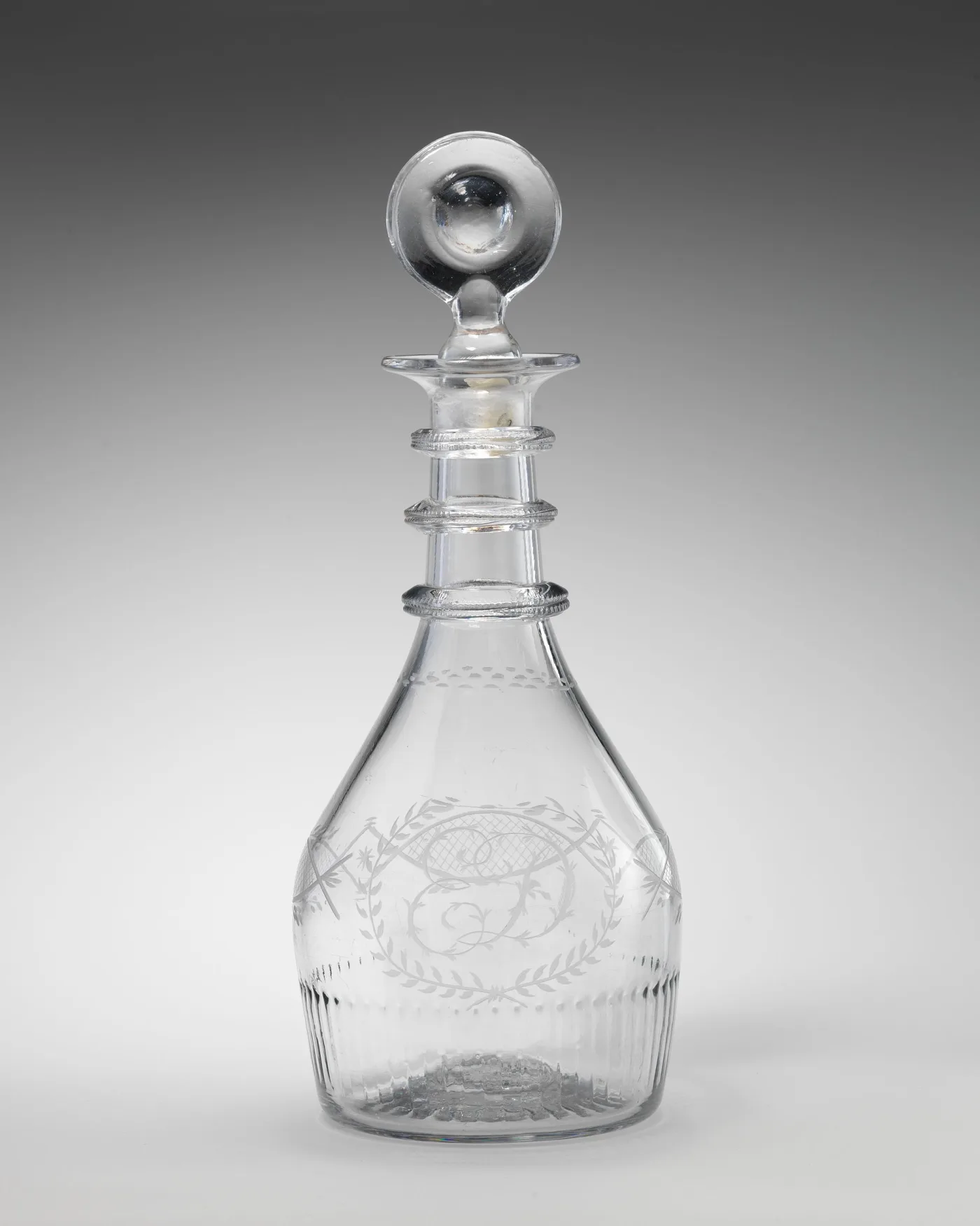
Decanters with replaced (non-original) stoppers, lamps with replaced fittings, and sets assembled from mixed sources are common. A stopper that does not seat perfectly, mismatched cutting between a body and its stopper, or slight differences within a "set" all signal a marriage. Original, matched components matter to both authenticity and value.
"Antique" Overstatement
Finally, the commonest misrepresentation is simply calling twentieth-century revival Waterford "antique" (implying the rare Georgian firm) or calling unattributable period glass "Waterford." Accurate dating — revival crystal vs. genuine pre-1851 Irish glass — is itself a guard against overpaying.
Condition Assessment
Cut crystal is durable but far from indestructible, and condition has a large effect on value; examine every piece methodically under good light.
Chips, Nicks, and Flea Bites
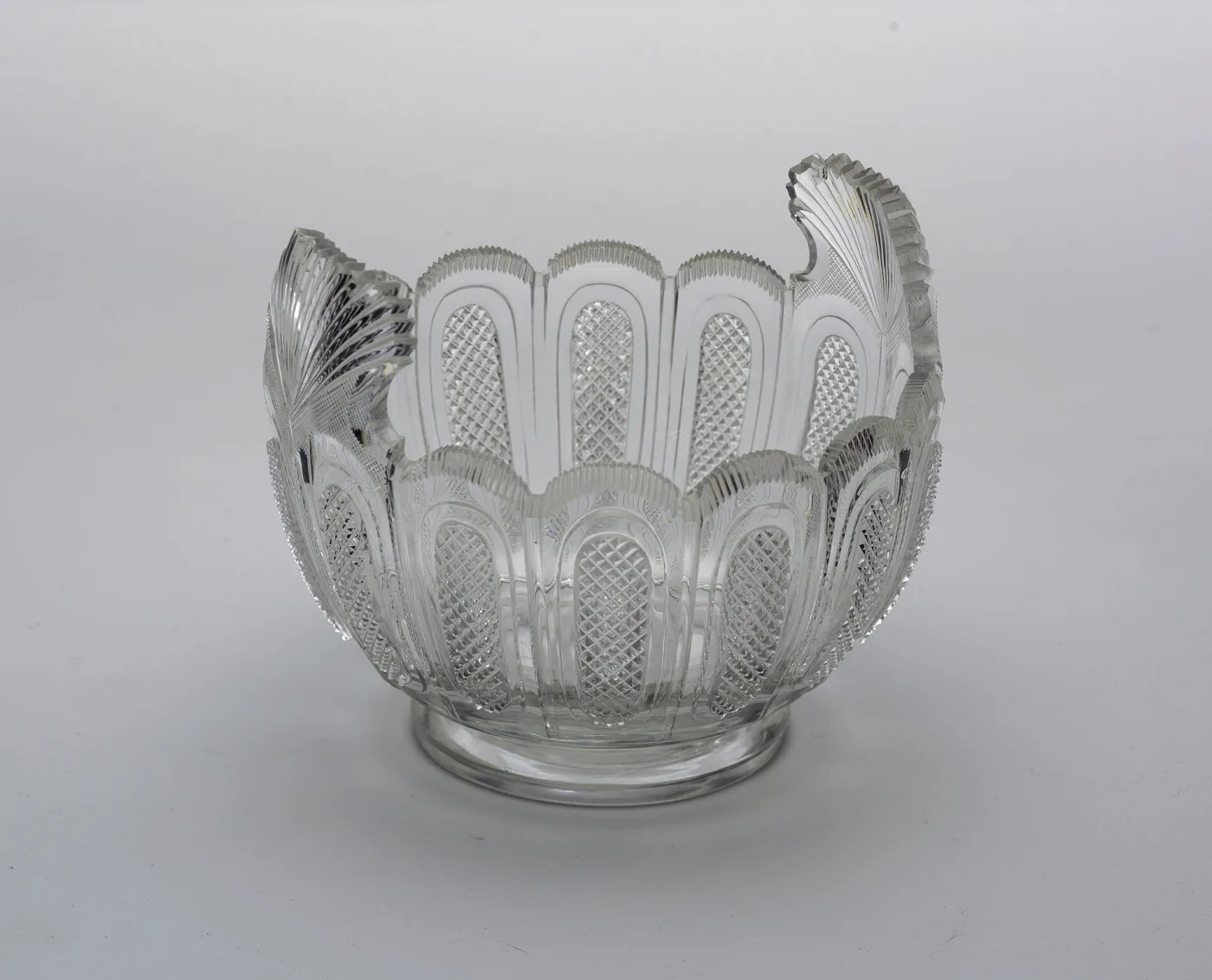
Run a fingertip and a loupe around every rim, foot, and the high points of the cutting, where chips concentrate. Rim chips on stemware and bowls, "flea bites" (tiny nicks) on the points of the diamonds, and chips on the foot all reduce value. Sharp cut points are the most vulnerable spots on any cut-crystal piece.
Cracks and Stress Lines
Hold the piece to the light and look through the body for cracks, internal fractures, and stress lines (especially near handles, at the junction of bowl and stem, and around decanter necks). Tap gently and listen: a cracked piece gives a dull, dead sound instead of a clear ring. Any crack is serious in crystal.
Sick Glass and Cloudiness
Interior cloudiness ("sick glass") from water or detergent left standing — common in vases and decanters — is etching of the glass surface and is often impossible to fully remove. Hold the piece to the light to check interior clarity. Cloudiness inside a decanter or vase significantly lowers value.
Scratches, Wear, and Dishwasher Damage
Base wear is normal and expected on older pieces, but heavy scratching, a dulled and clouded surface from repeated dishwashing, or abraded cutting all reduce value. Dishwasher detergent and heat permanently etch lead crystal; a piece with the tell-tale overall haze of dishwasher damage is worth markedly less than crisp, clear crystal.
Repairs and Re-Grinding
Chips are sometimes ground out, leaving a rim slightly reduced or reshaped, or a fan-cut edge that no longer matches the original profile. A rim that looks uneven, too thin, or out of proportion may have been re-ground. Re-ground rims and polished-out chips are condition issues that should be disclosed and that reduce value.
What Drives Value
Several factors combine to set the price of Waterford, and the famous name alone is rarely the main one.
Pattern, Form, and Size
Desirable and recognizable patterns help, but form and size matter more than most owners expect. Large, deeply cut, complex pieces (big bowls, statement vases, decanters, chandeliers, presentation pieces) carry the most value; common small forms (a single wine glass, a small dish, a giftware bell) are modest despite the name. The most-produced patterns and forms are, by their abundance, the least scarce.
Hand-Cut vs. Machine-Cut
Earlier hand-cut Irish Waterford generally outvalues later machine-assisted production of the same pattern. The depth, crispness, and hand-made vitality of the cutting — together with an older-style mark — are what distinguish the more valuable pieces. The Marquis line, being machine-made and entry-level, sits below the classic range.
Completeness and Sets
A complete, matched set is worth far more than the sum of scattered pieces, and a single piece is most valuable to someone completing a set in that exact pattern and size. Decanters with original stoppers, boxed sets, and full services of stemware command premiums; odd survivors and mismatched lots do not.
Condition
Condition can swing value dramatically. Crisp, clear, chip-free, crack-free crystal with sharp cutting and clear interiors holds value; chips, cracks, sick glass, dishwasher haze, and re-ground rims subtract heavily. In a category where so much was made, condition is often the deciding factor between pieces.
Market Realities
Finally, the practical market for ordinary twentieth-century Waterford giftware and common stemware is softer than many owners assume, precisely because so much was produced and so much is now being sold from estates. The valuable pieces are the early hand-cut, the large and elaborate, the complete sets, and the genuinely rare — not the common gift bell or single goblet. For realistic, market-based valuation across categories, our valuation and appraisal guide and buying and selling strategies guide explain how to set sensible expectations.
Care, Cleaning, and Display
Lead crystal rewards gentle, conservative handling; most of the damage that destroys value is avoidable.
Hand-Wash Only
Never put Waterford in a dishwasher. Dishwasher detergent and heat permanently etch and cloud lead crystal, turning clear, brilliant glass into hazy, devalued glass. Wash by hand in lukewarm (not hot) water with a little mild detergent, padding the sink with a soft cloth, and rinse and dry promptly with a soft lint-free cloth to avoid water spots.
Preventing Sick Glass
Never leave water standing in a crystal vase or decanter, which causes interior clouding that may be irreversible. Empty, rinse, and dry vases and decanters promptly after use, and store decanters with the stopper out so air can circulate (a tightly stoppered damp decanter can both cloud inside and seize its stopper).
Handling Stemware and Stoppers
Hold stemware by the bowl or foot, not by twisting the stem, which is the weakest point. Lift bowls and vases by the body, not by rims. Never force a stuck decanter stopper; gentle warmth, a little lubrication, and patience are safer than risking a broken neck.
Display and Storage
Display crystal out of direct sun on a stable, padded surface, away from edges and high-traffic areas where it can be knocked. For storage, wrap each piece individually in acid-free tissue, support fragile points, and never let pieces touch one another. The general principles in our storage, care, and preservation guide apply directly to fragile cut crystal.
Common Beginner Mistakes
A handful of errors catch new Waterford owners and buyers again and again.
Assuming All Cut Crystal Is Waterford
Deeply cut crystal is made by Bohemian, German, French, and many other makers; without a Waterford mark or a matched Waterford pattern, cut crystal is not necessarily Waterford at all. Resist the urge to attach the famous name to every brilliant, heavy, cut piece.
Trusting a Mark Over the Glass
Because genuine Waterford is sometimes unmarked, forgers add marks to lesser crystal. A mark that looks too crisp, wrong, or out of place — on glass whose cutting and quality do not match Waterford — is a red flag. Let the quality and pattern of the crystal confirm the mark, not the reverse.
Confusing "Antique" Waterford with Revival Waterford
Calling twentieth-century revival crystal "antique" implies the rare Georgian firm and overstates what most pieces are. Identify which Waterford you have — pre-1851 Irish glass (rare, usually unmarked) or revival-era brand crystal (common) — before forming value expectations.
Overlooking the Marquis Distinction
A piece marked "Marquis" is the more affordable, machine-made Marquis line, not the classic hand-cut Waterford range, and should be described and valued as such. Selling Marquis simply as "Waterford" overstates it.
Ruining Crystal in the Dishwasher
Nothing destroys the value of good crystal faster than dishwasher haze. Treating Waterford as everyday dishwasher-safe glass etches it permanently. Hand-washing is not optional for crystal you want to keep its value.
Ignoring Chips, Cracks, and Sick Glass
Tiny rim chips, flea bites on cut points, hairline cracks, and interior cloudiness are easy to miss but heavily affect value. Inspect every rim, foot, point, and interior under good light before buying, selling, or valuing. For confident identification of any piece, photograph the base, the mark, and the cutting clearly, exactly as you would for any crystal purchase.
Frequently Asked Questions
How can I tell if my crystal is really Waterford?
Check the base under raking light and a loupe for an acid-etched or engraved Waterford mark (often with the seahorse emblem), then confirm that the cut pattern matches a documented Waterford pattern such as Lismore. Genuine Waterford is heavy full-lead crystal that is water-clear, rings with a clear sustained note, and shows sharp, crisp, hand-finished cutting. A mark plus a matched pattern plus the right weight and brilliance together confirm it; any one alone is weaker evidence.
Where is the Waterford mark located?
Almost always on the base — the underside of the foot on stemware, or the center or edge of the base on bowls, vases, and giftware. The mark is usually small and lightly etched, so wipe the base clean and examine it under angled light and a loupe. Remember that some genuine Waterford, and almost all pre-1851 Irish Waterford, is unmarked, so absence of a mark does not by itself rule out Waterford.
What is the most common Waterford pattern?
Lismore, by a wide margin. It is defined by alternating panels of fine cross-cut diamonds and tall vertical wedge (miter) cuts, and it was produced for decades across an enormous range of forms — stemware, bowls, vases, decanters, and countless giftware items. Because so much Lismore was made, it is the pattern most often inherited and asked about, and common Lismore forms are modest in value despite the famous name.
Is Marquis the same as Waterford?
Marquis by Waterford is a separate, more affordable, generally machine-made line under the Waterford brand. It is genuine Waterford-brand product but is positioned and priced below the classic hand-cut Waterford range. Pieces are marked "Marquis" rather than simply "Waterford," and they should be described and valued as Marquis, not as the classic line.
How do I tell hand-cut Waterford from machine-cut?
Hand-cut crystal has sharp, crisp cuts with clean intersections and tiny hand-made irregularities that signal quality; machine-cut crystal is real cutting but almost perfectly uniform and can look slightly "too perfect"; pressed (molded) imitation has rounded, dull "cuts," mold seams, and lighter weight. Run a fingernail over the diamonds — genuine cutting is sharp, molded imitation is smooth and rounded. Earlier hand-cut Irish Waterford generally outvalues later machine-assisted production.
Is unmarked cut crystal ever genuine Waterford?
Sometimes — older revival pieces, certain forms, and worn examples can be unmarked, and pre-1851 Irish Waterford is almost never marked. But unmarked deeply cut crystal is at least as likely to be Bohemian, German, or other Continental crystal, which is excellent in its own right but not Waterford. Without a mark or a matched Waterford pattern, the honest description is "Waterford-style cut crystal," and a specialist opinion is wise before paying a Waterford premium.
How do I tell Waterford from Bohemian crystal?
The decisive factor is the mark and the pattern: genuine Waterford carries a Waterford mark (where marked) and matches a documented Waterford pattern, while Bohemian and other Continental crystal carries different marks, no marks, or different cutting schemes. Bohemian crystal can equal or exceed Waterford in cutting quality, so brilliance alone proves nothing; only the mark and the matched pattern attribute a piece to Waterford specifically.
Why is my Waterford worth less than I expected?
Because so much twentieth-century Waterford was produced and so much is now being sold from estates, the market for common giftware and single stemware pieces is softer than many owners assume. Value concentrates in early hand-cut pieces, large and elaborate forms, complete matched sets, decanters with original stoppers, and genuinely rare items — not in the common gift bell or single goblet. Condition (chips, cracks, sick glass, dishwasher haze) also strongly affects price.
Can dishwasher-clouded crystal be fixed?
Usually not. Dishwasher detergent and heat permanently etch the surface of lead crystal, and the resulting haze (a form of sick glass) is generally impossible to fully remove. Prevention is the only reliable answer: always hand-wash crystal in lukewarm water with mild detergent, and never leave water standing in vases or decanters. Permanently clouded crystal is worth markedly less than crisp, clear pieces.
Is twentieth-century Waterford really "antique"?
Strictly, no — the revival brand dates from the late 1940s onward, so most "Waterford" in circulation is later twentieth-century crystal rather than true antique. Genuine antique Waterford means glass from the original 1783–1851 firm, which is rare, usually unmarked, and a specialist field. Both are collectible, but they are very different things, and conflating them leads to mistaken expectations about rarity and value.