Antique Lalique Glass Identification Guide: Expert Tips for Collectors
Lalique glass stands as one of the most celebrated achievements in decorative arts, representing the pinnacle of French glassmaking artistry spanning from the Art Nouveau era through Art Deco and into the modern age. Created by the legendary René Lalique, these pieces combine technical innovation with breathtaking beauty, featuring nature-inspired motifs, feminine forms, and geometric patterns that have captivated collectors for over a century. Today, authentic Lalique pieces command significant prices at auction, with rare designs fetching tens of thousands of dollars.
Identifying genuine Lalique glass requires understanding the evolution of signatures, recognizing characteristic design elements, and distinguishing original pieces from the numerous reproductions flooding the market. The company's long production history, spanning from René Lalique's earliest jewelry work in the 1880s to contemporary crystal production, means collectors must navigate various periods, each with distinct characteristics and market values.
This comprehensive guide equips you with expert knowledge to identify authentic Lalique glass, understand its historical context, recognize valuable pieces, and build a meaningful collection. Whether examining an opalescent vase from the 1920s, a perfume bottle designed for Coty, or a modern Cristal Lalique piece, these insights will help you authenticate and appreciate these treasured works of French decorative art.
Table of Contents
- History of René Lalique and Lalique Glass
- Lalique Signatures and Marks
- Art Nouveau Period (1885-1920)
- Art Deco Period (1920-1945)
- Post-War and Modern Lalique
- Types of Lalique Objects
- Popular Designs and Patterns
- Colors and Finishes
- Authenticating Lalique Glass
- Spotting Fakes and Reproductions
- Condition Assessment
- Valuation Factors
- Building a Lalique Collection
- Care and Preservation
- Market Trends and Investment
History of René Lalique and Lalique Glass
René Jules Lalique (1860-1945) began his artistic career as a jewelry designer, revolutionizing the field before transitioning to glass, where he achieved even greater acclaim. His journey from apprentice goldsmith to internationally celebrated glass artist spans six decades of continuous innovation and artistic excellence, establishing a legacy that continues under family leadership today.
Early Career in Jewelry (1880-1900)
After apprenticing with Parisian jeweler Louis Aucoc and studying in London, Lalique established his own workshop in 1885. His revolutionary approach rejected the diamond-dominated conventions of traditional jewelry, instead embracing semi-precious stones, enamel, glass, horn, and ivory. His naturalistic designs featuring insects, flowers, and female figures attracted attention from leading Parisian jewelers and eventually from actress Sarah Bernhardt, whose patronage elevated his reputation. By 1900, Lalique's jewelry designs at the Paris Exposition Universelle earned him international acclaim and the Legion of Honor.
Transition to Glass (1900-1920)
Lalique's experimentation with glass began through his jewelry work, where he incorporated glass elements into brooches and pendants. Around 1907, perfume maker François Coty commissioned Lalique to design perfume bottles, initiating a collaboration that transformed commercial perfume packaging into an art form. Lalique established his first glass factory at Combs-la-Ville in 1909, and his success led to a larger facility at Wingen-sur-Moder in Alsace in 1921, which remains operational today.
The Golden Age of Lalique Glass (1920-1939)
The interwar period represented Lalique's most prolific and celebrated era. He created thousands of designs for vases, bowls, lighting fixtures, architectural elements, car mascots, and decorative objects. His work perfectly captured the Art Deco aesthetic while maintaining the naturalistic influences of Art Nouveau. Major commissions included the interior of the SS Normandie ocean liner, the dining car of the Orient Express, and architectural elements for buildings worldwide. By the 1930s, Lalique glass was synonymous with French luxury and artistic innovation.
Legacy and Continuation
René Lalique died in 1945, but his son Marc continued the business, shifting production from demi-crystal to full lead crystal in 1948 and changing the company name to Cristal Lalique. Marc's daughter Marie-Claude Lalique later led the company, maintaining the artistic tradition while introducing contemporary designs. Today, the company operates under luxury group ownership while continuing to produce pieces using many of René Lalique's original designs alongside new creations.
Lalique Signatures and Marks
Understanding Lalique signatures is essential for authentication and dating. The company's marking practices evolved significantly over its history, with different signature styles indicating specific periods and production methods.
René Lalique Period Signatures (Pre-1945)
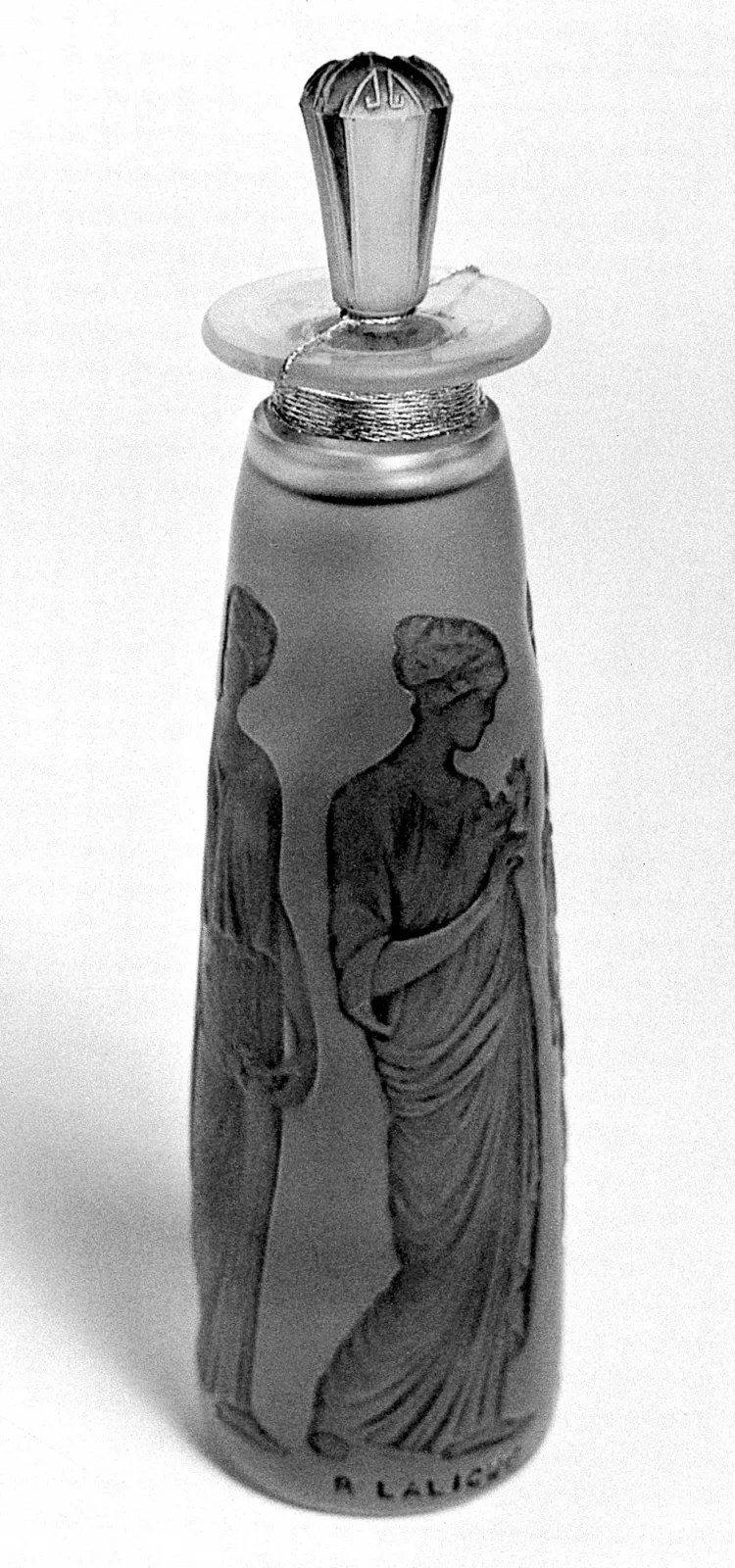
During René Lalique's lifetime, pieces were marked "R. Lalique" or "R. LALIQUE" in various forms. Early pieces often featured engraved signatures, either wheel-cut or diamond-point engraved. Production pieces typically bore molded signatures incorporated into the glass during manufacture. The signature might appear in block letters, script, or a combination. "France" often accompanies the signature, indicating pieces intended for export. Particularly valuable are pieces with both engraved signatures and molded marks, suggesting special or early production.
Post-1945 Signatures
After René Lalique's death in 1945, the "R" was dropped from signatures. Pieces from this period are marked simply "Lalique" or "LALIQUE." The transition to full lead crystal in 1948 coincided with marking pieces as "Cristal Lalique" or "Lalique France." Modern pieces typically bear "Lalique France" or "Lalique Paris" marks, often acid-etched rather than engraved or molded.
Signature Placement and Styles
Signature locations vary by object type. Vases typically bear marks on the base or lower body. Plates and bowls show signatures on the underside. Perfume bottles may be marked on the base, with atomizers sometimes marked on metal fittings. Car mascots bear signatures on the base or rear edge. The style of signature execution provides dating clues: deeply engraved signatures suggest early production, while shallow acid-etched marks indicate later manufacture.
Model Numbers and Design Names
Many Lalique pieces bear model numbers in addition to signatures. These numbers correspond to specific designs catalogued by the company. Original catalogs list designs by number with dimensions and variations. Design names like "Bacchantes," "Serpent," or "Ceylan" help identify specific patterns. Collectors use these numbers and names to research production dates, variations, and relative rarity of specific designs.
Signature Variations and Authenticity
Authentic signatures show consistent characteristics within production periods. The depth, clarity, and precision of engraving reflect quality craftsmanship. Molded signatures appear integral to the glass, not applied afterward. Be suspicious of signatures that appear crude, inconsistent with the piece's apparent period, or showing signs of recent application. Remember that some authentic pieces, particularly early production or damaged examples, may have lost original paper labels without bearing permanent marks.
Art Nouveau Period (1885-1920)
René Lalique's Art Nouveau work established his reputation as a revolutionary artist who transformed both jewelry and glass design. This period's pieces reflect the movement's celebration of natural forms, sensuous curves, and innovative materials.
Art Nouveau Jewelry
Lalique's jewelry from this period represents some of his most valuable and sought-after work. Pieces feature dragonflies, peacocks, serpents, orchids, and female figures rendered in gold, enamel, glass, and unusual materials like horn and ivory. The emphasis on design over material value challenged jewelry conventions, with glass and enamel valued as highly as precious stones. Museum collections worldwide feature Lalique Art Nouveau jewelry, with auction prices for exceptional pieces reaching hundreds of thousands of dollars.
Early Glass Experiments
Lalique's transition to glass began through his jewelry work, incorporating pâte de verre and plique-à-jour enamel techniques. The collaboration with Coty beginning around 1907 marked his entry into commercial glass production. Early perfume bottles for Coty, Worth, and other perfumers combined elegant design with practical function, establishing perfume presentation as an art form. These early commercial pieces demonstrated Lalique's ability to translate artistic vision into reproducible manufactured objects.
Characteristic Art Nouveau Motifs
Art Nouveau Lalique pieces feature flowing organic lines, asymmetrical compositions, and naturalistic subjects. Female figures appear frequently, often with flowing hair and ethereal expressions. Flora and fauna subjects include wisteria, pine branches, thistles, beetles, and butterflies. Water themes featuring fish, seahorses, and mermaids reflect the period's fascination with aquatic forms. These motifs continued influencing Lalique's work even as stylistic trends evolved toward Art Deco geometry.
Transitional Designs
The period from 1910 to 1920 shows Lalique moving between Art Nouveau organicism and emerging Art Deco stylization. Designs from this transitional period may combine naturalistic subjects with more geometric treatment. These pieces often prove particularly interesting to collectors, documenting the evolution of Lalique's artistic vision. The establishment of the Wingen-sur-Moder factory in 1921 marks the formal beginning of Lalique's Art Deco production era.
Art Deco Period (1920-1945)
The Art Deco period represents Lalique's most prolific and commercially successful era. His glass perfectly captured the style's celebration of modernity, luxury, and geometric elegance, establishing Lalique as synonymous with interwar French decorative arts.
Art Deco Design Philosophy
Lalique's Art Deco work balanced geometric precision with organic inspiration. Stylized natural forms replaced literal naturalism, with birds, fish, and flowers rendered in rhythmic, repeating patterns. Human figures became more statuesque and idealized. The influence of Cubism, ancient Egyptian art, and machine aesthetics appeared in angular compositions and stepped forms. Despite this geometric tendency, Lalique maintained sensuous surface textures and subtle color variations that softened pure geometry.
Major Design Categories
The Art Deco period saw Lalique create his most diverse range of objects. Vases ranged from small bud vases to monumental floor pieces. Tableware included complete dinner services, drinking glasses, and serving pieces. Lighting fixtures encompassed chandeliers, wall sconces, and table lamps. Architectural elements included doors, windows, fountains, and wall panels for commercial and residential installations. Car mascots, or "bouchons de radiateur," became coveted luxury accessories for automobile enthusiasts.
Iconic Art Deco Designs
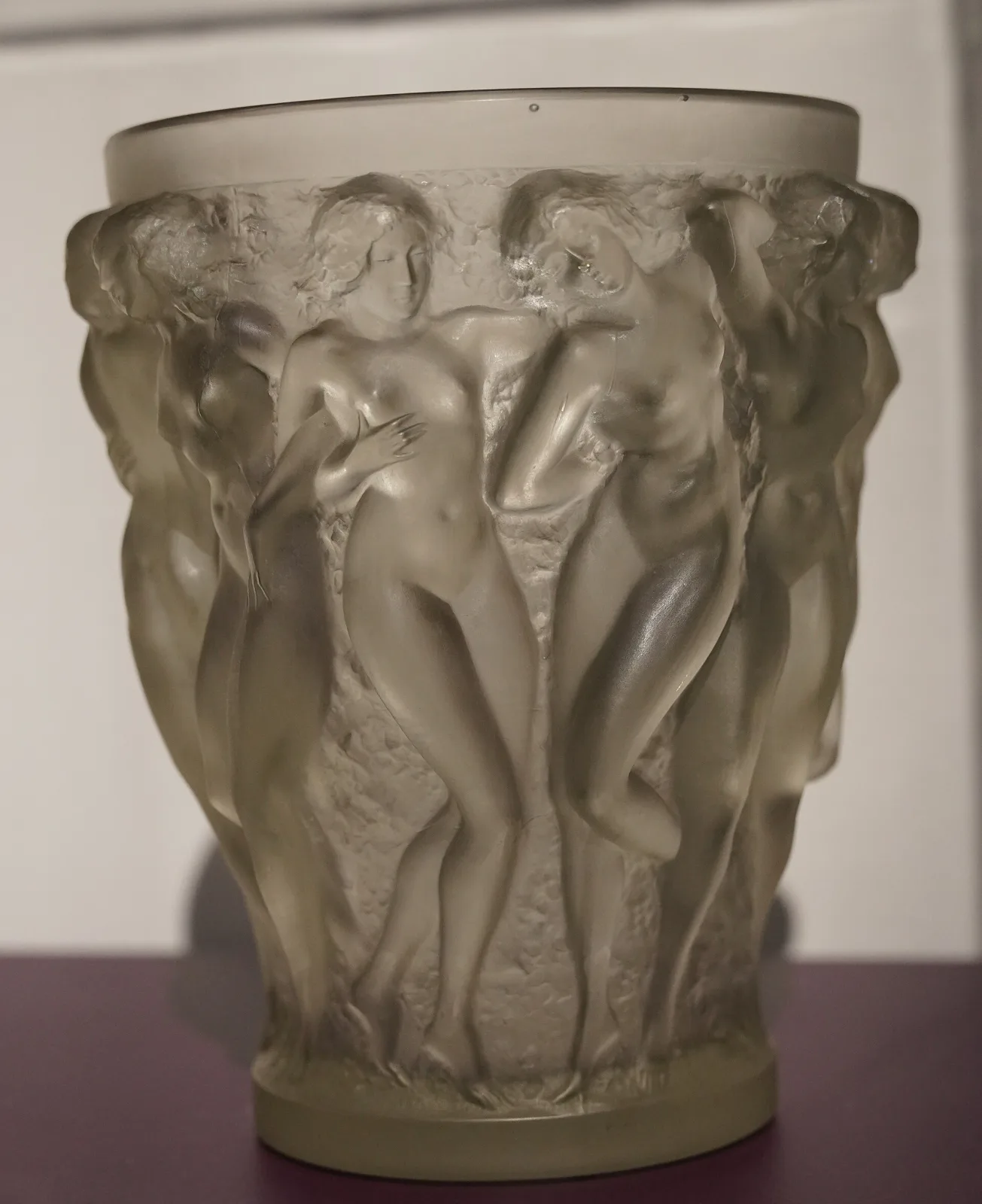
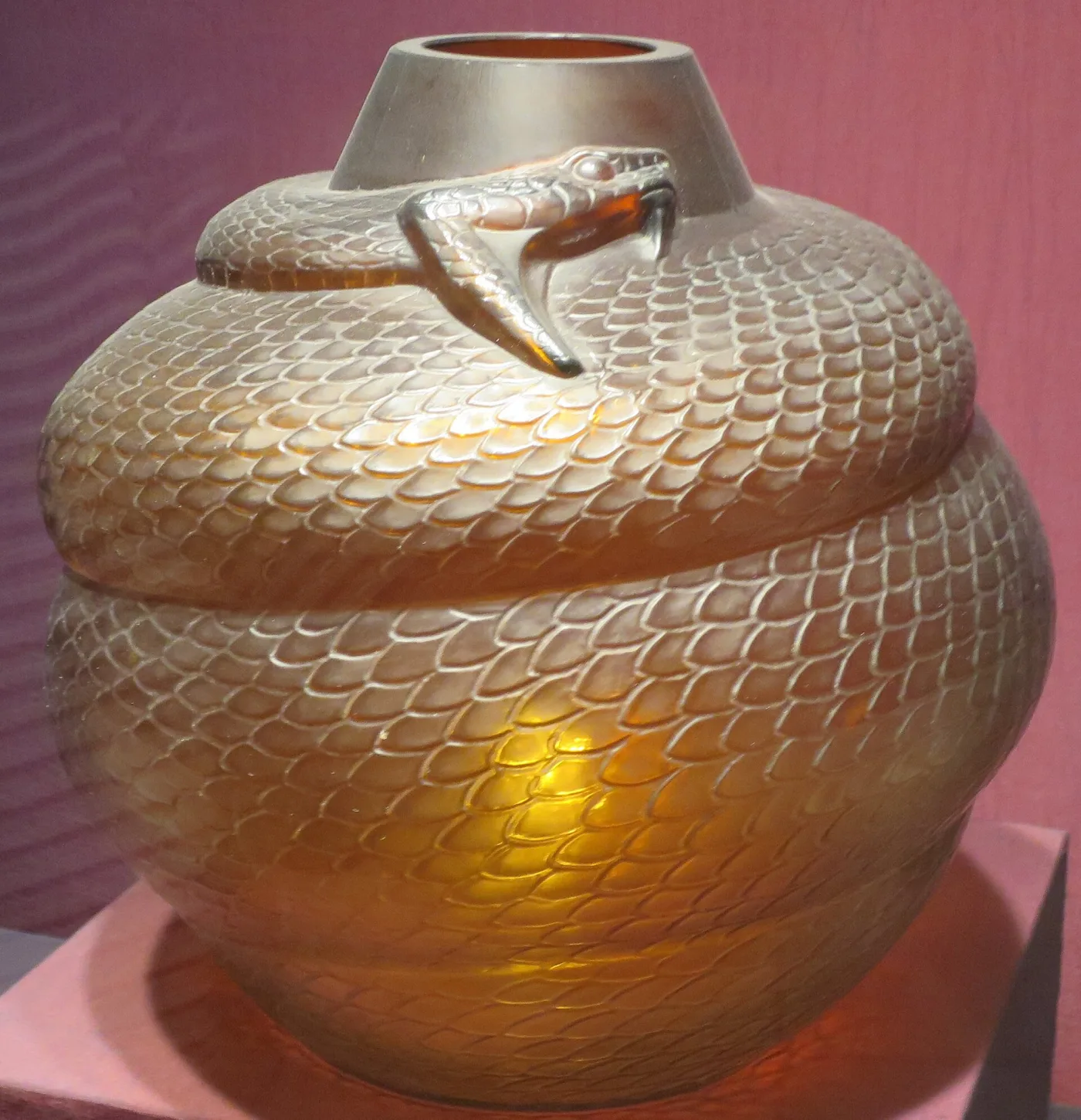
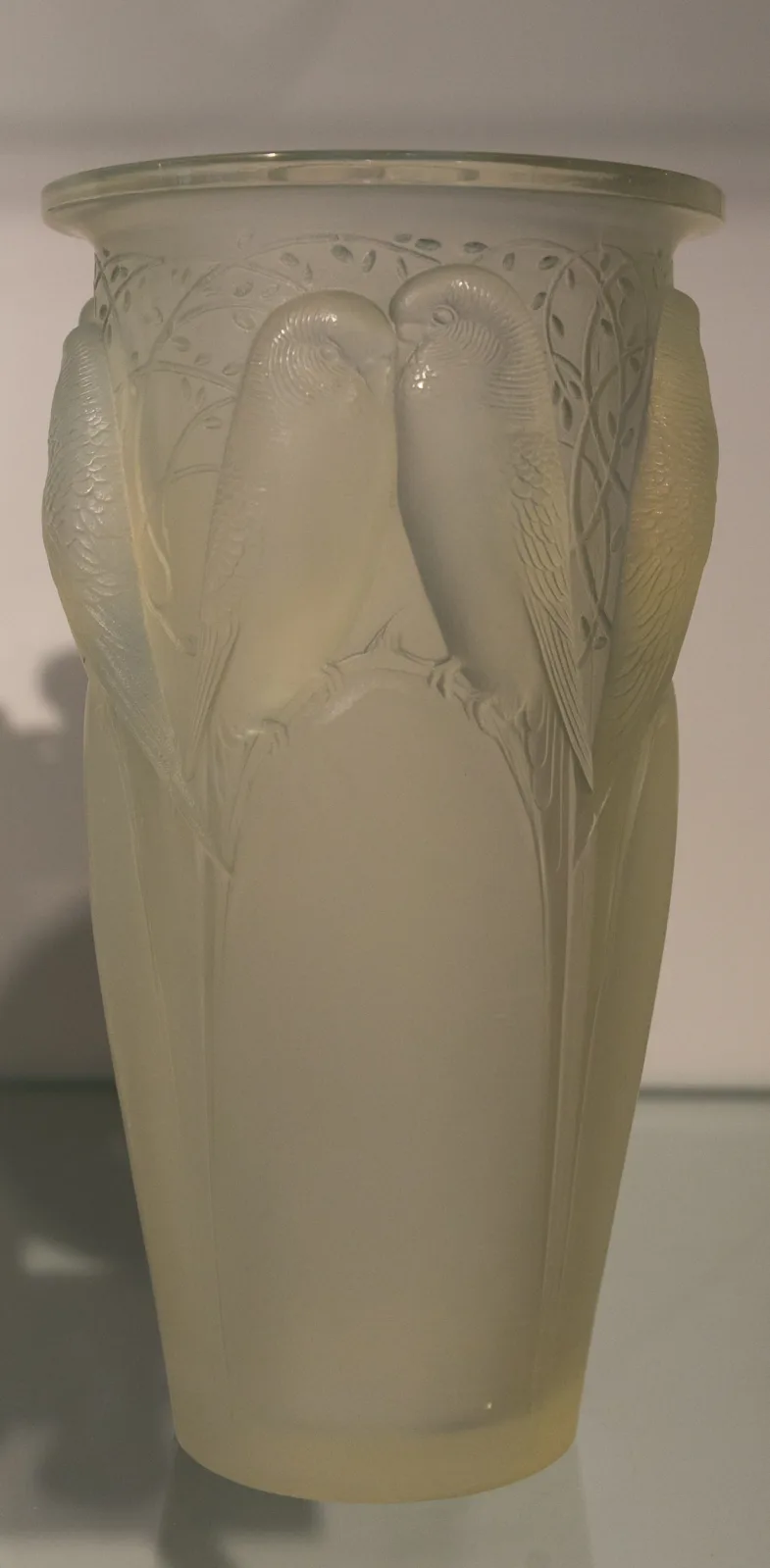
Several designs from this period achieved iconic status. The "Bacchantes" vase, featuring dancing female figures in relief, exemplifies Lalique's mastery of the female form in glass. "Serpent" vases display coiled snake motifs in dramatic opalescent glass. "Ceylan" features paired lovebirds in symmetrical arrangements. "Perruches" showcases parakeets amid flowering branches. These designs command premium prices and remain instantly recognizable symbols of Art Deco elegance.
Commercial Success and Commissions
Lalique's Art Deco period combined artistic innovation with commercial success. The 1925 Paris Exposition des Arts Décoratifs featured an entire Lalique pavilion and dining room. Major architectural commissions included the glass panels for the Côte d'Azur Pullman Express, interiors of the SS Normandie, and installations in Tokyo's Prince Asaka Museum. These prestigious projects demonstrated Lalique's ability to work at architectural scale while maintaining artistic integrity.

Post-War and Modern Lalique
The period following René Lalique's death in 1945 brought significant changes to the company while maintaining the founder's artistic legacy. Understanding this evolution helps collectors identify and value pieces from different eras.
Marc Lalique Era (1945-1977)
René's son Marc took leadership after his father's death, making significant changes to production. In 1948, the company transitioned from demi-crystal to full lead crystal (24% lead content), enhancing brilliance and clarity. This change coincided with dropping the "R" from signatures and introducing "Cristal Lalique" marking. Marc maintained production of many of his father's designs while introducing new pieces reflecting mid-century aesthetics. The Wingen-sur-Moder factory continued as the primary production facility.
Marie-Claude Lalique Era (1977-1994)
Marc's daughter Marie-Claude continued family leadership, combining traditional designs with contemporary innovations. She introduced jewelry collections reviving her great-grandfather's legacy as a jeweler, created new decorative objects, and expanded into luxury accessories. The company maintained its position as a premier French luxury brand while adapting to changing markets. Marie-Claude's leadership saw increased international expansion and new retail strategies.
Corporate Ownership Period (1994-Present)
The Lalique company has passed through several corporate owners since the family's departure. Art & Fragrance acquired the company, followed by Pochet Group and eventually Swiss-based Lalique Group. Despite ownership changes, production continues at Wingen-sur-Moder using traditional techniques. The company produces both reissues of classic René Lalique designs and new contemporary pieces. Crystal jewelry, perfume bottles, and decorative objects remain core product categories.
Distinguishing Periods
Collectors value pieces differently based on production period. René Lalique pieces (pre-1945) command highest prices, particularly Art Deco era works. Marc Lalique period pieces (1945-1977) appeal to collectors appreciating lead crystal quality and mid-century designs. Recent production holds value as luxury decorative objects but lacks the investment potential of earlier pieces. Signatures, marks, and design characteristics help establish production period for specific pieces.
Types of Lalique Objects
Lalique produced an extraordinary diversity of objects throughout the company's history. Understanding these categories helps collectors focus their interests and identify specific pieces.
Vases
Vases represent Lalique's most recognized category, ranging from small bud vases to impressive floor-standing pieces. Forms include traditional vessel shapes, spherical bodies, cylindrical tubes, and sculptural compositions where the vase function becomes secondary to artistic expression. Surface treatments range from deeply molded relief patterns to subtle frosted textures. Popular designs like "Bacchantes," "Serpent," and "Tourbillons" showcase the diversity of approaches within this category. Vases remain the most actively collected Lalique category with strong secondary market presence.
Perfume Bottles
Lalique's perfume bottles revolutionized fragrance presentation. Commercial commissions for Coty, Worth, Nina Ricci, and other perfumers produced thousands of designs. These range from simple elegant forms to elaborate presentations with figural stoppers and complex molded decoration. The bottles' small size makes them accessible to collectors with limited space. Values vary enormously based on design, rarity, and condition, with exceptional examples reaching five figures at auction.
Tableware and Barware
Complete table services, drinking glasses, decanters, and serving pieces demonstrate Lalique's functional design capabilities. Patterns include geometric Art Deco designs, naturalistic motifs, and elegant simplicity suitable for formal entertaining. Stemware ranges from simply elegant to elaborately decorated forms. Collectors seek complete sets, though individual pieces also trade actively. Barware includes cocktail accessories, ice buckets, and decanters reflecting prohibition-era sophistication and post-war entertaining culture.
Lighting
Lalique lighting fixtures range from intimate table lamps to massive architectural chandeliers. The interplay of light through glass showcases Lalique's mastery of opalescence and transparency. Ceiling fixtures, wall sconces, and illuminated panels feature in both residential and commercial installations. These pieces often prove challenging to collect due to size and installation requirements, but represent some of Lalique's most impressive achievements.
Car Mascots
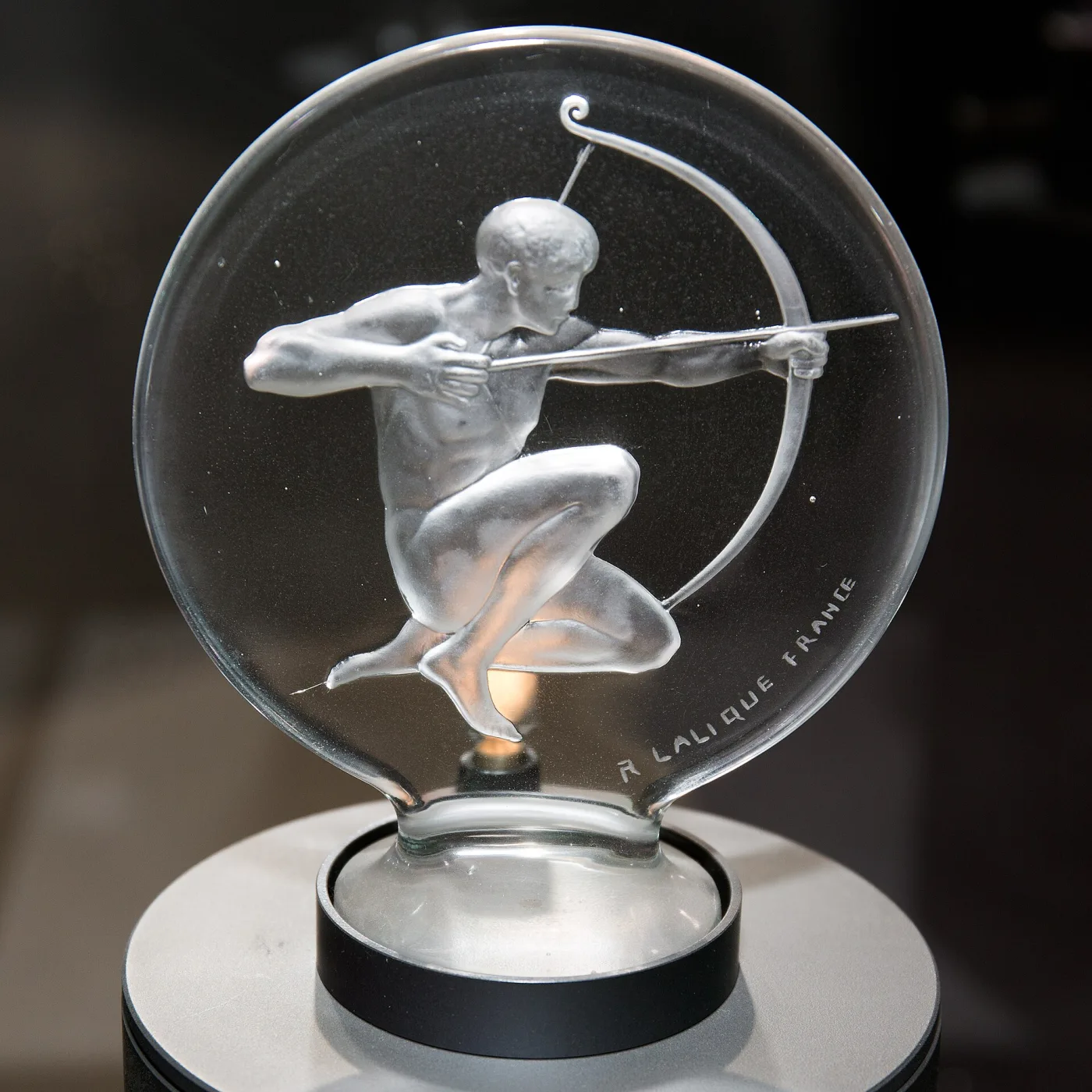
Automobile hood ornaments, or "bouchons de radiateur," represent a uniquely collectible Lalique category. Produced primarily from 1925 to 1931, approximately thirty designs depicted animals, human figures, and abstract forms. Designed to glow from light passing through while driving at night, these pieces combined sculpture, function, and spectacle. Authentic car mascots in excellent condition are rare and valuable, with top examples exceeding $100,000 at auction.
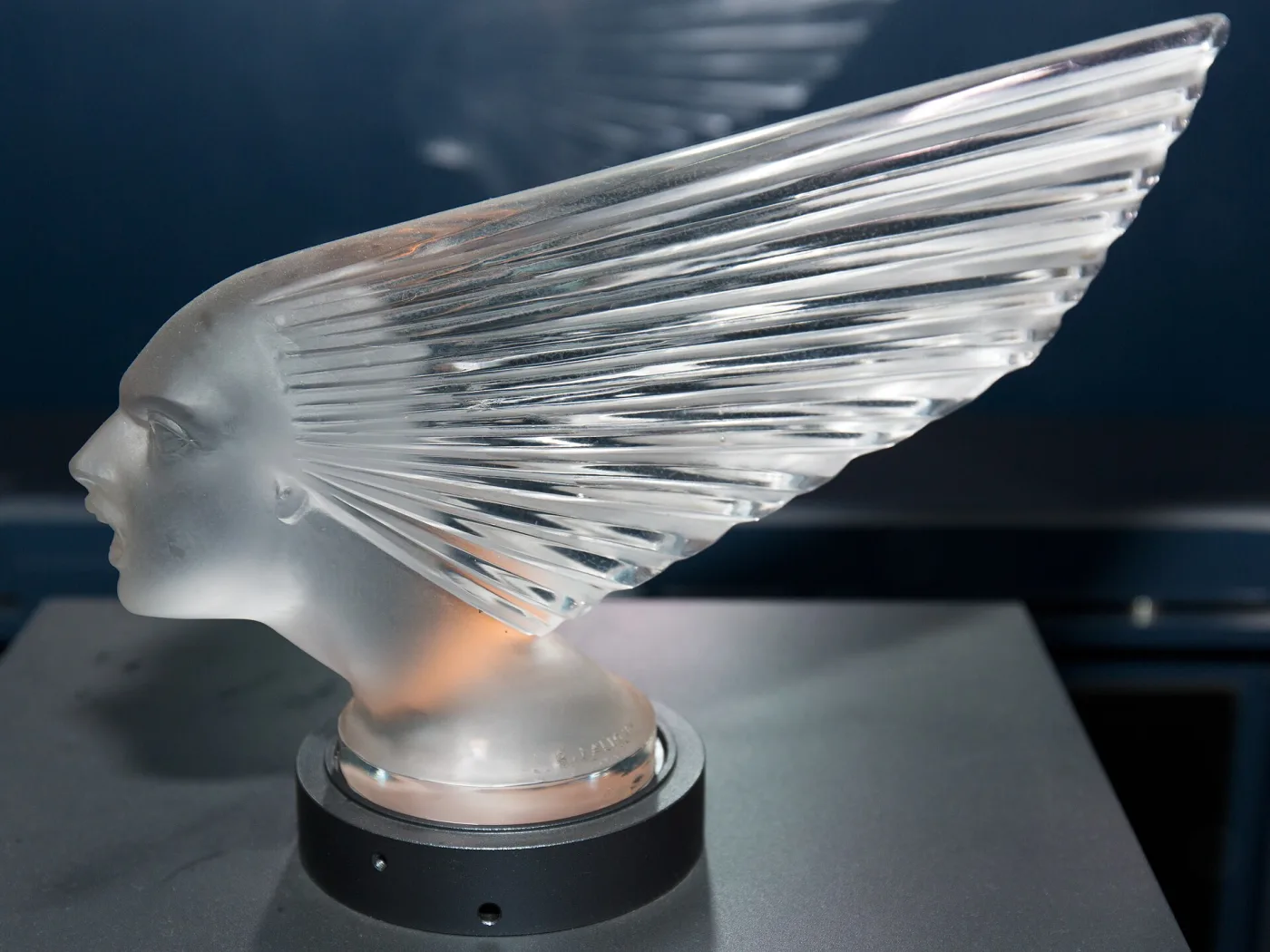
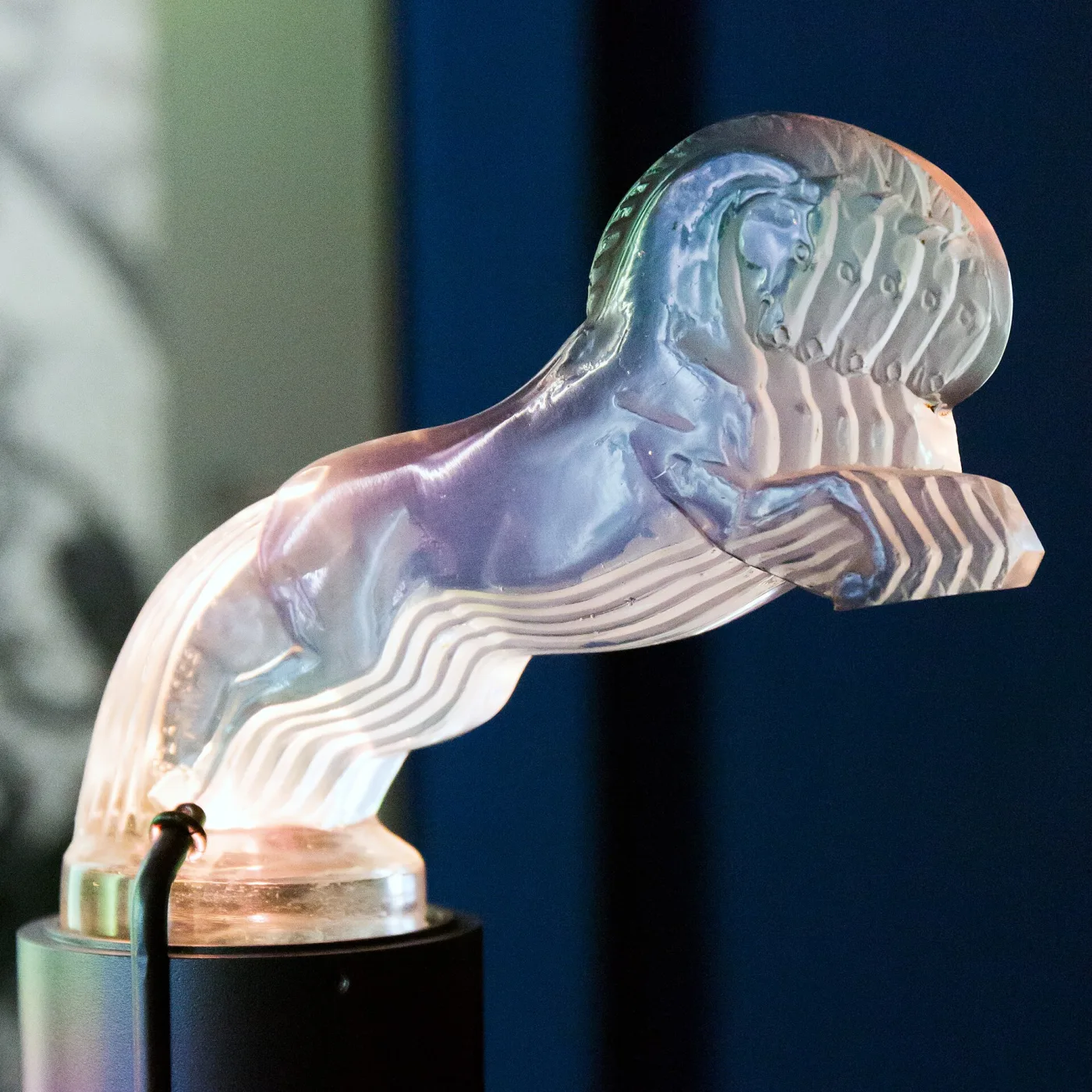
Car mascots are the category where Lalique meets the motor car, and they are collected as fiercely by car people as by glass people. Both of these were designed to bolt to a radiator cap, and many were sold with an illuminated base that lit the glass from below — which is how they are displayed here, and a caution worth stating: the colour you see in a lit display is the lamp, not the glass. Judge colour on a mascot only in daylight, off its base. Two further points. Mascots led hard lives on the front of moving cars, so chips to the extremities — the tip of a wing, a horse’s ear, the point of a beak — are the norm and are priced in, but a re-polished chip that has altered the profile is a different matter. And the model names are the vocabulary of the field: reference lists are organised by name and year, so identifying the model is the first step, not the last.
Decorative Objects
Beyond functional categories, Lalique created purely decorative objects including figurines, paperweights, bookends, clocks, mirrors, and picture frames. Figural sculptures depict female nudes, animals, and mythological subjects. Paperweights feature fish, birds, and other naturalistic motifs. These objects offer collecting opportunities across price ranges, from modest paperweights to significant sculptural pieces.
Popular Designs and Patterns
Certain Lalique designs achieved iconic status, remaining recognizable and desirable across collecting generations. Understanding these popular patterns helps collectors identify pieces and understand market preferences.
Nature-Inspired Designs
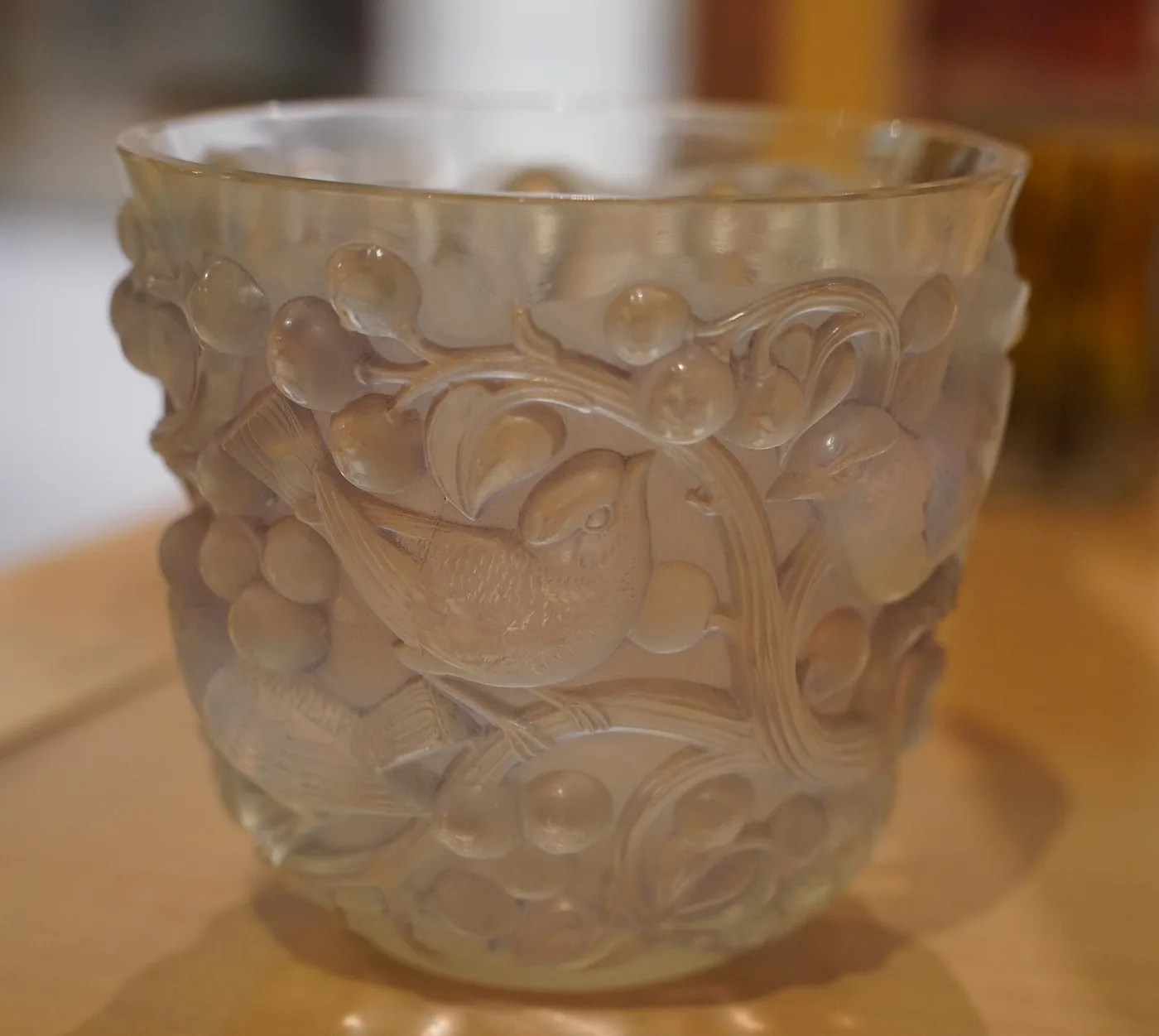
Natural subjects dominate Lalique's design repertoire. Bird designs include parakeets ("Perruches"), sparrows, swallows, and peacocks. Fish motifs appear on vases, bowls, and paperweights. Floral patterns feature roses, thistles, dahlias, and cherry blossoms. Insect designs include dragonflies, beetles, and butterflies recalling Art Nouveau origins. These nature-inspired patterns reflect René Lalique's lifelong fascination with organic forms and textures.
Female Figure Designs
The female form appears throughout Lalique's work, from his earliest jewelry through his final glass designs. Dancing figures on the "Bacchantes" vase epitomize Art Deco idealization of the female body. Nymph and naiad figures appear in decorative panels and fountain elements. Stylized female faces serve as perfume bottle stoppers and decorative accents. These designs continue resonating with collectors appreciating Lalique's elegant celebration of feminine beauty.
Geometric and Abstract Patterns
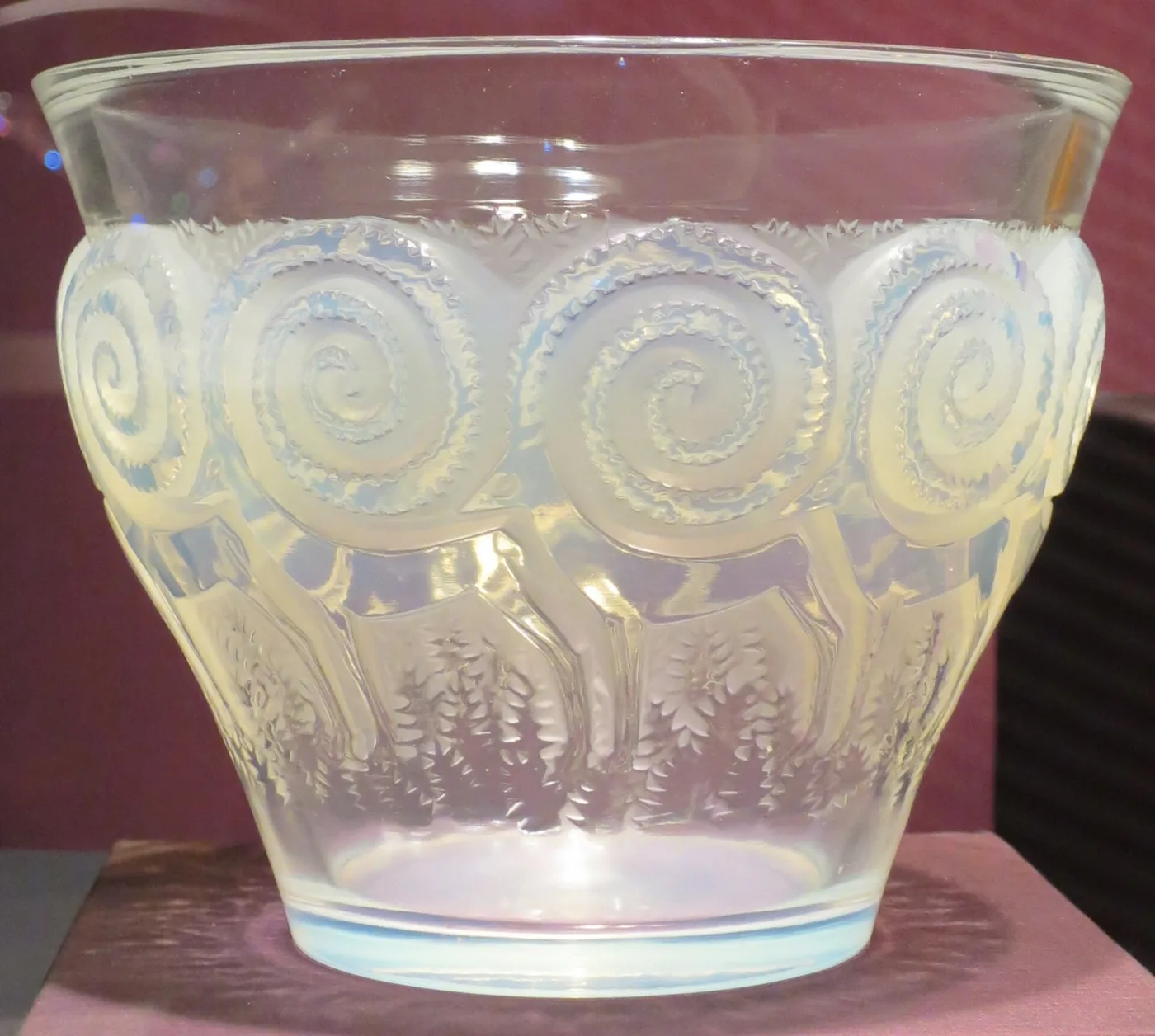
Art Deco influence brought geometric patterns into Lalique's repertoire. Spiral designs like "Tourbillons" demonstrate kinetic visual effects through molded swirls. Stepped and angular forms reflect modernist architectural influences. Rhythmic repeating patterns create visual movement across vessel surfaces. These geometric designs appeal to collectors favoring Art Deco aesthetics over naturalistic subjects.
Collectible Design Series
Certain designs achieved particular collectible status. The "Ceylan" vase with paired budgies remains perpetually popular. "Rampillon" features geometric floral patterns in high relief. "Formose" showcases swimming goldfish in dynamic arrangements. "Gui" depicts mistletoe in delicate relief. Knowledge of these recognized designs helps collectors identify pieces and understand relative values within the Lalique market.
Colors and Finishes
Lalique's sophisticated use of color and surface treatment distinguishes his work from other glass makers. Understanding these characteristics aids authentication and appreciation of individual pieces.
Opalescent Glass
Opalescence represents Lalique's signature glass effect, creating a bluish-white glow where glass is thickest, distinct from the uniform opacity found in antique milk glass. This effect results from adding phosphates or fluorides to the glass formula. The opalescence appears strongest in relief areas and recessed molding, creating dramatic contrast with thinner, clearer sections. Authentic opalescent Lalique glass shows subtle color gradation impossible to replicate in modern reproductions. This characteristic proved particularly effective for Art Deco designs where interplay of light and shadow defined the visual experience.
Colored Glass
Beyond clear and opalescent glass, Lalique produced pieces in various colors. Blue ranged from pale ice blue to deep cobalt. Amber tones from golden honey to rich brown. Green appeared in both yellow-green and blue-green variations. Red and orange pieces, relatively rare, command premium prices. Black glass, often combined with chrome or black enamel details, reflected Art Deco sophistication. Gray glass, produced primarily in the 1930s, offers a distinctive collected category.
Surface Treatments
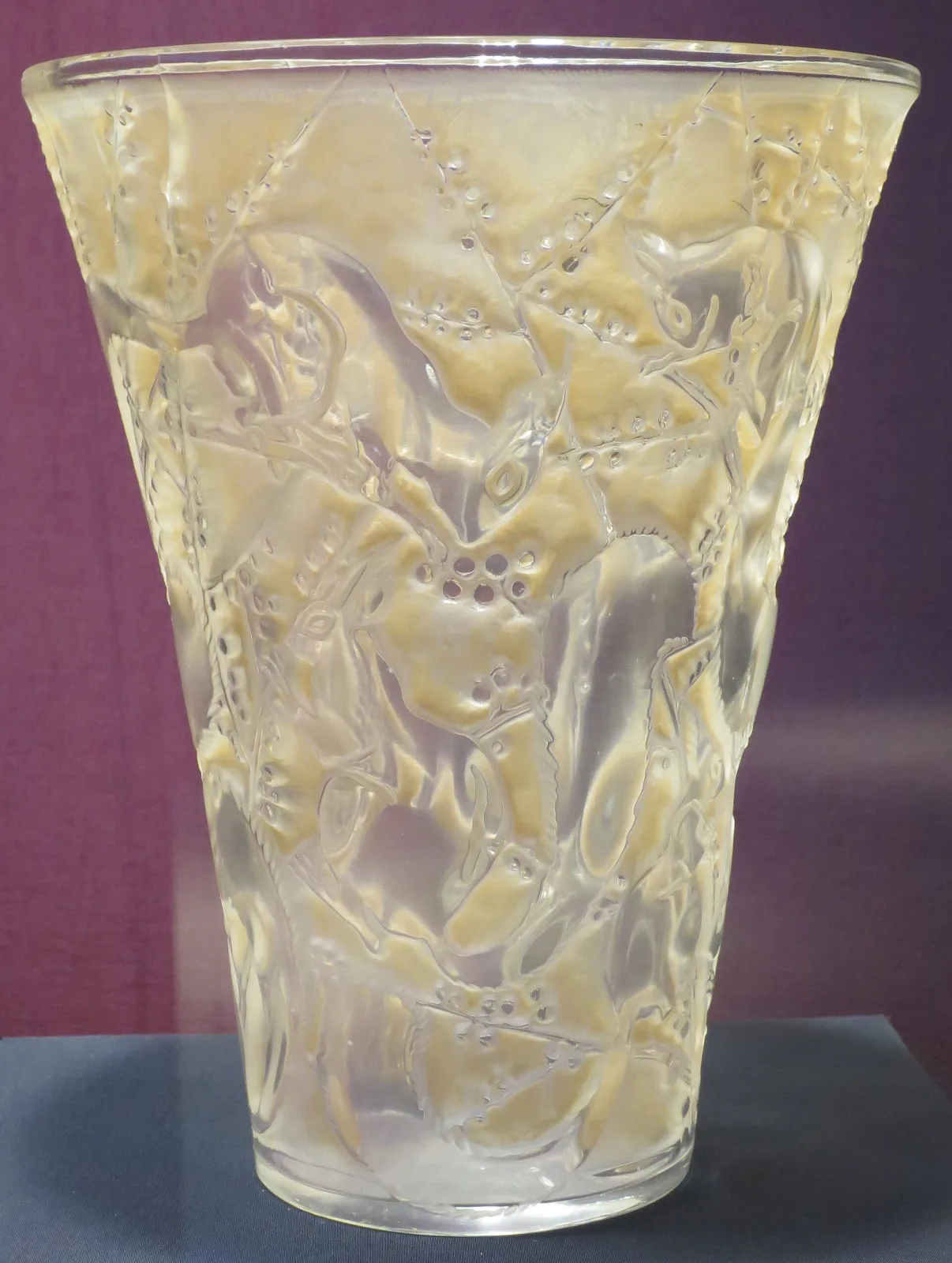
Lalique employed various surface treatments creating distinctive visual effects. Frosted glass, achieved through acid etching or sandblasting, creates matte surfaces contrasting with polished areas. Polished and unpolished areas within single pieces create visual depth and pattern definition. Patina, originally applied enamel or stain in recessed areas, enhances relief pattern visibility. Some pieces featured painted or enameled accents adding color to otherwise clear or frosted glass.
Original vs. Altered Finishes
Collectors must distinguish original finishes from later alterations. Original patina, applied during manufacture, shows consistent application within pattern recesses. Later "restored" patina may appear uneven or inappropriately applied. Polishing to remove damage or wear can affect original surface texture. Examination under magnification reveals alterations affecting value and authenticity assessment.
Authenticating Lalique Glass
Proper authentication requires examining multiple characteristics, as no single feature definitively confirms authenticity. Systematic assessment of signatures, quality, design, and condition builds confidence in attribution.
Signature Analysis
Begin authentication by examining any signatures or marks. Authentic signatures show consistent style appropriate to the piece's apparent period. Engraved signatures display clean, confident execution without crude corrections. Molded signatures appear integral to the glass, formed during manufacture rather than added afterward. The signature's placement should be consistent with documented examples of the specific design. Research reference books and auction records to verify signature styles for specific periods and designs.
Quality Assessment
Authentic Lalique glass demonstrates exceptional manufacturing quality. Examine the precision of molded relief details, looking for sharp definition and consistent depth. Surface finish should appear professional and intentional, whether polished, frosted, or combined. Glass quality should be consistent throughout without obvious bubbles, inclusions, or manufacturing defects in visible areas. The weight and balance of the piece should feel appropriate for its size and apparent wall thickness.
Design Verification
Compare the piece to documented examples in reference books and auction records. Authentic designs should match documented dimensions, patterns, and variations. Be suspicious of pieces that don't correspond to any known Lalique design, though remember that not all authentic designs are well-documented. Proportions and pattern arrangements should match reference examples, as reproductions often show subtle differences in scale or detail arrangement.
Material Characteristics
Authentic René Lalique glass has specific material characteristics. Pre-1945 pieces use demi-crystal formulas producing distinctive optical properties. Post-1945 lead crystal has different weight and brilliance. Opalescence in authentic pieces shows characteristic blue-white glow impossible to exactly replicate. UV light can reveal fluorescence patterns helping distinguish old from new glass. These material assessments require experience and comparison with known authentic examples.
Professional Authentication
For significant purchases, consider professional authentication. Auction houses employ specialists who examine pieces before sale. Dealers specializing in Lalique can provide expertise regarding authenticity. Museum curators may offer opinions on exceptional pieces. Documentation from recognized experts adds value and confidence to significant acquisitions. The cost of professional authentication is justified for valuable pieces where authenticity questions exist.
Spotting Fakes and Reproductions
The Lalique market contains numerous reproductions, ranging from honest reissues to deliberate fakes. Understanding common deceptions helps collectors avoid costly mistakes.
Contemporary Production vs. Vintage
The Lalique company continues producing many of René Lalique's original designs. These legitimate contemporary pieces are marked appropriately and sold as current production. Problems arise when these pieces are misrepresented as vintage. Contemporary pieces have different signatures, use full lead crystal rather than original formulas, and show modern manufacturing characteristics. Honest dealers clearly distinguish vintage pieces from contemporary reissues.
Czech and Asian Reproductions
Reproductions from Czech Republic and Asian manufacturers flood the market. These pieces may copy Lalique designs without authorization, sometimes adding fake signatures. Quality varies from obviously crude to deceptively skillful. Czech reproductions often show good technical quality but use different glass formulas and lack authentic signatures. Asian reproductions typically show inferior molding precision and glass quality. These pieces may legitimately sell as decorative objects but become problematic when misrepresented as authentic Lalique.
Fake Signatures
Adding fake signatures to unsigned pieces or reproductions is common fraud. Examination reveals inconsistencies with authentic signature styles. Fake engraved signatures often appear too shallow, irregular, or improperly positioned. Added signatures may show tool marks inconsistent with period techniques. Compare suspect signatures to documented authentic examples, noting letter formation, spacing, and execution quality. When signatures don't match the piece's other characteristics, question authenticity.
Altered Pieces
Some fraud involves altering authentic pieces. Grinding away damage can affect original signatures or surface treatments. Adding patina to previously clear pieces misrepresents original condition. Converting damaged pieces into "artistic" fragments disguises their compromised state. Careful examination reveals alterations through inconsistent wear patterns, tool marks, and surface irregularities.
Red Flags for Collectors
Several warning signs suggest problematic pieces. Unusually low prices for supposedly valuable pieces warrant skepticism. Sellers unable to provide provenance information or detailed condition reports raise concerns. Signatures inconsistent with apparent period or design indicate problems. Poor quality inconsistent with Lalique's manufacturing standards suggests reproduction. Online purchases without physical examination carry inherent risks. Trust your instincts when something seems wrong, and seek expert opinions before significant purchases.
Condition Assessment
Condition significantly affects Lalique value, making systematic assessment essential for collecting decisions. Understanding common condition issues helps evaluate pieces appropriately.
Chips and Cracks
Glass damage ranges from minor fleabites to significant chips and cracks. Examine pieces carefully under good lighting, feeling edges for chips invisible to casual observation. Hairline cracks may appear only under magnification or specific lighting angles. Interior cracks from thermal shock sometimes escape notice until light passes through at specific angles. Any structural damage significantly reduces value, with severity determining the extent of impact.
Surface Wear and Scratches
Normal handling causes surface wear over decades of existence. Minor scratches consistent with age and use may be acceptable on older pieces. Excessive wear from harsh cleaning or abrasion reduces appeal and value. Deep scratches affecting decorative surfaces prove particularly detrimental. Examine surfaces under magnification to assess wear severity and pattern.
Patina and Finish Condition
Original patina in relief recesses enhances pattern visibility and authenticity. Missing patina from cleaning or wear affects appearance while potentially confirming authentic age. Reapplied patina may look different from original applications. Surface finishes should show appropriate wear consistent with age and use. Polished pieces should maintain original surface quality without excessive wear or amateur repolishing.
Repairs and Restorations
Previous repairs affect value and should be disclosed. Professional restorations using appropriate techniques may be acceptable for rare pieces. Amateur repairs using inappropriate adhesives or methods cause additional damage and significantly reduce value. Examine pieces carefully for evidence of repairs, including glue residue, misaligned sections, and fill materials. UV light reveals some adhesives invisible under normal lighting.
Condition Grading
Collectors use various grading systems describing condition. "Mint" indicates no damage or wear visible to naked eye. "Excellent" allows minor wear consistent with age. "Good" indicates more obvious wear or minor damage not affecting structural integrity. "Fair" describes pieces with more significant issues remaining displayable. "Poor" indicates major damage affecting display or structural integrity. Understanding these gradations helps interpret auction descriptions and dealer offerings.
Valuation Factors
Multiple factors interact to determine Lalique values. Understanding these considerations helps collectors make informed decisions about purchases and sales.
Design Rarity and Desirability
Not all Lalique designs hold equal value. Rare designs produced in limited quantities command premiums over common patterns. Iconic designs like "Bacchantes" maintain strong demand regardless of supply. Large, impressive pieces typically exceed smaller examples of similar designs. Car mascots, due to limited production numbers and specialized collector base, often achieve remarkable prices. Research auction records to understand relative values of specific designs.
Period and Attribution
René Lalique period pieces (pre-1945) command highest prices. Art Deco era pieces from the 1920s and 30s represent peak collectibility. Post-1945 Marc Lalique pieces hold value but typically below equivalent René Lalique designs. Contemporary production pieces sell as luxury decorative objects rather than collectible antiques. Clear attribution to specific periods through signatures, design records, and provenance strengthens value.
Color and Finish
Certain colors command premiums over common clear or opalescent glass. Red, black, and unusual color variations typically exceed standard colors. Original patina and surface treatments enhance value when properly preserved. Pieces retaining original presentation boxes or documentation add value through completeness and provenance support.
Size and Visual Impact
Larger pieces typically command higher prices than smaller examples. Monumental vases and architectural elements represent significant investments but offer dramatic visual impact. Small pieces like perfume bottles and paperweights remain accessible to beginning collectors. Consider display space and practical requirements alongside value considerations.
Market Conditions
Lalique values fluctuate with broader economic conditions and collecting trends. The market strengthened considerably in recent years, with renewed appreciation for Art Nouveau and Art Deco decorative arts. Major auction results influence private sale pricing. Geographic market variations exist, with stronger markets in France, United States, and Japan. Monitor auction results and dealer offerings to understand current market conditions for specific categories and designs.
Building a Lalique Collection
Thoughtful collecting strategies help build meaningful collections while managing investment and space considerations. These approaches apply whether collecting broadly or focusing on specific categories.
Defining Your Focus
Consider specializing rather than collecting randomly. Focus options include specific object types (perfume bottles, vases, car mascots), design periods (Art Nouveau, Art Deco, post-war), subjects (birds, female figures, geometric patterns), or colors. Specialization enables developing deep expertise and building comprehensive holdings in chosen areas. However, remain flexible enough to acquire exceptional pieces outside your primary focus.
Education and Research
Invest in education before making significant purchases. Acquire reference books covering Lalique history, designs, and signatures. Study museum collections featuring Lalique glass. Attend auction previews to examine pieces and compare your assessments to expert cataloging. Join collector organizations and online communities sharing knowledge and experiences. Handle pieces whenever possible to develop tactile familiarity with authentic Lalique characteristics.
Building Dealer Relationships
Establish relationships with reputable Lalique dealers. Quality dealers provide authentication expertise, fair pricing, and alerts to pieces matching your interests. Auction house specialists similarly offer resources and information. Building these relationships requires demonstrating serious interest and willingness to purchase. Good dealers become valuable partners in building collections, offering expertise beyond what individual collectors can develop.
Starting Points
Beginning collectors often start with accessible categories before progressing to major pieces. Paperweights and small decorative objects offer entry points at modest prices. Post-war production pieces provide Lalique quality at lower cost than vintage. Perfume bottles span price ranges from affordable to exceptional. As knowledge and resources grow, upgrade to more significant pieces while potentially selling earlier purchases to fund better examples.
Documentation and Records
Maintain careful records for each acquisition. Photograph pieces thoroughly from multiple angles, documenting signatures and any condition issues. Record purchase information including source, date, and price paid. Preserve any authentication documentation, original boxes, or provenance information. These records prove valuable for insurance, eventual sale, and personal reference. Well-documented pieces command higher prices and sell more easily than those lacking provenance.
Care and Preservation
Proper care preserves your collection's condition and value while allowing safe display and enjoyment. Glass requires specific handling considerations to prevent damage.
Cleaning Methods
Clean Lalique glass carefully using appropriate methods. Dust regularly with soft, lint-free cloths or fine brushes reaching into relief details. For more thorough cleaning, use lukewarm water with minimal mild dish soap. Avoid hot water, harsh chemicals, or abrasive materials that could damage surfaces. Never use dishwashers or ultrasonic cleaners on valuable pieces. Dry thoroughly with soft cloths, ensuring no moisture remains in relief areas. For pieces with original patina, avoid aggressive cleaning that might remove intentional surface treatments.
Handling Precautions
Always handle glass with clean, dry hands. Support pieces from the bottom rather than grasping rims, stems, or delicate elements. Move one piece at a time, never stacking or carrying multiple items. Clear workspace areas before handling pieces. Be particularly careful with pieces having projecting elements or thin walls. When showing pieces to others, provide handling guidance and supervise carefully.
Display Considerations
Display glass away from high-traffic areas where pieces might be bumped. Use display cabinets with glass shelves allowing light transmission while protecting from dust. Ensure shelves provide adequate support without sagging. Position lighting to showcase opalescence and surface treatments without excessive heat that might stress glass. Avoid direct sunlight that could fade patina or stress glass through thermal cycling.
Storage Solutions
Store pieces not on display carefully wrapped in acid-free tissue paper. Use sturdy boxes with dividers preventing pieces from touching. Store boxes in stable environments away from temperature extremes. Label boxes clearly with contents. Never stack glass pieces directly on each other. For extended storage, inspect periodically for condition changes or storage problems.
Insurance Documentation
Maintain adequate insurance coverage for valuable collections. Document pieces with detailed photographs and written descriptions. Update appraisals periodically as market values change. Consider specialized collectibles insurance providing broader coverage than standard homeowners policies. Keep documentation in secure locations separate from the collection itself.
Market Trends and Investment
Understanding current market trends helps collectors make informed acquisition and disposition decisions. Lalique markets have shown strength in recent years as appreciation for Art Nouveau and Art Deco continues growing.
Recent Market Performance
Lalique markets have strengthened considerably since the early 2000s. Major auction houses report increased interest and rising prices for quality pieces. Art Deco glass, including Lalique, has benefited from broader appreciation for the period. René Lalique pieces particularly have seen strong appreciation, with record prices for exceptional examples. The market shows depth across price ranges, from accessible entry-level pieces to museum-quality rarities.
Trending Categories
Certain categories show particular current strength. Car mascots continue commanding exceptional prices due to rarity and specialized collector interest. Large architectural pieces attract both collectors and interior designers. Art Nouveau jewelry, when available, achieves remarkable results. Certain colored glass variations show increased collector interest. Monitor auction results to identify emerging trends and potentially undervalued categories.
Investment Considerations
While Lalique can appreciate, approach collecting primarily for enjoyment rather than investment. Buy quality pieces you genuinely appreciate, as they provide value through enjoyment regardless of financial appreciation. The strongest performers combine rarity, condition, important designs, and documented provenance. However, decorative arts markets can be unpredictable, with tastes changing over time. Don't invest more than you can afford, and maintain realistic expectations about returns.
Future Outlook
Interest in quality decorative arts continues strong among collectors, designers, and museums. Lalique's combination of artistic merit, technical innovation, and historical importance appeals to diverse collectors. Limited supply of René Lalique period pieces suggests continued appreciation potential for authentic vintage pieces. Contemporary production maintains brand presence while original pieces become increasingly scarce. Focus on acquiring pieces you genuinely appreciate, positioned to enjoy them regardless of market performance.