Antique Political Campaign Memorabilia Identification Guide: Buttons, Ribbons, and Dating
Political campaign memorabilia is one of the richest and most closely documented corners of American collecting. Every four years, candidates and their supporters produced a flood of buttons, ribbons, badges, posters, and novelties designed to put a name and a face in front of voters. Because these objects are tied to specific, datable elections and to individual candidates, they offer something most antiques cannot: a precise moment in history, printed right on the object.
That precision cuts both ways. A genuine pinback button from a hard-fought nineteenth-century race can be worth thousands of dollars, while a modern reproduction of the very same design—often made to be sold as a cheap novelty—can look nearly identical in a photograph yet be worth almost nothing. The difference lives in the construction method, the materials, the tiny union labels and back-paper markings, the style of the pin assembly, and the specific pattern of age a real campaign relic accumulates.
This guide walks through how to read political campaign memorabilia the way an experienced collector does: recognizing the major formats and the eras they belong to, dating a piece by how it was made, understanding what drives value, and—most importantly—separating authentic period items from the reproductions and outright fakes that dominate the low end of the market.
Table of Contents
- What Political Campaign Memorabilia Is
- A Timeline: Dating by Format and Construction
- The Main Formats You Will Encounter
- The Anatomy of a Pinback Button
- Union Labels, Back Paper, and Maker Marks
- Jugates, Coattails, and Slogans
- Dating Clues Beyond Construction
- Grading Condition Honestly
- Spotting Reproductions and Fakes
- What Drives Value
- A Step-by-Step Inspection Routine
- Care, Storage, and Preservation
What Political Campaign Memorabilia Is
Political campaign memorabilia—often called political Americana—is any object produced to promote a candidate, party, cause, or issue during an election. The category spans presidential races, which dominate the hobby, as well as gubernatorial, congressional, mayoral, and even referendum campaigns. It includes worn items (buttons, ribbons, badges), display items (posters, banners, window cards), and a vast field of novelties from bandannas and canes to tokens, mugs, and mechanical toys.
The hobby is unusually well organized. The American Political Items Collectors (APIC), founded in 1945, maintains a shared vocabulary, publishes reference material, and sustains a network of specialists. Auction houses such as Hake's—founded in 1967 as America's first auction house devoted to pop-culture artifacts—have built decades of catalogued sales that function as a price and authentication record. For collectors, this documentation is a gift: nearly every important design has been photographed, dated, and described.
Politically themed items overlap with several neighboring fields. Patriotic and flag-themed pieces sit close to Americana and patriotic collectibles; campaign medalets and tokens border on numismatics; and paper items such as posters and cards connect to broader ephemera collecting. Understanding those cousins helps you place a piece in its manufacturing and market context.
A Timeline: Dating by Format and Construction
The single most useful dating tool is format, because the technology of campaign advertising changed in a fairly predictable sequence. Each new method has a known introduction date, so identifying how an item was made brackets when it could have been made. No timeline is absolute—older methods persisted alongside newer ones—but the broad arc is reliable enough to anchor an estimate within an era.
The Medalet and Token Era (1789–1850s)
The earliest campaign items were not buttons in the modern sense. George Washington's 1789 inauguration produced clothing buttons with patriotic inscriptions, and the first half of the nineteenth century saw struck brass medalets, tokens, and thread-back "shank" buttons promoting candidates. These items are scarce, often small, and command serious money when authentic. They share manufacturing DNA with early coinage, so the same eye used to read a struck antique coin—checking for genuine die wear, correct metal, and period striking—applies here.
The Ferrotype and Ribbon Era (1856–1888)
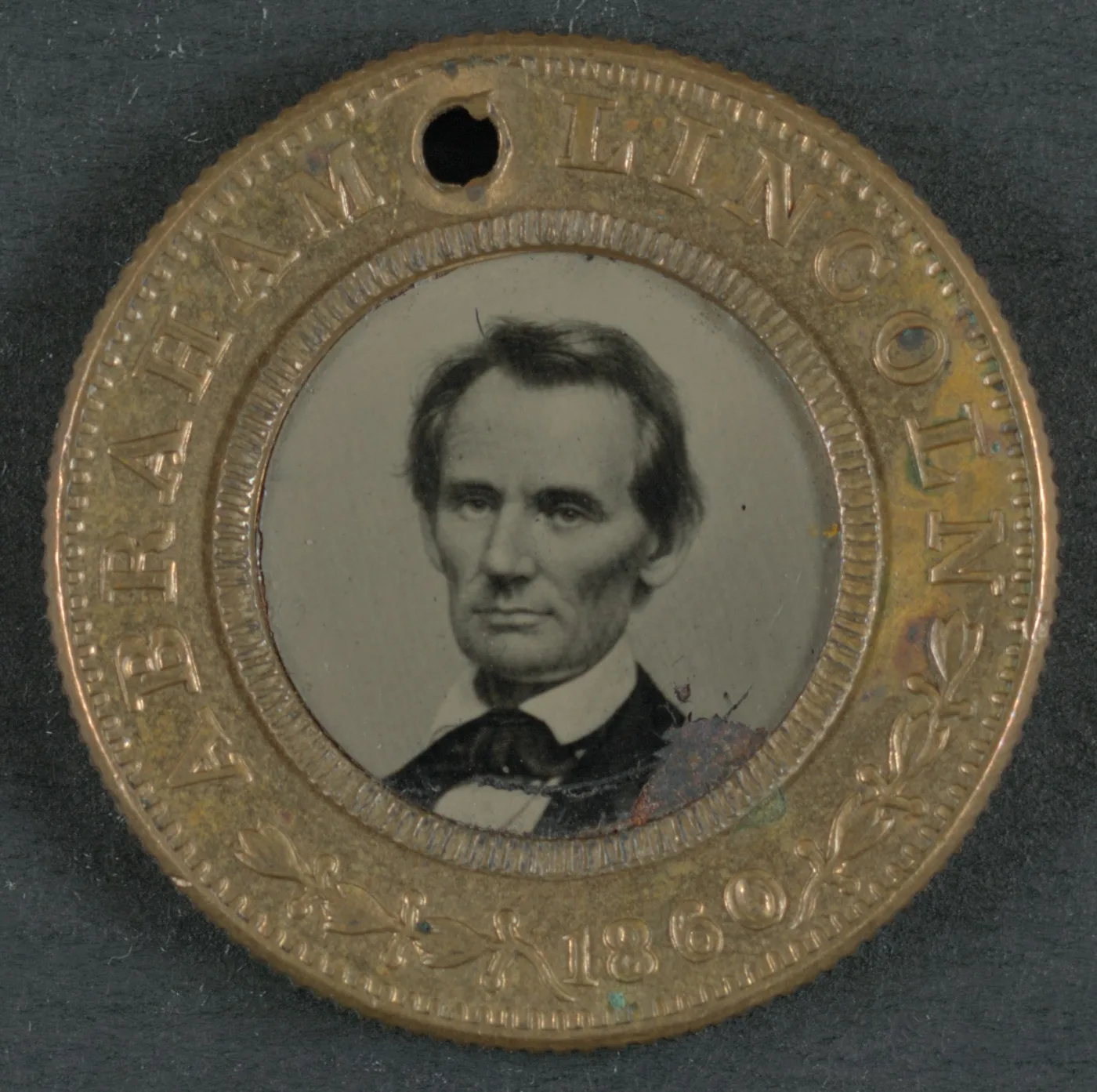
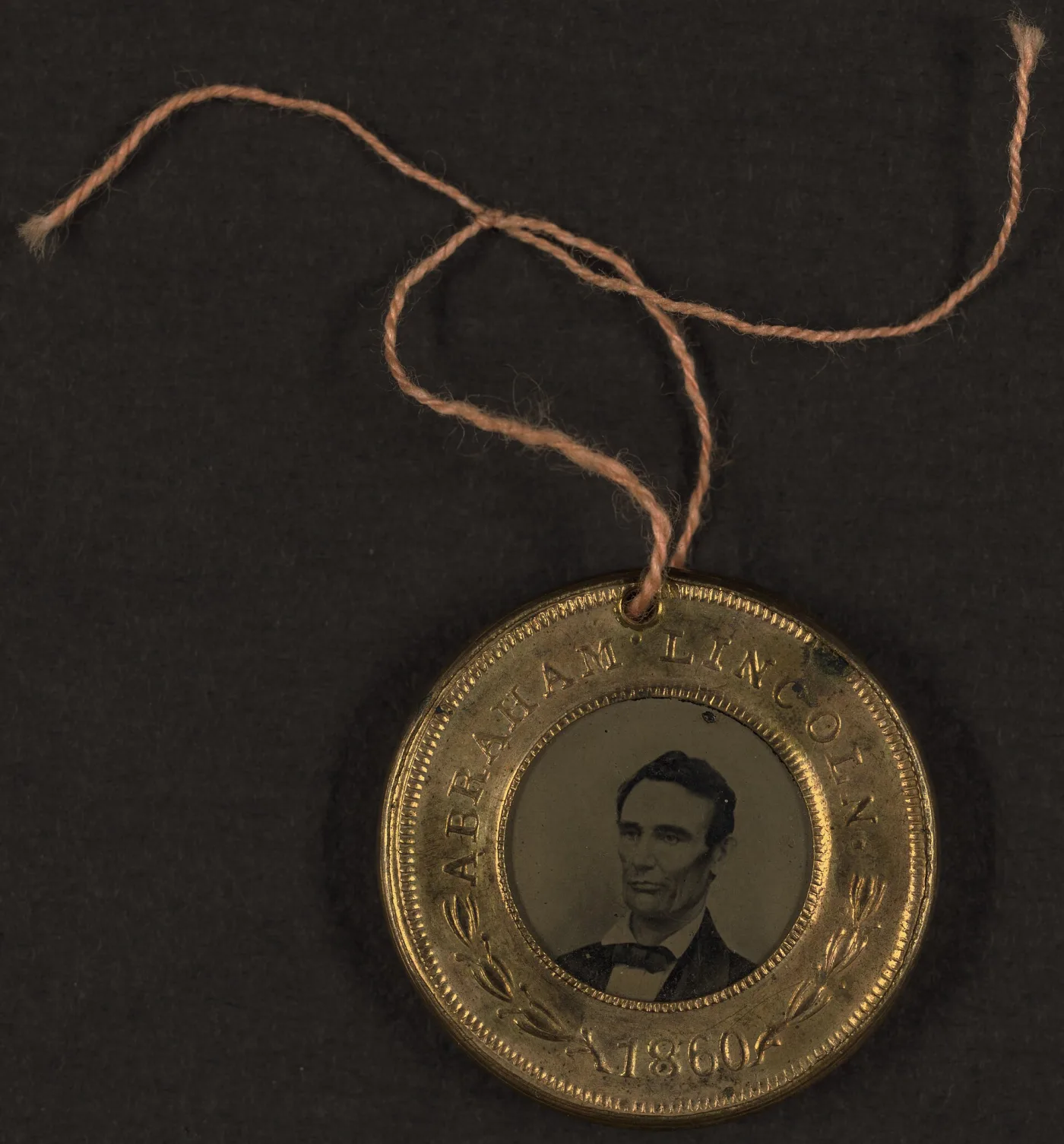
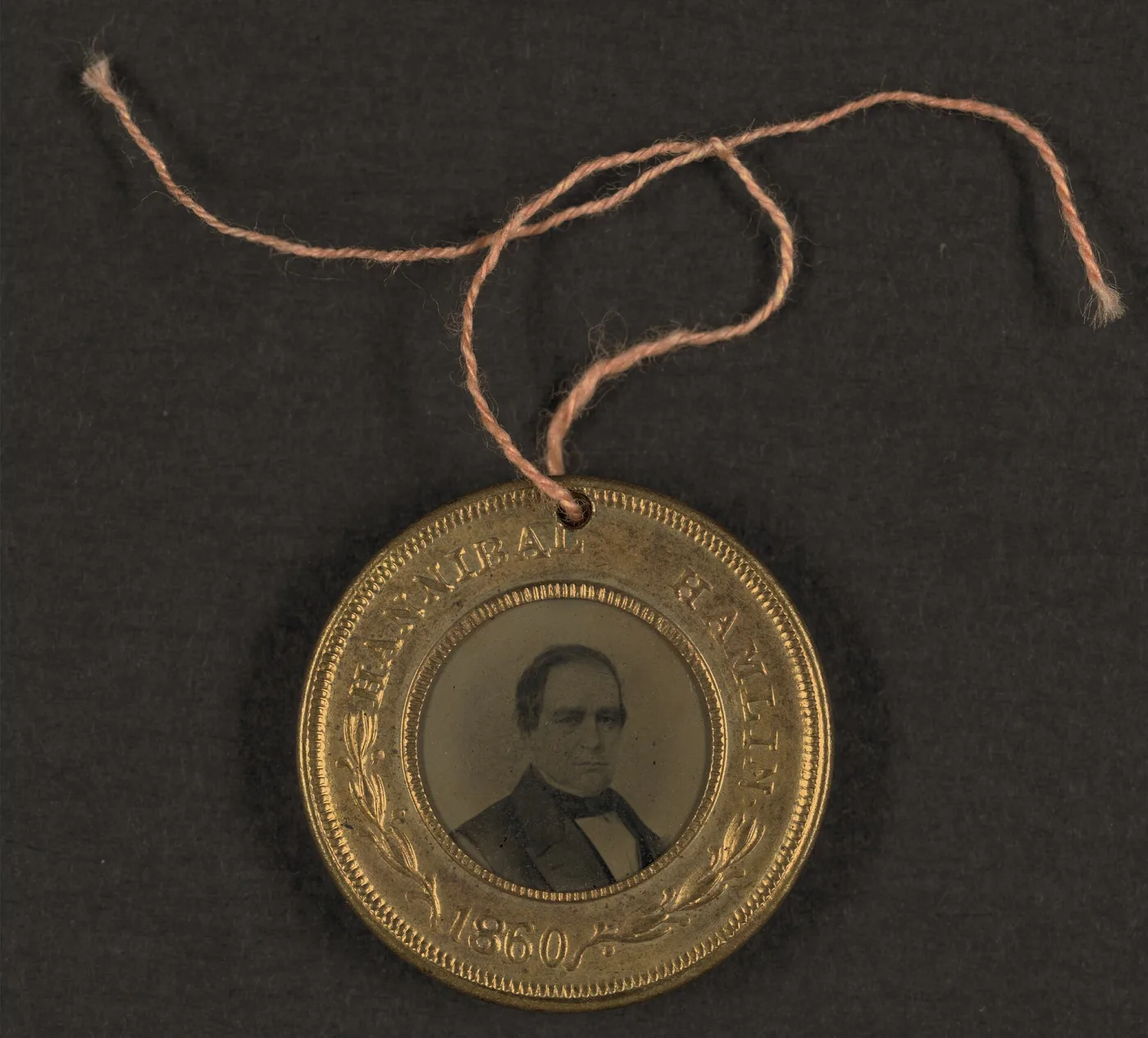
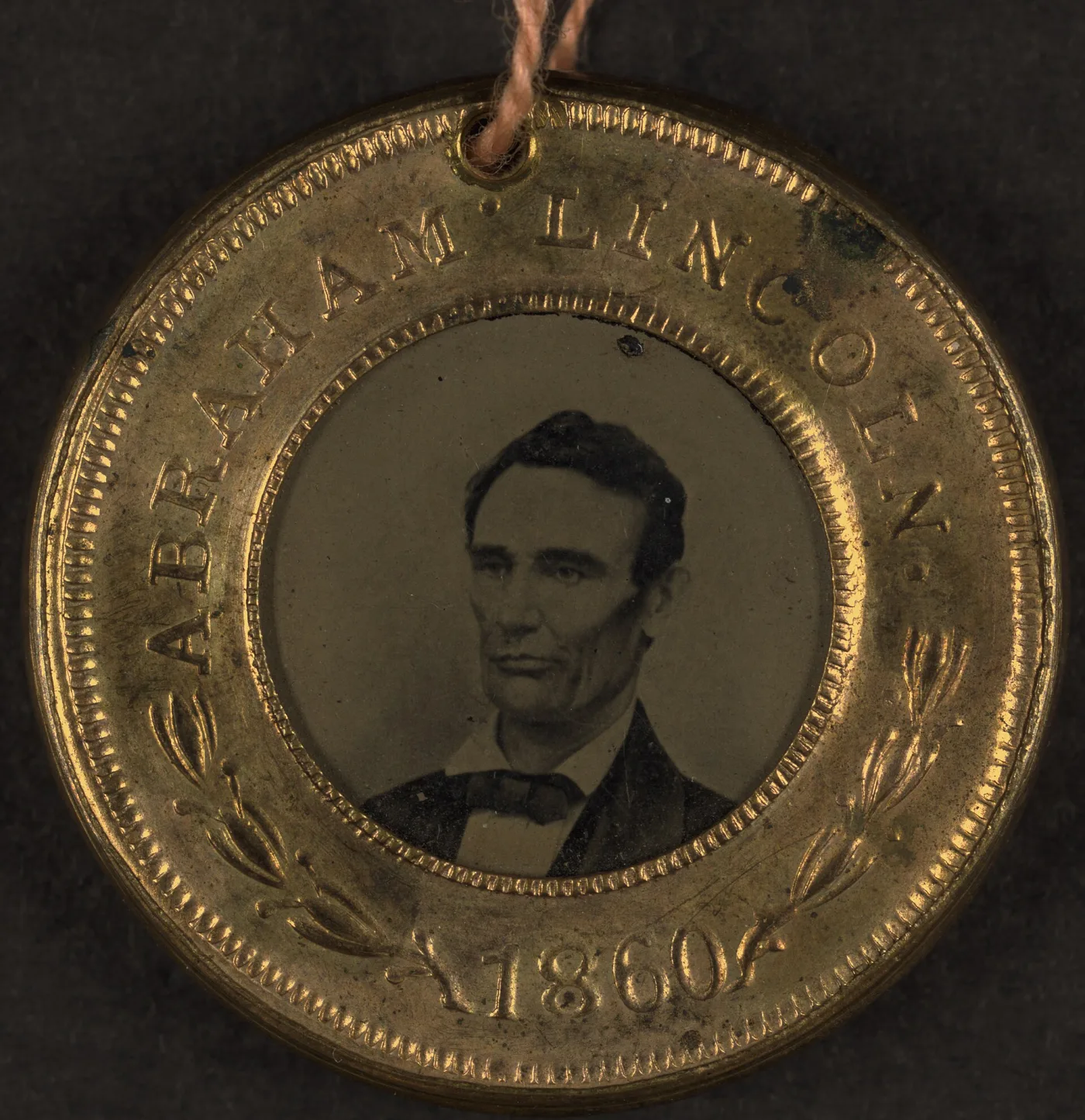
Mid-century campaigns embraced photography. Ferrotype badges—small tintype photographs of a candidate set into a stamped brass frame or "shell"—appeared from 1856 and were widely used through the 1888 election. The 1860 Lincoln and Hamlin campaign is the classic example, often as a jugate showing both the presidential and vice-presidential candidates. Silk and paper ribbons, printed with portraits and slogans and worn from a lapel, were also central to campaigns of this period. Because ferrotypes and ribbons are fragile, surviving examples in good condition are highly prized.
The Celluloid Pinback Era (1896–1920s)
The modern pinback button was born in the 1890s. Amanda Lougee received an 1893 patent for a clothing button covered with a thin sheet of transparent celluloid, and the Whitehead & Hoag Company of Newark, New Jersey acquired the rights and secured a key pinback patent in 1896. This made it cheap to print a full-color image on paper, protect it under celluloid, and mount it on a metal disc with a pin. The 1896 McKinley–Bryan race is generally regarded as the first great "button" campaign, and the celluloid era from 1896 into the 1920s produced the colorful, artistic designs collectors prize most.
The Lithograph Button Era (1916–Present)
Around 1916, manufacturers introduced the lithographed button—"litho" for short—in which the design is printed directly onto a sheet of tin and the button is stamped out, with no paper or celluloid involved. Lithos were cheaper to produce and came to dominate mid- and late-twentieth-century campaigns, especially for the millions of inexpensive buttons handed out from the 1930s onward. Celluloid buttons continued to be made for premium items, so the two methods overlap, but the presence of a true litho generally signals 1916 or later.
The Modern Novelty and Reproduction Era (1960s–Present)
From the 1960s forward, campaigns expanded into an enormous range of plastic and printed novelties, while the collector market itself spawned a second, more troublesome development: mass reproductions of famous older designs. By the early 1970s these copies were so widespread that federal law intervened, a story covered in the reproductions section below. The practical takeaway is that a design's apparent age no longer guarantees the object is old.
The Main Formats You Will Encounter
Beyond the broad timeline, campaign items fall into a handful of recognizable formats. Learning the vocabulary helps you search listings accurately and compare like with like.
Pinback Buttons
The pinback button is the heart of the hobby: a round (occasionally oval or rectangular) badge with a design on the front and a pin on the back. Sizes range from tiny "sevenths" under an inch to large "buttons" of six inches or more, with common sizes clustering around 7/8", 1-1/4", and larger showpieces. Buttons are described first by construction—celluloid or litho—then by size, design, and campaign.
Ribbons, Badges, and Ferrotypes
Campaign ribbons are printed silk or paper strips worn from the lapel, often bearing a portrait, slogan, and event or delegate information. Badges combine hardware—a top bar pin, a hanging ribbon, and sometimes a metal medallion or shell at the bottom—into a single suspended assembly. Ferrotype badges, as noted above, set a small tintype portrait into a brass frame. These formats dominate the pre-button era and remain popular with convention and delegate collectors.
Posters, Banners, and Paper
Large-format paper—posters, window cards, and cloth banners—advertised candidates in shop windows and at rallies. Jugate posters showing both running mates are especially collectible. Because paper is fragile and was rarely saved, condition varies widely, and the same handling and storage cautions that apply to antique postcards and other paper collectibles apply here.
Textiles and Three-Dimensional Novelties
Campaigns produced bandannas, flags, sashes, and clothing, along with a huge variety of three-dimensional novelties: canes, torches, lanterns, mechanical toys, tokens, mugs, plates, and figural items. These "go-withs" broaden the hobby enormously and often carry strong graphic and folk appeal even when the candidate is obscure.
The Anatomy of a Pinback Button
Because buttons are the most collected—and most reproduced—format, learning how one is physically built is the foundation of authentication. A celluloid button is an assembly of distinct layers, and understanding those layers tells you both how it was made and where to look for age and originality.
The Layered Construction
A classic celluloid pinback is built by printing the design on a paper disc, laying a thin sheet of transparent celluloid over it to protect and gloss the image, then wrapping both around the edge of a metal disc. The wrapped edge is secured by a metal ring called a collet, which crimps everything tight against the back. The rolled edge where the materials fold over the rim is known as the "curl," and its appearance is a key study point.
Reading the Curl and Collet
On a genuine older celluloid, the curl is smooth and even, and the collet grips firmly with age-appropriate patina. Loose, sloppy, or bright modern collets, or a curl that looks freshly rolled, are warning signs. Because the celluloid layer is vulnerable to moisture, genuine older buttons often show brown spots or "foxing," small cracks, or crazing in the celluloid—forms of aging that are difficult to fake convincingly and that reproductions on modern materials typically lack.
Lithograph Buttons Are Different
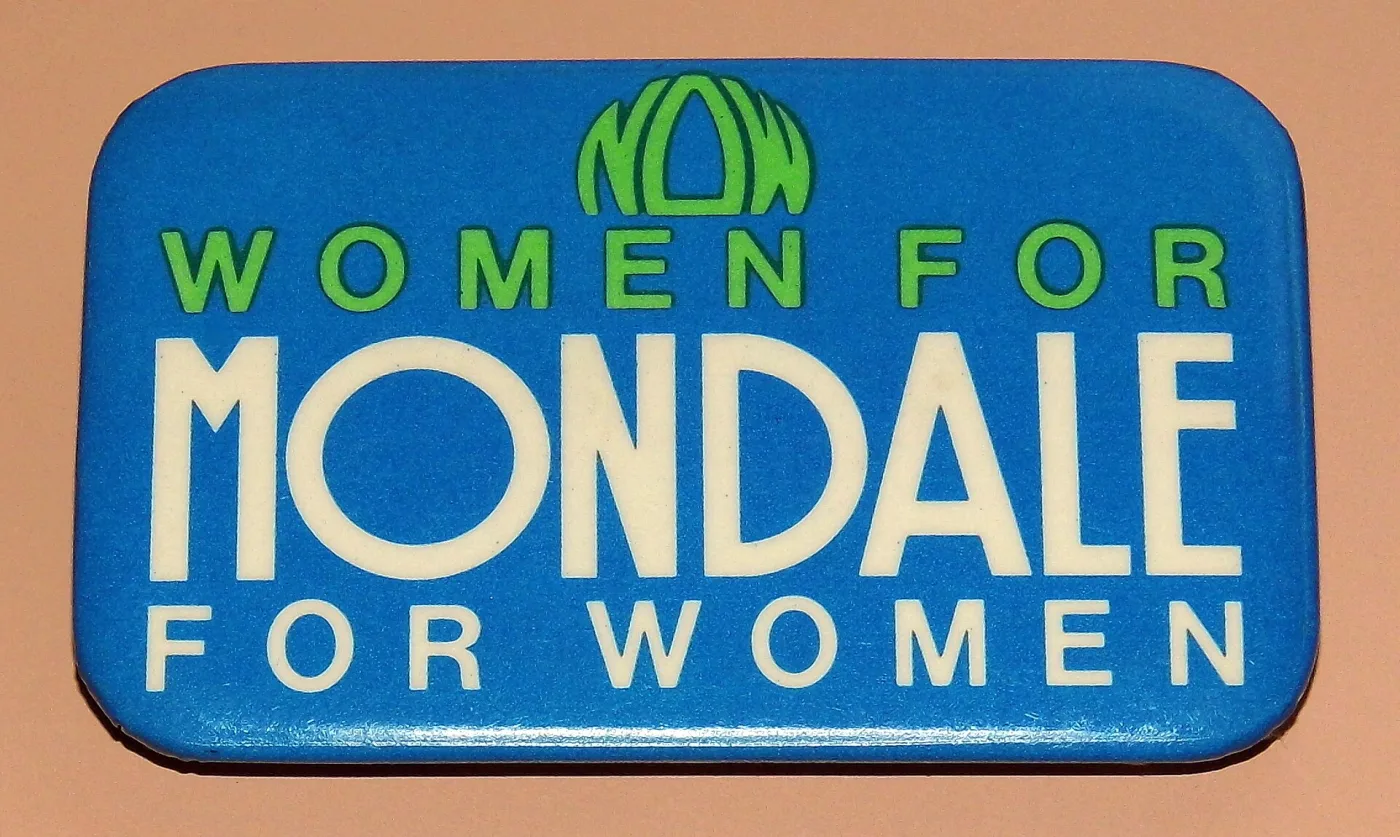
A litho button has no paper or celluloid: the image is printed straight onto tin and the button is stamped from the sheet, so it feels thinner and more metallic, and the design can show fine printing dots directly on the surface. Lithos are more prone to rust and to scratches that cut through to bare metal. Recognizing at a glance whether you are holding a layered celluloid or a printed-tin litho immediately narrows the era and the set of authenticity tests that apply.
The Pin Assembly
The style of the pin and spring on the back evolved over time, and collectors use it as a dating and authenticity clue. Early buttons used specific spring and wire arrangements; later mass-produced buttons used simpler, standardized fasteners. A pin assembly that is obviously modern on a button claimed to be a century old is a strong signal that something is wrong—either a reproduction or a rebuilt piece.

Union Labels, Back Paper, and Maker Marks
Some of the most decisive dating and authentication evidence on a button is the smallest: the printing in the margin of the front, the paper on the back, and the maker's imprint. Learning to read these details separates casual guessing from confident identification.
The Allied Printing Trades Union Label
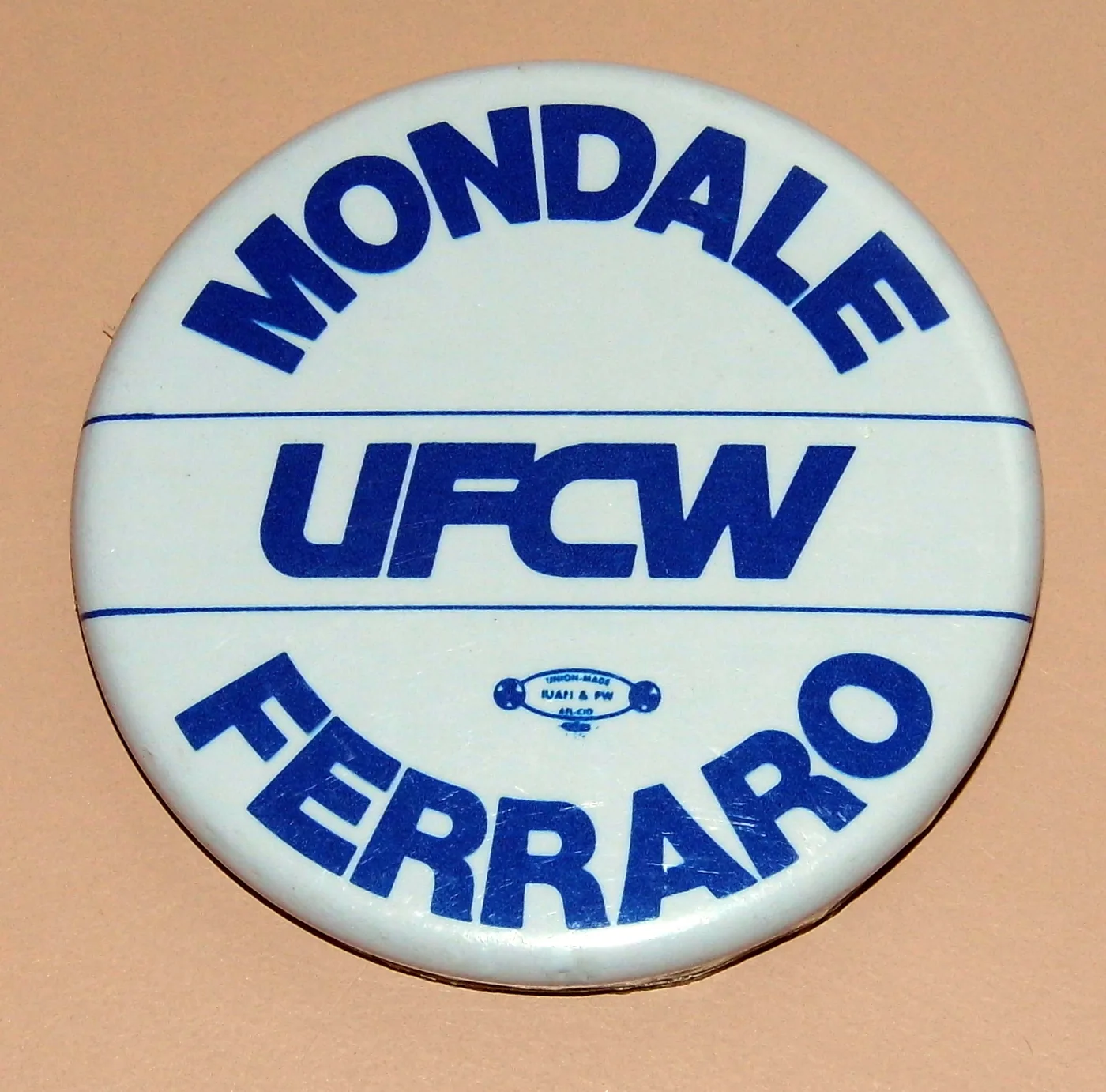
Celluloid buttons frequently carry a tiny "Allied Printing Trades" union label—a small oval or bug printed in the margin of the design. Lithographed buttons instead often carry a lithographers' union mark on the rim or stamped into the base. The presence, style, and city named in a union label can help confirm a button was produced by a union shop in a plausible period, and the specific form of the label evolved over time, offering another dating lever.
Back Paper and Manufacturer Imprints
Many celluloid buttons have a paper disc on the back—"back paper"—printed with the manufacturer's name and address, patent dates, or advertising. Whitehead & Hoag back papers are the most famous, but dozens of makers used them. Because companies changed names, addresses, and patent citations over the years, a back paper can often be dated to a specific range, much as a maker's mark can date a piece of pottery. Treat any legible imprint as a research lead and cross-check it against known operating dates using solid provenance and authentication research.
Patent Dates Set a Floor, Not a Ceiling
A patent date printed on a button or its back paper marks the earliest the design or method could have been used—it is a "no earlier than" boundary, not the date of manufacture. A button citing an 1896 pinback patent was made in 1896 or later, and the actual campaign it promotes will usually pin the year precisely. Never read a patent date as the production date itself.
When There Is No Marking
Plenty of genuine buttons, especially small or late ones, carry no union label, back paper, or maker mark at all. Absence of a marking is not proof of a reproduction. In those cases, lean harder on construction, materials, pin assembly, and honest wear to build your case rather than relying on an imprint that may never have existed.
Jugates, Coattails, and Slogans
The hobby has its own vocabulary for what a button depicts, and knowing these terms both sharpens your searches and helps you understand relative value.
Jugates and Multigates
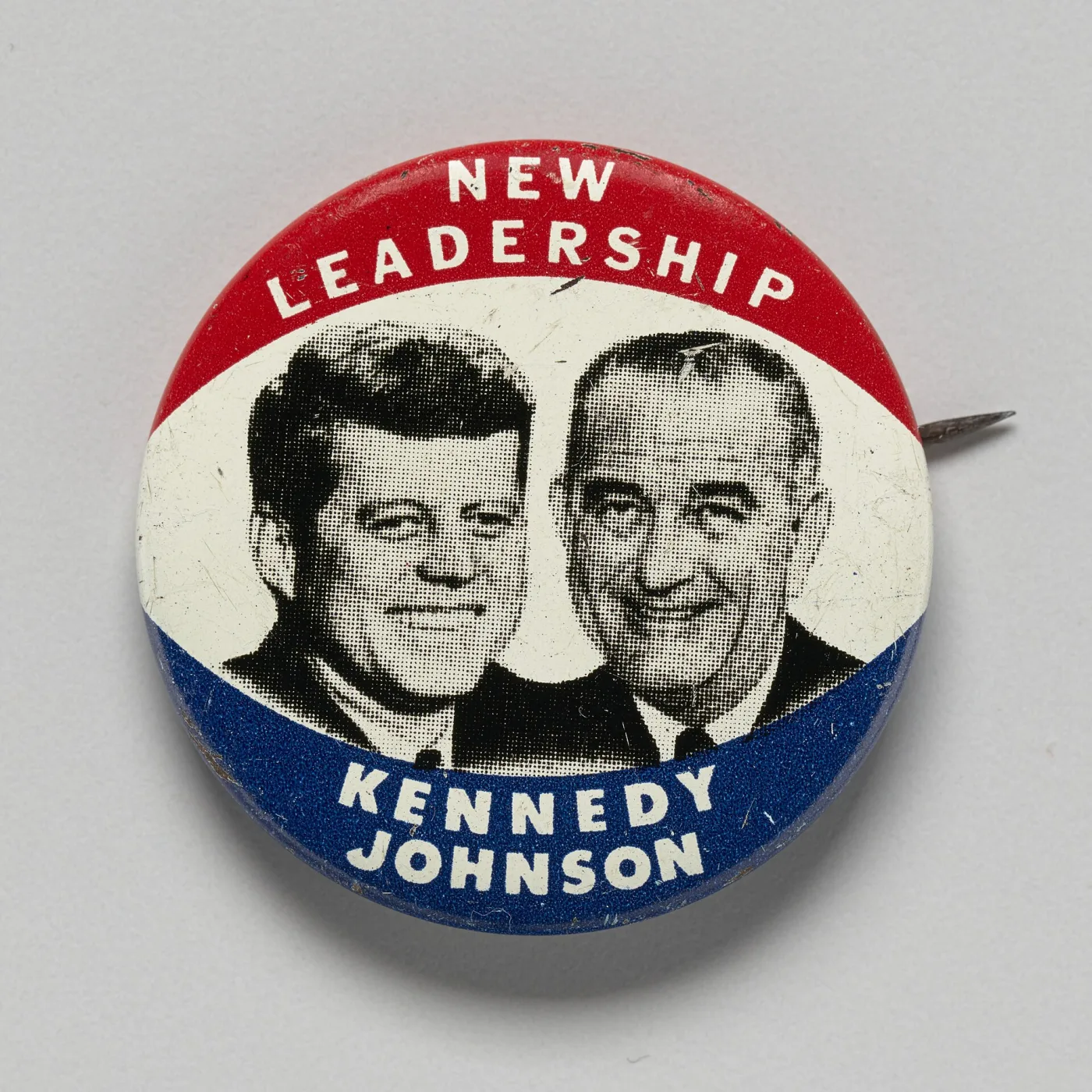
A "jugate" is any item picturing two candidates together—most often the presidential and vice-presidential nominees of the same ticket. Jugates are especially desirable because they show a complete ticket and typically feature richer artwork. Items showing three or more portraits are sometimes called "multigates" or "trigates." Many of the hobby's most valuable buttons, including celebrated early jugates, belong to this group; the 1920 Cox and Roosevelt jugate is a famous rarity with auction records reaching into five and even six figures for the scarcest variety.
Coattail and Local Items
A "coattail" item links a presidential candidate with a state or local candidate on the same button—riding the presidential nominee's "coattails." These pieces are prized by collectors of a given state or race, since they often exist in tiny quantities. Purely local buttons—for a governor, senator, mayor, or a specific ballot issue—may hold little national value yet sell briskly to specialists in that place or contest, echoing how hometown appeal drives demand across many collecting fields.
Slogans, Names, and Portrait Types
Buttons are also categorized by what they say and show: portrait buttons (a candidate's face), name buttons (just a name or "For President"), slogan buttons (a phrase or cause), and cause or issue buttons (promoting a policy rather than a person). Clever or historically significant slogans, and designs tied to memorable moments, add appeal. The wording itself is frequently datable, because slogans were often used only during a single campaign.
Dating Clues Beyond Construction
Construction sets the broad era; the details narrow it down. Several independent clues, taken together, produce a confident estimate—and because campaigns are datable events, political items can often be pinned to an exact year.
The Candidate and the Race
The most powerful clue is simply who is pictured or named. A button for a specific candidate points to the years that person actually ran, and the pairing on a jugate usually identifies one exact election. Reference works and auction archives catalogue known designs by campaign, so matching a button to a documented example is often the fastest route to a firm date.
Slogans, Issues, and Events
A slogan tied to a particular campaign theme, a reference to a contemporary issue, or a convention or event name can fix the date within a single race or even a single week. Because political language is so specific to its moment, wording is one of the most precise dating tools available on any campaign item.
Graphic Style and Printing
Design fashions changed over the decades: the ornate, artistic full-color lithography of the early celluloid era looks nothing like the flat, bold graphics of the 1960s or the photographic styles of later campaigns. Printing method matters too—rich multicolor celluloid versus simpler litho tin—and helps corroborate the era suggested by other clues.
Materials and Hardware Details
The substrate (celluloid, litho tin, plastic, paper, silk), the pin and spring assembly, the union label style, and the back paper all shift over time. When these physical details line up with the candidate, slogan, and graphic style, you can date a piece with real confidence; when they conflict, treat the discrepancy as a red flag rather than a curiosity.
Grading Condition Honestly
Condition is the great value multiplier in campaign collecting. Because buttons and badges were worn, handled, and stored casually, honest grading is essential—both when buying and when describing a piece you own. Collectors care intensely about surface, color, and originality.
Grading the Surface and Image
For a button, the celluloid or printed surface is what buyers pay for. Assess fading, scratches, cracks, and crazing in the celluloid; foxing (brown spots from moisture); rust or "rim rust" creeping in from the edge on litho and metal-backed pieces; and overall gloss and contrast. Bright, sharp, crack-free examples command strong premiums, while foxed, faded, or rusted buttons drop in value quickly even for a desirable design.
Foxing, Cracks, and Rim Damage
Celluloid is chemically active and vulnerable to humidity, so foxing and crazing are common and expected on older buttons; light examples are tolerated, heavy ones are penalized. On litho buttons, rust is the chief enemy, often starting at the rim and spreading. Dents, cracks through the celluloid, and losses at the edge all reduce grade. Learning to weigh these flaws consistently is what separates a fair description from an optimistic one.
Originality of the Pin and Assembly
Collectors expect the original pin, spring, collet, and back paper to be intact. A replaced pin, a re-crimped collet, or a missing back paper reduces originality and value, and a button that has been taken apart and reassembled is worth less than an untouched example. As with any antique, an unrestored, original piece almost always outperforms a "improved" one.
Ribbons, Paper, and Textiles
For ribbons, badges, and paper, condition hinges on fading, staining, foxing, tears, and fragility of the silk or paper. Convention badges should ideally retain all their hardware—the pin bar, ribbon, and any medallion or shell—since incomplete assemblies lose value. The same care used in judging medals and decorations, where original ribbons and suspensions matter greatly, carries over directly to political badges.
Spotting Reproductions and Fakes
Reproductions are the defining hazard of this category. Beginning in the 1960s, copies of famous older buttons were produced in enormous numbers, and many now carry decades of their own honest-looking wear—so the age of the object alone no longer guarantees authenticity. Distinguishing a period piece from a reproduction is the single most valuable skill a collector can develop.
The Hobby Protection Act and Reproduction Marks
The problem grew so severe that Congress passed the Hobby Protection Act, effective in 1973, which requires reproductions of political items (and certain collectible coins) to be permanently and legibly marked to identify them as copies—typically with the word "reproduction" or the maker's identifier. Always check the curl, rim, and back for such a mark. Its presence is decisive proof of a modern copy; but note that many illegal reproductions were made without the required mark, so its absence does not prove authenticity.
Known Reproduction Sets
Several famous reproduction sets circulate widely, including cereal-premium and commemorative "sets" of presidential designs distributed in the mid-twentieth century, and many modern novelty copies. Experienced collectors learn to recognize these specific designs on sight. When a "rare" early button turns up cheaply and abundantly, it is very often a member of a known reproduction set rather than a genuine survivor.
Printing Dots, Colors, and Materials
Under magnification, genuine period buttons show printing consistent with their era, while many modern reproductions betray a different dot structure from inkjet or laser printing, or unnaturally bright, uniform color and crisp edges. Reproductions may also use the wrong materials—modern plastics or thin tin where an original would be layered celluloid on a proper metal disc. Test the weight and feel, inspect the curl and collet, and be skeptical of any "old" button that looks freshly minted.
Anachronisms and Conflicting Clues
Watch for details that could not exist in the claimed period: a modern pin assembly, a bright new collet, a back paper citing the wrong era, or graphic and printing styles that clash with the candidate. When several signals conflict—period design but modern hardware, or old-looking wear but crisp modern ink—assume a reproduction until proven otherwise. For anything valuable, corroborate against catalogued examples from established references and auction archives before you buy.
What Drives Value
Prices for political memorabilia span an enormous range. Common late-twentieth-century litho buttons frequently trade for just a few dollars, while scarce early celluloid jugates, ferrotypes, and rare local pieces can run from the low hundreds into the thousands—and the greatest rarities reach five and six figures at auction. Several factors interact to set the number.
Candidate, Campaign, and Rarity
Buttons for closely contested, historically significant, or short-lived campaigns tend to be scarcer and more desirable, and third-party and losing-ticket items are often rarer than those of eventual winners. Genuine scarcity—small production runs, regional distribution, or high attrition—raises prices, but only when paired with collector demand. A rare button for a candidate nobody collects is still a slow seller.
Design, Jugates, and Eye Appeal
Bold, colorful, artistically composed designs command premiums because much of the demand is visual. Jugates, striking graphics, clever slogans, and large "showpiece" sizes lead the market, while plain name buttons lag. Two items of equal rarity can diverge sharply in price simply because one is more beautiful or historically evocative.
Condition and Originality
As covered above, condition and originality can swing value several-fold. A bright, crack-free celluloid with its original pin and back paper far outperforms a foxed, faded, or reassembled example of the same design. On badges, complete original hardware matters greatly.
Provenance and Documentation
A documented history—an auction pedigree, an old collection label, or a match to a catalogued example—adds confidence and value, especially for expensive pieces where authenticity is paramount. Approaching value systematically, using recent comparable sales from established archives, mirrors the broader discipline of antique valuation and appraisal.
A Step-by-Step Inspection Routine
Bringing the clues together, here is a repeatable routine for evaluating any political item, whether at a flea market, an estate sale, a show, or in an online listing.
1. Identify the Format and Construction
Determine whether you are holding a celluloid button, a litho button, a ribbon, a ferrotype, a badge, paper, or a novelty. For buttons, decide celluloid versus litho by weight, layering, and surface. This immediately brackets the likely era and the authenticity tests that apply.
2. Read the Candidate, Slogan, and Design
Record who is pictured or named, any slogan or issue, whether it is a jugate or coattail, and the graphic style. Match it against catalogued designs to identify the campaign and refine the date, and to flag anything anachronistic.
3. Examine Labels, Back Paper, and Hardware
Look for a union label in the margin, a back paper with a maker and patent dates, and the style of the pin and collet. Research any imprint you find, remembering that a patent date is a floor and a missing mark is not disqualifying.
4. Judge Condition and Originality
Grade the surface for fading, cracks, crazing, foxing, and rust; confirm the pin, collet, and back paper are original and intact; and check badges for complete hardware. Use raking light and magnification.
5. Screen for Reproduction Tells
Check the curl, rim, and back for a "reproduction" mark; look for modern printing dots, over-bright color, wrong materials, or modern hardware; and recognize known reproduction sets. When several signals conflict, default to caution. For anything valuable, corroborate against documented originals before committing—and when you want a fast second opinion, photographing the piece with the Antique Identifier app gives you an instant AI-assisted starting point for further research.
Care, Storage, and Preservation
Political items were made to be worn and displayed briefly, not preserved for a century, so thoughtful care protects both their appearance and their value. The guiding principle is minimal, reversible intervention—stabilize the environment and resist the urge to clean or "improve."
Handling Buttons Safely
Handle buttons by the rim, keep them dry, and never attempt to clean the celluloid with solvents, water, or abrasives, which can craze the surface, lift the paper, or strip the printed image. Do not try to polish a metal collet or remove foxing yourself; aggressive cleaning almost always lowers value. Original surface, flaws and all, is what collectors want.
Controlling Humidity and Light
Celluloid is highly sensitive to moisture, which causes foxing, and to heat, which can degrade it; litho and metal pieces rust in damp conditions. Store and display in a stable, moderate environment out of direct sunlight, which fades printed color, and away from high humidity. These are the same climate principles used for long-term antique storage and preservation.
Storing Ribbons, Paper, and Textiles
Ribbons, posters, and paper items should be kept flat in acid-free materials, away from light and moisture, and handled as little as possible because silk and old paper are fragile and easily torn or stained. Avoid adhesives, tape, and lamination, which cause permanent damage and destroy value.
Documentation and Provenance
Keep notes, photographs, and any receipts, auction records, or collection history for each piece. Recording the campaign, construction, markings, measured size, and condition builds a reference file that supports future valuation and resale, and it protects you and future owners by documenting exactly what the item is and what, if anything, has been done to it.