Antique Globe Identification Guide: Cartography, Makers & Valuation
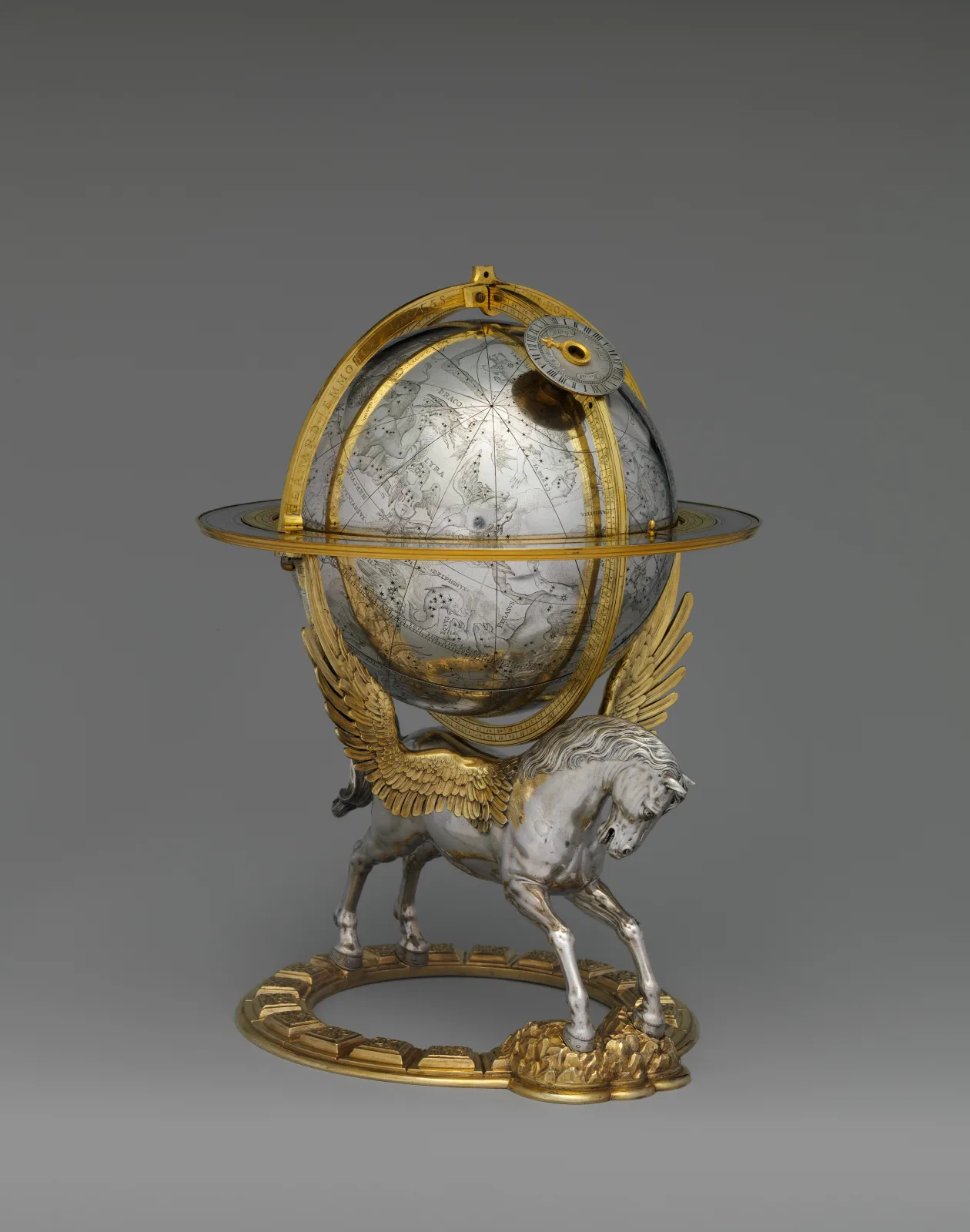
Antique globes capture centuries of exploration, scientific discovery, and geopolitical change in a single sculptural object. Whether crafted for naval observatories, gentleman’s libraries, or classroom instruction, each sphere reflects the technical knowledge and printing craft of its era. This guide equips collectors, archivists, and appraisal professionals with a detailed framework to authenticate, date, and value antique terrestrial and celestial globes with confidence.
Table of Contents
- Understanding Globe Types and Historical Context
- Construction Methods, Gores, and Materials
- Cartographic Content and Dating Clues
- Stands, Mounts, and Instrument Integration
- Maker Marks, Retail Labels, and Provenance
- Condition Grading, Conservation, and Storage
- Market Insights, Valuation Drivers, and Investment Tips
- Research Workflow and Recommended Resources
Understanding Globe Types and Historical Context
Globes evolved alongside advances in astronomy and navigation. Identifying the intended application helps narrow production periods and maker attribution.
Primary Globe Categories
- Terrestrial Globes: Depict Earth’s geography; used for navigation, trade planning, and educational purposes.
- Celestial Globes: Map constellations and ecliptic lines for astronomers and astrologers; often feature mythological imagery.
- Lunar & Planetary Globes: Rare 19th–20th century scientific instruments showing emerging astronomical discoveries.
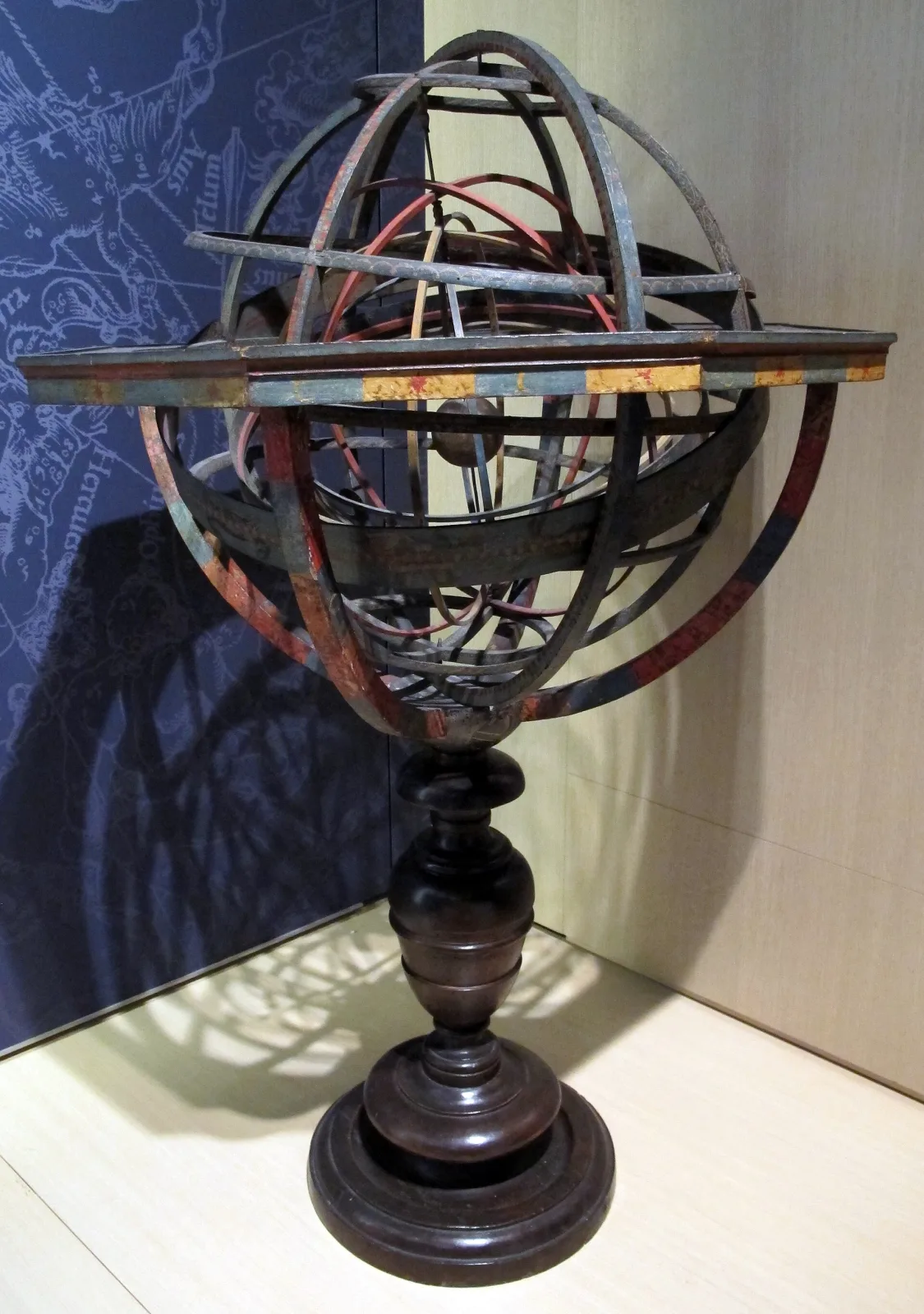
- Telluriums & Orreries: Mechanized teaching models combining spheres to demonstrate planetary motion.
- School Globes: Mass-produced for classroom use, typically smaller, with protective varnish for durability.
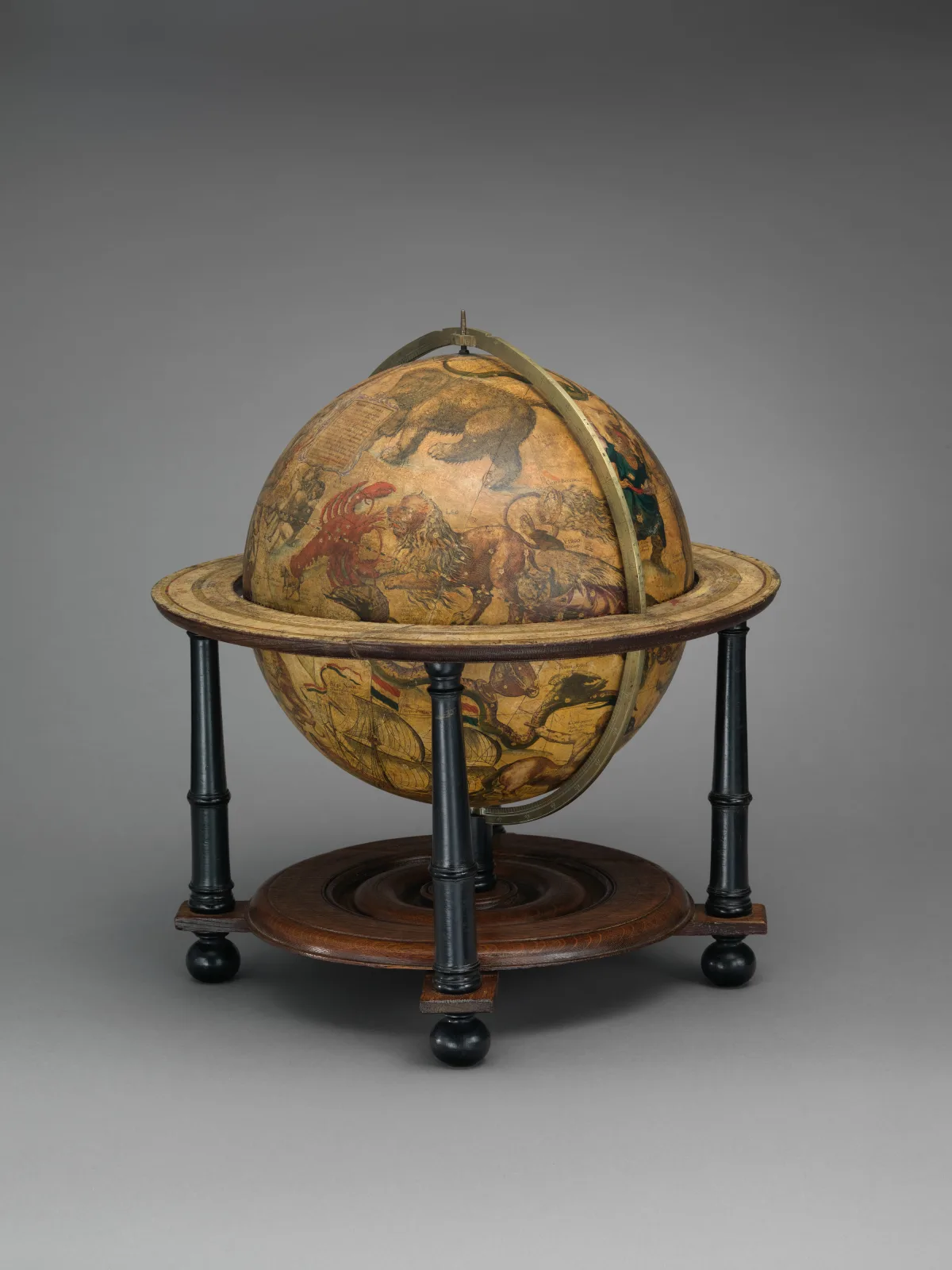
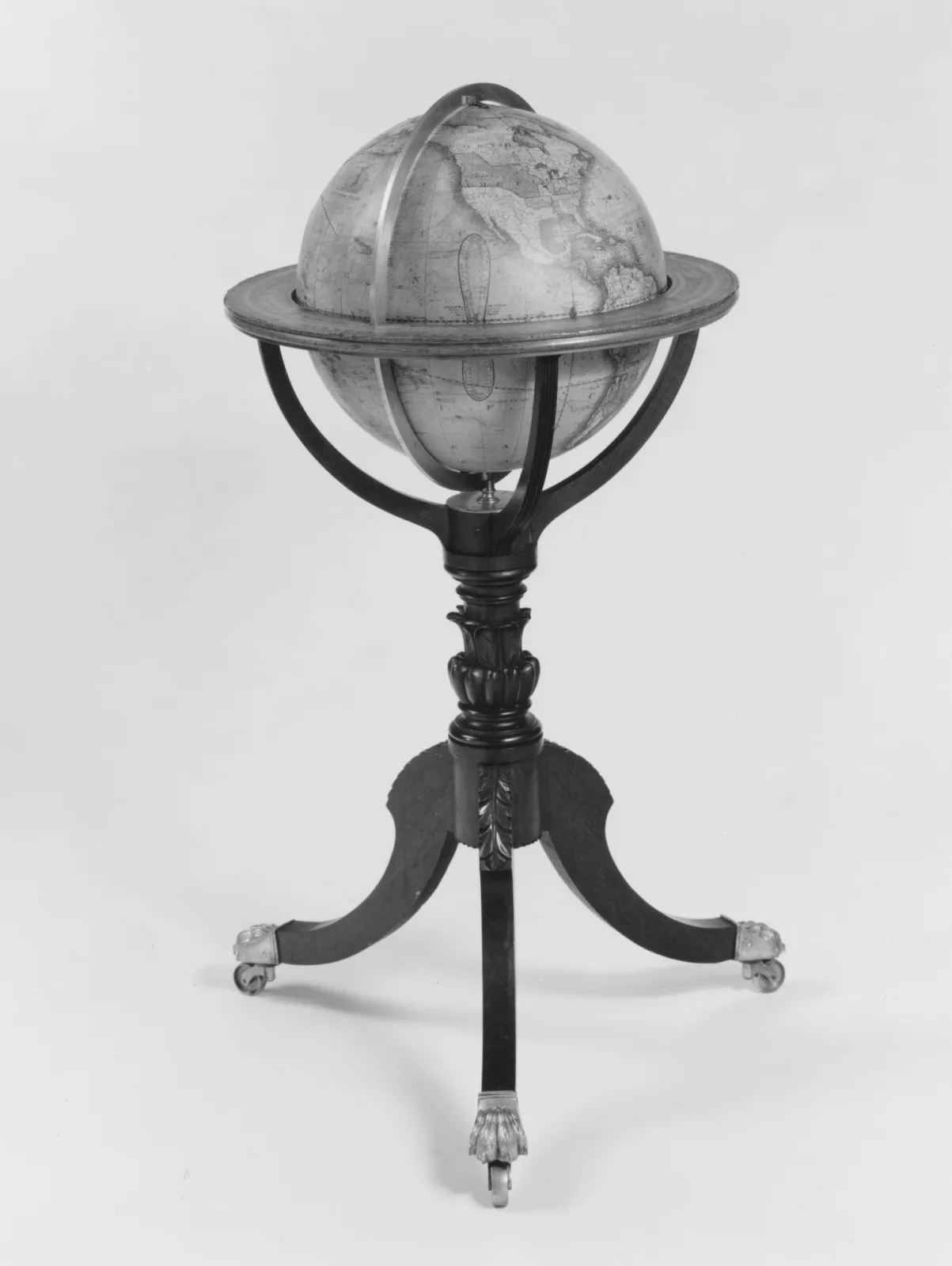
The first question to settle on any globe is which of these two it is, because everything downstream depends on it. A terrestrial globe maps the earth; a celestial globe maps the sky, and it is drawn as if you were outside the sphere of stars looking in, so its constellations are mirror-reversed from how you see them. That reversal is the fastest test when the surface is too worn to read place names. The pairing also shows how completely the trade changed in two centuries. Blaeu was an Amsterdam maker working for scholars and wealthy collectors; Wilson was the first commercial globe maker in the United States, selling to schools. Note the materials in their two records — both are paper printed in gores and pasted over a core, and the core is what the next section is about.
Period Benchmarks
- Age of Exploration (1500–1700): Hand-colored copperplate gores, incomplete coastlines, sea monsters, and navigational rhumb lines.
- Enlightenment (1700–1820): Scientific accuracy improves; dual-language legends and decorative cartouches remain prevalent.
- Industrial & Colonial Expansion (1820–1900): Lithographed gores, bold colonial boundaries, patent information, and educational branding.
- Early Modern (1900–1945): Updated borders post World Wars, national flags, and simplified color palettes for mass instruction.
Contextualizing the globe within its historical narrative reveals why certain territories are emphasized, omitted, or stylized.
Construction Methods, Gores, and Materials
Physical construction provides some of the most reliable authentication data. Examine the sphere core, gore seams, equatorial rings, and protective coatings.
Sphere Cores
- Plaster over Papier-Mâché: Common from the 17th century onward; light weight but prone to cracking.
- Solid Wood: Early Italian and Dutch examples; lathe-turned halves doweled together.
- Metallic Cores: Brass or copper spheres used in premium scientific instruments or maritime globes.
- Composite Shells: Late 19th century manufacturers used composition or gutta-percha blends for durability.
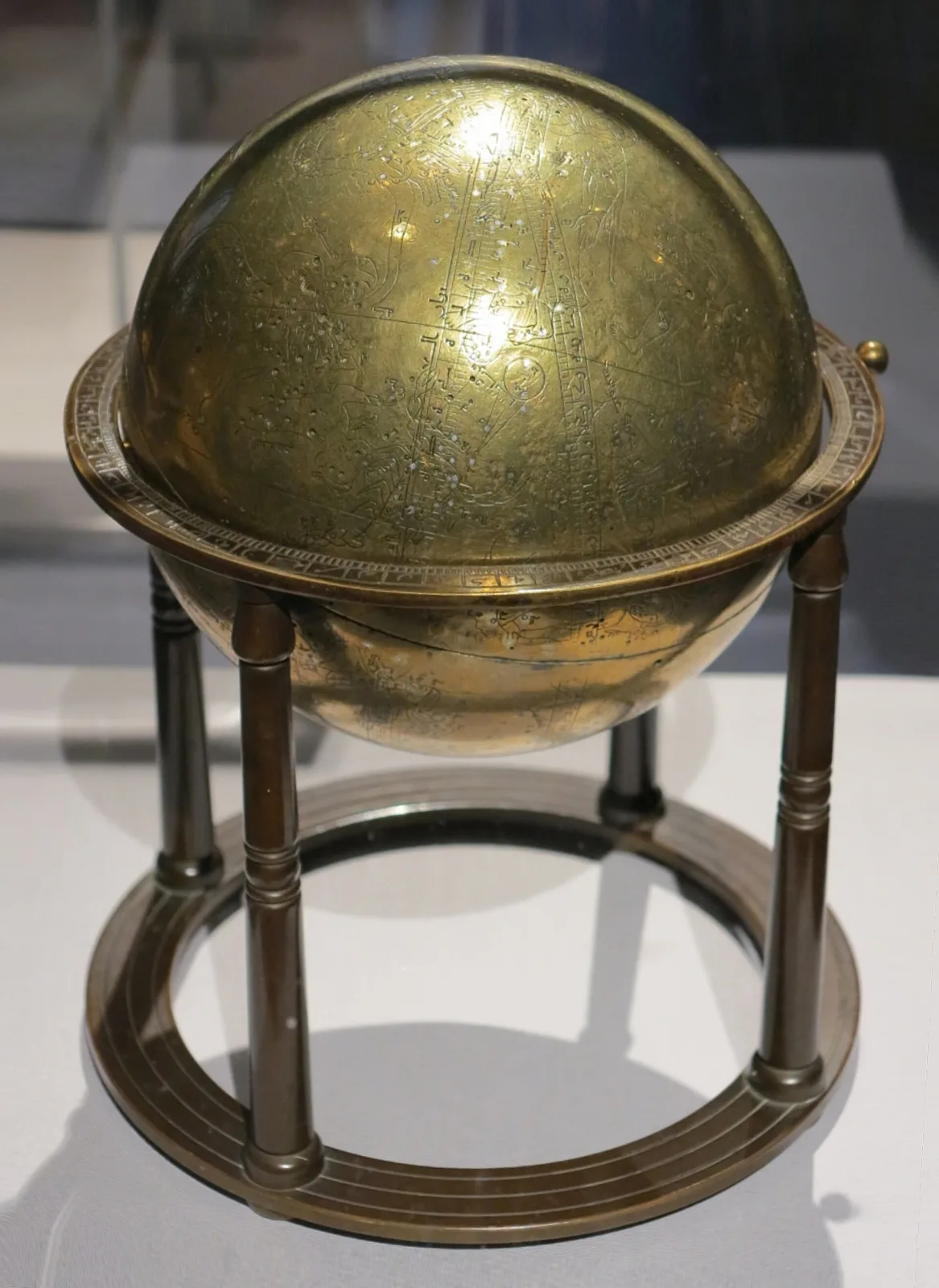
Gore Layout and Printing
- Number of Gores: Eight, twelve, or twenty-four elongated segments indicate different printing traditions; higher counts allow finer detail.
- Engraving Style: Copperplate engraving reveals fine hatch lines, while lithography features uniform dot patterns.
- Polar Calottes: Separate circular disks covering the poles can show later replacements if paper tone differs.
- Hand Color vs. Chromolithography: Early globes were colored by hand with gum arabic; look for brush overlap along gore edges.
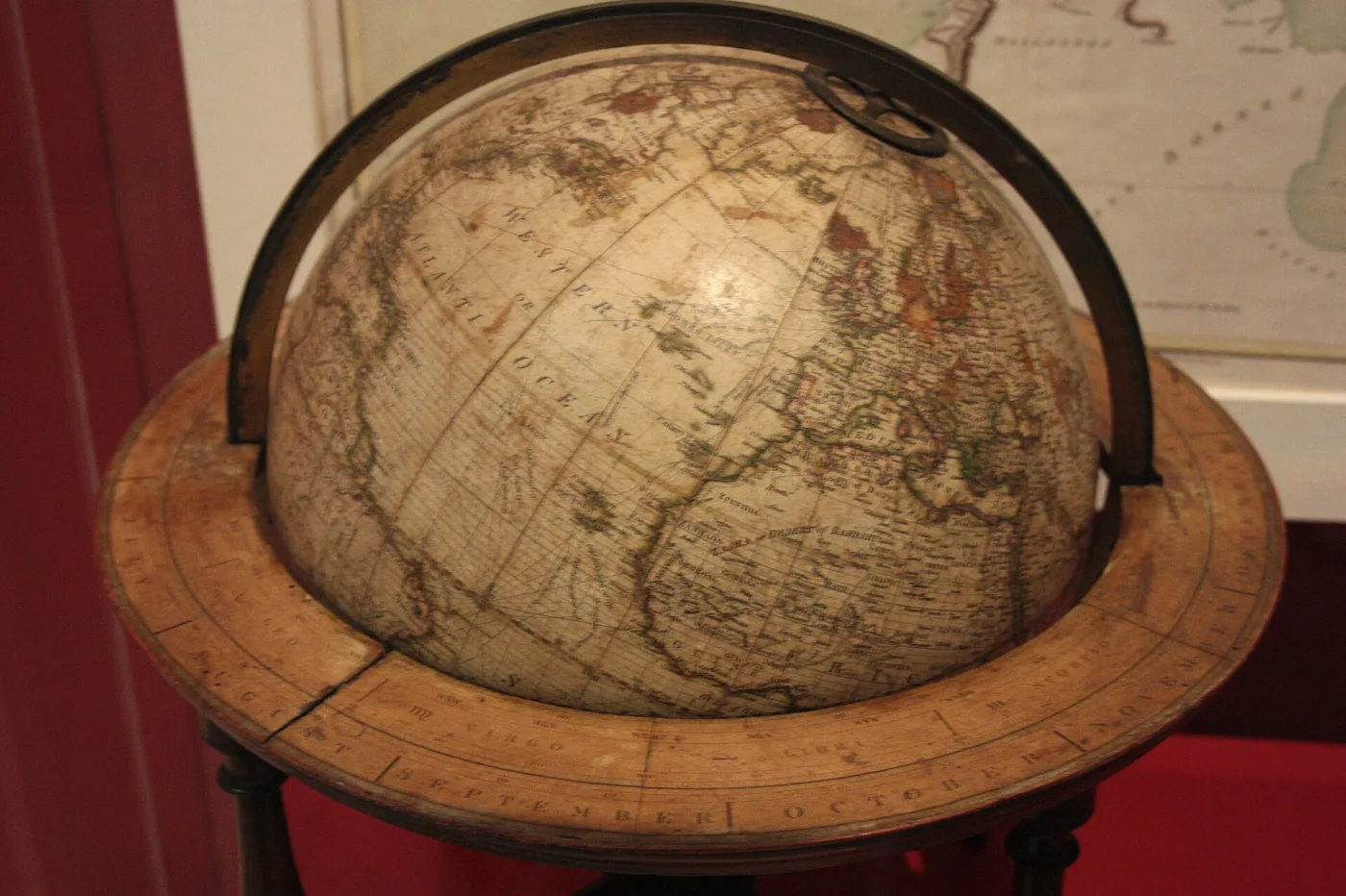
Protective Finishes and Hardware
- Shellac or Varnish: Original coatings mellow to warm amber; modern polyurethane appears overly glossy.
- Meridian Rings: Brass with hand-scribed degree scales signals high-quality workshop output.
- Horizon Circles: Wood or paperboard rings printed with calendrical data, zodiac signs, or compass bearings.
- Fasteners: Traditional square nails or hand-cut screws contrast with later Phillips-head replacements.
Cartographic Content and Dating Clues
Political boundaries, place names, and scientific annotations provide timestamped evidence. Cross-reference historical events to refine dating.
Territorial Indicators
- United States Borders: Presence of the Oregon Territory, Republic of Texas, or Alaska purchase dates narrows ranges.
- African Partitioning: Depiction of Congo Free State or German East Africa indicates post-1885 production.
- Italian & German Unification: Separate duchies versus unified nations signal pre- or post-1871 cartography.
- Soviet References: Use of USSR or renamed cities (e.g., Leningrad) dates globes after 1924.
Scientific and Nautical Data
- Longitude Reference: Ferro, Paris, or Greenwich prime meridians reveal cultural alignment and era.
- Isothermal or Ocean Current Lines: Popular on 19th century educational globes influenced by Humboldt.
- Trade Routes & Cable Lines: Telegraph cables or steamship paths highlight industrial age production.
- Celestial Coordinate Systems: Presence of precession indicators or nebula catalog numbers hints at astronomical scholarship.
Typography and Language
Typeface choices, spelling conventions, and bilingual legends can connect a globe to specific publishers or export markets. Gothic scripts suggest German production, while italicized serif captions are typical of British or American makers.

Stands, Mounts, and Instrument Integration
The base is more than furniture—it reflects intended use and often houses additional measuring tools.
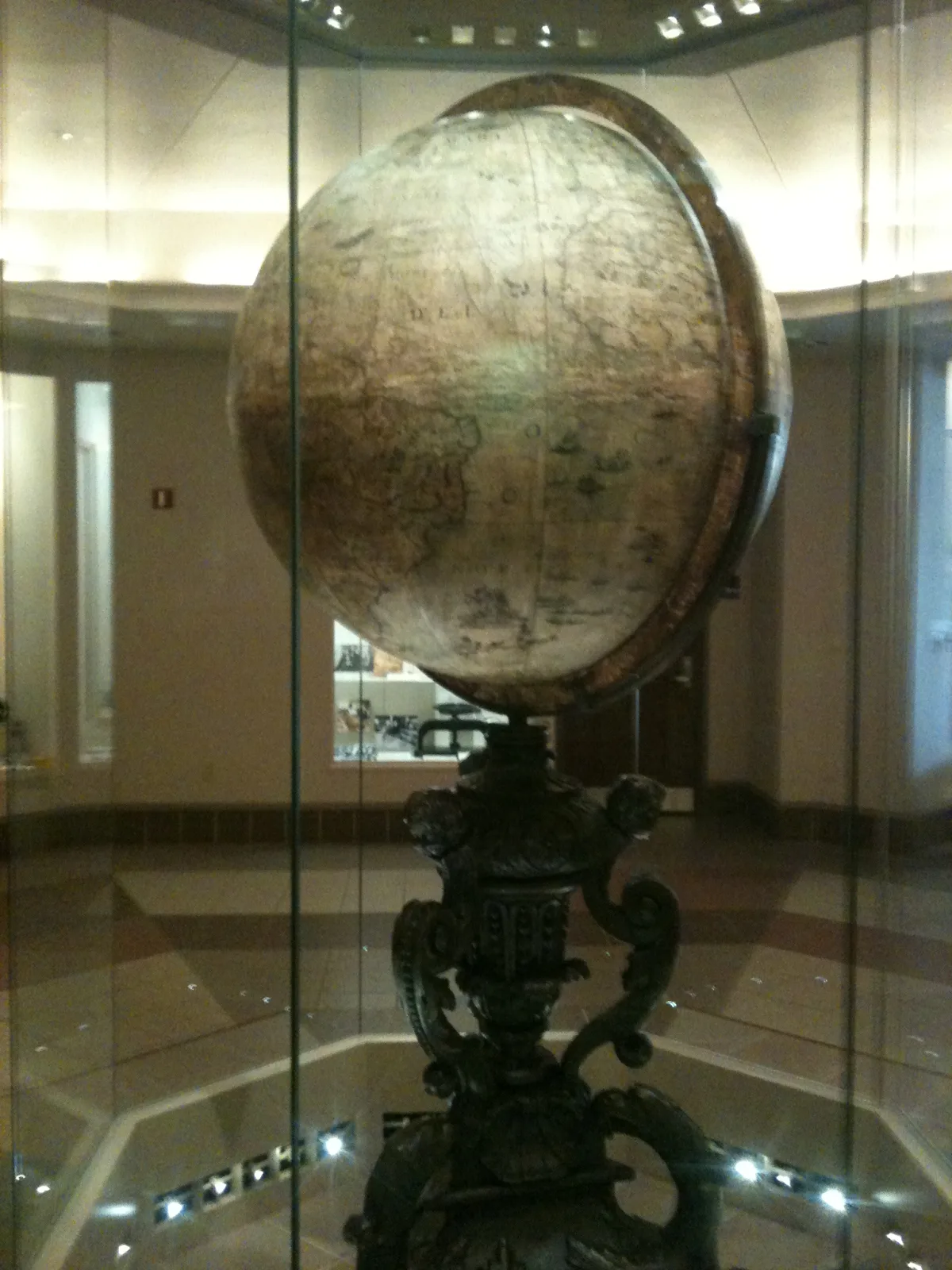
Common Stand Styles
- Table Stand with Four Legs: Popular in 18th century libraries; look for turned balusters and stretcher bars.
- Pillar or Single Column: Neoclassical taste featuring tripod feet and decorative ormolu mounts.
- Full Horizon Frame: Classroom globes with printed horizon ring supported by discrete legs.
- Inclination or Inclined Arms: Allow demonstration of Earth’s tilt; often patent-marked.
- Portable Gimbaled Stands: Maritime globes use brass gimbals or boxed cases for shipboard stability.
Integrated Instruments
- Compass Roses: Built into horizon rings for alignment.
- Quadrants & Inclinometers: Brass arcs used to measure solar declination or altitude.
- Clockwork Mechanisms: Orreries may feature geared systems demonstrating planetary periods.
- Lighting Fixtures: Early 20th century novelty globes incorporate internal bulbs; check wiring age.
Assess whether stand components are original by comparing wood species, patina, and screw wear with the globe sphere. Replacement bases impact value significantly.
Maker Marks, Retail Labels, and Provenance
Most reputable globe makers left clues—engraved cartouches, paper labels, or patent statements. Document every inscription before conservation.
Where to Find Identifiers
- Cartouches: Ornamental panels naming the maker, engraver, or dedicatee, usually near the South Atlantic.
- Support Rings: Degree scales stamped with firm names such as Newton & Son or W. & A.K. Johnston.
- Horizon Labels: Retailer decals from academic supply houses or department stores.
- Underside Marks: Pencil inventory numbers, shipping labels, or customs stamps on the base.
Notable Globe Makers
- Gerhard Mercator & Hondius (Netherlands): Early pioneering engravers with elaborate celestial imagery.
- John & William Cary (London): 18th–19th century precision globes prized for geographical accuracy.
- Newton & Son / Malby (London): Produced library globes with mahogany stands and brass meridians.
- Matthias Seutter & Justus Perthes (Germany): Known for rich hand coloring and bilingual legends.
- Franklin & Denoyer-Geppert (USA): Mass-market school globes with state-of-the-art lithography.
Provenance Documentation
Seek archival invoices, institution accession cards, or shipping manifests. Auction catalogs, maritime logs, and family estate records can corroborate ownership lineage and justify insurance appraisals.
Condition Grading, Conservation, and Storage
Mixed-media construction demands a careful, reversible approach to conservation.
Condition Metrics
- Surface Wear: Evaluate abrasion along gore seams, oxidation spots, and pigment fading.
- Structural Stability: Tap for hollow sounds indicating voids or delamination beneath plaster.
- Stand Integrity: Check for warped horizon rings, loose tenons, or missing brass fittings.
- Restoration Evidence: Note overpainting, regilded hardware, or modern adhesive residues.
Conservation Best Practices
- Environmental Control: Maintain 45–55% relative humidity and stable temperatures to protect paper and wood.
- Cleaning Protocols: Use dry microfiber tools; avoid solvents that dissolve original varnish.
- Paper Repairs: Consolidate lifting gores with wheat-starch paste applied by paper conservators.
- Stand Restoration: Tighten joints with hide glue rather than epoxy to preserve reversibility.
Long-Term Storage
Store globes on padded cradles or stand upright in dust-protected vitrines. Rotate periodically to prevent UV streaking, and document every intervention with high-resolution imagery for future reference.
Market Insights, Valuation Drivers, and Investment Tips
Collectors prize globes that combine rarity, aesthetic appeal, and scholarly importance. Recent sales show resilient demand for high-quality examples.
Key Valuation Factors
- Maker Prestige: Globes signed by Cary, Blaeu, or Newton can command significant premiums.
- Size and Scale: Library globes over 18 inches typically outperform smaller desk models.
- Original Stand: Matching period bases increase values by 30–50% compared with sphere-only examples.
- Decorative Condition: Intact varnish and vibrant hand coloring fuel retail appeal.
Current Market Trends
- Institutional Demand: Museums focused on navigation history actively acquire documented globes.
- Interior Design Influence: High-end decorators seek statement globes, boosting demand for polished stands.
- Digital Provenance Tools: Blockchain-logged ownership records are emerging for top-tier examples.
- Cross-Collecting: Coin, map, and maritime collectors increasingly compete for rare globes.
Investment Strategies
- Specialize in a Theme: Focus on specific regions, makers, or celestial bodies to build expertise.
- Audit Restoration Costs: Budget 10–20% of purchase price for conservation before resale.
- Track Sales Data: Monitor auction databases, dealer reports, and insurance schedules annually.
- Leverage Technology: Use the Antique Identifier app to compare gore layouts and detect inconsistencies.
Research Workflow and Recommended Resources
Structured documentation ensures credible appraisals and smooth export or loan processes.
Step-by-Step Research
- Photograph in Quadrants: Capture polar views, gore seams, and cartouches before handling.
- Measure Precisely: Record diameter, meridian height, and horizon ring width for comparison charts.
- Cross-Reference Catalogs: Consult maker catalogs, maritime supply lists, and educational equipment brochures.
- Consult Specialists: Reach out to map libraries, the International Coronelli Society, or professional conservators.
Recommended Resources
- Literature: Elly Dekker’s “Globes at Greenwich,” Silvia Sumira’s “The Art and History of Globes.”
- Digital Archives: David Rumsey Map Collection, Barry Lawrence Ruderman Antique Maps, Deutsche Nationalbibliothek catalogs.
- Institutional Repositories: Royal Observatory Greenwich, Smithsonian National Air and Space Museum archives.
- Tools: Antique Identifier app for AI-enhanced visual comparisons, UV-light inspection checklists, and sale tracking.
Document your findings in a structured dossier combining imagery, measurements, condition notes, and provenance evidence to support insurance, loan requests, or eventual sale.
Conclusion
Antique globes are three-dimensional time capsules that reward deep study. By analyzing construction techniques, decoding cartographic content, and connecting each piece to maker records, you can separate authentic period works from later reproductions and negotiate from a position of knowledge.
Approach every globe as both a scientific instrument and a decorative art object. With disciplined research, careful conservation, and modern digital tools, collectors can preserve these navigational storytellers for future generations.