
Schrade Old Timer Pocket Knives: Dating by the Tang Stamp
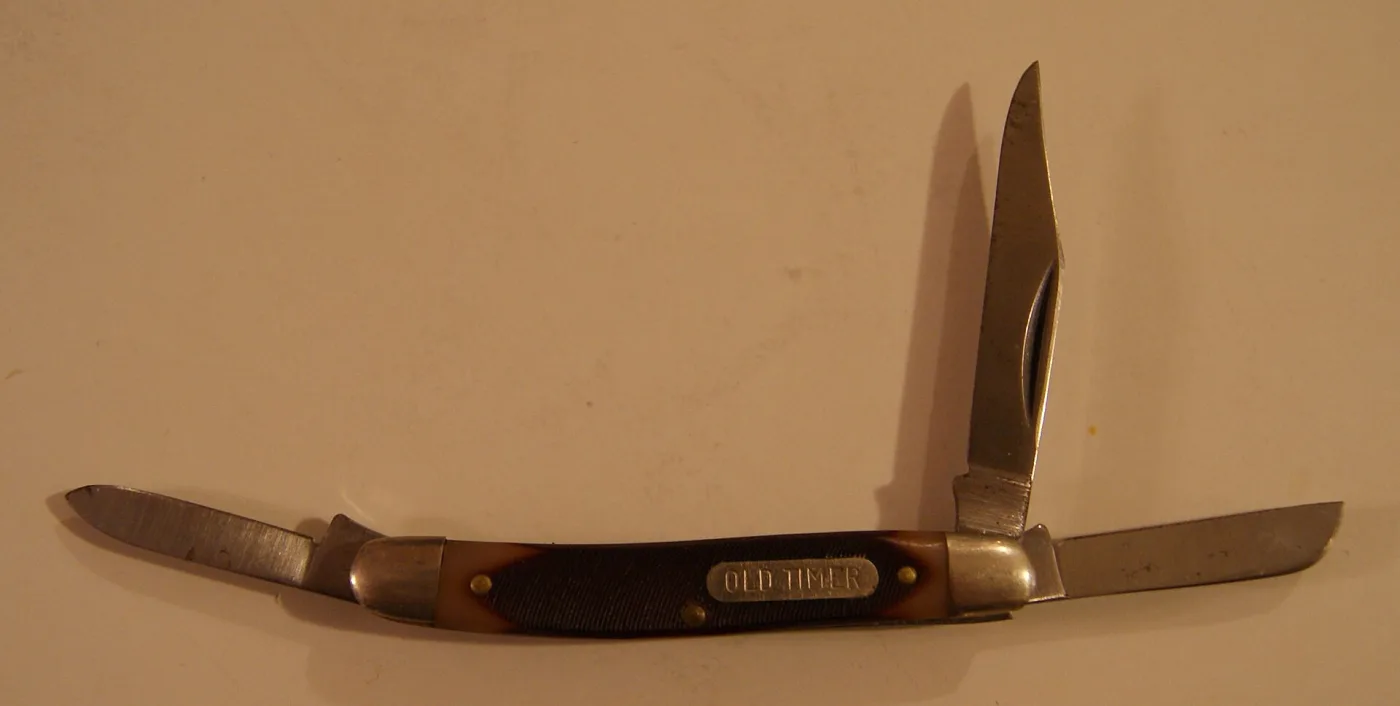
Schrade's Old Timer knives were made in New York State for more than forty years and in large numbers, which is why so many turn up in drawers, tackle boxes and estate sales today. Nearly every one can be dated to within a few decades without taking it anywhere, because Schrade changed the wording stamped on its blades at fixed points in the company's history.
This guide reads those stamps in order, from Schrade Walden to the 2004 centennial knives, explains what the plus sign in SCHRADE+ means, and shows how to tell an American-made Old Timer from the ones made in China since 2004.
Table of Contents
The Stamps in Order
Open the largest blade and look at its base, just above the bolster. The small lettering stamped there is the tang stamp, and it is the first thing to read. The table puts the Old Timer stamps in sequence. The dates are approximate; where published sources disagree, the table gives both years.
| What the knife says | Approximate dates | How to recognise it |
|---|---|---|
| SCHRADE WALDEN N.Y. U.S.A. | Late 1950s to 1973–74 | The word WALDEN in the stamp. Still used after the move to Ellenville in 1958 |
| SCHRADE U.S.A. | 1973–74 to 2004 | WALDEN is gone. Made in Ellenville, New York |
| SCHRADE+ U.S.A. | 1970s to 2004 | A plus sign after SCHRADE, marking a stainless steel blade |
| 100th / 1904–2004 shield | 2004 | A centennial banner shield in place of the plain OLD TIMER shield; the last year of U.S. production |
| China as the country of origin | After 2004 | Made for the brand's new owner after the Ellenville factory closed; no U.S.A. country stamp |
Two things follow from the table. A knife that says WALDEN can be no later than the mid-1970s, whatever its condition. And any Old Timer stamped U.S.A. as its country of manufacture was made in 2004 or earlier.
Why the Stamps Changed
The stamps track the company. Schrade Cutlery Company was founded in Walden, New York, in 1904. In 1946 Albert Baer, whose Imperial Knife Associated Companies already owned the Ulster Knife Company in Ellenville, bought Schrade and renamed it the Schrade Walden Cutlery Corporation. In 1958 the Schrade Walden operation moved from Walden into the Ulster plant in Ellenville.
The Old Timer line was launched in the late 1950s. Most accounts date it to 1959, with a Barlow-style pattern numbered 2OT, although some put the start in 1958. The line grew into dozens of patterns, from small peanuts to large stockmen and fixed-blade hunters.
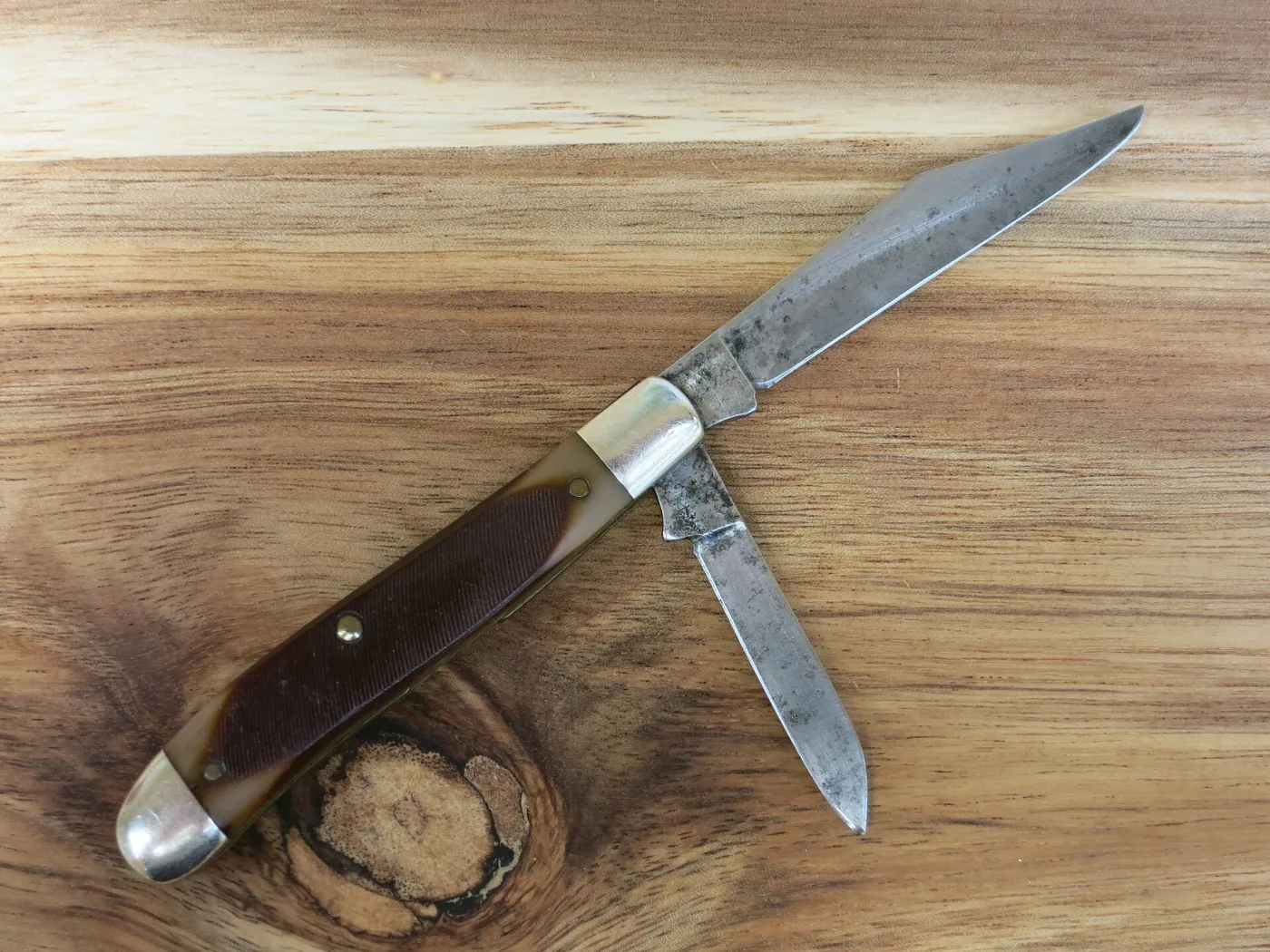
In 1985 the group took the name Imperial Schrade Corp., and by 1990 all of its American manufacturing had been consolidated in Ellenville. The company marked its hundredth year in 2004, and in July of that year the Ellenville factory closed. The Old Timer, Schrade and Uncle Henry names were bought by Taylor Brands, which moved production to China.
Schrade Walden N.Y. U.S.A.
The earliest Old Timers carry the stamp SCHRADE WALDEN N.Y. U.S.A. It is the stamp most likely to catch people out, because it stayed in use long after the factory left Walden. Imperial Schrade's own history says the Schrade Walden stamp was discontinued in 1974; collectors' references put the change in mid-1973. Either way, a Walden stamp means before the mid-1970s, not before 1958.
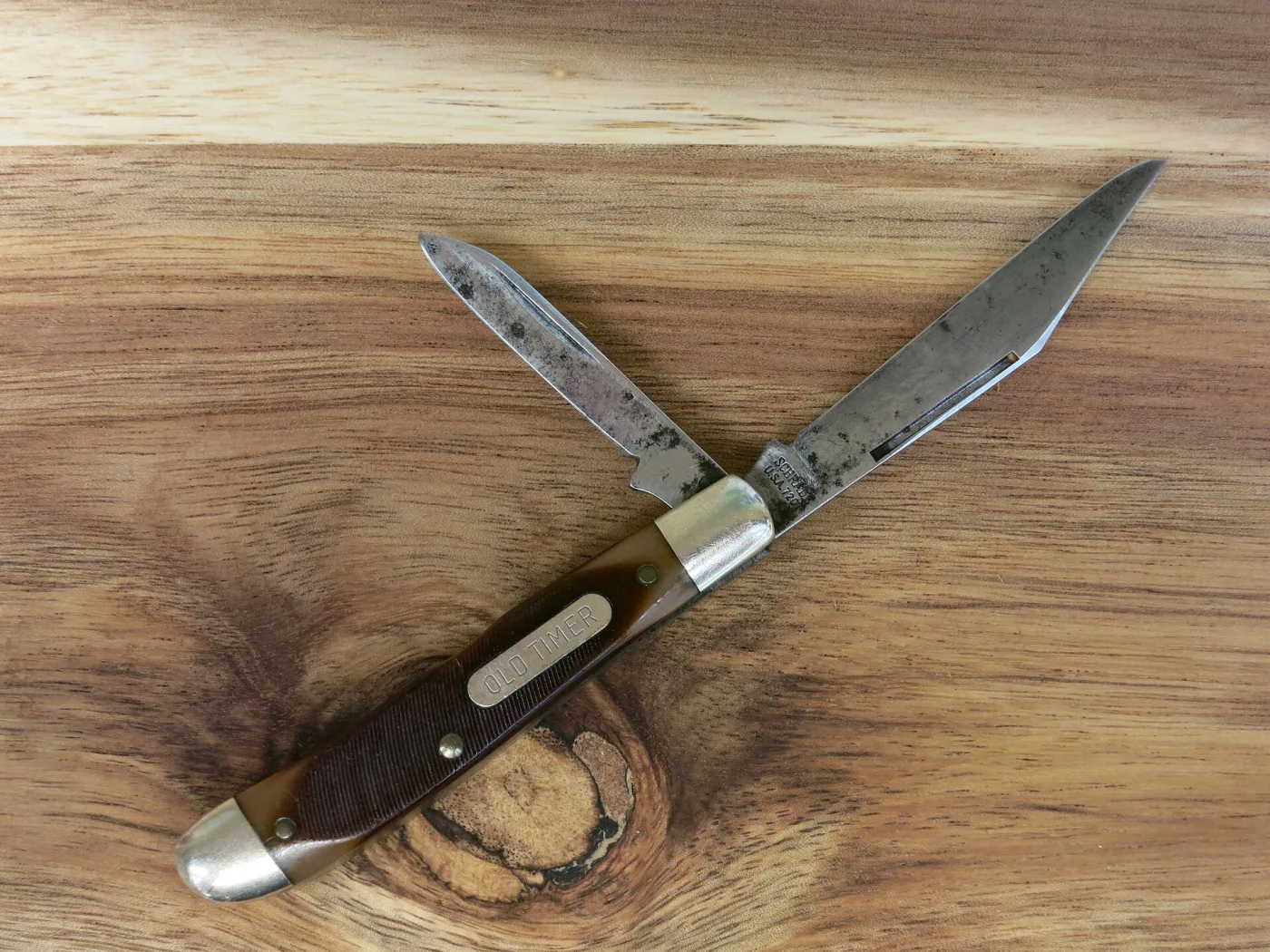
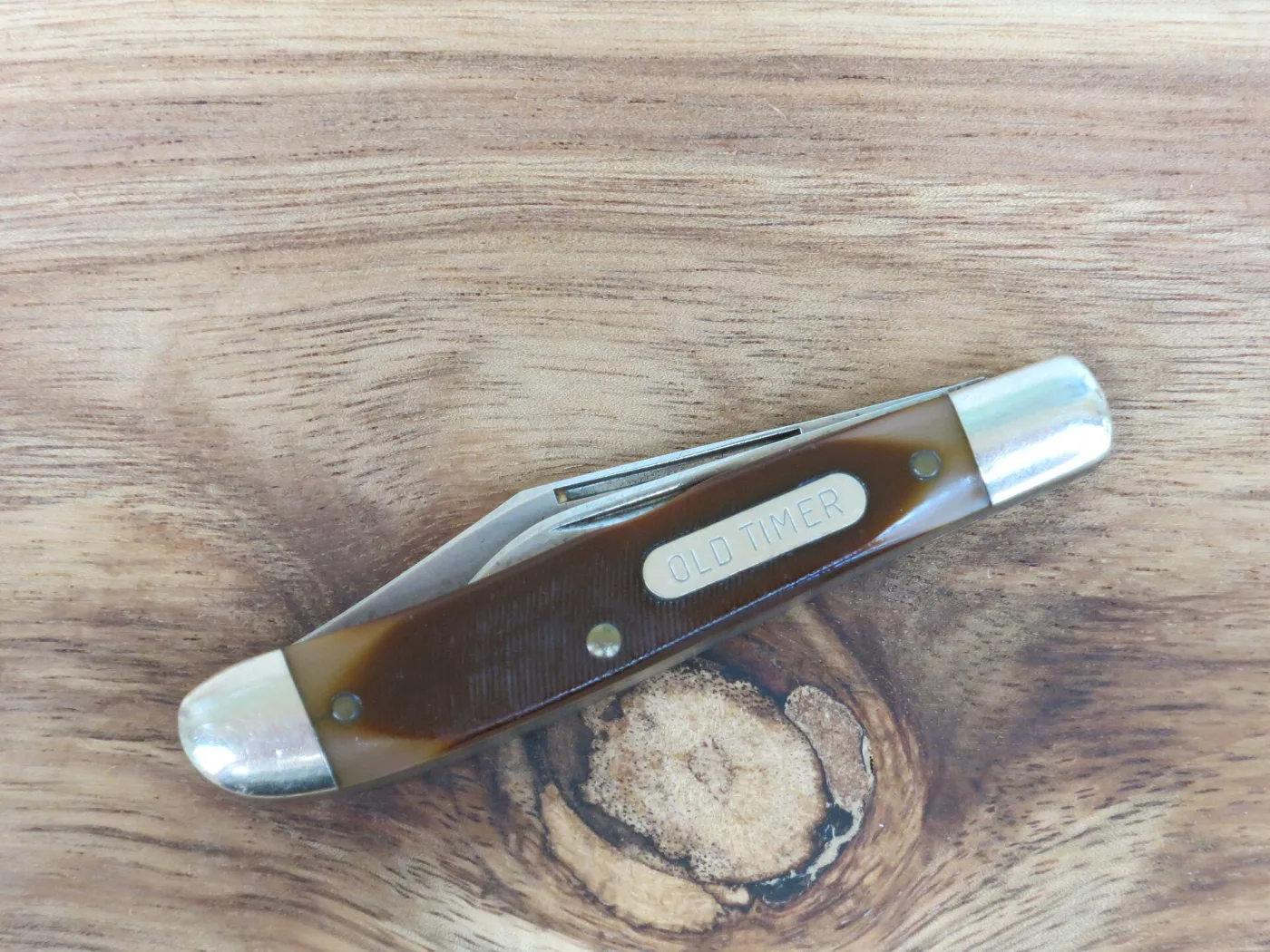
Walden-stamped Old Timers are the ones collectors look for first, simply because they are the oldest. The long-running 8OT Senior Stockman, for example, was added to the line in 1960 and made until 2004, so the same pattern turns up with more than one of the stamps in the table. The stamp, not the pattern, is what dates it.
Schrade U.S.A. and the Plus Sign
After the Walden stamp was dropped, Old Timers were stamped SCHRADE U.S.A. or SCHRADE+ U.S.A. These are by far the most common Old Timers, covering some thirty years of production in Ellenville.
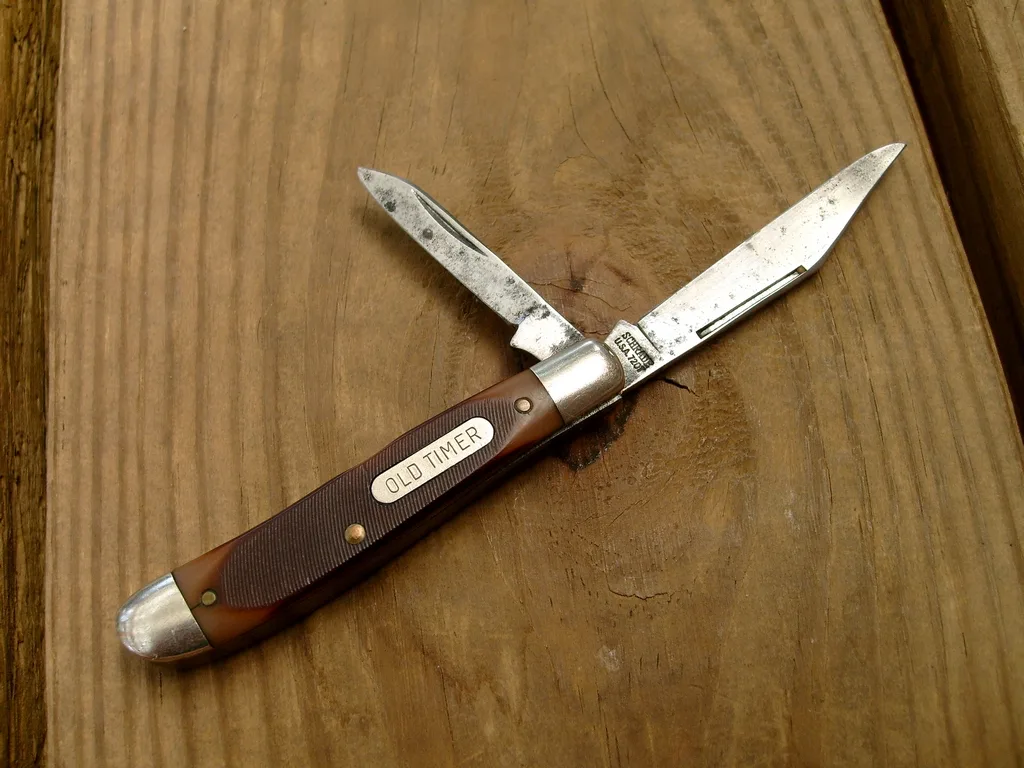
The plus sign is not decoration. Schrade added it in the 1970s to mark stainless steel blades, so that buyers could tell them from the traditional carbon steel. That makes the plus sign useful in one direction only. A SCHRADE+ stamp tells you the blade is stainless. A stamp without the plus does not prove carbon steel, because before the sign was introduced, stainless blades were stamped the same way as carbon ones.
The traditional Old Timer blade was high-carbon 1095 steel, which takes a keen edge and sharpens easily but darkens and spots with use. A grey or mottled blade on a knife with no plus sign fits carbon steel; a bright blade that never discolours fits stainless.
2004: The Centennial Knives
For its hundredth year, 2004, Schrade issued anniversary Old Timers with a special shield: a banner reading 100th and 1904–2004 alongside OLD TIMER, in place of the usual plain shield.
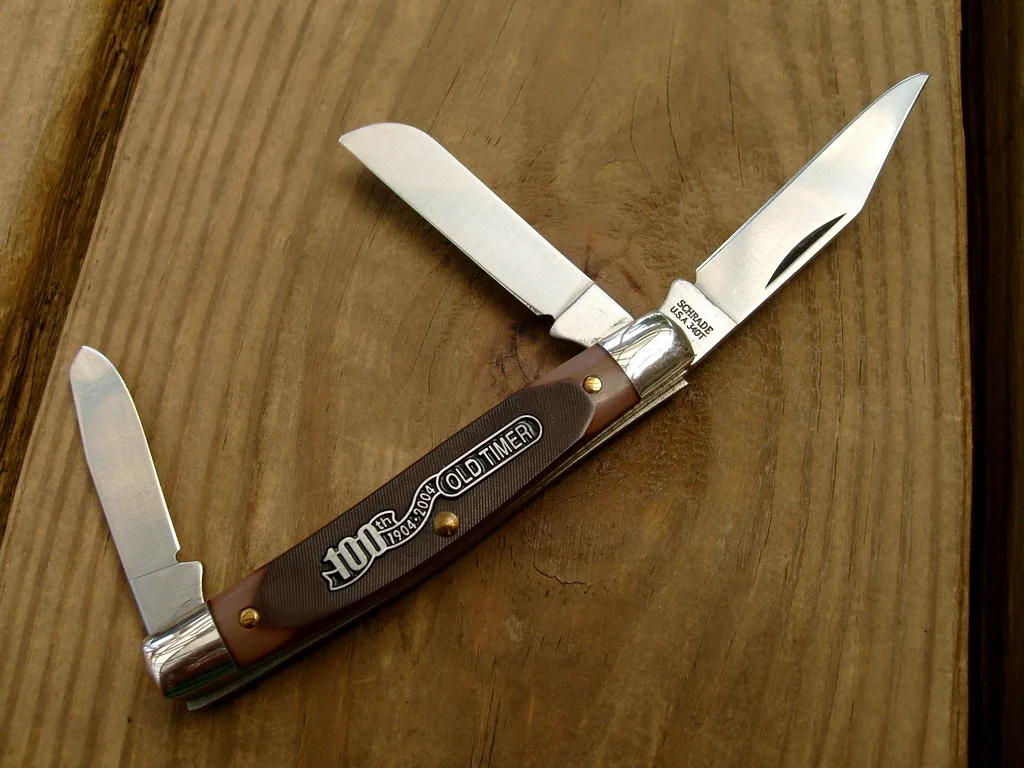
These knives come from the last year of American production, since the Ellenville factory closed in July 2004. A centennial shield on a knife stamped U.S.A. is therefore about as late as a genuine American Old Timer gets.
After 2004: Made in China
When Imperial Schrade closed, Taylor Brands bought the Old Timer name along with Schrade and Uncle Henry, and production moved to China. New Old Timers have been made there ever since, including new versions of the classic patterns, so the pattern name alone does not tell you which you have.
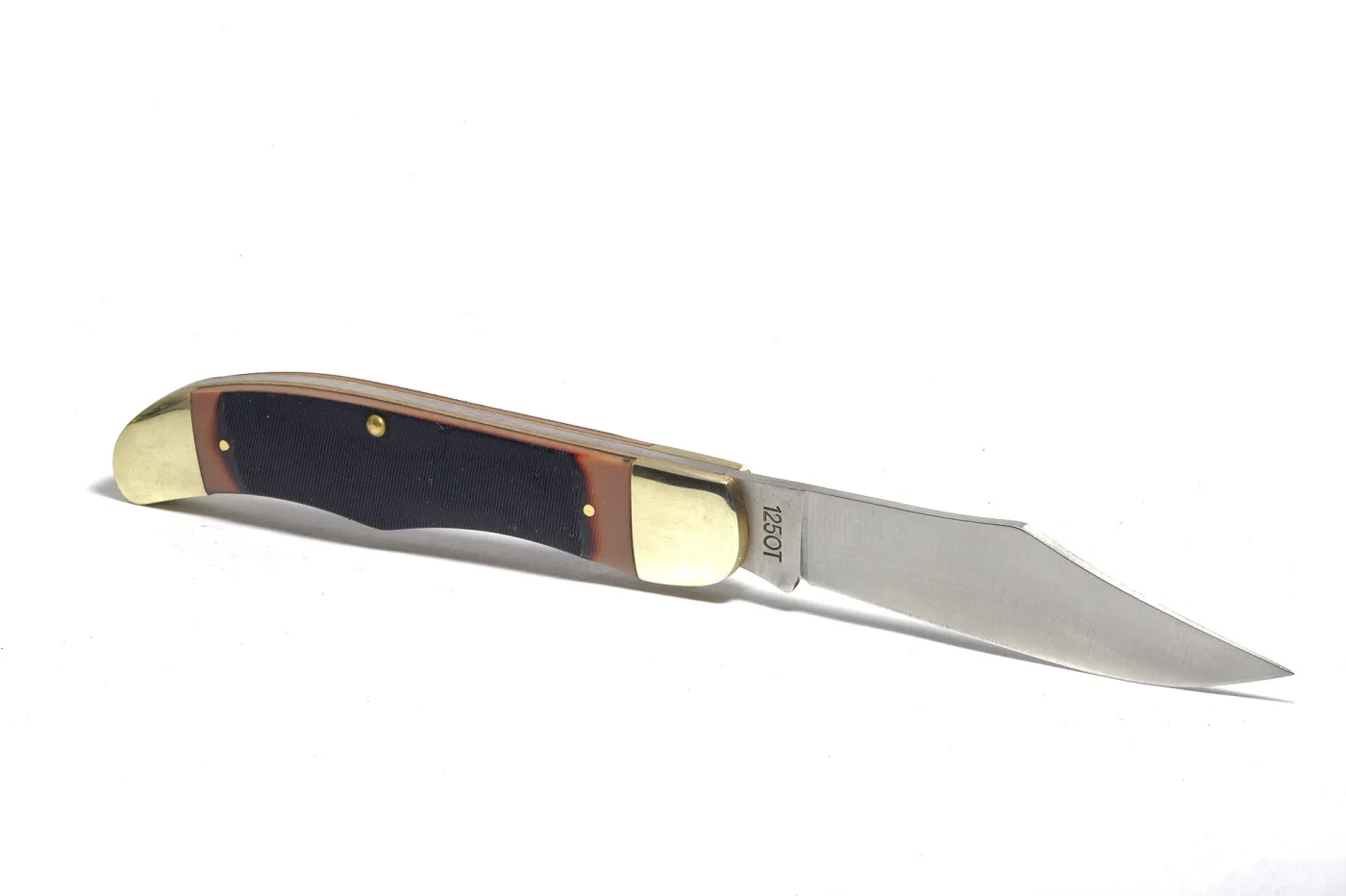
The test is simple: a genuine American Old Timer is stamped U.S.A. as its country of manufacture, and a post-2004 knife is marked as made in China. The later knives are sound working knives, but they are modern production, so it is the U.S.A. stamp that separates a vintage Old Timer from a new one.
Four Clues That Should Agree
The stamp dates the knife. The rest of the knife should tell the same story, and when it does not, something has been replaced or the knife is not what it seems.
| Clue | What to look for | What it tells you |
|---|---|---|
| Tang stamp | WALDEN, U.S.A., the plus sign, or China | The date range, from the table above |
| Model number | A number ending in OT, such as 8OT, 34OT or 108OT | That it is an Old Timer pattern, not an Uncle Henry (UH) or another Schrade line |
| Shield and handle | A metal OLD TIMER shield in brown sawcut handles; a centennial banner in 2004 | That the handles are the line's own; a centennial shield means 2004 |
| Blade steel | Patina and spotting, or a bright blade that never stains | Carbon or stainless, which should match the plus sign when there is one |
A SCHRADE+ stamp on a heavily patinated blade, or a Walden stamp on a knife with modern handle scales, is worth a closer look before you buy or sell. For the wider world of American folding knives, from Case to Camillus, see the pocket knife identification guide, and for other old edged tools the guides to straight razors and scissors and shears.
Frequently Asked Questions
How do I tell how old my Schrade Old Timer knife is?
Read the tang stamp, the small marking on the base of the main blade. SCHRADE WALDEN N.Y. U.S.A. means it was made before about 1973 or 1974. SCHRADE U.S.A. or SCHRADE+ U.S.A. means about 1973 to 2004. A shield reading 100th 1904-2004 marks the 2004 centennial year, the last year of American production. An Old Timer marked as made in China dates from after 2004.
What does the plus sign in SCHRADE+ mean?
It marks a stainless steel blade. Schrade added the plus sign to its tang stamp in the 1970s so buyers could tell stainless blades from carbon steel. The reverse does not hold: before the plus sign was introduced, stainless and carbon blades carried the same stamp, so a stamp without it does not prove the blade is carbon steel.
Are Old Timer knives still made in the USA?
No. Imperial Schrade closed its factory in Ellenville, New York, in July 2004, and the Old Timer name was bought by Taylor Brands, which moved production to China. Every Old Timer made in the United States dates from 2004 or earlier.
Why does my knife say Walden when Schrade was in Ellenville?
Schrade Walden moved from Walden to Ellenville, New York, in 1958, but it kept the Schrade Walden stamp until 1973 or 1974. So a Walden stamp does not mean the knife was made in Walden. It means it was made before the stamp was changed.
What does OT mean on an Old Timer knife?
OT stands for Old Timer. Schrade gave each Old Timer pattern a number followed by OT, such as the 8OT Senior Stockman, the 34OT Middleman or the 152OT Sharpfinger, to separate the line from its other knives, such as the Uncle Henry patterns marked UH.
The Short Version
Open the main blade and read the tang. SCHRADE WALDEN N.Y. U.S.A. means before about 1973–74. SCHRADE U.S.A. or SCHRADE+ U.S.A. means about 1973 to 2004, with the plus sign marking a stainless blade. A 100th, 1904–2004 shield means the centennial year. And an Old Timer marked China was made after 2004.
Then check that the OT model number, the shield and the blade agree with the stamp. When they do, you have your date.