
Antique Scrimshaw Identification Guide: Materials, Techniques & Authentication
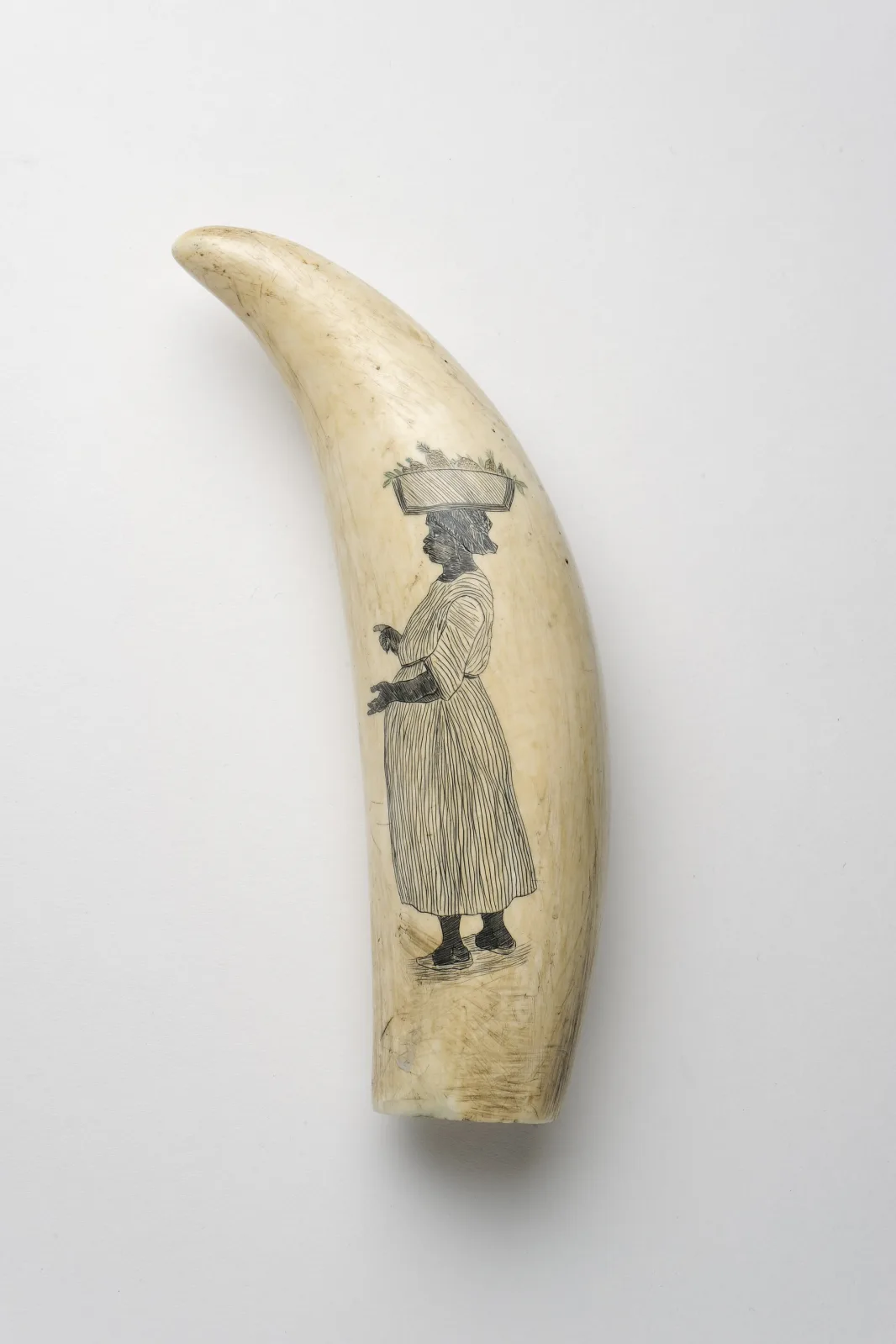
Scrimshaw represents one of the most distinctive forms of American folk art, born from the long idle hours sailors spent aboard whaling vessels during the 18th and 19th centuries. These hand-engraved and carved works on whale teeth, walrus tusks, and whale bone offer a remarkable window into maritime history, depicting everything from whaling scenes and portraits to patriotic imagery and elaborate geometric patterns.
For collectors, scrimshaw presents both extraordinary opportunities and significant challenges. Genuine antique pieces from the golden age of American whaling (roughly 1820 to 1870) can command prices ranging from a few hundred dollars for simple tooth engravings to hundreds of thousands for documented museum-quality works. However, the market is flooded with reproductions, modern copies on genuine old teeth, and outright fakes made from plastic resin or polymer materials designed to fool even experienced collectors.
This guide covers the essential knowledge you need to identify, authenticate, and evaluate antique scrimshaw. You will learn to distinguish genuine whale ivory from bone and synthetic substitutes, recognize period-appropriate engraving techniques, understand the legal framework surrounding ivory trade, and assess the condition and value of scrimshaw pieces with confidence.
Table of Contents
- History of Scrimshaw: Origins & Golden Age
- Materials Used in Scrimshaw
- Identifying Genuine Whale Ivory
- Engraving Techniques & Tools
- Common Subjects & Imagery
- Dating Antique Scrimshaw
- Authentication: Spotting Fakes & Reproductions
- Legal Considerations & CITES Regulations
- Notable Scrimshaw Artists & Schools
- Forms & Types of Scrimshaw Objects
- Condition Assessment & Grading
- Value Factors & Market Trends
- Care & Preservation
- Building a Scrimshaw Collection
History of Scrimshaw: Origins & Golden Age
The practice of engraving on whale teeth and bone dates back centuries, with indigenous peoples of the Arctic regions producing carved ivory objects long before European contact. However, scrimshaw as it is recognized today emerged primarily among Anglo-American whalers during the late 18th century and reached its peak during the golden age of American whaling from approximately 1820 to 1870.
Early Origins
The word "scrimshaw" itself has debated origins. Some scholars trace it to the Dutch word "schrimschander" (a lazy fellow), while others connect it to a British naval slang term for idle time activities. Whatever its etymology, by the early 1800s, the term was widely used in American whaling ports like New Bedford, Nantucket, and New London to describe the engraved and carved works produced by sailors.
Whaling voyages typically lasted two to four years, and sailors had considerable downtime between whale sightings. The raw materials were readily available: sperm whale teeth, whale jawbone (known as panbone), walrus tusks obtained through trade or hunting, and baleen from the whale's mouth. With nothing but time and basic tools, whalers transformed these materials into remarkable works of art.
The Golden Age (1820-1870)
The peak period of scrimshaw production coincided with the height of the American whaling industry. During this era, New Bedford, Massachusetts served as the whaling capital of the world, with hundreds of ships sailing to the Pacific, Atlantic, and Arctic oceans. The art form flourished as sailors developed increasingly sophisticated techniques, creating detailed scenes, portraits, and decorative objects.
Scrimshaw from this golden age is the most prized by collectors. The work reflects the artistic sensibilities of the time, often drawing from popular prints, illustrations, and engravings that sailors carried aboard ship. Many pieces bear witness to specific voyages and historical events, making them valuable both as art and as historical documents.
Decline & Revival
The decline of the whaling industry after the Civil War, accelerated by the discovery of petroleum in Pennsylvania in 1859, led to a corresponding decline in scrimshaw production. By the early 20th century, scrimshaw was primarily a collectors' curiosity. A revival of interest began in the 1960s and 1970s, fueled partly by President John F. Kennedy's well-publicized collection of scrimshaw. This revival, unfortunately, also spurred a cottage industry of fakes and reproductions that continues to challenge collectors today.
Materials Used in Scrimshaw
Understanding the materials used in scrimshaw is fundamental to authentication. Different materials have distinct physical properties that affect how they age, how they respond to engraving, and how they appear under magnification.
Sperm Whale Teeth
Sperm whale teeth are the most iconic scrimshaw medium. A mature sperm whale's lower jaw contains 18 to 26 conical teeth, each weighing between 200 grams and one kilogram. These teeth have a thin outer layer of cementum covering a thick dentine core. The cross-section reveals a distinctive pattern of concentric growth rings, much like tree rings, which is one of the most reliable indicators of genuine whale tooth.
Raw sperm whale teeth have a rough, somewhat ridged exterior surface with a natural yellowish-cream color. When polished for scrimshaw work, the surface becomes smooth and takes on a warm ivory tone. Over time, genuine whale teeth develop a characteristic patina that ranges from pale honey to deep amber, depending on age and storage conditions.
Whale Bone (Panbone)
The jawbone of large whales, particularly the sperm whale and right whale, provided flat panels ideal for larger scrimshaw compositions. Panbone is lighter and more porous than tooth ivory, with a grainy texture visible to the naked eye. It typically displays a network of small holes where blood vessels once ran through the living bone. Scrimshaw on panbone tends to be larger format work, including busks (corset stays), pie crimpers, and decorative panels.
Walrus Ivory
Walrus tusks were commonly used by whalers who hunted in Arctic waters. Walrus ivory differs from whale tooth in several key ways. In cross-section, walrus ivory displays a distinctive marbled pattern known as "oatmeal grain" in the secondary dentine core. The outer layer of primary dentine is smoother and more uniform. Walrus ivory is denser than whale tooth and takes fine detail exceptionally well.
Baleen
Baleen, the flexible filter plates from the mouths of baleen whales, was used for both functional and decorative purposes. Also known as "whalebone" (though technically not bone), baleen is a keratinous material similar to fingernails. It was heated, molded, and engraved to create boxes, busks, walking stick handles, and other items. Baleen is dark gray to black in color and has a layered, somewhat fibrous structure visible under magnification.
Other Materials
Sailors also worked with a variety of other materials, including cow bone, elk antler, coconut shell, and tropical hardwoods. These "non-traditional" materials are sometimes included under the broader umbrella of scrimshaw, particularly when the work was clearly done by a sailor in the scrimshaw tradition. Bone items are often lighter and more porous than ivory, and they may display a slightly bluish tint compared to ivory's warm yellow tones. The closely related Caribbean shell-mosaic tradition is covered in our sailor's valentines identification guide, which addresses the Bridgetown-made shellwork souvenirs whalers commonly brought home alongside their own scrimshaw.
Identifying Genuine Whale Ivory
The ability to distinguish genuine whale ivory from substitutes is the single most critical skill in scrimshaw collecting. Modern fakes commonly use plastic resin, polymer clay, bone, or even dental-grade acrylic to simulate the appearance of whale tooth.
The Hot Needle Test
One of the simplest preliminary tests involves heating a needle and touching it to an inconspicuous area of the suspect piece. Genuine ivory will not melt or produce a chemical odor. Plastic and resin fakes will soften, produce a small mark, and emit a distinctly chemical or burning plastic smell. This test should be performed carefully and only on an area that will not be visible, as it can leave a tiny mark.
UV Light (Blacklight) Examination
Under long-wave ultraviolet light (blacklight), genuine old ivory typically fluoresces with a warm violet-blue glow due to its organic composition. Modern plastics and resins may fluoresce differently, often showing a brighter, more uniform white or greenish glow. However, this test is not conclusive on its own, as some modern synthetic materials have been formulated to mimic ivory's UV response.
Cross-Section Grain Patterns
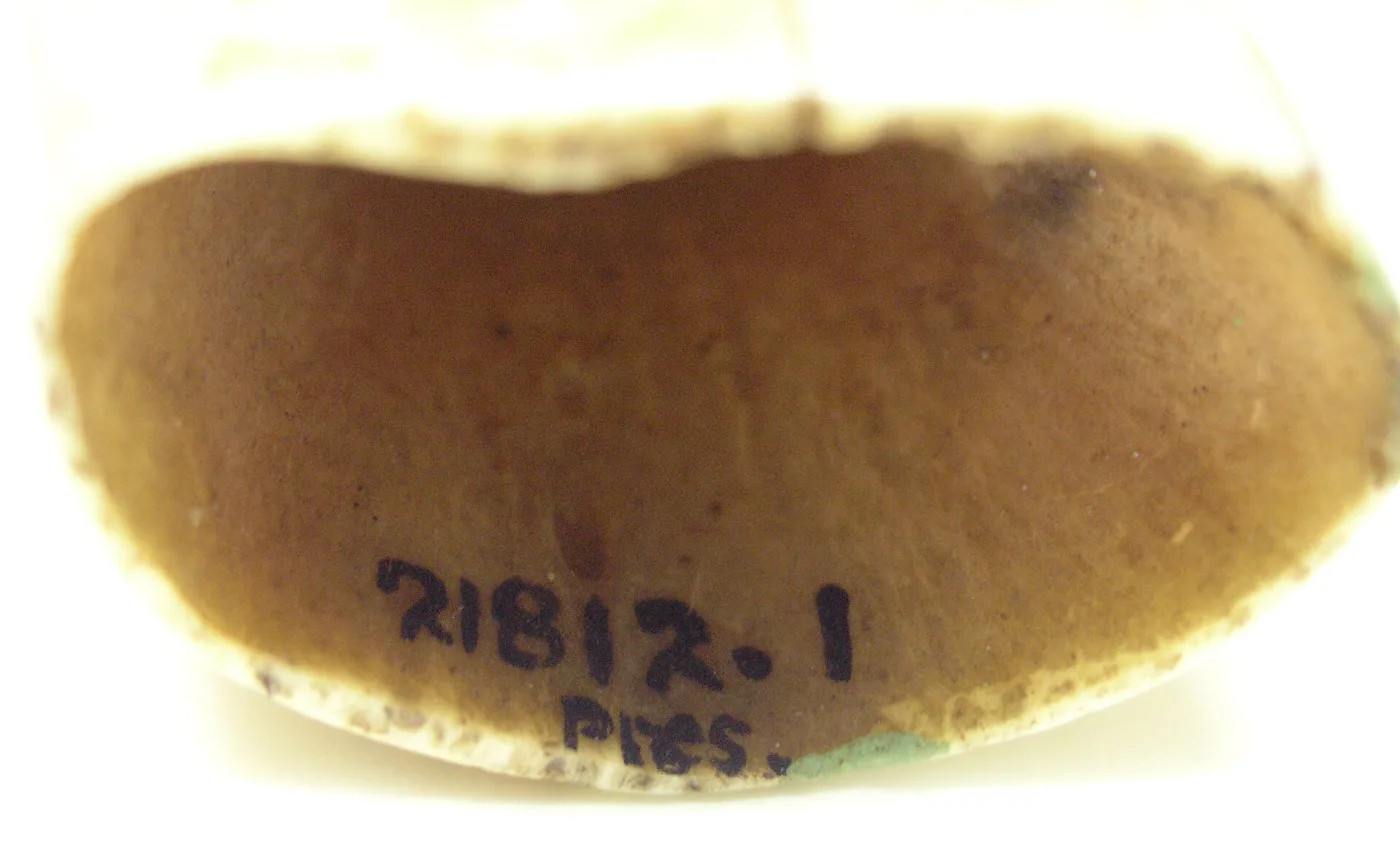
The most reliable visual identification method involves examining the grain pattern. Genuine sperm whale tooth shows concentric growth rings when viewed in cross-section at the root end. These rings are irregular and organic in appearance, unlike the uniform patterns seen in synthetic materials. Under a 10x loupe, the dentine structure of genuine whale ivory shows a distinctive pattern of microscopic tubules radiating from the central pulp cavity.
Weight & Temperature
Genuine ivory feels noticeably heavier than plastic or resin substitutes of the same size. Ivory also feels cool to the touch and warms slowly when held, while plastics tend to reach skin temperature more quickly. These tactile tests, while subjective, become more reliable with experience handling genuine pieces.
Surface Patina
Authentic antique scrimshaw develops a natural patina over decades and centuries. This patina results from oxidation, handling, and exposure to light and air. It manifests as a warm yellowing that penetrates into the material rather than sitting on the surface. Artificial aging applied to modern fakes may appear as a surface coating that can be scratched or rubbed off, particularly in recessed areas where genuine patina would be deepest.
Engraving Techniques & Tools
Understanding how scrimshaw was made helps distinguish period work from modern reproductions. The tools and techniques available to 19th-century whalers differed significantly from those used by contemporary scrimshaw artists.
Traditional Incising Method
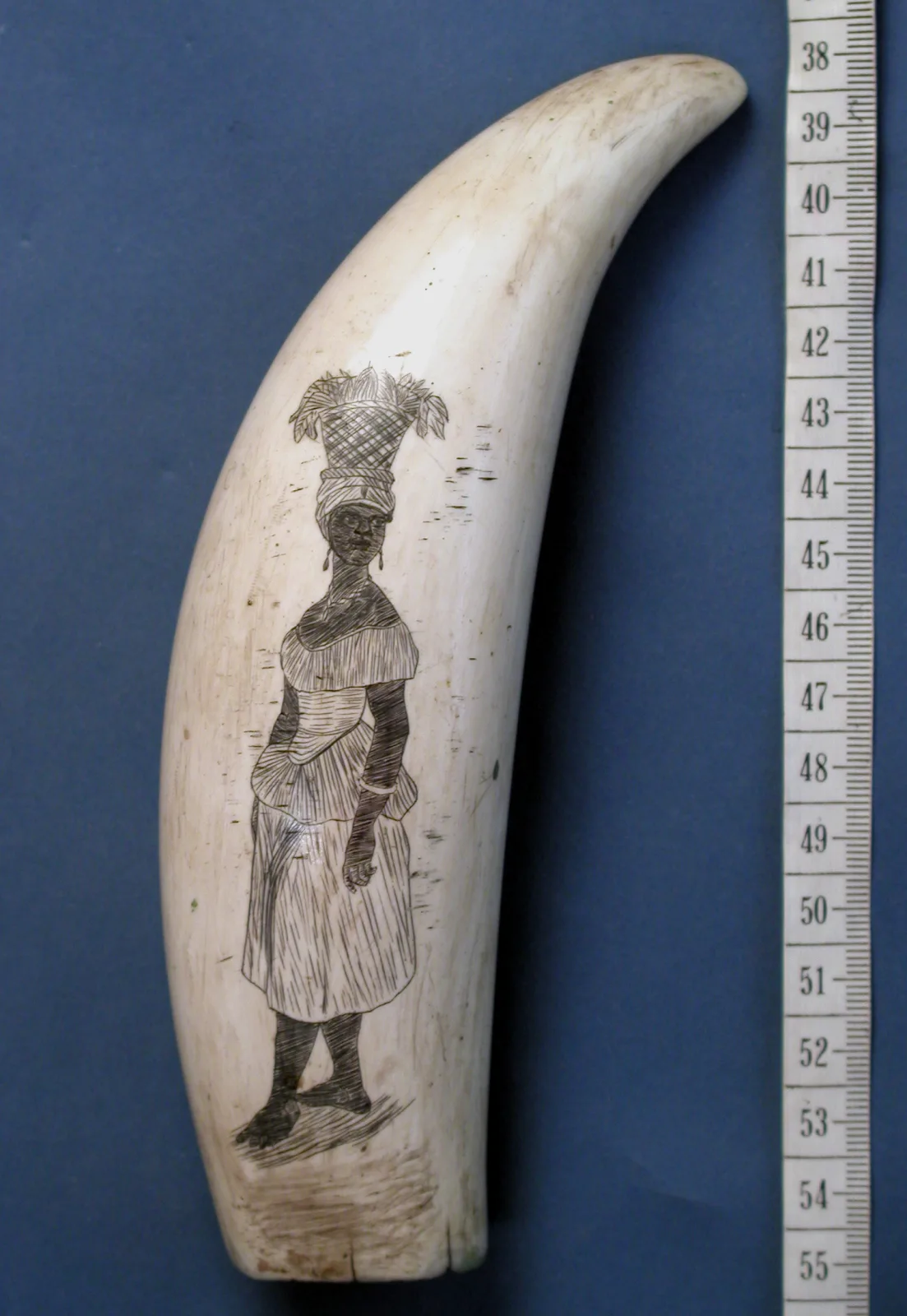
The most common scrimshaw technique involves incising lines into the polished surface of the tooth or bone using a sharp pointed tool. Whalers typically used sail needles, repurposed knife blades, or improvised tools fashioned from nails or hardened wire. The incised lines were then filled with pigment, usually lampblack (soot mixed with oil or grease), India ink, or occasionally colored pigments derived from berries, tobacco juice, or trade goods.
Under magnification, traditionally incised lines show slight irregularities in width and depth, reflecting the hand-held nature of the work. The lines may wander slightly, and cross-hatching tends to have visible variations in spacing and angle. These imperfections are actually desirable from an authentication standpoint, as they confirm hand execution rather than mechanical or laser-produced engraving.
Relief Carving
More ambitious scrimshaw work involved carving designs in low relief, creating raised figures against a recessed background. Relief carving required considerably more skill and time than simple incising and is found less frequently on teeth, though it was more common on panbone and walrus ivory. The depth of carving varies but rarely exceeds a few millimeters on whale teeth due to the thinness of the usable outer layer.
Stipple Technique
Some scrimshaw artists employed a stipple technique, creating images through patterns of dots rather than lines. This method allows for subtle gradations of tone and can produce remarkably detailed portraits and landscapes. Stippled scrimshaw requires extraordinary patience and is generally associated with the most skilled practitioners. Under magnification, individual dots should show slight variations in size and depth if done by hand.
Modern vs. Period Tooling
Modern scrimshaw artists use electric engraving tools, dental burrs, and even laser engraving machines that produce fundamentally different marks. Electric tool marks tend to be more uniform in width and depth. Laser engraving creates perfectly uniform lines with characteristically smooth, slightly melted edges visible under high magnification. Examining the engraved lines at 20x to 40x magnification is one of the most effective ways to distinguish period scrimshaw from modern work.

Common Subjects & Imagery
The subjects depicted in scrimshaw provide important clues for dating and authentication. Different themes were popular during different periods, and certain subjects are more commonly associated with specific regions or voyages.
Whaling Scenes
Depictions of whale hunts, including the chase in whaleboats, the harpooning, and the trying out of blubber, are among the most iconic scrimshaw subjects. These scenes often draw from published illustrations, particularly the popular whale prints of the era. Whaling scenes are most commonly found on teeth from the 1830s through 1860s, the peak period of both whaling activity and scrimshaw production.
Ship Portraits
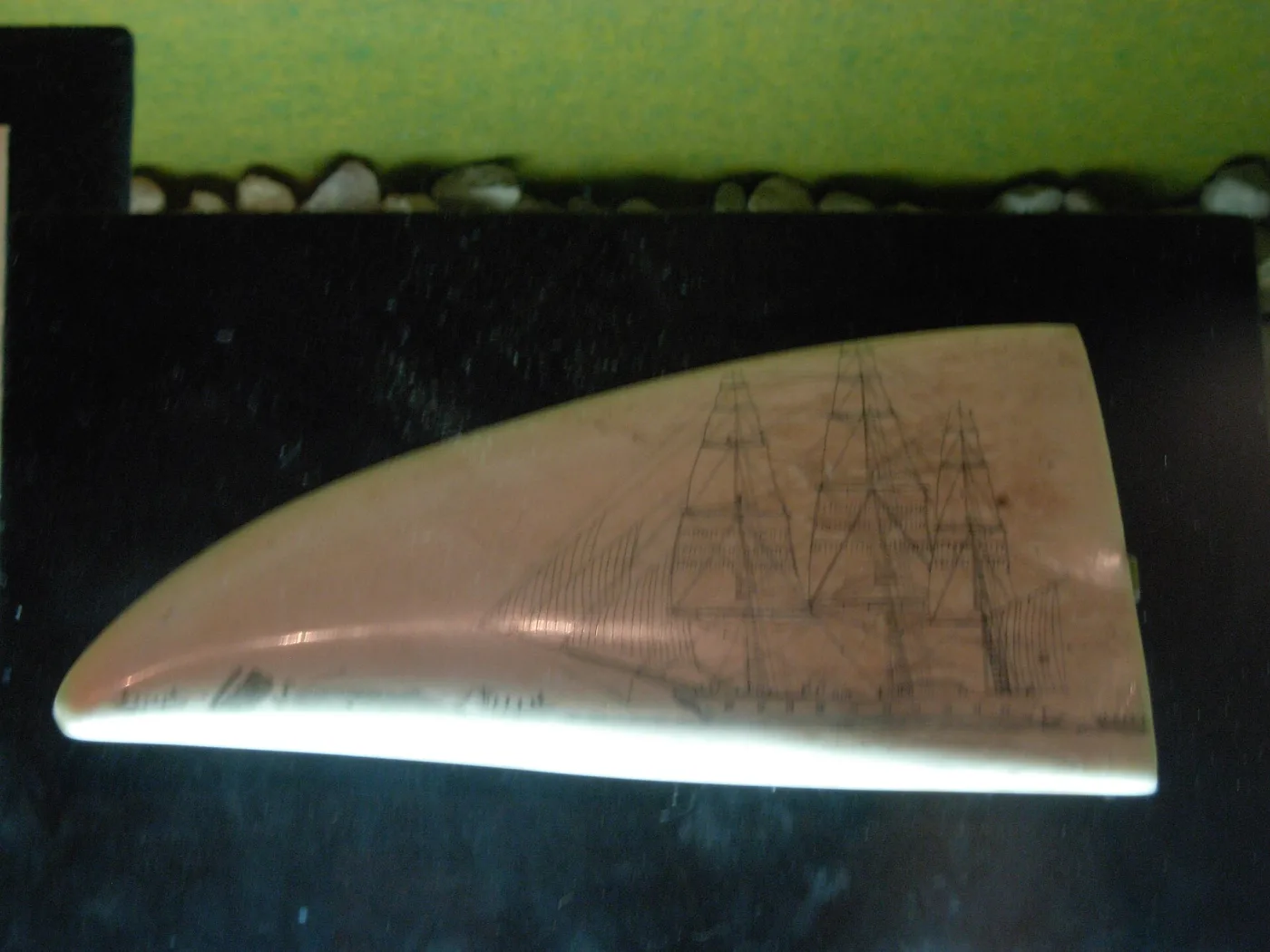
Detailed renderings of sailing vessels, particularly whaling ships and naval vessels, are extremely popular scrimshaw subjects. Sailors took great pride in depicting their own vessels and often included specific details like the ship's name, rigging configuration, and flag details. Ship portraits that can be identified and connected to specific vessels and voyages carry significant historical value and command premium prices.
Portraits & Female Figures
Portraits of women, often idealized representations of wives, sweethearts, or fashionable ladies, are among the most common scrimshaw subjects. Many were copied from popular prints and fashion plates of the day. The clothing styles, hairstyles, and poses depicted can help date the work, as sailors typically drew from contemporary illustrations available to them. Portraits of men, including presidents and military figures, are less common but do appear.
Patriotic & Military Imagery
American eagles, shields, flags, and other patriotic motifs appear frequently on scrimshaw, reflecting the strong national pride of the era. Similar engraving techniques were applied to powder horns, which share many decorative motifs with maritime scrimshaw. Military imagery, including battle scenes, military officers, and regimental insignia, was particularly common during and after the War of 1812, the Mexican-American War, and the Civil War. The specific style and subject matter of patriotic imagery can help narrow the date of production.
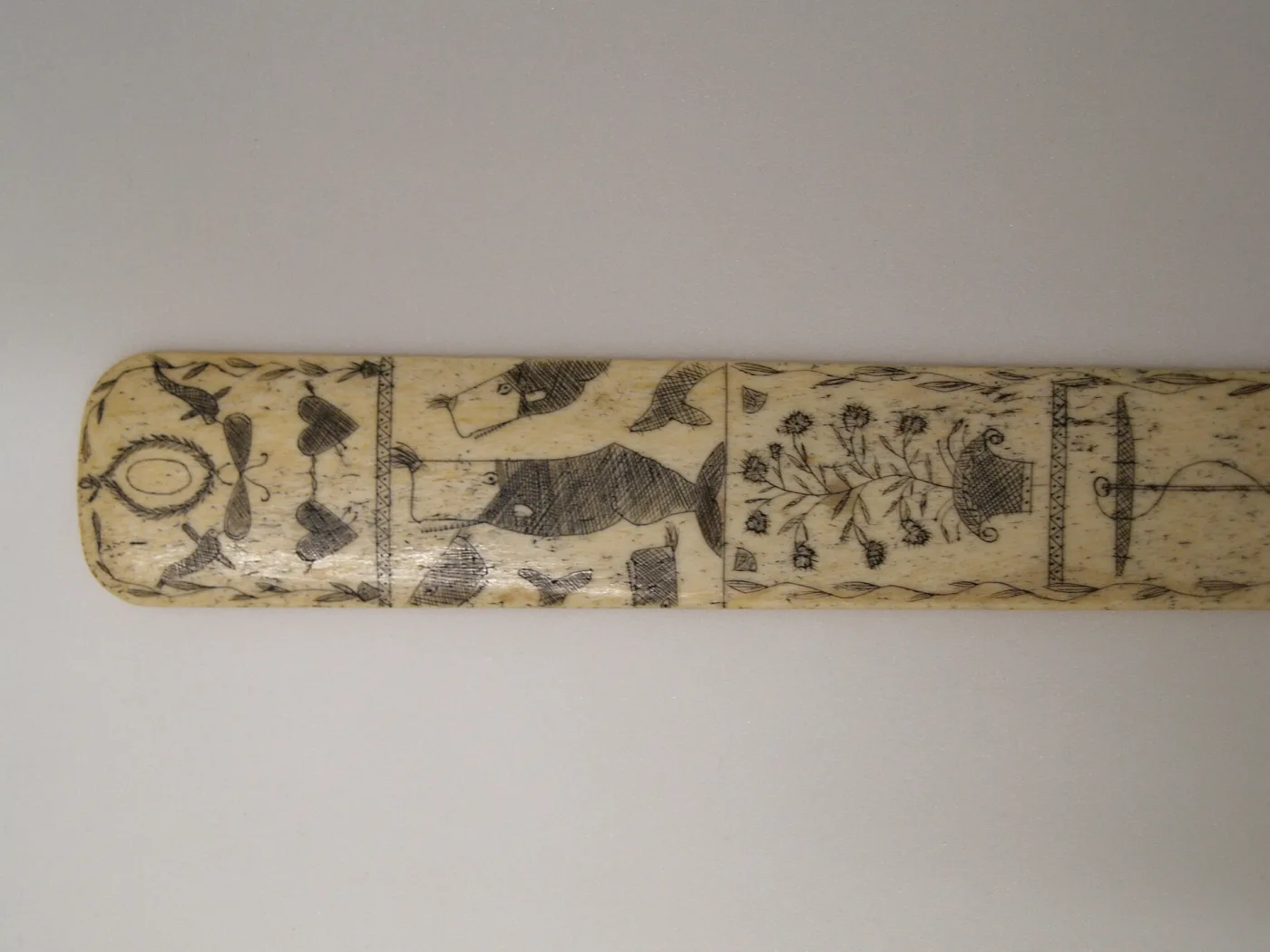
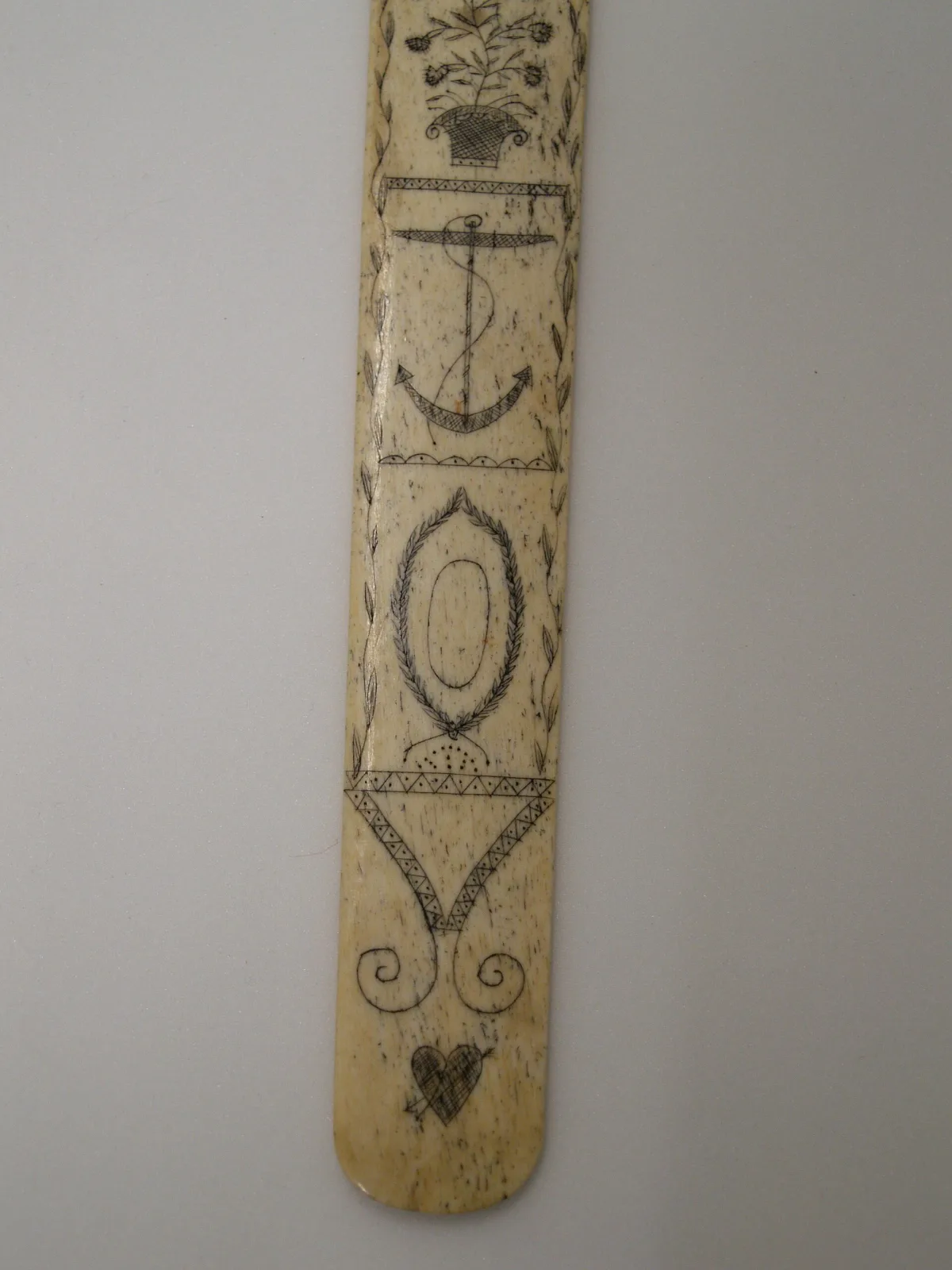
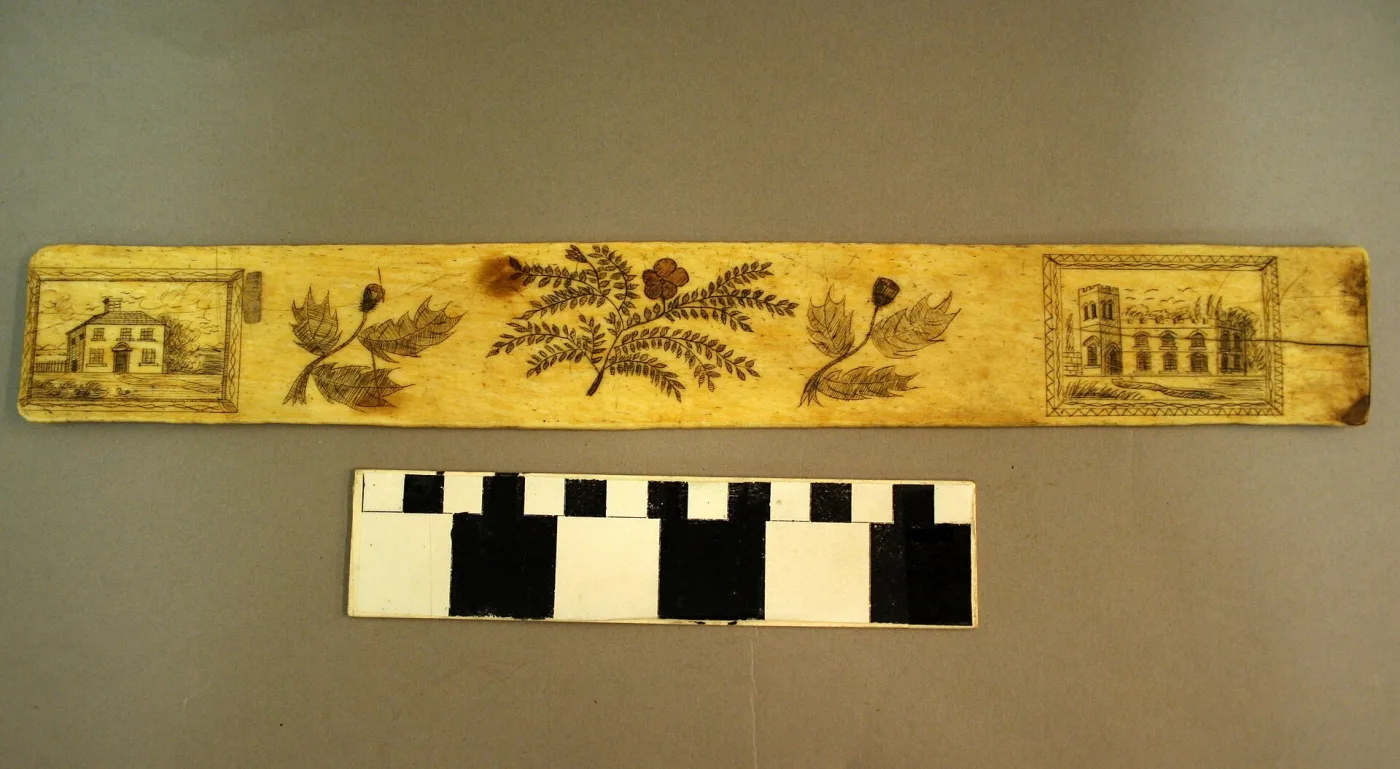
Floral & Geometric Designs
Many scrimshaw teeth feature elaborate floral arrangements, vine patterns, or geometric borders. These decorative elements were often combined with figurative scenes to create more complex compositions. Floral designs were frequently incorporated into the reverse side of teeth whose obverse featured more elaborate figurative work.
Erotic Scrimshaw
A subset of scrimshaw features explicit or suggestive imagery, reflecting the male-dominated environment aboard whaling ships. These pieces were typically more personal items not intended for display or gift-giving. While sometimes dismissed as crude, erotic scrimshaw can be quite accomplished artistically and carries the same authentication challenges as other genres.
Dating Antique Scrimshaw
Assigning a date range to a piece of scrimshaw requires consideration of multiple factors, as there are no absolute dating methods available. The convergence of several indicators provides the most reliable assessment.
Subject Matter & Imagery Sources
Since many scrimshaw images were copied from published prints and illustrations, identifying the source material can establish a terminus post quem (earliest possible date). Fashion details in portraits, specific ship designs, flag configurations (the number of stars on American flags changed frequently), and the depiction of historical events all provide dating clues. A scene showing a steamship, for example, cannot predate the adoption of steam propulsion on whaling vessels.
Pigment Analysis
The pigments used to fill incised lines offer dating evidence. Early scrimshaw typically used lampblack, producing deep black lines that sometimes appear slightly brownish with age. India ink became increasingly available after the 1830s. Commercial inks and colored pigments expanded the palette in the later 19th century. Chemical analysis of pigments can help confirm or challenge a proposed date, though this requires laboratory testing.
Tool Marks & Technique
The type and character of tool marks evolve over time. Earlier scrimshaw tends to show broader, less refined line work compared to the increasingly detailed work of the mid-19th century. The introduction of steel sail needles provided finer points than earlier iron tools. The presence of power tool marks or perfectly uniform lines immediately suggests modern production.
Tooth Morphology & Wear
The physical characteristics of the tooth itself offer dating evidence. Teeth from older whales tend to be larger and show more natural wear at the tip. The root end may show evidence of how the tooth was extracted, which varied by period. Heavily worn teeth suggest they were carried and handled extensively, consistent with age. Fresh-looking teeth with minimal root area patina are suspect.
Provenance & Documentation
The most reliable dating comes from documented provenance. Ship logs, personal diaries, family records, and historical collection records can establish both the date and the specific voyage during which a piece was created. Scrimshaw with traceable provenance to known whalers or specific ships commands a substantial premium in the market.
Authentication: Spotting Fakes & Reproductions
The scrimshaw market has been plagued by fakes and reproductions since the collecting revival of the 1960s. Understanding the most common deception techniques is essential for any serious collector.
Resin & Polymer Fakes
The most common fakes are cast from molds using polyester resin, polymer clay, or similar synthetic materials. These copies often reproduce the general shape and surface decoration of genuine scrimshaw but fail under close inspection. Look for mold lines, uniform surface texture, air bubbles trapped beneath the surface, and an unnaturally uniform color. The hot needle test will quickly identify resin and polymer fakes, as they will melt and emit a chemical odor when touched with a heated needle.
Modern Engraving on Old Teeth
A more sophisticated deception involves obtaining genuine old (but unengraved) whale teeth and adding modern artwork. These fakes pass material tests but fail on stylistic and technical grounds. Under magnification, the engraved lines will appear fresh and sharp, lacking the softened edges and accumulated grime found in genuinely old engravings. The pigment in the lines will appear bright and evenly distributed rather than showing the fading and partial loss characteristic of age.
Computer-Generated Transfers
Some modern forgers use computer-generated images transferred onto genuine or synthetic tooth surfaces. These transfers can be identified by their perfectly uniform line quality, mechanical precision in hatching patterns, and sometimes by a subtle surface film visible under raking light. High magnification reveals the characteristic dots of inkjet printing or the smooth uniformity of laser transfer, both of which are distinctly different from hand-incised lines.
Ink & Pigment Aging
Forgers attempt to simulate age by treating modern engravings with tea, coffee, tobacco juice, or commercial antiquing solutions. Genuine aged pigment settles deep into incised lines and shows natural fading with possible partial loss in areas of wear. Artificial aging tends to produce a more uniform surface color that may also affect the surrounding unengraved surface in an unnatural way. Under UV light, artificially aged pigments may fluoresce differently from naturally aged materials.
Red Flags for Buyers
Several warning signs should raise immediate suspicion. Pieces offered without any provenance or history should be scrutinized heavily. Unusually low prices for supposedly period work are a common indicator of fakes. Perfect condition without any wear, chips, or patina loss on supposedly 150-year-old pieces is highly unlikely. Multiple similar pieces appearing on the market simultaneously may indicate batch production of fakes. Sellers who resist examination or refuse to allow expert inspection should be avoided.
Legal Considerations & CITES Regulations
The legal framework surrounding scrimshaw ownership and trade is complex and varies by jurisdiction. Understanding these regulations is essential for both buying and selling scrimshaw legally.
The Marine Mammal Protection Act (MMPA)
In the United States, the Marine Mammal Protection Act of 1972 prohibits the taking, possession, and trade of marine mammal parts, including whale teeth and bone. However, there is a critical exception: items made from marine mammal materials that were legally acquired before the Act took effect and that qualify as antiques (over 100 years old) can be legally bought and sold. This pre-Act exemption is the legal basis for most scrimshaw commerce in the United States.
The Endangered Species Act (ESA)
The Endangered Species Act provides additional protections for sperm whales and other whale species. Trade in whale ivory is regulated under this act, with exemptions for documented antiques. State laws may impose additional restrictions. Some states, notably New York, California, New Jersey, and Hawaii, have enacted strict ivory sales bans that may affect scrimshaw trade even when federal exemptions would otherwise apply.
CITES International Regulations
The Convention on International Trade in Endangered Species (CITES) regulates the international movement of whale ivory. Exporting or importing scrimshaw across national borders requires CITES permits, which can be difficult to obtain even for documented antique pieces. Some countries, particularly members of the European Union, have extremely strict ivory regulations that may effectively prohibit all ivory trade regardless of age.
Documentation Requirements
To legally buy, sell, or transport scrimshaw, collectors should maintain thorough documentation establishing the pre-Act provenance of their pieces. This may include purchase receipts, auction records, estate documentation, photographs showing the piece in collections prior to 1972, or expert appraisals confirming antique status. Ivory dealers and auction houses typically require this documentation before handling scrimshaw transactions.
Practical Advice for Collectors
Before buying or selling scrimshaw, consult with an attorney familiar with wildlife and antiquities law in your jurisdiction. Keep all purchase documentation permanently. Photograph your collection regularly with dated images. When shipping scrimshaw, be aware that carriers may have their own policies regarding ivory transport. For international purchases, arrange CITES documentation before the sale rather than attempting to obtain permits afterward.
Notable Scrimshaw Artists & Schools
While most scrimshaw was created anonymously by ordinary sailors, some practitioners achieved recognition for their exceptional skill. Identifying the work of known scrimshanders can significantly increase a piece's value and historical importance.
Edward Burdett (1805-1833)
Edward Burdett of Nantucket is considered one of the finest early scrimshaw artists. His work is characterized by finely detailed ship portraits and whaling scenes executed with remarkable precision for the period. Burdett sailed on several whaling voyages and died at sea at the age of 28. His identified works are held in major museums and represent some of the most valuable scrimshaw in existence.
Frederick Myrick (1808-1862)
Frederick Myrick is perhaps the most famous named scrimshander. His work, primarily executed aboard the whaling ship Susan between 1828 and 1829, is distinguished by inscriptions that frequently include the ship's name, the date, and patriotic sentiments. Myrick's teeth are among the most sought-after scrimshaw pieces, with confirmed examples selling for hundreds of thousands of dollars at auction.
The Britannia Engraver
This unidentified artist, named for a distinctive female figure of Britannia that appears in many of the attributed works, produced a substantial body of scrimshaw characterized by elaborate compositions, fine line work, and a consistent artistic style. The Britannia Engraver is believed to have been active between 1830 and 1850, and approximately 50 teeth and panbone pieces have been attributed to this hand.
Regional Schools
Certain whaling ports developed recognizable scrimshaw traditions. Nantucket work tends toward refined, carefully composed scenes, reflecting the island's Quaker cultural influence. New Bedford scrimshaw is generally bolder and more varied in subject matter. Pacific-based whalers sometimes incorporated Asian and Polynesian influences into their work. Recognizing these regional characteristics can help attribute pieces to specific areas and time periods.
Forms & Types of Scrimshaw Objects
Scrimshaw encompasses a wide variety of functional and decorative objects beyond the commonly recognized engraved whale tooth. Understanding these forms helps collectors identify less obvious scrimshaw pieces and appreciate the full range of the art form.
Engraved Whale Teeth
The most iconic form of scrimshaw, engraved whale teeth feature incised designs on one or both sides. Teeth range in size from small, roughly palm-sized specimens to large examples exceeding 20 centimeters in length. Teeth were typically polished before engraving and may show evidence of mounting holes or flat-filed bases added to allow them to stand upright for display.
Busks (Corset Stays)
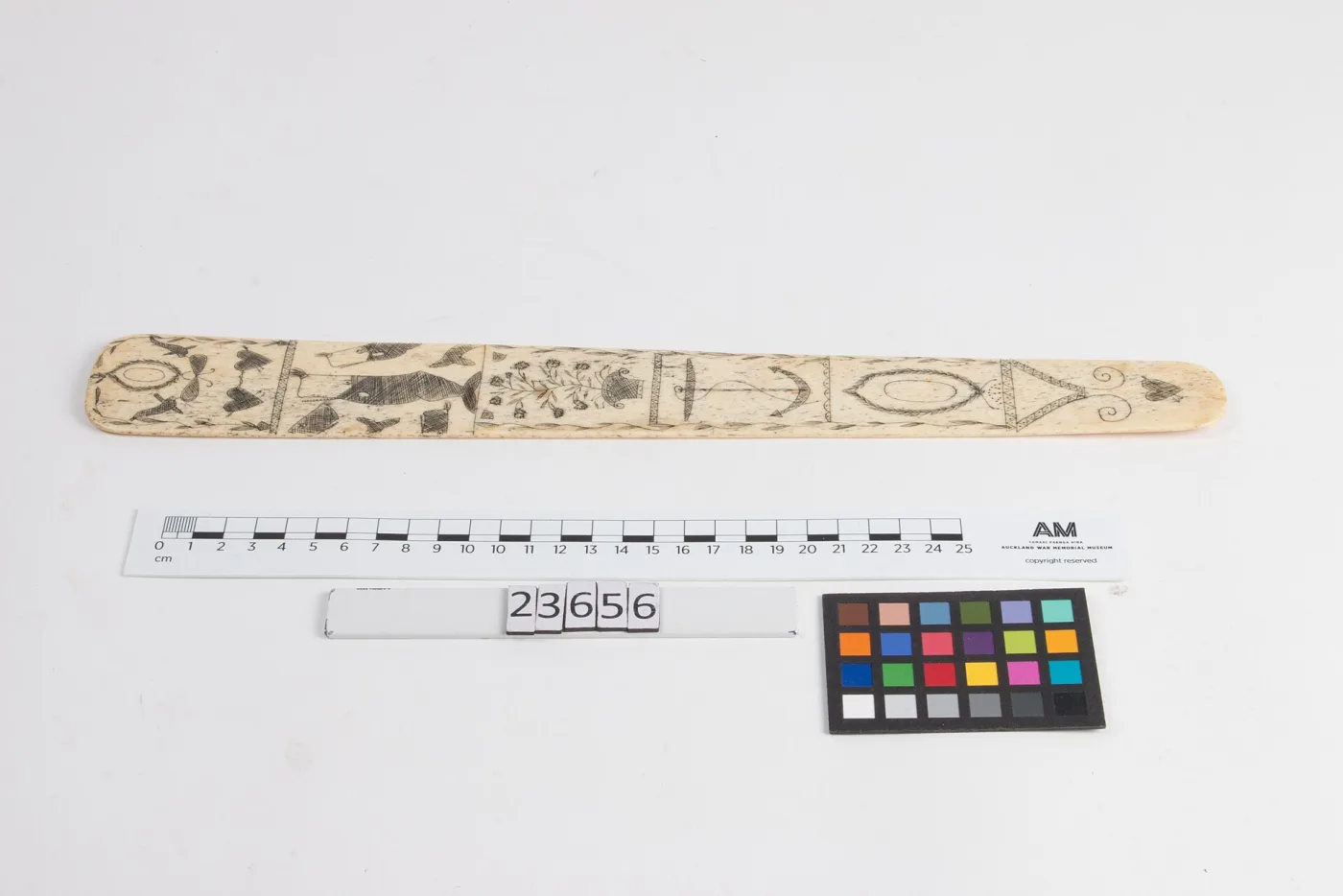
Busks are flat, elongated pieces of whale bone or ivory used to stiffen the front panel of a woman's corset. Scrimshaw busks were highly personal gifts from sailors to their wives or sweethearts, often decorated with romantic imagery, hearts, flowers, and sentimental inscriptions. These intimate items are prized by collectors for their personal nature and the quality of their engraving, which was often quite fine due to the smooth, flat surface.
Jagging Wheels (Pie Crimpers)
Among the most common functional scrimshaw objects, jagging wheels were used to crimp the edges of pie crusts. They typically feature a wheel (or multiple wheels) mounted on an elaborately carved handle of whale ivory or bone. The handles often incorporate forks, decorative turnings, and carved figures. Jagging wheels demonstrate remarkable variety in design and are actively collected as a distinct category.
Swift Yarn Winders
Scrimshaw swifts are collapsible yarn-winding devices made entirely from whale bone and ivory. These complex mechanical objects feature dozens of interlocking slats, adjustable clamps, and turned central posts. A fully functional scrimshaw swift represents one of the most technically challenging creations in the medium and can contain over 100 individual parts. High-quality swifts are among the most expensive scrimshaw items.
Walking Sticks & Canes
Whale ivory and bone were used to create handles, ferrules, and decorative sections for walking sticks. Scrimshaw cane handles may be carved in the round to represent clenched fists, turk's head knots, animal figures, or abstract forms. The shafts might incorporate alternating sections of whale bone and tropical wood in decorative patterns.
Boxes & Containers
Sailors created a variety of boxes from whale bone panels, including ditty boxes for personal effects, sewing boxes for wives and mothers, and snuff boxes. Panbone provided excellent flat material for box construction, and the engraved decoration often covers all visible surfaces. The construction methods, including pinned joints and fitted lids, reflect the woodworking and mechanical skills common among seafarers.
Condition Assessment & Grading
The condition of a scrimshaw piece significantly affects its value. Understanding what constitutes acceptable wear versus damage helps collectors make informed purchasing decisions.
Natural Aging
Genuine antique scrimshaw exhibits predictable aging characteristics. The ivory surface develops a warm patina ranging from pale yellow to deep amber. Fine surface cracking, known as checking or crazing, develops as the ivory loses moisture over decades. These hairline cracks typically follow the grain structure of the material and are a positive sign of genuine age. Slight warping may occur, particularly in teeth that have been stored in variable humidity conditions.
Wear Patterns
Pieces that were used (jagging wheels, busks, walking sticks) show wear patterns consistent with their function. Carried teeth display handling wear on prominent surfaces and edges. The pigment in engraved lines may show partial loss in high-wear areas while remaining intact in protected recesses. These wear patterns should appear natural and consistent with the object's presumed history of use and handling.
Damage Assessment
Common forms of damage include chips and cracks at the tooth tip or edges, loss of the root section, staining from contact with metals or chemicals, and deliberate modifications such as drilled mounting holes added later. Damage from improper storage, including excessive drying, exposure to heat sources, or prolonged direct sunlight, may cause deep cracking, delamination, or bleaching of the natural patina. These conditions generally reduce value but do not necessarily negate authenticity.
Repairs & Restorations
Many antique scrimshaw pieces have been repaired over their lifetime. Old repairs using animal glues, shellac, and similar traditional materials are more acceptable to the market than modern repairs using epoxy or synthetic adhesives. Re-inking of worn engraved lines is a common form of restoration that may enhance appearance but can mask original work if done poorly. Any repairs or restorations should be disclosed when buying or selling.
Value Factors & Market Trends
The scrimshaw market has experienced significant price appreciation over the past several decades, though legal restrictions on ivory trade have created a complex marketplace. Several key factors determine the value of individual pieces.
Artistic Quality
The single most important value factor is the quality and sophistication of the artwork. Finely detailed scenes with skillful composition, accurate perspective, and refined line work command substantially higher prices than crude or simplistic engravings. The difference between mediocre and exceptional artistic quality can represent a tenfold or greater variation in value for otherwise comparable pieces.
Subject Matter
Certain subjects are more desirable to collectors than others. Whaling scenes, identified ship portraits, and historical event depictions typically command premium prices. Patriotic imagery and portraits are solidly popular. Simple geometric patterns and basic floral designs, while charming, generally fall at the lower end of the value spectrum for engraved teeth.
Provenance
Documented provenance linking a piece to a specific whaler, ship, or voyage dramatically increases value. Exhibition history, inclusion in published references, and prior ownership by notable collectors also enhance desirability. In the current regulatory environment, provenance documentation that establishes pre-1972 ownership is not just valuable but often legally necessary for sale.
Attribution
Work attributed to known scrimshaw artists commands significantly higher prices than anonymous pieces of comparable quality. Frederick Myrick teeth regularly sell for six figures at auction. Even tentative attributions to identified hands add substantial value, provided the attribution is supported by credible scholarly opinion.
Size & Form
Larger whale teeth generally command higher prices, all else being equal, as they provide a larger canvas for artwork. Rare forms such as swifts, elaborate jagging wheels, and complete sets of items command premiums based on their rarity and complexity. Panbone pieces, while generally less expensive per piece than teeth, can reach high prices when the engraving is exceptional.
Market Trends
The scrimshaw market has been affected by tightening ivory regulations, which have reduced the number of venues willing to handle ivory sales. Major auction houses continue to sell properly documented antique scrimshaw, but the pool of active buyers has been somewhat constrained by legal concerns. This has created opportunities for knowledgeable collectors willing to navigate the regulatory landscape, as some pieces may be undervalued relative to their artistic and historical significance.
Care & Preservation
Proper care is essential to preserving scrimshaw for future generations. Ivory and bone are organic materials that respond to environmental conditions and require attention to maintain their condition.
Environmental Controls
Ivory is extremely sensitive to changes in humidity and temperature. Sudden environmental shifts can cause cracking, warping, and delamination. The ideal storage environment maintains stable relative humidity between 45% and 55% at temperatures between 65 and 72 degrees Fahrenheit. Avoid placing scrimshaw near heating vents, air conditioning ducts, fireplaces, or windows with direct sun exposure. Use a hygrometer to monitor the humidity in display and storage areas.
Light Exposure
Prolonged exposure to direct sunlight or strong artificial light bleaches the natural patina of ivory and can cause the material to become brittle. Display scrimshaw in areas with indirect, moderate lighting. If museum-style display lighting is used, select low-UV sources and keep exposure time reasonable. Rotate displayed pieces periodically to distribute any light exposure evenly.
Handling
Handle scrimshaw with clean, dry hands or cotton gloves. Oils and acids from skin can stain ivory over time. Support pieces from below rather than gripping them at narrow points. When moving scrimshaw, wrap pieces individually in acid-free tissue paper and transport them in padded containers. Never stack teeth or place heavy objects on top of ivory items.
Cleaning
Clean scrimshaw only when genuinely necessary, using the gentlest possible methods. Light surface dust can be removed with a soft, dry brush. If deeper cleaning is required, use a slightly damp (not wet) soft cloth with no cleaning agents. Never soak ivory in water or apply chemical cleaners, solvents, or polishes. Old, stable grime is preferable to damage from aggressive cleaning. For valuable pieces, consult a professional conservator before attempting any cleaning.
Building a Scrimshaw Collection
Starting a scrimshaw collection requires patience, education, and careful attention to authenticity and legality. Following established best practices helps new collectors avoid costly mistakes.
Education First
Before making any purchases, invest time in learning about scrimshaw through books, museum collections, and experienced collectors. Visit the New Bedford Whaling Museum, the Nantucket Whaling Museum, and the Mystic Seaport Museum, which house major scrimshaw collections. Handle as many genuine pieces as possible to develop the tactile familiarity that supports authentication. Attend auction previews to examine lots before sale.
Buying Strategy
Buy from established, reputable dealers and auction houses with documented expertise in scrimshaw and marine art. Request provenance documentation and pre-1972 ownership evidence before purchasing. Start with modestly priced pieces to develop your eye before investing in expensive works. Consider building depth in a specific collecting area rather than acquiring a broad but shallow collection.
Authentication Resources
For significant purchases, seek expert authentication before committing. Several specialists in the field offer paid authentication services. Some auction houses provide condition reports and authenticity guarantees. Museum curators may be willing to offer informal opinions, though most will not provide formal appraisals. When in doubt, walk away and continue researching. The pieces you do not buy can be as important as those you do.
Insurance & Documentation
Insure your collection through a specialized fine art and antiques policy that specifically covers ivory and marine artifacts. Photograph every piece in detail, including all surfaces, the root cavity, and any identifying marks or labels. Maintain organized files with purchase receipts, provenance documentation, authenticity opinions, and insurance records. This documentation protects both the financial and historical value of your collection.