
Antique Religious Objects & Icons Identification Guide: Dating, Authentication & Valuation
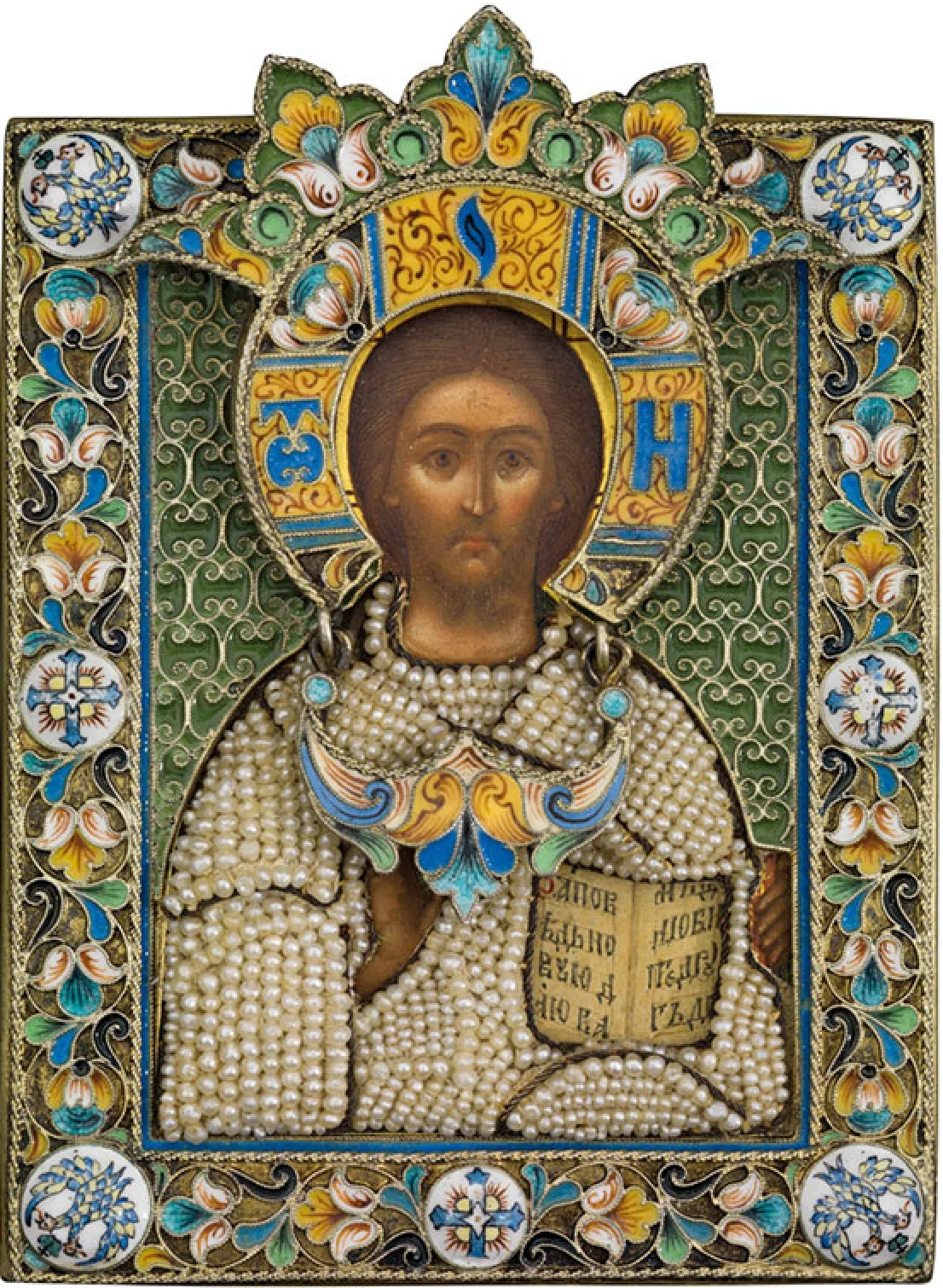
Antique religious objects represent a profound intersection of faith, artistry, and cultural heritage. From Byzantine icons adorned with gold leaf to ornate liturgical vessels crafted from precious metals, these sacred artifacts embody centuries of devotional tradition and masterful craftsmanship. Whether you've inherited a family heirloom, discovered an intriguing piece at an estate sale, or are building a collection of religious art, understanding how to properly identify and authenticate these treasures is essential. This comprehensive guide will walk you through everything you need to know about identifying antique religious objects, from recognizing iconographic traditions to authenticating materials and determining historical value.
Table of Contents
Understanding Religious Object Categories
Religious artifacts span numerous categories, each with distinct characteristics and identification markers. Understanding these categories is the first step in proper identification.
Icons and Religious Paintings
Sacred images that serve as focal points for devotion and worship:
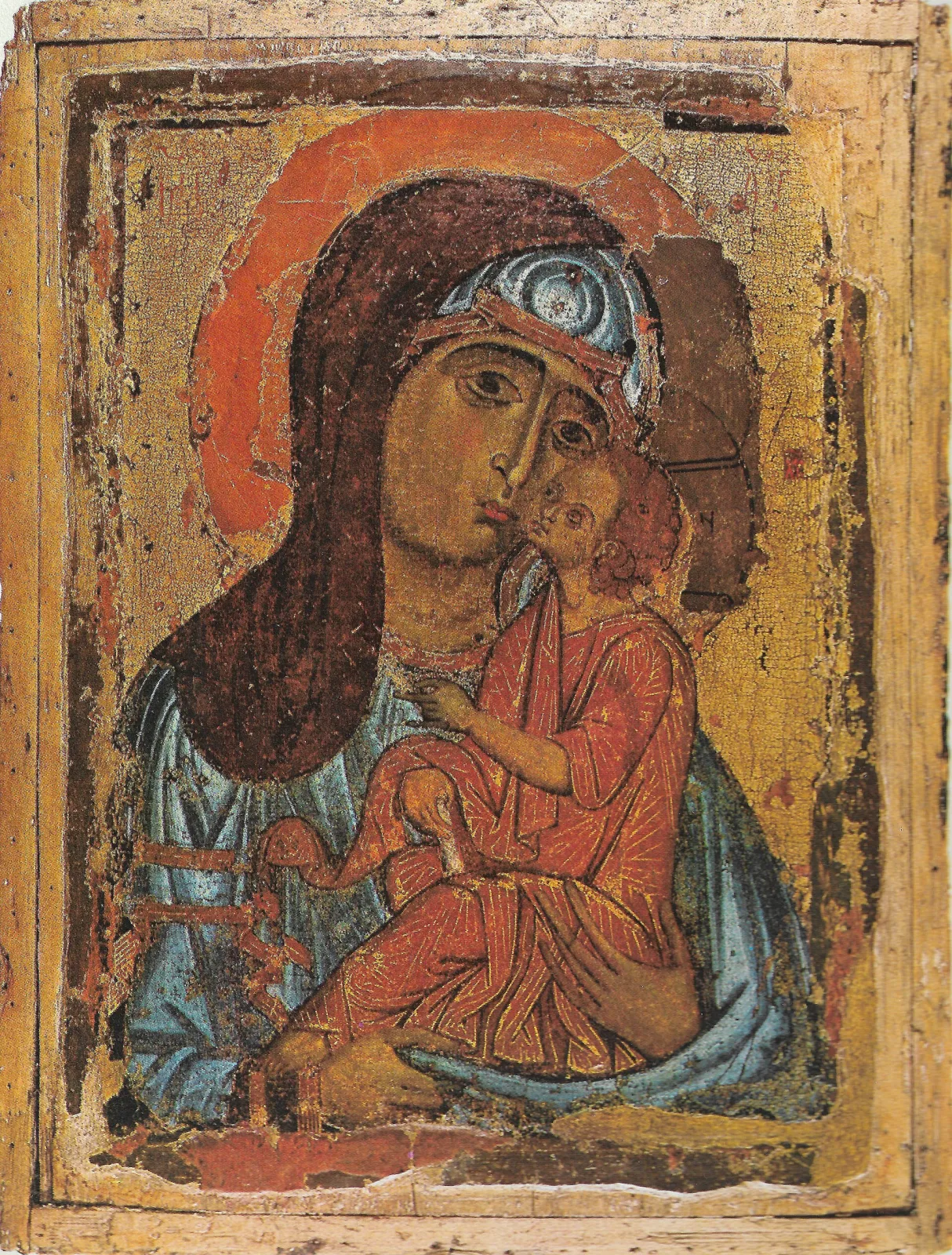
- Panel Icons: Traditional Byzantine and Orthodox icons painted on wood panels with egg tempera and gold leaf
- Triptychs: Three-paneled icons designed for portable altars and personal devotion
- Devotional Paintings: Religious scenes on canvas or panel from Catholic and Protestant traditions
- Miniature Icons: Small portable icons often set in silver or enamel frames
- Reverse Glass Paintings: Folk art religious images painted on the back of glass panels
Liturgical Metalwork
Sacred vessels and implements used in religious ceremonies:
- Chalices and Patens: Communion vessels often crafted from silver or gold with elaborate decoration
- Censers (Thuribles): Incense burners suspended from chains, typically bronze or silver
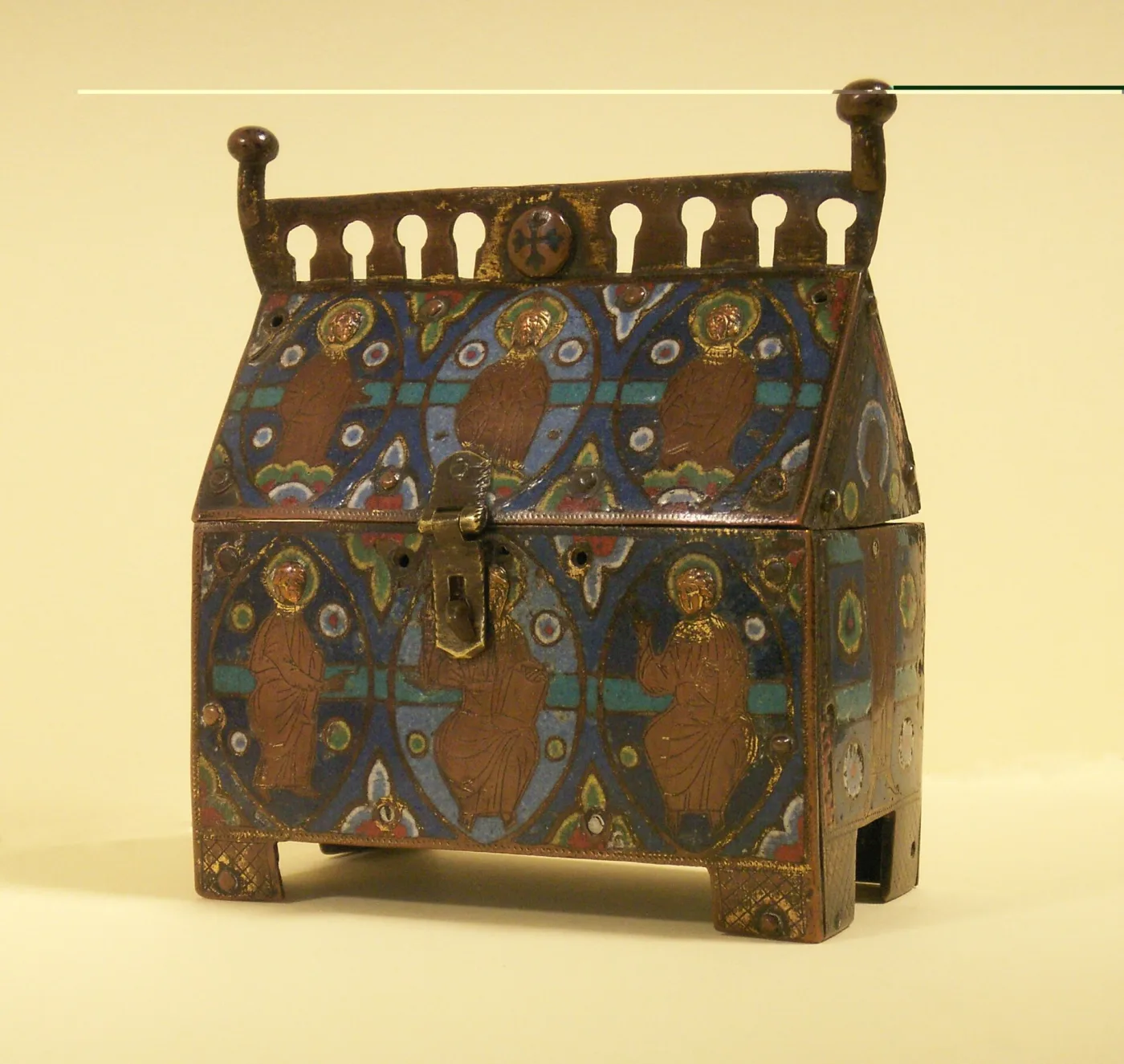
- Reliquaries: Ornate containers designed to house sacred relics, often featuring precious stones
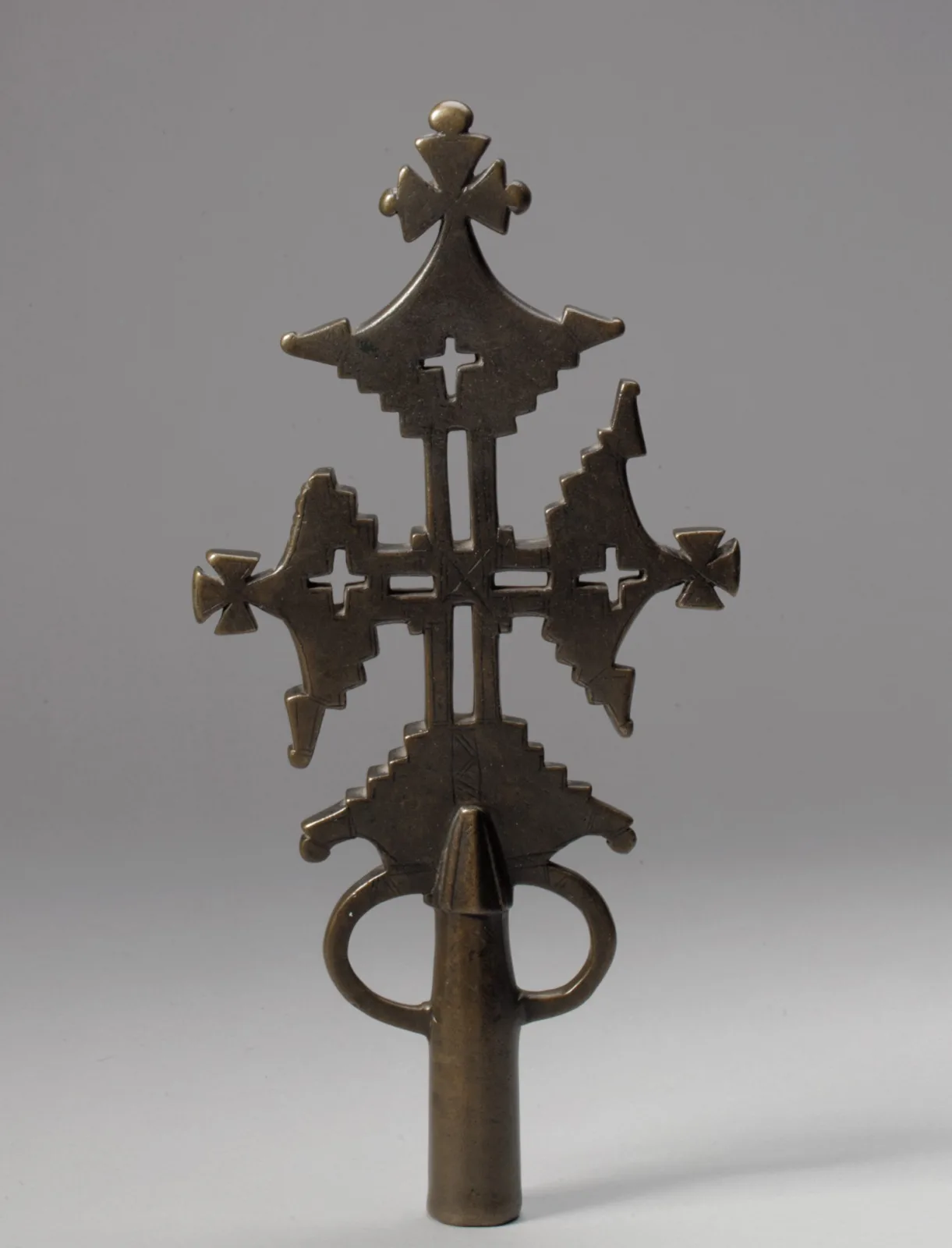
- Processional Crosses: Large crosses mounted on staffs for ceremonial processions
- Candlesticks and Altar Sets: Liturgical lighting fixtures in matching sets
- Monstrances: Display vessels for the consecrated Host, featuring intricate metalwork
Devotional Objects
Personal items used for private prayer and religious practice:
- Crosses and Crucifixes: Ranging from simple wooden crosses to elaborate jeweled masterpieces
- Rosaries and Prayer Beads: Catholic rosaries, Islamic prayer beads, Buddhist malas
- Prayer Books and Missals: Illuminated manuscripts and printed devotional texts
- Holy Water Fonts: Wall-mounted or freestanding vessels for blessed water
- Votive Objects: Ex-votos, candles, and offerings made in fulfillment of religious vows
Religious Furniture and Architectural Elements
- Altarpieces: Carved or painted panels forming the backdrop for church altars
- Prie-dieux: Kneeling benches for private prayer, often elaborately carved
- Tabernacles: Locked receptacles for storing consecrated elements
- Lecterns and Pulpits: Reading stands and preaching platforms with decorative carving
Cultural and Faith-Specific Objects
- Jewish Ceremonial Objects: Menorahs, Torah ornaments, Kiddush cups, Hanukkah lamps
- Buddhist Artifacts: Statuary, prayer wheels, ritual bells, singing bowls
- Islamic Art: Calligraphic panels, prayer rugs, Quran stands, mosque lamps
- Hindu Objects: Deity statues, puja vessels, oil lamps
Historical Periods and Styles
Understanding the evolution of religious art through different historical periods is crucial for accurate dating and attribution.
Early Christian and Byzantine Era (4th-15th Century)
The foundational period of Christian religious art:
- Early Christian (4th-7th Century): Simple symbolic imagery, catacomb paintings, early cross designs
- Byzantine Empire (330-1453 CE): Standardized iconographic traditions, gold backgrounds, frontal poses, hierarchical scaling
- Iconographic Conventions: Established symbolic colors, gesture meanings, and compositional rules
- Materials: Egg tempera on prepared wood panels, gold leaf application, natural pigments
- Notable Features: Elongated figures, spiritual rather than realistic representation, extensive use of symbolism
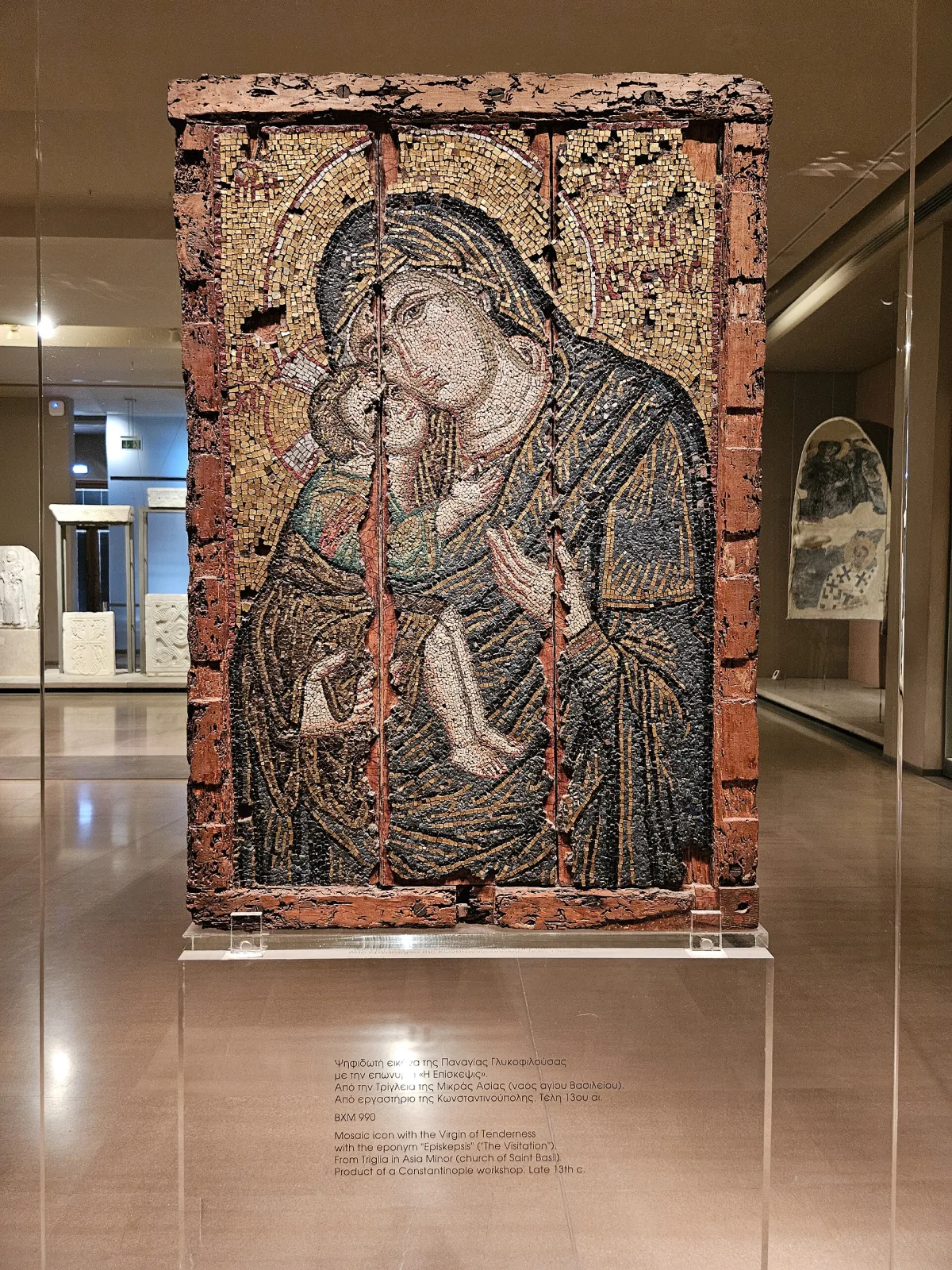
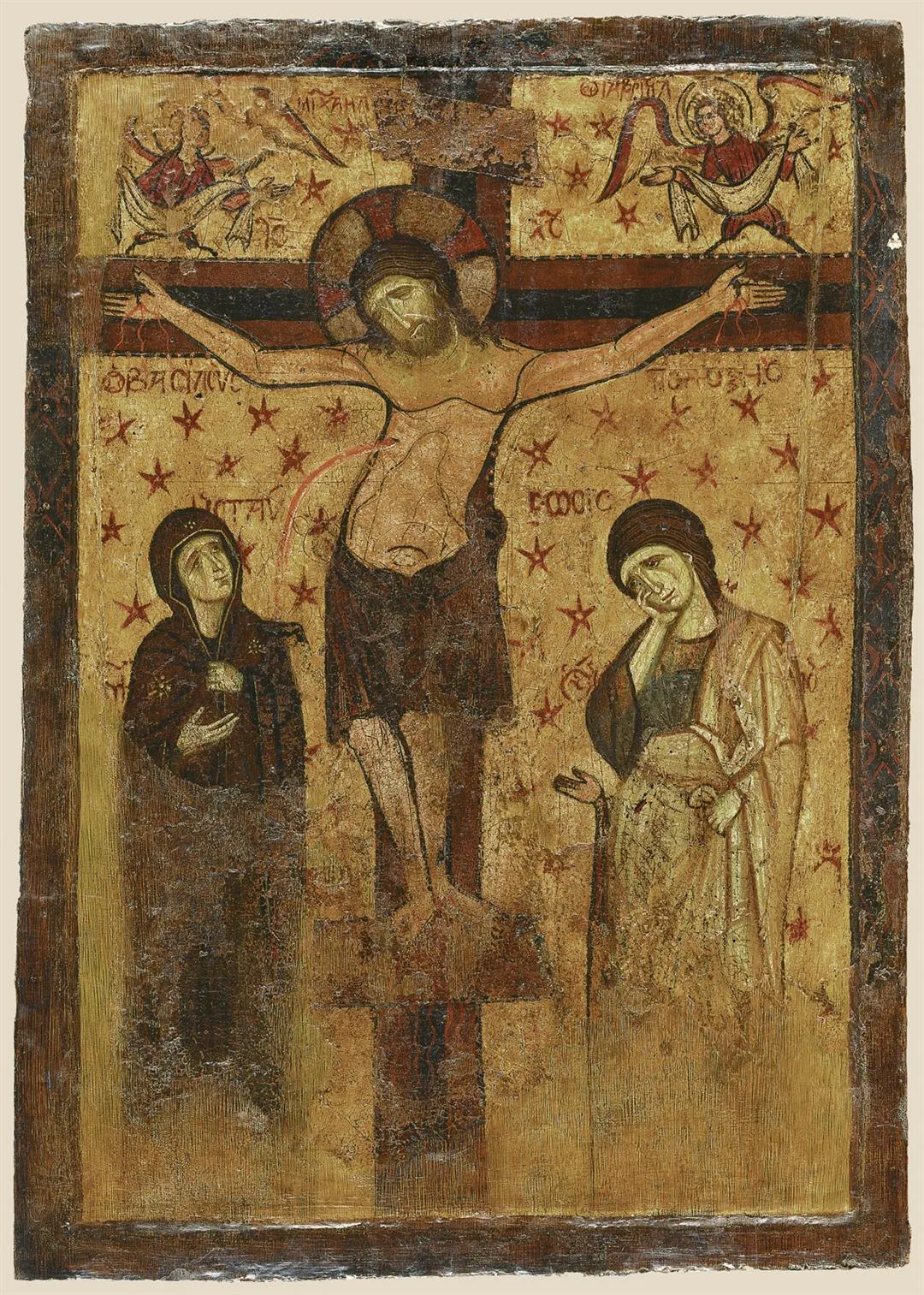
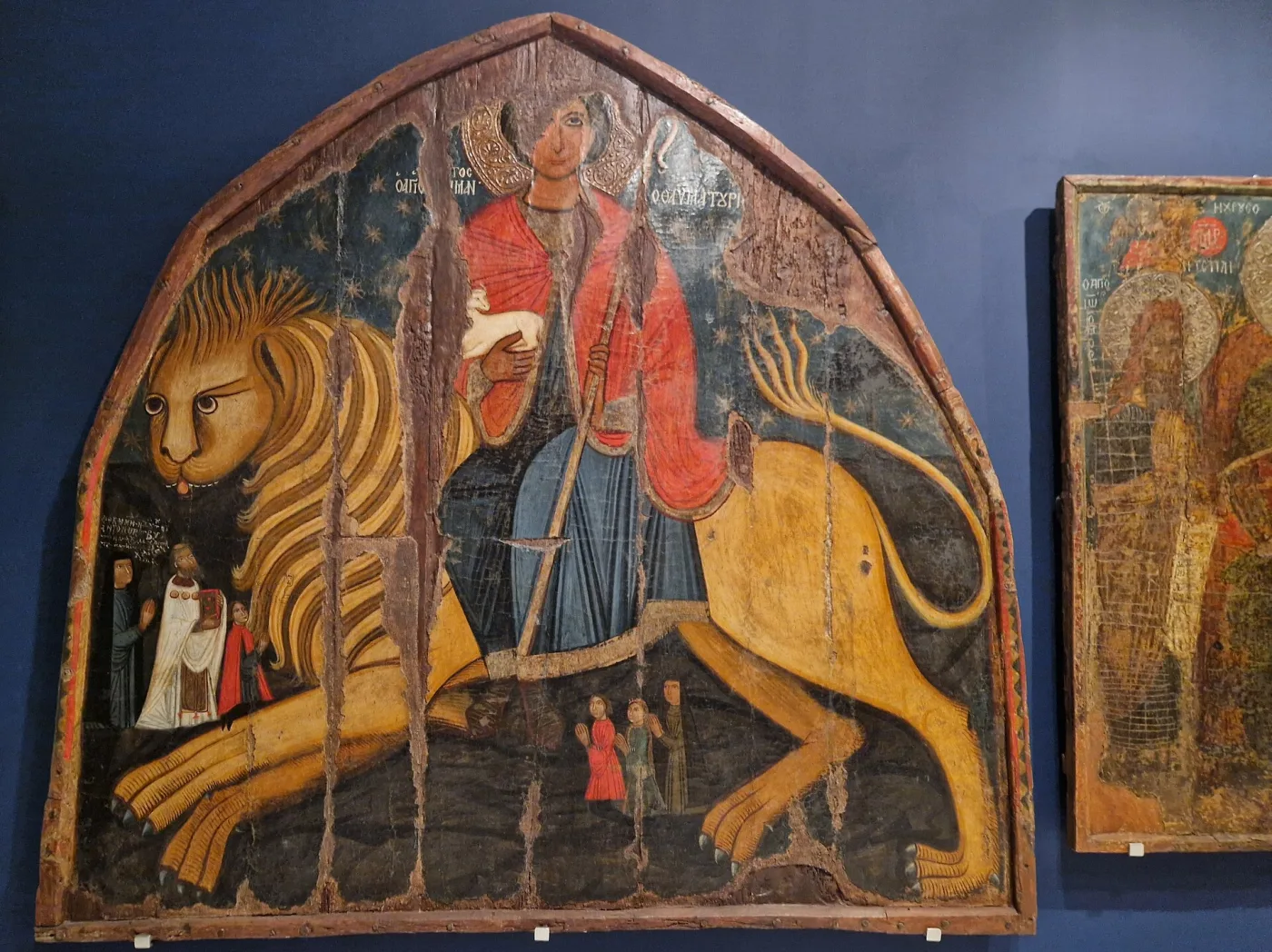
Two Byzantine icons, two entirely different objects. Portable mosaic icons are rare and were luxury commissions — tesserae a millimetre or two across, set into wax on a panel — and they survive far better than paint because glass does not fade or flake. Painted panels are the norm, and the one on the right carries the single most important warning in this field: it has been repainted twice, and the museum can say so because conservation has separated the layers. Overpainting is the rule, not the exception. Icons were working objects in continuous use, and a darkened or damaged image was routinely painted over rather than cleaned, sometimes several times across centuries. So the date of the surface you are looking at is not the date of the object, an icon can be genuinely ancient and yet show a nineteenth-century face, and neither fact makes it a fake. It makes it an icon.
Medieval Period (5th-15th Century)
- Romanesque (11th-12th Century): Heavy, solid forms, stylized figures, architectural integration
- Gothic (12th-15th Century): Increased naturalism, emotional expression, elaborate metalwork, pointed arches
- Illuminated Manuscripts: Hand-painted prayer books, Books of Hours, Psalters with miniature illustrations
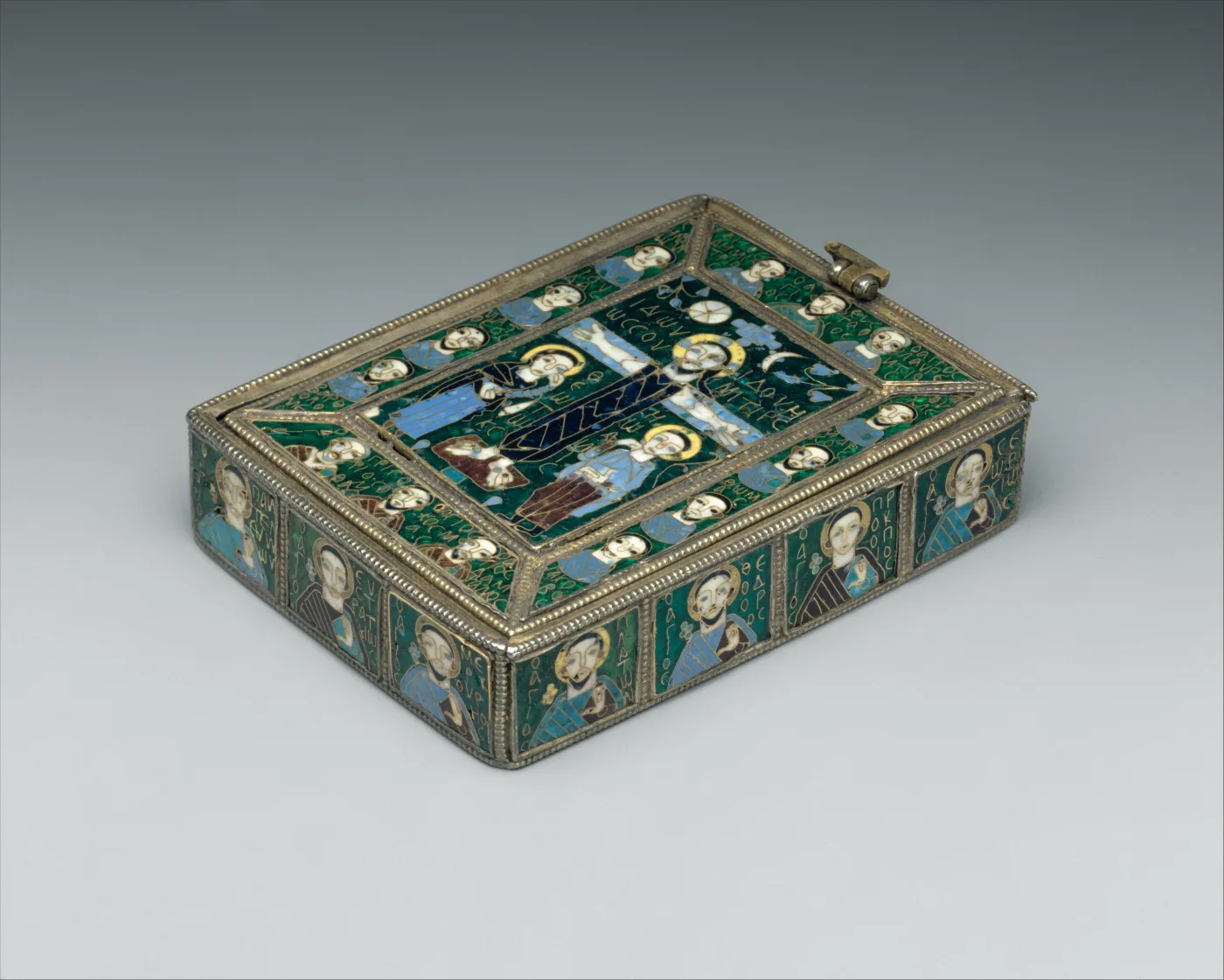
- Metalwork Advancements: Development of champlevé and cloisonné enamel techniques
- Regional Variations: French, German, Italian, and English Gothic styles with distinct characteristics
Renaissance Period (14th-17th Century)
Artistic revolution affecting religious art:
- Early Renaissance (14th-15th Century): Return to classical forms, mathematical perspective, humanistic approach
- High Renaissance (late 15th-early 16th Century): Technical perfection, balanced composition, idealized beauty
- Characteristics: Realistic anatomy, atmospheric perspective, architectural backgrounds
- Materials Innovation: Oil painting techniques, canvas supports, new pigments
Baroque and Rococo (17th-18th Century)
- Baroque (17th Century): Dramatic lighting, emotional intensity, ornate decoration, Counter-Reformation influence
- Rococo (18th Century): Lighter colors, delicate forms, asymmetrical designs, pastoral religious themes
- Liturgical Objects: Elaborate silver and gold work, extensive use of precious stones
- Regional Centers: Spanish, Italian, German, and French baroque traditions
Victorian Era (1837-1901)
Mass production meets devotional revival:
- Gothic Revival: Romantic return to medieval forms and techniques
- Mass Production: Plaster chalkware statuary, chromolithograph holy cards, pressed brass religious items
- Arts and Crafts Movement: Reaction against industrialization, return to handcraft quality
- Materials: Introduction of electroplating, composition materials, industrial manufacturing
- Devotional Boom: Wide accessibility of religious objects for home altars and personal use
This same Victorian appetite for affordable devotional keepsakes produced the religious-verse woven silk bookmarks made by Thomas Stevens of Coventry, which carried scripture and pious mottoes in colorful silk for use in prayer books and Bibles.
Materials and Construction Techniques
The materials and methods used in creating religious objects provide crucial dating and authentication information.
Precious Metals Identification
- Gold: Examine for karat marks, patina development, weight density, and acid test reactions
- Silver: Look for hallmarks, sterling marks (.925), oxidation patterns, and tarnish characteristics
- Gilt Bronze: Bronze base with gold leaf or mercury gilding, common in liturgical objects
- Electroplating: Post-1840s technology creating thin metal coatings, lighter weight than solid metal
- Vermeil: Silver with gold plating, used for high-quality religious vessels
Icon Painting Techniques
Traditional methods that have remained consistent for centuries:
- Panel Preparation: Wood selection (typically linden, cypress, or oak), gesso application, smoothing
- Egg Tempera: Pigments mixed with egg yolk binder, characteristic of Byzantine tradition
- Gold Leaf Application: Burnished gold backgrounds, halos, and decorative elements
- Layering Technique: Dark base layers gradually built up to lighter highlights
- Protective Coating: Traditional linseed oil varnish or modern synthetic varnishes
- Aging Signs: Craquelure patterns, darkened varnish, paint loss in predictable areas
Enamel Work
- Cloisonné: Wire cells filled with colored enamel, common in Byzantine and Russian religious art
- Champlevé: Carved depressions in metal filled with enamel, medieval European technique
- Painted Enamel: Enamel painted onto metal surface, developed during Renaissance
- Plique-à-jour: Translucent enamel without metal backing, creating stained-glass effect
- Limoges Enamel: Specific French enameling tradition with distinctive characteristics
Gemstones and Decorative Elements
- Period-Appropriate Stones: Garnets, pearls, emeralds in medieval work; broader range in later periods
- Setting Techniques: Bezel settings in earlier periods, prong settings in later work
- Glass Imitations: Paste stones common in 18th-19th century devotional objects
- Niello Work: Black metallic alloy inlaid in engraved designs, common in Russian Orthodox items
Wood Carving and Sculpture
- Wood Types: Boxwood for detailed miniatures, oak for altarpieces, linden for icons
- Carving Techniques: Relief carving for panels, full round for statuary
- Polychromy: Painted and gilded surfaces on carved wood, layering techniques
- Tool Marks: Hand-carving irregularities versus machine-made uniformity

Authentication Markers
Identifying genuine antique religious objects requires examining multiple authentication factors.
Maker's Marks and Hallmarks
- Silver Hallmarks: Assay office marks, date letters, maker's marks, standard marks
- Location: Typically on bases, rims, or inconspicuous surfaces of metalwork
- Workshop Marks: Established religious workshops often marked their output
- Regional Variations: Different marking systems in Russia, France, Germany, England
- Research Resources: Hallmark encyclopedias, online databases, specialist publications
Artist Signatures and Inscriptions
- Icon Painters: Signatures often in Church Slavonic or Greek, sometimes dated
- Workshop Attribution: School or workshop identification rather than individual artists
- Dedicatory Inscriptions: Commissioner names, dedication dates, blessing texts
- Authenticity Concerns: Later additions of signatures to increase value, forged inscriptions
Iconographic Accuracy
Theological and artistic correctness as authentication evidence:
- Symbolic Elements: Period-appropriate halos, gestures, attributes of saints
- Compositional Rules: Following established iconographic canons for each subject
- Color Symbolism: Traditional color associations (Christ in red and blue, etc.)
- Inscriptions: Proper abbreviated names, blessing formulas in correct language
- Theological Details: Historically accurate doctrinal representations
Patina and Age Indicators
- Metal Patina: Natural oxidation patterns consistent with age and use
- Wear Patterns: Expected wear in high-touch areas, appropriate to functional use
- Wood Aging: Shrinkage cracks, color darkening, appropriate tool marks
- Paint Surface: Age-appropriate craquelure, natural darkening, authentic restoration evidence
- Fabricated Age: Warning signs of artificial aging, inappropriate wear patterns
Construction Methods
- Hand vs. Machine: Hand-forged versus cast metal, hand-carved versus machine-cut wood
- Joinery Techniques: Period-appropriate woodworking methods for panels and frames
- Panel Construction: Wood grain direction, butterfly joints, traditional glues
- Modern Techniques: Warning signs like power tool marks, modern adhesives, recent materials
Provenance Documentation
- Ownership History: Documented chain of custody, ecclesiastical records
- Church Deaccessioning: Documentation from church sales or closures
- Auction Records: Previous sale documentation with photographs
- Family History: Inherited pieces with oral or written family records
- Export Documents: Permits from countries with cultural property laws
Dating Techniques
Accurate dating requires combining multiple analytical approaches and careful examination.
Stylistic Analysis
- Artistic Period Characteristics: Identifying Byzantine, Gothic, Renaissance, Baroque features
- Regional Style Variations: Russian, Greek, Italian, Spanish iconographic traditions
- Evolution of Forms: How chalice shapes, cross designs, and icon compositions changed over time
- Decorative Motifs: Period-specific ornamental patterns and symbolic elements
Hallmark and Mark Dating
- Date Letters: Annual letter cycles used by assay offices to indicate year of manufacture
- Standard Marks: Changes in fineness standards over time
- Assay Office Marks: Different offices operated during different periods
- Reference Materials: Hallmark guides organized by country and period
Iconographic Evolution
- Costume Details: Saints depicted in period-appropriate vestments and clothing styles
- Architectural Elements: Background buildings reflecting contemporary architecture
- Doctrinal Changes: Iconographic shifts following theological councils or reforms
- Regional Developments: Local iconographic traditions and their evolution
Material Analysis
- Pigment Analysis: Identifying when specific pigments became available (Prussian blue after 1704, etc.)
- Metal Composition: Changes in alloy formulations over time
- Wood Species: Dendrochronology for panel dating, regional wood preferences
- Textile Examination: Fiber analysis and weaving techniques for vestments and altar cloths
Scientific Testing Methods
- Radiocarbon Dating: Accurate dating for organic materials (wood, textiles)
- X-ray Fluorescence: Non-destructive analysis of metal composition and pigments
- Infrared Reflectography: Revealing underdrawings in icons and paintings
- UV Examination: Detecting later additions, repairs, and varnish layers
- Microscopic Analysis: Examining paint layers, tool marks, manufacturing techniques
Historical Documentation
- Church Inventories: Historical records listing religious objects owned by specific churches
- Commission Records: Documented orders to artists and metalworkers
- Monastery Archives: Records of religious communities and their possessions
- Ecclesiastical Catalogs: Published inventories of church treasuries
Regional Identification
Religious objects often reflect distinct regional traditions and characteristics that aid in identification.
Russian Orthodox Tradition
- Icon Characteristics: Rich colors, elaborate gold backgrounds, distinctive facial features
- Enameling: Extensive use of cloisonné enamel on crosses and covers
- Materials: Silver with niello work, gilt bronze, semi-precious stones
- Schools: Novgorod, Moscow, Palekh traditions with recognizable styles
- Inscriptions: Church Slavonic text, distinctive lettering styles
- Silver Marks: Russian hallmark system with kokoshnik marks, assay master marks
Greek and Byzantine Traditions
- Classical Byzantine Style: Formal poses, gold backgrounds, hierarchical compositions
- Cretan School: Renaissance influences blended with Byzantine tradition
- Metalwork: Elaborate repoussé work, filigree decoration
- Iconographic Features: Greek inscriptions, specific saint depictions
- Regional Variations: Differences between Constantinople, Mount Athos, and island workshops
Western European Catholic Artifacts
- Italian Renaissance: Classical proportions, realistic anatomy, oil painting techniques
- Spanish Colonial: Polychrome wooden santos, silver ex-votos, elaborate altarpieces
- French Production: Limoges enamels, Gothic ivory carvings, ornate metalwork
- German Craftsmanship: Detailed wood carving, Nuremberg brass work, gothic altarpieces
- Irish and Celtic: Celtic cross designs, interlaced patterns, stone and metal work
Ethiopian Christian Art
- Distinctive Style: Large almond-shaped eyes, geometric patterns, bright colors
- Materials: Wood panels, parchment manuscripts, processional crosses
- Iconography: Unique depictions of Biblical scenes and saints
- Crosses: Elaborately decorated Ethiopian crosses in bronze and silver
Jewish Ceremonial Objects
- Torah Ornaments: Silver finials (rimonim), breastplates, pointers (yad)
- Menorahs: Seven and nine-branched candelabra in various styles and periods
- Kiddush Cups: Silver ceremonial wine goblets, often hallmarked
- Hanukkah Lamps: Eight-branched oil lamps or candelabra with servant light
- Regional Styles: Eastern European, Middle Eastern, North African traditions
Buddhist Religious Objects
- Bronze Statuary: Buddha figures in various mudras, bodhisattva representations
- Tibetan Artifacts: Prayer wheels, ritual bells, thangka paintings
- Chinese Buddhist Art: Gilt bronze figures, porcelain Guanyin statues
- Southeast Asian: Thai, Burmese, Cambodian Buddha images with distinctive features
- Materials: Bronze, brass, gilt metal, semi-precious stones
Islamic Sacred Art
- Calligraphy: Quranic verses in various calligraphic styles
- Mosque Lamps: Enameled glass lamps, brass openwork lanterns
- Prayer Rugs: Distinctive mihrab designs, regional weaving traditions
- Quran Stands: Carved wooden or inlaid metal book rests
- Regional Variations: Ottoman, Persian, Moorish, Mughal artistic traditions
Condition Assessment
Evaluating the condition of religious objects is essential for determining value and preservation needs.
Icon Condition Issues
- Paint Loss: Flaking, abrasion, missing areas affecting value and readability
- Panel Damage: Cracks, splits, warping, insect damage, previous repairs
- Overpainting: Later additions covering original work, reducing authenticity
- Varnish Condition: Yellowed, clouded, or damaged protective coatings
- Gold Leaf: Wear, loss, or damage to gilded areas
- Acceptable Wear: Aging consistent with authentic period pieces versus damage
Metal Object Condition
- Corrosion: Appropriate patina versus damaging corrosion, verdigris on bronze
- Dents and Damage: Impact damage, bent elements, structural compromise
- Repair History: Solder repairs, replaced elements, restoration work
- Cleaning Issues: Over-cleaning removing patina, harsh chemical damage
- Plating Loss: Worn gilt or silver plating exposing base metal
- Missing Elements: Lost stones, detached enamel, missing decorative parts
Textile and Vestment Condition
- Fabric Deterioration: Tears, splits, fiber weakness, light damage
- Staining: Age spots, candle wax, water damage, previous use marks
- Embroidery Condition: Loose threads, missing metallic elements, silk deterioration
- Storage Damage: Fold lines, creasing, moth damage, mildew
Restoration History Assessment
- Appropriate Restoration: Professional conservation following best practices
- Poor Restoration: Amateur repairs, inappropriate materials, over-restoration
- Documentation: Records of conservation work, before and after photos
- Reversibility: Whether restoration can be undone if needed
- Impact on Value: How restoration quality affects market value
Conservation Best Practices
- Professional Evaluation: When to consult qualified conservators
- Environmental Control: Proper temperature, humidity, light exposure
- Handling Protocols: Safe handling to prevent damage
- Storage Solutions: Appropriate materials and methods for long-term preservation
- Display Considerations: UV-filtering glass, stable mounting, security
Valuation Factors
Multiple factors influence the market value of antique religious objects.
Age and Historical Period
- Medieval and Earlier: Extremely rare, museum-quality pieces commanding premium prices
- Renaissance Period: High value for authenticated pieces from major art centers
- 17th-18th Century: Strong market for quality baroque and rococo liturgical items
- 19th Century: Variable value depending on quality, craftsmanship, and rarity
- Early 20th Century: Growing interest in Arts and Crafts and Art Nouveau religious pieces
Artist or Workshop Attribution
- Named Artists: Documented attribution to recognized icon painters or metalworkers
- Important Schools: Pieces from renowned workshops or artistic centers
- Master Craftsmen: Items by guild masters or court artisans
- Anonymous Quality: High craftsmanship even without specific attribution
Materials and Craftsmanship
- Precious Metals: Silver and gold content significantly affecting value
- Gemstones: Quality and authenticity of precious stones
- Artistic Skill: Level of craftsmanship, detail work, technical excellence
- Enamel Quality: Intricacy and condition of enamel work
- Size Considerations: Larger icons and objects generally more valuable
Religious and Cultural Significance
- Iconographic Importance: Rare depictions or theologically significant subjects
- Historical Associations: Connection to important religious figures, events, or institutions
- Pilgrimage Souvenirs: Objects from major pilgrimage sites
- Liturgical Function: Importance of the object's ceremonial role
Rarity and Provenance
- Documented History: Clear provenance from ecclesiastical or notable collections
- Survival Rate: Rarity due to destruction, iconoclasm, or limited production
- Royal or Noble Provenance: Objects from aristocratic chapel collections
- Museum Deaccessioning: Pieces with institutional collection history
Condition and Completeness
- Original Condition: Unrestored pieces in exceptional state command premium
- Professional Restoration: Quality conservation maintaining authenticity
- Completeness: All original elements present versus missing parts
- Functionality: Whether liturgical objects remain usable
Market Demand Factors
- Collector Interest: Current trends in religious art collecting
- Geographic Market: Stronger demand in countries sharing religious tradition
- Exhibition History: Pieces shown in major museum exhibitions
- Published References: Objects illustrated in scholarly publications
- Cultural Heritage Restrictions: Export limitations affecting availability
Price Ranges and Auction Records
- Entry Level: Victorian devotional objects, simple crosses: $50-$500
- Mid-Range: 18th-19th century icons, silver liturgical items: $500-$5,000
- High-End: Museum-quality pieces, major artist attributions: $5,000-$50,000+
- Museum Quality: Medieval artifacts, major masterworks: $50,000-millions
- Market Resources: Auction results, dealer catalogs, specialist appraisers
Using Technology for Identification
AI-Powered Mobile Applications
Modern technology has transformed the accessibility of religious object identification:
- Antique Identifier App: Instant AI-powered identification from smartphone photos
- Image Recognition: Compare religious objects against extensive databases of known pieces
- Style Analysis: Identify artistic periods, regional traditions, and iconographic types
- Material Detection: AI assistance in identifying metals, painting techniques, and construction methods
- Expert Consultation: Connect with specialists for authentication and appraisal
Photography Techniques for Religious Objects
- Lighting Considerations: Avoid glare on metalwork and glass, use diffused natural light
- Detail Shots: Capture maker's marks, signatures, hallmarks, and decorative details
- Multiple Angles: Photograph front, back, sides, and any inscriptions
- Scale Reference: Include measurement indicators for size assessment
- Condition Documentation: Photograph damage, repairs, and condition issues
Online Research Databases
- Museum Collections: Digital archives of religious art from major institutions
- Auction House Archives: Searchable records of previously sold items with prices
- Academic Resources: University digital libraries and iconographic databases
- Hallmark Databases: Online resources for identifying metalwork marks
- Collector Forums: Communities sharing knowledge and identification assistance
Advanced Analysis Technologies
- UV Light Examination: Revealing repairs, overpainting, and varnish layers
- Magnification Tools: Examining brushwork, hallmarks, and material details
- XRF Analyzers: Portable devices for non-destructive metal and pigment analysis
- Digital Microscopy: High-magnification documentation and analysis
Conclusion
Identifying antique religious objects requires a thoughtful blend of artistic knowledge, historical understanding, material analysis, and respect for cultural traditions. Whether you're examining a Byzantine icon, a Renaissance chalice, or a Victorian devotional piece, the principles of careful observation, research, and authentication remain constant.
Remember that religious artifacts carry significance beyond their material value. They represent centuries of faith, artistic dedication, and cultural heritage. Proper identification and authentication not only helps determine market value but also preserves the historical and spiritual context of these remarkable objects. Always approach religious antiques with the reverence and care they deserve, and consider consulting specialists when dealing with potentially significant pieces.
As you develop your expertise in religious object identification, you'll discover that each piece tells a unique story connecting artistic tradition, devotional practice, and human creativity across the centuries.