Antique Nutcrackers Identification Guide: Types, Materials, and Dating
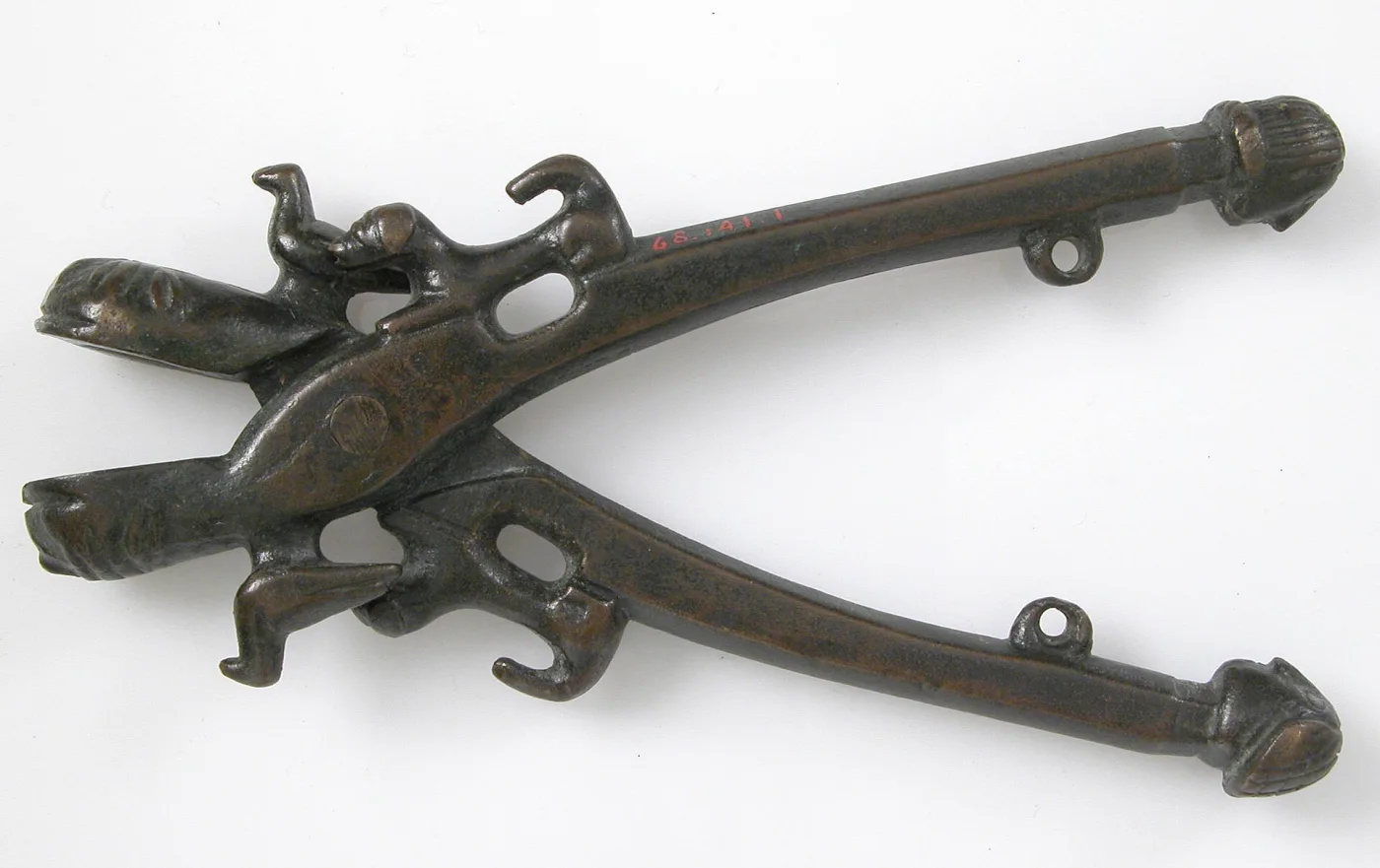
Few antique tools blend usefulness and personality quite like the nutcracker. For centuries, cracking a hazelnut or walnut at the table was a small ceremony, and the tool that did the job was often carved, cast, or forged into something worth looking at. The result is a collecting field that stretches from grim iron levers made by a village blacksmith to grinning brass terriers, hand-carved wooden squirrels, and the tall painted soldiers that now define the Christmas season.
That range is exactly what makes identification interesting—and occasionally tricky. A cast-iron dog nutcracker made in the 1890s can sit on a shelf beside a 1970s reproduction of the same design, and in a photograph the two can look nearly identical. The differences live in the casting quality, the paint, the wear on the jaws, the weight in the hand, and the small marks left by the foundry or carver who made it.
This guide explains how to read antique nutcrackers the way an experienced collector does: recognizing the major mechanical types, sorting them by material, dating a piece by how it was made, understanding what drives value, and telling genuine period examples from the reproductions that fill the low end of the market.
Table of Contents
- What Counts as an Antique Nutcracker
- The Four Mechanical Types
- Figural Nutcrackers and Their Subjects
- Reading the Material
- Regional Traditions and the Christmas Nutcracker
- Dating Clues: Construction and Finish
- Maker Marks, Foundries, and Patents
- Grading Condition Honestly
- Spotting Reproductions and Fakes
- What Drives Value
- A Step-by-Step Inspection Routine
- Care, Storage, and Preservation
What Counts as an Antique Nutcracker
A nutcracker is any hand tool designed to break the shell of a nut while leaving the kernel intact. That simple job has been solved in dozens of ways, and the objects that resulted range from purely functional kitchen implements to decorative sculptures that happen to crack nuts. Strictly speaking, an antique is generally defined as at least a hundred years old, while "vintage" covers pieces from roughly the 1920s through the mid-twentieth century. In practice, collectors use the word "antique" loosely to cover any older nutcracker with genuine age and character.
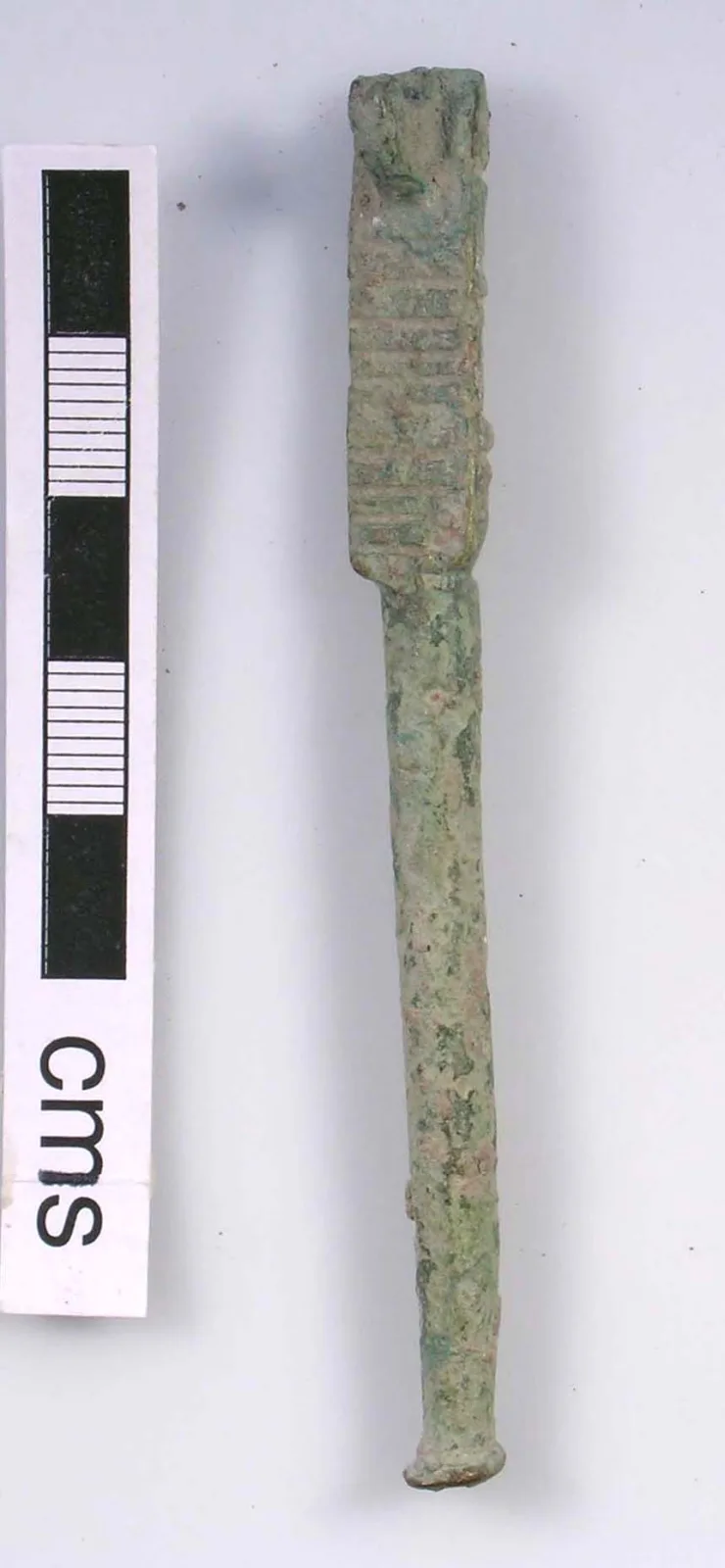
The category sits at a crossroads of several collecting fields. As a working implement, a nutcracker belongs alongside other antique kitchenware and utensils. As a cast metal object, it shares foundry technology and casting clues with cast iron collectibles and mechanical novelties. And as a carved decorative piece, the finest examples overlap with folk art and sculpture. Because a nutcracker can be judged as a tool, as a casting, or as a carving, learning to see it through all three lenses is the key to accurate identification.
One useful habit at the outset: separate the object's function from its form. The mechanism—how the tool actually applies force to the shell—tells you what family it belongs to and often brackets its age. The form—whether it is a plain lever or a sculpted dog—tells you about its decorative tradition, its maker's ambitions, and much of its market value. The two together give you a confident identification.
The Four Mechanical Types
Almost every antique nutcracker uses one of four mechanisms to break a shell. Identifying the mechanism first is the fastest way to organize what you are looking at, because each type has a rough era, a set of typical materials, and its own authenticity concerns.
Lever (Hinged Arm) Nutcrackers
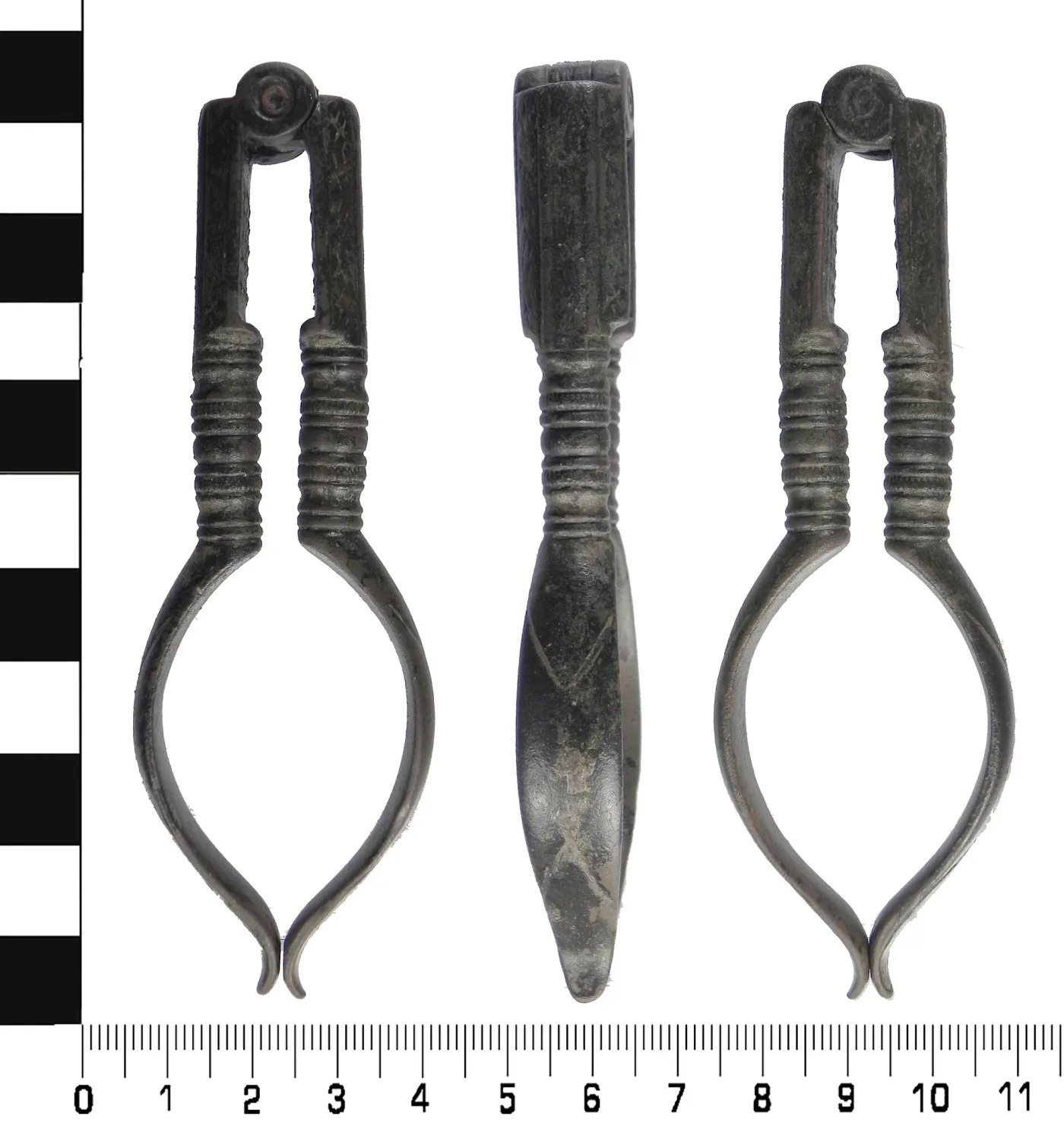
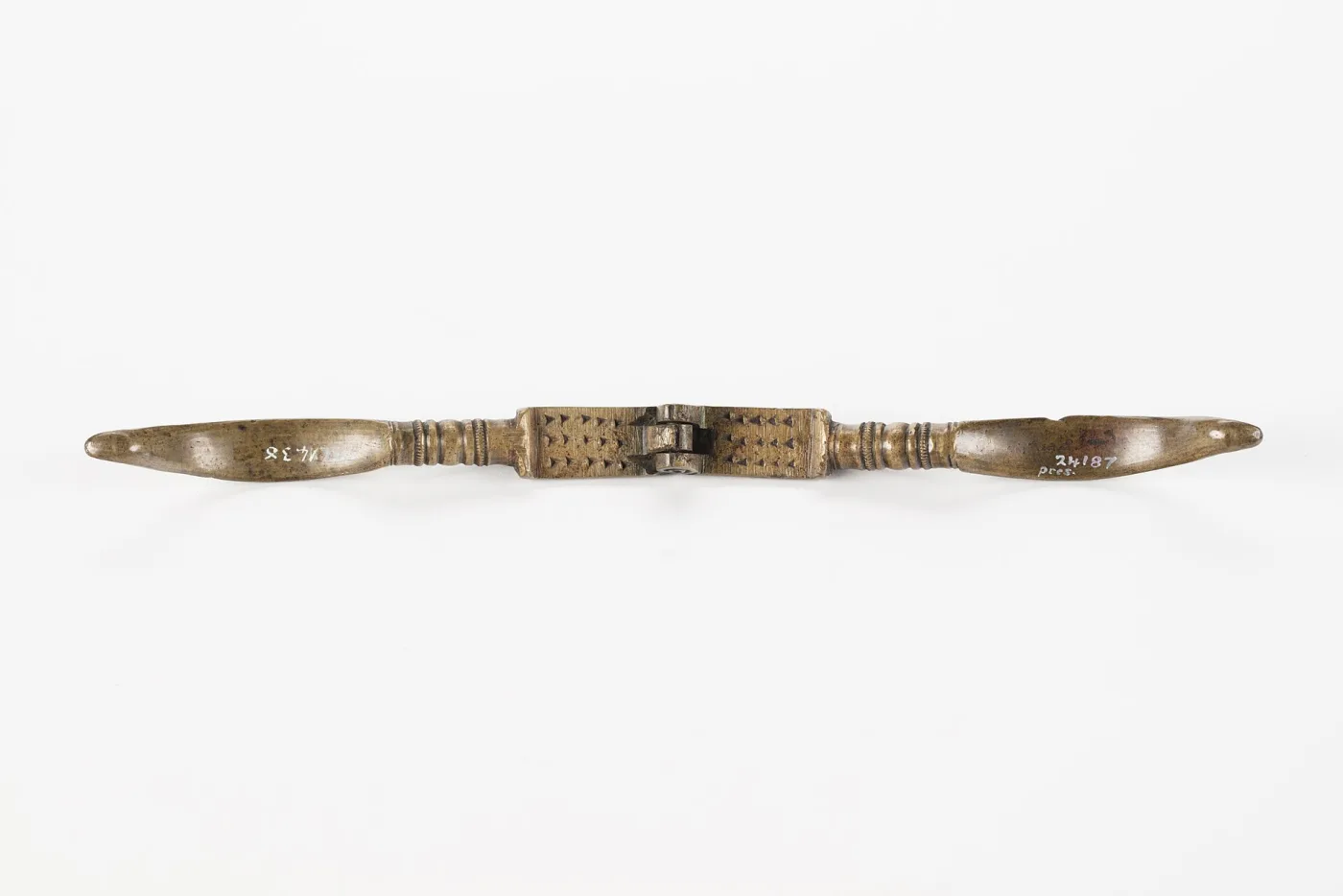
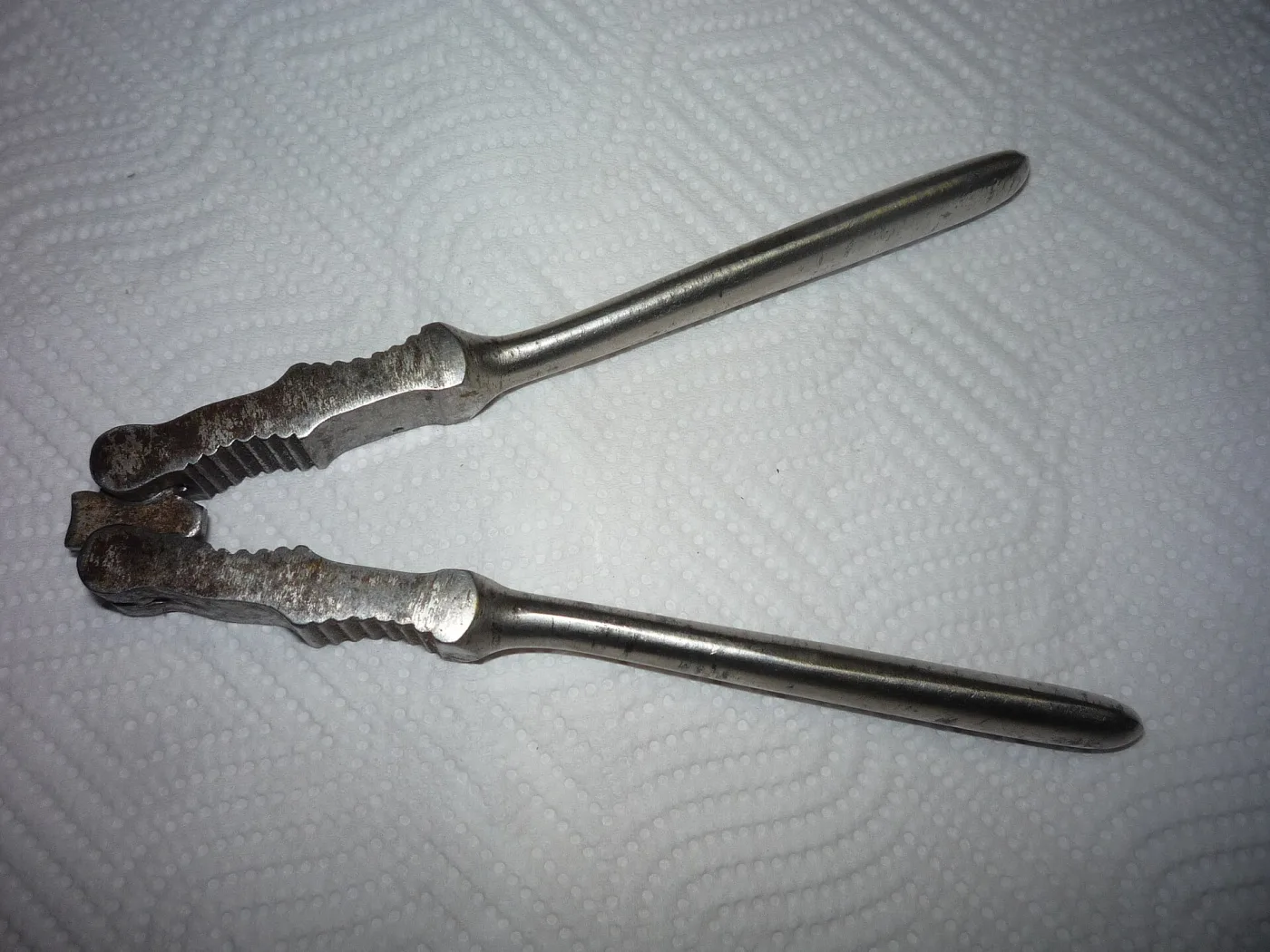
The lever nutcracker is the form most people picture: two arms joined at a hinge or pivot near one end, with the nut placed between them and squeezed by pressing the handles together. Mechanically it is a class-two lever, multiplying hand pressure to concentrate force on the shell. This is the design of the familiar metal "plier" nutcracker sold in bowls of mixed nuts, and it is also the design of most figural table nutcrackers, where the lever is disguised as an animal's jaws or a pair of legs. Lever types dominate the cast-iron and cast-brass fields and span the eighteenth century to the present.
Screw (Threaded) Nutcrackers
Screw nutcrackers apply pressure by turning a threaded bolt or wing-nut that drives a plunger against the nut, which sits in a cup or between two blocks. Turning the screw slowly increases pressure until the shell gives way, offering fine control that is gentle on delicate kernels. Many are turned from wood on a lathe, forming a cup with a wooden screw, while others are cast in brass or bronze. Screw types are common in European treen and in Georgian and Victorian tableware, and the hand-cut threads on early wooden examples are a valuable dating clue.
Percussion and Anvil Nutcrackers
The simplest and oldest approach is percussion: striking the nut, or pressing it against a hard surface. Anvil nutcrackers formalize this with a small cast base holding the nut and a hinged hammer or striker that is pressed or tapped down onto it. Some are spring-loaded so the striker returns after each crack. These heavy, utilitarian cast-iron pieces were popular from the late nineteenth century and were often clamped or bolted to a table edge, blurring the line with other bench-mounted kitchen tools.
Cam and Ratchet Nutcrackers
A smaller family uses a cam, ratchet, or geared action to close the jaws, sometimes with a spring return. These more mechanically ambitious designs appear on patented late-Victorian and early-twentieth-century models that tried to improve on the plain lever. Because they rely on moving parts, missing springs and worn pivots are common, and a working example is worth noticeably more than one that is seized or incomplete. Their patent-driven complexity also means many carry maker marks and patent dates, which is a gift for dating.
Figural Nutcrackers and Their Subjects
For collectors, the figural nutcracker—one shaped like an animal, person, or object—is the heart of the hobby. The mechanism is usually a simple lever, but it is concealed within a sculpted form, and the subject matter, artistry, and casting quality drive both desirability and price.
Dogs, Squirrels, and Other Animals
Animal subjects are the most common and beloved. The cast-iron dog is almost a genre unto itself: the nut is placed under the raised tail and the tail is pressed down to crack it, a design produced in huge numbers from the late nineteenth century onward. Squirrels are equally popular and thematically apt, since the animal is forever associated with nuts; carved wooden squirrels holding a nut in their paws are a staple of Black Forest work. Alligators, elephants, parrots, roosters, rams, and fish all appear, giving animal-form nutcrackers enormous variety.
Human Figures and Caricatures
Human-form nutcrackers range from dignified heads to broad caricatures. Some depict recognizable figures—politicians, soldiers, or literary characters—while others are generic "old man," jester, or dandy figures whose hinged jaws or legs do the cracking. Brass "lady's legs" nutcrackers, in which a pair of cast legs form the lever, are a well-known Victorian novelty. Human figures shade naturally into the caricature tradition and connect to broader fields of figural cast metal, from figural doorstops to the coin-swallowing mechanical banks that share the same foundries and design sensibility.
Heads and Standing Figures
A distinct European tradition carves the nutcracker as a head or standing figure whose lower jaw is a lever: place a nut in the mouth, pull a handle at the back, and the jaw closes to crack it. This is the ancestor of the modern Christmas nutcracker, discussed below. Antique carved heads—often grotesque, comic, or characterful—are prized as folk sculpture, and the best hand-carved examples overlap with the wider world of Black Forest carvings.
Reading the Material
After the mechanism, material is the most important thing to identify. It narrows the likely era, the region, and the authenticity tests that apply, and it is usually possible to determine by careful looking, weighing in the hand, and a few simple checks.
Cast Iron
Cast iron is heavy, cold to the touch, and shows the texture and mold lines of the casting process. Antique iron nutcrackers—dogs, anvils, and lever types—often carry the fine surface grain of sand casting and, where the original finish survives, traces of paint or japanning. Iron rusts, so genuine age usually brings some oxidation in crevices, and the same casting knowledge used to authenticate other iron pieces applies: look for crisp original detail, appropriate seam lines, and wear consistent with a heavy tool. Reproductions are frequently cast iron too, so material alone does not prove age; the quality of the casting and the character of the surface do much of the work.
Brass and Bronze
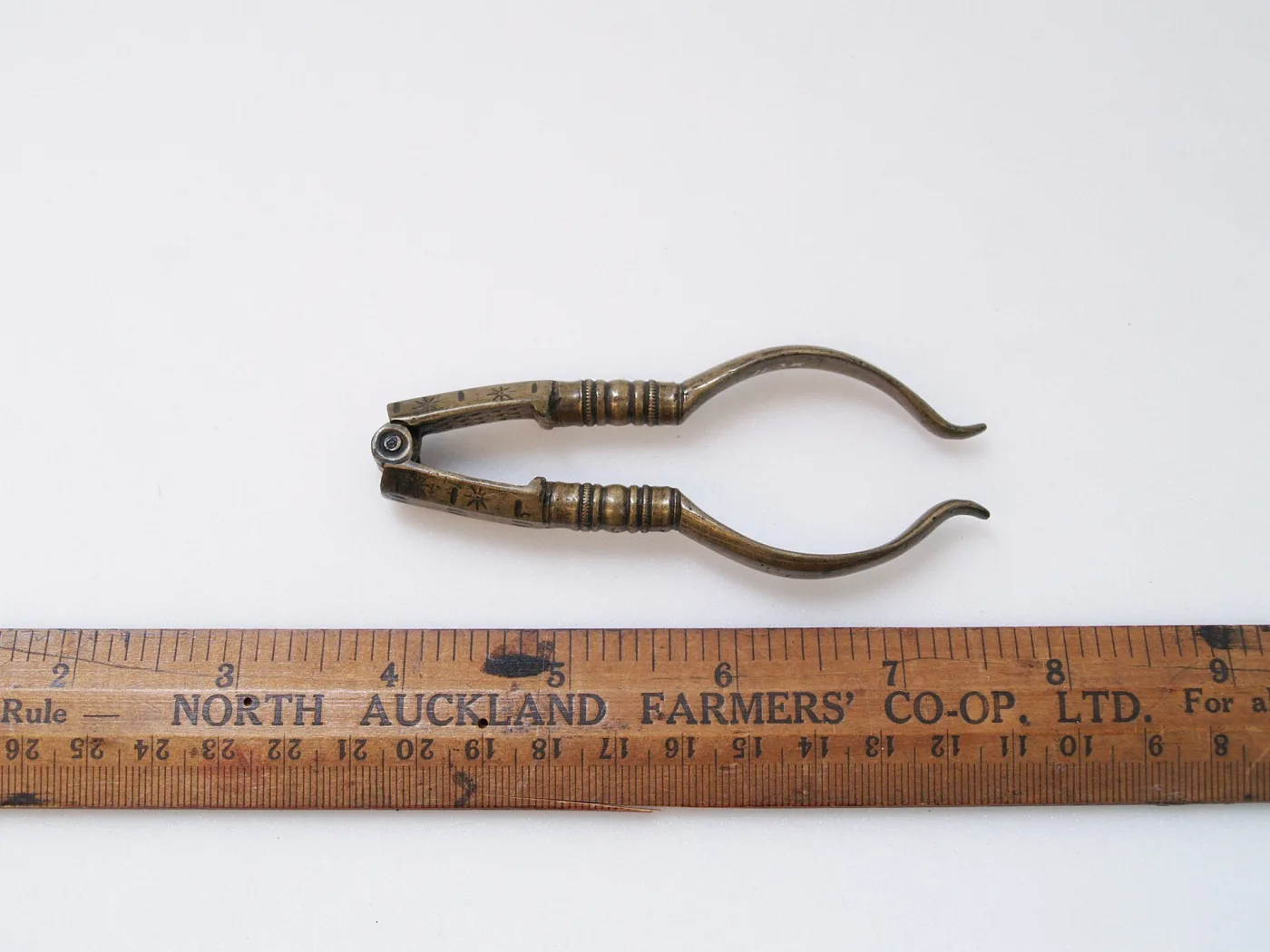
Brass nutcrackers—warm gold in color—were popular for decorative table pieces from the eighteenth century onward, and the "lady's legs" and animal-head designs are especially associated with cast brass. Genuine old brass develops a mellow patina and darkens in recesses; a harshly bright, uniform yellow surface suggests recent manufacture or aggressive polishing. Bronze, heavier and browner, appears on finer sculptural pieces. Because color and patina are central to dating cast copper alloys, the guidance for distinguishing bronze, brass, and spelter is directly useful here, including the important caution that cheap "spelter" (zinc alloy) was often used to imitate more valuable metals.
Wood and Treen
Turned and carved wood produced some of the oldest and most artistic nutcrackers. Lathe-turned screw types in boxwood or fruitwood, and hand-carved figures in walnut, lime, or pine, belong to the broad family of woodenware and treen. Age shows as a deep, even patina, honest wear on handling points, and the subtle irregularity of hand carving. The wear on a genuine wooden nutcracker concentrates exactly where a hand would grip and where nuts were cracked—an authenticity pattern that machine-made copies rarely reproduce convincingly.
Silver, Steel, and Combination Pieces
Fine dining brought silver and silver-plated nutcrackers to the Georgian and Victorian table, sometimes as part of a boxed nut set with picks. Forged steel lever types, plain and functional, were made by cutlers and blacksmiths. Many nutcrackers combine materials—a steel spring in an iron body, a brass figure on a wooden base—and each material carries its own dating and condition clues that must be weighed together.
Regional Traditions and the Christmas Nutcracker
Nutcrackers were made almost everywhere nuts were eaten, but a few regional traditions are distinctive enough to help with identification.
English and American Cast Metal
Britain and the United States produced the great wave of cast-iron and cast-brass figural nutcrackers from the mid-nineteenth century into the twentieth. English brass novelties—dogs, birds, and the famous legs—were exported widely, while American foundries turned out iron dogs and squirrels alongside the doorstops and banks made on the same casting lines. Bench-mounted iron nutcrackers with patent marks are strongly associated with American manufacturers.
Black Forest and Alpine Carving
The Black Forest region of Germany and the woodcarving centers of the Alps produced superb carved nutcrackers, from naturalistic squirrels and dogs to characterful human heads. These hand-carved pieces are collected as folk sculpture as much as tools, and the finest command strong prices. Their deeply undercut carving and expressive detail place them alongside the region's celebrated animal carvings.
The Erzgebirge Christmas Nutcracker
The tall, brightly painted standing nutcracker—soldier, king, or gendarme with a lever jaw—comes from the Erzgebirge (Ore Mountains) region of Germany, where turned and assembled wooden figures have been made since the nineteenth century. Popularized in the English-speaking world by the ballet and by mid-twentieth-century imports, these are now icons of Christmas. Genuine older Erzgebirge examples are turned and assembled from many parts, hand-painted, and often marked by workshops such as long-established Steinbach or Christian Ulbricht; modern mass-produced decorative "nutcrackers" that cannot actually crack a nut are a different, largely non-functional product.

Dating Clues: Construction and Finish
No single feature dates a nutcracker, but a handful of construction and finish clues, read together, will usually place a piece within an era. The goal is to let the object's manufacture tell you when it could—and could not—have been made.
Casting Method and Seam Lines
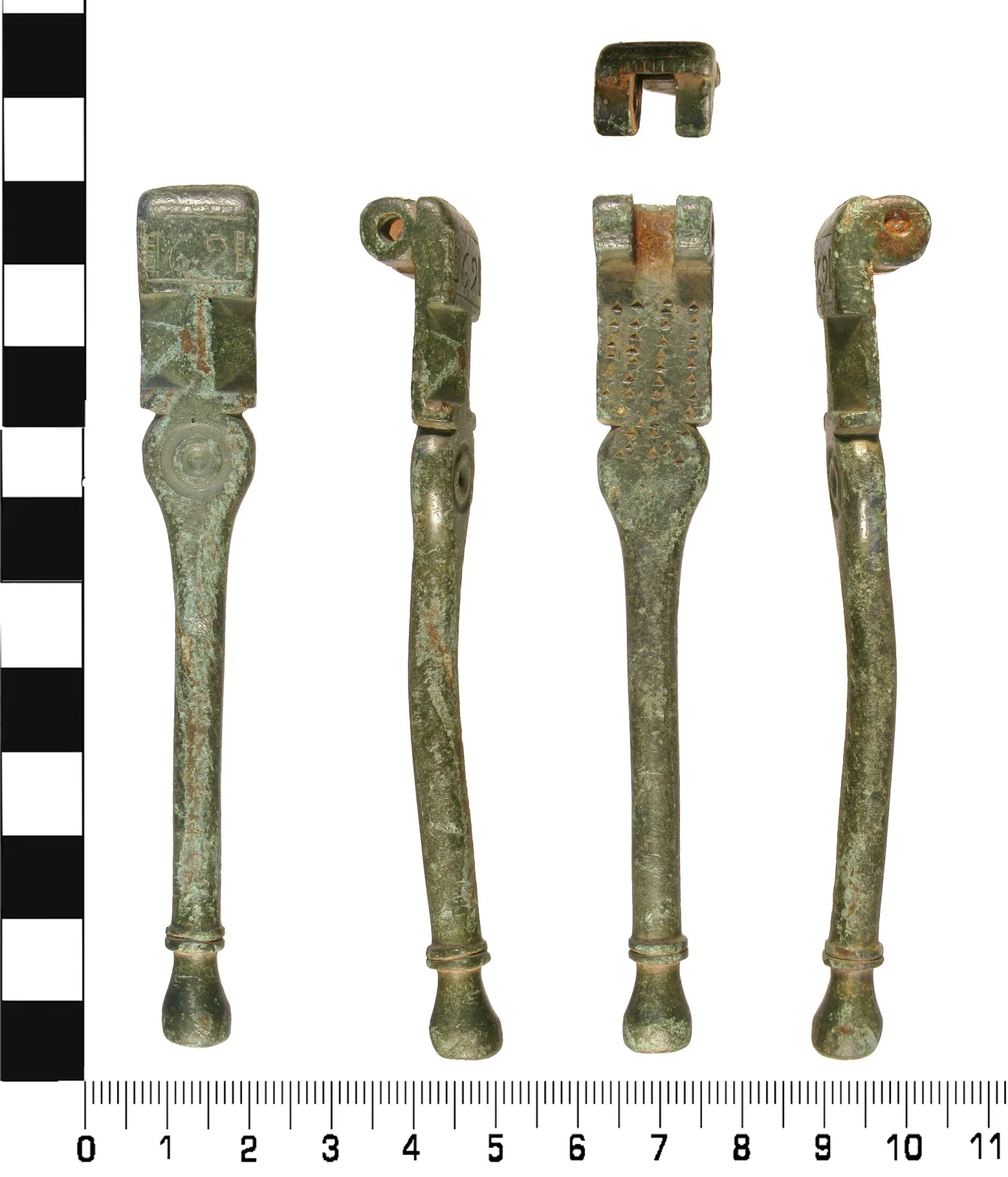
On cast metal, the mold seams, surface texture, and crispness of detail reveal how a piece was made. Early sand-cast iron and brass show a slightly grainy surface and mold lines that were hand-finished, sometimes leaving faint file marks where the seam was dressed. Later machine-molded and modern reproduction castings can look too smooth, or conversely too rough and pitted, with mold lines left unfinished. Sharp, well-defined original detail that has softened only through genuine wear is a good sign of age.
Hand Carving Versus Machine Work
On wood, the difference between hand and machine work is decisive. Hand-carved figures show tiny asymmetries, tool facets, and detail that varies slightly from one side to the other, while machine-carved or molded modern pieces are mechanically uniform. Under magnification, look for the small ridges left by carving gouges on genuine older work; their absence, replaced by a bland even surface, points to later manufacture.
Fasteners, Springs, and Pivots
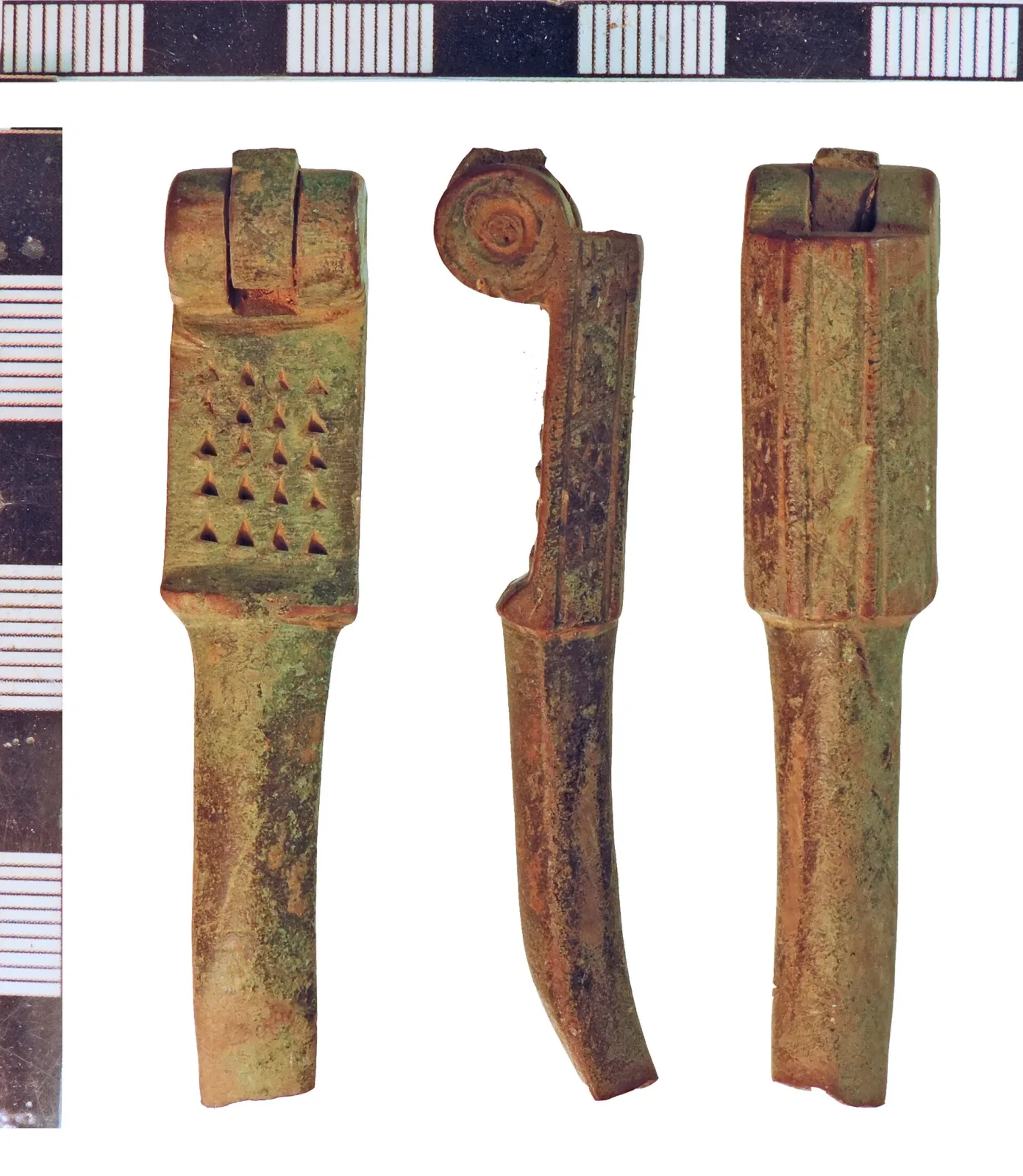
The hardware that holds a nutcracker together evolved over time. Hand-forged pins, cut nails, and slotted screws suggest an earlier date, while Phillips screws (which came into wide use only in the 1930s) and modern machine fasteners indicate a later origin or a repair. A spring or pivot that looks obviously modern on a piece claimed to be a century old is a warning sign of either a reproduction or a rebuild.
Original Finish and Paint
Surviving original finish is one of the best dating tools. Antique painted iron shows age-appropriate wear—paint worn away exactly where hands and nuts contacted the piece, with intact color protected in recesses. Old japanning (a hard black varnish) crazes and flakes in characteristic ways. Fresh, evenly applied modern paint, or paint that sits on top of rust rather than under it, betrays a repaint or a reproduction. The pattern and logic of the wear should always match how the tool was actually used.
Maker Marks, Foundries, and Patents
Many antique nutcrackers are marked, and a mark can transform a guess into a firm identification. Marks are most common on patented mechanical types and on quality decorative pieces, and least common on plain village-blacksmith and folk work.
Where to Look
Examine the underside of the base, the inner faces of the handles, the back of a figure, and any flat panel where a foundry could impress a name. Cast marks are molded into the metal and read slightly raised or recessed; stamped marks are struck in afterward. On wood, marks may be branded, incised, or applied as a paper label—labels are fragile, so a surviving one adds interest and evidence.
Patent Dates and Numbers
Patented American nutcrackers frequently carry a patent date or number, which is a superb dating tool: the object cannot predate its patent. A marked "PAT. APPLIED FOR" or a specific patent date brackets the piece precisely, and patent records can often be traced to the inventor and manufacturer. Because so many mechanical nutcrackers were patented around 1900, these marks are more common than beginners expect—always check for them.
Foundry and Workshop Names
Named makers add value and confidence. In cast metal, foundry names or model numbers help attribute a piece and compare it against documented examples. In Erzgebirge Christmas nutcrackers, workshop names and paper labels identify the maker and era. As with any marked antique, treat a mark as one piece of evidence to be checked against the object's construction and wear rather than as proof on its own, since marks can be faked or transferred.
Grading Condition Honestly
Condition drives value as much as rarity, and honest grading protects both buyer and seller. Because a nutcracker is a tool, some working wear is expected and even desirable as evidence of authenticity; the question is whether the piece is complete, sound, and retains its character.
Completeness and Function
The first test is whether the nutcracker still works and whether all its parts are present. Missing springs, replaced pivots, snapped handles, and absent screws all reduce value, and a mechanical type that no longer functions is worth far less than one that does. Gently test the action if you can do so without forcing anything; a smooth, complete mechanism is a meaningful plus.
Surface, Rust, and Patina
Distinguish honest patina from damage. A mellow surface, light oxidation in crevices, and worn high points are desirable signs of age. Active flaking rust, deep pitting that has eaten away detail, and cracks that threaten the structure are condition problems. On brass and bronze, an even natural patina is preferable to a harshly polished surface—over-polishing removes both metal and value.
Repairs, Repaint, and Losses
Look for repairs and restoration, which should be disclosed. Re-soldered joints, replacement parts, filled cracks, and repaint all affect value, and a repaint in particular can hide problems and mask originality. For a genuinely rare piece, sympathetic conservation may be worthwhile, but heavy-handed restoration usually harms value—principles covered in our antique restoration and conservation guide. When in doubt, stabilize rather than "improve," and keep original surface wherever possible.
Spotting Reproductions and Fakes
Reproduction nutcrackers are widespread, especially copies of popular cast-iron figural designs like the dog. Many were made as decorative items with no intent to deceive, but once they enter the secondary market they are easily passed off—knowingly or not—as antiques. Learning the tells is essential.
Casting Quality and Weight
Reproduction castings are often inferior: detail is soft or blurry, mold lines are rough and unfinished, and the metal may be lighter or feel different in the hand than a period piece. Compare the crispness of fine detail—an animal's fur, teeth, or eyes—against known originals. A copy made from a mold taken off an existing piece (a "recast") loses a generation of sharpness, so the detail is slightly muddy and the overall dimensions may be a touch smaller due to shrinkage.
Artificial Aging
Fakers apply chemical patinas, paint-and-distress finishes, and even fresh rust to simulate age. The giveaway is logic: genuine wear is where hands and nuts touched the piece, while artificial aging is often uniform, appears in places that would never wear naturally, or sits on top of surfaces rather than in them. Rust that forms over paint (instead of paint over rust) and a suspiciously even "antique" darkness are common tells.
Anachronistic Details
Modern fasteners, machine-perfect symmetry, new-looking springs, and materials that do not match the claimed age all betray a reproduction. A "Victorian" nutcracker held together with a Phillips screw, or a "hand-carved" figure with mechanically identical left and right sides, is telling you it is not what it claims. When a design is known to have been reproduced heavily, demand more evidence—marks, provenance, and wear that all agree—before accepting it as period.
Christmas Nutcracker Confusion
Be careful with decorative standing "nutcrackers." A great many modern examples are purely ornamental, mass-produced, and cannot crack a nut at all, yet are sold as though descended from antique tradition. Genuine older Erzgebirge pieces are functional, multi-part turned figures with hand painting and, often, a workshop mark; recent decorative imports are lighter, glued, and unmarked. Distinguishing a true antique or quality workshop nutcracker from a gift-shop ornament is one of the most common identification tasks in this field.
What Drives Value
Nutcracker values span an enormous range, from a few dollars for a common twentieth-century lever to four figures for a rare marked figural or a superb hand-carved piece. A handful of factors explain most of the difference.
Rarity, Subject, and Artistry
Scarcity and appeal drive price. Unusual subjects, finely modeled figures, and documented rare designs command premiums, while common mass-produced forms remain inexpensive. Among figural pieces, the quality of the sculpture matters enormously: an expressive, crisply cast or deeply carved figure outsells a crude one of the same subject many times over. Novelty and charm—a well-observed dog, a witty caricature—carry real market weight.
Material, Marks, and Age
Material and attribution shift value substantially. Fine brass, bronze, and silver pieces generally outsell plain iron, and a genuine maker or patent mark adds both confidence and money. Verified age helps, but age alone is not enough—a worn, common old nutcracker can be worth less than a rarer, more artistic vintage one. Condition then modulates everything: completeness and honest original surface add value, while damage, heavy repaint, and missing parts subtract it.
Provenance and Sets
Documented history and completeness add value. A nutcracker that survives with its original box, matching nut picks, or a credible provenance is worth more than a loose example. Boxed Georgian and Victorian nut sets, and complete figural pieces with all parts intact, appeal strongly to collectors. As always, an honest, well-documented piece outperforms a questionable one, and buyers pay for the confidence that documentation provides.
A Step-by-Step Inspection Routine
Bringing the clues together, here is a practical sequence for examining a nutcracker you are trying to identify or authenticate. Working through it in order keeps you from jumping to conclusions.
1. Identify the Mechanism and Material
First decide which of the four mechanical types you are holding—lever, screw, percussion/anvil, or cam/ratchet—and what it is made of. Heft it; feel whether it is cold heavy iron, warm brass, or light wood. This immediately narrows the era and the family of tests that apply.
2. Read the Form and Subject
If it is figural, identify the subject and assess the quality of the modeling or carving. Note whether detail is crisp and expressive or soft and generic, and compare the overall proportions against documented examples of that design where possible.
3. Hunt for Marks
Systematically check the base, handles, back, and any flat panel for cast, stamped, branded, or labeled marks, and especially for patent dates or numbers. Photograph anything you find and research it. A single mark can settle the identification.
4. Examine Construction and Wear
Study the casting seams or carving facets, the fasteners and springs, and the pattern of wear. Confirm that the wear is where hands and nuts would actually contact the piece, and that fasteners and finish are consistent with the claimed age. Watch for anachronisms.
5. Assess Condition and Reach a Verdict
Finally, grade completeness, function, and surface, and weigh everything together. If mechanism, material, marks, construction, and wear all agree on a story, you can identify and roughly date the piece with confidence. If any element contradicts the others, treat the piece cautiously—an inconsistency is usually the first sign of a reproduction, a marriage, or a later repair. For a valuable or contested piece, a specialist appraisal is worth the cost.
Care, Storage, and Preservation
Once identified, an antique nutcracker deserves care that preserves both its function and the surface that proves its age. The guiding principle is restraint: stabilize the piece and protect it, but resist the urge to make it look new.
Cleaning Without Damage
Clean gently. Dust and light dirt can be removed with a soft brush or barely damp cloth, but avoid harsh abrasives and aggressive polishing, which strip patina and value. On iron, remove only active, flaking rust and stabilize the surface with a microcrystalline wax; do not sand down to bright metal. On brass and bronze, resist over-polishing—an even patina is desirable. On wood, avoid soaking; a little appropriate wax or oil, sparingly applied, is usually enough.
Controlling the Environment
Store nutcrackers in a stable environment away from damp, which rusts iron and cracks wood, and away from direct heat and strong light. Keep moving parts lightly protected against corrosion, and store mechanical pieces so springs are not under constant tension. If a piece still works, use it sparingly and gently rather than forcing hard nuts through a fragile antique mechanism.
Documentation and Display
Keep a simple record for each piece—photographs, any marks, measurements, and what you know of its history. This documentation supports future identification, aids insurance, and adds to the object's provenance over time. When displaying, support figures so they cannot topple, and keep delicate carved or painted pieces out of high-traffic areas where they might be knocked. Thoughtful storage and display are the same disciplines that protect any collectible tool, and they ensure your nutcracker survives to be identified by the next collector as clearly as you identified it.