Antique Minton Identification Guide: Marks, Cyphers & Dating
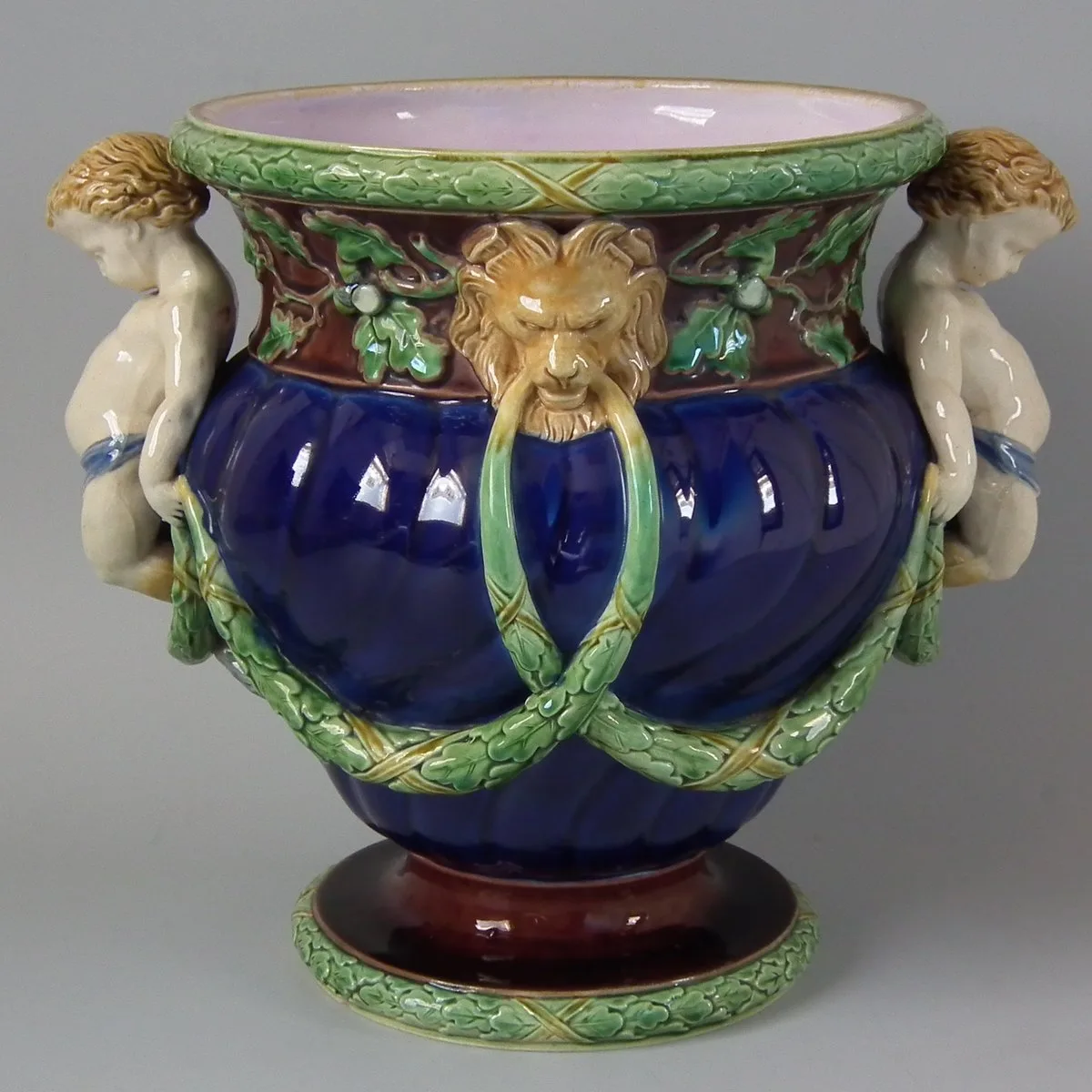
Minton is one of the great names of English ceramics, ranked alongside Wedgwood and Royal Worcester as a factory that shaped taste for nearly two centuries. Founded in Stoke-on-Trent by Thomas Minton, the firm produced everything from blue-printed earthenware and richly gilded dinner services to spectacular exhibition majolica, jewel-like pâte-sur-pâte plaques, and the architectural tiles that still line Victorian floors. That range is exactly why Minton confuses so many buyers: a single word on the base can hide a fifty-year gap in age and a tenfold gap in value.
The good news is that Minton left behind one of the most precise dating systems in the entire pottery industry. From 1842 the factory impressed a year cypher into much of its ware, meaning a genuine piece can often be dated to a single year rather than a vague decade. Combine that cypher with the evolution of the globe mark, the shift from “MINTON” to “MINTONS,” and body-and-decoration clues, and you have a reliable framework for separating a Georgian print from a 1920s cabinet plate.
This guide walks through that framework step by step. You will learn how to read Minton marks and impressed date codes, how to recognize the major ware families, how to spot reproductions and married pieces, and how condition and signature drive value. Use it as a working checklist whether you are examining a plate in hand, bidding at auction, or judging a piece from online photographs.
Table of Contents
- What Counts as Antique Minton?
- Minton Timeline and Key Production Eras
- Identify the Ware Family First
- Reading Minton Printed and Impressed Marks
- Decoding the Minton Year Cypher
- MINTON vs MINTONS and the Globe Mark
- Minton Majolica Identification Checklist
- Pâte-sur-Pâte and the Solon Legacy
- Secessionist Ware and Art Pottery Lines
- Minton Encaustic and Art Tiles
- Bone China, Dinner Services, and Acid Gold
- Common Reproductions and Married Pieces
- Condition, Restoration, and Value Impact
- Buying Strategy and Collector Priorities
- Documentation, Storage, and Long-Term Care
- 30-Second Minton Triage Checklist
What Counts as Antique Minton?
In standard trade usage, “antique” means at least 100 years old. For Minton that captures an enormous span of production, from the earliest Thomas Minton earthenwares of the early nineteenth century through the high Victorian majolica boom and into Edwardian art pottery now crossing the century line. Anything made after roughly the mid-1920s is more accurately described as vintage or mid-century, even though the factory continued as a respected maker for decades afterward.
The important point is that the Minton name alone tells you very little about age. The firm used the name continuously, so a printed backstamp can belong to almost any period. Antique status depends on the combination of mark style, impressed date code, body, and decoration all pointing to the same era. A piece can carry the Minton name and still be a later reissue, a factory second, or a decorative item assembled from mismatched parts.
Why precise terminology matters
Sellers frequently blur “antique Minton” and “vintage Minton,” and the price difference is real. A documented nineteenth-century majolica game-pie dish or a signed pâte-sur-pâte plaque sits in a completely different market from a 1950s bone china teacup. Getting the terminology right protects buyers, supports accurate insurance valuation, and makes your own catalog searchable and credible when you eventually sell.
Minton Timeline and Key Production Eras
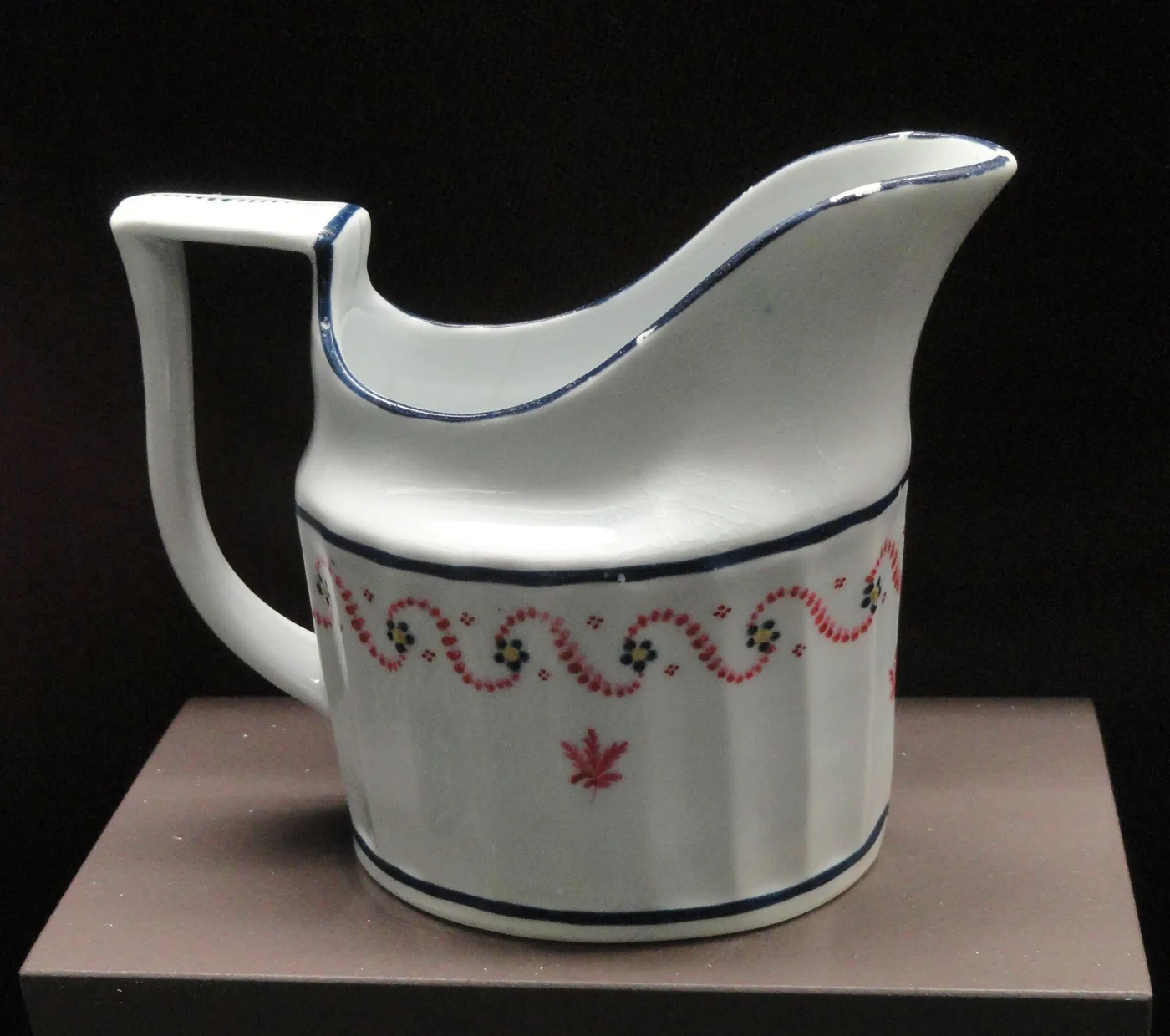
Thomas Minton established the pottery in Stoke-on-Trent around the turn of the nineteenth century, initially building a reputation on blue transfer-printed earthenware in the Staffordshire tradition. Under his son Herbert Minton the firm expanded dramatically, moving into fine bone china, ornamental porcelain, encaustic tiles, and the majolica that would be unveiled to international acclaim at the Great Exhibition of 1851. The Victorian decades were Minton’s golden age, when the factory recruited leading artists and won prizes at world’s fairs.
Think in eras rather than exact dates. Early Minton (pre-1842) predates the year cypher and relies on printed and impressed pattern marks. The classic Victorian period (roughly the 1840s to 1890s) covers majolica, pâte-sur-pâte, Aesthetic Movement designs, and the richest gilded services. The late Victorian and Edwardian period introduces Art Nouveau influence and the Secessionist range, and by the interwar years production shifts toward the vintage category.
Era clues visible without specialist tools
Before you read a single mark, study body tone, gilding style, and decoration discipline. Early wares tend toward restrained blue-printed patterns; high Victorian pieces show ambitious modeling, dense gilding, and jewel-bright majolica glazes; Edwardian art wares favor stylized organic lines. These broad visual signatures let you place a piece in the right half-century before you turn it over to confirm.
Identify the Ware Family First
The single most useful habit is to identify the ware family before you obsess over the backstamp, because the body limits which marks and dates are even plausible. Minton produced distinct families with very different surfaces: lead-glazed majolica with thick colored glazes over relief modeling; hard-looking porcelain and bone china with translucent bodies; matte-bodied pâte-sur-pâte with white slip relief on tinted grounds; earthenware Secessionist ware with tube-lined outlines; and dust-pressed encaustic tiles.
When the body and the claimed identity conflict, slow down. A glossy, brightly colored relief dish is majolica territory, not fine porcelain; a translucent gilded plate is bone china, not earthenware. Misreading the family is the fastest way to misdate a piece or overpay, because a majolica mark set behaves very differently from a bone china service mark. Body-first identification keeps you anchored in reality.
Practical body assessment
Examine the piece in neutral light and, if possible, under magnification. Check translucency by holding thinner sections to a light source, feel the weight, and inspect the foot rim for glaze pooling or biscuit texture. On majolica, look at how the colored glazes settle into the modeled relief. On porcelain, assess the whiteness and ring of the body. This ceramics assessment routine tells you which mark system to expect before you even look.
Reading Minton Printed and Impressed Marks
Minton bases usually tell a layered story, and the mistake beginners make is reading only the most obvious element. A typical piece can carry a printed factory mark (often incorporating a globe or a crown), an impressed factory name, an impressed year cypher, an impressed month letter, a shape or pattern number, and small painted or impressed potters’ and decorators’ marks. No single element proves authenticity or age; consistency among all of them does.
Printed marks evolved through recognizable stages. Early pieces may show pattern names within decorative cartouches similar to other Staffordshire transferware. From the 1860s the globe device becomes standard, gaining a crown in the 1870s and the word “England” from 1891 to satisfy import regulations. “Made in England” generally indicates twentieth-century production. Reading the printed mark in sequence with the impressed codes is what turns a guess into a dated attribution.
High-confidence mark habits
Photograph every mark in raking light so impressed cyphers and month letters show their depth and edge quality. A crisp, cleanly impressed cypher on a body of the right period is reassuring; a shallow, smeared, or oddly placed mark deserves scrutiny, as cast reproductions often blur exactly these details. Compare against museum collections and reputable auction archives rather than random image grids that mix originals, reissues, and fakes without context.

Decoding the Minton Year Cypher
Minton’s year cypher is the collector’s single greatest advantage. Beginning in 1842 and running for a full century to 1942, the factory impressed a small graphic symbol into much of its ware, with a different symbol assigned to each year. Because the cyphers are pictorial rather than a simple date, a genuine impressed cypher can pin a piece to one specific year, a level of precision most factories never offered. Examples include distinctive shapes such as a Staffordshire knot, crosses and dots set within squares, triangles, or circles, each mapped to its year in published reference tables.
The cypher rarely travels alone. Minton commonly added an impressed letter for the month of manufacture (for instance, an “S” that can indicate September), along with a shape number and a potter’s mark. Not every piece shows all of these, and small utilitarian wares may carry none, but when several impressed elements appear together they cross-confirm one another. A cypher that agrees with the printed mark style and the body type is powerful evidence of an authentic, datable piece.
How to use cyphers without memorizing them
You do not need to memorize a hundred symbols. Photograph the impressed cypher clearly, then match it against a trusted printed or online cypher chart, cross-checking the result against the printed mark and body. Beware of confusing the year cypher with the separate month letter or with a decorator’s mark; read each impressed element in its own right. When a cypher and a printed mark disagree by decades, treat the piece as a possible marriage or a later reissue until you can resolve the conflict.
MINTON vs MINTONS and the Globe Mark
One of the quickest dating shortcuts is the spelling of the factory name. Around 1851, near the introduction of the majolica process, Minton began adding the word “MINTON” in capitals as an impressed mark. From about 1873 the factory changed this to the plural “MINTONS.” As a rule of thumb, an impressed singular “MINTON” suggests pre-1873 production, while “MINTONS” points to later work. This single letter is one of the most reliable era markers on the whole base.
The printed globe mark tracks a parallel evolution. From roughly 1863 to 1872 the standard printed mark showed a globe with “Minton” across a central band. From about 1873 to 1912 the globe gained a crown above it and used the “MINTONS” spelling, with “England” added from 1891. From around 1912 the globe was redrawn within laurel leaves beneath a different crown. Placing your piece within this sequence, then confirming with the impressed cypher, usually resolves dating quickly.
Other named and painted marks
Watch for supplementary marks that narrow the date further. A printed or painted ermine device was used on fine Minton porcelains around 1850 to 1870 and is a useful mid-century indicator. Pattern books also assigned pattern numbers and retailer marks, and prestige services were sometimes marked for the retailer who commissioned them. As always, treat each mark as one data point; a convincing attribution comes from several marks agreeing, not from one impressive-looking stamp.
Minton Majolica Identification Checklist
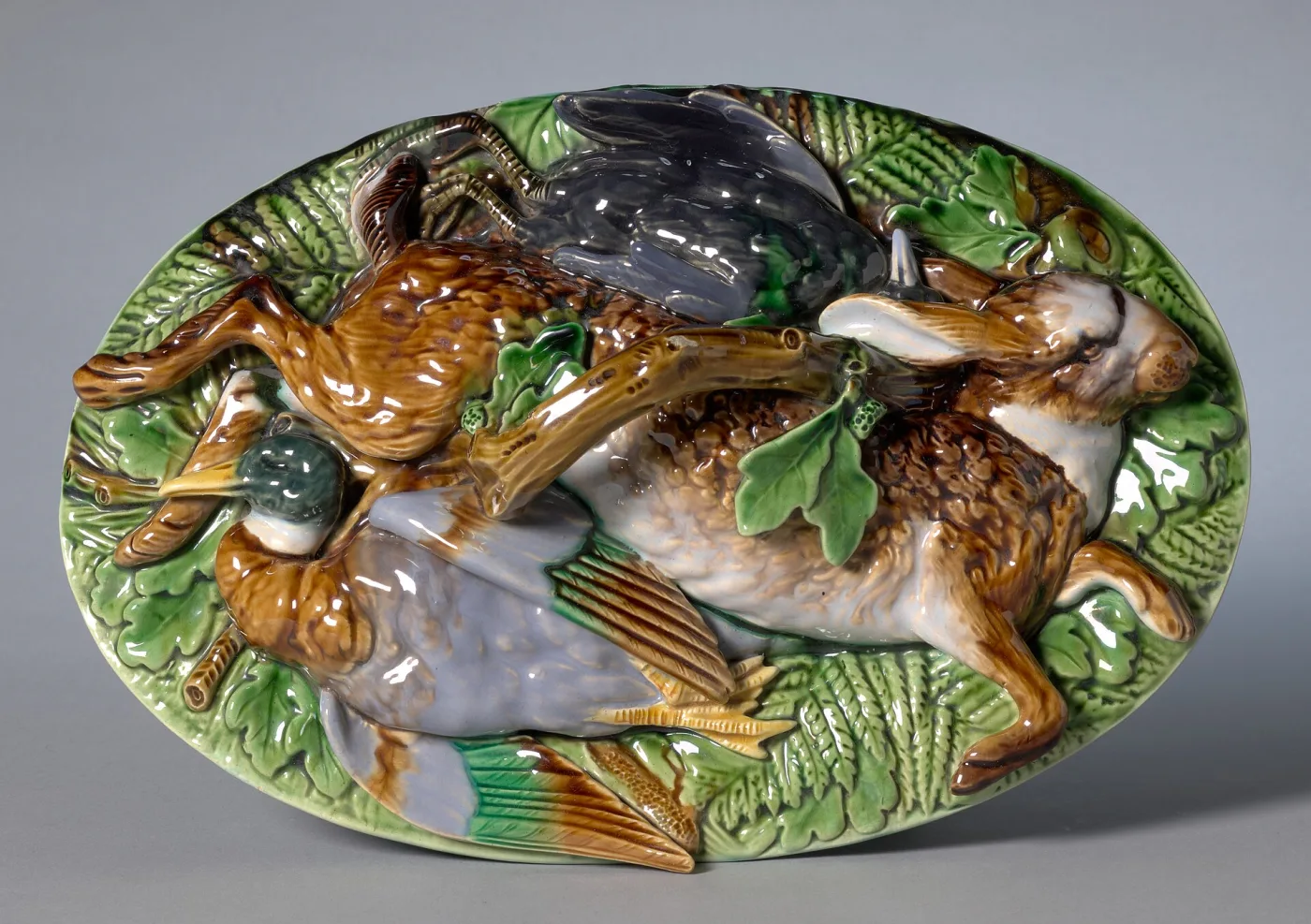
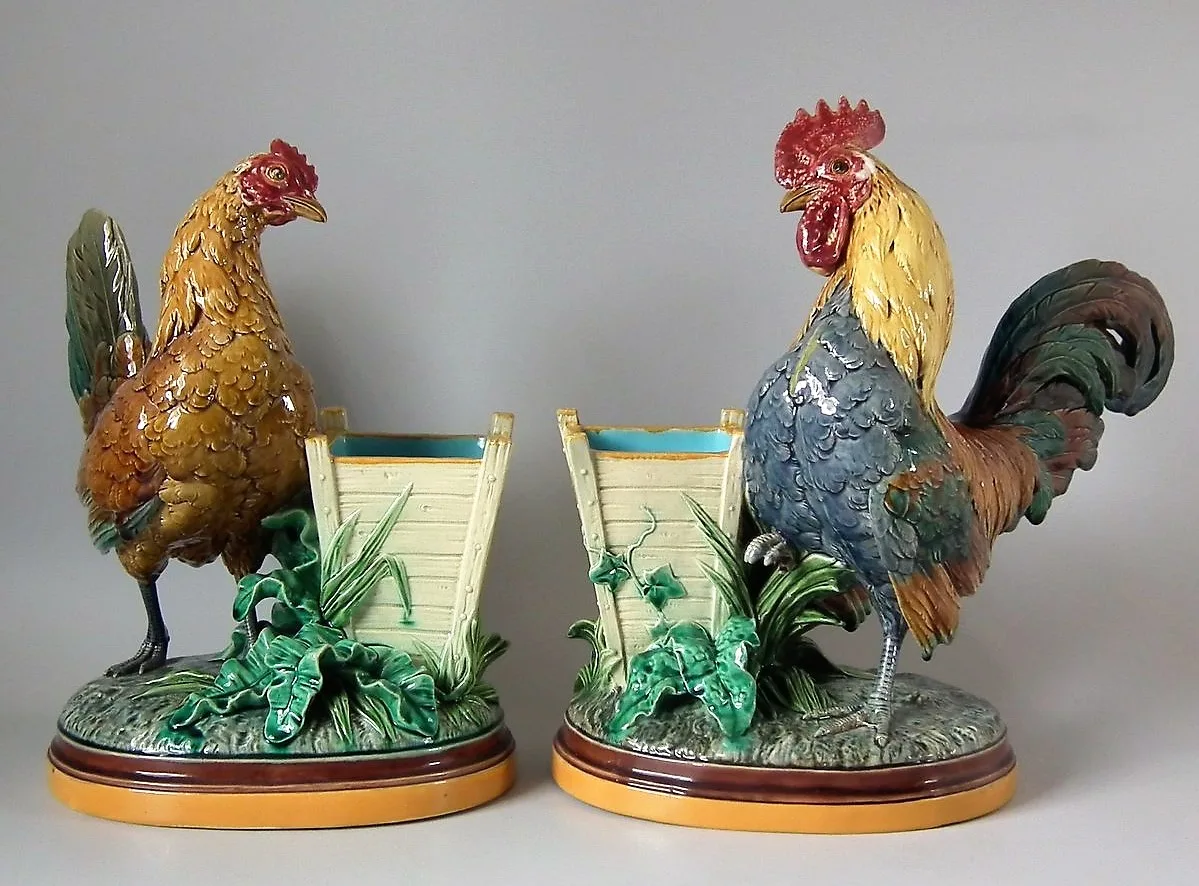
Majolica is Minton’s most theatrical and sought-after ware. Introduced at the 1851 Great Exhibition, Minton majolica uses richly colored lead glazes flooded over crisply modeled earthenware, producing everything from naturalistic oyster plates and game-pie dishes to monumental jardinières and figural garden seats. Because it transformed the factory’s fortunes for a generation, Minton majolica set the standard that rival potteries and, later, majolica reproducers tried to imitate.
Start with modeling quality and glaze behavior. Genuine Minton majolica shows confident, sharp relief with glazes that pool naturally into the recesses and remain clean at the edges. The palette is vivid but controlled, and the underside is typically finished with a mottled or colored glaze rather than left plain white. Look for the impressed “MINTON” or “MINTONS” name and, crucially, an impressed year cypher, which many quality pieces carry.
Separating Minton from rival and reproduction majolica
Nineteenth-century rivals and modern reproducers both copied popular Minton forms. Reproductions often betray themselves through soft, blurry modeling, muddy or overly glossy glazes, unnaturally heavy potting, and marks that are absent, printed instead of impressed, or clumsily faked. A Minton form with no cypher, no impressed name, and thick modern-feeling glaze should be treated as decorative rather than period until better evidence appears. When the modeling is razor-sharp and the cypher agrees with the mark style, confidence rises sharply.
Pâte-sur-Pâte and the Solon Legacy
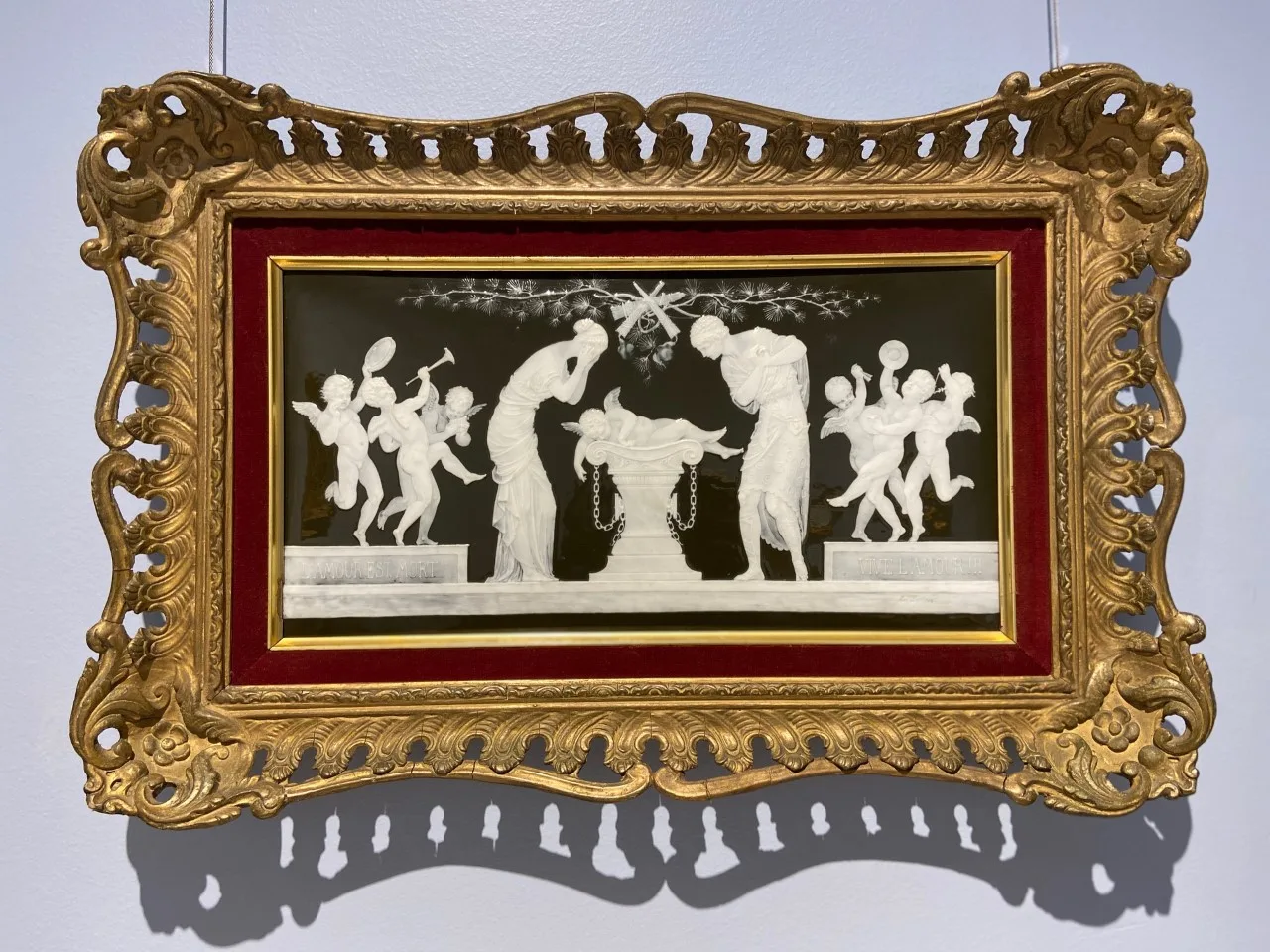
Pâte-sur-pâte, meaning “paste on paste,” is Minton’s most refined art ceramic and among the most prized in the collector market. The technique builds a design in low relief by brushing layer upon layer of white liquid slip onto a tinted ground, allowing each layer to dry before the next is added, then carving and finishing the translucent result. The effect resembles a carved cameo and demands extraordinary patience and skill.
The name most associated with Minton pâte-sur-pâte is Marc-Louis Solon, who developed the method at Sèvres before bringing it to Staffordshire, where he created and taught the technique to a small studio of artists. Signed pieces by M. L. Solon command a significant premium, and works by his pupils are collectible in their own right. Because these are labor-intensive art objects rather than production tableware, authenticity, signature, and condition dominate value.
What to verify on a pâte-sur-pâte piece
Examine the relief under angled light: genuine work shows subtle tonal gradation and translucency in the built-up slip, with hand-carved detail rather than mechanical uniformity. Look for an artist’s signature or monogram, and confirm it against documented examples. Because these pieces are valuable, they attract both outright fakes and optimistic attributions, so require strong provenance or specialist confirmation before paying top-tier prices.
Secessionist Ware and Art Pottery Lines
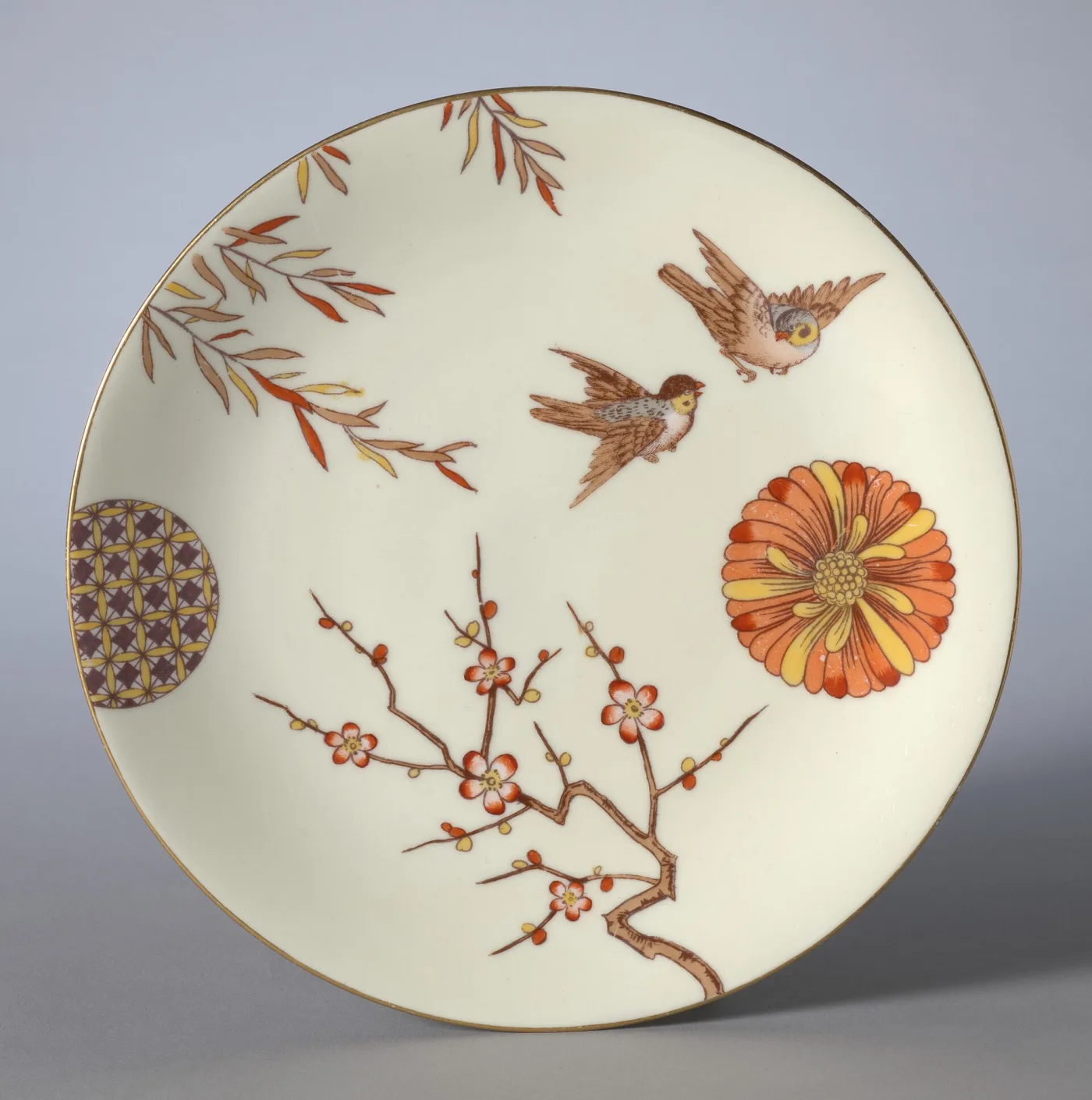
By the turn of the twentieth century Minton responded to modern taste with its Secessionist range, an earthenware line produced from roughly 1901 to 1916 and inspired by the Vienna Secession movement. Léon Solon, son of Marc-Louis, drove the design, working with the modeler John Wadsworth. Secessionist ware uses bold stylized floral and organic patterns, flowing tube-lined outlines that separate the colors, and strong glaze contrasts that feel closer to Art Nouveau than to Victorian majolica.
These wares are distinctive and increasingly collected, but they sit at the boundary between antique and vintage depending on the exact date. Identification rests on recognizing the tube-lined technique, the characteristic palette, and the printed Secessionist branding used on the range, backed up by the standard Minton marks and any impressed cypher. Because the line was made for a relatively short window, dating is usually straightforward once the style is recognized.
Distinguishing Secessionist from imitators
Tube-lined decoration was popular across the industry, so similar-looking wares by other Staffordshire makers are common. Confirm the Minton and Secessionist marks rather than assuming attribution from style alone, and compare the crispness of the tube-lining and the specific colorways against documented Minton examples. As with every Minton family, style suggests but marks confirm.
Minton Encaustic and Art Tiles
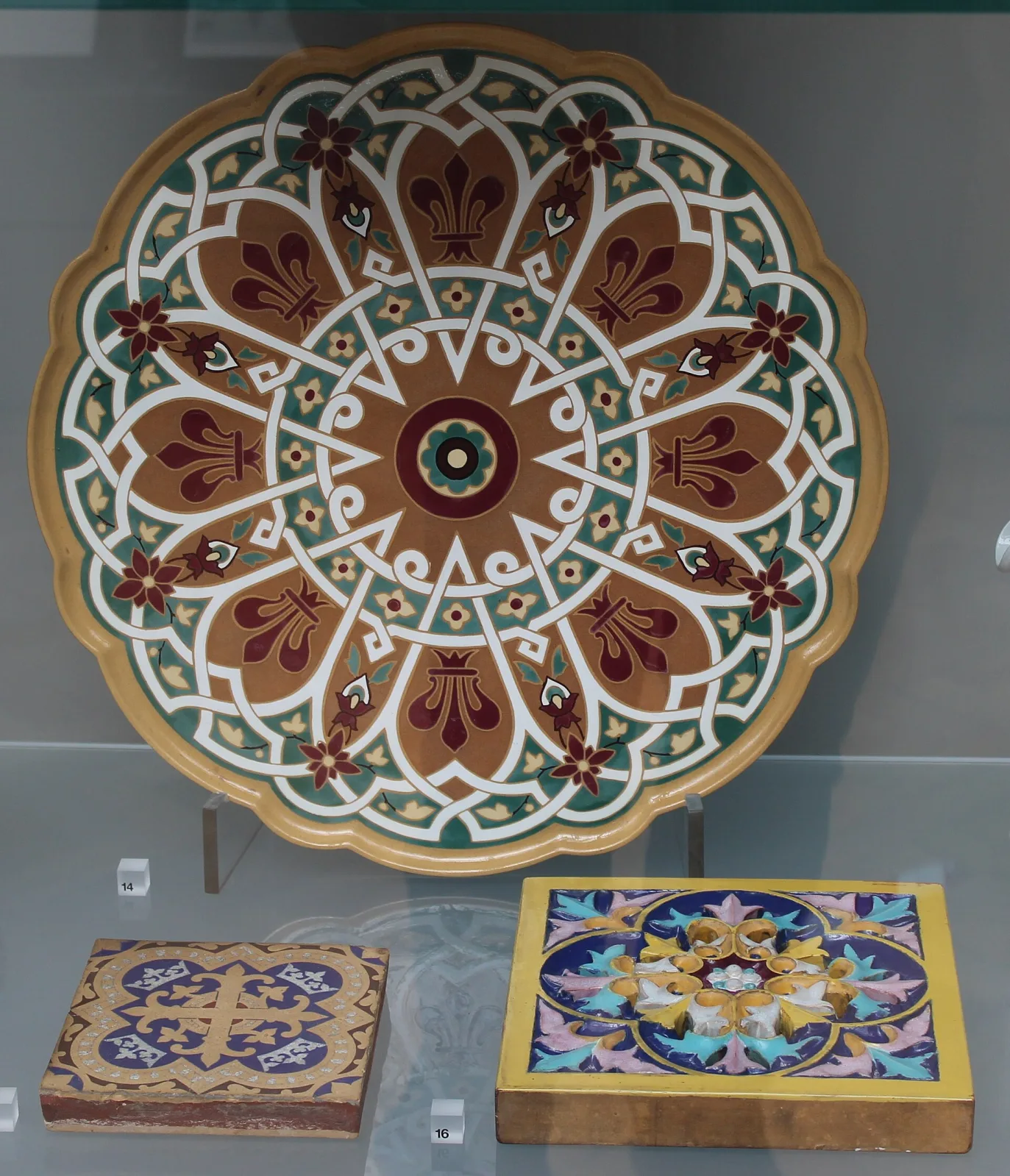
Minton was a giant of the Victorian tile industry, and its encaustic and printed tiles survive in churches, public buildings, and grand houses around the world. Encaustic tiles carry their pattern in inlaid colored clays rather than surface glaze, so the design runs into the body and resists wear. Minton also produced dust-pressed transfer-printed and majolica-glazed art tiles, many designed by notable artists during the Aesthetic Movement, which overlap with the wider world of decorative tiles.
Tile marks differ from tableware marks and often appear as impressed or molded lettering on the reverse, sometimes referencing the associated tile firms Minton established, such as Minton, Hollins & Co. and Minton & Co. Because tiles were made in huge quantities and installed rather than shelved, condition, pattern rarity, and completeness of a set drive value more than the presence of a mark alone.
Assessing tiles for authenticity and value
Turn the tile over and read the reverse for the molded or impressed maker information and any registration details. On the face, inlaid encaustic patterns should show color running into the body rather than sitting on top as a printed layer. Salvaged architectural tiles are widely collected, so a documented pattern in good condition, especially as part of a matching group, is worth considerably more than a single chipped example.
Bone China, Dinner Services, and Acid Gold
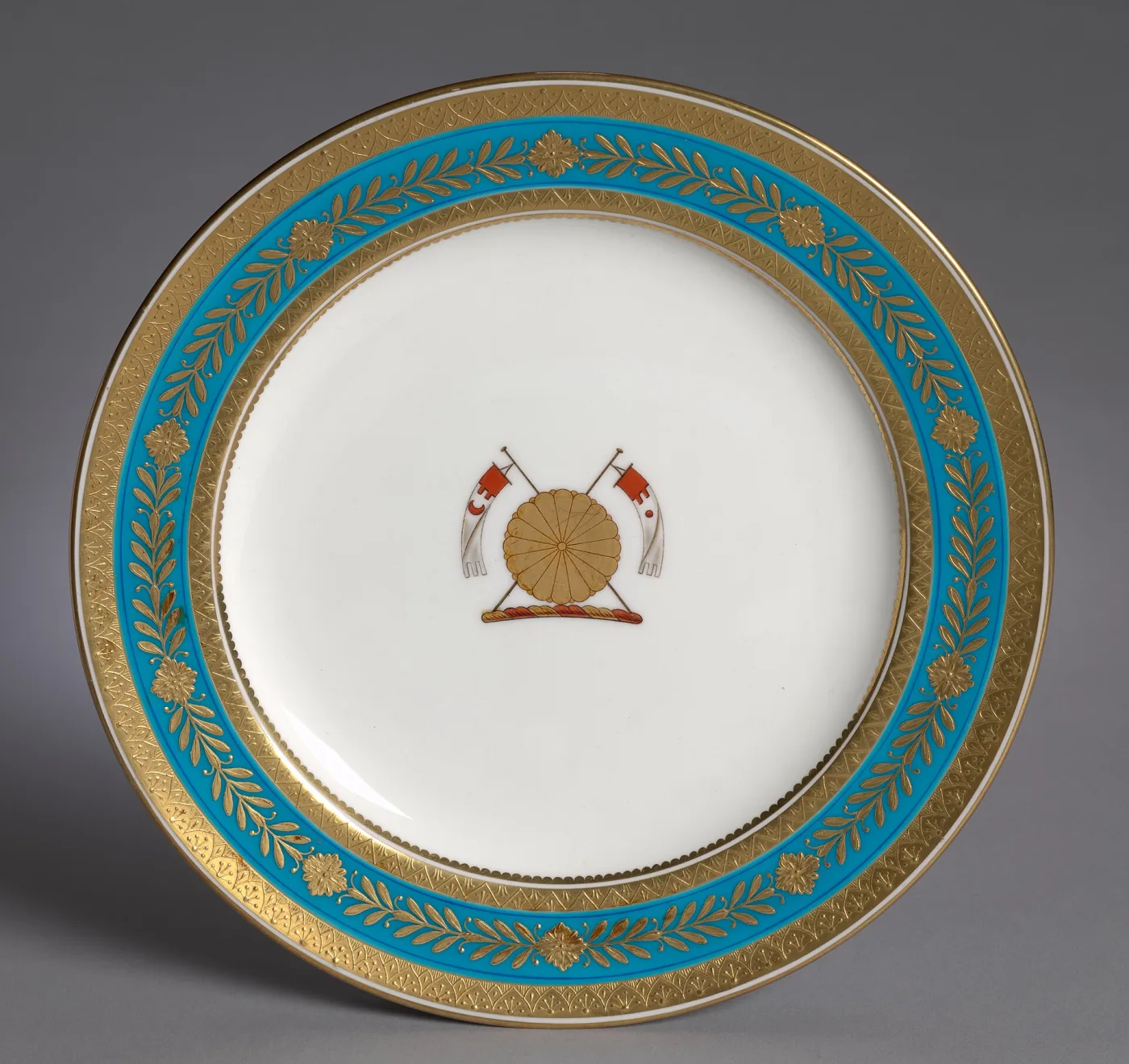
Alongside its art wares, Minton was a leading maker of luxury bone china dinner and dessert services, and these remain the pieces most collectors first encounter. Minton bone china is prized for its fine white body, elegant shapes, and lavish gilding. The factory perfected acid gilding, a technique that bites a pattern into the surface with acid before gilding so the raised and matte gold catch the light, producing the deep, jewel-like borders seen on the best services.
Service wares carry the full range of Minton marks, including printed globe or crown marks, impressed cyphers, pattern numbers, and sometimes retailers’ names for commissioned sets. Because services were made over long periods, individual plates within a pattern can span years, so date each piece on its own marks rather than assuming a whole set shares one date. Rich gilding and hand-painted panels, particularly with named artists, raise value substantially.
Comparing Minton services with rival makers
Minton competed directly with other great English factories, and their gilded services can look superficially similar. Distinguish them by the specific mark, the body quality, and the character of the gilding and painting. Acid-gold borders and finely painted reserves are Minton hallmarks, but confirm attribution with the backstamp and cypher rather than relying on decorative resemblance, which the whole industry shared.
Common Reproductions and Married Pieces
Minton’s popularity guarantees reproductions and misattributions. The most common problems are modern majolica cast from Minton-style forms and sold as period, later reissues of classic patterns presented as antique, and married pieces where an authentic base is paired with a replacement lid or a mismatched saucer to complete a set. Optimistic attribution is also rife, with sellers labeling any richly gilded plate “Minton” because it resembles known work, without documentary support.
Online listings amplify the risk because photographs can hide foot-rim wear, absent cyphers, and restored areas. Always request clear base images, side profiles, and close-ups of every mark, and specifically ask whether an impressed year cypher is present on wares that should carry one. When a seller repeatedly supplies vague photos or cannot answer basic mark questions, treat that as missing evidence, not a bargaining position.
Risk control before payment
Favor sellers who offer clear return policies, condition transparency, and provenance statements, echoing the discipline covered in our provenance research guide. For high-value majolica or signed pâte-sur-pâte, require third-party condition reports or specialist review before committing. A modest verification cost is far cheaper than owning a reproduction or a marriage that is difficult to resell honestly.
Condition, Restoration, and Value Impact
Condition is decisive in Minton valuation, and its impact varies sharply by ware family. On majolica, chips and glaze losses at high points, hairline cracks, and old overpaint all reduce value, and heavy restoration can cap prices even on rare forms. On bone china services, rubbed gilding, cutlery marks, and hairlines lower desirability. On pâte-sur-pâte, any damage to the delicate relief is especially serious because the surface is the entire point of the object.
Use strong raking light to detect filled chips, repainted glaze, and re-gilding, and consider UV examination, which can reveal some restoration although interpretation takes experience because materials fluoresce differently. Record every condition finding with photographs, both for your own catalog and for insurance. Honest, documented condition reporting also protects you when you resell, since informed Minton buyers inspect closely.
How condition affects different categories
Everyday tablewares tolerate light wear better than exhibition-quality art pieces. For majolica, edge integrity and glaze completeness are central; for pâte-sur-pâte, crisp undamaged relief and an intact signature dominate; for tiles, surface wear and set completeness matter most. Always judge condition against the rarity and collecting category rather than applying a single standard to every Minton object.
Buying Strategy and Collector Priorities
Decide your focus before you buy, because Minton is too vast to collect indiscriminately. Some collectors specialize in majolica forms, others in signed pâte-sur-pâte, Secessionist ware, encaustic tiles, or a particular gilded service pattern. Concentrating on one lane builds visual familiarity fast, so you quickly recognize correct modeling, glaze, and marks within your specialty and stop making the same mistakes.
Track realized auction prices rather than asking prices, since they reveal what informed buyers actually pay for comparable form and condition. Build a simple grading matrix covering authenticity confidence, ware family, condition, rarity, and, for art wares, signature. This turns enthusiasm into repeatable logic and, as our valuation and appraisal guide stresses, keeps you from overpaying for attractive but poorly documented pieces.
Negotiation and documentation basics
Ask direct questions about chips, hairlines, restoration, cyphers, and provenance, and request written confirmation where possible. Keep invoices, correspondence, and photographs linked to each piece. Good records strengthen insurance claims, support honest resale listings, and make estate planning far easier for a significant Minton collection that may span several ware families and decades.
Documentation, Storage, and Long-Term Care
Antique Minton needs stable storage: moderate temperature, controlled humidity, and protection from vibration and knocks. Keep majolica and gilded services out of direct sunlight, which can stress old repairs and dull perception of color and gold over time. Support display pieces on padded, inert mounts, and never stack relief-modeled majolica or delicate pâte-sur-pâte without soft separators, since applied and carved details chip easily.
Handle each piece by the body rather than by handles, spouts, finials, or applied relief. Clean gently with a soft cloth and minimal moisture, avoid harsh detergents entirely, and never use abrasive pads on gilding or matte pâte-sur-pâte surfaces. If professional restoration is genuinely required, use a conservator experienced with historic ceramics and insist on a full written treatment report you can keep with the object’s records.
Building a durable collection record
Create a catalog entry for every object recording dimensions, weight, all marks including the year cypher and month letter, condition notes, and acquisition source. Add macro photographs of base marks and any repaired zones. Over time this personal database becomes a genuine authentication tool, helping you spot outliers, compare new candidates against known-good examples, and maintain consistent standards as the collection grows.
30-Second Minton Triage Checklist
Use this quick triage when you encounter a possible Minton piece and need a fast confidence estimate:
1) Ware family: Is it majolica, bone china, pâte-sur-pâte, Secessionist earthenware, or tile, and does the body match that identity?
2) Name spelling: Is the impressed name “MINTON” (pre-1873) or “MINTONS” (from 1873), and does it fit the rest of the evidence?
3) Year cypher: Is there an impressed year cypher, and does the year agree with the printed mark style and body?
4) Printed mark stage: Does the globe or crown mark, and any “England” or “Made in England,” place the piece in a consistent period?
5) Decoration logic: Do modeling, glaze or gilding quality, and any signature belong together, or does the piece feel assembled or reproduced?
6) Condition and documentation: Are chips, hairlines, restoration, and provenance disclosed and priced in?
If four or more points are strong and consistent, proceed with normal due diligence. If two or more fail, downgrade confidence and either negotiate hard or walk away. This keeps you from overpaying for attractive but uncertain pieces and steadily raises the quality of your collection.
From triage to final decision
After triage, move to full verification for anything above your routine spending threshold. Re-check mark and cypher photographs in raking light, match the cypher against a trusted chart, compare dimensions and modeling with documented examples, and assess restoration under magnification and UV. The strongest Minton buyers pair quick instinct with slow confirmation, because lasting confidence comes from process rather than luck.